
Comparing Surface Area Vs Osmotic Power Efficiency
APR 20, 20269 MIN READ
Generate Your Research Report Instantly with AI Agent
Patsnap Eureka helps you evaluate technical feasibility & market potential.
Osmotic Power Technology Background and Efficiency Goals
Osmotic power technology, also known as pressure retarded osmosis (PRO) or salinity gradient power, represents a renewable energy approach that harnesses the chemical potential difference between solutions of varying salt concentrations. This technology exploits the natural osmotic pressure gradient that occurs when freshwater and seawater are separated by a semi-permeable membrane, generating clean electricity through controlled mixing processes.
The fundamental principle underlying osmotic power generation dates back to the 1970s when Norwegian engineer Loeb first proposed the concept of extracting energy from salinity gradients. The technology operates by allowing water molecules to pass through specialized membranes from low-salinity to high-salinity solutions, creating hydraulic pressure that can drive turbines for electricity generation. This process mimics natural phenomena observed in estuaries where rivers meet oceans, representing an abundant and continuous energy source.
Historical development of osmotic power technology has progressed through distinct phases, beginning with theoretical foundations in the mid-20th century and advancing toward practical implementations in recent decades. Early research focused primarily on membrane development and understanding fundamental transport mechanisms, while contemporary efforts emphasize system optimization and commercial viability. The technology has evolved from laboratory-scale experiments to pilot plant demonstrations, with Norway leading pioneering efforts through Statkraft's prototype facilities.
Current efficiency targets for osmotic power systems center on achieving power densities exceeding 5 watts per square meter of membrane surface area, representing a critical threshold for commercial feasibility. Research institutions and industry stakeholders have established ambitious goals of reaching 10-15 W/m² within the next decade, which would significantly improve the economic competitiveness of osmotic power compared to other renewable energy technologies.
The relationship between membrane surface area and power efficiency constitutes a fundamental challenge in osmotic power development. Larger membrane surface areas theoretically enable higher total power output, but practical limitations including concentration polarization, membrane fouling, and pressure losses can diminish overall system efficiency. Optimizing this balance requires sophisticated membrane designs, advanced materials engineering, and innovative system architectures that maximize energy extraction while minimizing operational complexities and maintenance requirements.
The fundamental principle underlying osmotic power generation dates back to the 1970s when Norwegian engineer Loeb first proposed the concept of extracting energy from salinity gradients. The technology operates by allowing water molecules to pass through specialized membranes from low-salinity to high-salinity solutions, creating hydraulic pressure that can drive turbines for electricity generation. This process mimics natural phenomena observed in estuaries where rivers meet oceans, representing an abundant and continuous energy source.
Historical development of osmotic power technology has progressed through distinct phases, beginning with theoretical foundations in the mid-20th century and advancing toward practical implementations in recent decades. Early research focused primarily on membrane development and understanding fundamental transport mechanisms, while contemporary efforts emphasize system optimization and commercial viability. The technology has evolved from laboratory-scale experiments to pilot plant demonstrations, with Norway leading pioneering efforts through Statkraft's prototype facilities.
Current efficiency targets for osmotic power systems center on achieving power densities exceeding 5 watts per square meter of membrane surface area, representing a critical threshold for commercial feasibility. Research institutions and industry stakeholders have established ambitious goals of reaching 10-15 W/m² within the next decade, which would significantly improve the economic competitiveness of osmotic power compared to other renewable energy technologies.
The relationship between membrane surface area and power efficiency constitutes a fundamental challenge in osmotic power development. Larger membrane surface areas theoretically enable higher total power output, but practical limitations including concentration polarization, membrane fouling, and pressure losses can diminish overall system efficiency. Optimizing this balance requires sophisticated membrane designs, advanced materials engineering, and innovative system architectures that maximize energy extraction while minimizing operational complexities and maintenance requirements.
Market Demand for Osmotic Energy Solutions
The global energy transition toward renewable sources has created substantial market demand for osmotic energy solutions, driven by the urgent need to diversify clean energy portfolios beyond traditional solar and wind technologies. Osmotic power, also known as salinity gradient power or blue energy, represents a promising avenue for continuous renewable energy generation that operates independently of weather conditions and time of day constraints.
Coastal regions with access to both seawater and freshwater sources present the most immediate market opportunities for osmotic energy deployment. Countries with extensive coastlines and significant freshwater discharge, including Norway, the Netherlands, Japan, and parts of North America, have demonstrated strong interest in developing commercial osmotic power facilities. The technology's ability to provide baseload renewable energy makes it particularly attractive for grid stabilization applications.
Industrial sectors requiring continuous power supply have emerged as key market drivers for osmotic energy solutions. Data centers, manufacturing facilities, and desalination plants represent high-value applications where the consistent power output characteristics of osmotic systems align well with operational requirements. The integration potential with existing desalination infrastructure creates additional market synergies, as brine discharge streams can serve dual purposes for both water treatment and energy generation.
Government policies promoting renewable energy adoption have significantly influenced market demand patterns. Feed-in tariffs, renewable energy certificates, and carbon pricing mechanisms have improved the economic viability of osmotic power projects. Several European Union member states have incorporated osmotic energy into their national renewable energy strategies, creating regulatory frameworks that support technology development and deployment.
The membrane technology sector has experienced increased investment activity as osmotic power applications drive demand for high-performance selective membranes. Advanced materials research focusing on surface area optimization and permeability enhancement has attracted both venture capital and corporate research funding, indicating strong market confidence in the technology's commercial potential.
Energy storage integration represents an emerging market segment where osmotic power systems can complement battery technologies and pumped hydro storage. The predictable and controllable nature of osmotic energy generation makes it suitable for grid balancing applications, particularly in regions with high renewable energy penetration where intermittency management becomes critical for system stability.
Coastal regions with access to both seawater and freshwater sources present the most immediate market opportunities for osmotic energy deployment. Countries with extensive coastlines and significant freshwater discharge, including Norway, the Netherlands, Japan, and parts of North America, have demonstrated strong interest in developing commercial osmotic power facilities. The technology's ability to provide baseload renewable energy makes it particularly attractive for grid stabilization applications.
Industrial sectors requiring continuous power supply have emerged as key market drivers for osmotic energy solutions. Data centers, manufacturing facilities, and desalination plants represent high-value applications where the consistent power output characteristics of osmotic systems align well with operational requirements. The integration potential with existing desalination infrastructure creates additional market synergies, as brine discharge streams can serve dual purposes for both water treatment and energy generation.
Government policies promoting renewable energy adoption have significantly influenced market demand patterns. Feed-in tariffs, renewable energy certificates, and carbon pricing mechanisms have improved the economic viability of osmotic power projects. Several European Union member states have incorporated osmotic energy into their national renewable energy strategies, creating regulatory frameworks that support technology development and deployment.
The membrane technology sector has experienced increased investment activity as osmotic power applications drive demand for high-performance selective membranes. Advanced materials research focusing on surface area optimization and permeability enhancement has attracted both venture capital and corporate research funding, indicating strong market confidence in the technology's commercial potential.
Energy storage integration represents an emerging market segment where osmotic power systems can complement battery technologies and pumped hydro storage. The predictable and controllable nature of osmotic energy generation makes it suitable for grid balancing applications, particularly in regions with high renewable energy penetration where intermittency management becomes critical for system stability.
Current State of Surface Area Optimization Challenges
Surface area optimization in osmotic power systems faces significant technical barriers that limit commercial viability. Current membrane technologies struggle to achieve the theoretical maximum surface area utilization due to concentration polarization effects, where salt concentration gradients form near membrane surfaces. This phenomenon reduces the effective driving force for power generation, creating a fundamental trade-off between membrane surface area and actual power output efficiency.
Manufacturing constraints present another critical challenge in surface area optimization. Existing fabrication techniques for pressure-retarded osmosis and reverse electrodialysis membranes cannot consistently produce ultra-thin, defect-free surfaces at industrial scales. The membrane thickness directly impacts power density, yet reducing thickness below 50 micrometers often results in mechanical instability and premature failure under operational pressures.
Fouling and scaling represent persistent operational challenges that compromise surface area effectiveness over time. Organic matter, suspended particles, and mineral deposits accumulate on membrane surfaces, progressively reducing active area and increasing hydraulic resistance. Current cleaning protocols require system shutdowns and chemical treatments that significantly impact overall system economics and operational continuity.
Spacer design optimization remains an unresolved engineering challenge affecting surface area utilization. Traditional spacer configurations create flow maldistribution and dead zones that prevent uniform membrane utilization. Advanced computational fluid dynamics studies reveal that up to 30% of membrane surface area operates at suboptimal conditions due to inadequate mass transfer in conventional spacer geometries.
Temperature and pressure stability limitations constrain surface area optimization strategies. High-performance membranes with maximized surface area often exhibit reduced thermal stability, limiting operational temperature ranges and seasonal performance variations. Pressure limitations prevent the use of ultra-thin membranes that could theoretically provide superior surface-to-volume ratios.
Integration challenges between surface area maximization and system-level optimization create additional complexity. Increasing membrane surface area through module stacking or advanced geometries often results in higher pressure drops, increased pumping requirements, and reduced net energy output. Current system designs struggle to balance these competing factors effectively.
Quality control and standardization issues hinder consistent surface area optimization across different manufacturing batches and suppliers. Variations in membrane porosity, surface roughness, and chemical composition create unpredictable performance characteristics that complicate system design and performance prediction models.
Manufacturing constraints present another critical challenge in surface area optimization. Existing fabrication techniques for pressure-retarded osmosis and reverse electrodialysis membranes cannot consistently produce ultra-thin, defect-free surfaces at industrial scales. The membrane thickness directly impacts power density, yet reducing thickness below 50 micrometers often results in mechanical instability and premature failure under operational pressures.
Fouling and scaling represent persistent operational challenges that compromise surface area effectiveness over time. Organic matter, suspended particles, and mineral deposits accumulate on membrane surfaces, progressively reducing active area and increasing hydraulic resistance. Current cleaning protocols require system shutdowns and chemical treatments that significantly impact overall system economics and operational continuity.
Spacer design optimization remains an unresolved engineering challenge affecting surface area utilization. Traditional spacer configurations create flow maldistribution and dead zones that prevent uniform membrane utilization. Advanced computational fluid dynamics studies reveal that up to 30% of membrane surface area operates at suboptimal conditions due to inadequate mass transfer in conventional spacer geometries.
Temperature and pressure stability limitations constrain surface area optimization strategies. High-performance membranes with maximized surface area often exhibit reduced thermal stability, limiting operational temperature ranges and seasonal performance variations. Pressure limitations prevent the use of ultra-thin membranes that could theoretically provide superior surface-to-volume ratios.
Integration challenges between surface area maximization and system-level optimization create additional complexity. Increasing membrane surface area through module stacking or advanced geometries often results in higher pressure drops, increased pumping requirements, and reduced net energy output. Current system designs struggle to balance these competing factors effectively.
Quality control and standardization issues hinder consistent surface area optimization across different manufacturing batches and suppliers. Variations in membrane porosity, surface roughness, and chemical composition create unpredictable performance characteristics that complicate system design and performance prediction models.
Existing Surface Area Enhancement Solutions
01 Membrane technology and materials for osmotic power generation
Advanced membrane materials and structures are critical for improving osmotic power efficiency. This includes the development of thin-film composite membranes, nanostructured membranes, and selective ion-exchange membranes that enhance water flux while minimizing reverse salt flux. The optimization of membrane properties such as porosity, thickness, and surface characteristics directly impacts the power density and overall efficiency of osmotic power systems.- Membrane technology and materials for osmotic power generation: Advanced membrane materials and structures are critical for improving osmotic power efficiency. This includes the development of thin-film composite membranes, nanostructured membranes, and selective ion-exchange membranes that enhance water flux while minimizing reverse salt flux. The optimization of membrane properties such as porosity, thickness, and surface characteristics directly impacts the power density and overall efficiency of osmotic power systems.
- Pressure retarded osmosis (PRO) system optimization: Pressure retarded osmosis systems can be optimized through various engineering approaches including hydraulic pressure management, flow configuration design, and module arrangement. Key factors include optimizing the operating pressure, controlling concentration polarization effects, and designing efficient spacer configurations to maximize energy extraction from salinity gradients. System-level improvements focus on reducing energy losses and increasing net power output.
- Reverse electrodialysis (RED) stack design and electrode systems: Reverse electrodialysis technology utilizes ion-exchange membranes in stack configurations to convert salinity gradient energy into electrical power. Efficiency improvements involve optimizing electrode materials, reducing internal resistance, enhancing ion selectivity, and designing efficient stack architectures. Advanced electrode systems and improved membrane arrangements contribute to higher voltage generation and reduced energy losses in the conversion process.
- Hybrid systems and energy recovery integration: Hybrid osmotic power systems combine multiple technologies or integrate with existing infrastructure to enhance overall efficiency. This includes coupling osmotic power generation with desalination processes, integrating energy recovery devices, and combining different salinity gradient technologies. These integrated approaches allow for waste heat utilization, brine management optimization, and improved energy conversion efficiency through synergistic effects.
- Pretreatment and solution management for enhanced performance: Effective pretreatment of feed solutions and draw solutions is essential for maintaining high osmotic power efficiency. This includes filtration systems, chemical conditioning, temperature control, and concentration management strategies. Proper solution management reduces membrane fouling, maintains optimal salinity gradients, and extends system operational lifetime. Advanced monitoring and control systems enable real-time optimization of solution parameters to maximize power output.
02 Pressure retarded osmosis (PRO) system optimization
Pressure retarded osmosis systems can be optimized through various engineering approaches including hydraulic pressure management, flow configuration design, and module arrangement. Key factors include optimizing the operating pressure relative to osmotic pressure difference, minimizing pressure drops, and designing efficient spacer configurations to reduce concentration polarization effects and enhance energy extraction efficiency.Expand Specific Solutions03 Hybrid systems combining osmotic power with other energy technologies
Integration of osmotic power generation with other renewable energy systems or desalination processes can significantly improve overall efficiency. These hybrid approaches may combine osmotic power with reverse osmosis, forward osmosis, or other water treatment technologies to maximize energy recovery and reduce operational costs. The synergistic effects of combined systems enable better utilization of salinity gradients and waste streams.Expand Specific Solutions04 Pretreatment and feed solution management
Effective pretreatment of feed solutions and optimization of solution chemistry are essential for maintaining high osmotic power efficiency. This includes controlling fouling, scaling, and biofouling through appropriate filtration, chemical treatment, and monitoring systems. Proper management of draw solution concentration, temperature, and flow rates helps maintain optimal osmotic pressure differentials and prevents membrane degradation over time.Expand Specific Solutions05 Energy recovery and conversion systems
Efficient energy recovery devices and power conversion systems are crucial for maximizing the usable energy output from osmotic power plants. This includes the design of high-efficiency turbines, pressure exchangers, and electrical generators specifically adapted for osmotic power applications. Advanced control systems and real-time monitoring enable optimization of energy extraction under varying operating conditions and salinity gradients.Expand Specific Solutions
Key Players in Osmotic Energy Industry
The osmotic power technology sector is in its early development stage, characterized by significant research activity but limited commercial deployment. The market remains nascent with substantial growth potential as global demand for renewable energy solutions intensifies. Technology maturity varies considerably across players, with leading research institutions like Nanyang Technological University, King Abdullah University of Science & Technology, and National University of Singapore driving fundamental research breakthroughs in membrane materials and surface optimization. Industrial players including State Grid Corp. of China and PetroChina represent potential large-scale adopters, while specialized companies like Saltpower Holding ApS and Saltkraft ApS focus on commercialization efforts. The competitive landscape shows a clear divide between academic research excellence and industrial application readiness, with most players still addressing core technical challenges in surface area optimization and power conversion efficiency rather than market-ready solutions.
Nanyang Technological University
Technical Solution: NTU researchers have developed comprehensive studies comparing surface area optimization with osmotic power efficiency in both forward osmosis and pressure retarded osmosis systems. Their research focuses on nanostructured membrane surfaces that increase effective area through controlled roughness while maintaining selective permeability. The university has pioneered biomimetic membrane designs inspired by natural osmotic processes, achieving up to 40% improvement in power density per unit surface area. Their work includes mathematical modeling of surface area scaling effects on overall system efficiency and cost-effectiveness analysis.
Strengths: Leading research institution with extensive publications and innovative biomimetic approaches to surface area optimization. Weaknesses: Academic focus limits immediate commercial application and scalability of laboratory-scale results.
King Abdullah University of Science & Technology
Technical Solution: KAUST has developed advanced membrane technologies for osmotic power generation with particular emphasis on surface area enhancement through hierarchical nanostructures. Their research demonstrates how controlled surface morphology can increase effective membrane area by up to 300% while maintaining selectivity. The university's approach includes novel fabrication techniques for creating high-surface-area membranes using electrospinning and phase inversion methods. Their studies show optimal surface area to thickness ratios for maximizing osmotic power output while minimizing pressure drop and concentration polarization effects.
Strengths: Cutting-edge nanotechnology research with significant surface area enhancement achievements and strong materials science expertise. Weaknesses: Research-focused institution with limited direct commercial partnerships and technology transfer capabilities.
Core Innovations in Membrane Surface Optimization
Osmotic power generator
PatentActiveUS20190226463A1
Innovation
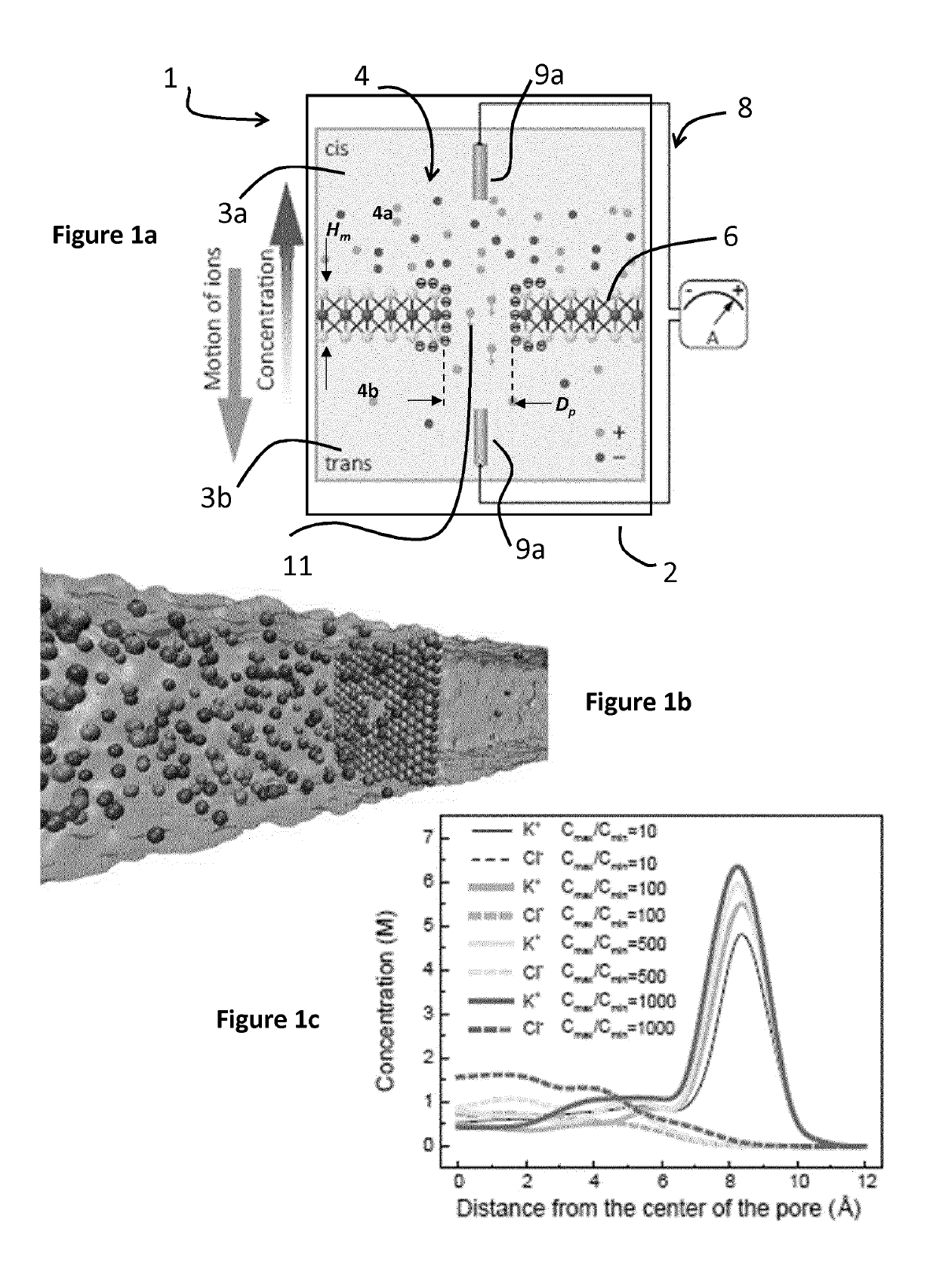
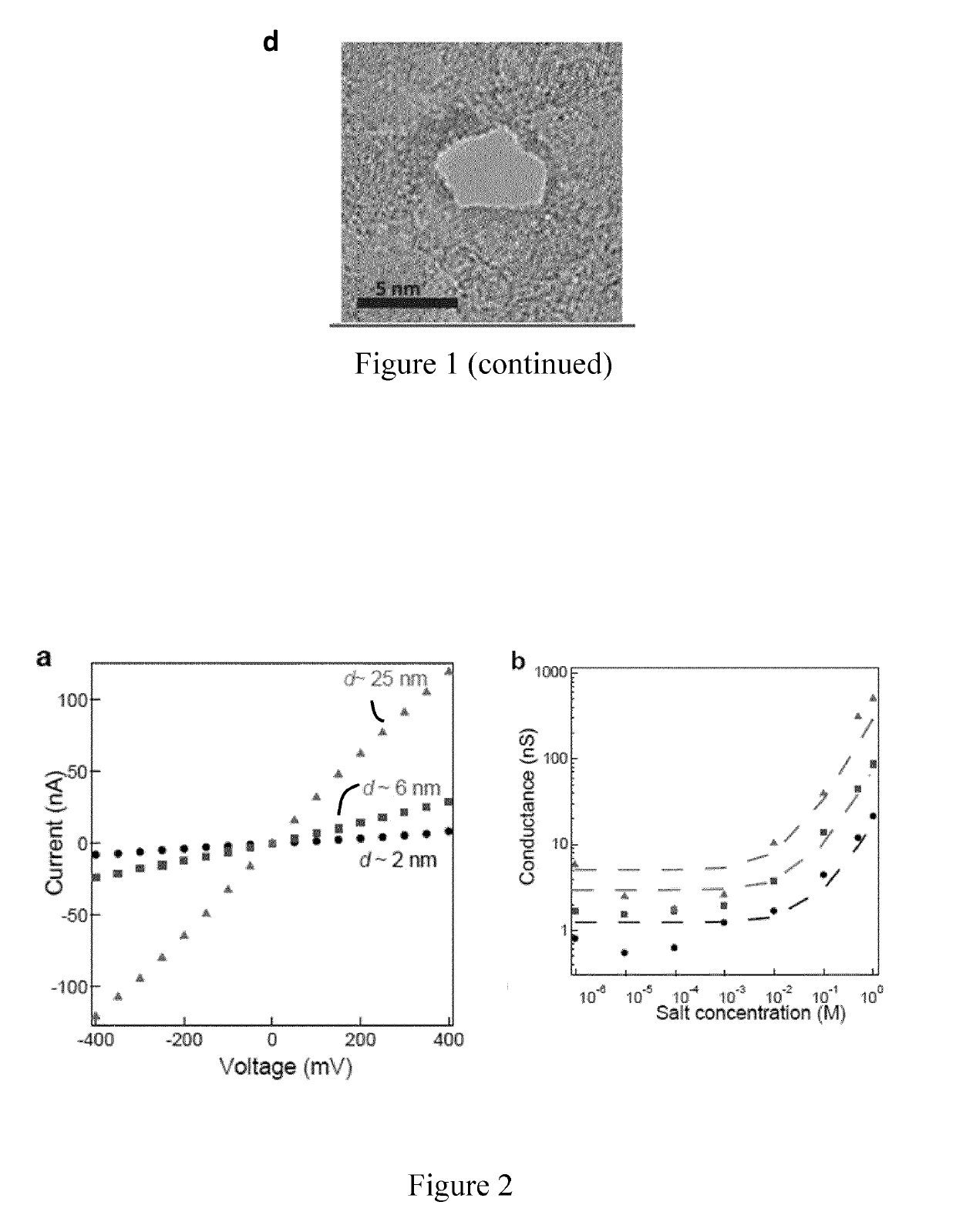
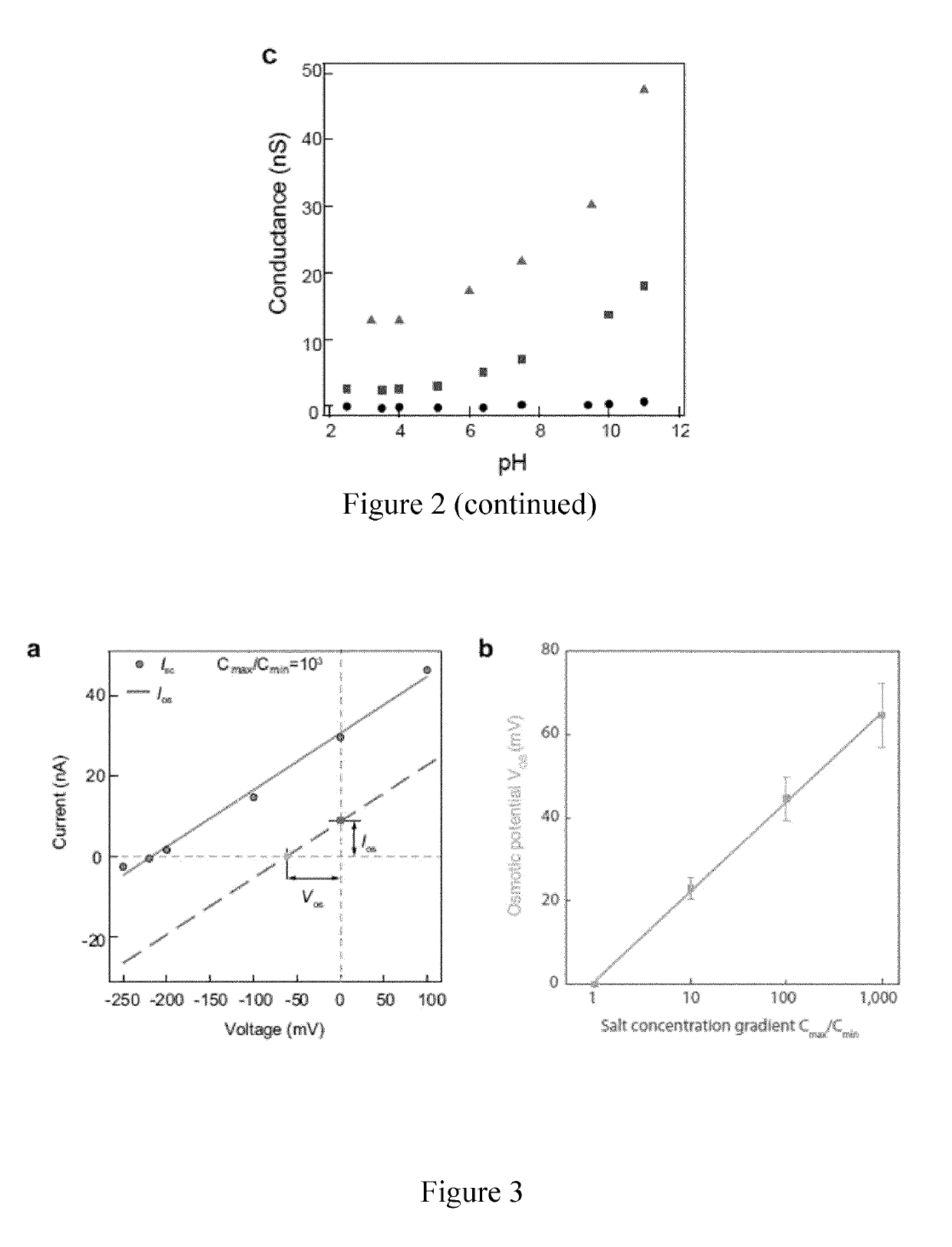
- The development of an osmotic power generator utilizing a thin layer of 2D materials with controlled pore sizes between 2 nm to 25 nm, made from materials like transition metal dichalcogenides (TMDCs) and supported by structures such as SiNx, to facilitate efficient ion passage and generate a high osmotic potential and ionic current.

Hollow fiber forward osmosis membrane
PatentWO2012002263A1
Innovation
- Development of a hollow fiber type forward osmosis membrane with optimized inner diameter (50-200 μm) and length (0.5-2m) for enhanced power generation efficiency, allowing permeation of diluted water through concentrated seawater or non-concentrated seawater with freshwater, increasing flow rates and power generation efficiency.


Environmental Impact Assessment of Osmotic Systems
The environmental implications of osmotic power systems present a complex landscape of benefits and challenges that must be carefully evaluated against traditional energy generation methods. While osmotic power technology offers significant potential for clean energy production, comprehensive environmental impact assessments reveal multifaceted considerations spanning ecosystem disruption, resource utilization, and long-term sustainability metrics.
Marine ecosystem impacts represent the most immediate environmental concern for osmotic power installations. Large-scale seawater intake systems required for optimal surface area utilization can significantly affect local marine biodiversity through entrainment and impingement of aquatic organisms. The continuous withdrawal of substantial water volumes necessary to maximize osmotic efficiency creates localized flow patterns that may disrupt natural habitat conditions and migration routes for marine species.
Membrane manufacturing processes introduce substantial upstream environmental burdens that directly correlate with surface area requirements. The production of high-performance selective membranes involves energy-intensive chemical processes and specialized materials, generating considerable carbon footprints before system deployment. Larger membrane installations designed to optimize power efficiency consequently amplify these manufacturing-related environmental impacts proportionally.
Brine discharge management emerges as a critical environmental challenge, particularly as systems scale to achieve higher power outputs. The concentrated salt solutions produced during osmotic power generation require careful disposal strategies to prevent localized salinity increases that could harm sensitive marine ecosystems. Discharge volume and concentration levels directly relate to the system's surface area optimization and operational efficiency parameters.
Land use considerations become increasingly significant as osmotic power systems expand to capture greater surface areas for enhanced efficiency. Coastal installations may compete with sensitive wetland habitats, requiring careful site selection and potential habitat mitigation measures. The infrastructure footprint necessary to support large-scale osmotic operations can fragment coastal ecosystems and alter natural shoreline dynamics.
Long-term environmental benefits include substantial reductions in greenhouse gas emissions compared to fossil fuel alternatives, with osmotic systems producing minimal operational carbon footprints once installed. The renewable nature of salinity gradients provides sustainable energy generation without depleting natural resources, offering significant climate change mitigation potential when deployed at scale while maintaining optimal surface area configurations for maximum environmental benefit ratios.
Marine ecosystem impacts represent the most immediate environmental concern for osmotic power installations. Large-scale seawater intake systems required for optimal surface area utilization can significantly affect local marine biodiversity through entrainment and impingement of aquatic organisms. The continuous withdrawal of substantial water volumes necessary to maximize osmotic efficiency creates localized flow patterns that may disrupt natural habitat conditions and migration routes for marine species.
Membrane manufacturing processes introduce substantial upstream environmental burdens that directly correlate with surface area requirements. The production of high-performance selective membranes involves energy-intensive chemical processes and specialized materials, generating considerable carbon footprints before system deployment. Larger membrane installations designed to optimize power efficiency consequently amplify these manufacturing-related environmental impacts proportionally.
Brine discharge management emerges as a critical environmental challenge, particularly as systems scale to achieve higher power outputs. The concentrated salt solutions produced during osmotic power generation require careful disposal strategies to prevent localized salinity increases that could harm sensitive marine ecosystems. Discharge volume and concentration levels directly relate to the system's surface area optimization and operational efficiency parameters.
Land use considerations become increasingly significant as osmotic power systems expand to capture greater surface areas for enhanced efficiency. Coastal installations may compete with sensitive wetland habitats, requiring careful site selection and potential habitat mitigation measures. The infrastructure footprint necessary to support large-scale osmotic operations can fragment coastal ecosystems and alter natural shoreline dynamics.
Long-term environmental benefits include substantial reductions in greenhouse gas emissions compared to fossil fuel alternatives, with osmotic systems producing minimal operational carbon footprints once installed. The renewable nature of salinity gradients provides sustainable energy generation without depleting natural resources, offering significant climate change mitigation potential when deployed at scale while maintaining optimal surface area configurations for maximum environmental benefit ratios.
Economic Viability Analysis of Surface Area Scaling
The economic viability of surface area scaling in osmotic power systems presents a complex optimization challenge that directly impacts the commercial feasibility of this renewable energy technology. As membrane surface area increases, the capital expenditure grows substantially due to higher material costs, manufacturing complexity, and installation requirements. However, this investment must be balanced against the corresponding increase in power output and revenue generation potential.
Cost analysis reveals that membrane materials typically represent 40-60% of total system costs in osmotic power installations. Linear scaling of surface area results in proportional increases in membrane procurement costs, but economies of scale can reduce per-unit costs for larger installations. Manufacturing efficiency improvements and bulk purchasing agreements become increasingly significant as project scale expands beyond 10,000 square meters of active membrane area.
The relationship between surface area and power density exhibits diminishing returns due to concentration polarization effects and mass transfer limitations. While doubling membrane area theoretically doubles power output, practical efficiency losses mean actual gains range from 70-85% of theoretical maximum. This efficiency degradation directly impacts the return on investment calculations for surface area expansion strategies.
Infrastructure scaling costs follow a non-linear pattern, with supporting systems such as pumping, pre-treatment, and power conditioning requiring disproportionate investments at larger scales. Site preparation and civil works costs increase exponentially beyond certain threshold areas, particularly in marine environments where osmotic power systems are typically deployed.
Financial modeling indicates that optimal economic performance occurs within specific surface area ranges, typically between 5,000-25,000 square meters for current technology generations. Beyond these thresholds, marginal costs exceed marginal revenue gains, creating negative economic returns. Sensitivity analysis shows that membrane cost reductions of 30-40% would shift optimal scaling parameters significantly upward, potentially enabling economically viable installations exceeding 50,000 square meters of active surface area.
Cost analysis reveals that membrane materials typically represent 40-60% of total system costs in osmotic power installations. Linear scaling of surface area results in proportional increases in membrane procurement costs, but economies of scale can reduce per-unit costs for larger installations. Manufacturing efficiency improvements and bulk purchasing agreements become increasingly significant as project scale expands beyond 10,000 square meters of active membrane area.
The relationship between surface area and power density exhibits diminishing returns due to concentration polarization effects and mass transfer limitations. While doubling membrane area theoretically doubles power output, practical efficiency losses mean actual gains range from 70-85% of theoretical maximum. This efficiency degradation directly impacts the return on investment calculations for surface area expansion strategies.
Infrastructure scaling costs follow a non-linear pattern, with supporting systems such as pumping, pre-treatment, and power conditioning requiring disproportionate investments at larger scales. Site preparation and civil works costs increase exponentially beyond certain threshold areas, particularly in marine environments where osmotic power systems are typically deployed.
Financial modeling indicates that optimal economic performance occurs within specific surface area ranges, typically between 5,000-25,000 square meters for current technology generations. Beyond these thresholds, marginal costs exceed marginal revenue gains, creating negative economic returns. Sensitivity analysis shows that membrane cost reductions of 30-40% would shift optimal scaling parameters significantly upward, potentially enabling economically viable installations exceeding 50,000 square meters of active surface area.
Unlock deeper insights with Patsnap Eureka Quick Research — get a full tech report to explore trends and direct your research. Try now!
Generate Your Research Report Instantly with AI Agent
Supercharge your innovation with Patsnap Eureka AI Agent Platform!