
Optimization Strategies for Osmotic Power Systems
APR 20, 20269 MIN READ
Generate Your Research Report Instantly with AI Agent
Patsnap Eureka helps you evaluate technical feasibility & market potential.
Osmotic Power Technology Background and Objectives
Osmotic power technology, also known as pressure retarded osmosis (PRO) or salinity gradient power, represents a promising renewable energy source that harnesses the chemical potential difference between solutions of varying salt concentrations. This technology exploits the natural osmotic process where water molecules migrate through a semi-permeable membrane from a low-salinity solution to a high-salinity solution, generating hydraulic pressure that can be converted into electrical energy.
The fundamental principle underlying osmotic power systems dates back to the 1970s when Norwegian engineer Loeb first proposed the concept of extracting energy from salinity gradients. The technology gained renewed attention in the early 2000s as global energy demands intensified and the search for sustainable alternatives to fossil fuels accelerated. The process involves positioning a semi-permeable membrane between freshwater and seawater, creating a pressure differential of approximately 26 bar under ideal conditions.
Current osmotic power development focuses on two primary configurations: pressure retarded osmosis and reverse electrodialysis (RED). PRO systems utilize hydraulic pressure generated by osmotic flow to drive turbines, while RED systems employ ion-selective membranes to create electrical potential differences. Both approaches face significant technical challenges related to membrane performance, fouling resistance, and energy conversion efficiency.
The primary objective of osmotic power optimization strategies centers on achieving commercially viable power densities exceeding 5 W/m² of membrane area, compared to current laboratory achievements of 2-3 W/m². Key performance targets include developing membranes with enhanced water permeability while maintaining salt rejection capabilities, minimizing concentration polarization effects, and reducing system operational costs to below $0.10 per kWh.
Strategic development goals encompass advancing membrane materials science, particularly focusing on thin-film composite membranes with optimized support layer structures. Additionally, system-level optimization aims to integrate efficient pre-treatment processes, develop robust anti-fouling strategies, and establish sustainable brine management protocols. The ultimate vision involves deploying large-scale osmotic power plants at river mouths and coastal areas, contributing significantly to the global renewable energy portfolio while addressing freshwater scarcity through integrated desalination processes.
The fundamental principle underlying osmotic power systems dates back to the 1970s when Norwegian engineer Loeb first proposed the concept of extracting energy from salinity gradients. The technology gained renewed attention in the early 2000s as global energy demands intensified and the search for sustainable alternatives to fossil fuels accelerated. The process involves positioning a semi-permeable membrane between freshwater and seawater, creating a pressure differential of approximately 26 bar under ideal conditions.
Current osmotic power development focuses on two primary configurations: pressure retarded osmosis and reverse electrodialysis (RED). PRO systems utilize hydraulic pressure generated by osmotic flow to drive turbines, while RED systems employ ion-selective membranes to create electrical potential differences. Both approaches face significant technical challenges related to membrane performance, fouling resistance, and energy conversion efficiency.
The primary objective of osmotic power optimization strategies centers on achieving commercially viable power densities exceeding 5 W/m² of membrane area, compared to current laboratory achievements of 2-3 W/m². Key performance targets include developing membranes with enhanced water permeability while maintaining salt rejection capabilities, minimizing concentration polarization effects, and reducing system operational costs to below $0.10 per kWh.
Strategic development goals encompass advancing membrane materials science, particularly focusing on thin-film composite membranes with optimized support layer structures. Additionally, system-level optimization aims to integrate efficient pre-treatment processes, develop robust anti-fouling strategies, and establish sustainable brine management protocols. The ultimate vision involves deploying large-scale osmotic power plants at river mouths and coastal areas, contributing significantly to the global renewable energy portfolio while addressing freshwater scarcity through integrated desalination processes.
Market Demand for Renewable Osmotic Energy Solutions
The global energy transition toward renewable sources has created substantial market demand for innovative clean energy technologies, with osmotic power systems emerging as a promising solution for sustainable electricity generation. This technology harnesses the chemical potential difference between saltwater and freshwater through selective membranes, offering a continuous and predictable energy source that complements intermittent renewables like solar and wind power.
Market drivers for osmotic power solutions stem from multiple converging factors. Climate change mitigation policies worldwide are accelerating the adoption of carbon-neutral energy technologies, creating regulatory frameworks that favor renewable energy investments. The increasing scarcity of freshwater resources paradoxically enhances the value proposition of osmotic power, as these systems can simultaneously generate electricity while contributing to desalination processes, addressing both energy and water security challenges.
Industrial sectors demonstrate growing interest in osmotic power applications, particularly in coastal regions with abundant seawater access. The technology appeals to industries seeking reliable baseload renewable energy that operates independently of weather conditions. Unlike solar or wind installations, osmotic power systems provide consistent energy output, making them attractive for continuous industrial processes and grid stabilization applications.
Geographic market potential concentrates in regions with significant salinity gradients, including coastal areas, salt lakes, and industrial brine discharge sites. Countries with extensive coastlines and ambitious renewable energy targets represent primary markets, while inland applications focus on industrial waste streams and geothermal brines. The technology's modular scalability enables deployment across diverse market segments, from small-scale distributed generation to large utility-scale installations.
Economic factors increasingly favor osmotic power development as membrane technologies advance and production costs decline. The growing emphasis on energy storage alternatives positions osmotic power as a complementary technology that reduces grid dependency on battery systems. Market demand is further stimulated by corporate sustainability commitments and environmental, social, and governance investment criteria that prioritize innovative clean energy solutions.
The convergence of technological maturation, supportive policy environments, and increasing environmental awareness creates a favorable market landscape for osmotic power systems, positioning this technology as a viable component of future renewable energy portfolios.
Market drivers for osmotic power solutions stem from multiple converging factors. Climate change mitigation policies worldwide are accelerating the adoption of carbon-neutral energy technologies, creating regulatory frameworks that favor renewable energy investments. The increasing scarcity of freshwater resources paradoxically enhances the value proposition of osmotic power, as these systems can simultaneously generate electricity while contributing to desalination processes, addressing both energy and water security challenges.
Industrial sectors demonstrate growing interest in osmotic power applications, particularly in coastal regions with abundant seawater access. The technology appeals to industries seeking reliable baseload renewable energy that operates independently of weather conditions. Unlike solar or wind installations, osmotic power systems provide consistent energy output, making them attractive for continuous industrial processes and grid stabilization applications.
Geographic market potential concentrates in regions with significant salinity gradients, including coastal areas, salt lakes, and industrial brine discharge sites. Countries with extensive coastlines and ambitious renewable energy targets represent primary markets, while inland applications focus on industrial waste streams and geothermal brines. The technology's modular scalability enables deployment across diverse market segments, from small-scale distributed generation to large utility-scale installations.
Economic factors increasingly favor osmotic power development as membrane technologies advance and production costs decline. The growing emphasis on energy storage alternatives positions osmotic power as a complementary technology that reduces grid dependency on battery systems. Market demand is further stimulated by corporate sustainability commitments and environmental, social, and governance investment criteria that prioritize innovative clean energy solutions.
The convergence of technological maturation, supportive policy environments, and increasing environmental awareness creates a favorable market landscape for osmotic power systems, positioning this technology as a viable component of future renewable energy portfolios.
Current State and Challenges of Osmotic Power Systems
Osmotic power systems, also known as pressure retarded osmosis (PRO) and reverse electrodialysis (RED) technologies, represent a promising renewable energy source that harnesses the chemical potential difference between freshwater and seawater. Currently, the global development of osmotic power technology remains in the demonstration and pilot project phase, with limited commercial deployment despite decades of research and development efforts.
The theoretical potential for osmotic power generation is substantial, with estimates suggesting that global salinity gradient energy could provide approximately 2,000 TWh annually. However, practical implementation has been constrained by significant technical and economic barriers that prevent widespread adoption. Norway's Statkraft operated the world's first osmotic power prototype plant from 2009 to 2014, achieving power densities of only 2.7 W/m², far below the commercial viability threshold of 5-10 W/m².
Several fundamental challenges continue to impede the advancement of osmotic power systems. Membrane performance represents the most critical bottleneck, as current membranes suffer from low power density, fouling susceptibility, and limited durability under operational conditions. The concentration polarization phenomenon significantly reduces the effective driving force across membranes, while internal concentration polarization within the membrane support layer further diminishes performance.
Fouling mechanisms pose another major obstacle, as biological, organic, and inorganic fouling rapidly degrades membrane performance in real-world applications. The complex composition of natural water sources introduces unpredictable fouling patterns that are difficult to mitigate through conventional pretreatment methods. Additionally, the high capital costs associated with membrane replacement and system maintenance create economic barriers to commercial deployment.
Geographically, osmotic power development is concentrated in regions with abundant freshwater-seawater interfaces, including Scandinavia, the Netherlands, Japan, and South Korea. These countries have invested significantly in research infrastructure and pilot projects, though none have achieved sustained commercial operation. The technology distribution reflects both resource availability and national energy security priorities, with coastal nations showing the greatest interest in osmotic power development.
Current power conversion efficiencies remain disappointingly low, typically ranging from 1-3% of theoretical maximum values. This performance gap stems from multiple loss mechanisms including membrane resistance, concentration polarization effects, and system parasitic losses. The integration of osmotic power systems with existing infrastructure also presents logistical challenges that complicate deployment strategies.
The theoretical potential for osmotic power generation is substantial, with estimates suggesting that global salinity gradient energy could provide approximately 2,000 TWh annually. However, practical implementation has been constrained by significant technical and economic barriers that prevent widespread adoption. Norway's Statkraft operated the world's first osmotic power prototype plant from 2009 to 2014, achieving power densities of only 2.7 W/m², far below the commercial viability threshold of 5-10 W/m².
Several fundamental challenges continue to impede the advancement of osmotic power systems. Membrane performance represents the most critical bottleneck, as current membranes suffer from low power density, fouling susceptibility, and limited durability under operational conditions. The concentration polarization phenomenon significantly reduces the effective driving force across membranes, while internal concentration polarization within the membrane support layer further diminishes performance.
Fouling mechanisms pose another major obstacle, as biological, organic, and inorganic fouling rapidly degrades membrane performance in real-world applications. The complex composition of natural water sources introduces unpredictable fouling patterns that are difficult to mitigate through conventional pretreatment methods. Additionally, the high capital costs associated with membrane replacement and system maintenance create economic barriers to commercial deployment.
Geographically, osmotic power development is concentrated in regions with abundant freshwater-seawater interfaces, including Scandinavia, the Netherlands, Japan, and South Korea. These countries have invested significantly in research infrastructure and pilot projects, though none have achieved sustained commercial operation. The technology distribution reflects both resource availability and national energy security priorities, with coastal nations showing the greatest interest in osmotic power development.
Current power conversion efficiencies remain disappointingly low, typically ranging from 1-3% of theoretical maximum values. This performance gap stems from multiple loss mechanisms including membrane resistance, concentration polarization effects, and system parasitic losses. The integration of osmotic power systems with existing infrastructure also presents logistical challenges that complicate deployment strategies.
Existing Optimization Solutions for Osmotic Systems
01 Pressure retarded osmosis (PRO) systems for power generation
Osmotic power systems utilize pressure retarded osmosis technology to generate electricity from the salinity gradient between seawater and freshwater. These systems employ semi-permeable membranes that allow water molecules to pass through while blocking salt ions. The osmotic pressure difference drives water flow, which is converted to mechanical energy through turbines. The technology focuses on optimizing membrane materials, pressure vessels, and energy recovery devices to maximize power output efficiency.- Pressure retarded osmosis (PRO) systems for power generation: Osmotic power systems utilize pressure retarded osmosis technology to generate electricity from salinity gradients. These systems employ semi-permeable membranes that allow water to flow from low-salinity solutions to high-salinity solutions, creating pressure that drives turbines for power generation. The technology harnesses the natural osmotic pressure difference between fresh water and seawater or between different salinity levels to produce renewable energy.
- Membrane technology and materials for osmotic power systems: Advanced membrane materials and configurations are critical for efficient osmotic power generation. These include specialized semi-permeable membranes with enhanced permeability, selectivity, and durability characteristics. The membranes are designed to withstand high pressure differentials while maintaining optimal water flux and salt rejection properties. Various membrane compositions and structural designs are employed to maximize energy conversion efficiency and system longevity.
- Forward osmosis systems and applications: Forward osmosis technology represents an alternative approach to osmotic power generation, utilizing draw solutions with high osmotic pressure to extract water through membranes. These systems can be integrated with various industrial processes and desalination operations. The technology offers advantages in terms of lower energy consumption and reduced fouling compared to traditional pressure-driven membrane processes.
- Hybrid osmotic power systems and energy recovery: Hybrid configurations combine osmotic power generation with other energy conversion technologies to enhance overall system efficiency. These integrated systems may incorporate energy recovery devices, pressure exchangers, and coupling with desalination or wastewater treatment processes. The hybrid approach allows for optimization of energy output while addressing multiple water treatment objectives simultaneously.
- System optimization and control mechanisms: Advanced control systems and optimization strategies are employed to maximize power output and operational efficiency in osmotic power systems. These include monitoring and adjustment of flow rates, pressure differentials, membrane performance parameters, and solution concentrations. Automated control mechanisms help maintain optimal operating conditions and prevent membrane fouling or damage while ensuring consistent power generation.
02 Membrane technology and materials for osmotic power
Advanced membrane designs are critical for osmotic power generation, including thin-film composite membranes, hollow fiber configurations, and spiral wound modules. These membranes must exhibit high water permeability, salt rejection capabilities, and mechanical strength to withstand operating pressures. Material innovations include polymeric membranes, ceramic membranes, and hybrid structures that enhance durability and reduce fouling. Membrane surface modifications and coating techniques are employed to improve performance and longevity in osmotic power applications.Expand Specific Solutions03 Reverse electrodialysis (RED) systems
Reverse electrodialysis represents an alternative approach to osmotic power generation using ion-exchange membranes arranged in alternating patterns. The system converts the chemical potential difference between high and low salinity solutions directly into electrical energy through ionic transport. Stack designs, electrode configurations, and membrane selectivity are optimized to enhance voltage output and current density. This technology is particularly suitable for applications where direct electrical generation is preferred over mechanical conversion.Expand Specific Solutions04 Hybrid and integrated osmotic power systems
Integrated systems combine osmotic power generation with other renewable energy technologies or water treatment processes to improve overall efficiency and economic viability. Hybrid configurations may include coupling with desalination plants, wastewater treatment facilities, or thermal energy systems. These integrated approaches enable energy recovery from multiple sources, reduce operational costs, and maximize resource utilization. System designs focus on optimizing flow rates, pressure management, and energy cascading between different process stages.Expand Specific Solutions05 Pretreatment and fouling control in osmotic power systems
Effective pretreatment methods are essential for maintaining membrane performance and preventing fouling in osmotic power systems. Techniques include filtration, chemical treatment, and biological control to remove suspended solids, organic matter, and microbial contaminants from feed solutions. Anti-fouling strategies incorporate membrane cleaning protocols, surface modifications, and operational parameter optimization. These approaches extend membrane lifespan, reduce maintenance requirements, and ensure consistent power generation efficiency over extended operational periods.Expand Specific Solutions
Key Players in Osmotic Power Industry
The osmotic power systems sector represents an emerging renewable energy field currently in its early commercialization phase, with significant growth potential driven by increasing demand for sustainable energy solutions. The market remains relatively small but shows promising expansion opportunities as coastal regions seek alternative energy sources. Technology maturity varies considerably across the competitive landscape, with established industrial players like Siemens AG, ABB Ltd., and Toshiba Corp. leveraging their engineering expertise to develop scalable systems, while specialized companies such as Gradiant Corp., Saltpower Holding ApS, and NRGTEK Inc focus on innovative membrane technologies and optimization strategies. Leading research institutions including MIT, Nanyang Technological University, and KAUST are advancing fundamental science, particularly in membrane development and system efficiency improvements. Japanese companies like Toyobo Co., Toray Industries, and Sasakura Engineering contribute advanced materials and desalination expertise, while utility companies such as State Grid Corp. of China explore grid integration possibilities, creating a diverse ecosystem spanning from basic research to commercial deployment.
Statkraft Development AS
Technical Solution: Statkraft has developed advanced pressure retarded osmosis (PRO) technology for osmotic power generation, focusing on optimizing membrane performance and system efficiency. Their approach involves using specialized semi-permeable membranes that allow water molecules to pass through while blocking salt ions, creating pressure differentials of up to 26 bar. The company has implemented innovative pre-treatment systems to minimize membrane fouling and developed modular system designs that can be scaled for different applications. Their optimization strategies include advanced membrane cleaning protocols, real-time monitoring systems for pressure and flow rates, and integration with existing hydroelectric infrastructure to maximize energy output efficiency.
Strengths: Pioneer in commercial osmotic power with extensive field experience and proven technology. Weaknesses: High capital costs and limited commercial viability at current efficiency levels.
ABB Ltd.
Technical Solution: ABB has developed specialized power conversion and grid integration systems for osmotic power plants, optimizing the electrical infrastructure required to convert mechanical energy from osmotic pressure into grid-ready electricity. Their technology includes variable frequency drives specifically designed for the unique operating characteristics of osmotic power turbines, advanced power conditioning systems that handle fluctuating power output, and smart grid integration solutions that optimize energy dispatch. The company has also developed modular electrical systems that can be easily scaled and maintained, along with advanced monitoring and diagnostic tools that ensure optimal electrical system performance. Their approach includes energy storage integration to smooth power output variations and maximize grid stability.
Strengths: World-class electrical engineering capabilities and extensive experience in renewable energy grid integration. Weaknesses: Limited involvement in core osmotic power generation technology and membrane system development.
Core Innovations in Osmotic Power Efficiency Enhancement
Method and apparatus for osmotic power generation
PatentActiveUS20110133487A1
Innovation
- The system employs a semi-permeable membrane chamber with two fluid portions, where a first pump communicates low TDS fluid and a second pump communicates higher TDS fluid, generating osmotic pressure, and a regenerative variable frequency drive converts excess energy into electrical power using a common shaft to minimize energy losses.


Method of osmotic energy harvesting using responsive compounds and molecules
PatentInactiveUS10690122B2
Innovation
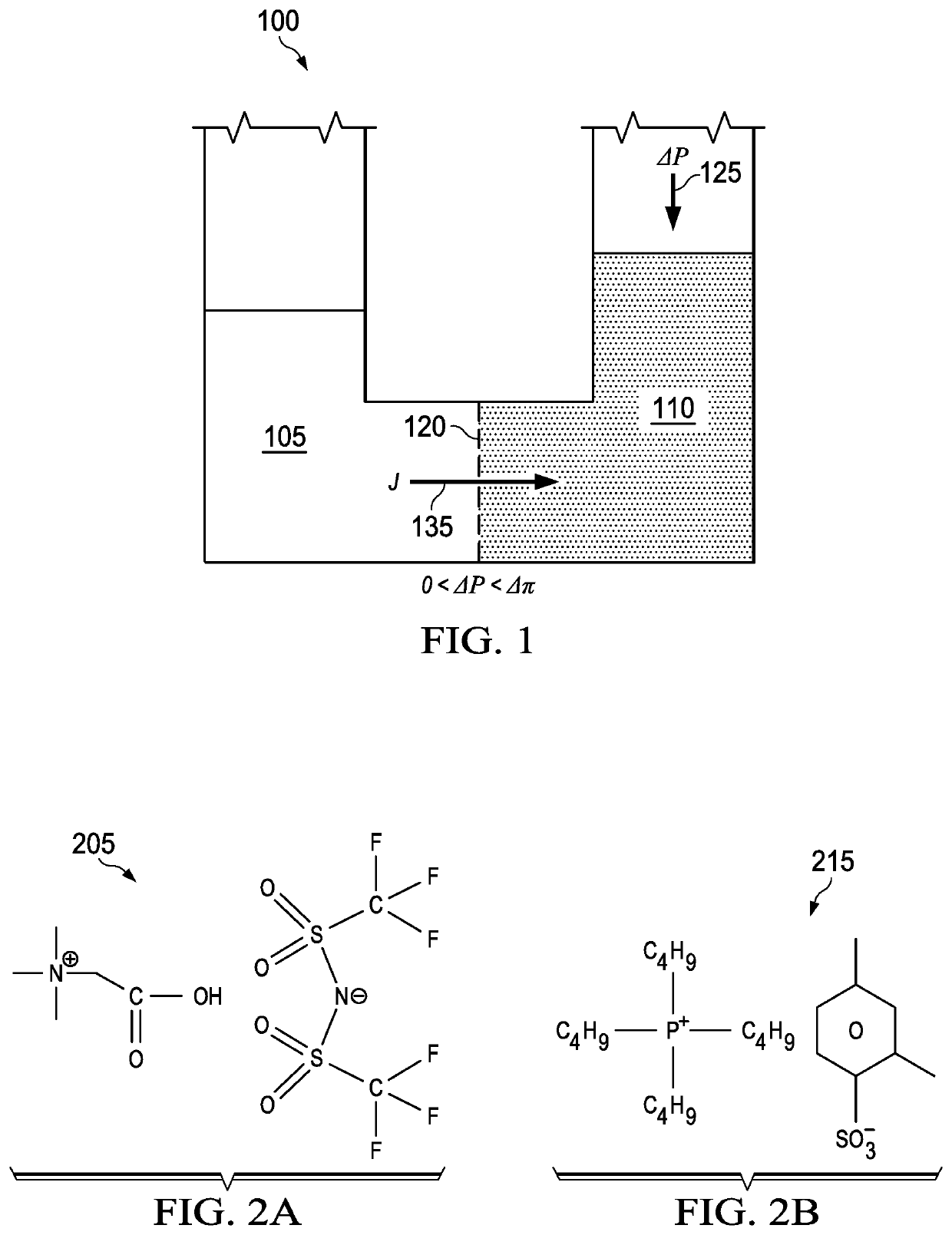
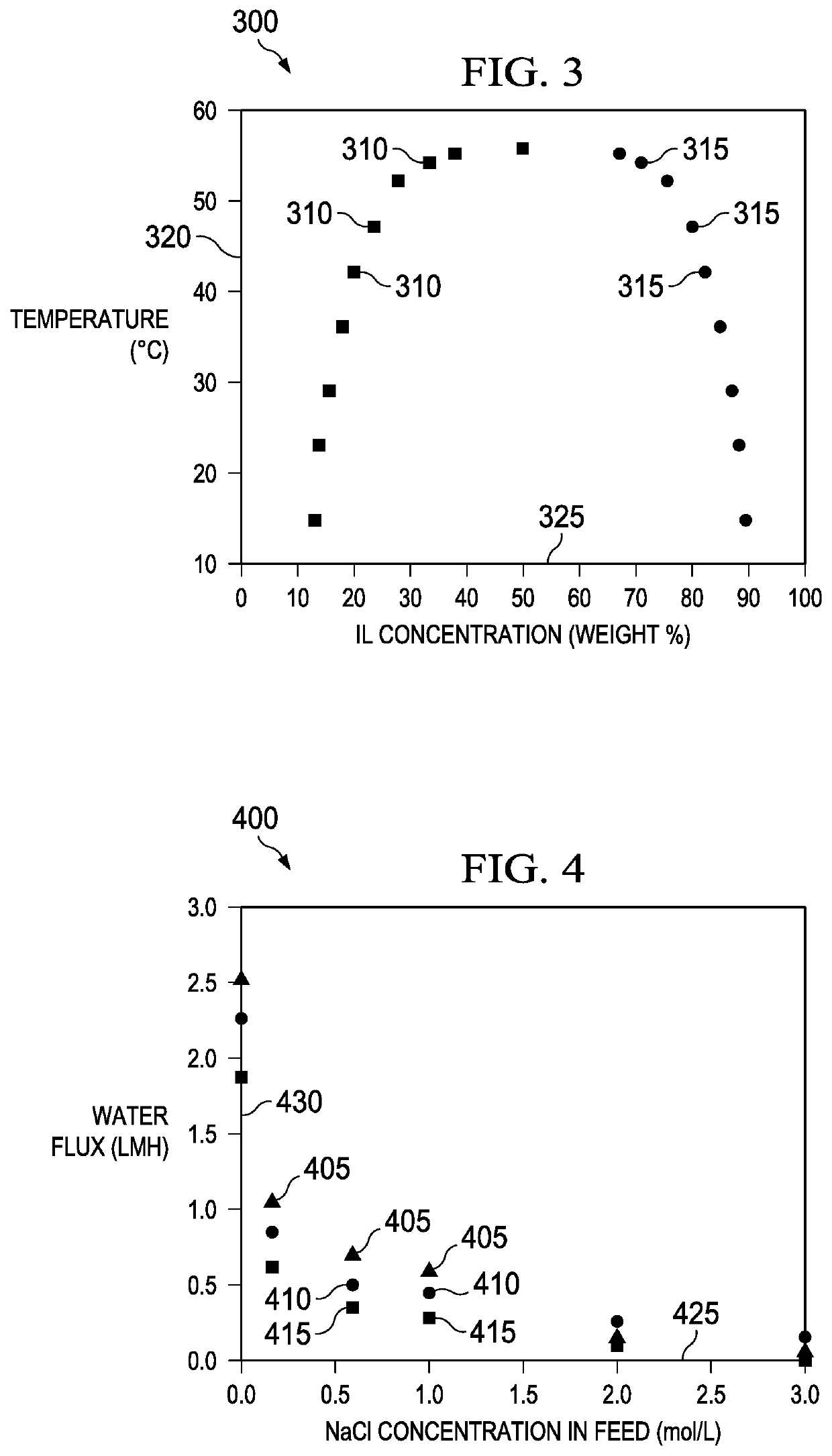
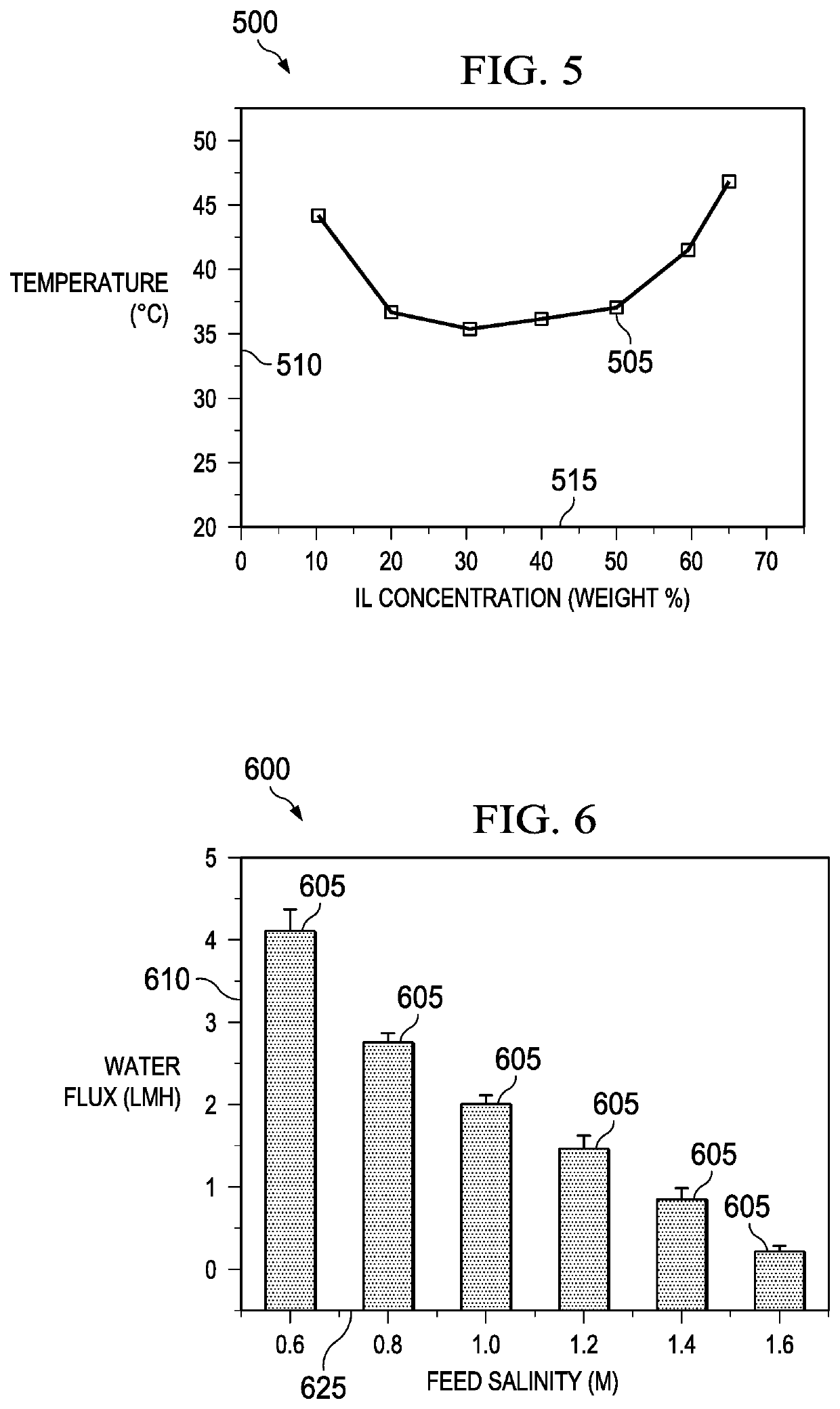
- The use of stimuli-responsive draw solutions with larger molecular sizes, such as ionic liquids with LCST or UCST properties, in conjunction with larger permeable membranes and low-grade heat sources, allows for osmotic power generation in diverse locations with reduced environmental impact and energy consumption.

Environmental Impact Assessment of Osmotic Power
Osmotic power systems present a promising renewable energy technology with relatively minimal environmental impacts compared to conventional power generation methods. The environmental assessment of these systems reveals both positive contributions to sustainable energy goals and specific considerations that require careful management during implementation.
The primary environmental advantage of osmotic power lies in its carbon-neutral operation. Unlike fossil fuel-based power generation, osmotic power systems produce electricity without direct greenhouse gas emissions during operation. The technology harnesses the natural salinity gradient between freshwater and seawater, creating a clean energy source that contributes to carbon footprint reduction. Life cycle assessments indicate that the carbon payback period for osmotic power installations is significantly shorter than traditional energy infrastructure.
Water quality impacts represent a critical consideration in osmotic power deployment. The mixing process of freshwater and seawater creates brackish water discharge that requires careful management to prevent ecosystem disruption. While the mixed water is chemically stable and non-toxic, its salinity levels may affect local aquatic environments if not properly dispersed. Advanced discharge strategies and monitoring systems are essential to minimize potential impacts on marine and estuarine ecosystems.
Membrane manufacturing and disposal constitute the most significant environmental challenge for osmotic power systems. The specialized membranes required for pressure retarded osmosis contain synthetic polymers and chemical additives that demand energy-intensive production processes. End-of-life membrane management requires development of recycling protocols to prevent accumulation of non-biodegradable materials in waste streams.
Ecosystem integration assessments demonstrate that osmotic power facilities can be designed with minimal habitat disruption. Unlike large-scale hydroelectric projects, osmotic power installations require relatively small physical footprints and do not necessitate significant landscape modification. Careful site selection near natural freshwater-seawater interfaces can leverage existing salinity gradients without creating artificial barriers or flow alterations.
The technology's environmental profile positions osmotic power as a complementary renewable energy source that supports biodiversity conservation goals while contributing to clean energy portfolios. Ongoing environmental monitoring and adaptive management strategies ensure that osmotic power development maintains its sustainability credentials throughout operational lifecycles.
The primary environmental advantage of osmotic power lies in its carbon-neutral operation. Unlike fossil fuel-based power generation, osmotic power systems produce electricity without direct greenhouse gas emissions during operation. The technology harnesses the natural salinity gradient between freshwater and seawater, creating a clean energy source that contributes to carbon footprint reduction. Life cycle assessments indicate that the carbon payback period for osmotic power installations is significantly shorter than traditional energy infrastructure.
Water quality impacts represent a critical consideration in osmotic power deployment. The mixing process of freshwater and seawater creates brackish water discharge that requires careful management to prevent ecosystem disruption. While the mixed water is chemically stable and non-toxic, its salinity levels may affect local aquatic environments if not properly dispersed. Advanced discharge strategies and monitoring systems are essential to minimize potential impacts on marine and estuarine ecosystems.
Membrane manufacturing and disposal constitute the most significant environmental challenge for osmotic power systems. The specialized membranes required for pressure retarded osmosis contain synthetic polymers and chemical additives that demand energy-intensive production processes. End-of-life membrane management requires development of recycling protocols to prevent accumulation of non-biodegradable materials in waste streams.
Ecosystem integration assessments demonstrate that osmotic power facilities can be designed with minimal habitat disruption. Unlike large-scale hydroelectric projects, osmotic power installations require relatively small physical footprints and do not necessitate significant landscape modification. Careful site selection near natural freshwater-seawater interfaces can leverage existing salinity gradients without creating artificial barriers or flow alterations.
The technology's environmental profile positions osmotic power as a complementary renewable energy source that supports biodiversity conservation goals while contributing to clean energy portfolios. Ongoing environmental monitoring and adaptive management strategies ensure that osmotic power development maintains its sustainability credentials throughout operational lifecycles.
Economic Feasibility Analysis of Osmotic Energy Systems
The economic feasibility of osmotic energy systems represents a critical determinant for the commercial viability and widespread deployment of this renewable energy technology. Current economic assessments indicate that osmotic power generation faces significant cost challenges, with capital expenditure requirements ranging from $3,000 to $8,000 per kilowatt of installed capacity, substantially higher than conventional renewable energy sources such as wind and solar power.
The primary cost drivers in osmotic energy systems include membrane technology, which accounts for approximately 40-60% of total system costs, infrastructure development for intake and discharge systems, and ongoing operational expenses related to membrane replacement and maintenance. Advanced selective membranes, essential for achieving commercially viable power densities, currently cost between $50-200 per square meter, with replacement cycles of 3-5 years significantly impacting long-term operational economics.
Revenue generation potential varies considerably based on geographical location and salinity gradients available. Coastal regions with access to seawater and freshwater sources demonstrate the highest economic potential, with theoretical power densities reaching 2-5 watts per square meter of membrane area. However, real-world implementations typically achieve only 20-30% of theoretical maximum due to concentration polarization, fouling, and system inefficiencies.
Levelized cost of electricity calculations for current osmotic power technologies range from $0.15 to $0.45 per kilowatt-hour, making them economically uncompetitive compared to conventional energy sources. Break-even analysis suggests that membrane costs must decrease by 70-80% while simultaneously improving power density by 300-400% to achieve grid parity with fossil fuel alternatives.
Economic projections indicate that osmotic energy systems may achieve commercial viability within 10-15 years, contingent upon breakthrough developments in membrane technology, system optimization, and economies of scale in manufacturing. Government incentives, carbon pricing mechanisms, and renewable energy mandates could accelerate economic feasibility timelines by improving the competitive position of osmotic power relative to carbon-intensive alternatives.
The primary cost drivers in osmotic energy systems include membrane technology, which accounts for approximately 40-60% of total system costs, infrastructure development for intake and discharge systems, and ongoing operational expenses related to membrane replacement and maintenance. Advanced selective membranes, essential for achieving commercially viable power densities, currently cost between $50-200 per square meter, with replacement cycles of 3-5 years significantly impacting long-term operational economics.
Revenue generation potential varies considerably based on geographical location and salinity gradients available. Coastal regions with access to seawater and freshwater sources demonstrate the highest economic potential, with theoretical power densities reaching 2-5 watts per square meter of membrane area. However, real-world implementations typically achieve only 20-30% of theoretical maximum due to concentration polarization, fouling, and system inefficiencies.
Levelized cost of electricity calculations for current osmotic power technologies range from $0.15 to $0.45 per kilowatt-hour, making them economically uncompetitive compared to conventional energy sources. Break-even analysis suggests that membrane costs must decrease by 70-80% while simultaneously improving power density by 300-400% to achieve grid parity with fossil fuel alternatives.
Economic projections indicate that osmotic energy systems may achieve commercial viability within 10-15 years, contingent upon breakthrough developments in membrane technology, system optimization, and economies of scale in manufacturing. Government incentives, carbon pricing mechanisms, and renewable energy mandates could accelerate economic feasibility timelines by improving the competitive position of osmotic power relative to carbon-intensive alternatives.
Unlock deeper insights with Patsnap Eureka Quick Research — get a full tech report to explore trends and direct your research. Try now!
Generate Your Research Report Instantly with AI Agent
Supercharge your innovation with Patsnap Eureka AI Agent Platform!