
Evaluate Energy Conversion in Osmotic Power Systems
APR 20, 20269 MIN READ
Generate Your Research Report Instantly with AI Agent
Patsnap Eureka helps you evaluate technical feasibility & market potential.
Osmotic Power Technology Background and Energy Goals
Osmotic power technology represents a revolutionary approach to renewable energy generation that harnesses the natural phenomenon of osmosis to produce electricity. This technology, also known as pressure-retarded osmosis (PRO) or salinity gradient power, exploits the chemical potential difference between solutions of varying salt concentrations to drive energy conversion processes. The fundamental principle relies on the spontaneous movement of water molecules across semi-permeable membranes from low-salinity to high-salinity solutions, creating hydraulic pressure that can be converted into mechanical and subsequently electrical energy.
The historical development of osmotic power concepts traces back to the 1970s when researchers first recognized the theoretical potential of salinity gradients as an energy source. Early investigations focused on understanding the thermodynamic principles governing osmotic processes and identifying suitable membrane materials capable of withstanding the demanding operational conditions. The technology gained renewed attention in the early 2000s as global energy demands intensified and the need for sustainable alternatives to fossil fuels became increasingly urgent.
Contemporary osmotic power systems primarily target two main application scenarios: seawater-freshwater interfaces and industrial brine waste streams. Coastal regions where rivers meet oceans present natural salinity gradients with theoretical energy densities of approximately 2-3 kWh per cubic meter of freshwater. Industrial applications focus on utilizing concentrated brine solutions from desalination plants, chemical processing facilities, and salt production operations, which offer significantly higher energy densities due to their elevated salt concentrations.
The primary technological objectives for osmotic power systems center on achieving commercially viable energy conversion efficiencies and power densities. Current research targets include developing advanced membrane materials with enhanced water permeability, improved salt rejection capabilities, and extended operational lifespans. Key performance metrics focus on achieving power densities exceeding 5 W/m² of membrane area, which represents the threshold for economic feasibility in most applications.
Long-term strategic goals encompass scaling osmotic power technology to contribute meaningfully to global renewable energy portfolios. Projections suggest that optimized osmotic power systems could potentially generate several terawatt-hours annually by utilizing naturally occurring salinity gradients and industrial waste streams. The technology's unique advantage lies in its ability to provide continuous, weather-independent power generation, complementing intermittent renewable sources like solar and wind energy.
Environmental sustainability objectives emphasize minimizing ecological impacts while maximizing energy recovery from existing salinity gradients. Advanced system designs aim to integrate osmotic power generation with existing infrastructure, such as wastewater treatment facilities and desalination plants, creating synergistic approaches that enhance overall energy efficiency while reducing environmental footprints.
The historical development of osmotic power concepts traces back to the 1970s when researchers first recognized the theoretical potential of salinity gradients as an energy source. Early investigations focused on understanding the thermodynamic principles governing osmotic processes and identifying suitable membrane materials capable of withstanding the demanding operational conditions. The technology gained renewed attention in the early 2000s as global energy demands intensified and the need for sustainable alternatives to fossil fuels became increasingly urgent.
Contemporary osmotic power systems primarily target two main application scenarios: seawater-freshwater interfaces and industrial brine waste streams. Coastal regions where rivers meet oceans present natural salinity gradients with theoretical energy densities of approximately 2-3 kWh per cubic meter of freshwater. Industrial applications focus on utilizing concentrated brine solutions from desalination plants, chemical processing facilities, and salt production operations, which offer significantly higher energy densities due to their elevated salt concentrations.
The primary technological objectives for osmotic power systems center on achieving commercially viable energy conversion efficiencies and power densities. Current research targets include developing advanced membrane materials with enhanced water permeability, improved salt rejection capabilities, and extended operational lifespans. Key performance metrics focus on achieving power densities exceeding 5 W/m² of membrane area, which represents the threshold for economic feasibility in most applications.
Long-term strategic goals encompass scaling osmotic power technology to contribute meaningfully to global renewable energy portfolios. Projections suggest that optimized osmotic power systems could potentially generate several terawatt-hours annually by utilizing naturally occurring salinity gradients and industrial waste streams. The technology's unique advantage lies in its ability to provide continuous, weather-independent power generation, complementing intermittent renewable sources like solar and wind energy.
Environmental sustainability objectives emphasize minimizing ecological impacts while maximizing energy recovery from existing salinity gradients. Advanced system designs aim to integrate osmotic power generation with existing infrastructure, such as wastewater treatment facilities and desalination plants, creating synergistic approaches that enhance overall energy efficiency while reducing environmental footprints.
Market Demand for Renewable Osmotic Energy Solutions
The global renewable energy market has witnessed unprecedented growth, with osmotic power systems emerging as a promising solution to address the increasing demand for clean, sustainable energy sources. This technology leverages the natural process of osmosis to generate electricity, positioning itself as a complementary renewable energy source alongside solar, wind, and hydroelectric power systems.
Market drivers for osmotic energy solutions are primarily rooted in the urgent need to decarbonize energy systems and achieve net-zero emissions targets. Governments worldwide have implemented stringent renewable energy mandates and carbon pricing mechanisms, creating favorable regulatory environments for innovative clean energy technologies. The European Union's Green Deal and similar initiatives in Asia-Pacific regions have accelerated investment in next-generation renewable technologies, including osmotic power systems.
Coastal regions with access to both seawater and freshwater sources represent the primary target markets for osmotic energy deployment. Northern European countries, particularly Norway and the Netherlands, have demonstrated strong interest in osmotic power development due to their extensive coastlines and commitment to renewable energy transition. Similarly, regions with significant river deltas and estuarine environments, such as the Mississippi Delta and Yangtze River Delta, present substantial market opportunities.
The industrial sector shows growing interest in osmotic power systems for distributed energy applications, particularly in water treatment facilities and desalination plants where the technology can provide dual benefits of energy generation and water processing. This convergence of water and energy needs creates a compelling value proposition for osmotic energy solutions in water-stressed regions.
Energy security concerns have further amplified market demand, as osmotic power systems offer continuous, weather-independent electricity generation unlike solar and wind technologies. This baseload capability makes osmotic energy particularly attractive for grid stabilization applications and remote area electrification projects where consistent power supply is critical.
Investment patterns indicate strong venture capital and government funding support for osmotic energy research and development, reflecting market confidence in the technology's commercial potential. Strategic partnerships between energy companies and water utilities are emerging to explore integrated osmotic power deployment models.
Market drivers for osmotic energy solutions are primarily rooted in the urgent need to decarbonize energy systems and achieve net-zero emissions targets. Governments worldwide have implemented stringent renewable energy mandates and carbon pricing mechanisms, creating favorable regulatory environments for innovative clean energy technologies. The European Union's Green Deal and similar initiatives in Asia-Pacific regions have accelerated investment in next-generation renewable technologies, including osmotic power systems.
Coastal regions with access to both seawater and freshwater sources represent the primary target markets for osmotic energy deployment. Northern European countries, particularly Norway and the Netherlands, have demonstrated strong interest in osmotic power development due to their extensive coastlines and commitment to renewable energy transition. Similarly, regions with significant river deltas and estuarine environments, such as the Mississippi Delta and Yangtze River Delta, present substantial market opportunities.
The industrial sector shows growing interest in osmotic power systems for distributed energy applications, particularly in water treatment facilities and desalination plants where the technology can provide dual benefits of energy generation and water processing. This convergence of water and energy needs creates a compelling value proposition for osmotic energy solutions in water-stressed regions.
Energy security concerns have further amplified market demand, as osmotic power systems offer continuous, weather-independent electricity generation unlike solar and wind technologies. This baseload capability makes osmotic energy particularly attractive for grid stabilization applications and remote area electrification projects where consistent power supply is critical.
Investment patterns indicate strong venture capital and government funding support for osmotic energy research and development, reflecting market confidence in the technology's commercial potential. Strategic partnerships between energy companies and water utilities are emerging to explore integrated osmotic power deployment models.
Current State and Challenges of Osmotic Power Systems
Osmotic power systems represent a promising renewable energy technology that harnesses the chemical potential difference between solutions of varying salinity concentrations. Currently, two primary technologies dominate the field: Pressure Retarded Osmosis (PRO) and Reverse Electrodialysis (RED). PRO systems utilize semi-permeable membranes to generate hydraulic pressure from osmotic gradients, while RED systems employ ion-exchange membranes to capture electrical energy directly from salinity differences.
The global development of osmotic power technology remains in its nascent stages, with most installations operating as pilot-scale demonstrations rather than commercial facilities. Norway leads in PRO technology development through Statkraft's pioneering research, while the Netherlands has advanced RED technology through collaborative efforts between research institutions and industry partners. Several Asian countries, including South Korea and Japan, have initiated significant research programs focusing on membrane optimization and system integration.
Power output densities represent the most critical performance limitation across all osmotic power technologies. Current PRO systems achieve power densities of approximately 2-5 W/m², significantly below the theoretical maximum of 10-15 W/m² required for economic viability. RED systems face similar constraints, with typical power densities ranging from 1-3 W/m², hampering large-scale deployment prospects.
Membrane fouling constitutes another fundamental challenge affecting long-term system performance and operational costs. Biological fouling, scaling, and organic matter accumulation reduce membrane permeability and selectivity over time, necessitating frequent cleaning cycles and membrane replacement. This degradation directly impacts energy conversion efficiency and increases maintenance requirements, undermining economic feasibility.
The availability and quality of suitable water sources present geographical and logistical constraints for osmotic power deployment. Systems require consistent access to high-salinity and low-salinity water streams with minimal contamination levels. River mouths and coastal areas offer optimal conditions, but environmental regulations and competing water usage demands often limit installation opportunities.
Economic barriers remain substantial, with current capital costs exceeding $10,000 per installed kilowatt, compared to $1,000-3,000 for conventional renewable technologies. High membrane costs, complex system designs, and low energy conversion efficiencies contribute to unfavorable levelized cost of electricity calculations, requiring significant technological breakthroughs to achieve market competitiveness.
The global development of osmotic power technology remains in its nascent stages, with most installations operating as pilot-scale demonstrations rather than commercial facilities. Norway leads in PRO technology development through Statkraft's pioneering research, while the Netherlands has advanced RED technology through collaborative efforts between research institutions and industry partners. Several Asian countries, including South Korea and Japan, have initiated significant research programs focusing on membrane optimization and system integration.
Power output densities represent the most critical performance limitation across all osmotic power technologies. Current PRO systems achieve power densities of approximately 2-5 W/m², significantly below the theoretical maximum of 10-15 W/m² required for economic viability. RED systems face similar constraints, with typical power densities ranging from 1-3 W/m², hampering large-scale deployment prospects.
Membrane fouling constitutes another fundamental challenge affecting long-term system performance and operational costs. Biological fouling, scaling, and organic matter accumulation reduce membrane permeability and selectivity over time, necessitating frequent cleaning cycles and membrane replacement. This degradation directly impacts energy conversion efficiency and increases maintenance requirements, undermining economic feasibility.
The availability and quality of suitable water sources present geographical and logistical constraints for osmotic power deployment. Systems require consistent access to high-salinity and low-salinity water streams with minimal contamination levels. River mouths and coastal areas offer optimal conditions, but environmental regulations and competing water usage demands often limit installation opportunities.
Economic barriers remain substantial, with current capital costs exceeding $10,000 per installed kilowatt, compared to $1,000-3,000 for conventional renewable technologies. High membrane costs, complex system designs, and low energy conversion efficiencies contribute to unfavorable levelized cost of electricity calculations, requiring significant technological breakthroughs to achieve market competitiveness.
Existing Osmotic Energy Conversion Solutions
01 Pressure Retarded Osmosis (PRO) systems for energy generation
Osmotic power systems utilize pressure retarded osmosis technology to generate electricity from salinity gradients. These systems employ semipermeable membranes that allow water to flow from low-salinity solutions to high-salinity solutions, creating hydraulic pressure that drives turbines for power generation. The technology is particularly applicable at river-sea interfaces where freshwater meets seawater, enabling renewable energy conversion from natural salinity differences.- Pressure Retarded Osmosis (PRO) systems for energy generation: Osmotic power systems utilize pressure retarded osmosis technology to generate electricity from the salinity gradient between fresh water and salt water. The system employs semi-permeable membranes that allow water molecules to pass through while retaining salt ions, creating osmotic pressure that drives turbines for power generation. This technology can be applied in coastal areas where rivers meet the sea, converting the chemical potential energy difference into mechanical and electrical energy.
- Reverse electrodialysis (RED) energy conversion systems: Energy conversion through reverse electrodialysis utilizes ion-exchange membranes arranged in alternating patterns to capture energy from salinity gradients. When solutions of different salt concentrations flow through the membrane stack, ions migrate across the membranes, generating an electrical potential difference that can be harvested as electrical power. This method provides an alternative approach to osmotic power generation with different membrane requirements and operational characteristics.
- Membrane materials and configurations for osmotic power systems: Advanced membrane technologies focus on developing high-performance semi-permeable membranes with enhanced water flux, salt rejection, and mechanical strength. Innovations include thin-film composite membranes, nanostructured materials, and optimized membrane module designs that maximize the active surface area while minimizing pressure losses. The membrane configuration and material selection significantly impact the overall efficiency and economic viability of osmotic power generation systems.
- Hybrid osmotic power systems with energy storage integration: Hybrid systems combine osmotic power generation with energy storage technologies to provide stable and dispatchable power output. These integrated systems may incorporate batteries, capacitors, or other storage mechanisms to buffer the variable nature of osmotic power generation. The integration allows for better grid compatibility and enables the osmotic power system to provide continuous power supply despite fluctuations in water flow or salinity gradients.
- Pre-treatment and water management systems for osmotic power plants: Effective pre-treatment systems are essential for maintaining membrane performance and system longevity in osmotic power applications. These systems include filtration, chemical treatment, and fouling prevention mechanisms that ensure consistent water quality entering the osmotic modules. Water management also encompasses the handling of concentrate streams, fresh water sources, and the optimization of flow rates to maximize energy extraction while minimizing operational costs and environmental impact.
02 Reverse electrodialysis (RED) membrane systems
Energy conversion through reverse electrodialysis utilizes ion-exchange membranes to harvest energy from salinity gradients. This approach involves alternating cation and anion exchange membranes that generate electrical potential differences when solutions of different salinities flow through the system. The ionic transport across membranes directly produces electrical current, offering an alternative method for osmotic power generation without mechanical turbines.Expand Specific Solutions03 Membrane materials and configurations for enhanced efficiency
Advanced membrane technologies focus on optimizing material properties and structural configurations to improve energy conversion efficiency. Innovations include thin-film composite membranes, nanostructured materials, and specialized surface treatments that enhance water permeability while maintaining salt rejection. Membrane module designs incorporate optimized flow patterns and reduced internal concentration polarization to maximize power density output.Expand Specific Solutions04 Hybrid osmotic power systems with energy storage integration
Integrated systems combine osmotic power generation with energy storage technologies to provide stable and dispatchable power output. These hybrid configurations may incorporate battery systems, capacitors, or other storage mechanisms to buffer the variable nature of salinity gradient resources. System designs also integrate power conditioning equipment and control systems to optimize energy conversion and grid compatibility.Expand Specific Solutions05 Pretreatment and solution management systems
Effective osmotic power generation requires sophisticated pretreatment processes and solution management to maintain system performance. Technologies include filtration systems to remove particulates and biological matter, chemical treatment to prevent membrane fouling, and solution concentration management to optimize salinity gradients. These systems ensure long-term operational stability and maximize energy extraction efficiency from available salinity resources.Expand Specific Solutions
Key Players in Osmotic Power Industry
The osmotic power systems industry is in its early developmental stage, representing a nascent renewable energy sector with significant potential but limited commercial deployment. The market remains relatively small with most projects in pilot or demonstration phases, though growing interest in sustainable energy solutions is driving investment. Technology maturity varies considerably across players, with established corporations like Toshiba Corp., EnBW Energie Baden Württemberg AG, and State Grid Corp. of China leveraging their energy infrastructure expertise to explore osmotic applications. Specialized companies such as Saltpower Holding ApS, Saltkraft ApS, and NRGTEK Inc focus specifically on osmotic technologies, while research institutions including Yale University, KAUST, and Nanyang Technological University contribute fundamental research. Industrial players like Gradiant Corp. and Sasakura Engineering Co. apply their water treatment expertise to osmotic systems, creating a diverse competitive landscape spanning from pure research to commercial applications.
Saltpower Holding ApS
Technical Solution: Saltpower develops advanced pressure retarded osmosis (PRO) technology for commercial osmotic power generation. Their system utilizes specially designed semi-permeable membranes to harness the energy difference between fresh and salt water. The company focuses on optimizing membrane performance and system efficiency through innovative membrane materials and module designs. Their technology targets power generation capacities ranging from several kilowatts to megawatt scale installations, with particular emphasis on coastal locations where rivers meet the sea. The system incorporates advanced pressure management and energy recovery mechanisms to maximize power output while minimizing operational costs.
Strengths: Specialized focus on osmotic power with proven commercial applications and scalable technology solutions. Weaknesses: Limited to specific geographical locations and faces challenges with membrane fouling and replacement costs.
Gradiant Corp.
Technical Solution: Gradiant develops innovative reverse electrodialysis (RED) and forward osmosis systems for osmotic power generation. Their technology platform combines advanced membrane engineering with proprietary electrodialysis stack designs to capture salinity gradient energy. The company's approach focuses on optimizing ion exchange membranes and stack configurations to maximize power density and energy conversion efficiency. Their systems are designed for modular deployment, allowing scalable installations from pilot-scale demonstrations to industrial-level power generation. Gradiant's technology particularly targets applications in desalination plant integration and industrial brine waste energy recovery, offering dual benefits of power generation and water treatment.
Strengths: Proven expertise in membrane technology and water treatment with integrated solutions for multiple applications. Weaknesses: Complex system requirements and competition from established desalination technologies in target markets.
Core Innovations in Membrane and Energy Conversion
Regulating pressure conditions in osmotic systems
PatentInactiveEP2504080A1
Innovation
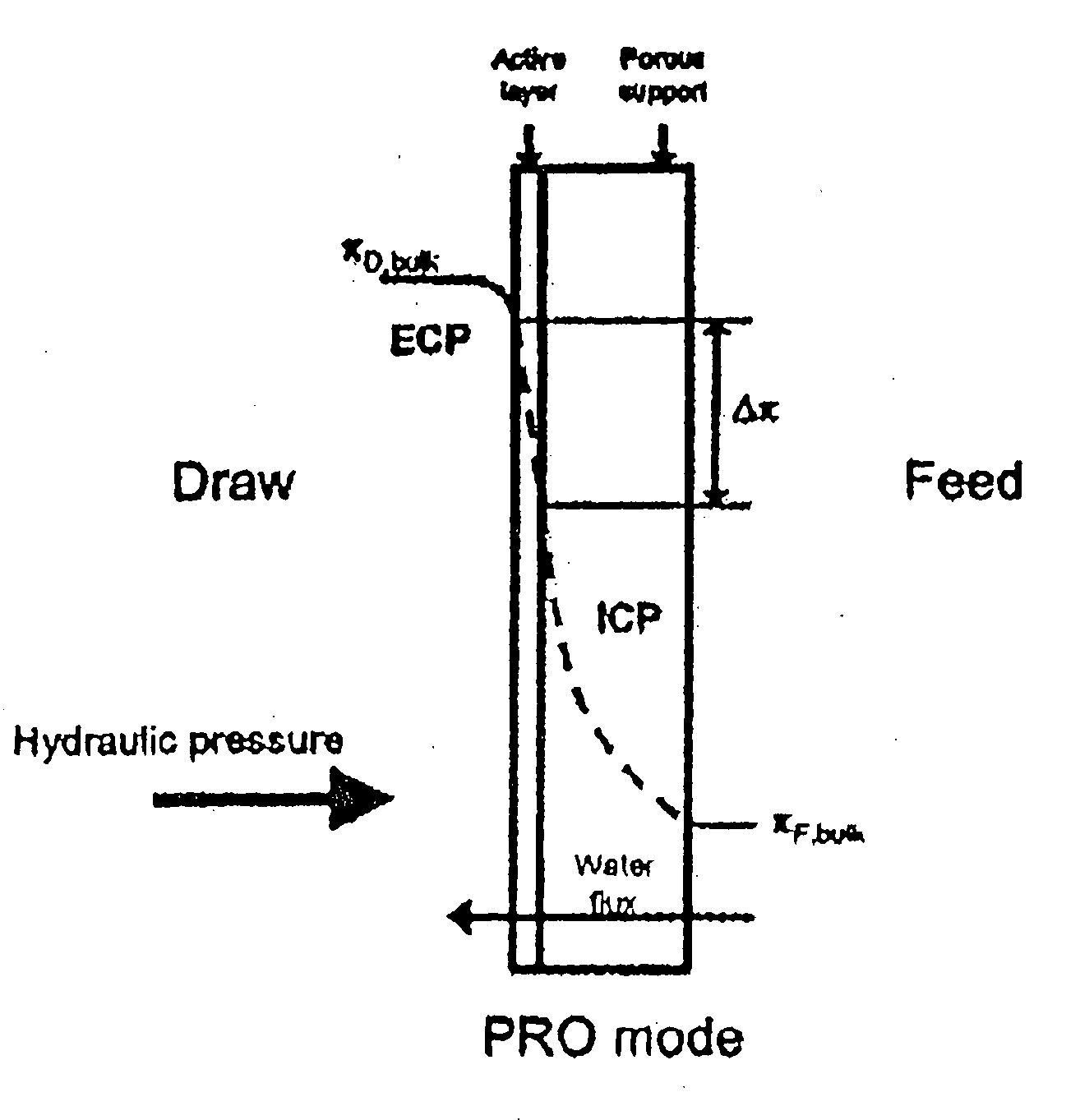
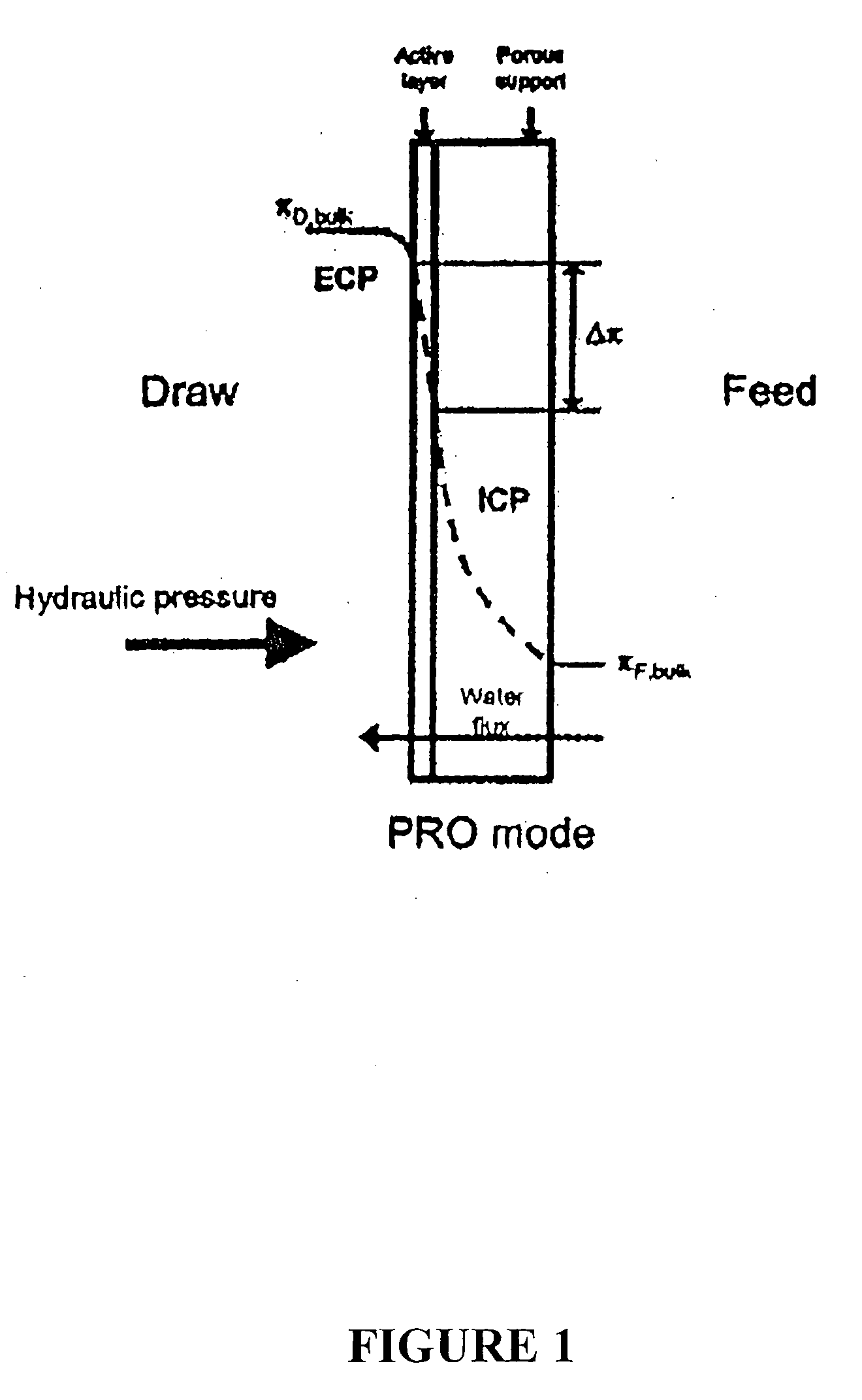
- An osmotic system comprising a feed side and draw side compartment separated by a semi-permeable membrane, with pressure conversion means, a pressure exchanger, and adjustable flow control means regulated by a pressure sensor to maintain optimal pressure conditions, allowing for fast and energy-efficient adjustment of pressure in response to changes.
Osmotic Heat Engine
PatentInactiveUS20100024423A1
Innovation
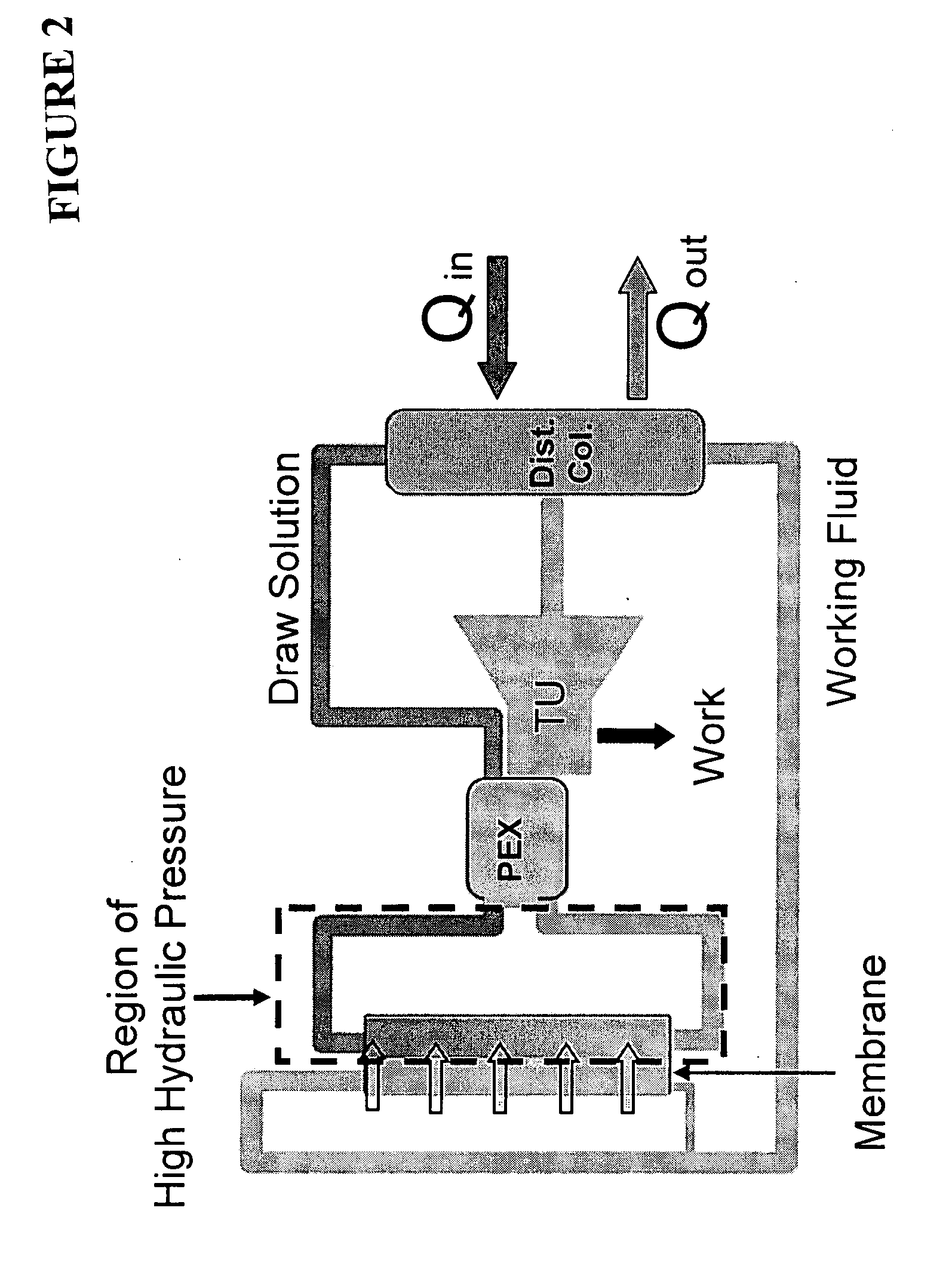
- A closed-loop osmotic heat engine using a semi-permeable membrane with a recyclable ammonia-carbon dioxide draw solution and deionized water as the working fluid, which minimizes internal concentration polarization and allows for efficient osmotic pressure conversion into electrical power.

Environmental Impact Assessment of Osmotic Systems
Osmotic power systems present a complex environmental profile that requires comprehensive assessment across multiple ecological dimensions. These systems, while generating renewable energy through salinity gradients, introduce both positive and negative environmental implications that must be carefully evaluated against conventional energy alternatives.
The primary environmental benefit of osmotic power systems lies in their minimal carbon footprint during operation. Unlike fossil fuel-based power generation, these systems produce electricity without direct greenhouse gas emissions, contributing to climate change mitigation efforts. The technology harnesses natural salinity differences, typically between seawater and freshwater, creating a sustainable energy source that operates continuously without weather dependency.
However, osmotic systems pose significant challenges to aquatic ecosystems through water intake and discharge processes. Large-scale installations require substantial volumes of both fresh and saltwater, potentially affecting local hydrological patterns and marine environments. The intake systems may impact fish populations and other marine organisms through entrainment and impingement, similar to concerns associated with desalination plants.
Membrane technology, central to osmotic power generation, presents both environmental opportunities and challenges. While advanced membranes enable efficient energy conversion, their manufacturing processes involve chemical-intensive procedures and specialized materials. The lifecycle assessment of these membranes reveals energy-intensive production phases, though operational efficiency gains often offset initial environmental costs over extended periods.
Brine discharge represents another critical environmental consideration. The concentrated salt solutions produced during osmotic processes require careful management to prevent ecosystem disruption. Improper discharge can alter local salinity levels, affecting marine biodiversity and potentially creating dead zones in sensitive coastal areas.
Land use requirements for osmotic power installations are generally minimal compared to solar or wind farms, presenting advantages for environmental preservation. However, coastal positioning requirements may conflict with sensitive marine habitats and existing coastal development patterns.
The technology's environmental impact varies significantly based on implementation scale and location selection. Small-scale pilot projects demonstrate lower environmental risks, while commercial-scale installations require extensive environmental impact assessments and mitigation strategies to ensure sustainable operation within existing ecological frameworks.
The primary environmental benefit of osmotic power systems lies in their minimal carbon footprint during operation. Unlike fossil fuel-based power generation, these systems produce electricity without direct greenhouse gas emissions, contributing to climate change mitigation efforts. The technology harnesses natural salinity differences, typically between seawater and freshwater, creating a sustainable energy source that operates continuously without weather dependency.
However, osmotic systems pose significant challenges to aquatic ecosystems through water intake and discharge processes. Large-scale installations require substantial volumes of both fresh and saltwater, potentially affecting local hydrological patterns and marine environments. The intake systems may impact fish populations and other marine organisms through entrainment and impingement, similar to concerns associated with desalination plants.
Membrane technology, central to osmotic power generation, presents both environmental opportunities and challenges. While advanced membranes enable efficient energy conversion, their manufacturing processes involve chemical-intensive procedures and specialized materials. The lifecycle assessment of these membranes reveals energy-intensive production phases, though operational efficiency gains often offset initial environmental costs over extended periods.
Brine discharge represents another critical environmental consideration. The concentrated salt solutions produced during osmotic processes require careful management to prevent ecosystem disruption. Improper discharge can alter local salinity levels, affecting marine biodiversity and potentially creating dead zones in sensitive coastal areas.
Land use requirements for osmotic power installations are generally minimal compared to solar or wind farms, presenting advantages for environmental preservation. However, coastal positioning requirements may conflict with sensitive marine habitats and existing coastal development patterns.
The technology's environmental impact varies significantly based on implementation scale and location selection. Small-scale pilot projects demonstrate lower environmental risks, while commercial-scale installations require extensive environmental impact assessments and mitigation strategies to ensure sustainable operation within existing ecological frameworks.
Economic Feasibility and Cost Analysis Framework
The economic feasibility of osmotic power systems hinges on comprehensive cost-benefit analysis that encompasses capital expenditure, operational expenses, and revenue generation potential. Current estimates indicate that the levelized cost of electricity (LCOE) for osmotic power ranges from $0.15 to $0.35 per kWh, significantly higher than conventional renewable sources. This cost structure is primarily driven by membrane technology expenses, which constitute approximately 40-60% of total system costs.
Capital investment requirements for osmotic power facilities are substantial, with membrane replacement costs representing a critical ongoing expense. High-performance membranes typically require replacement every 3-5 years, creating recurring operational burdens that significantly impact long-term profitability. Infrastructure development costs, including intake and discharge systems, pre-treatment facilities, and power conversion equipment, further contribute to the economic challenges.
The economic viability framework must account for location-specific factors that dramatically influence project economics. Coastal installations benefit from consistent salinity gradients but face higher construction costs and environmental compliance requirements. River mouth locations offer natural mixing zones but may experience seasonal variations affecting power output predictability and revenue streams.
Membrane performance degradation presents a critical economic risk factor requiring sophisticated modeling approaches. Fouling mitigation strategies, including chemical cleaning and pre-treatment systems, add operational complexity and costs that must be integrated into comprehensive economic assessments. These factors collectively influence the internal rate of return and payback periods for osmotic power investments.
Revenue optimization strategies focus on grid integration capabilities and energy storage solutions to maximize value capture during peak demand periods. Economic models must incorporate carbon credit mechanisms and renewable energy incentives that can significantly improve project economics. Government subsidies and feed-in tariffs play crucial roles in bridging the gap between current costs and market competitiveness.
Risk assessment frameworks evaluate technological uncertainties, regulatory changes, and market volatility impacts on long-term financial performance. Sensitivity analysis reveals that membrane cost reductions of 50-70% would be necessary to achieve grid parity with conventional renewable technologies, highlighting the importance of continued research and development investments in membrane technology advancement.
Capital investment requirements for osmotic power facilities are substantial, with membrane replacement costs representing a critical ongoing expense. High-performance membranes typically require replacement every 3-5 years, creating recurring operational burdens that significantly impact long-term profitability. Infrastructure development costs, including intake and discharge systems, pre-treatment facilities, and power conversion equipment, further contribute to the economic challenges.
The economic viability framework must account for location-specific factors that dramatically influence project economics. Coastal installations benefit from consistent salinity gradients but face higher construction costs and environmental compliance requirements. River mouth locations offer natural mixing zones but may experience seasonal variations affecting power output predictability and revenue streams.
Membrane performance degradation presents a critical economic risk factor requiring sophisticated modeling approaches. Fouling mitigation strategies, including chemical cleaning and pre-treatment systems, add operational complexity and costs that must be integrated into comprehensive economic assessments. These factors collectively influence the internal rate of return and payback periods for osmotic power investments.
Revenue optimization strategies focus on grid integration capabilities and energy storage solutions to maximize value capture during peak demand periods. Economic models must incorporate carbon credit mechanisms and renewable energy incentives that can significantly improve project economics. Government subsidies and feed-in tariffs play crucial roles in bridging the gap between current costs and market competitiveness.
Risk assessment frameworks evaluate technological uncertainties, regulatory changes, and market volatility impacts on long-term financial performance. Sensitivity analysis reveals that membrane cost reductions of 50-70% would be necessary to achieve grid parity with conventional renewable technologies, highlighting the importance of continued research and development investments in membrane technology advancement.
Unlock deeper insights with Patsnap Eureka Quick Research — get a full tech report to explore trends and direct your research. Try now!
Generate Your Research Report Instantly with AI Agent
Supercharge your innovation with Patsnap Eureka AI Agent Platform!