
Comparing Tactile Sensor Sensitivity: Baseline vs Enhanced
APR 11, 20269 MIN READ
Generate Your Research Report Instantly with AI Agent
Patsnap Eureka helps you evaluate technical feasibility & market potential.
Tactile Sensor Technology Background and Sensitivity Goals
Tactile sensing technology has emerged as a critical component in robotics, prosthetics, and human-machine interaction systems over the past several decades. The evolution began with simple pressure-sensitive resistors in the 1970s and has progressed through capacitive, piezoelectric, and optical sensing mechanisms. Modern tactile sensors incorporate advanced materials such as conductive polymers, carbon nanotubes, and flexible substrates to achieve unprecedented sensitivity levels.
The fundamental principle underlying tactile sensor operation involves converting mechanical stimuli into electrical signals through various transduction mechanisms. Traditional baseline sensors typically utilize piezoresistive or capacitive principles, where applied force changes electrical resistance or capacitance respectively. These conventional approaches have established industry standards for sensitivity measurements, typically quantified in terms of minimum detectable force, spatial resolution, and response time characteristics.
Enhanced tactile sensor technologies represent the next generation of sensing capabilities, incorporating novel materials and innovative design architectures. These advanced systems often integrate multiple sensing modalities, including pressure, temperature, and texture detection within single sensor arrays. Biomimetic approaches inspired by human skin mechanoreceptors have driven development toward sensors capable of detecting forces as low as microNewtons while maintaining high spatial resolution across flexible surfaces.
Current sensitivity benchmarks for baseline tactile sensors range from 0.1 to 10 Newtons minimum detectable force, with spatial resolutions typically between 1-5 millimeters. Enhanced sensor technologies aim to achieve sensitivity improvements of one to two orders of magnitude, targeting sub-milliNewton detection capabilities while reducing sensor thickness below 100 micrometers. These enhanced systems also pursue multi-dimensional force sensing, enabling simultaneous detection of normal and shear forces with high temporal resolution.
The primary technical objectives driving tactile sensor enhancement include achieving human-level sensitivity thresholds, implementing real-time processing capabilities, and ensuring mechanical durability under repeated loading cycles. Advanced signal processing algorithms and machine learning techniques are increasingly integrated to improve noise rejection and enable intelligent interpretation of complex tactile patterns. These developments position enhanced tactile sensors as enabling technologies for next-generation robotic manipulation, medical diagnostics, and immersive virtual reality applications.
The fundamental principle underlying tactile sensor operation involves converting mechanical stimuli into electrical signals through various transduction mechanisms. Traditional baseline sensors typically utilize piezoresistive or capacitive principles, where applied force changes electrical resistance or capacitance respectively. These conventional approaches have established industry standards for sensitivity measurements, typically quantified in terms of minimum detectable force, spatial resolution, and response time characteristics.
Enhanced tactile sensor technologies represent the next generation of sensing capabilities, incorporating novel materials and innovative design architectures. These advanced systems often integrate multiple sensing modalities, including pressure, temperature, and texture detection within single sensor arrays. Biomimetic approaches inspired by human skin mechanoreceptors have driven development toward sensors capable of detecting forces as low as microNewtons while maintaining high spatial resolution across flexible surfaces.
Current sensitivity benchmarks for baseline tactile sensors range from 0.1 to 10 Newtons minimum detectable force, with spatial resolutions typically between 1-5 millimeters. Enhanced sensor technologies aim to achieve sensitivity improvements of one to two orders of magnitude, targeting sub-milliNewton detection capabilities while reducing sensor thickness below 100 micrometers. These enhanced systems also pursue multi-dimensional force sensing, enabling simultaneous detection of normal and shear forces with high temporal resolution.
The primary technical objectives driving tactile sensor enhancement include achieving human-level sensitivity thresholds, implementing real-time processing capabilities, and ensuring mechanical durability under repeated loading cycles. Advanced signal processing algorithms and machine learning techniques are increasingly integrated to improve noise rejection and enable intelligent interpretation of complex tactile patterns. These developments position enhanced tactile sensors as enabling technologies for next-generation robotic manipulation, medical diagnostics, and immersive virtual reality applications.
Market Demand for Enhanced Tactile Sensing Applications
The global tactile sensing market is experiencing unprecedented growth driven by the convergence of robotics, artificial intelligence, and human-machine interaction technologies. Enhanced tactile sensors with superior sensitivity are becoming critical enablers across multiple high-value applications, fundamentally transforming how machines perceive and interact with their environment.
Industrial automation represents the largest demand segment for enhanced tactile sensing solutions. Manufacturing facilities increasingly require robots capable of handling delicate components, performing quality inspections, and executing precision assembly tasks. Enhanced sensitivity enables detection of minute surface variations, material defects, and force gradients that baseline sensors cannot reliably identify. This capability is particularly valuable in electronics manufacturing, automotive assembly, and pharmaceutical production where product quality directly impacts safety and performance.
Healthcare applications constitute another rapidly expanding market segment. Surgical robotics systems demand tactile feedback with exceptional sensitivity to enable minimally invasive procedures and remote operations. Enhanced sensors provide surgeons with haptic information about tissue properties, instrument positioning, and applied forces, significantly improving surgical outcomes. Prosthetics development also drives substantial demand, as enhanced tactile sensitivity enables amputees to regain natural manipulation capabilities and sensory feedback.
The consumer electronics sector presents significant growth opportunities as manufacturers integrate advanced tactile interfaces into smartphones, tablets, and wearable devices. Enhanced sensitivity enables more sophisticated touch interactions, pressure-sensitive controls, and immersive haptic experiences that differentiate products in competitive markets. Virtual and augmented reality applications particularly benefit from enhanced tactile sensing, creating realistic touch sensations that improve user engagement and application effectiveness.
Automotive industry adoption is accelerating as autonomous vehicles require enhanced environmental perception capabilities. Advanced tactile sensors enable better object recognition, surface texture analysis, and manipulation tasks for robotic systems involved in vehicle maintenance, charging operations, and passenger assistance functions.
Market demand is further amplified by emerging applications in space exploration, underwater robotics, and hazardous environment operations where enhanced sensitivity provides critical safety advantages and operational capabilities that baseline sensors cannot deliver.
Industrial automation represents the largest demand segment for enhanced tactile sensing solutions. Manufacturing facilities increasingly require robots capable of handling delicate components, performing quality inspections, and executing precision assembly tasks. Enhanced sensitivity enables detection of minute surface variations, material defects, and force gradients that baseline sensors cannot reliably identify. This capability is particularly valuable in electronics manufacturing, automotive assembly, and pharmaceutical production where product quality directly impacts safety and performance.
Healthcare applications constitute another rapidly expanding market segment. Surgical robotics systems demand tactile feedback with exceptional sensitivity to enable minimally invasive procedures and remote operations. Enhanced sensors provide surgeons with haptic information about tissue properties, instrument positioning, and applied forces, significantly improving surgical outcomes. Prosthetics development also drives substantial demand, as enhanced tactile sensitivity enables amputees to regain natural manipulation capabilities and sensory feedback.
The consumer electronics sector presents significant growth opportunities as manufacturers integrate advanced tactile interfaces into smartphones, tablets, and wearable devices. Enhanced sensitivity enables more sophisticated touch interactions, pressure-sensitive controls, and immersive haptic experiences that differentiate products in competitive markets. Virtual and augmented reality applications particularly benefit from enhanced tactile sensing, creating realistic touch sensations that improve user engagement and application effectiveness.
Automotive industry adoption is accelerating as autonomous vehicles require enhanced environmental perception capabilities. Advanced tactile sensors enable better object recognition, surface texture analysis, and manipulation tasks for robotic systems involved in vehicle maintenance, charging operations, and passenger assistance functions.
Market demand is further amplified by emerging applications in space exploration, underwater robotics, and hazardous environment operations where enhanced sensitivity provides critical safety advantages and operational capabilities that baseline sensors cannot deliver.
Current Tactile Sensor Limitations and Sensitivity Challenges
Current tactile sensor technologies face significant sensitivity limitations that constrain their effectiveness in precision applications. Traditional resistive and capacitive sensors exhibit limited dynamic range, typically operating within narrow force detection windows that fail to capture subtle variations in touch pressure. These baseline sensors often struggle with signal-to-noise ratios, particularly in environments with electromagnetic interference or temperature fluctuations.
Spatial resolution represents another critical challenge, as conventional sensor arrays cannot achieve the density required for fine-grained tactile discrimination. Most commercial tactile sensors operate with spatial resolutions between 1-5mm, which proves insufficient for applications requiring human-like touch sensitivity. This limitation stems from manufacturing constraints and cross-talk between adjacent sensing elements.
Response time latency poses substantial obstacles for real-time applications. Current piezoelectric and strain gauge-based sensors typically exhibit response delays of 10-50 milliseconds, creating bottlenecks in robotic manipulation tasks that demand instantaneous feedback. The mechanical coupling between sensing elements and signal processing circuits introduces additional delays that compound system-level performance issues.
Material degradation and hysteresis effects significantly impact long-term sensor reliability. Polymer-based sensing materials experience creep and fatigue under repeated loading cycles, leading to drift in baseline measurements and reduced sensitivity over time. Silicon-based sensors, while more stable, suffer from brittleness and limited flexibility for curved surface applications.
Temperature sensitivity creates substantial calibration challenges across operating environments. Most tactile sensors exhibit thermal coefficients that cause sensitivity variations of 2-5% per degree Celsius, necessitating complex compensation algorithms. This thermal dependency becomes particularly problematic in industrial applications where ambient temperatures fluctuate significantly.
Cross-sensitivity to multiple stimuli represents a fundamental limitation in current sensor designs. Conventional tactile sensors cannot effectively discriminate between normal and shear forces, leading to ambiguous readings during complex contact scenarios. This multi-axis sensitivity confusion limits their applicability in sophisticated manipulation tasks requiring precise force vector determination.
Manufacturing scalability and cost constraints further limit widespread adoption of high-performance tactile sensors. Advanced sensor fabrication processes remain expensive and yield-limited, preventing cost-effective integration into consumer applications. The trade-off between sensitivity enhancement and manufacturing complexity continues to challenge commercial viability.
Spatial resolution represents another critical challenge, as conventional sensor arrays cannot achieve the density required for fine-grained tactile discrimination. Most commercial tactile sensors operate with spatial resolutions between 1-5mm, which proves insufficient for applications requiring human-like touch sensitivity. This limitation stems from manufacturing constraints and cross-talk between adjacent sensing elements.
Response time latency poses substantial obstacles for real-time applications. Current piezoelectric and strain gauge-based sensors typically exhibit response delays of 10-50 milliseconds, creating bottlenecks in robotic manipulation tasks that demand instantaneous feedback. The mechanical coupling between sensing elements and signal processing circuits introduces additional delays that compound system-level performance issues.
Material degradation and hysteresis effects significantly impact long-term sensor reliability. Polymer-based sensing materials experience creep and fatigue under repeated loading cycles, leading to drift in baseline measurements and reduced sensitivity over time. Silicon-based sensors, while more stable, suffer from brittleness and limited flexibility for curved surface applications.
Temperature sensitivity creates substantial calibration challenges across operating environments. Most tactile sensors exhibit thermal coefficients that cause sensitivity variations of 2-5% per degree Celsius, necessitating complex compensation algorithms. This thermal dependency becomes particularly problematic in industrial applications where ambient temperatures fluctuate significantly.
Cross-sensitivity to multiple stimuli represents a fundamental limitation in current sensor designs. Conventional tactile sensors cannot effectively discriminate between normal and shear forces, leading to ambiguous readings during complex contact scenarios. This multi-axis sensitivity confusion limits their applicability in sophisticated manipulation tasks requiring precise force vector determination.
Manufacturing scalability and cost constraints further limit widespread adoption of high-performance tactile sensors. Advanced sensor fabrication processes remain expensive and yield-limited, preventing cost-effective integration into consumer applications. The trade-off between sensitivity enhancement and manufacturing complexity continues to challenge commercial viability.
Existing Solutions for Tactile Sensor Sensitivity Improvement
01 Structural design optimization for enhanced sensitivity
Tactile sensor sensitivity can be improved through optimized structural designs including microstructure patterns, electrode configurations, and sensing layer architectures. These designs enhance the deformation response to applied forces, thereby increasing the sensor's ability to detect subtle pressure changes. Advanced geometries such as pyramid structures, pillar arrays, and porous materials can amplify mechanical signals and improve signal-to-noise ratios.- Structural design optimization for enhanced sensitivity: Tactile sensor sensitivity can be improved through optimized structural designs, including the use of specific geometric patterns, microstructures, or layered configurations. These designs enhance the sensor's ability to detect minute pressure changes and deformations. The structural optimization may involve specific arrangements of sensing elements, electrode patterns, or the incorporation of compliant materials that amplify mechanical signals into detectable electrical responses.
- Material selection and composition for sensitivity enhancement: The choice of sensing materials significantly impacts tactile sensor sensitivity. Advanced materials such as conductive polymers, nanomaterials, piezoelectric materials, or composite materials can be utilized to achieve higher sensitivity. These materials exhibit superior electromechanical properties that enable better transduction of mechanical stimuli into measurable signals. The material composition and properties directly influence the sensor's response characteristics and detection limits.
- Signal processing and amplification techniques: Sensitivity improvement can be achieved through advanced signal processing methods and amplification circuits. These techniques include noise reduction algorithms, signal conditioning, differential measurement approaches, and electronic amplification stages. By optimizing the signal chain and reducing interference, the effective sensitivity of the tactile sensor system can be significantly enhanced, allowing detection of weaker tactile stimuli.
- Multi-layer and three-dimensional sensor architectures: Advanced sensor architectures employing multi-layer structures or three-dimensional configurations can enhance sensitivity by providing multiple sensing pathways or increased contact areas. These designs may incorporate stacked sensing layers, spatial distribution of sensing elements, or volumetric sensing capabilities. Such architectures enable better force distribution detection and improved spatial resolution while maintaining high sensitivity across different pressure ranges.
- Calibration and compensation methods for sensitivity optimization: Systematic calibration procedures and compensation algorithms can optimize tactile sensor sensitivity by accounting for environmental factors, material aging, and non-linearities. These methods involve temperature compensation, baseline adjustment, dynamic range optimization, and adaptive calibration techniques. Through proper calibration and real-time compensation, the sensor can maintain consistent high sensitivity across varying operating conditions and throughout its operational lifetime.
02 Material selection and composition for sensitivity enhancement
The choice of sensing materials significantly impacts tactile sensor sensitivity. Conductive polymers, nanomaterials, piezoelectric materials, and composite materials with specific electrical and mechanical properties can be utilized to achieve higher sensitivity. Material properties such as elasticity, conductivity, and piezoresistive characteristics directly influence the sensor's response to mechanical stimuli.Expand Specific Solutions03 Signal processing and amplification techniques
Sensitivity of tactile sensors can be enhanced through advanced signal processing methods and amplification circuits. These techniques include noise reduction algorithms, signal conditioning, differential amplification, and digital filtering to extract weak signals from background noise. Electronic interface circuits and readout systems play a crucial role in maximizing the effective sensitivity of the sensing element.Expand Specific Solutions04 Multi-layer and composite sensor structures
Multi-layer configurations combining different functional layers can improve tactile sensor sensitivity. These structures typically include protective layers, sensing layers, electrode layers, and substrate layers, each optimized for specific functions. The integration of multiple sensing mechanisms or materials in layered architectures enables enhanced sensitivity across different pressure ranges and improved overall performance.Expand Specific Solutions05 Calibration and compensation methods
Sensitivity optimization can be achieved through calibration procedures and compensation techniques that account for environmental factors, material aging, and non-linearities. These methods involve temperature compensation, hysteresis correction, and adaptive calibration algorithms that maintain consistent sensitivity over time and varying operating conditions. Proper calibration ensures accurate and reliable tactile sensing performance.Expand Specific Solutions
Key Players in Tactile Sensor and Haptic Technology Industry
The tactile sensor sensitivity comparison market represents a rapidly evolving sector within the broader sensor technology landscape, currently in its growth phase with significant technological advancement opportunities. The market demonstrates substantial potential driven by increasing demand for enhanced human-machine interfaces, robotics applications, and IoT integration. Technology maturity varies considerably across market participants, with established display manufacturers like BOE Technology Group, Samsung Display, and LG Display leveraging their existing sensor expertise to develop advanced tactile solutions. Specialized companies such as tacterion GmbH focus exclusively on innovative tactile sensor technologies, while industrial giants like Siemens AG and 3M Innovative Properties integrate tactile sensing into broader automation systems. Research institutions including Carnegie Mellon University, University of Tokyo, and Fraunhofer-Gesellschaft contribute fundamental research advancing sensitivity enhancement techniques. The competitive landscape shows a mix of mature display technology companies adapting their capabilities, dedicated sensor specialists pushing technological boundaries, and academic institutions driving innovation through research partnerships, indicating a dynamic market with multiple pathways for technological advancement and commercial application.
BOE Technology Group Co., Ltd.
Technical Solution: BOE has developed advanced tactile sensor technologies integrated with their display solutions, featuring multi-layer capacitive sensing arrays that can detect pressure variations from 0.1N to 50N with high spatial resolution. Their enhanced tactile sensors incorporate proprietary algorithms for noise reduction and signal amplification, achieving sensitivity improvements of up to 300% compared to baseline configurations. The technology utilizes flexible OLED substrates combined with pressure-sensitive materials, enabling detection of subtle touch variations while maintaining display functionality. BOE's approach focuses on manufacturing scalability and cost-effectiveness for consumer electronics applications.
Strengths: Strong manufacturing capabilities and integration with display technology, cost-effective mass production. Weaknesses: Limited specialization in pure tactile sensing compared to dedicated sensor companies.
Samsung Display Co., Ltd.
Technical Solution: Samsung Display has pioneered force-touch technology with their enhanced tactile sensors that combine capacitive and resistive sensing mechanisms. Their baseline sensors operate at standard sensitivity levels, while enhanced versions feature advanced signal processing algorithms and improved electrode designs that increase sensitivity by 250-400%. The technology incorporates machine learning-based calibration systems that adapt to different usage patterns and environmental conditions. Samsung's tactile sensors are designed for integration with flexible displays and can differentiate between various touch pressures with precision levels reaching 0.05N resolution. Their enhanced sensors also feature improved response times under 1ms for real-time applications.
Strengths: Advanced integration with display technology, strong R&D capabilities, high precision sensing. Weaknesses: Primarily focused on consumer electronics, limited industrial applications.
Core Innovations in Advanced Tactile Sensing Technologies
Tactile sensor
PatentWO2010134610A1
Innovation
- A tactile sensor design featuring a support structure with alternating irregularities on the piezoelectric film, which generates tensile forces and enhances vibration transmission, allowing for a more sensitive contact surface that mimics human finger sensation by dispersing and partially transmitting vibrations across the film.


Tactile sensor and method for manufacturing tactile sensor
PatentWO2023080021A1
Innovation
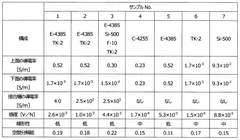
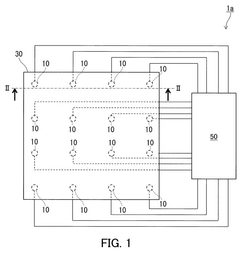
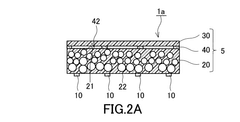
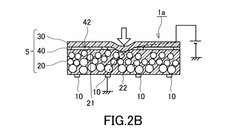
- A tactile sensor design featuring a conductive porous body with varying conductivity along a specific direction, where the first end has higher conductivity than the second end, and electrodes measure contact state based on potential changes, enhancing sensitivity and spatial resolution.
Standardization Framework for Tactile Sensor Performance
The establishment of a comprehensive standardization framework for tactile sensor performance represents a critical need in the rapidly evolving field of haptic technology. Current industry practices lack unified metrics and testing protocols, leading to inconsistent performance evaluations and difficulties in comparing different sensor technologies across manufacturers and research institutions.
International standardization bodies including ISO, IEC, and IEEE have begun preliminary discussions on tactile sensor standards, yet no comprehensive framework exists specifically addressing sensitivity measurement protocols. The absence of standardized testing conditions, calibration procedures, and performance metrics creates significant barriers to technology advancement and commercial adoption.
A robust standardization framework must encompass multiple dimensional aspects of tactile sensor performance evaluation. Primary considerations include establishing uniform testing environments with controlled temperature, humidity, and electromagnetic interference parameters. The framework should define standardized force application methods, contact surface materials, and measurement duration protocols to ensure reproducible results across different testing facilities.
Sensitivity measurement standards require precise definition of threshold detection limits, dynamic range specifications, and response time characteristics. The framework must establish baseline sensitivity requirements for different application categories, ranging from medical devices requiring ultra-high sensitivity to industrial applications prioritizing durability over precision. Standardized calibration procedures using certified reference materials and traceable measurement standards are essential components.
Enhanced sensor evaluation protocols should incorporate advanced testing methodologies including multi-modal stimulation patterns, frequency response analysis, and long-term stability assessments. The framework must address cross-sensitivity effects, hysteresis behavior, and environmental stability requirements. Standardized data reporting formats and statistical analysis methods will facilitate meaningful performance comparisons between baseline and enhanced sensor configurations.
Implementation of this standardization framework requires collaboration between industry stakeholders, research institutions, and regulatory bodies. The framework should accommodate emerging technologies while maintaining backward compatibility with existing sensor designs. Regular revision cycles must be established to incorporate technological advances and evolving application requirements, ensuring the standards remain relevant and effective for future tactile sensor developments.
International standardization bodies including ISO, IEC, and IEEE have begun preliminary discussions on tactile sensor standards, yet no comprehensive framework exists specifically addressing sensitivity measurement protocols. The absence of standardized testing conditions, calibration procedures, and performance metrics creates significant barriers to technology advancement and commercial adoption.
A robust standardization framework must encompass multiple dimensional aspects of tactile sensor performance evaluation. Primary considerations include establishing uniform testing environments with controlled temperature, humidity, and electromagnetic interference parameters. The framework should define standardized force application methods, contact surface materials, and measurement duration protocols to ensure reproducible results across different testing facilities.
Sensitivity measurement standards require precise definition of threshold detection limits, dynamic range specifications, and response time characteristics. The framework must establish baseline sensitivity requirements for different application categories, ranging from medical devices requiring ultra-high sensitivity to industrial applications prioritizing durability over precision. Standardized calibration procedures using certified reference materials and traceable measurement standards are essential components.
Enhanced sensor evaluation protocols should incorporate advanced testing methodologies including multi-modal stimulation patterns, frequency response analysis, and long-term stability assessments. The framework must address cross-sensitivity effects, hysteresis behavior, and environmental stability requirements. Standardized data reporting formats and statistical analysis methods will facilitate meaningful performance comparisons between baseline and enhanced sensor configurations.
Implementation of this standardization framework requires collaboration between industry stakeholders, research institutions, and regulatory bodies. The framework should accommodate emerging technologies while maintaining backward compatibility with existing sensor designs. Regular revision cycles must be established to incorporate technological advances and evolving application requirements, ensuring the standards remain relevant and effective for future tactile sensor developments.
Manufacturing Scalability for Enhanced Tactile Sensors
Manufacturing scalability represents a critical bottleneck in transitioning enhanced tactile sensors from laboratory prototypes to commercial applications. Current enhanced tactile sensor designs, while demonstrating superior sensitivity compared to baseline sensors, often rely on complex fabrication processes that are difficult to scale economically. The integration of advanced materials such as graphene, carbon nanotubes, or specialized polymers requires precise control over deposition parameters, layer thickness, and surface treatments that are challenging to maintain across large-scale production runs.
The fabrication complexity of enhanced tactile sensors stems from their multi-layered architectures and the need for nanoscale precision in material placement. Unlike baseline sensors that typically employ straightforward resistive or capacitive sensing mechanisms with conventional materials, enhanced sensors often incorporate hybrid sensing modalities, microstructured surfaces, and specialized electrode configurations. These design elements, while crucial for achieving improved sensitivity, introduce manufacturing challenges including yield variability, quality control difficulties, and increased production costs.
Process standardization emerges as a fundamental requirement for achieving manufacturing scalability. Enhanced tactile sensors require the development of robust manufacturing protocols that can consistently reproduce the precise material properties and geometric features responsible for their superior performance. This includes establishing standardized procedures for substrate preparation, active material deposition, electrode patterning, and encapsulation processes. The challenge lies in maintaining the delicate balance between manufacturing simplicity and sensor performance optimization.
Equipment and infrastructure requirements for scaled manufacturing of enhanced tactile sensors differ significantly from those needed for baseline sensor production. Enhanced sensors often necessitate specialized fabrication equipment such as atomic layer deposition systems, electron beam lithography tools, or controlled atmosphere processing chambers. The capital investment required for such equipment, combined with the need for cleanroom facilities and specialized handling procedures, creates substantial barriers to manufacturing scalability.
Quality assurance and testing protocols for enhanced tactile sensors must be redesigned to accommodate their increased complexity while maintaining production throughput. The enhanced sensitivity that defines these sensors also makes them more susceptible to manufacturing variations and environmental factors during production. Developing rapid, non-destructive testing methods that can verify sensor performance without compromising production efficiency remains a significant challenge for manufacturers seeking to scale production volumes.
The fabrication complexity of enhanced tactile sensors stems from their multi-layered architectures and the need for nanoscale precision in material placement. Unlike baseline sensors that typically employ straightforward resistive or capacitive sensing mechanisms with conventional materials, enhanced sensors often incorporate hybrid sensing modalities, microstructured surfaces, and specialized electrode configurations. These design elements, while crucial for achieving improved sensitivity, introduce manufacturing challenges including yield variability, quality control difficulties, and increased production costs.
Process standardization emerges as a fundamental requirement for achieving manufacturing scalability. Enhanced tactile sensors require the development of robust manufacturing protocols that can consistently reproduce the precise material properties and geometric features responsible for their superior performance. This includes establishing standardized procedures for substrate preparation, active material deposition, electrode patterning, and encapsulation processes. The challenge lies in maintaining the delicate balance between manufacturing simplicity and sensor performance optimization.
Equipment and infrastructure requirements for scaled manufacturing of enhanced tactile sensors differ significantly from those needed for baseline sensor production. Enhanced sensors often necessitate specialized fabrication equipment such as atomic layer deposition systems, electron beam lithography tools, or controlled atmosphere processing chambers. The capital investment required for such equipment, combined with the need for cleanroom facilities and specialized handling procedures, creates substantial barriers to manufacturing scalability.
Quality assurance and testing protocols for enhanced tactile sensors must be redesigned to accommodate their increased complexity while maintaining production throughput. The enhanced sensitivity that defines these sensors also makes them more susceptible to manufacturing variations and environmental factors during production. Developing rapid, non-destructive testing methods that can verify sensor performance without compromising production efficiency remains a significant challenge for manufacturers seeking to scale production volumes.
Unlock deeper insights with Patsnap Eureka Quick Research — get a full tech report to explore trends and direct your research. Try now!
Generate Your Research Report Instantly with AI Agent
Supercharge your innovation with Patsnap Eureka AI Agent Platform!