

Comparing Two-Pin Vs Multi-Pin Electrodes In Electrostatic Chuck Applications
MAY 14, 20269 MIN READ
Generate Your Research Report Instantly with AI Agent
PatSnap Eureka helps you evaluate technical feasibility & market potential.
Electrostatic Chuck Technology Background and Objectives
Electrostatic chuck (ESC) technology emerged in the semiconductor manufacturing industry during the 1980s as a critical solution for wafer handling and positioning during various fabrication processes. The fundamental principle relies on electrostatic forces generated between charged electrodes and conductive or dielectric substrates, enabling secure wafer clamping without mechanical contact that could potentially damage delicate semiconductor surfaces.
The evolution of ESC technology has been driven by the semiconductor industry's relentless pursuit of smaller feature sizes, higher precision, and improved process control. As device geometries shrunk from micrometers to nanometers, traditional mechanical clamping methods became inadequate due to particle contamination risks, wafer warpage, and insufficient temperature uniformity during critical processes such as plasma etching, ion implantation, and chemical vapor deposition.
Modern electrostatic chucks operate on two primary mechanisms: Coulombic and Johnsen-Rahbek effects. Coulombic chucks utilize pure electrostatic attraction between oppositely charged surfaces, while Johnsen-Rahbek chucks exploit the conductivity properties of dielectric materials under applied electric fields. The choice between these mechanisms significantly influences electrode design considerations, particularly the debate between two-pin and multi-pin electrode configurations.
The electrode configuration directly impacts critical performance parameters including clamping force distribution, temperature uniformity, particle generation, and process repeatability. Two-pin electrode systems offer simplicity in design and control circuitry, while multi-pin configurations provide enhanced spatial control over electrostatic forces but introduce complexity in power distribution and monitoring systems.
Current technological objectives focus on achieving superior wafer flatness control, minimizing backside particle contamination, optimizing thermal management, and ensuring reliable wafer release mechanisms. Advanced ESC designs must accommodate increasingly stringent requirements for temperature uniformity within ±1°C across 300mm wafers while maintaining clamping forces sufficient for high-aspect-ratio etching processes.
The comparative analysis between two-pin and multi-pin electrode architectures represents a critical decision point in ESC design, influencing manufacturing costs, process capabilities, and long-term reliability. Understanding these trade-offs is essential for optimizing semiconductor fabrication equipment performance in next-generation manufacturing environments.
The evolution of ESC technology has been driven by the semiconductor industry's relentless pursuit of smaller feature sizes, higher precision, and improved process control. As device geometries shrunk from micrometers to nanometers, traditional mechanical clamping methods became inadequate due to particle contamination risks, wafer warpage, and insufficient temperature uniformity during critical processes such as plasma etching, ion implantation, and chemical vapor deposition.
Modern electrostatic chucks operate on two primary mechanisms: Coulombic and Johnsen-Rahbek effects. Coulombic chucks utilize pure electrostatic attraction between oppositely charged surfaces, while Johnsen-Rahbek chucks exploit the conductivity properties of dielectric materials under applied electric fields. The choice between these mechanisms significantly influences electrode design considerations, particularly the debate between two-pin and multi-pin electrode configurations.
The electrode configuration directly impacts critical performance parameters including clamping force distribution, temperature uniformity, particle generation, and process repeatability. Two-pin electrode systems offer simplicity in design and control circuitry, while multi-pin configurations provide enhanced spatial control over electrostatic forces but introduce complexity in power distribution and monitoring systems.
Current technological objectives focus on achieving superior wafer flatness control, minimizing backside particle contamination, optimizing thermal management, and ensuring reliable wafer release mechanisms. Advanced ESC designs must accommodate increasingly stringent requirements for temperature uniformity within ±1°C across 300mm wafers while maintaining clamping forces sufficient for high-aspect-ratio etching processes.
The comparative analysis between two-pin and multi-pin electrode architectures represents a critical decision point in ESC design, influencing manufacturing costs, process capabilities, and long-term reliability. Understanding these trade-offs is essential for optimizing semiconductor fabrication equipment performance in next-generation manufacturing environments.
Market Demand for Advanced Wafer Handling Solutions
The semiconductor manufacturing industry is experiencing unprecedented growth driven by expanding applications in artificial intelligence, 5G communications, automotive electronics, and Internet of Things devices. This surge in demand has created substantial pressure on wafer fabrication facilities to enhance production efficiency while maintaining stringent quality standards. Advanced wafer handling solutions, particularly electrostatic chuck systems, have emerged as critical enablers for meeting these evolving manufacturing requirements.
Modern semiconductor processes demand increasingly precise wafer positioning and control during various fabrication steps including etching, deposition, and lithography. The transition toward smaller node geometries and three-dimensional device architectures has intensified the need for superior wafer clamping technologies that can provide uniform force distribution and minimize particle contamination. Electrostatic chucks have become indispensable in addressing these challenges, with electrode configuration playing a pivotal role in determining system performance.
The market demand for electrostatic chuck solutions is being shaped by several key factors. Manufacturing facilities are prioritizing systems that offer enhanced process uniformity, reduced defect rates, and improved throughput capabilities. The choice between two-pin and multi-pin electrode configurations has become a strategic consideration for equipment manufacturers and semiconductor fabs alike, as each approach offers distinct advantages for specific applications and process requirements.
Process complexity in advanced semiconductor manufacturing has driven demand for more sophisticated wafer handling solutions. Multi-pin electrode configurations are gaining traction in applications requiring precise local control and compensation for wafer non-uniformities. Conversely, two-pin systems continue to find strong demand in applications where simplicity, cost-effectiveness, and proven reliability are paramount considerations.
The automotive semiconductor segment represents a particularly dynamic growth area, with increasing electrification and autonomous driving technologies creating substantial demand for power semiconductors and advanced sensors. These applications often require specialized wafer handling approaches, influencing the selection criteria between different electrode configurations based on specific thermal and mechanical requirements.
Equipment manufacturers are responding to market demands by developing more versatile electrostatic chuck platforms that can accommodate varying electrode configurations. This flexibility allows semiconductor fabs to optimize their processes for different product types and manufacturing requirements while maintaining equipment standardization and reducing operational complexity.
Modern semiconductor processes demand increasingly precise wafer positioning and control during various fabrication steps including etching, deposition, and lithography. The transition toward smaller node geometries and three-dimensional device architectures has intensified the need for superior wafer clamping technologies that can provide uniform force distribution and minimize particle contamination. Electrostatic chucks have become indispensable in addressing these challenges, with electrode configuration playing a pivotal role in determining system performance.
The market demand for electrostatic chuck solutions is being shaped by several key factors. Manufacturing facilities are prioritizing systems that offer enhanced process uniformity, reduced defect rates, and improved throughput capabilities. The choice between two-pin and multi-pin electrode configurations has become a strategic consideration for equipment manufacturers and semiconductor fabs alike, as each approach offers distinct advantages for specific applications and process requirements.
Process complexity in advanced semiconductor manufacturing has driven demand for more sophisticated wafer handling solutions. Multi-pin electrode configurations are gaining traction in applications requiring precise local control and compensation for wafer non-uniformities. Conversely, two-pin systems continue to find strong demand in applications where simplicity, cost-effectiveness, and proven reliability are paramount considerations.
The automotive semiconductor segment represents a particularly dynamic growth area, with increasing electrification and autonomous driving technologies creating substantial demand for power semiconductors and advanced sensors. These applications often require specialized wafer handling approaches, influencing the selection criteria between different electrode configurations based on specific thermal and mechanical requirements.
Equipment manufacturers are responding to market demands by developing more versatile electrostatic chuck platforms that can accommodate varying electrode configurations. This flexibility allows semiconductor fabs to optimize their processes for different product types and manufacturing requirements while maintaining equipment standardization and reducing operational complexity.
Current ESC Electrode Design Challenges and Limitations
Current electrostatic chuck electrode designs face significant challenges in achieving optimal performance across diverse semiconductor manufacturing applications. Traditional two-pin electrode configurations, while offering simplicity in design and manufacturing, encounter substantial limitations in wafer clamping uniformity and process adaptability. These systems often struggle with edge effects, where wafer periphery regions experience inconsistent electrostatic forces, leading to potential wafer warpage and reduced process yield.
Multi-pin electrode architectures, despite their enhanced control capabilities, introduce complexity-related challenges that impact both manufacturing costs and operational reliability. The increased number of electrical connections creates potential failure points, while the sophisticated control systems required for independent pin management demand advanced power supply designs and real-time monitoring capabilities. These systems also face difficulties in maintaining uniform impedance across all electrode segments, particularly as pin counts increase beyond conventional configurations.
Thermal management represents a critical limitation across both electrode types, as non-uniform heat distribution can compromise wafer processing quality. Two-pin systems often exhibit thermal gradients due to their simplified electrode geometry, while multi-pin designs struggle with heat dissipation variations between individual electrode segments. This thermal non-uniformity becomes particularly problematic in high-temperature processes where precise temperature control is essential for process repeatability.
Contamination control poses another significant challenge, especially in multi-pin configurations where increased surface complexity creates additional particle trapping sites. The intricate geometries required for multi-pin electrode isolation can harbor contaminants that are difficult to remove during standard cleaning procedures, potentially affecting subsequent wafer processing steps.
Power consumption optimization remains a persistent issue, particularly in multi-pin systems where individual electrode control requires sophisticated power management strategies. The need for independent voltage regulation across multiple pins increases overall system complexity and energy consumption, while two-pin systems, though more energy-efficient, lack the flexibility to optimize power distribution based on specific process requirements.
Manufacturing precision requirements for multi-pin electrodes present substantial fabrication challenges, as dimensional tolerances become increasingly critical with higher pin densities. The alignment accuracy needed between electrode segments and corresponding control circuits often pushes current manufacturing capabilities to their limits, resulting in higher production costs and potential yield issues.
Multi-pin electrode architectures, despite their enhanced control capabilities, introduce complexity-related challenges that impact both manufacturing costs and operational reliability. The increased number of electrical connections creates potential failure points, while the sophisticated control systems required for independent pin management demand advanced power supply designs and real-time monitoring capabilities. These systems also face difficulties in maintaining uniform impedance across all electrode segments, particularly as pin counts increase beyond conventional configurations.
Thermal management represents a critical limitation across both electrode types, as non-uniform heat distribution can compromise wafer processing quality. Two-pin systems often exhibit thermal gradients due to their simplified electrode geometry, while multi-pin designs struggle with heat dissipation variations between individual electrode segments. This thermal non-uniformity becomes particularly problematic in high-temperature processes where precise temperature control is essential for process repeatability.
Contamination control poses another significant challenge, especially in multi-pin configurations where increased surface complexity creates additional particle trapping sites. The intricate geometries required for multi-pin electrode isolation can harbor contaminants that are difficult to remove during standard cleaning procedures, potentially affecting subsequent wafer processing steps.
Power consumption optimization remains a persistent issue, particularly in multi-pin systems where individual electrode control requires sophisticated power management strategies. The need for independent voltage regulation across multiple pins increases overall system complexity and energy consumption, while two-pin systems, though more energy-efficient, lack the flexibility to optimize power distribution based on specific process requirements.
Manufacturing precision requirements for multi-pin electrodes present substantial fabrication challenges, as dimensional tolerances become increasingly critical with higher pin densities. The alignment accuracy needed between electrode segments and corresponding control circuits often pushes current manufacturing capabilities to their limits, resulting in higher production costs and potential yield issues.
Existing Two-Pin vs Multi-Pin Electrode Solutions
01 Electrode configuration and design optimization
Various electrode configurations and designs are employed to optimize the performance of electrostatic chucks. These include multi-zone electrode arrangements, segmented electrode patterns, and specialized geometric configurations that enhance uniform electrostatic force distribution across the chuck surface. The electrode design directly impacts the holding force and uniformity of substrate clamping.- Electrode configuration and design optimization: Various electrode configurations and designs are employed to optimize the performance of electrostatic chucks. These include specific geometric arrangements, electrode patterns, and structural modifications that enhance the electrostatic holding force and improve wafer clamping efficiency. The designs focus on achieving uniform electric field distribution and minimizing edge effects to ensure stable wafer positioning during semiconductor processing operations.
- Multi-zone electrode systems: Multi-zone electrode configurations enable independent control of different regions within the electrostatic chuck. This approach allows for selective activation and deactivation of specific zones, providing enhanced flexibility in wafer handling and processing. The multi-zone design facilitates better temperature control, improved process uniformity, and enables advanced wafer positioning capabilities for various semiconductor manufacturing applications.
- Electrode material composition and properties: The selection and optimization of electrode materials play a crucial role in electrostatic chuck performance. Various conductive materials and compositions are utilized to achieve desired electrical properties, thermal characteristics, and durability. The material properties directly influence the electrostatic force generation, thermal conductivity, and long-term reliability of the chuck system under harsh processing conditions.
- Voltage control and power supply systems: Advanced voltage control mechanisms and power supply systems are implemented to regulate the electrical characteristics of electrostatic chuck electrodes. These systems provide precise control over the applied voltages, enable dynamic adjustment of electrostatic forces, and incorporate safety features for reliable operation. The control systems optimize power consumption while maintaining consistent clamping performance throughout the processing cycle.
- Electrode insulation and dielectric layers: Proper insulation and dielectric layer design are essential for electrode functionality and safety in electrostatic chuck systems. These layers provide electrical isolation, prevent unwanted current leakage, and ensure reliable operation under high voltage conditions. The dielectric materials and their thickness are carefully selected to optimize the electrostatic field distribution while maintaining adequate breakdown voltage resistance and thermal stability.
02 Electrode material composition and properties
The selection of appropriate electrode materials is crucial for electrostatic chuck performance. Various conductive materials and composite structures are utilized to achieve desired electrical conductivity, thermal stability, and mechanical durability. Material properties such as resistivity, thermal expansion coefficient, and chemical resistance are key considerations in electrode design.Expand Specific Solutions03 Electrode insulation and dielectric layers
Proper insulation systems and dielectric layer configurations are essential for safe and effective electrode operation. These systems prevent electrical breakdown, ensure proper voltage distribution, and maintain electrical isolation between different electrode zones. The thickness, material composition, and surface treatment of dielectric layers significantly affect chuck performance.Expand Specific Solutions04 Electrode power supply and control systems
Advanced power supply and control systems are implemented to manage electrode voltage and current distribution. These systems include voltage regulation circuits, feedback control mechanisms, and multi-channel power distribution networks that enable precise control of electrostatic forces across different chuck zones. Control algorithms optimize clamping force and minimize substrate distortion.Expand Specific Solutions05 Electrode manufacturing and fabrication processes
Specialized manufacturing techniques and fabrication processes are employed to produce high-quality electrodes with precise dimensions and properties. These processes include thin-film deposition, photolithography patterning, etching techniques, and surface treatment methods. Manufacturing precision directly impacts electrode performance, reliability, and service life in semiconductor processing applications.Expand Specific Solutions
Key Players in ESC and Semiconductor Equipment Industry
The electrostatic chuck electrode technology market is in a mature growth phase, driven by expanding semiconductor manufacturing and advanced packaging applications. The industry demonstrates significant scale with established players like Applied Materials, Lam Research, and Tokyo Electron leading equipment integration, while ASML provides critical lithography systems requiring precise wafer handling. Technology maturity varies across segments, with two-pin configurations representing established solutions and multi-pin designs emerging for enhanced control in advanced nodes. Asian manufacturers including Samsung Display, NAURA Microelectronics, and JUSUNG Engineering are rapidly advancing capabilities, particularly in display and memory applications. Material specialists like Shin-Etsu Chemical and Saint-Gobain provide critical ceramic components, while Chinese companies such as ChangXin Memory Technologies and Suzhou Kematek are developing localized supply chains. The competitive landscape reflects a transition toward more sophisticated multi-pin architectures to meet stringent requirements of next-generation semiconductor processes, with technology maturity concentrated among established equipment manufacturers while emerging players focus on specialized applications and cost-effective solutions.
Applied Materials, Inc.
Technical Solution: Applied Materials develops advanced electrostatic chuck systems with both two-pin and multi-pin electrode configurations for semiconductor manufacturing. Their two-pin designs offer simplified control circuits and reduced manufacturing complexity, making them cost-effective for standard wafer processing applications. The multi-pin electrode systems provide enhanced wafer uniformity control through independent zone management, enabling precise temperature and clamping force distribution across different wafer regions. These systems incorporate proprietary dielectric materials and advanced voltage control algorithms to optimize wafer flatness and minimize particle generation during processing.
Strengths: Industry-leading technology with comprehensive electrode solutions, strong R&D capabilities, and extensive manufacturing experience. Weaknesses: Higher cost compared to competitors, complex system integration requirements.
Lam Research Corp.
Technical Solution: Lam Research implements sophisticated electrostatic chuck technologies featuring both two-pin and multi-pin electrode architectures optimized for plasma processing environments. Their two-pin systems utilize high-voltage DC clamping with simplified electrode geometry, providing reliable wafer retention with minimal electrical complexity. The multi-pin configurations employ segmented electrode arrays that enable independent control of multiple wafer zones, allowing for compensation of wafer bow and thickness variations. These systems integrate advanced ceramic materials with embedded heating elements and incorporate real-time feedback control to maintain optimal wafer temperature uniformity and clamping performance throughout the process cycle.
Strengths: Excellent plasma processing integration, robust thermal management capabilities, and proven reliability in high-volume manufacturing. Weaknesses: Limited flexibility for non-standard wafer sizes, higher maintenance requirements for multi-pin systems.
Core Innovations in ESC Electrode Design Patents
ALN material and electrostatic chuck incorporating same
PatentInactiveUS6982125B2
Innovation
- The use of aluminum nitride (AlN) in electrostatic chucks with a specific resistivity ratio ρ10V/ρ500V less than about 5, achieved through densification methods like hot pressing and heat treatment in a carbon-free environment, to enhance charge accumulation and dissipation rates.


Electrostatic chuck assembly
PatentActiveUS20100039747A1
Innovation
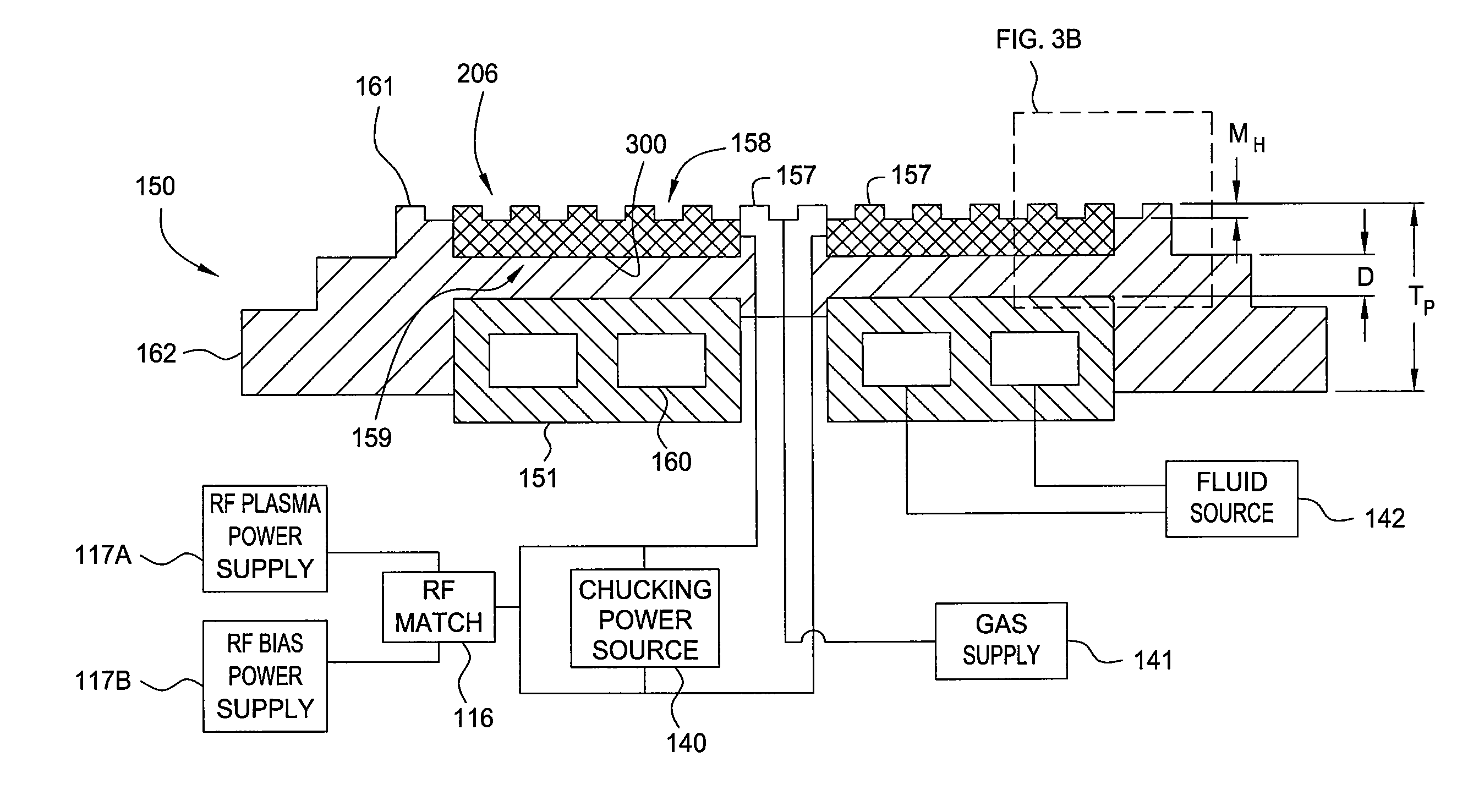
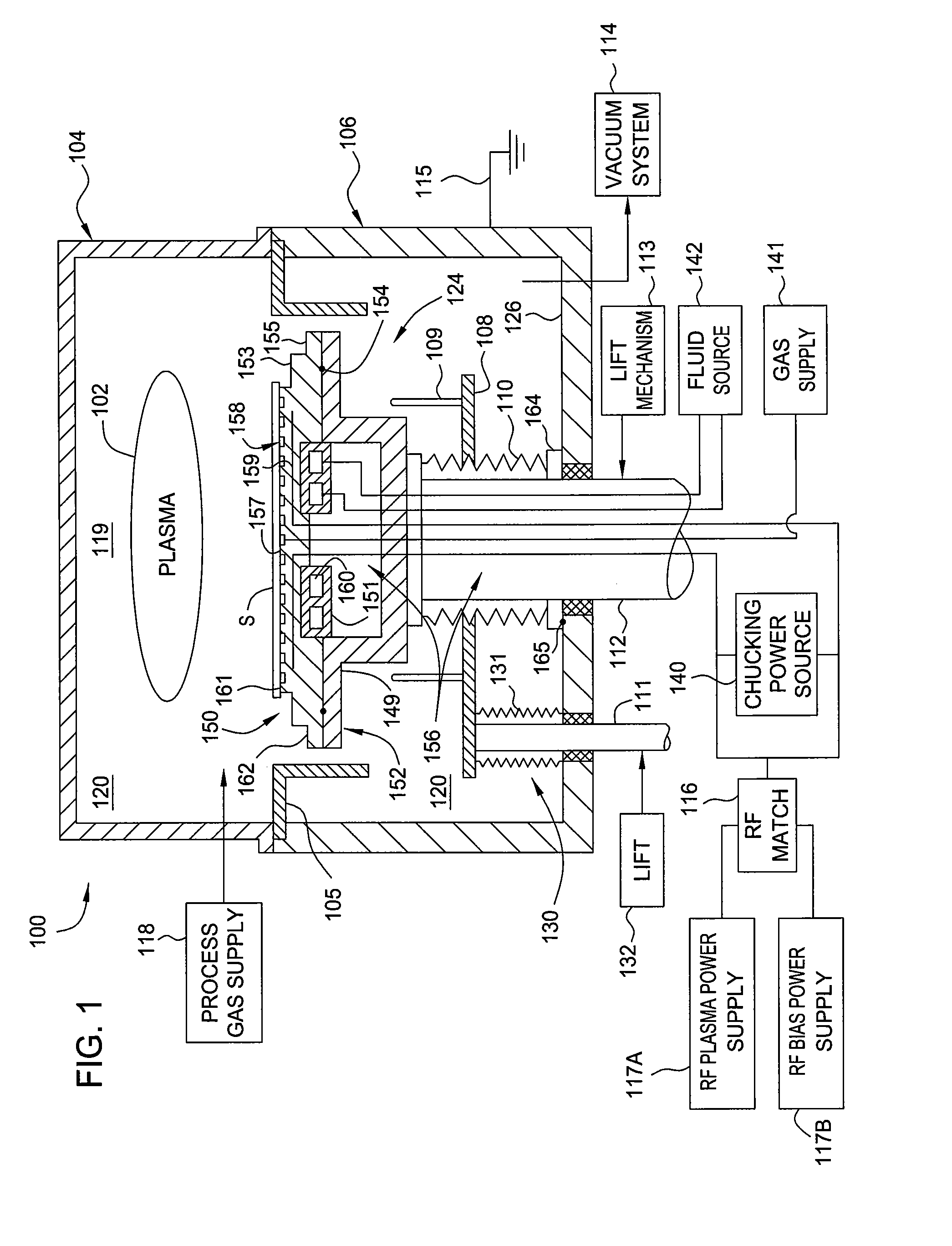
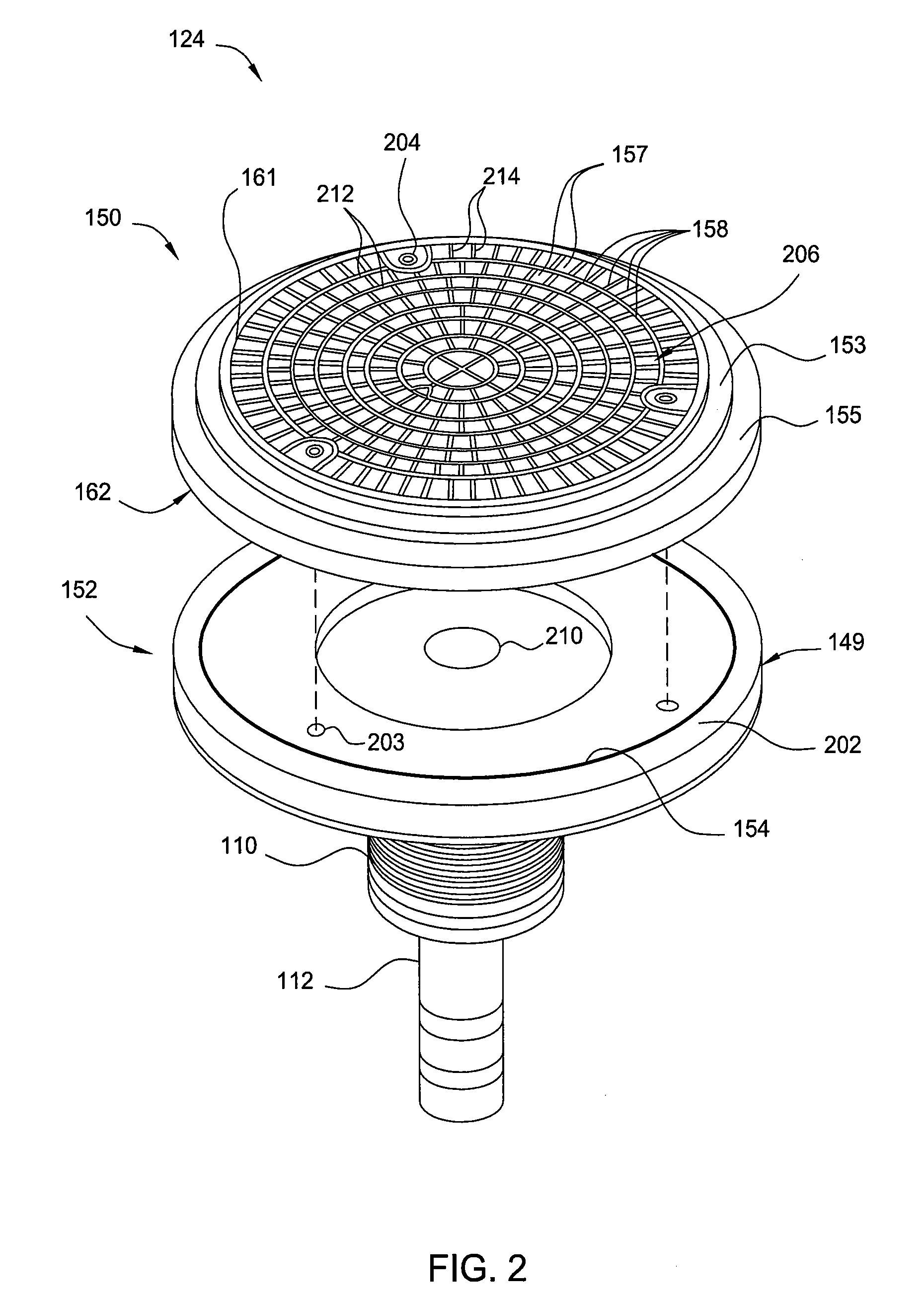
- An electrostatic chuck assembly featuring a support base and puck with conductive metal matrix composite electrodes and a dielectric layer, along with a cooling plate and o-rings, designed to minimize thermo-mechanical stresses and optimize RF power coupling through a dielectric layer with matched thermal expansion coefficients and efficient RF energy transmission.

Semiconductor Manufacturing Standards and Regulations
The semiconductor manufacturing industry operates under stringent regulatory frameworks that directly impact electrostatic chuck (ESC) electrode design and implementation. International standards organizations, including SEMI (Semiconductor Equipment and Materials International) and IEC (International Electrotechnical Commission), have established comprehensive guidelines governing ESC performance, safety, and reliability requirements. These standards specifically address electrical safety parameters, contamination control measures, and operational consistency metrics that influence the selection between two-pin and multi-pin electrode configurations.
SEMI standards such as SEMI E10 for safety guidelines and SEMI F47 for contamination control establish baseline requirements for ESC systems. Two-pin electrode designs typically demonstrate simpler compliance pathways due to their reduced electrical complexity and fewer potential failure points. The streamlined architecture facilitates easier validation against safety standards, particularly regarding electrical isolation and ground fault protection requirements.
Multi-pin electrode configurations face more complex regulatory compliance challenges due to their increased electrical circuit complexity. However, they offer enhanced process control capabilities that align with emerging Industry 4.0 manufacturing standards. Advanced monitoring and diagnostic features inherent in multi-pin systems support compliance with predictive maintenance requirements and real-time process validation protocols mandated by modern semiconductor manufacturing standards.
Regional regulatory variations significantly impact electrode selection strategies. European CE marking requirements emphasize electromagnetic compatibility and safety standards that may favor two-pin designs for their inherent simplicity. Conversely, Asian markets, particularly in advanced semiconductor manufacturing hubs, increasingly adopt standards that prioritize process precision and yield optimization, potentially favoring multi-pin configurations despite their regulatory complexity.
Environmental regulations, including RoHS compliance and energy efficiency standards, influence material selection and power consumption characteristics of both electrode types. Two-pin systems generally exhibit lower standby power consumption, supporting energy efficiency mandates. Multi-pin systems, while consuming more power, often achieve superior process efficiency that can offset energy consumption concerns through reduced processing time and improved yield rates.
Quality management system requirements under ISO 9001 and semiconductor-specific standards like ISO/TS 16949 mandate comprehensive documentation and traceability for ESC electrode systems. Multi-pin configurations typically provide enhanced diagnostic data that supports quality system requirements for process monitoring and continuous improvement initiatives, despite requiring more complex validation procedures during initial implementation phases.
SEMI standards such as SEMI E10 for safety guidelines and SEMI F47 for contamination control establish baseline requirements for ESC systems. Two-pin electrode designs typically demonstrate simpler compliance pathways due to their reduced electrical complexity and fewer potential failure points. The streamlined architecture facilitates easier validation against safety standards, particularly regarding electrical isolation and ground fault protection requirements.
Multi-pin electrode configurations face more complex regulatory compliance challenges due to their increased electrical circuit complexity. However, they offer enhanced process control capabilities that align with emerging Industry 4.0 manufacturing standards. Advanced monitoring and diagnostic features inherent in multi-pin systems support compliance with predictive maintenance requirements and real-time process validation protocols mandated by modern semiconductor manufacturing standards.
Regional regulatory variations significantly impact electrode selection strategies. European CE marking requirements emphasize electromagnetic compatibility and safety standards that may favor two-pin designs for their inherent simplicity. Conversely, Asian markets, particularly in advanced semiconductor manufacturing hubs, increasingly adopt standards that prioritize process precision and yield optimization, potentially favoring multi-pin configurations despite their regulatory complexity.
Environmental regulations, including RoHS compliance and energy efficiency standards, influence material selection and power consumption characteristics of both electrode types. Two-pin systems generally exhibit lower standby power consumption, supporting energy efficiency mandates. Multi-pin systems, while consuming more power, often achieve superior process efficiency that can offset energy consumption concerns through reduced processing time and improved yield rates.
Quality management system requirements under ISO 9001 and semiconductor-specific standards like ISO/TS 16949 mandate comprehensive documentation and traceability for ESC electrode systems. Multi-pin configurations typically provide enhanced diagnostic data that supports quality system requirements for process monitoring and continuous improvement initiatives, despite requiring more complex validation procedures during initial implementation phases.
Cost-Performance Trade-offs in ESC Design Selection
The selection between two-pin and multi-pin electrode configurations in electrostatic chuck applications involves critical cost-performance considerations that directly impact manufacturing economics and operational efficiency. Two-pin ESC designs typically offer lower initial capital investment, reduced manufacturing complexity, and simplified control systems, making them attractive for cost-sensitive applications where basic wafer holding capabilities are sufficient.
Multi-pin electrode configurations, while requiring higher upfront investment, deliver superior performance characteristics including enhanced wafer uniformity, improved temperature control, and greater process flexibility. The additional pins enable more precise electrostatic field distribution, resulting in better wafer flatness and reduced particle generation during processing.
From a total cost of ownership perspective, two-pin systems demonstrate advantages in maintenance simplicity and reduced spare parts inventory. The fewer electrical connections translate to lower failure rates and simplified troubleshooting procedures. However, multi-pin systems often justify their higher costs through improved yield rates and enhanced process capability, particularly in advanced semiconductor manufacturing where wafer uniformity directly impacts device performance.
The performance trade-offs become particularly evident in high-volume production environments. Multi-pin configurations typically achieve superior chucking force distribution, enabling processing of larger wafer sizes and thinner substrates with reduced risk of breakage. This capability becomes increasingly valuable as semiconductor devices migrate to larger wafer formats and thinner geometries.
Economic analysis reveals that the break-even point between configurations depends heavily on production volume, yield requirements, and substrate specifications. High-volume fabs processing advanced nodes often find multi-pin systems cost-effective despite higher initial investment, while lower-volume operations or mature process nodes may optimize costs through two-pin implementations.
The decision framework must also consider future scalability requirements, as upgrading from two-pin to multi-pin configurations typically requires complete chuck replacement rather than incremental enhancement, representing a significant capital expenditure that should be factored into long-term strategic planning.
Multi-pin electrode configurations, while requiring higher upfront investment, deliver superior performance characteristics including enhanced wafer uniformity, improved temperature control, and greater process flexibility. The additional pins enable more precise electrostatic field distribution, resulting in better wafer flatness and reduced particle generation during processing.
From a total cost of ownership perspective, two-pin systems demonstrate advantages in maintenance simplicity and reduced spare parts inventory. The fewer electrical connections translate to lower failure rates and simplified troubleshooting procedures. However, multi-pin systems often justify their higher costs through improved yield rates and enhanced process capability, particularly in advanced semiconductor manufacturing where wafer uniformity directly impacts device performance.
The performance trade-offs become particularly evident in high-volume production environments. Multi-pin configurations typically achieve superior chucking force distribution, enabling processing of larger wafer sizes and thinner substrates with reduced risk of breakage. This capability becomes increasingly valuable as semiconductor devices migrate to larger wafer formats and thinner geometries.
Economic analysis reveals that the break-even point between configurations depends heavily on production volume, yield requirements, and substrate specifications. High-volume fabs processing advanced nodes often find multi-pin systems cost-effective despite higher initial investment, while lower-volume operations or mature process nodes may optimize costs through two-pin implementations.
The decision framework must also consider future scalability requirements, as upgrading from two-pin to multi-pin configurations typically requires complete chuck replacement rather than incremental enhancement, representing a significant capital expenditure that should be factored into long-term strategic planning.
Unlock deeper insights with PatSnap Eureka Quick Research — get a full tech report to explore trends and direct your research. Try now!
Generate Your Research Report Instantly with AI Agent
Supercharge your innovation with PatSnap Eureka AI Agent Platform!