

Multipoint Control Unit vs. DSP: Which Offers Better Processing?
MAR 17, 20269 MIN READ
Generate Your Research Report Instantly with AI Agent
PatSnap Eureka helps you evaluate technical feasibility & market potential.
MCU vs DSP Processing Architecture Background and Objectives
The evolution of digital processing architectures has fundamentally transformed how electronic systems handle computational tasks, with Microcontroller Units (MCUs) and Digital Signal Processors (DSPs) emerging as two distinct yet complementary processing paradigms. This technological divergence stems from the growing complexity of modern applications that demand specialized processing capabilities tailored to specific computational requirements.
MCUs represent a general-purpose processing approach, integrating CPU cores with peripheral interfaces, memory controllers, and various I/O capabilities on a single chip. These architectures prioritize versatility and system integration, enabling developers to implement complex control algorithms while managing multiple system functions simultaneously. The MCU design philosophy emphasizes balanced performance across diverse computational tasks, making them ideal for applications requiring real-time control, user interface management, and system coordination.
DSPs, conversely, evolved from the specific need to process continuous data streams with mathematical precision and speed. These processors feature specialized architectures optimized for repetitive mathematical operations, particularly multiply-accumulate functions essential for signal processing algorithms. DSP architectures incorporate dedicated hardware accelerators, specialized instruction sets, and memory architectures designed to maximize throughput for signal processing workloads.
The technological objectives driving this comparative analysis center on understanding how architectural differences translate into practical performance advantages for specific application domains. Modern embedded systems increasingly require hybrid processing capabilities, where traditional control functions must coexist with intensive signal processing tasks, creating demand for comprehensive performance evaluation frameworks.
Contemporary market demands have intensified the need for processing architecture optimization, as applications spanning telecommunications, automotive systems, industrial automation, and consumer electronics require increasingly sophisticated computational capabilities. The convergence of IoT technologies, edge computing requirements, and real-time processing demands has created scenarios where selecting the optimal processing architecture directly impacts system performance, power consumption, and development complexity.
This analysis aims to establish clear performance benchmarks and architectural trade-offs between MCU and DSP processing capabilities, providing technical insights that inform strategic decisions in embedded system design and development planning.
MCUs represent a general-purpose processing approach, integrating CPU cores with peripheral interfaces, memory controllers, and various I/O capabilities on a single chip. These architectures prioritize versatility and system integration, enabling developers to implement complex control algorithms while managing multiple system functions simultaneously. The MCU design philosophy emphasizes balanced performance across diverse computational tasks, making them ideal for applications requiring real-time control, user interface management, and system coordination.
DSPs, conversely, evolved from the specific need to process continuous data streams with mathematical precision and speed. These processors feature specialized architectures optimized for repetitive mathematical operations, particularly multiply-accumulate functions essential for signal processing algorithms. DSP architectures incorporate dedicated hardware accelerators, specialized instruction sets, and memory architectures designed to maximize throughput for signal processing workloads.
The technological objectives driving this comparative analysis center on understanding how architectural differences translate into practical performance advantages for specific application domains. Modern embedded systems increasingly require hybrid processing capabilities, where traditional control functions must coexist with intensive signal processing tasks, creating demand for comprehensive performance evaluation frameworks.
Contemporary market demands have intensified the need for processing architecture optimization, as applications spanning telecommunications, automotive systems, industrial automation, and consumer electronics require increasingly sophisticated computational capabilities. The convergence of IoT technologies, edge computing requirements, and real-time processing demands has created scenarios where selecting the optimal processing architecture directly impacts system performance, power consumption, and development complexity.
This analysis aims to establish clear performance benchmarks and architectural trade-offs between MCU and DSP processing capabilities, providing technical insights that inform strategic decisions in embedded system design and development planning.
Market Demand for MCU and DSP Processing Solutions
The global market for MCU and DSP processing solutions is experiencing unprecedented growth driven by the convergence of multiple technological trends and application domains. The proliferation of Internet of Things devices, autonomous systems, and edge computing applications has created substantial demand for both microcontroller units and digital signal processors, each serving distinct but often complementary roles in modern electronic systems.
MCU solutions dominate the embedded systems market, particularly in applications requiring real-time control, sensor interfacing, and system management functions. The automotive sector represents one of the largest growth drivers, with modern vehicles incorporating hundreds of MCUs for engine control, safety systems, infotainment, and advanced driver assistance systems. Industrial automation and smart manufacturing initiatives further amplify demand for MCU-based solutions capable of handling complex control algorithms while maintaining cost efficiency.
DSP processors command significant market presence in applications demanding intensive mathematical computations and signal processing capabilities. Telecommunications infrastructure, audio processing systems, medical imaging equipment, and radar applications constitute primary demand sources for DSP solutions. The emergence of 5G networks and the expansion of wireless communication systems have particularly accelerated DSP adoption rates across multiple industry verticals.
The market landscape reveals distinct segmentation patterns based on processing requirements and application constraints. High-performance computing applications increasingly favor DSP architectures for their specialized instruction sets and parallel processing capabilities, while cost-sensitive embedded applications continue to rely heavily on MCU solutions for their integration advantages and power efficiency characteristics.
Emerging application domains such as artificial intelligence at the edge, autonomous robotics, and smart city infrastructure are creating hybrid demand scenarios where both MCU and DSP capabilities are required within single system architectures. This trend is driving innovation in heterogeneous processing solutions and system-on-chip designs that integrate multiple processing paradigms.
Market dynamics indicate sustained growth trajectories for both technology segments, with regional variations reflecting different industrial priorities and technological adoption patterns. The competitive landscape continues evolving as traditional semiconductor companies expand their portfolios to address converging market requirements and emerging application scenarios.
MCU solutions dominate the embedded systems market, particularly in applications requiring real-time control, sensor interfacing, and system management functions. The automotive sector represents one of the largest growth drivers, with modern vehicles incorporating hundreds of MCUs for engine control, safety systems, infotainment, and advanced driver assistance systems. Industrial automation and smart manufacturing initiatives further amplify demand for MCU-based solutions capable of handling complex control algorithms while maintaining cost efficiency.
DSP processors command significant market presence in applications demanding intensive mathematical computations and signal processing capabilities. Telecommunications infrastructure, audio processing systems, medical imaging equipment, and radar applications constitute primary demand sources for DSP solutions. The emergence of 5G networks and the expansion of wireless communication systems have particularly accelerated DSP adoption rates across multiple industry verticals.
The market landscape reveals distinct segmentation patterns based on processing requirements and application constraints. High-performance computing applications increasingly favor DSP architectures for their specialized instruction sets and parallel processing capabilities, while cost-sensitive embedded applications continue to rely heavily on MCU solutions for their integration advantages and power efficiency characteristics.
Emerging application domains such as artificial intelligence at the edge, autonomous robotics, and smart city infrastructure are creating hybrid demand scenarios where both MCU and DSP capabilities are required within single system architectures. This trend is driving innovation in heterogeneous processing solutions and system-on-chip designs that integrate multiple processing paradigms.
Market dynamics indicate sustained growth trajectories for both technology segments, with regional variations reflecting different industrial priorities and technological adoption patterns. The competitive landscape continues evolving as traditional semiconductor companies expand their portfolios to address converging market requirements and emerging application scenarios.
Current State and Performance Gaps in MCU vs DSP
The current landscape of processing capabilities between Multipoint Control Units (MCUs) and Digital Signal Processors (DSPs) reveals significant architectural and performance distinctions that impact their respective applications in modern embedded systems. MCUs, designed as general-purpose microcontrollers, typically operate at clock frequencies ranging from 16MHz to 800MHz, with ARM Cortex-M series representing the mainstream architecture. These processors excel in control-oriented tasks, offering integrated peripherals, low power consumption, and cost-effective solutions for system management applications.
DSPs, conversely, are specialized processors optimized for mathematical computations and signal processing operations. Modern DSPs operate at frequencies exceeding 1GHz, with architectures like Texas Instruments' C6000 series and Analog Devices' SHARC family delivering processing capabilities measured in GFLOPS (Giga Floating Point Operations Per Second). The fundamental architectural difference lies in DSPs' Harvard architecture, featuring separate instruction and data memory paths, enabling parallel data processing that MCUs cannot match.
Performance gaps become evident when examining computational throughput and specialized processing capabilities. DSPs demonstrate superior performance in Fast Fourier Transform (FFT) operations, digital filtering, and real-time signal processing, achieving execution speeds 10-100 times faster than MCUs for equivalent mathematical operations. However, MCUs maintain advantages in power efficiency, with typical consumption ranging from microamps to milliamps in sleep modes, compared to DSPs' higher baseline power requirements.
Memory architecture represents another critical differentiator. DSPs typically feature larger on-chip memory configurations, with some variants offering up to 8MB of integrated RAM, while MCUs generally provide 32KB to 2MB of flash memory and 4KB to 512KB of RAM. This disparity directly impacts the complexity of algorithms each processor type can handle effectively.
Integration capabilities favor MCUs, which commonly include analog-to-digital converters, communication interfaces, and timing peripherals on-chip. DSPs often require external components for system integration, increasing overall solution complexity and cost. The performance gap is further highlighted in real-time processing scenarios, where DSPs can handle multiple concurrent signal processing tasks while maintaining deterministic timing, whereas MCUs may struggle with computationally intensive real-time requirements.
Current market positioning reflects these performance characteristics, with DSPs commanding premium pricing due to specialized capabilities, while MCUs offer cost-effective solutions for control applications. The emergence of hybrid architectures and AI-enhanced processing units is beginning to blur traditional boundaries, suggesting future convergence in certain application domains.
DSPs, conversely, are specialized processors optimized for mathematical computations and signal processing operations. Modern DSPs operate at frequencies exceeding 1GHz, with architectures like Texas Instruments' C6000 series and Analog Devices' SHARC family delivering processing capabilities measured in GFLOPS (Giga Floating Point Operations Per Second). The fundamental architectural difference lies in DSPs' Harvard architecture, featuring separate instruction and data memory paths, enabling parallel data processing that MCUs cannot match.
Performance gaps become evident when examining computational throughput and specialized processing capabilities. DSPs demonstrate superior performance in Fast Fourier Transform (FFT) operations, digital filtering, and real-time signal processing, achieving execution speeds 10-100 times faster than MCUs for equivalent mathematical operations. However, MCUs maintain advantages in power efficiency, with typical consumption ranging from microamps to milliamps in sleep modes, compared to DSPs' higher baseline power requirements.
Memory architecture represents another critical differentiator. DSPs typically feature larger on-chip memory configurations, with some variants offering up to 8MB of integrated RAM, while MCUs generally provide 32KB to 2MB of flash memory and 4KB to 512KB of RAM. This disparity directly impacts the complexity of algorithms each processor type can handle effectively.
Integration capabilities favor MCUs, which commonly include analog-to-digital converters, communication interfaces, and timing peripherals on-chip. DSPs often require external components for system integration, increasing overall solution complexity and cost. The performance gap is further highlighted in real-time processing scenarios, where DSPs can handle multiple concurrent signal processing tasks while maintaining deterministic timing, whereas MCUs may struggle with computationally intensive real-time requirements.
Current market positioning reflects these performance characteristics, with DSPs commanding premium pricing due to specialized capabilities, while MCUs offer cost-effective solutions for control applications. The emergence of hybrid architectures and AI-enhanced processing units is beginning to blur traditional boundaries, suggesting future convergence in certain application domains.
Existing Processing Capability Comparison Solutions
01 MCU architecture with integrated DSP capabilities
Multipoint Control Units can be designed with integrated Digital Signal Processing capabilities to handle both control functions and signal processing tasks within a single unit. This integration allows for efficient resource utilization and reduced system complexity by combining traditional MCU control logic with DSP processing power for real-time signal manipulation, filtering, and transformation operations.- MCU architecture with integrated DSP capabilities: Multipoint Control Units can be designed with integrated Digital Signal Processing capabilities to handle both control functions and signal processing tasks within a single unit. This integration allows for efficient resource utilization and reduced system complexity by combining traditional MCU control logic with DSP processing power for real-time signal manipulation, filtering, and transformation operations.
- Distributed processing architecture using MCU and dedicated DSP: Systems can employ a distributed architecture where the Multipoint Control Unit handles coordination and control tasks while separate DSP processors perform intensive signal processing operations. This approach allows for specialized optimization of each component, with the MCU managing communication protocols, resource allocation, and system coordination, while DSP units focus on computationally intensive tasks such as audio/video processing, encoding, and decoding.
- Real-time multimedia processing in conferencing systems: Advanced conferencing systems utilize both MCU and DSP capabilities to enable real-time multimedia processing including audio mixing, video switching, and transcoding. The processing architecture supports multiple simultaneous connections with dynamic resource allocation, enabling features such as voice activation, echo cancellation, and adaptive bitrate control for optimal conference quality across diverse network conditions.
- Scalable processing architecture with load balancing: Modern systems implement scalable architectures that dynamically balance processing loads between MCU control functions and DSP computational tasks. This approach enables efficient handling of varying numbers of participants and different media types by distributing workload across multiple processing units, supporting features like cascading configurations and hierarchical processing structures for large-scale deployments.
- Hardware acceleration and specialized processing modules: Systems incorporate specialized hardware acceleration modules and co-processors to enhance both MCU control efficiency and DSP processing performance. These implementations include dedicated circuits for specific operations such as codec processing, encryption, packet handling, and protocol conversion, allowing the main processing units to focus on higher-level coordination and complex signal processing algorithms while offloading routine tasks to optimized hardware.
02 Distributed processing architecture using MCU and dedicated DSP
Systems can employ a distributed architecture where the Multipoint Control Unit handles coordination and control tasks while separate DSP processors perform intensive signal processing operations. This approach allows for specialized optimization of each component, with the MCU managing communication protocols, resource allocation, and system coordination while DSP units focus on computationally intensive tasks such as audio/video processing, encoding, and decoding.Expand Specific Solutions03 Real-time multimedia processing in conferencing systems
Advanced conferencing systems utilize both MCU and DSP capabilities to enable real-time multimedia processing including audio mixing, video switching, and transcoding. The processing architecture supports multiple simultaneous connections with dynamic resource allocation, enabling features such as voice activation, echo cancellation, and adaptive bitrate control for optimal conference quality across diverse network conditions.Expand Specific Solutions04 Programmable DSP resources for flexible MCU functionality
Modern systems implement programmable DSP resources that can be dynamically allocated and configured by the MCU to support varying processing requirements. This flexibility enables the system to adapt to different application scenarios, workloads, and quality requirements by reconfiguring DSP algorithms and processing pipelines under MCU control, supporting multiple codecs, protocols, and processing modes within the same hardware platform.Expand Specific Solutions05 Load balancing and resource management between MCU and DSP
Efficient systems implement sophisticated load balancing mechanisms to distribute processing tasks between MCU control functions and DSP computational resources. The architecture includes monitoring capabilities to assess processing loads, network conditions, and quality requirements, enabling dynamic task allocation and resource scheduling to optimize overall system performance, minimize latency, and maximize the number of supported endpoints or streams.Expand Specific Solutions
Key Players in MCU and DSP Semiconductor Industry
The competitive landscape for Multipoint Control Unit (MCU) versus DSP processing capabilities reflects a mature, highly competitive market currently in the growth-to-consolidation phase. The global market, valued at approximately $15-20 billion, is dominated by established semiconductor giants including Qualcomm, Texas Instruments, Samsung Electronics, and MediaTek, who possess advanced fabrication capabilities and extensive IP portfolios. Technology maturity varies significantly across applications, with companies like Analog Devices and NVIDIA pushing boundaries in specialized DSP applications, while traditional MCU leaders such as Renesas Electronics and NXP maintain strong positions in embedded control systems. Chinese players including Huawei and ZTE are rapidly advancing capabilities, particularly in telecommunications applications, while research institutions like ITRI and National University of Defense Technology drive innovation in next-generation architectures, creating a dynamic ecosystem where processing convergence increasingly blurs traditional MCU-DSP distinctions.
QUALCOMM, Inc.
Technical Solution: QUALCOMM develops advanced multicore DSP architectures with their Hexagon DSP series, featuring specialized vector processing units and hardware accelerators for AI workloads. Their Snapdragon platforms integrate multiple DSP cores with ARM processors, enabling distributed processing where MCU handles control functions while DSP manages intensive signal processing tasks. The company's approach emphasizes heterogeneous computing, allowing dynamic workload allocation between different processing units based on computational requirements and power constraints.
Strengths: Industry-leading mobile DSP performance, excellent power efficiency, strong AI acceleration capabilities. Weaknesses: Higher cost compared to traditional MCU solutions, complex development ecosystem requiring specialized expertise.
Texas Instruments Incorporated
Technical Solution: Texas Instruments offers comprehensive solutions comparing MCU and DSP capabilities through their C2000 real-time control MCUs and C6000 DSP families. Their approach focuses on hybrid architectures where MCUs provide deterministic control with integrated peripherals, while DSPs deliver superior mathematical processing performance for algorithms like FFT and filtering. TI's benchmarking shows DSPs achieving 10-100x performance improvements in signal processing tasks compared to traditional MCUs, but MCUs offer better real-time response and lower power consumption for control applications.
Strengths: Extensive product portfolio, strong real-time performance, excellent development tools and documentation. Weaknesses: Fragmented product lines can complicate selection, some legacy architectures lack modern features.
Core Innovations in MCU and DSP Architecture Design
Multipoint processing unit
PatentInactiveUS7698365B2
Innovation
- The introduction of multipoint processing terminals (MPTs) and multicast bridging terminals (BTs) that offload transcoding and media processing tasks, allowing specialized terminals to handle format changes and signal processing operations, thereby reducing the burden on MCUs and gateways and enabling more efficient resource utilization.


Digital signal processor computation core with input operand selection from operand bus for dual operations
PatentInactiveUS7111155B1
Innovation
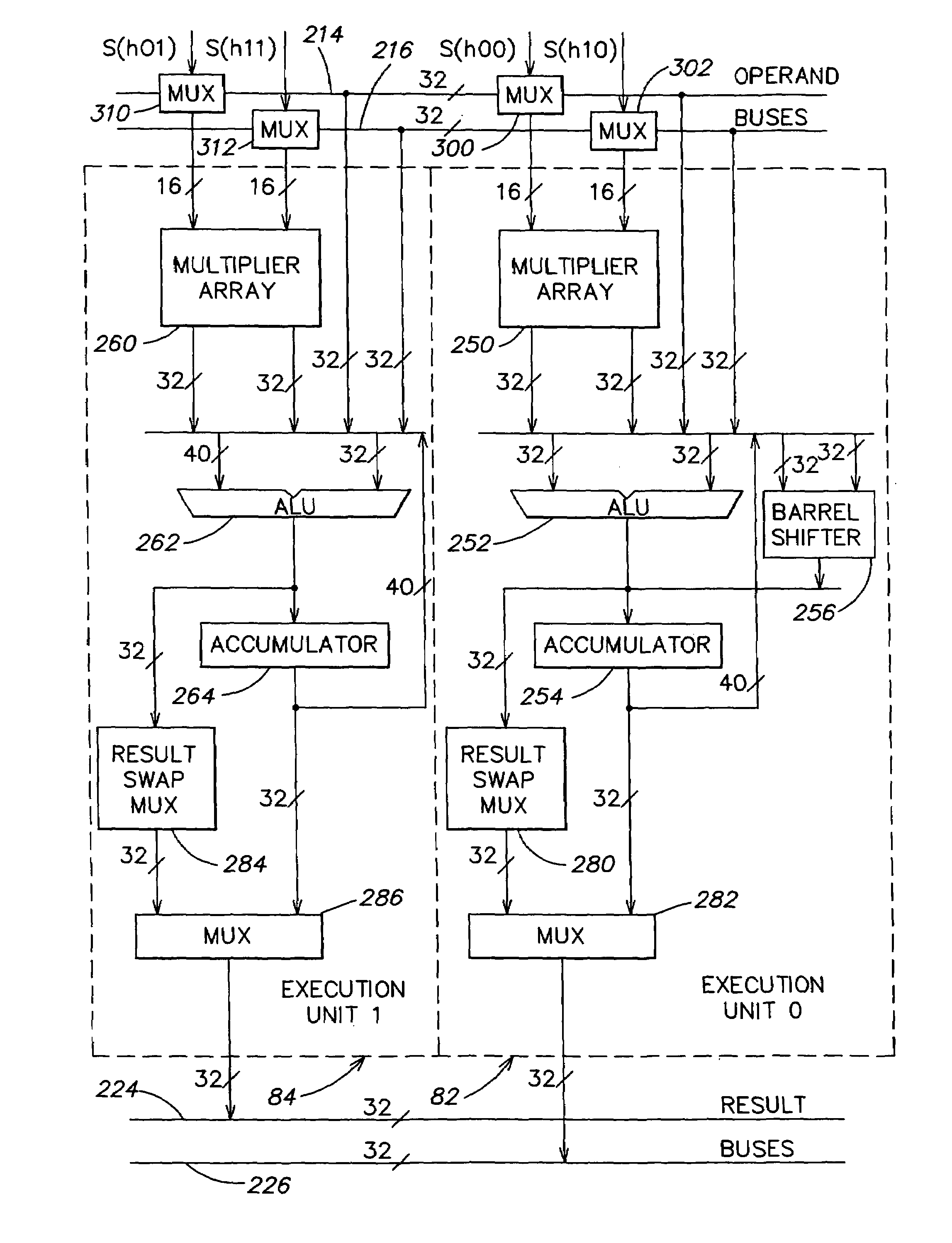
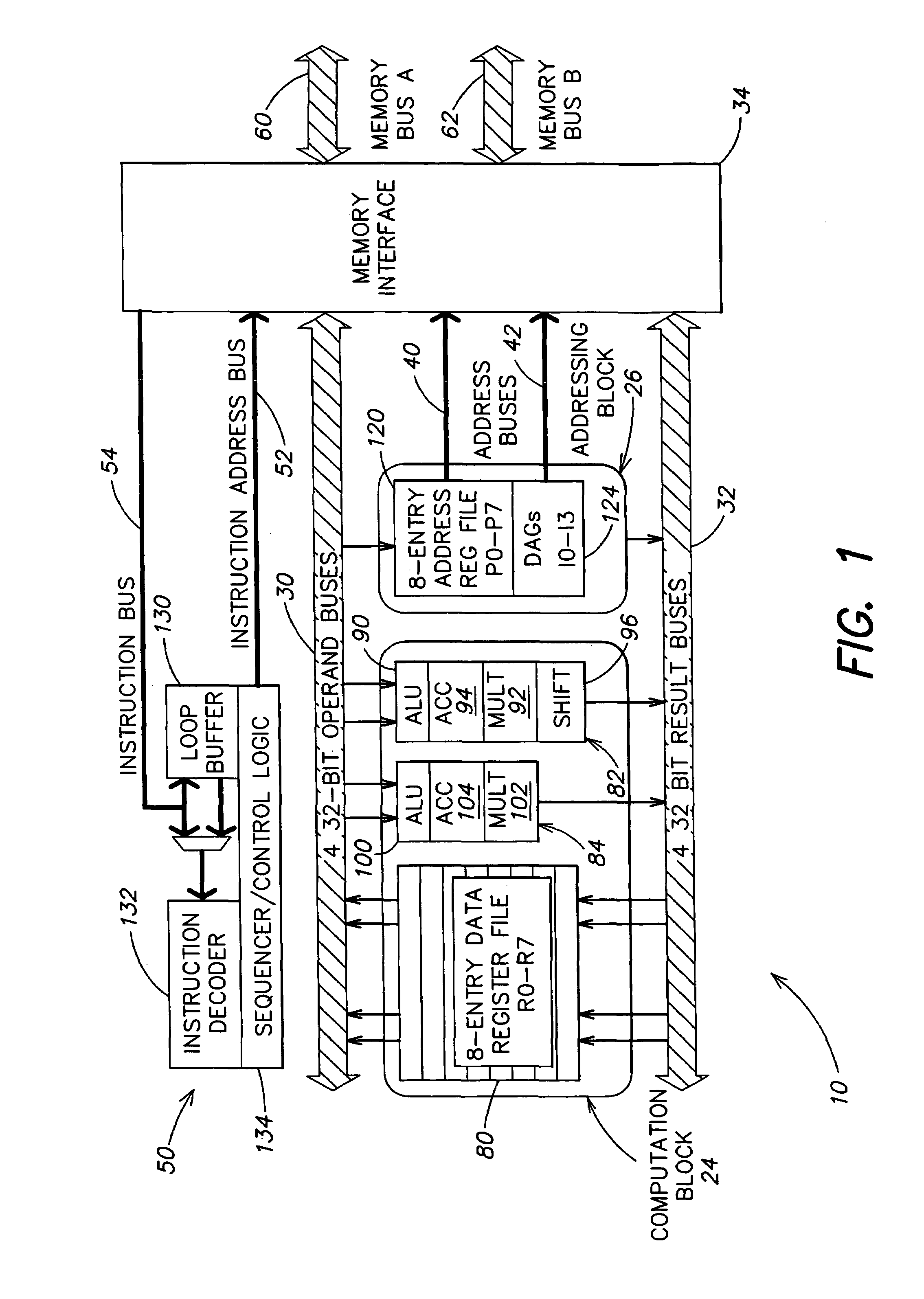
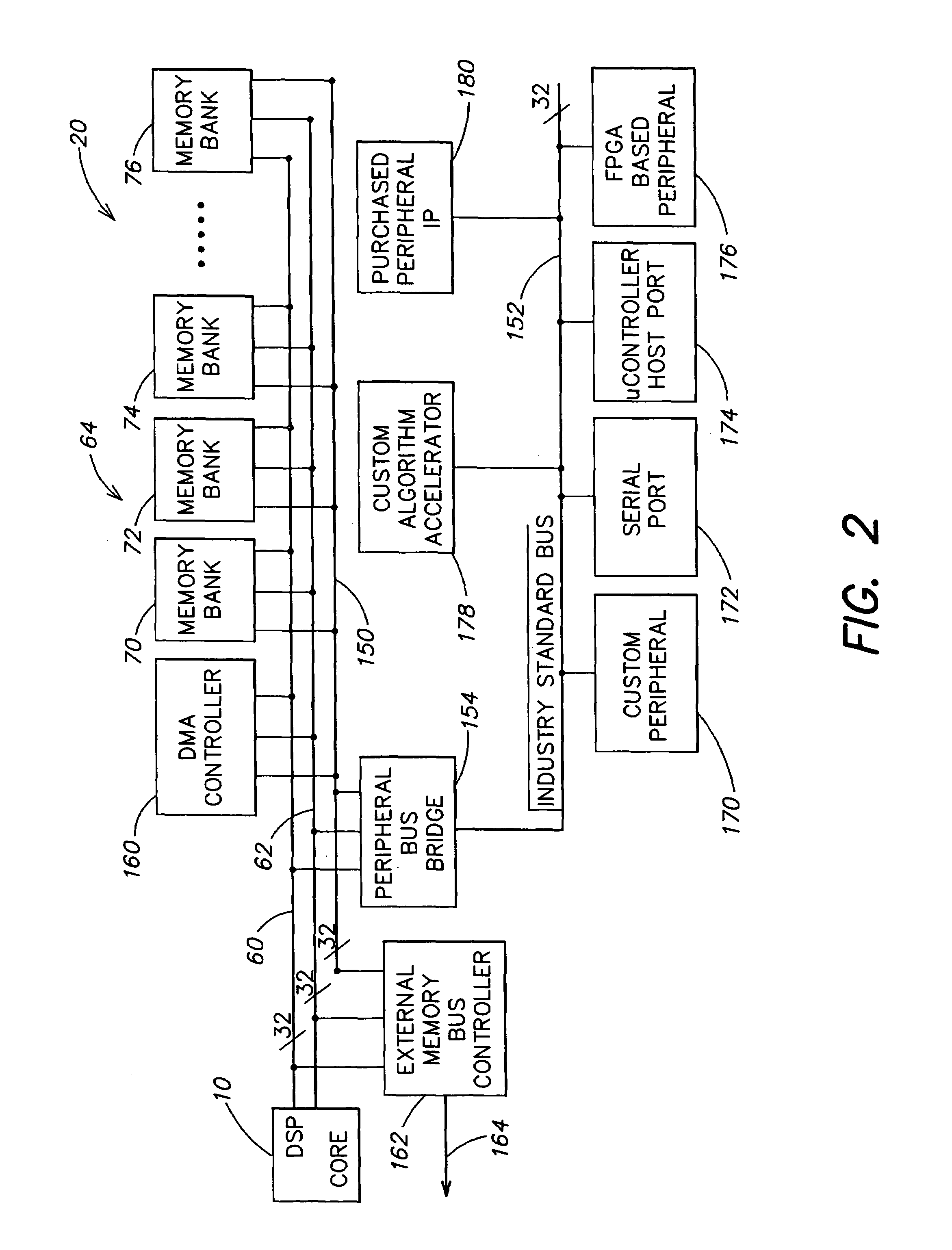
- A computation core with dual execution units, a register file, and operand buses that allow for flexible operand selection and result swapping, enabling efficient execution of both digital signal processor and microcontroller instructions in a single core, along with a pipeline structure that avoids stalling during memory access operations.

Power Efficiency Considerations in Processing Unit Selection
Power efficiency represents a critical factor in selecting between Multipoint Control Units (MCUs) and Digital Signal Processors (DSPs) for processing-intensive applications. The architectural differences between these processing units directly impact their energy consumption patterns and operational efficiency under varying workload conditions.
MCUs typically demonstrate superior power efficiency in control-oriented applications due to their optimized instruction sets and integrated peripheral management capabilities. Their ability to enter various low-power states, including sleep and standby modes, makes them particularly suitable for battery-powered devices requiring intermittent processing bursts. The integrated power management units in modern MCUs can dynamically adjust clock frequencies and voltage levels, achieving power consumption as low as microamperes during idle states.
DSPs excel in power efficiency when handling computationally intensive signal processing tasks through their specialized multiply-accumulate units and parallel processing architectures. The dedicated hardware accelerators for common DSP operations, such as FFT and filtering, significantly reduce the number of clock cycles required per operation, translating to lower overall energy consumption for signal processing workloads. Advanced DSP architectures incorporate dynamic voltage and frequency scaling technologies that optimize power consumption based on real-time processing demands.
The power efficiency comparison becomes more complex when considering hybrid processing scenarios. MCUs with integrated DSP capabilities offer balanced power consumption profiles, combining the low-power standby characteristics of traditional microcontrollers with enhanced signal processing efficiency. However, dedicated DSPs often outperform these hybrid solutions in sustained high-throughput applications due to their specialized power optimization techniques.
Thermal management considerations also influence power efficiency selection criteria. DSPs typically require more sophisticated cooling solutions due to higher power densities, potentially offsetting their computational efficiency advantages in power-constrained environments. MCUs generally operate within lower thermal envelopes, simplifying system design and reducing auxiliary power requirements for thermal management.
The selection decision must account for application-specific duty cycles, processing load characteristics, and system-level power budgets to determine the optimal processing unit configuration for maximum energy efficiency.
MCUs typically demonstrate superior power efficiency in control-oriented applications due to their optimized instruction sets and integrated peripheral management capabilities. Their ability to enter various low-power states, including sleep and standby modes, makes them particularly suitable for battery-powered devices requiring intermittent processing bursts. The integrated power management units in modern MCUs can dynamically adjust clock frequencies and voltage levels, achieving power consumption as low as microamperes during idle states.
DSPs excel in power efficiency when handling computationally intensive signal processing tasks through their specialized multiply-accumulate units and parallel processing architectures. The dedicated hardware accelerators for common DSP operations, such as FFT and filtering, significantly reduce the number of clock cycles required per operation, translating to lower overall energy consumption for signal processing workloads. Advanced DSP architectures incorporate dynamic voltage and frequency scaling technologies that optimize power consumption based on real-time processing demands.
The power efficiency comparison becomes more complex when considering hybrid processing scenarios. MCUs with integrated DSP capabilities offer balanced power consumption profiles, combining the low-power standby characteristics of traditional microcontrollers with enhanced signal processing efficiency. However, dedicated DSPs often outperform these hybrid solutions in sustained high-throughput applications due to their specialized power optimization techniques.
Thermal management considerations also influence power efficiency selection criteria. DSPs typically require more sophisticated cooling solutions due to higher power densities, potentially offsetting their computational efficiency advantages in power-constrained environments. MCUs generally operate within lower thermal envelopes, simplifying system design and reducing auxiliary power requirements for thermal management.
The selection decision must account for application-specific duty cycles, processing load characteristics, and system-level power budgets to determine the optimal processing unit configuration for maximum energy efficiency.
Cost-Performance Trade-offs in MCU vs DSP Implementation
The cost-performance analysis between MCU and DSP implementations reveals significant trade-offs that organizations must carefully evaluate when selecting processing solutions for multipoint control applications. Initial hardware acquisition costs typically favor MCU-based systems, with general-purpose microcontrollers ranging from $2-50 per unit compared to specialized DSPs that can cost $20-200 per unit depending on processing capabilities and feature sets.
Development costs present another critical consideration, as MCU implementations generally require lower upfront investment in specialized development tools and expertise. Standard C programming environments and widely available development boards reduce barrier to entry, while DSP implementations often necessitate specialized knowledge of signal processing algorithms, optimized compilers, and dedicated development environments that can increase project timelines by 20-40%.
Power consumption characteristics directly impact operational costs, particularly in battery-powered or energy-constrained applications. MCUs typically operate at lower clock frequencies with simpler architectures, resulting in power consumption ranges of 10-100mW during active processing. DSPs, while more power-hungry at 50-500mW, deliver substantially higher computational throughput per watt when handling intensive signal processing tasks, making them more cost-effective for high-performance applications.
Performance scalability represents a crucial long-term cost factor. MCU-based solutions may require multiple processing units or external accelerators to handle increasing computational demands, potentially doubling or tripling system costs. DSP architectures inherently provide better scalability for signal processing workloads, offering superior price-performance ratios as application complexity grows.
Maintenance and lifecycle costs also differ significantly between implementations. MCU-based systems benefit from broader supplier ecosystems and longer product lifecycles, reducing obsolescence risks. DSP solutions, while potentially offering better performance longevity, may face more frequent hardware refresh cycles due to rapidly evolving signal processing requirements and specialized vendor dependencies.
Development costs present another critical consideration, as MCU implementations generally require lower upfront investment in specialized development tools and expertise. Standard C programming environments and widely available development boards reduce barrier to entry, while DSP implementations often necessitate specialized knowledge of signal processing algorithms, optimized compilers, and dedicated development environments that can increase project timelines by 20-40%.
Power consumption characteristics directly impact operational costs, particularly in battery-powered or energy-constrained applications. MCUs typically operate at lower clock frequencies with simpler architectures, resulting in power consumption ranges of 10-100mW during active processing. DSPs, while more power-hungry at 50-500mW, deliver substantially higher computational throughput per watt when handling intensive signal processing tasks, making them more cost-effective for high-performance applications.
Performance scalability represents a crucial long-term cost factor. MCU-based solutions may require multiple processing units or external accelerators to handle increasing computational demands, potentially doubling or tripling system costs. DSP architectures inherently provide better scalability for signal processing workloads, offering superior price-performance ratios as application complexity grows.
Maintenance and lifecycle costs also differ significantly between implementations. MCU-based systems benefit from broader supplier ecosystems and longer product lifecycles, reducing obsolescence risks. DSP solutions, while potentially offering better performance longevity, may face more frequent hardware refresh cycles due to rapidly evolving signal processing requirements and specialized vendor dependencies.
Unlock deeper insights with PatSnap Eureka Quick Research — get a full tech report to explore trends and direct your research. Try now!
Generate Your Research Report Instantly with AI Agent
Supercharge your innovation with PatSnap Eureka AI Agent Platform!