
Heat Engine vs Internal Combustion Engine: Efficiency
OCT 9, 20268 MIN READ
Generate Your Research Report Instantly with AI Agent
Patsnap Eureka helps you evaluate technical feasibility & market potential.
Heat Engine vs ICE Efficiency Background and Objectives
The quest for efficient energy conversion has been central to industrial and technological advancement since the 18th century. Heat engines, encompassing a broad category of devices that convert thermal energy into mechanical work, have evolved from early steam engines to modern gas turbines and Stirling engines. Internal combustion engines, as a specialized subset of heat engines, have dominated transportation and power generation sectors since the late 19th century. Understanding the efficiency differences between these two categories represents a critical research area for addressing contemporary energy challenges and environmental concerns.
The fundamental distinction lies in combustion location and thermodynamic cycle implementation. Internal combustion engines burn fuel directly within the working chamber, while external heat engines receive thermal energy from external sources. This architectural difference profoundly impacts theoretical efficiency limits, practical performance characteristics, and application suitability. Historical development shows that internal combustion engines achieved rapid adoption due to superior power-to-weight ratios, while external heat engines maintained advantages in fuel flexibility and emission control.
Current global imperatives around carbon neutrality and sustainable energy systems have renewed interest in comparative efficiency analysis. The transportation sector, responsible for approximately 24% of global CO2 emissions, predominantly relies on internal combustion engines. Meanwhile, emerging technologies such as concentrated solar power and waste heat recovery systems leverage external heat engine principles. This divergence necessitates rigorous technical evaluation to guide future development priorities.
The primary objective of this research is to establish comprehensive efficiency benchmarks across different operating conditions, fuel types, and scale factors. Secondary objectives include identifying technological barriers limiting efficiency improvements, evaluating the potential for hybrid configurations, and projecting future efficiency trajectories based on materials science and thermodynamic innovations. This analysis aims to provide actionable insights for strategic technology investment decisions and policy formulation in the evolving energy landscape.
The fundamental distinction lies in combustion location and thermodynamic cycle implementation. Internal combustion engines burn fuel directly within the working chamber, while external heat engines receive thermal energy from external sources. This architectural difference profoundly impacts theoretical efficiency limits, practical performance characteristics, and application suitability. Historical development shows that internal combustion engines achieved rapid adoption due to superior power-to-weight ratios, while external heat engines maintained advantages in fuel flexibility and emission control.
Current global imperatives around carbon neutrality and sustainable energy systems have renewed interest in comparative efficiency analysis. The transportation sector, responsible for approximately 24% of global CO2 emissions, predominantly relies on internal combustion engines. Meanwhile, emerging technologies such as concentrated solar power and waste heat recovery systems leverage external heat engine principles. This divergence necessitates rigorous technical evaluation to guide future development priorities.
The primary objective of this research is to establish comprehensive efficiency benchmarks across different operating conditions, fuel types, and scale factors. Secondary objectives include identifying technological barriers limiting efficiency improvements, evaluating the potential for hybrid configurations, and projecting future efficiency trajectories based on materials science and thermodynamic innovations. This analysis aims to provide actionable insights for strategic technology investment decisions and policy formulation in the evolving energy landscape.
Market Demand for High-Efficiency Power Systems
The global demand for high-efficiency power systems has intensified significantly in recent years, driven by escalating environmental regulations, energy security concerns, and economic pressures across multiple industrial sectors. Transportation remains the largest consumer of power conversion technologies, with automotive, marine, and aviation industries collectively seeking solutions that maximize fuel economy while minimizing emissions. Stringent emission standards such as Euro 7, China VI, and increasingly restrictive carbon neutrality targets have compelled manufacturers to prioritize efficiency improvements in both heat engines and internal combustion engines.
Industrial and stationary power generation sectors represent another substantial market segment demanding enhanced efficiency. Combined heat and power systems, distributed generation facilities, and backup power installations are increasingly evaluated based on their thermal efficiency and operational cost-effectiveness. The rising cost of fossil fuels and the economic viability of waste heat recovery have made efficiency optimization a critical purchasing criterion for industrial operators.
The commercial vehicle sector demonstrates particularly acute demand for efficiency gains, as fuel costs constitute a major operational expense. Fleet operators in logistics, public transportation, and heavy-duty applications are actively seeking power systems that deliver measurable reductions in fuel consumption. This market segment shows willingness to invest in advanced technologies that promise rapid return on investment through operational savings.
Emerging markets in developing economies present growing demand for affordable yet efficient power solutions. As these regions industrialize and motorize rapidly, there exists substantial opportunity for deploying optimized power systems that balance performance requirements with fuel economy. Local emission regulations are progressively tightening, creating additional impetus for efficiency-focused technologies.
The marine industry faces unique efficiency demands due to international maritime regulations targeting greenhouse gas reductions. Large-scale propulsion systems and auxiliary power units aboard commercial vessels require substantial efficiency improvements to meet compliance standards while maintaining economic competitiveness in global shipping markets.
Hybrid and range-extended electric vehicle architectures have created specialized demand for highly efficient thermal engines operating in optimized duty cycles. These applications prioritize peak efficiency over broad operating ranges, presenting distinct technical requirements compared to conventional automotive powertrains.
Industrial and stationary power generation sectors represent another substantial market segment demanding enhanced efficiency. Combined heat and power systems, distributed generation facilities, and backup power installations are increasingly evaluated based on their thermal efficiency and operational cost-effectiveness. The rising cost of fossil fuels and the economic viability of waste heat recovery have made efficiency optimization a critical purchasing criterion for industrial operators.
The commercial vehicle sector demonstrates particularly acute demand for efficiency gains, as fuel costs constitute a major operational expense. Fleet operators in logistics, public transportation, and heavy-duty applications are actively seeking power systems that deliver measurable reductions in fuel consumption. This market segment shows willingness to invest in advanced technologies that promise rapid return on investment through operational savings.
Emerging markets in developing economies present growing demand for affordable yet efficient power solutions. As these regions industrialize and motorize rapidly, there exists substantial opportunity for deploying optimized power systems that balance performance requirements with fuel economy. Local emission regulations are progressively tightening, creating additional impetus for efficiency-focused technologies.
The marine industry faces unique efficiency demands due to international maritime regulations targeting greenhouse gas reductions. Large-scale propulsion systems and auxiliary power units aboard commercial vessels require substantial efficiency improvements to meet compliance standards while maintaining economic competitiveness in global shipping markets.
Hybrid and range-extended electric vehicle architectures have created specialized demand for highly efficient thermal engines operating in optimized duty cycles. These applications prioritize peak efficiency over broad operating ranges, presenting distinct technical requirements compared to conventional automotive powertrains.
Current Efficiency Status and Technical Barriers
Internal combustion engines currently dominate the transportation and power generation sectors, achieving thermal efficiencies ranging from 25% to 45% depending on the engine type and operating conditions. Modern gasoline engines typically operate at 20-30% efficiency under real-world driving conditions, while advanced diesel engines can reach 40-45% efficiency in optimal scenarios. High-performance turbocharged engines and those employing variable valve timing have pushed boundaries further, yet significant energy losses persist through exhaust heat, friction, and incomplete combustion.
External combustion heat engines, particularly Stirling engines and organic Rankine cycle systems, demonstrate theoretical efficiency advantages but face practical implementation challenges. Stirling engines can theoretically approach Carnot efficiency limits, yet commercial applications rarely exceed 30-40% due to heat transfer limitations and mechanical losses. Steam turbines in large-scale power plants achieve efficiencies of 33-48%, benefiting from economies of scale and advanced thermodynamic cycles that internal combustion engines cannot replicate in mobile applications.
The primary technical barriers limiting internal combustion engine efficiency include thermodynamic constraints imposed by the Otto and Diesel cycles, heat rejection requirements, and mechanical friction losses accounting for 10-15% of fuel energy. Knock limitations in gasoline engines restrict compression ratios, while diesel engines face challenges with nitrogen oxide formation at high temperatures. Advanced technologies such as homogeneous charge compression ignition and variable compression ratios show promise but introduce complexity and cost concerns.
Heat engines encounter distinct obstacles, particularly in transient response and power density. External combustion systems require substantial heat exchanger surface areas, resulting in larger, heavier configurations unsuitable for many mobile applications. Heat transfer rates fundamentally limit power output per unit volume, making heat engines less competitive where space and weight constraints are critical. Additionally, startup times for external combustion systems significantly exceed those of internal combustion engines, restricting their applicability in transportation sectors.
Material limitations present challenges for both engine types. Internal combustion engines operating at higher compression ratios and temperatures demand advanced materials resistant to thermal and mechanical stress. Heat engines pursuing higher temperature differentials face similar material constraints in heat exchanger design, where thermal cycling and corrosion resistance become critical factors affecting longevity and maintenance requirements.
External combustion heat engines, particularly Stirling engines and organic Rankine cycle systems, demonstrate theoretical efficiency advantages but face practical implementation challenges. Stirling engines can theoretically approach Carnot efficiency limits, yet commercial applications rarely exceed 30-40% due to heat transfer limitations and mechanical losses. Steam turbines in large-scale power plants achieve efficiencies of 33-48%, benefiting from economies of scale and advanced thermodynamic cycles that internal combustion engines cannot replicate in mobile applications.
The primary technical barriers limiting internal combustion engine efficiency include thermodynamic constraints imposed by the Otto and Diesel cycles, heat rejection requirements, and mechanical friction losses accounting for 10-15% of fuel energy. Knock limitations in gasoline engines restrict compression ratios, while diesel engines face challenges with nitrogen oxide formation at high temperatures. Advanced technologies such as homogeneous charge compression ignition and variable compression ratios show promise but introduce complexity and cost concerns.
Heat engines encounter distinct obstacles, particularly in transient response and power density. External combustion systems require substantial heat exchanger surface areas, resulting in larger, heavier configurations unsuitable for many mobile applications. Heat transfer rates fundamentally limit power output per unit volume, making heat engines less competitive where space and weight constraints are critical. Additionally, startup times for external combustion systems significantly exceed those of internal combustion engines, restricting their applicability in transportation sectors.
Material limitations present challenges for both engine types. Internal combustion engines operating at higher compression ratios and temperatures demand advanced materials resistant to thermal and mechanical stress. Heat engines pursuing higher temperature differentials face similar material constraints in heat exchanger design, where thermal cycling and corrosion resistance become critical factors affecting longevity and maintenance requirements.
Mainstream Efficiency Enhancement Solutions
01 Waste Heat Recovery Systems
Methods and devices designed to capture and utilize waste heat from internal combustion engine exhaust or cooling systems, converting lost thermal energy into usable work to enhance overall engine efficiency.- Waste heat recovery systems: Waste heat recovery devices and systems are utilized to capture residual thermal energy from exhaust gases or cooling components of an internal combustion engine. Recovering this waste heat enables additional energy generation or feedback, thereby significantly improving the overall system efficiency.
- Combustion efficiency enhancement and fuel modification: Methods and devices are implemented to enhance combustion efficiency directly within the combustion chamber. This includes fuel heat treatment, oxygen molecule activation via terahertz wave resonance, and structural modifications that optimize air-fuel mixing and reduce unburned fuel loss.
- Thermal management and engine heat insulation: Thermal management systems and specialized heat-insulating layers on combustion chamber walls are used to regulate heat flow within the engine. By minimizing heat loss to the surroundings and maintaining optimal operating temperatures, the engine's thermal efficiency is improved.
- Optimization of engine working cycles and feedback control: Modified thermodynamic working cycles, advanced feedback control methods, and real-time efficiency monitoring are integrated into the engine design. These techniques optimize operating parameters dependent on combustion pressure and state parameters to maintain peak engine efficiency.
- Combined engine cycles and auxiliary heat engine integration: Internal combustion engines can be combined with secondary heat engines, such as steam engines or turbines, into multicycle configurations. This hybrid operational approach extracts work from multiple thermodynamic stages to drastically boost overall energy output.
02 Optimal Engine Design and Thermodynamic Cycles
Advanced internal combustion engine designs and modified working cycles structured to maximize thermal efficiency, optimize mechanical feedback, and increase overall work output.Expand Specific Solutions03 Fuel Treatment and Combustion Optimization
Technologies aimed at improving combustion efficiency through physical or chemical fuel treatment, molecular activation, precise air-fuel control, and advanced ignition methods to ensure complete fuel burn.Expand Specific Solutions04 Thermal Management and Insulation
Implementation of heat control systems, thermal insulation layers on combustion chamber walls, and specialized heat sinks to minimize unwanted heat loss and maintain optimal operating temperatures.Expand Specific Solutions05 Engine Operation Control and Diagnostic Methods
Control strategies, algorithms, and diagnostic apparatuses that determine real-time engine conditions and internal thermal efficiency to dynamically adjust operating parameters for peak performance.Expand Specific Solutions
Major Players in Engine Technology Development
The comparative research on heat engine versus internal combustion engine efficiency represents a mature technological field experiencing incremental innovation rather than disruptive transformation. The market remains substantial, driven by ongoing demands for energy efficiency improvements and emissions reduction across automotive, industrial, and power generation sectors. While internal combustion engines dominate current applications, heat engine technologies are gaining renewed attention for waste heat recovery and hybrid systems. Key players include established manufacturers like DENSO Corp., which advances automotive powertrain systems, specialized engineering firms such as Thermal Systems Inc. and International Power Technology Inc. providing industrial solutions, and academic institutions including Tianjin University and Newcastle University conducting fundamental research. Chinese entities like Harbin Xiangkai Technology Development Co. contribute to regional market development, reflecting the technology's global competitive landscape and continued optimization focus.
Thermal Systems, Inc.
Technical Solution: Thermal Systems, Inc. specializes in developing waste heat recovery systems that bridge the efficiency gap between pure heat engines and internal combustion engines. Their proprietary technology utilizes organic Rankine cycle (ORC) systems integrated with ICE exhaust streams, converting thermal energy that would otherwise be lost into useful mechanical or electrical power. Comparative analysis from their systems shows that baseline ICE efficiency of 30-35% can be enhanced by 8-12 percentage points through heat recovery integration. The company's research demonstrates that while standalone heat engines face challenges with transient load response, hybrid configurations combining ICE primary power with heat engine bottoming cycles offer optimal efficiency-performance balance. Their systems have been validated in heavy-duty truck applications, showing fuel consumption reductions of 5-7% through recovered waste heat utilization, effectively creating a combined cycle approach that leverages advantages of both engine types.
Strengths: Practical commercial solutions, proven field performance data, expertise in system integration and optimization. Weaknesses: Technology adds system complexity and weight, economic payback period may be extended in lower-utilization applications.
International Power Technology, Inc.
Technical Solution: International Power Technology, Inc. focuses on advanced power generation systems with research comparing efficiency characteristics of various heat engine configurations against internal combustion alternatives for stationary and mobile applications. Their technical assessments evaluate Stirling engines, Brayton cycle gas turbines, and Rankine steam cycles in direct comparison with reciprocating ICEs across multiple performance metrics. Research data indicates that for continuous-duty stationary applications, combined-cycle heat engines can achieve system efficiencies of 55-60%, significantly exceeding standalone ICE generator sets at 35-40%. However, their studies also document that ICEs maintain advantages in specific power output (power per unit weight) by factors of 2-3 times, and demonstrate superior cold-start capability and transient response. The company's comparative framework examines total lifecycle efficiency including manufacturing energy, operational efficiency, and maintenance requirements, providing holistic efficiency assessments beyond simple thermal conversion rates.
Strengths: Comprehensive lifecycle analysis approach, extensive experience across multiple engine technologies, strong focus on application-specific optimization. Weaknesses: Limited presence in automotive sector, solutions may be cost-prohibitive for small-scale applications.
Core Patents in Engine Efficiency Improvement
Heat Engine with High Efficiency Attributable to Temperature Responsive Equilibrium Reactions and Method for Optimization
PatentInactiveUS20140202147A1
Innovation
- The use of a working fluid with a molecular dimer structure that chemically dissociates into monomer gas molecules at higher temperatures, increasing the number of gas particles, combined with optimized operating points and regenerative heat exchange, allows for enhanced thermal efficiency and work output without the need for catalysts.


High efficiency integrated heat engine (HEIHE)
PatentInactiveUS20090056331A1
Innovation
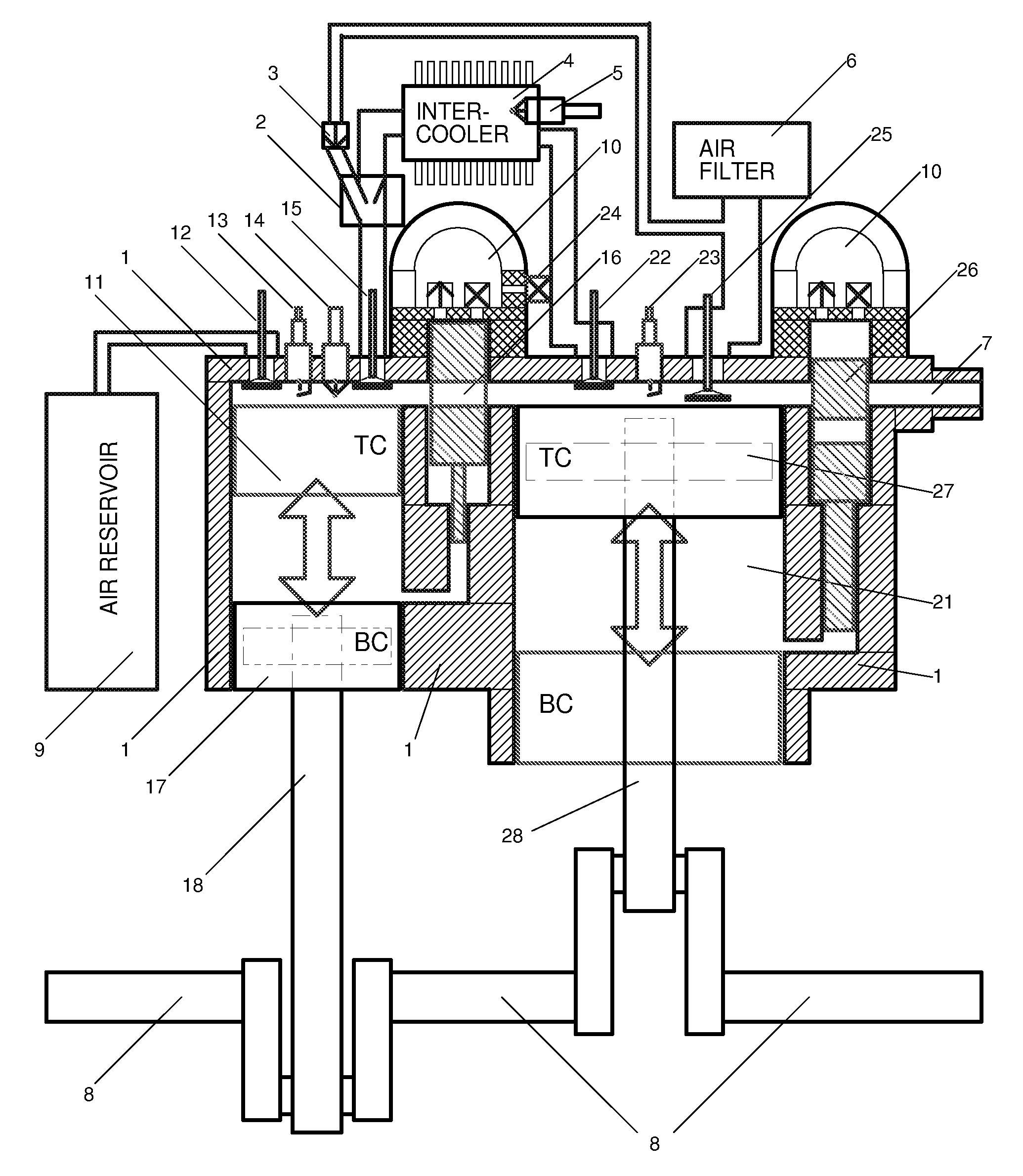
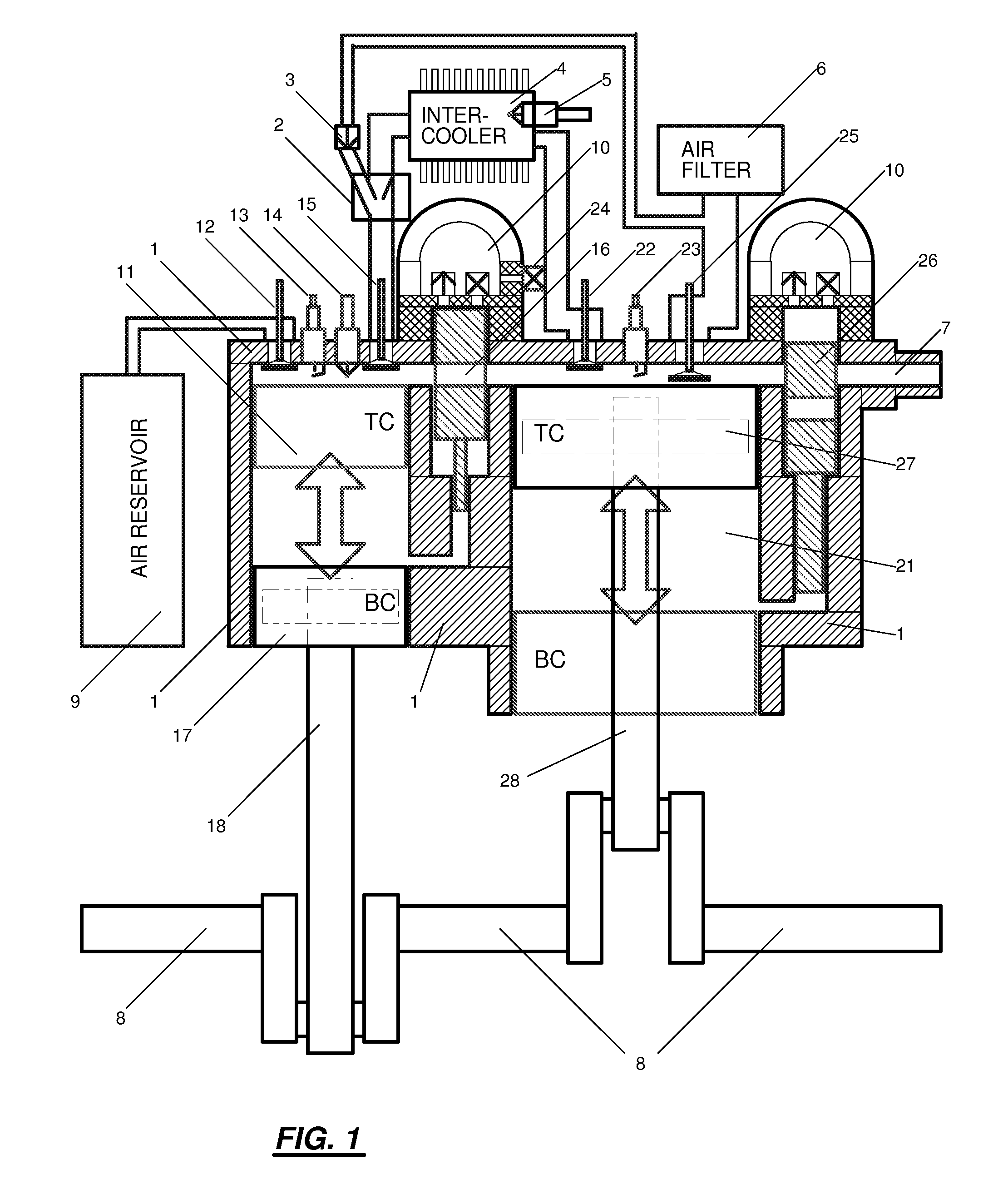
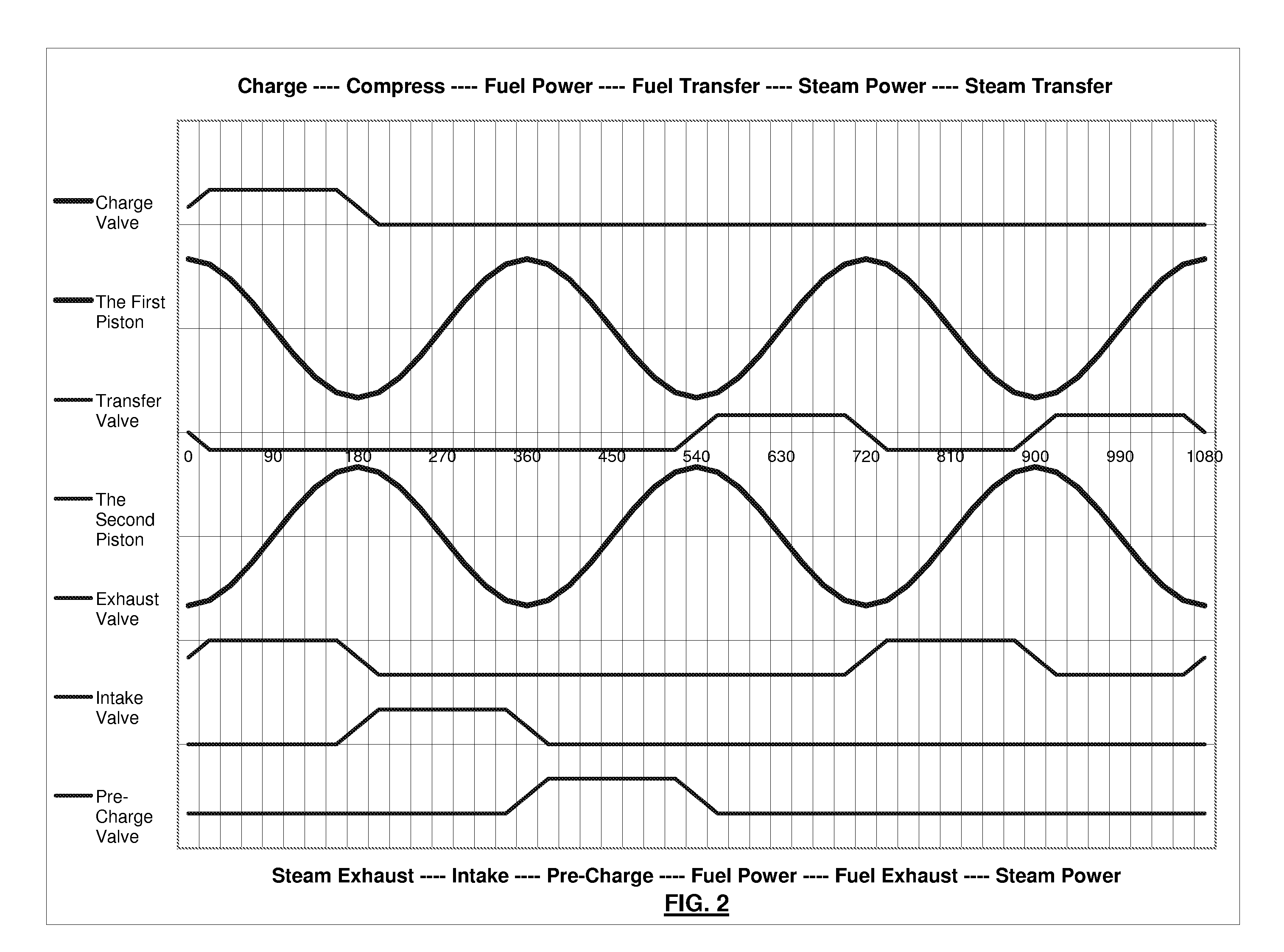
- The High Efficient Integrated Heat Engine (HEIHE) employs a twin compound cylinder structure with integrated air-fuel and steam expansions, utilizing compressed air as a secondary working fluid for enhanced waste heat recovery, and incorporates features like exhaust actuated valves, injective superchargers, and in-cylinder catalytic meshes to achieve higher efficiency through staged combustion and thermal energy recovery.

Environmental Regulations Impact on Engine Design
Environmental regulations have emerged as a dominant force reshaping engine design philosophies across both heat engines and internal combustion engines over the past three decades. The progressive tightening of emission standards, particularly regarding nitrogen oxides, particulate matter, carbon monoxide, and unburned hydrocarbons, has fundamentally altered the engineering priorities that govern thermal efficiency optimization. Regulatory frameworks such as Euro VI, EPA Tier 4, and China VI have established increasingly stringent limits that compel manufacturers to integrate advanced emission control technologies, often at the expense of theoretical thermodynamic efficiency gains.
The implementation of exhaust gas recirculation systems, selective catalytic reduction units, diesel particulate filters, and three-way catalytic converters represents mandatory design elements that introduce parasitic energy losses and increase system complexity. These components, while essential for meeting regulatory compliance, impose additional backpressure, thermal management challenges, and auxiliary power consumption that directly impact the net efficiency of both engine categories. The trade-off between achieving optimal combustion temperatures for efficiency and maintaining temperatures within regulatory emission windows has become a central design constraint.
Furthermore, the global push toward carbon neutrality has introduced lifecycle emission considerations that extend beyond operational efficiency metrics. Regulations now increasingly account for well-to-wheel emissions, prompting a fundamental reassessment of fuel selection, combustion strategies, and hybrid system integration. This regulatory evolution has accelerated research into alternative combustion modes, including homogeneous charge compression ignition and low-temperature combustion concepts, which attempt to simultaneously address efficiency and emission objectives.
The divergent regulatory treatment of stationary heat engines versus mobile internal combustion engines has created distinct development trajectories. Stationary applications often face site-specific emission permits with continuous monitoring requirements, while mobile applications must demonstrate compliance across varied operating conditions and duty cycles. This regulatory bifurcation influences testing methodologies, calibration strategies, and the economic viability of efficiency-enhancing technologies, ultimately determining which innovations achieve commercial deployment in comparative efficiency research.
The implementation of exhaust gas recirculation systems, selective catalytic reduction units, diesel particulate filters, and three-way catalytic converters represents mandatory design elements that introduce parasitic energy losses and increase system complexity. These components, while essential for meeting regulatory compliance, impose additional backpressure, thermal management challenges, and auxiliary power consumption that directly impact the net efficiency of both engine categories. The trade-off between achieving optimal combustion temperatures for efficiency and maintaining temperatures within regulatory emission windows has become a central design constraint.
Furthermore, the global push toward carbon neutrality has introduced lifecycle emission considerations that extend beyond operational efficiency metrics. Regulations now increasingly account for well-to-wheel emissions, prompting a fundamental reassessment of fuel selection, combustion strategies, and hybrid system integration. This regulatory evolution has accelerated research into alternative combustion modes, including homogeneous charge compression ignition and low-temperature combustion concepts, which attempt to simultaneously address efficiency and emission objectives.
The divergent regulatory treatment of stationary heat engines versus mobile internal combustion engines has created distinct development trajectories. Stationary applications often face site-specific emission permits with continuous monitoring requirements, while mobile applications must demonstrate compliance across varied operating conditions and duty cycles. This regulatory bifurcation influences testing methodologies, calibration strategies, and the economic viability of efficiency-enhancing technologies, ultimately determining which innovations achieve commercial deployment in comparative efficiency research.
Thermodynamic Limits and Breakthrough Pathways
The fundamental efficiency constraints of heat engines and internal combustion engines are governed by the second law of thermodynamics, which establishes theoretical maximum efficiency boundaries that no real-world system can surpass. For heat engines operating on the Carnot cycle, the maximum theoretical efficiency is determined by the temperature differential between the hot and cold reservoirs, expressed as η = 1 - (Tc/Th). This fundamental limitation means that even idealized heat engines cannot achieve complete energy conversion. Internal combustion engines, while also constrained by thermodynamic principles, face additional losses from incomplete combustion, heat transfer through cylinder walls, and friction, typically achieving practical efficiencies between 25-40% compared to their theoretical Carnot limits of 60-70%.
The gap between theoretical and practical efficiency represents a critical frontier for technological advancement. Current research pathways focus on minimizing irreversibilities through advanced combustion strategies, including homogeneous charge compression ignition and low-temperature combustion modes that reduce heat losses and improve fuel conversion efficiency. Material science innovations enabling higher operating temperatures directly expand the Carnot efficiency ceiling, with ceramic composites and thermal barrier coatings showing promise for next-generation engines.
Breakthrough opportunities exist in waste heat recovery systems that capture and convert thermal energy otherwise lost to the environment. Organic Rankine cycles, thermoelectric generators, and turbo-compounding technologies represent practical approaches to approaching thermodynamic limits by utilizing secondary energy conversion pathways. Additionally, variable compression ratio mechanisms and advanced valve timing systems enable engines to operate closer to optimal thermodynamic conditions across diverse operating ranges.
Emerging paradigms challenge conventional engine architectures entirely. Isothermal compression and expansion processes, though difficult to implement practically, theoretically eliminate temperature-related irreversibilities. Hybrid systems combining internal combustion engines with electric powertrains effectively extend operational efficiency by optimizing engine operation within narrow, high-efficiency windows. These multifaceted approaches collectively define the pathway toward overcoming inherent thermodynamic barriers while acknowledging that absolute limits remain fundamentally insurmountable within classical thermodynamic frameworks.
The gap between theoretical and practical efficiency represents a critical frontier for technological advancement. Current research pathways focus on minimizing irreversibilities through advanced combustion strategies, including homogeneous charge compression ignition and low-temperature combustion modes that reduce heat losses and improve fuel conversion efficiency. Material science innovations enabling higher operating temperatures directly expand the Carnot efficiency ceiling, with ceramic composites and thermal barrier coatings showing promise for next-generation engines.
Breakthrough opportunities exist in waste heat recovery systems that capture and convert thermal energy otherwise lost to the environment. Organic Rankine cycles, thermoelectric generators, and turbo-compounding technologies represent practical approaches to approaching thermodynamic limits by utilizing secondary energy conversion pathways. Additionally, variable compression ratio mechanisms and advanced valve timing systems enable engines to operate closer to optimal thermodynamic conditions across diverse operating ranges.
Emerging paradigms challenge conventional engine architectures entirely. Isothermal compression and expansion processes, though difficult to implement practically, theoretically eliminate temperature-related irreversibilities. Hybrid systems combining internal combustion engines with electric powertrains effectively extend operational efficiency by optimizing engine operation within narrow, high-efficiency windows. These multifaceted approaches collectively define the pathway toward overcoming inherent thermodynamic barriers while acknowledging that absolute limits remain fundamentally insurmountable within classical thermodynamic frameworks.
Unlock deeper insights with Patsnap Eureka Quick Research — get a full tech report to explore trends and direct your research. Try now!
Generate Your Research Report Instantly with AI Agent
Supercharge your innovation with Patsnap Eureka AI Agent Platform!