

Control Engineering's Role in Enhancing Safety Systems
MAR 27, 20269 MIN READ
Generate Your Research Report Instantly with AI Agent
PatSnap Eureka helps you evaluate technical feasibility & market potential.
Control Engineering Safety System Background and Objectives
Control engineering has emerged as a fundamental discipline in modern industrial safety systems, evolving from basic mechanical controls to sophisticated digital architectures that govern critical infrastructure worldwide. The field encompasses the design, implementation, and optimization of automated systems that monitor, regulate, and protect industrial processes across sectors including chemical processing, nuclear power generation, aerospace, automotive manufacturing, and oil and gas operations.
The historical development of control engineering in safety applications traces back to the early 20th century with simple mechanical interlocks and pressure relief systems. The introduction of electronic controls in the 1960s marked a significant milestone, followed by the revolutionary adoption of programmable logic controllers (PLCs) and distributed control systems (DCS) in the 1970s and 1980s. The digital transformation accelerated with the integration of advanced sensors, real-time monitoring capabilities, and intelligent algorithms that enable predictive safety interventions.
Contemporary safety systems leverage sophisticated control engineering principles to achieve unprecedented levels of reliability and responsiveness. Modern architectures incorporate redundant control loops, fail-safe mechanisms, and multi-layered protection strategies that can detect anomalies within milliseconds and execute protective actions automatically. The integration of artificial intelligence and machine learning algorithms has further enhanced the predictive capabilities of these systems, enabling proactive risk mitigation rather than purely reactive responses.
The primary objective of control engineering in safety systems is to establish robust, reliable, and resilient protection mechanisms that prevent catastrophic failures, minimize human exposure to hazardous conditions, and ensure operational continuity under adverse circumstances. These systems must achieve extremely high safety integrity levels (SIL) while maintaining operational efficiency and cost-effectiveness.
Key technical objectives include developing fault-tolerant control architectures that can maintain safe operation even when individual components fail, implementing real-time monitoring and diagnostic capabilities that provide early warning of potential hazards, and creating adaptive control strategies that can respond appropriately to unexpected operating conditions. The systems must also ensure seamless integration with existing industrial infrastructure while meeting stringent regulatory compliance requirements and international safety standards such as IEC 61508 and IEC 61511.
The historical development of control engineering in safety applications traces back to the early 20th century with simple mechanical interlocks and pressure relief systems. The introduction of electronic controls in the 1960s marked a significant milestone, followed by the revolutionary adoption of programmable logic controllers (PLCs) and distributed control systems (DCS) in the 1970s and 1980s. The digital transformation accelerated with the integration of advanced sensors, real-time monitoring capabilities, and intelligent algorithms that enable predictive safety interventions.
Contemporary safety systems leverage sophisticated control engineering principles to achieve unprecedented levels of reliability and responsiveness. Modern architectures incorporate redundant control loops, fail-safe mechanisms, and multi-layered protection strategies that can detect anomalies within milliseconds and execute protective actions automatically. The integration of artificial intelligence and machine learning algorithms has further enhanced the predictive capabilities of these systems, enabling proactive risk mitigation rather than purely reactive responses.
The primary objective of control engineering in safety systems is to establish robust, reliable, and resilient protection mechanisms that prevent catastrophic failures, minimize human exposure to hazardous conditions, and ensure operational continuity under adverse circumstances. These systems must achieve extremely high safety integrity levels (SIL) while maintaining operational efficiency and cost-effectiveness.
Key technical objectives include developing fault-tolerant control architectures that can maintain safe operation even when individual components fail, implementing real-time monitoring and diagnostic capabilities that provide early warning of potential hazards, and creating adaptive control strategies that can respond appropriately to unexpected operating conditions. The systems must also ensure seamless integration with existing industrial infrastructure while meeting stringent regulatory compliance requirements and international safety standards such as IEC 61508 and IEC 61511.
Market Demand for Advanced Safety Control Systems
The global market for advanced safety control systems is experiencing unprecedented growth driven by stringent regulatory requirements and increasing awareness of operational safety across multiple industries. Manufacturing sectors, particularly chemical processing, oil and gas, and pharmaceutical industries, are demanding sophisticated control engineering solutions to prevent catastrophic failures and ensure worker protection. These industries face mounting pressure from regulatory bodies to implement fail-safe mechanisms and automated safety protocols that can respond to hazardous conditions within milliseconds.
Transportation infrastructure represents another significant demand driver, with smart cities and autonomous vehicle development requiring robust safety control architectures. Railway systems, aviation, and maritime operations are increasingly adopting predictive safety control systems that leverage real-time monitoring and machine learning algorithms to prevent accidents before they occur. The integration of Internet of Things sensors with advanced control systems has created new market opportunities for comprehensive safety monitoring solutions.
The energy sector, including renewable energy installations and traditional power generation facilities, demonstrates substantial appetite for enhanced safety control systems. Wind farms, solar installations, and nuclear facilities require sophisticated control engineering solutions to manage complex safety protocols while maintaining operational efficiency. Grid modernization initiatives worldwide are driving demand for intelligent safety systems that can automatically isolate faults and prevent cascading failures.
Healthcare and biotechnology industries are emerging as high-growth segments for safety control systems, particularly in laboratory automation and medical device manufacturing. These sectors require precise environmental controls and contamination prevention systems that integrate seamlessly with existing operational workflows. The COVID-19 pandemic has accelerated adoption of automated safety monitoring systems in healthcare facilities.
Market demand is increasingly shifting toward integrated safety platforms that combine traditional control engineering with artificial intelligence and predictive analytics capabilities. Organizations seek comprehensive solutions that provide real-time risk assessment, automated emergency response, and continuous safety performance optimization. This trend reflects growing recognition that modern safety challenges require sophisticated, interconnected control systems rather than isolated safety devices.
The competitive landscape shows strong demand for customizable safety control solutions that can adapt to specific industry requirements while maintaining compliance with international safety standards. Companies are prioritizing vendors who can demonstrate proven expertise in both control engineering fundamentals and emerging safety technologies.
Transportation infrastructure represents another significant demand driver, with smart cities and autonomous vehicle development requiring robust safety control architectures. Railway systems, aviation, and maritime operations are increasingly adopting predictive safety control systems that leverage real-time monitoring and machine learning algorithms to prevent accidents before they occur. The integration of Internet of Things sensors with advanced control systems has created new market opportunities for comprehensive safety monitoring solutions.
The energy sector, including renewable energy installations and traditional power generation facilities, demonstrates substantial appetite for enhanced safety control systems. Wind farms, solar installations, and nuclear facilities require sophisticated control engineering solutions to manage complex safety protocols while maintaining operational efficiency. Grid modernization initiatives worldwide are driving demand for intelligent safety systems that can automatically isolate faults and prevent cascading failures.
Healthcare and biotechnology industries are emerging as high-growth segments for safety control systems, particularly in laboratory automation and medical device manufacturing. These sectors require precise environmental controls and contamination prevention systems that integrate seamlessly with existing operational workflows. The COVID-19 pandemic has accelerated adoption of automated safety monitoring systems in healthcare facilities.
Market demand is increasingly shifting toward integrated safety platforms that combine traditional control engineering with artificial intelligence and predictive analytics capabilities. Organizations seek comprehensive solutions that provide real-time risk assessment, automated emergency response, and continuous safety performance optimization. This trend reflects growing recognition that modern safety challenges require sophisticated, interconnected control systems rather than isolated safety devices.
The competitive landscape shows strong demand for customizable safety control solutions that can adapt to specific industry requirements while maintaining compliance with international safety standards. Companies are prioritizing vendors who can demonstrate proven expertise in both control engineering fundamentals and emerging safety technologies.
Current State and Challenges in Safety Control Engineering
Safety control engineering has reached a sophisticated level of maturity, with modern systems incorporating multiple layers of protection and advanced monitoring capabilities. Contemporary safety systems utilize distributed control architectures, redundant hardware configurations, and real-time monitoring networks to ensure continuous operation and rapid fault detection. These systems have evolved from simple mechanical interlocks to complex digital platforms capable of managing thousands of safety-critical parameters simultaneously.
The integration of artificial intelligence and machine learning algorithms into safety control systems represents a significant advancement in predictive maintenance and anomaly detection. Modern safety controllers can now process vast amounts of sensor data to identify potential failure modes before they manifest as actual safety incidents. However, this technological sophistication introduces new complexities in system validation, cybersecurity, and regulatory compliance.
Despite technological advances, safety control engineering faces substantial challenges in achieving seamless integration across diverse industrial environments. Legacy system compatibility remains a persistent issue, as many facilities operate with mixed-generation equipment spanning decades of technological evolution. The challenge of maintaining safety integrity while upgrading or retrofitting existing systems requires careful consideration of functional safety standards and risk assessment methodologies.
Cybersecurity vulnerabilities present an increasingly critical challenge for safety control systems. As industrial networks become more interconnected and accessible remotely, the potential for cyber attacks targeting safety-critical infrastructure has grown exponentially. Traditional safety systems designed with air-gapped architectures now must incorporate robust cybersecurity measures without compromising their fundamental safety functions or response times.
Regulatory compliance complexity continues to escalate as safety standards evolve to address emerging technologies and threat vectors. The harmonization of international safety standards, while beneficial for global operations, creates implementation challenges for organizations operating across multiple jurisdictions. Additionally, the rapid pace of technological change often outpaces regulatory framework development, creating gaps in guidance for emerging safety technologies.
Human factor integration remains a significant challenge in safety control engineering. While automation has reduced human error in many scenarios, it has also created new challenges related to operator situational awareness, skill degradation, and over-reliance on automated systems. Designing safety systems that effectively balance human oversight with automated protection requires careful consideration of human-machine interface design and operator training requirements.
The integration of artificial intelligence and machine learning algorithms into safety control systems represents a significant advancement in predictive maintenance and anomaly detection. Modern safety controllers can now process vast amounts of sensor data to identify potential failure modes before they manifest as actual safety incidents. However, this technological sophistication introduces new complexities in system validation, cybersecurity, and regulatory compliance.
Despite technological advances, safety control engineering faces substantial challenges in achieving seamless integration across diverse industrial environments. Legacy system compatibility remains a persistent issue, as many facilities operate with mixed-generation equipment spanning decades of technological evolution. The challenge of maintaining safety integrity while upgrading or retrofitting existing systems requires careful consideration of functional safety standards and risk assessment methodologies.
Cybersecurity vulnerabilities present an increasingly critical challenge for safety control systems. As industrial networks become more interconnected and accessible remotely, the potential for cyber attacks targeting safety-critical infrastructure has grown exponentially. Traditional safety systems designed with air-gapped architectures now must incorporate robust cybersecurity measures without compromising their fundamental safety functions or response times.
Regulatory compliance complexity continues to escalate as safety standards evolve to address emerging technologies and threat vectors. The harmonization of international safety standards, while beneficial for global operations, creates implementation challenges for organizations operating across multiple jurisdictions. Additionally, the rapid pace of technological change often outpaces regulatory framework development, creating gaps in guidance for emerging safety technologies.
Human factor integration remains a significant challenge in safety control engineering. While automation has reduced human error in many scenarios, it has also created new challenges related to operator situational awareness, skill degradation, and over-reliance on automated systems. Designing safety systems that effectively balance human oversight with automated protection requires careful consideration of human-machine interface design and operator training requirements.
Current Safety Control Engineering Solutions
01 Safety monitoring and control systems for industrial processes
Implementation of comprehensive safety monitoring systems that continuously track critical parameters in industrial control environments. These systems integrate sensors, data acquisition units, and automated response mechanisms to detect anomalies and potential hazards in real-time. The monitoring systems can trigger automatic shutdown procedures or corrective actions when safety thresholds are exceeded, ensuring operational safety in complex engineering environments.- Safety monitoring and control systems for industrial processes: Implementation of comprehensive safety monitoring systems that continuously track critical parameters in industrial control environments. These systems integrate sensors, data acquisition units, and automated response mechanisms to detect anomalies and potential hazards in real-time. The monitoring systems can trigger automatic shutdown procedures or corrective actions when safety thresholds are exceeded, ensuring operational safety in complex engineering environments.
- Fail-safe mechanisms and redundancy in control systems: Design and implementation of fail-safe architectures that ensure system safety even during component failures or unexpected conditions. These mechanisms include redundant control pathways, backup power systems, and automatic fallback modes that maintain safe operation. The redundancy strategies prevent single points of failure and ensure continuous safe operation through duplicate or triplicate critical components and control logic.
- Safety interlock and emergency shutdown systems: Development of interlock systems that prevent unsafe operations by enforcing predetermined safety conditions and sequences. These systems incorporate emergency shutdown capabilities that can rapidly bring processes to a safe state when hazardous conditions are detected. The interlock logic ensures that equipment cannot operate unless all safety prerequisites are met, while emergency systems provide immediate response to critical situations.
- Human-machine interface for safety management: Design of intuitive operator interfaces that facilitate safe control and monitoring of engineering systems. These interfaces provide clear visualization of system status, safety parameters, and alarm conditions, enabling operators to make informed decisions quickly. The systems include alarm management, safety procedure guidance, and operator authentication to ensure only authorized personnel can perform critical operations.
- Risk assessment and safety validation methods: Systematic approaches for evaluating and validating safety in control engineering systems through hazard analysis, risk assessment, and compliance verification. These methods include simulation-based testing, formal verification techniques, and safety certification procedures that ensure systems meet regulatory requirements and industry standards. The validation processes identify potential safety issues during design and implementation phases before deployment.
02 Fail-safe mechanisms and redundancy in control systems
Design and implementation of fail-safe architectures that ensure system safety even during component failures or unexpected conditions. These mechanisms include redundant control pathways, backup power systems, and automatic fallback modes that maintain safe operation. The redundancy approach ensures continuous safety protection through multiple independent safety layers that can compensate for individual component failures.Expand Specific Solutions03 Safety interlock and emergency shutdown systems
Development of interlock systems that prevent unsafe operations through logical safety constraints and automated emergency shutdown capabilities. These systems enforce safety protocols by preventing incompatible operations from occurring simultaneously and providing rapid emergency response mechanisms. The interlock logic ensures that all safety conditions are met before allowing critical operations to proceed.Expand Specific Solutions04 Human-machine interface for safety management
Design of intuitive human-machine interfaces that enhance safety awareness and enable effective operator intervention during critical situations. These interfaces provide clear visualization of safety status, alarm management, and guided response procedures. The interface design focuses on reducing operator error and improving decision-making during emergency scenarios through ergonomic design and clear information presentation.Expand Specific Solutions05 Safety assessment and risk management frameworks
Establishment of systematic frameworks for evaluating safety risks and implementing appropriate mitigation strategies in control engineering applications. These frameworks include hazard identification methodologies, risk quantification techniques, and safety validation procedures. The assessment approach enables proactive identification of potential safety issues and guides the implementation of appropriate safety measures throughout the system lifecycle.Expand Specific Solutions
Key Players in Safety Control System Industry
The control engineering safety systems market represents a mature, high-growth sector driven by increasing industrial automation demands and stringent safety regulations across manufacturing, automotive, and process industries. The competitive landscape is dominated by established industrial giants including Siemens AG, ABB Ltd., Rockwell Automation, and Mitsubishi Electric, who leverage decades of expertise in automation and safety-critical systems. These market leaders compete alongside specialized safety technology providers like Pilz GmbH, FORT Robotics, and Phoenix Contact, who focus on innovative wireless safety solutions and advanced control systems. The technology demonstrates high maturity levels, with companies like OMRON, Yokogawa Electric, and Schneider Electric offering comprehensive safety portfolios spanning sensors, controllers, and integrated safety platforms. Emerging players from Asia, including Chinese firms like Sany Heavy Industry and various specialized electronics companies, are increasingly challenging traditional market dynamics through cost-effective solutions and rapid technological advancement, indicating a shift toward more diverse, globally distributed competition in safety-critical control engineering applications.
ABB Ltd.
Technical Solution: ABB's safety systems leverage their System 800xA platform with integrated safety functions, combining process control and safety in a unified architecture. Their approach utilizes advanced control algorithms with built-in safety interlocks, emergency shutdown systems, and fire and gas detection capabilities. The company's safety solutions incorporate machine learning algorithms for predictive maintenance and anomaly detection, enabling proactive safety management. Their distributed control systems feature triple-redundant processors and hot-standby configurations to ensure maximum availability and safety integrity in critical industrial processes.
Strengths: Unified control and safety platform, strong process industry expertise, advanced predictive capabilities. Weaknesses: Limited flexibility in mixed-vendor environments, requires specialized training for maintenance personnel.
Rockwell Automation Technologies, Inc.
Technical Solution: Rockwell Automation's Integrated Architecture combines safety and standard control through their GuardLogix safety controllers and Studio 5000 engineering environment. Their safety systems utilize Common Industrial Protocol (CIP Safety) for seamless communication between safety and standard devices. The company's approach emphasizes modular safety design with scalable I/O systems, integrated motion safety, and advanced diagnostics. Their Connected Components Workbench enables rapid safety system configuration with built-in safety function blocks and validation tools, supporting both discrete and process safety applications with comprehensive safety lifecycle management.
Strengths: Excellent integration with standard automation, strong motion safety capabilities, user-friendly engineering tools. Weaknesses: Primarily focused on North American market standards, limited compatibility with non-Rockwell hardware.
Core Technologies in Safety-Critical Control Systems
Safety protocol for industrial controller
PatentInactiveEP1521385A3
Innovation
- A network-independent high-reliability communications system is implemented by using dual error detection codes based on different protocols, with one code being a compressed representation, allowing for efficient error detection without increasing message size, thereby enhancing network performance and reliability.


Method to increase the safety integrity level of a control system
PatentInactiveUS7813820B2
Innovation
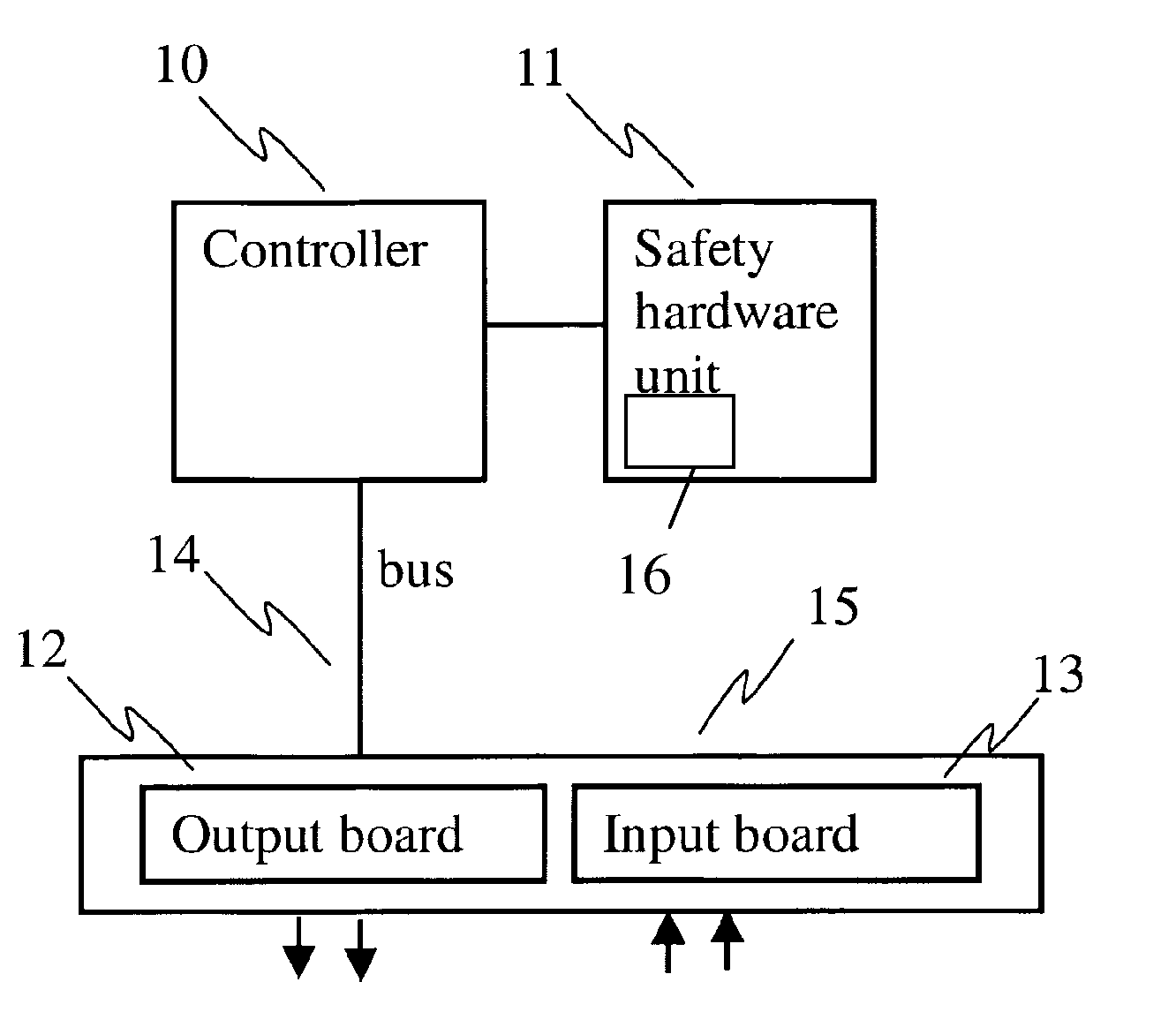
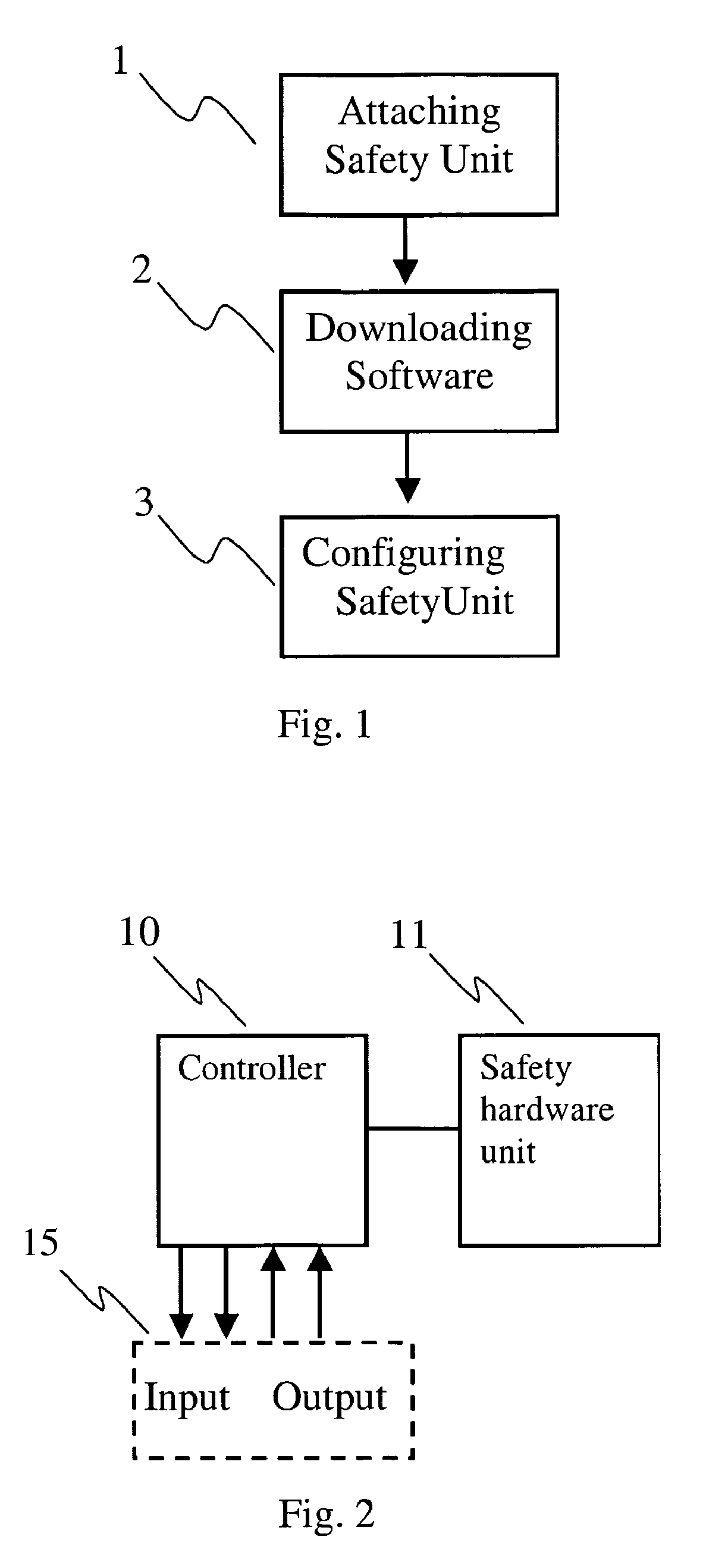
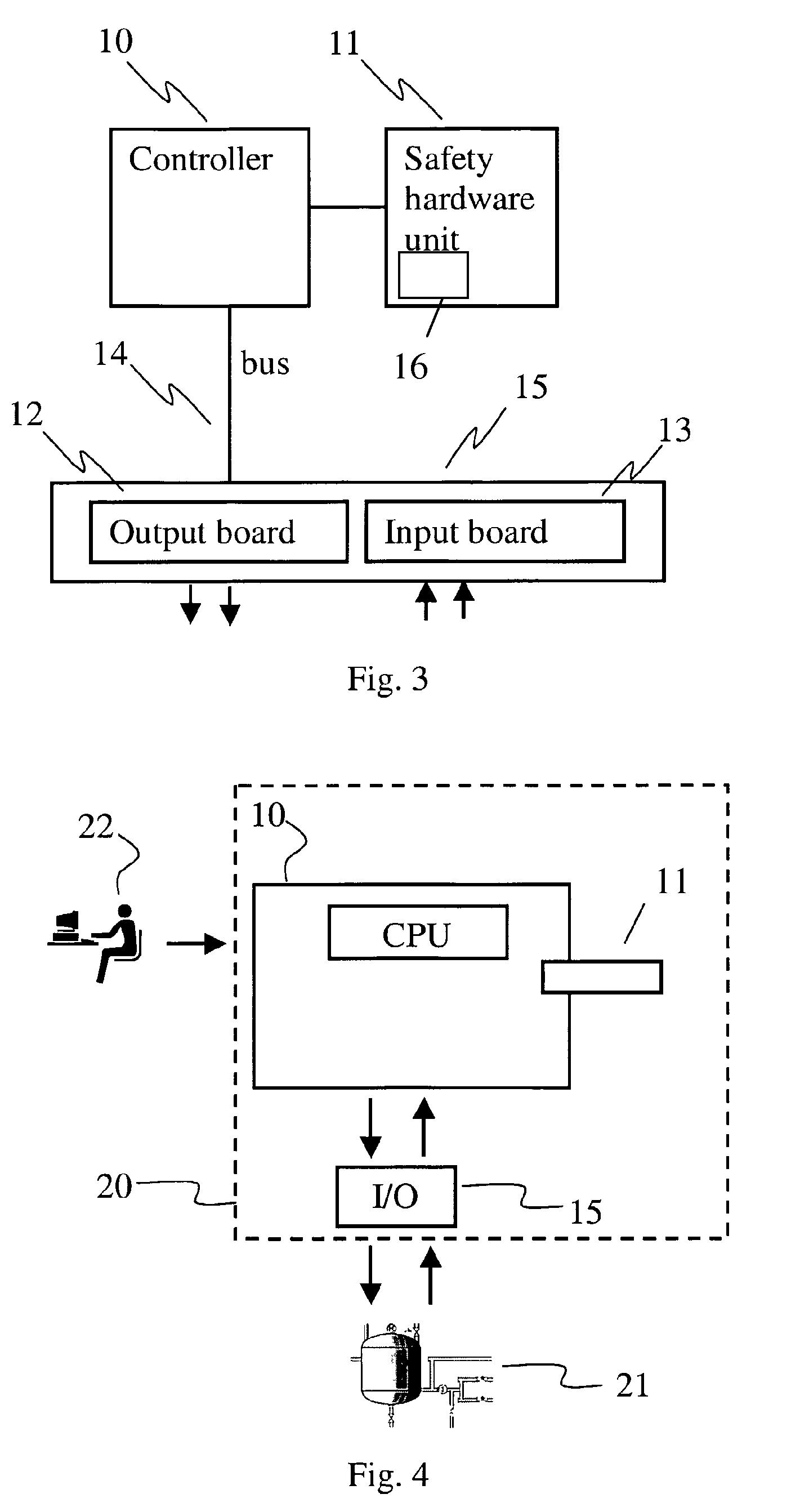
- A method that enhances the safety-integrity level of a single controller unit by attaching a plugable safety-hardware unit, downloading safety-related software, and configuring it to set the controller's output values in a safe state, allowing for flexible and cost-effective implementation of safety features.
Safety Standards and Regulatory Framework
Safety standards and regulatory frameworks form the foundational backbone for implementing control engineering solutions in safety-critical systems. These frameworks establish mandatory requirements, performance criteria, and verification procedures that control engineers must adhere to when designing, implementing, and maintaining safety systems across various industries.
The International Electrotechnical Commission (IEC) 61508 standard serves as the umbrella functional safety standard, defining Safety Integrity Levels (SIL) from SIL 1 to SIL 4, with each level corresponding to specific risk reduction factors and failure rate requirements. This standard provides the fundamental principles for electrical, electronic, and programmable electronic safety-related systems, establishing systematic approaches for hazard analysis, risk assessment, and safety lifecycle management.
Industry-specific standards build upon IEC 61508 to address sector-particular requirements. ISO 26262 governs automotive functional safety, emphasizing Automotive Safety Integrity Levels (ASIL) and addressing the unique challenges of automotive control systems. IEC 61511 focuses on process industry safety instrumented systems, while IEC 62061 and ISO 13849 address machinery safety applications with specific emphasis on control system architectures and performance levels.
Regulatory bodies worldwide enforce compliance through comprehensive certification processes and periodic audits. The European Union's Machinery Directive and ATEX Directive mandate conformity assessments for safety control systems in potentially explosive atmospheres. Similarly, the U.S. Occupational Safety and Health Administration (OSHA) and the Nuclear Regulatory Commission establish stringent requirements for safety systems in their respective domains.
These frameworks mandate systematic documentation, including safety requirement specifications, hazard and operability studies, and safety validation reports. Control engineers must demonstrate compliance through rigorous testing protocols, failure mode analysis, and proof testing procedures. The standards also require ongoing safety performance monitoring and periodic safety integrity verification throughout the system lifecycle.
Emerging regulatory trends increasingly emphasize cybersecurity integration within safety frameworks, reflecting the growing interconnectedness of modern control systems and the associated cyber-physical security risks.
The International Electrotechnical Commission (IEC) 61508 standard serves as the umbrella functional safety standard, defining Safety Integrity Levels (SIL) from SIL 1 to SIL 4, with each level corresponding to specific risk reduction factors and failure rate requirements. This standard provides the fundamental principles for electrical, electronic, and programmable electronic safety-related systems, establishing systematic approaches for hazard analysis, risk assessment, and safety lifecycle management.
Industry-specific standards build upon IEC 61508 to address sector-particular requirements. ISO 26262 governs automotive functional safety, emphasizing Automotive Safety Integrity Levels (ASIL) and addressing the unique challenges of automotive control systems. IEC 61511 focuses on process industry safety instrumented systems, while IEC 62061 and ISO 13849 address machinery safety applications with specific emphasis on control system architectures and performance levels.
Regulatory bodies worldwide enforce compliance through comprehensive certification processes and periodic audits. The European Union's Machinery Directive and ATEX Directive mandate conformity assessments for safety control systems in potentially explosive atmospheres. Similarly, the U.S. Occupational Safety and Health Administration (OSHA) and the Nuclear Regulatory Commission establish stringent requirements for safety systems in their respective domains.
These frameworks mandate systematic documentation, including safety requirement specifications, hazard and operability studies, and safety validation reports. Control engineers must demonstrate compliance through rigorous testing protocols, failure mode analysis, and proof testing procedures. The standards also require ongoing safety performance monitoring and periodic safety integrity verification throughout the system lifecycle.
Emerging regulatory trends increasingly emphasize cybersecurity integration within safety frameworks, reflecting the growing interconnectedness of modern control systems and the associated cyber-physical security risks.
Risk Assessment and Failure Mode Analysis
Risk assessment and failure mode analysis represent fundamental methodologies in control engineering for identifying, evaluating, and mitigating potential hazards within safety-critical systems. These systematic approaches enable engineers to proactively examine system vulnerabilities before they manifest as actual failures, thereby establishing robust preventive measures that enhance overall system reliability and safety performance.
The risk assessment process in control engineering involves comprehensive hazard identification, probability estimation, and consequence evaluation. Engineers employ quantitative techniques such as Fault Tree Analysis (FTA) and Event Tree Analysis (ETA) to model potential failure scenarios and calculate associated risk levels. These methodologies enable precise determination of acceptable risk thresholds and guide the implementation of appropriate safety measures based on statistical probability models and historical failure data.
Failure Mode and Effects Analysis (FMEA) serves as a cornerstone technique for systematic evaluation of potential component failures and their cascading effects throughout safety systems. This structured approach examines each system element to identify possible failure modes, assess their likelihood of occurrence, and evaluate the severity of resulting consequences. The analysis extends to Failure Mode, Effects, and Criticality Analysis (FMECA), which incorporates criticality rankings to prioritize mitigation efforts.
Advanced failure mode analysis techniques include Hazard and Operability Studies (HAZOP), which systematically examine process deviations using guide words to identify potential hazards. Layer of Protection Analysis (LOPA) provides quantitative assessment of independent protection layers, enabling engineers to verify whether existing safeguards meet required safety integrity levels for specific hazardous scenarios.
Modern control engineering integrates predictive analytics and machine learning algorithms into traditional risk assessment frameworks. These technologies enable real-time monitoring of system health parameters, early detection of degradation patterns, and dynamic risk assessment capabilities. Condition-based maintenance strategies leverage sensor data and prognostic models to predict component failures before they occur, significantly reducing unexpected system downtime and safety incidents.
The integration of risk assessment findings with control system design ensures that identified vulnerabilities are addressed through appropriate engineering controls, administrative procedures, and emergency response protocols, creating comprehensive safety management frameworks.
The risk assessment process in control engineering involves comprehensive hazard identification, probability estimation, and consequence evaluation. Engineers employ quantitative techniques such as Fault Tree Analysis (FTA) and Event Tree Analysis (ETA) to model potential failure scenarios and calculate associated risk levels. These methodologies enable precise determination of acceptable risk thresholds and guide the implementation of appropriate safety measures based on statistical probability models and historical failure data.
Failure Mode and Effects Analysis (FMEA) serves as a cornerstone technique for systematic evaluation of potential component failures and their cascading effects throughout safety systems. This structured approach examines each system element to identify possible failure modes, assess their likelihood of occurrence, and evaluate the severity of resulting consequences. The analysis extends to Failure Mode, Effects, and Criticality Analysis (FMECA), which incorporates criticality rankings to prioritize mitigation efforts.
Advanced failure mode analysis techniques include Hazard and Operability Studies (HAZOP), which systematically examine process deviations using guide words to identify potential hazards. Layer of Protection Analysis (LOPA) provides quantitative assessment of independent protection layers, enabling engineers to verify whether existing safeguards meet required safety integrity levels for specific hazardous scenarios.
Modern control engineering integrates predictive analytics and machine learning algorithms into traditional risk assessment frameworks. These technologies enable real-time monitoring of system health parameters, early detection of degradation patterns, and dynamic risk assessment capabilities. Condition-based maintenance strategies leverage sensor data and prognostic models to predict component failures before they occur, significantly reducing unexpected system downtime and safety incidents.
The integration of risk assessment findings with control system design ensures that identified vulnerabilities are addressed through appropriate engineering controls, administrative procedures, and emergency response protocols, creating comprehensive safety management frameworks.
Unlock deeper insights with PatSnap Eureka Quick Research — get a full tech report to explore trends and direct your research. Try now!
Generate Your Research Report Instantly with AI Agent
Supercharge your innovation with PatSnap Eureka AI Agent Platform!