

Current Patents in Hydrogen Solid Storage Systems
OCT 27, 20259 MIN READ
Generate Your Research Report Instantly with AI Agent
PatSnap Eureka helps you evaluate technical feasibility & market potential.
Hydrogen Storage Technology Background and Objectives
Hydrogen storage technology has evolved significantly over the past decades as a critical component in the transition toward a hydrogen-based clean energy economy. Initially developed in the 1970s during the oil crisis, hydrogen storage research gained momentum as nations sought energy independence. The field has since progressed through several technological generations, from conventional high-pressure gas cylinders to advanced materials-based solutions that offer improved safety and efficiency.
The evolution of hydrogen solid storage systems represents a particularly promising trajectory in this field. Early solid storage systems relied primarily on metal hydrides, which, while effective, suffered from weight inefficiencies and thermal management challenges. The 2000s witnessed the emergence of complex hydrides and chemical hydrogen storage materials, offering improved gravimetric capacity but presenting new challenges in hydrogen release kinetics.
Current technological trends focus on nanomaterials and hybrid systems that combine multiple storage mechanisms to overcome individual limitations. These advanced materials aim to meet the U.S. Department of Energy's targets for onboard hydrogen storage systems: 6.5 wt% system gravimetric capacity and 50 g/L volumetric capacity, with rapid fueling capabilities and operational temperatures compatible with fuel cell systems.
The global imperative to reduce carbon emissions has accelerated research in hydrogen technologies, with solid storage systems gaining prominence due to their potential safety advantages over compressed or liquefied hydrogen. The Paris Agreement and subsequent national hydrogen strategies have established clear policy frameworks supporting this technological direction, with countries like Japan, Germany, and China making substantial investments in hydrogen infrastructure.
The primary objective of current hydrogen solid storage research is to develop materials and systems that can store hydrogen safely at near-ambient conditions while achieving both high gravimetric and volumetric capacities. Secondary goals include improving cycling stability, reducing material costs, and enhancing system integration with both stationary and mobile applications.
Patent activity in this field has grown exponentially since 2010, with particular concentration in novel metal-organic frameworks (MOFs), doped carbon nanostructures, and complex metal hydrides. These patents reflect the industry's focus on overcoming the fundamental thermodynamic and kinetic barriers that have historically limited solid-state hydrogen storage performance.
Looking forward, the field aims to bridge the gap between laboratory demonstrations and commercial viability, with particular emphasis on scalable manufacturing processes and system-level integration that can meet the demanding requirements of transportation applications while remaining cost-competitive with conventional energy storage technologies.
The evolution of hydrogen solid storage systems represents a particularly promising trajectory in this field. Early solid storage systems relied primarily on metal hydrides, which, while effective, suffered from weight inefficiencies and thermal management challenges. The 2000s witnessed the emergence of complex hydrides and chemical hydrogen storage materials, offering improved gravimetric capacity but presenting new challenges in hydrogen release kinetics.
Current technological trends focus on nanomaterials and hybrid systems that combine multiple storage mechanisms to overcome individual limitations. These advanced materials aim to meet the U.S. Department of Energy's targets for onboard hydrogen storage systems: 6.5 wt% system gravimetric capacity and 50 g/L volumetric capacity, with rapid fueling capabilities and operational temperatures compatible with fuel cell systems.
The global imperative to reduce carbon emissions has accelerated research in hydrogen technologies, with solid storage systems gaining prominence due to their potential safety advantages over compressed or liquefied hydrogen. The Paris Agreement and subsequent national hydrogen strategies have established clear policy frameworks supporting this technological direction, with countries like Japan, Germany, and China making substantial investments in hydrogen infrastructure.
The primary objective of current hydrogen solid storage research is to develop materials and systems that can store hydrogen safely at near-ambient conditions while achieving both high gravimetric and volumetric capacities. Secondary goals include improving cycling stability, reducing material costs, and enhancing system integration with both stationary and mobile applications.
Patent activity in this field has grown exponentially since 2010, with particular concentration in novel metal-organic frameworks (MOFs), doped carbon nanostructures, and complex metal hydrides. These patents reflect the industry's focus on overcoming the fundamental thermodynamic and kinetic barriers that have historically limited solid-state hydrogen storage performance.
Looking forward, the field aims to bridge the gap between laboratory demonstrations and commercial viability, with particular emphasis on scalable manufacturing processes and system-level integration that can meet the demanding requirements of transportation applications while remaining cost-competitive with conventional energy storage technologies.
Market Analysis for Hydrogen Solid Storage Solutions
The global hydrogen solid storage market is experiencing significant growth, driven by increasing demand for clean energy solutions and the transition away from fossil fuels. Current market valuations indicate the hydrogen storage market reached approximately 227 million USD in 2022, with projections suggesting growth to 1.4 billion USD by 2030, representing a compound annual growth rate of 25.7% during the forecast period. Solid storage technologies are gaining particular attention within this broader market due to their safety advantages and higher volumetric capacity compared to compressed gas or liquid hydrogen storage methods.
Regional analysis reveals that Asia-Pacific currently dominates the hydrogen solid storage market, with Japan and South Korea leading in both research and commercial applications. Europe follows closely, particularly with strong government support in Germany, France, and the Nordic countries. North America, especially the United States, shows substantial growth potential driven by increasing investments in hydrogen infrastructure and transportation applications.
By application segment, the transportation sector represents the largest market share for hydrogen solid storage systems, accounting for approximately 45% of the total market. This is primarily due to the automotive industry's push toward hydrogen fuel cell vehicles that require efficient and safe hydrogen storage solutions. Industrial applications follow at roughly 30%, with portable power and stationary power applications comprising the remainder of the market.
Customer demand analysis indicates shifting preferences toward storage solutions that offer higher gravimetric capacity, faster kinetics, and lower operating temperatures. End-users across industries are increasingly prioritizing systems that can achieve Department of Energy targets of 6.5 wt% hydrogen capacity and operation below 100°C, which many current commercial solutions struggle to meet.
Market barriers include high material costs, particularly for advanced metal hydrides and complex hydrides that contain expensive rare earth elements. Additionally, manufacturing scalability remains challenging, with many promising materials demonstrating excellent performance in laboratory settings but facing significant hurdles in mass production environments.
Emerging market opportunities exist in the integration of solid storage systems with renewable energy generation, particularly in grid-scale energy storage applications where hydrogen can serve as a long-duration storage medium. The maritime and aviation sectors also represent growing market segments as these industries seek decarbonization solutions that offer higher energy density than battery technologies.
Regional analysis reveals that Asia-Pacific currently dominates the hydrogen solid storage market, with Japan and South Korea leading in both research and commercial applications. Europe follows closely, particularly with strong government support in Germany, France, and the Nordic countries. North America, especially the United States, shows substantial growth potential driven by increasing investments in hydrogen infrastructure and transportation applications.
By application segment, the transportation sector represents the largest market share for hydrogen solid storage systems, accounting for approximately 45% of the total market. This is primarily due to the automotive industry's push toward hydrogen fuel cell vehicles that require efficient and safe hydrogen storage solutions. Industrial applications follow at roughly 30%, with portable power and stationary power applications comprising the remainder of the market.
Customer demand analysis indicates shifting preferences toward storage solutions that offer higher gravimetric capacity, faster kinetics, and lower operating temperatures. End-users across industries are increasingly prioritizing systems that can achieve Department of Energy targets of 6.5 wt% hydrogen capacity and operation below 100°C, which many current commercial solutions struggle to meet.
Market barriers include high material costs, particularly for advanced metal hydrides and complex hydrides that contain expensive rare earth elements. Additionally, manufacturing scalability remains challenging, with many promising materials demonstrating excellent performance in laboratory settings but facing significant hurdles in mass production environments.
Emerging market opportunities exist in the integration of solid storage systems with renewable energy generation, particularly in grid-scale energy storage applications where hydrogen can serve as a long-duration storage medium. The maritime and aviation sectors also represent growing market segments as these industries seek decarbonization solutions that offer higher energy density than battery technologies.
Global Solid Storage Technology Status and Barriers
Hydrogen solid storage technology has evolved significantly over the past two decades, with major research centers in North America, Europe, and Asia leading development efforts. Currently, the global landscape shows varying levels of technological maturity across different storage methods. Metal hydrides have reached commercial viability for certain applications, while complex hydrides and chemical hydrogen carriers remain predominantly in research phases with limited commercial deployment.
The United States Department of Energy has established benchmark targets for hydrogen storage systems: 6.5 wt% gravimetric capacity and 50 g/L volumetric capacity by 2025, with ultimate targets of 7.5 wt% and 70 g/L respectively. These ambitious metrics have yet to be achieved in practical systems that combine adequate hydrogen capacity with suitable operating conditions.
A significant barrier to widespread adoption remains the energy efficiency of hydrogen absorption and desorption processes. Most current solid storage materials require either high temperatures (>100°C) for hydrogen release or high pressures (>100 bar) for hydrogen uptake, creating substantial energy penalties. This thermodynamic challenge represents perhaps the most fundamental obstacle in the field.
Material stability presents another critical challenge, with many promising storage compounds suffering from capacity degradation over multiple hydrogen loading/unloading cycles. For instance, complex borohydrides can lose up to 30% capacity after just 50 cycles due to irreversible phase transformations and material segregation.
Heat management during rapid hydrogen charging and discharging remains problematic, as the exothermic absorption and endothermic desorption processes create significant thermal gradients that can damage storage materials and reduce system efficiency. Current heat exchanger designs struggle to manage these thermal effects at the scales required for practical applications.
Cost factors continue to impede commercialization, with rare earth and platinum group metals often required as catalysts to improve kinetics. The manufacturing complexity of nano-structured materials with precisely controlled morphologies further increases production expenses, with current systems estimated at $300-500/kg of stored hydrogen—significantly above the $160/kg target for commercial viability.
Safety concerns persist around pyrophoricity of fine metal powders used in many storage systems, while the potential for dust explosions during material handling requires sophisticated containment strategies. Additionally, some storage materials can release toxic byproducts during degradation, necessitating careful system design and monitoring protocols.
The United States Department of Energy has established benchmark targets for hydrogen storage systems: 6.5 wt% gravimetric capacity and 50 g/L volumetric capacity by 2025, with ultimate targets of 7.5 wt% and 70 g/L respectively. These ambitious metrics have yet to be achieved in practical systems that combine adequate hydrogen capacity with suitable operating conditions.
A significant barrier to widespread adoption remains the energy efficiency of hydrogen absorption and desorption processes. Most current solid storage materials require either high temperatures (>100°C) for hydrogen release or high pressures (>100 bar) for hydrogen uptake, creating substantial energy penalties. This thermodynamic challenge represents perhaps the most fundamental obstacle in the field.
Material stability presents another critical challenge, with many promising storage compounds suffering from capacity degradation over multiple hydrogen loading/unloading cycles. For instance, complex borohydrides can lose up to 30% capacity after just 50 cycles due to irreversible phase transformations and material segregation.
Heat management during rapid hydrogen charging and discharging remains problematic, as the exothermic absorption and endothermic desorption processes create significant thermal gradients that can damage storage materials and reduce system efficiency. Current heat exchanger designs struggle to manage these thermal effects at the scales required for practical applications.
Cost factors continue to impede commercialization, with rare earth and platinum group metals often required as catalysts to improve kinetics. The manufacturing complexity of nano-structured materials with precisely controlled morphologies further increases production expenses, with current systems estimated at $300-500/kg of stored hydrogen—significantly above the $160/kg target for commercial viability.
Safety concerns persist around pyrophoricity of fine metal powders used in many storage systems, while the potential for dust explosions during material handling requires sophisticated containment strategies. Additionally, some storage materials can release toxic byproducts during degradation, necessitating careful system design and monitoring protocols.
Current Solid-State Hydrogen Storage Patent Landscape
01 Metal hydride-based hydrogen storage systems
Metal hydrides are compounds that can absorb and release hydrogen under specific temperature and pressure conditions. These materials offer high volumetric hydrogen storage capacity and can be used in solid storage systems. The hydrogen is stored in the interstitial sites of the metal lattice, forming a metal-hydrogen bond. These systems typically require heat management during absorption and desorption processes to maintain efficiency and safety.- Metal hydride-based storage systems: Metal hydrides are compounds formed when hydrogen combines with certain metals or alloys, creating a solid-state storage medium. These systems offer advantages in terms of safety and volumetric hydrogen density compared to compressed gas. The hydrogen is absorbed into the metal lattice structure and can be released through heating or pressure reduction. Various metal alloys can be engineered to optimize hydrogen storage capacity, kinetics, and operating conditions.
- Carbon-based hydrogen storage materials: Carbon-based materials such as activated carbon, carbon nanotubes, and graphene provide promising platforms for hydrogen storage through adsorption mechanisms. These materials offer large surface areas and tunable pore structures that can physically adsorb hydrogen molecules. The storage capacity can be enhanced through surface modifications, doping with metals, or creating hybrid structures. Carbon-based systems typically operate at low temperatures to maximize hydrogen uptake.
- Complex hydride storage systems: Complex hydrides, including borohydrides, alanates, and amides, represent advanced materials for solid hydrogen storage. These compounds typically contain light elements bonded with hydrogen, offering high theoretical hydrogen storage capacities. The hydrogen release and uptake processes often involve multiple steps and may require catalysts to improve kinetics. Research focuses on reducing dehydrogenation temperatures and improving reversibility for practical applications.
- Integrated hydrogen storage systems and devices: Integrated systems combine hydrogen storage materials with heat management, pressure regulation, and safety components to create complete storage solutions. These engineered systems address practical challenges such as heat dissipation during hydrogen absorption, uniform hydrogen distribution, and system durability. Designs may incorporate multiple storage tanks, cooling systems, sensors, and control mechanisms to optimize performance and safety for various applications including vehicles and stationary power.
- Novel composite materials for enhanced hydrogen storage: Composite materials combine different hydrogen storage mechanisms to overcome limitations of single-material approaches. These may include metal-organic frameworks (MOFs), nanostructured materials, polymer composites, or hybrid systems that integrate multiple storage principles. By combining materials with complementary properties, these composites can achieve improved storage capacity, faster kinetics, better thermal management, and enhanced cycling stability compared to conventional storage materials.
02 Carbon-based materials for hydrogen storage
Carbon-based materials such as activated carbon, carbon nanotubes, and graphene have been developed for hydrogen storage applications. These materials offer advantages including lightweight properties, high surface area, and tunable pore structures that can enhance hydrogen adsorption. The hydrogen molecules are typically stored through physisorption mechanisms on the surface of these materials, with storage capacity dependent on surface area and pore characteristics.Expand Specific Solutions03 Complex hydride hydrogen storage systems
Complex hydrides, including alanates, borohydrides, and amides, represent advanced materials for solid hydrogen storage. These compounds typically offer higher hydrogen content by weight compared to conventional metal hydrides. The hydrogen release and uptake in these systems often involve multiple reaction steps and may require catalysts to improve kinetics and lower operating temperatures. Research focuses on improving reversibility and cycling stability of these materials.Expand Specific Solutions04 Integrated hydrogen storage and fuel cell systems
These systems combine solid hydrogen storage materials with fuel cell technology to create efficient energy conversion solutions. The integration allows for direct hydrogen supply to the fuel cell from the storage medium, optimizing space utilization and system efficiency. These integrated systems often include heat management components that utilize waste heat from the fuel cell to assist hydrogen desorption from the storage material, creating synergistic effects that improve overall system performance.Expand Specific Solutions05 Novel composite materials and structures for hydrogen storage
Composite materials combining different hydrogen storage mechanisms or materials have been developed to overcome limitations of single-material systems. These composites may incorporate metal hydrides with carbon materials, polymers, or other additives to enhance hydrogen uptake, release kinetics, and cycling stability. Advanced structural designs including core-shell structures, nanostructured materials, and scaffolded systems are employed to maximize surface area and optimize hydrogen diffusion pathways within the storage medium.Expand Specific Solutions
Leading Companies and Research Institutions in Hydrogen Storage
The hydrogen solid storage systems market is currently in a growth phase, with increasing interest driven by clean energy transitions. The market size is expanding as automotive giants like Hyundai, Kia, Toyota, and Mercedes-Benz invest heavily in hydrogen technologies, particularly for fuel cell vehicles. Technical maturity varies across approaches, with metal hydrides showing more commercial readiness than newer materials. Leading automotive companies dominate the patent landscape, with Hyundai and Toyota demonstrating significant innovation leadership. Research institutions like the University of California and specialized energy companies such as Air Products & Chemicals and GKN Hydrogen are advancing novel storage solutions, indicating a collaborative ecosystem between industry and academia that is gradually moving this technology toward broader commercial viability.
Hyundai Motor Co., Ltd.
Technical Solution: Hyundai has pioneered innovative solid hydrogen storage technologies centered around advanced metal-organic frameworks (MOFs) and complex metal hydrides. Their patented systems utilize specially engineered porous materials with high surface areas exceeding 3000 m²/g that can achieve hydrogen storage capacities of up to 8 wt% at moderate pressures[2]. Hyundai's patents cover novel nano-structured composite materials that combine the benefits of physisorption and chemisorption mechanisms, allowing hydrogen storage at near-ambient conditions. Their technology incorporates proprietary catalyst systems that significantly improve kinetics, enabling hydrogen release at temperatures below 100°C with desorption rates suitable for automotive applications[4]. Hyundai has also developed modular storage systems with integrated heat exchangers that optimize the thermal management during charging and discharging cycles, addressing one of the key challenges in solid-state hydrogen storage[7].
Strengths: Hyundai's MOF-based systems achieve higher volumetric storage densities than compressed gas while operating at lower pressures, enhancing safety. Their modular approach allows scalable implementation across different vehicle platforms. Weaknesses: The complex materials synthesis increases production costs, and long-term stability under repeated cycling conditions remains a challenge, particularly in extreme temperature environments.
Toyota Motor Corp.
Technical Solution: Toyota has developed advanced metal hydride-based solid hydrogen storage systems that utilize complex metal alloys to absorb hydrogen at molecular levels. Their patented technology focuses on specialized alloys containing rare earth metals, titanium, and zirconium that can store hydrogen at moderate pressures (1-10 MPa) and temperatures. Toyota's patents cover novel compositions that achieve gravimetric hydrogen densities of 5-7 wt%, approaching the US DOE targets for automotive applications[1]. Their system architecture incorporates heat management subsystems that efficiently control the exothermic absorption and endothermic desorption processes, allowing for rapid refueling capabilities within 3-5 minutes[3]. Toyota has also patented specialized tank designs with integrated thermal management that optimize weight distribution and space utilization in fuel cell vehicles, enabling practical driving ranges exceeding 500 km while maintaining safety standards[5].
Strengths: Toyota's metal hydride systems offer superior safety compared to compressed gas, with lower operating pressures and reduced leakage risk. Their integrated thermal management enables faster refueling than competitors. Weaknesses: The systems still face challenges with overall weight penalties compared to compressed hydrogen, and the use of rare earth metals raises cost and sustainability concerns for mass production.
Key Patent Analysis and Technical Innovations
Hydrogen energy systems
PatentActiveUS9739422B2
Innovation
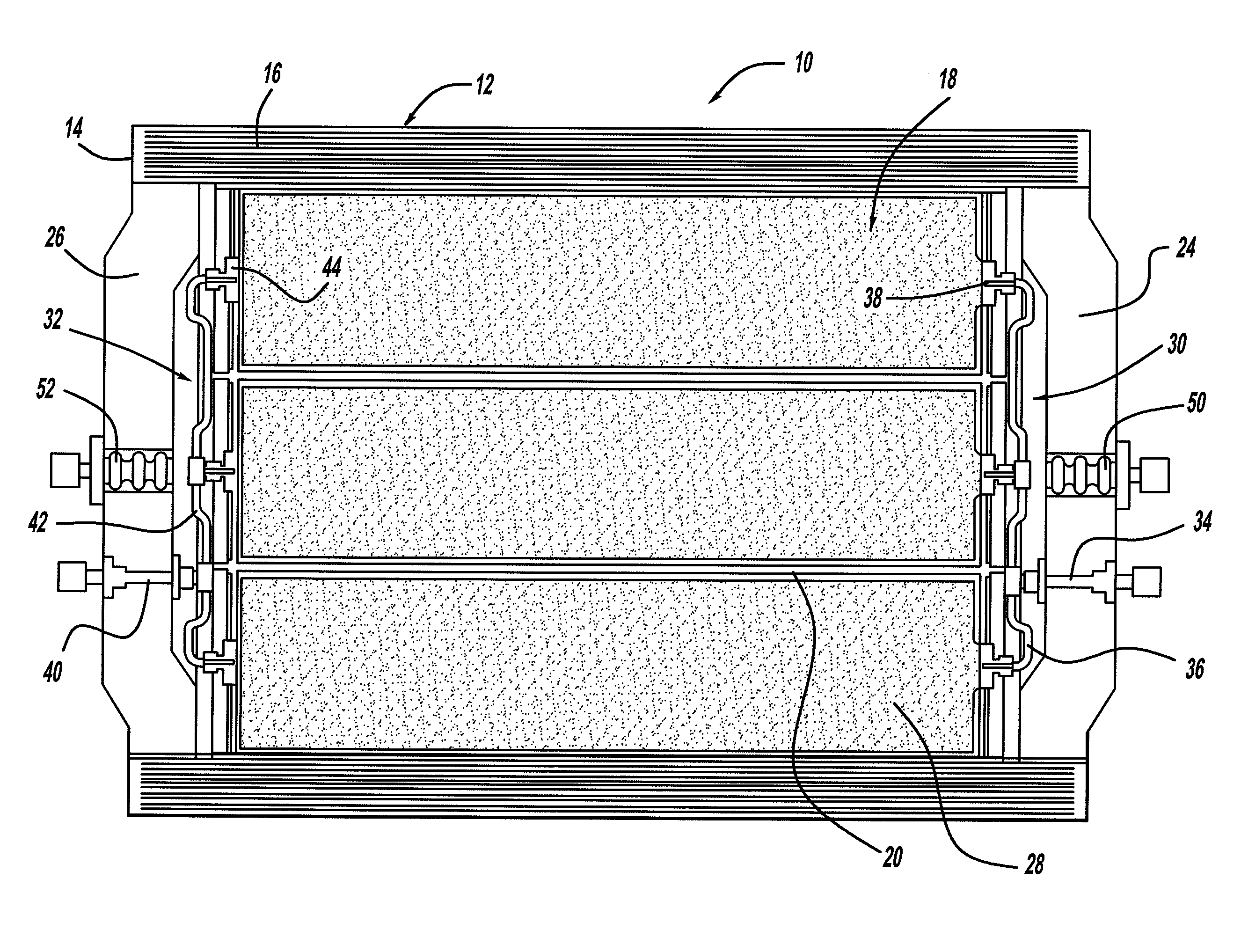
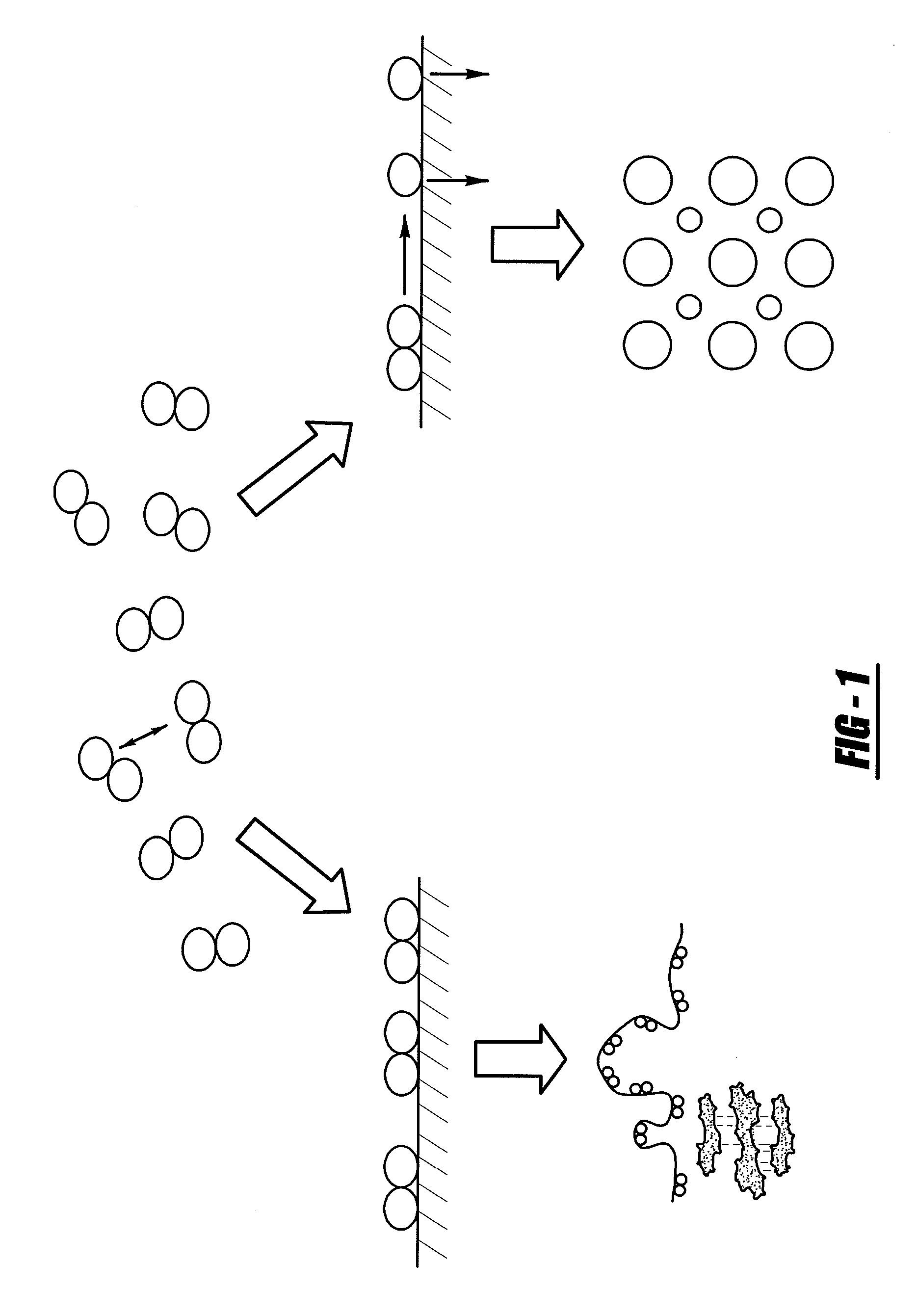
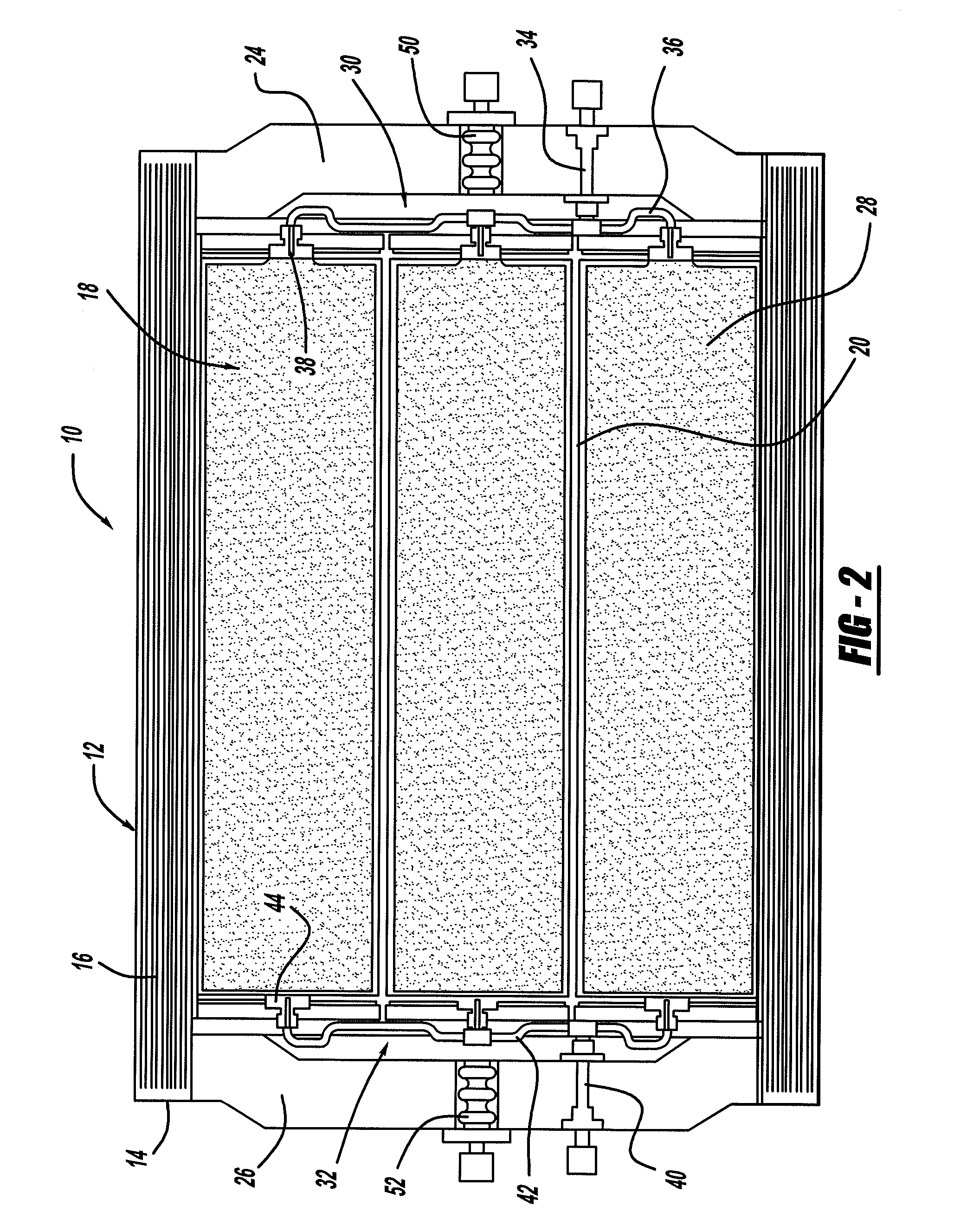
- A hydrogen energy system using magnesium hydride disks that can be safely stored and released using laser excitation, allowing controlled and efficient release of hydrogen gas for energy purposes, including vehicle fuel, with a decomposition temperature range of 120° C to 260° C and utilizing nano-structured elements for enhanced storage and release.


Hydrogen storage tank system based on gas adsorption on high-surface materials comprising an integrated heat exchanger
PatentInactiveUS7648568B2
Innovation
- A gas storage system utilizing cryo-adsorption on high surface materials, including activated carbons and metal-organic frameworks, within insulated pressure vessels, where a cooling fluid manages heat during gas filling and desorption, operating at pressures between 10 and 50 bar and temperatures from 25K to 200K.

Material Science Advancements for Enhanced Storage Capacity
Recent advancements in material science have significantly propelled hydrogen solid storage systems toward commercial viability. Metal hydrides, particularly magnesium-based compounds, have demonstrated remarkable progress with patents focusing on nanostructuring techniques that enhance absorption kinetics while maintaining high gravimetric capacity. These innovations have reduced operating temperatures from 300°C to approximately 150°C, representing a critical step toward practical applications.
Complex hydrides, including alanates and borohydrides, have emerged as promising alternatives with several patents addressing their stability challenges. Catalytic doping methods, protected by intellectual property from major research institutions, have successfully lowered decomposition temperatures while improving reversibility characteristics. Notable patents include novel synthesis routes for sodium aluminum hydride systems with titanium-based catalysts that achieve 5.5 wt% hydrogen capacity under moderate conditions.
Carbon-based materials represent another significant frontier, with recent patents covering metal-organic frameworks (MOFs) and covalent organic frameworks (COFs). These structures feature exceptional surface areas exceeding 6,000 m²/g and customizable pore architectures. Patents from leading chemical companies have documented hydrogen uptake approaching 8 wt% at cryogenic temperatures, with room temperature performance gradually improving through strategic metal incorporation.
Composite materials combining different storage mechanisms have generated substantial patent activity. These systems leverage spillover effects between catalytic metals and support materials to enhance adsorption properties. Recent patents describe hierarchical structures with optimized interfaces between metal hydrides and carbon scaffolds, achieving synergistic effects that surpass the limitations of individual components.
Nanomaterial engineering approaches feature prominently in current patent landscapes. Controlled synthesis of core-shell nanostructures with precisely tailored interfaces has demonstrated improved cycling stability and reduced degradation. Patents covering these advanced manufacturing techniques highlight methods for scalable production while maintaining nanoscale precision, addressing a critical barrier to commercialization.
Surface modification strategies represent another active area of patent development. Innovations include atomic layer deposition techniques for creating protective coatings that prevent oxidation while maintaining hydrogen permeability. These approaches have extended material lifetimes from hundreds to thousands of cycles, addressing durability concerns that have historically limited practical applications of solid-state hydrogen storage systems.
Complex hydrides, including alanates and borohydrides, have emerged as promising alternatives with several patents addressing their stability challenges. Catalytic doping methods, protected by intellectual property from major research institutions, have successfully lowered decomposition temperatures while improving reversibility characteristics. Notable patents include novel synthesis routes for sodium aluminum hydride systems with titanium-based catalysts that achieve 5.5 wt% hydrogen capacity under moderate conditions.
Carbon-based materials represent another significant frontier, with recent patents covering metal-organic frameworks (MOFs) and covalent organic frameworks (COFs). These structures feature exceptional surface areas exceeding 6,000 m²/g and customizable pore architectures. Patents from leading chemical companies have documented hydrogen uptake approaching 8 wt% at cryogenic temperatures, with room temperature performance gradually improving through strategic metal incorporation.
Composite materials combining different storage mechanisms have generated substantial patent activity. These systems leverage spillover effects between catalytic metals and support materials to enhance adsorption properties. Recent patents describe hierarchical structures with optimized interfaces between metal hydrides and carbon scaffolds, achieving synergistic effects that surpass the limitations of individual components.
Nanomaterial engineering approaches feature prominently in current patent landscapes. Controlled synthesis of core-shell nanostructures with precisely tailored interfaces has demonstrated improved cycling stability and reduced degradation. Patents covering these advanced manufacturing techniques highlight methods for scalable production while maintaining nanoscale precision, addressing a critical barrier to commercialization.
Surface modification strategies represent another active area of patent development. Innovations include atomic layer deposition techniques for creating protective coatings that prevent oxidation while maintaining hydrogen permeability. These approaches have extended material lifetimes from hundreds to thousands of cycles, addressing durability concerns that have historically limited practical applications of solid-state hydrogen storage systems.
Safety and Regulatory Framework for Hydrogen Storage Systems
The regulatory landscape for hydrogen solid storage systems has evolved significantly in response to the unique safety challenges posed by hydrogen as an energy carrier. International standards such as ISO/TC 197 and IEC/TC 105 provide comprehensive frameworks specifically addressing hydrogen technologies, with particular emphasis on storage system requirements. These standards establish critical parameters for pressure vessels, material compatibility, and leak detection systems essential for solid storage technologies.
In the United States, the Department of Energy's Hydrogen Program has developed specific safety codes and standards for hydrogen storage systems, including those utilizing metal hydrides and other solid-state materials. The National Fire Protection Association's NFPA 2 (Hydrogen Technologies Code) explicitly addresses solid storage systems, mandating specific ventilation requirements, pressure relief mechanisms, and thermal management systems to prevent catastrophic failures during hydrogen absorption and desorption processes.
European regulations, particularly through the EU's Regulation (EC) No 79/2009 and subsequent amendments, have established rigorous type-approval requirements for hydrogen storage systems in vehicles. These regulations include specific provisions for solid storage technologies, requiring extensive cycle testing, extreme temperature performance validation, and accelerated aging assessments to ensure long-term safety compliance.
Material safety considerations represent a critical component of the regulatory framework. Patents in solid hydrogen storage systems must demonstrate compliance with toxicity standards for all materials used, particularly regarding potential dust formation during handling and manufacturing. Recent regulatory updates have introduced more stringent requirements for lifecycle assessment, ensuring that end-of-life disposal or recycling processes do not create environmental or safety hazards.
Risk assessment methodologies specific to solid hydrogen storage have been standardized through organizations like the International Association for Hydrogen Safety (HySafe). These methodologies require quantitative evaluation of failure modes unique to solid storage systems, such as thermal runaway during charging, material degradation over multiple cycles, and potential for pyrophoric reactions upon air exposure of certain metal hydrides.
Certification processes for commercial deployment of patented solid storage technologies typically require third-party validation against these regulatory frameworks. This includes destructive testing protocols that evaluate system integrity under extreme conditions, including fire exposure, mechanical impact, and over-pressurization scenarios. Recent regulatory trends indicate movement toward harmonized global standards, potentially simplifying the path to market for innovative solid storage technologies while maintaining rigorous safety requirements.
In the United States, the Department of Energy's Hydrogen Program has developed specific safety codes and standards for hydrogen storage systems, including those utilizing metal hydrides and other solid-state materials. The National Fire Protection Association's NFPA 2 (Hydrogen Technologies Code) explicitly addresses solid storage systems, mandating specific ventilation requirements, pressure relief mechanisms, and thermal management systems to prevent catastrophic failures during hydrogen absorption and desorption processes.
European regulations, particularly through the EU's Regulation (EC) No 79/2009 and subsequent amendments, have established rigorous type-approval requirements for hydrogen storage systems in vehicles. These regulations include specific provisions for solid storage technologies, requiring extensive cycle testing, extreme temperature performance validation, and accelerated aging assessments to ensure long-term safety compliance.
Material safety considerations represent a critical component of the regulatory framework. Patents in solid hydrogen storage systems must demonstrate compliance with toxicity standards for all materials used, particularly regarding potential dust formation during handling and manufacturing. Recent regulatory updates have introduced more stringent requirements for lifecycle assessment, ensuring that end-of-life disposal or recycling processes do not create environmental or safety hazards.
Risk assessment methodologies specific to solid hydrogen storage have been standardized through organizations like the International Association for Hydrogen Safety (HySafe). These methodologies require quantitative evaluation of failure modes unique to solid storage systems, such as thermal runaway during charging, material degradation over multiple cycles, and potential for pyrophoric reactions upon air exposure of certain metal hydrides.
Certification processes for commercial deployment of patented solid storage technologies typically require third-party validation against these regulatory frameworks. This includes destructive testing protocols that evaluate system integrity under extreme conditions, including fire exposure, mechanical impact, and over-pressurization scenarios. Recent regulatory trends indicate movement toward harmonized global standards, potentially simplifying the path to market for innovative solid storage technologies while maintaining rigorous safety requirements.
Unlock deeper insights with PatSnap Eureka Quick Research — get a full tech report to explore trends and direct your research. Try now!
Generate Your Research Report Instantly with AI Agent
Supercharge your innovation with PatSnap Eureka AI Agent Platform!