Cycloidal Drives for Scalable Production: Efficiency Analysis
APR 27, 20269 MIN READ
Generate Your Research Report Instantly with AI Agent
PatSnap Eureka helps you evaluate technical feasibility & market potential.
Cycloidal Drive Technology Background and Production Goals
Cycloidal drives represent a sophisticated mechanical transmission technology that has evolved significantly since their initial development in the early 20th century. Originally conceived as a solution for achieving high reduction ratios in compact configurations, these drives utilize the mathematical principles of cycloidal motion to convert high-speed, low-torque input into low-speed, high-torque output through an elegant geometric mechanism.
The fundamental operating principle involves an eccentric cam rotating within a ring of pins or rollers, causing a cycloidal disc to execute a complex orbital motion. This motion is then converted to rotational output through a series of output pins or holes arranged in the cycloidal disc. The inherent design characteristics enable reduction ratios ranging from 6:1 to over 200:1 in a single stage, making them particularly attractive for applications requiring precise motion control and high torque density.
Historical development traces back to the 1930s when the first practical cycloidal reducers were introduced for industrial applications. The technology gained significant momentum during the 1970s and 1980s with advances in precision manufacturing and materials science, enabling tighter tolerances and improved performance characteristics. The integration of computer-aided design and manufacturing processes in the 1990s further refined the technology, allowing for optimized tooth profiles and enhanced efficiency.
Contemporary production goals for cycloidal drives focus on achieving scalable manufacturing processes that can deliver consistent quality across varying production volumes. The primary technical objectives include maximizing transmission efficiency, which typically ranges from 85% to 95% depending on design parameters and operating conditions. Efficiency optimization involves minimizing friction losses through advanced surface treatments, precision bearing systems, and optimized lubrication strategies.
Manufacturing scalability presents unique challenges due to the precision requirements inherent in cycloidal drive production. The cycloidal disc profiles require machining tolerances in the micrometer range to achieve optimal performance, necessitating advanced manufacturing technologies such as CNC grinding, electrical discharge machining, and coordinate measuring systems for quality control.
Current production goals emphasize the development of modular design architectures that enable efficient scaling from prototype to high-volume manufacturing. This includes standardization of key components, implementation of automated assembly processes, and establishment of robust quality assurance protocols that maintain performance consistency across production batches while reducing manufacturing costs and lead times.
The fundamental operating principle involves an eccentric cam rotating within a ring of pins or rollers, causing a cycloidal disc to execute a complex orbital motion. This motion is then converted to rotational output through a series of output pins or holes arranged in the cycloidal disc. The inherent design characteristics enable reduction ratios ranging from 6:1 to over 200:1 in a single stage, making them particularly attractive for applications requiring precise motion control and high torque density.
Historical development traces back to the 1930s when the first practical cycloidal reducers were introduced for industrial applications. The technology gained significant momentum during the 1970s and 1980s with advances in precision manufacturing and materials science, enabling tighter tolerances and improved performance characteristics. The integration of computer-aided design and manufacturing processes in the 1990s further refined the technology, allowing for optimized tooth profiles and enhanced efficiency.
Contemporary production goals for cycloidal drives focus on achieving scalable manufacturing processes that can deliver consistent quality across varying production volumes. The primary technical objectives include maximizing transmission efficiency, which typically ranges from 85% to 95% depending on design parameters and operating conditions. Efficiency optimization involves minimizing friction losses through advanced surface treatments, precision bearing systems, and optimized lubrication strategies.
Manufacturing scalability presents unique challenges due to the precision requirements inherent in cycloidal drive production. The cycloidal disc profiles require machining tolerances in the micrometer range to achieve optimal performance, necessitating advanced manufacturing technologies such as CNC grinding, electrical discharge machining, and coordinate measuring systems for quality control.
Current production goals emphasize the development of modular design architectures that enable efficient scaling from prototype to high-volume manufacturing. This includes standardization of key components, implementation of automated assembly processes, and establishment of robust quality assurance protocols that maintain performance consistency across production batches while reducing manufacturing costs and lead times.
Market Demand for Scalable Cycloidal Drive Systems
The global market for cycloidal drive systems is experiencing significant growth driven by increasing demand for precision motion control across multiple industrial sectors. Manufacturing industries are particularly seeking scalable production solutions that can deliver high torque density, compact design, and superior positioning accuracy. The automotive sector represents a substantial market segment, where cycloidal drives are increasingly adopted in robotic assembly lines, automated guided vehicles, and electric vehicle powertrains.
Industrial automation continues to be the primary driver of market expansion, with manufacturers requiring reliable transmission systems capable of handling varying production volumes. The semiconductor and electronics industries demonstrate strong demand for cycloidal drives in wafer handling equipment, pick-and-place machines, and precision positioning systems where scalability and efficiency are critical performance parameters.
Renewable energy applications, particularly wind turbine pitch control systems, constitute an emerging market segment with substantial growth potential. The ability of cycloidal drives to provide precise control while maintaining high efficiency ratios makes them attractive for large-scale renewable energy installations where operational reliability directly impacts energy production economics.
The aerospace and defense sectors show increasing interest in scalable cycloidal drive solutions for satellite positioning systems, radar applications, and unmanned aerial vehicle propulsion systems. These applications demand lightweight, compact transmission systems that can maintain performance consistency across different operational scales and environmental conditions.
Regional market dynamics reveal strong demand concentration in Asia-Pacific manufacturing hubs, where rapid industrial automation adoption drives cycloidal drive integration. European markets emphasize efficiency optimization and environmental compliance, creating opportunities for advanced cycloidal drive systems that demonstrate superior energy conversion ratios.
Market research indicates growing preference for modular cycloidal drive designs that enable manufacturers to scale production capacity without complete system redesign. This trend reflects broader industry movement toward flexible manufacturing systems capable of adapting to changing production requirements while maintaining operational efficiency standards.
The medical device industry represents an expanding market segment, particularly for surgical robotics and diagnostic equipment where precise motion control and scalable manufacturing capabilities are essential for meeting increasing healthcare technology demand.
Industrial automation continues to be the primary driver of market expansion, with manufacturers requiring reliable transmission systems capable of handling varying production volumes. The semiconductor and electronics industries demonstrate strong demand for cycloidal drives in wafer handling equipment, pick-and-place machines, and precision positioning systems where scalability and efficiency are critical performance parameters.
Renewable energy applications, particularly wind turbine pitch control systems, constitute an emerging market segment with substantial growth potential. The ability of cycloidal drives to provide precise control while maintaining high efficiency ratios makes them attractive for large-scale renewable energy installations where operational reliability directly impacts energy production economics.
The aerospace and defense sectors show increasing interest in scalable cycloidal drive solutions for satellite positioning systems, radar applications, and unmanned aerial vehicle propulsion systems. These applications demand lightweight, compact transmission systems that can maintain performance consistency across different operational scales and environmental conditions.
Regional market dynamics reveal strong demand concentration in Asia-Pacific manufacturing hubs, where rapid industrial automation adoption drives cycloidal drive integration. European markets emphasize efficiency optimization and environmental compliance, creating opportunities for advanced cycloidal drive systems that demonstrate superior energy conversion ratios.
Market research indicates growing preference for modular cycloidal drive designs that enable manufacturers to scale production capacity without complete system redesign. This trend reflects broader industry movement toward flexible manufacturing systems capable of adapting to changing production requirements while maintaining operational efficiency standards.
The medical device industry represents an expanding market segment, particularly for surgical robotics and diagnostic equipment where precise motion control and scalable manufacturing capabilities are essential for meeting increasing healthcare technology demand.
Current Efficiency Challenges in Cycloidal Drive Production
Cycloidal drive production faces significant efficiency challenges that stem from the inherent complexity of manufacturing precision components at scale. The primary bottleneck lies in achieving the extremely tight tolerances required for the cycloidal disc and pin ring assembly, where deviations as small as 5-10 micrometers can substantially impact performance. Traditional machining processes struggle to maintain these tolerances consistently across large production volumes, leading to increased rejection rates and quality control costs.
Manufacturing efficiency is further compromised by the multi-stage production process required for cycloidal drives. Each unit requires precise fabrication of multiple components including the cycloidal disc with its complex epitrochoidal profile, the pin ring assembly, and the output mechanism. The sequential nature of these operations creates production bottlenecks, particularly during the critical profiling stage where specialized CNC equipment must operate at reduced speeds to maintain accuracy.
Heat treatment processes present another significant challenge in scalable production. The cycloidal disc requires selective hardening to achieve optimal wear resistance while maintaining dimensional stability. Current thermal processing methods often result in distortion that necessitates additional finishing operations, increasing both production time and costs. The variability in heat treatment outcomes across different batch sizes further complicates quality consistency in high-volume manufacturing.
Assembly efficiency represents a critical constraint in current production methodologies. The precise alignment required between cycloidal discs and pin rings demands skilled technicians and specialized fixtures, limiting automation potential. Manual assembly processes introduce variability in preload settings and bearing clearances, directly impacting the final drive efficiency and creating quality inconsistencies across production batches.
Quality control and testing procedures constitute substantial efficiency barriers in current production systems. Each cycloidal drive unit requires comprehensive testing including backlash measurement, torque ripple analysis, and efficiency verification under various load conditions. These testing protocols, while essential for performance validation, significantly extend production cycle times and require expensive specialized equipment that limits throughput capacity in manufacturing facilities.
Manufacturing efficiency is further compromised by the multi-stage production process required for cycloidal drives. Each unit requires precise fabrication of multiple components including the cycloidal disc with its complex epitrochoidal profile, the pin ring assembly, and the output mechanism. The sequential nature of these operations creates production bottlenecks, particularly during the critical profiling stage where specialized CNC equipment must operate at reduced speeds to maintain accuracy.
Heat treatment processes present another significant challenge in scalable production. The cycloidal disc requires selective hardening to achieve optimal wear resistance while maintaining dimensional stability. Current thermal processing methods often result in distortion that necessitates additional finishing operations, increasing both production time and costs. The variability in heat treatment outcomes across different batch sizes further complicates quality consistency in high-volume manufacturing.
Assembly efficiency represents a critical constraint in current production methodologies. The precise alignment required between cycloidal discs and pin rings demands skilled technicians and specialized fixtures, limiting automation potential. Manual assembly processes introduce variability in preload settings and bearing clearances, directly impacting the final drive efficiency and creating quality inconsistencies across production batches.
Quality control and testing procedures constitute substantial efficiency barriers in current production systems. Each cycloidal drive unit requires comprehensive testing including backlash measurement, torque ripple analysis, and efficiency verification under various load conditions. These testing protocols, while essential for performance validation, significantly extend production cycle times and require expensive specialized equipment that limits throughput capacity in manufacturing facilities.
Existing Manufacturing Solutions for Cycloidal Drives
01 Gear tooth profile optimization for improved efficiency
Optimization of cycloidal gear tooth profiles through advanced mathematical modeling and geometric design can significantly improve transmission efficiency. This involves refining the tooth shape, contact patterns, and engagement characteristics to minimize friction losses and power transmission losses. The optimized profiles reduce sliding friction between mating surfaces and improve the overall mechanical efficiency of the cycloidal drive system.- Gear tooth profile optimization for improved efficiency: Optimization of cycloidal gear tooth profiles through advanced mathematical modeling and geometric design can significantly improve transmission efficiency. This involves refining the tooth shape, contact patterns, and engagement characteristics to minimize friction losses and power transmission losses. The optimized profiles reduce sliding friction between mating surfaces and improve the overall mechanical efficiency of the cycloidal drive system.
- Lubrication system enhancements: Advanced lubrication systems and lubricant formulations specifically designed for cycloidal drives can substantially improve operational efficiency. These systems ensure optimal lubricant distribution, reduce friction between moving components, and maintain consistent performance under varying load conditions. Proper lubrication management also extends component life and maintains efficiency over extended operating periods.
- Bearing and support structure improvements: Enhanced bearing designs and support structures play a crucial role in improving cycloidal drive efficiency by reducing internal friction and mechanical losses. These improvements include optimized bearing arrangements, advanced bearing materials, and precision support mechanisms that minimize energy losses during operation. The enhanced structures also provide better load distribution and reduced wear characteristics.
- Material selection and surface treatment technologies: Advanced materials and specialized surface treatments for cycloidal drive components contribute significantly to efficiency improvements. These technologies include high-strength alloys, surface hardening processes, and friction-reducing coatings that minimize wear and energy losses. The selection of appropriate materials and surface treatments ensures optimal performance characteristics and long-term efficiency maintenance.
- Control system integration and optimization: Integration of advanced control systems and optimization algorithms enables real-time efficiency monitoring and adjustment of cycloidal drive operations. These systems can dynamically optimize operating parameters, predict maintenance needs, and adjust performance characteristics to maintain peak efficiency. The control integration also allows for adaptive operation based on load conditions and environmental factors.
02 Lubrication system enhancements
Advanced lubrication systems and lubricant formulations specifically designed for cycloidal drives can substantially improve operational efficiency. These systems ensure optimal lubricant distribution, reduce friction between moving components, and maintain consistent performance under varying load conditions. Proper lubrication management also extends component life and maintains efficiency over extended operating periods.Expand Specific Solutions03 Bearing and support structure improvements
Enhanced bearing systems and support structures play a crucial role in improving cycloidal drive efficiency by reducing internal friction and mechanical losses. Advanced bearing designs, materials, and configurations minimize energy losses during rotation and provide better load distribution. These improvements result in smoother operation and higher overall system efficiency.Expand Specific Solutions04 Material selection and surface treatments
Strategic selection of advanced materials and specialized surface treatments for cycloidal drive components can significantly enhance efficiency. High-performance materials with superior wear resistance, reduced friction coefficients, and improved durability contribute to better energy transmission. Surface treatments and coatings further reduce friction losses and improve the longevity of critical components.Expand Specific Solutions05 Control system integration and optimization
Integration of advanced control systems and optimization algorithms enables real-time efficiency monitoring and adjustment of cycloidal drive parameters. These systems can dynamically optimize operating conditions, load distribution, and performance characteristics to maintain peak efficiency across varying operational demands. Smart control integration allows for predictive maintenance and continuous performance optimization.Expand Specific Solutions
Key Players in Cycloidal Drive and Precision Gear Industry
The cycloidal drives market is experiencing significant growth driven by increasing demand for precision motion control across robotics, automation, and manufacturing sectors. The industry is in a mature development stage with established players like SEW-EURODRIVE, Schaeffler Technologies, and KUKA Deutschland leading technological advancement. Market size continues expanding as applications diversify from traditional industrial automation to emerging fields like collaborative robotics and electric vehicles. Technology maturity varies significantly among players - established German manufacturers like Robert Bosch and TRUMPF demonstrate high technical sophistication, while companies such as Spinea (acquired by Timken) and specialized firms like SCHIEBEL Antriebstechnik focus on niche applications. Research institutions including Chongqing University and Shandong University contribute to fundamental research, while industrial giants integrate cycloidal technology into broader automation solutions, creating a competitive landscape characterized by both specialized expertise and comprehensive system integration capabilities.
SEW-EURODRIVE GmbH & Co. KG
Technical Solution: SEW-EURODRIVE has developed cycloidal gear technology integrated into their drive systems portfolio, focusing on high-efficiency power transmission for industrial automation applications. Their cycloidal drives achieve efficiency ratings of 92-94% through optimized gear geometry and advanced surface treatments that reduce friction and wear. The company's production approach emphasizes modular design principles and standardized manufacturing processes that enable cost-effective scaling while maintaining quality consistency. Their systems incorporate intelligent monitoring capabilities and predictive maintenance features that optimize operational efficiency throughout the drive's lifecycle.
Strengths: Established industrial automation expertise, modular design approach, integrated monitoring systems. Weaknesses: Traditional focus on conventional drives may limit cycloidal innovation, moderate efficiency compared to specialists.
KUKA Deutschland GmbH
Technical Solution: KUKA integrates cycloidal drive technology into their robotic joint systems to achieve high precision and reliability in industrial automation applications. Their cycloidal drives are designed with zero-backlash characteristics and efficiency levels around 88-92%, optimized for the repetitive motion requirements of robotic systems. The company's manufacturing approach focuses on lean production principles and quality assurance processes that ensure consistent performance across high-volume production runs. Their drives feature compact designs with high torque density and integrated sensor systems that provide real-time feedback for precision control applications.
Strengths: Robotics application expertise, zero-backlash precision, integrated sensor technology. Weaknesses: Primarily focused on robotics applications, efficiency levels below industry leaders.
Core Innovations in Cycloidal Drive Efficiency Optimization
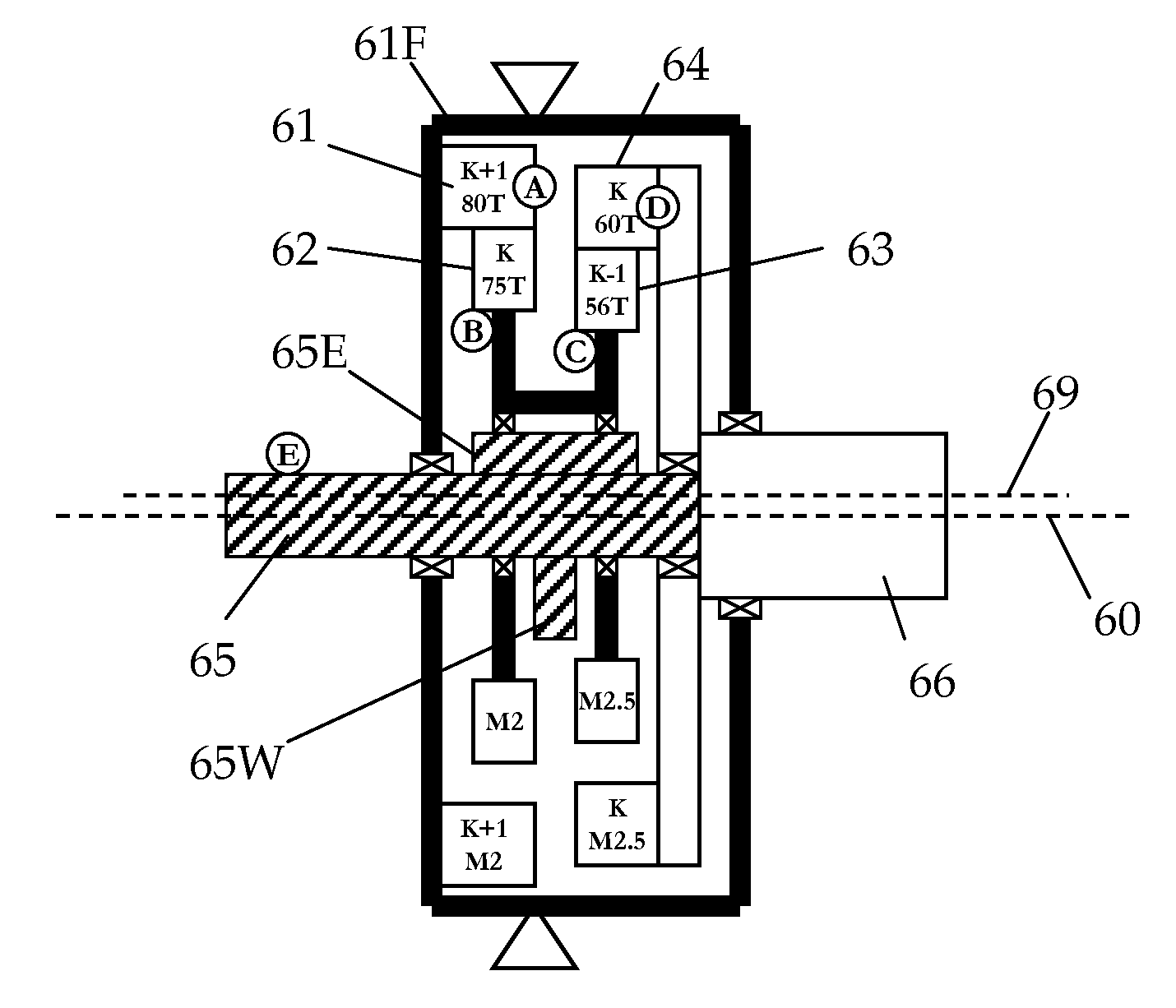
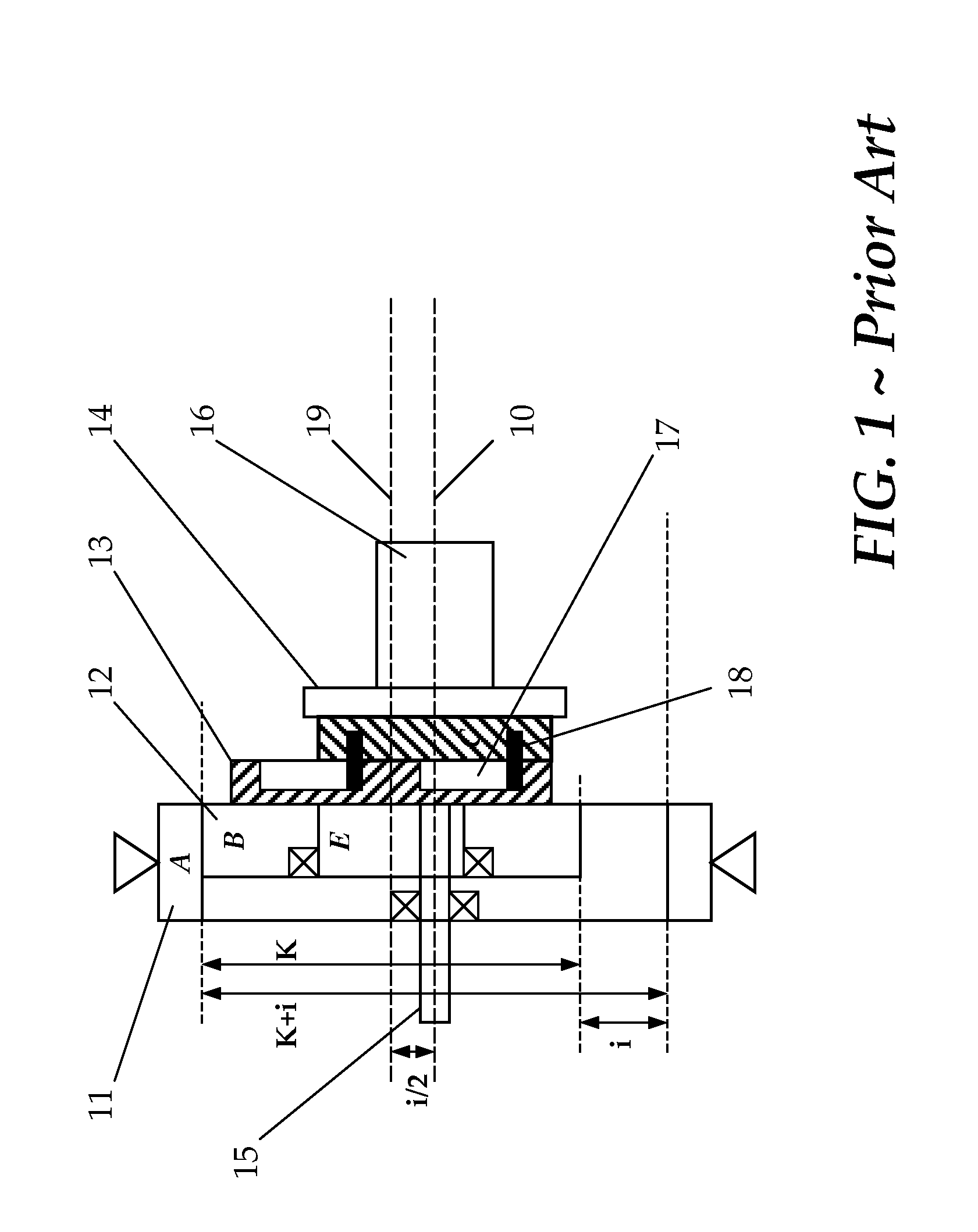
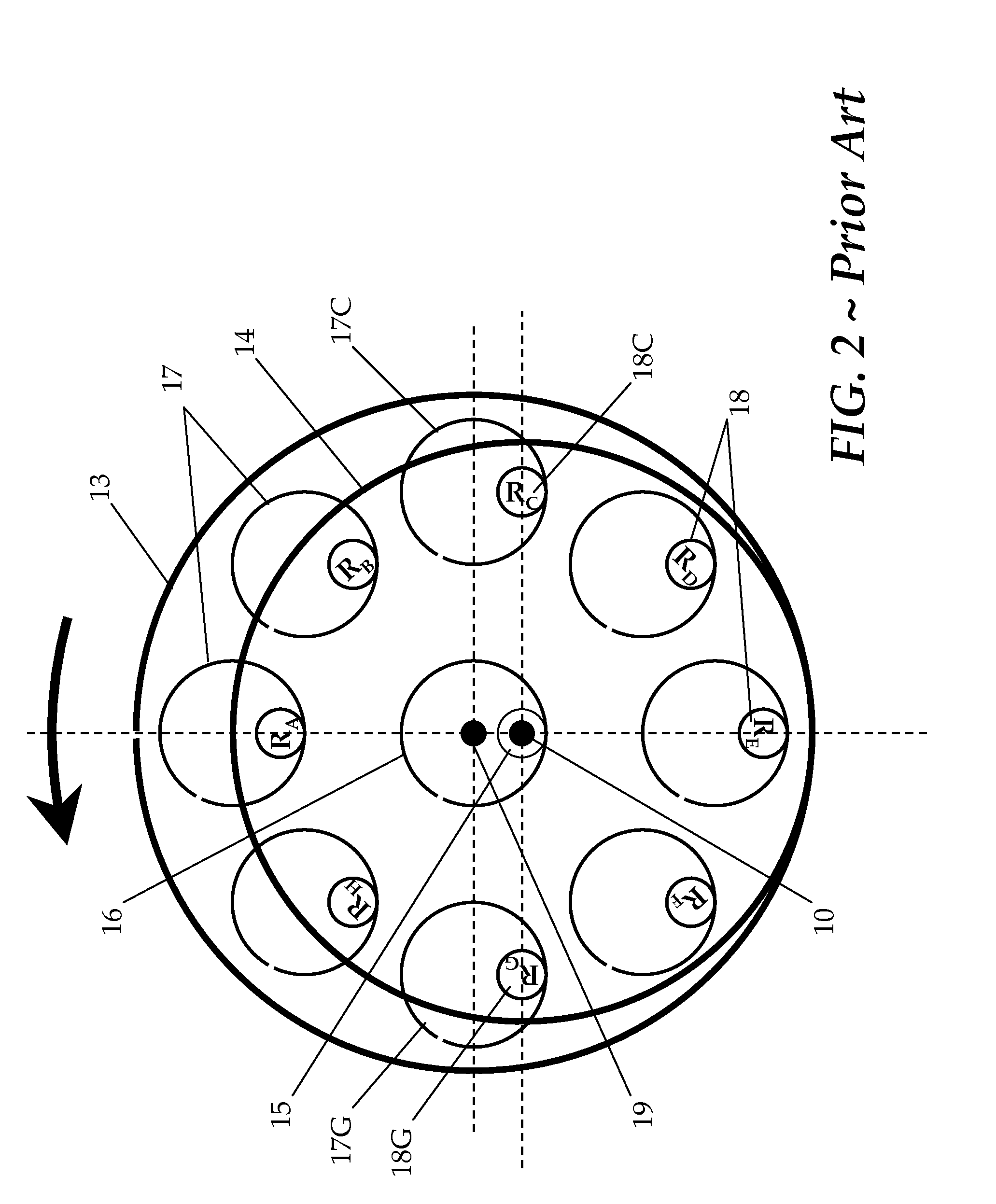
Large-ratio strain wave gearing speed changing apparatus
PatentInactiveEP2988024A3
Innovation
- A strain wave gearing speed changing apparatus with a coaxial pair of circular and flex splines, where the splines satisfy specific tooth number relationships, allowing for increased power density and reduced flexing, thereby enhancing efficiency and service life.


Large-ratio strain wave gearing speed changing apparatus
PatentInactiveUS20140345407A1
Innovation
- A strain wave gearing speed changing apparatus with a coaxial pair of circular and flex splines, where the splines satisfy specific tooth number relationships, allowing for increased power density and reduced flexing, thereby enhancing efficiency and service life by utilizing multiple meshing engagements and optimized dimensional configurations.

Quality Standards for Industrial Gear Manufacturing
Quality standards for industrial gear manufacturing play a critical role in ensuring the reliability and performance of cycloidal drives in scalable production environments. The manufacturing precision directly impacts the efficiency characteristics that define cycloidal drive systems, making adherence to stringent quality protocols essential for achieving optimal operational outcomes.
ISO 1328 and AGMA 2000 series standards establish the fundamental framework for gear accuracy classification in cycloidal drive components. These standards define tolerance classes ranging from IT5 to IT9 for critical dimensions, with cycloidal drives typically requiring IT6 or higher precision levels to maintain their characteristic high reduction ratios and smooth operation. The geometric accuracy of cycloidal discs and pin arrangements must conform to specific runout tolerances, typically within 0.005-0.015mm depending on the drive size and application requirements.
Surface finish specifications constitute another crucial aspect of quality control, with Ra values typically maintained below 0.8μm for contact surfaces in high-efficiency cycloidal drives. Advanced manufacturing processes such as precision grinding and honing are employed to achieve these surface quality requirements, directly contributing to reduced friction losses and enhanced power transmission efficiency.
Material quality standards encompass both chemical composition and mechanical properties verification. Heat treatment protocols must ensure uniform hardness distribution across cycloidal components, typically achieving 58-62 HRC for steel variants while maintaining core toughness. Non-destructive testing methods including ultrasonic inspection and magnetic particle testing are mandatory for detecting internal defects that could compromise long-term reliability.
Dimensional measurement protocols utilize coordinate measuring machines (CMM) and specialized gear measuring equipment to verify compliance with design specifications. Statistical process control (SPC) methodologies are implemented to monitor manufacturing consistency, with Cpk values maintained above 1.33 for critical parameters. These quality assurance measures ensure that cycloidal drives meet their specified efficiency ratings and maintain consistent performance across production batches.
Assembly quality standards address proper lubrication procedures, bearing preload specifications, and housing alignment tolerances. Final inspection protocols include efficiency testing under controlled conditions to validate that manufactured units achieve their designed performance characteristics before deployment in scalable production systems.
ISO 1328 and AGMA 2000 series standards establish the fundamental framework for gear accuracy classification in cycloidal drive components. These standards define tolerance classes ranging from IT5 to IT9 for critical dimensions, with cycloidal drives typically requiring IT6 or higher precision levels to maintain their characteristic high reduction ratios and smooth operation. The geometric accuracy of cycloidal discs and pin arrangements must conform to specific runout tolerances, typically within 0.005-0.015mm depending on the drive size and application requirements.
Surface finish specifications constitute another crucial aspect of quality control, with Ra values typically maintained below 0.8μm for contact surfaces in high-efficiency cycloidal drives. Advanced manufacturing processes such as precision grinding and honing are employed to achieve these surface quality requirements, directly contributing to reduced friction losses and enhanced power transmission efficiency.
Material quality standards encompass both chemical composition and mechanical properties verification. Heat treatment protocols must ensure uniform hardness distribution across cycloidal components, typically achieving 58-62 HRC for steel variants while maintaining core toughness. Non-destructive testing methods including ultrasonic inspection and magnetic particle testing are mandatory for detecting internal defects that could compromise long-term reliability.
Dimensional measurement protocols utilize coordinate measuring machines (CMM) and specialized gear measuring equipment to verify compliance with design specifications. Statistical process control (SPC) methodologies are implemented to monitor manufacturing consistency, with Cpk values maintained above 1.33 for critical parameters. These quality assurance measures ensure that cycloidal drives meet their specified efficiency ratings and maintain consistent performance across production batches.
Assembly quality standards address proper lubrication procedures, bearing preload specifications, and housing alignment tolerances. Final inspection protocols include efficiency testing under controlled conditions to validate that manufactured units achieve their designed performance characteristics before deployment in scalable production systems.
Cost-Benefit Analysis of Cycloidal Drive Scaling
The economic viability of scaling cycloidal drive production hinges on a comprehensive evaluation of initial capital investments versus long-term operational benefits. Manufacturing setup costs for cycloidal drives are substantially higher than conventional gear systems due to precision machining requirements and specialized tooling. The complex geometry of cycloidal discs demands advanced CNC equipment and quality control systems, resulting in initial capital expenditures ranging from 40-60% higher than traditional gear production lines.
However, the cost structure becomes increasingly favorable as production volumes scale. Cycloidal drives demonstrate superior economies of scale due to their modular design principles and standardized component architecture. Once manufacturing processes are optimized, per-unit production costs decrease significantly, with break-even points typically achieved at production volumes exceeding 10,000 units annually for standard industrial applications.
The operational cost advantages of cycloidal drives become pronounced in high-volume manufacturing scenarios. Their inherent efficiency ratings of 85-95% translate to reduced energy consumption across production facilities. For large-scale operations running continuous shifts, energy savings alone can justify the premium investment within 18-24 months. Additionally, the compact design reduces material usage by approximately 30% compared to equivalent planetary gear systems.
Maintenance cost analysis reveals substantial long-term benefits. Cycloidal drives exhibit exceptional durability with mean time between failures exceeding 50,000 operating hours under normal industrial conditions. This reliability translates to reduced downtime costs and lower maintenance labor requirements. The simplified lubrication systems and fewer wearing components result in 40-50% lower maintenance expenses over the equipment lifecycle.
Market positioning analysis indicates that cycloidal drive manufacturers can command premium pricing due to performance advantages. The total cost of ownership calculations consistently favor cycloidal systems in applications requiring high precision, compact form factors, and extended operational life. Return on investment metrics show positive cash flows typically beginning in the second year of scaled production, with cumulative benefits becoming substantial by year five of operation.
However, the cost structure becomes increasingly favorable as production volumes scale. Cycloidal drives demonstrate superior economies of scale due to their modular design principles and standardized component architecture. Once manufacturing processes are optimized, per-unit production costs decrease significantly, with break-even points typically achieved at production volumes exceeding 10,000 units annually for standard industrial applications.
The operational cost advantages of cycloidal drives become pronounced in high-volume manufacturing scenarios. Their inherent efficiency ratings of 85-95% translate to reduced energy consumption across production facilities. For large-scale operations running continuous shifts, energy savings alone can justify the premium investment within 18-24 months. Additionally, the compact design reduces material usage by approximately 30% compared to equivalent planetary gear systems.
Maintenance cost analysis reveals substantial long-term benefits. Cycloidal drives exhibit exceptional durability with mean time between failures exceeding 50,000 operating hours under normal industrial conditions. This reliability translates to reduced downtime costs and lower maintenance labor requirements. The simplified lubrication systems and fewer wearing components result in 40-50% lower maintenance expenses over the equipment lifecycle.
Market positioning analysis indicates that cycloidal drive manufacturers can command premium pricing due to performance advantages. The total cost of ownership calculations consistently favor cycloidal systems in applications requiring high precision, compact form factors, and extended operational life. Return on investment metrics show positive cash flows typically beginning in the second year of scaled production, with cumulative benefits becoming substantial by year five of operation.
Unlock deeper insights with PatSnap Eureka Quick Research — get a full tech report to explore trends and direct your research. Try now!
Generate Your Research Report Instantly with AI Agent
Supercharge your innovation with PatSnap Eureka AI Agent Platform!