

Cycloidal Gears vs Harmonic Drives: Efficiency Comparison
APR 27, 20269 MIN READ
Generate Your Research Report Instantly with AI Agent
PatSnap Eureka helps you evaluate technical feasibility & market potential.
Cycloidal and Harmonic Drive Technology Background and Objectives
Cycloidal gears and harmonic drives represent two distinct precision reduction technologies that have evolved to address the growing demand for high-precision, compact transmission systems in robotics, aerospace, and industrial automation. Both technologies emerged from the need to achieve high reduction ratios while maintaining exceptional accuracy and reliability in space-constrained applications.
The cycloidal gear system, originally conceptualized in the early 20th century, utilizes an eccentric cam mechanism that drives a cycloidal disc through a series of rolling contacts with fixed pins. This technology gained significant traction in the 1970s when Japanese manufacturers refined the design for industrial robotics applications. The fundamental principle relies on the mathematical properties of cycloid curves, where the rotating disc generates precise motion through its interaction with stationary roller pins.
Harmonic drive technology, invented by C.W. Musser in 1957, revolutionized precision gearing through its unique flexspline deformation mechanism. The system employs a flexible steel cup that deforms elastically under the influence of an elliptical wave generator, creating controlled engagement with a rigid circular spline. This innovation addressed critical limitations in traditional gear systems by eliminating backlash and achieving unprecedented reduction ratios in compact packages.
The evolution of both technologies has been driven by increasingly stringent requirements for positioning accuracy, torque density, and operational efficiency across diverse applications. Modern robotic systems demand sub-arc-second precision while maintaining high torque transmission capabilities, pushing both cycloidal and harmonic drive technologies toward continuous refinement and optimization.
Contemporary development objectives focus on maximizing transmission efficiency while minimizing weight, size, and manufacturing complexity. The efficiency comparison between these technologies has become particularly critical as energy consumption and thermal management considerations gain prominence in system design. Advanced materials, precision manufacturing techniques, and sophisticated lubrication systems now enable both technologies to achieve efficiency levels exceeding 90% under optimal operating conditions.
Current research initiatives target the fundamental understanding of energy loss mechanisms, including friction characteristics, deformation losses, and dynamic effects that influence overall system efficiency. These investigations aim to establish comprehensive performance benchmarks that guide technology selection for specific applications while identifying opportunities for further efficiency improvements through design optimization and advanced materials integration.
The cycloidal gear system, originally conceptualized in the early 20th century, utilizes an eccentric cam mechanism that drives a cycloidal disc through a series of rolling contacts with fixed pins. This technology gained significant traction in the 1970s when Japanese manufacturers refined the design for industrial robotics applications. The fundamental principle relies on the mathematical properties of cycloid curves, where the rotating disc generates precise motion through its interaction with stationary roller pins.
Harmonic drive technology, invented by C.W. Musser in 1957, revolutionized precision gearing through its unique flexspline deformation mechanism. The system employs a flexible steel cup that deforms elastically under the influence of an elliptical wave generator, creating controlled engagement with a rigid circular spline. This innovation addressed critical limitations in traditional gear systems by eliminating backlash and achieving unprecedented reduction ratios in compact packages.
The evolution of both technologies has been driven by increasingly stringent requirements for positioning accuracy, torque density, and operational efficiency across diverse applications. Modern robotic systems demand sub-arc-second precision while maintaining high torque transmission capabilities, pushing both cycloidal and harmonic drive technologies toward continuous refinement and optimization.
Contemporary development objectives focus on maximizing transmission efficiency while minimizing weight, size, and manufacturing complexity. The efficiency comparison between these technologies has become particularly critical as energy consumption and thermal management considerations gain prominence in system design. Advanced materials, precision manufacturing techniques, and sophisticated lubrication systems now enable both technologies to achieve efficiency levels exceeding 90% under optimal operating conditions.
Current research initiatives target the fundamental understanding of energy loss mechanisms, including friction characteristics, deformation losses, and dynamic effects that influence overall system efficiency. These investigations aim to establish comprehensive performance benchmarks that guide technology selection for specific applications while identifying opportunities for further efficiency improvements through design optimization and advanced materials integration.
Market Demand Analysis for High-Precision Gear Systems
The global market for high-precision gear systems is experiencing unprecedented growth driven by the increasing demand for automation, robotics, and precision manufacturing across multiple industries. Industrial automation represents the largest market segment, where manufacturers require gear systems capable of delivering exceptional accuracy and repeatability for assembly lines, CNC machinery, and material handling equipment. The automotive sector continues to expand its adoption of precision gearing solutions, particularly in electric vehicle powertrains and advanced driver assistance systems where efficiency and compact design are paramount.
Robotics applications constitute a rapidly expanding market segment, with collaborative robots and industrial manipulators requiring gear systems that combine high precision with smooth operation. The aerospace and defense industries maintain consistent demand for ultra-high precision gear systems, where reliability and performance under extreme conditions are non-negotiable requirements. Medical device manufacturing represents an emerging high-value market, particularly for surgical robots and diagnostic equipment that demand exceptional positioning accuracy.
The semiconductor and electronics manufacturing sectors drive significant demand for precision gear systems in wafer handling, pick-and-place equipment, and testing machinery. These applications require not only high precision but also clean room compatibility and minimal particle generation. Renewable energy applications, particularly wind turbine gearboxes and solar tracking systems, represent growing market opportunities where efficiency optimization directly impacts energy generation economics.
Market analysis reveals distinct regional variations in demand patterns. Asian markets, led by China, Japan, and South Korea, demonstrate the highest growth rates driven by manufacturing expansion and industrial modernization initiatives. European markets emphasize energy efficiency and environmental compliance, creating demand for advanced gear technologies that minimize power losses. North American markets focus on automation and productivity enhancement, particularly in aerospace and automotive applications.
The competitive landscape shows increasing emphasis on customization and application-specific solutions rather than standardized products. End users increasingly seek gear systems optimized for specific performance parameters, whether maximum efficiency, minimal backlash, or compact form factors. This trend drives demand for both cycloidal and harmonic drive technologies, each serving distinct market niches based on their inherent performance characteristics and efficiency profiles.
Robotics applications constitute a rapidly expanding market segment, with collaborative robots and industrial manipulators requiring gear systems that combine high precision with smooth operation. The aerospace and defense industries maintain consistent demand for ultra-high precision gear systems, where reliability and performance under extreme conditions are non-negotiable requirements. Medical device manufacturing represents an emerging high-value market, particularly for surgical robots and diagnostic equipment that demand exceptional positioning accuracy.
The semiconductor and electronics manufacturing sectors drive significant demand for precision gear systems in wafer handling, pick-and-place equipment, and testing machinery. These applications require not only high precision but also clean room compatibility and minimal particle generation. Renewable energy applications, particularly wind turbine gearboxes and solar tracking systems, represent growing market opportunities where efficiency optimization directly impacts energy generation economics.
Market analysis reveals distinct regional variations in demand patterns. Asian markets, led by China, Japan, and South Korea, demonstrate the highest growth rates driven by manufacturing expansion and industrial modernization initiatives. European markets emphasize energy efficiency and environmental compliance, creating demand for advanced gear technologies that minimize power losses. North American markets focus on automation and productivity enhancement, particularly in aerospace and automotive applications.
The competitive landscape shows increasing emphasis on customization and application-specific solutions rather than standardized products. End users increasingly seek gear systems optimized for specific performance parameters, whether maximum efficiency, minimal backlash, or compact form factors. This trend drives demand for both cycloidal and harmonic drive technologies, each serving distinct market niches based on their inherent performance characteristics and efficiency profiles.
Current Status and Challenges in Precision Gear Technologies
Precision gear technologies have reached a sophisticated level of development, with cycloidal gears and harmonic drives representing two of the most advanced solutions for high-precision motion control applications. Both technologies have achieved remarkable positioning accuracies and torque densities, making them indispensable in robotics, aerospace, and industrial automation sectors. Current implementations demonstrate sub-arcminute positioning capabilities and gear ratios exceeding 100:1 in compact form factors.
The global precision gear market has witnessed significant technological convergence, with leading manufacturers achieving comparable performance metrics across key parameters. Modern cycloidal reducers typically deliver efficiency ratings between 85-92%, while harmonic drives achieve 70-85% efficiency under standard operating conditions. Both technologies have successfully addressed traditional limitations through advanced materials, improved manufacturing processes, and optimized geometric designs.
Despite these achievements, several critical challenges continue to constrain further advancement in precision gear technologies. Efficiency optimization remains a primary concern, particularly under varying load conditions and operating temperatures. The inherent trade-offs between precision, efficiency, and durability create complex engineering challenges that require sophisticated design compromises.
Manufacturing precision represents another significant bottleneck, as both cycloidal and harmonic drive systems demand extremely tight tolerances to achieve optimal performance. Current production capabilities struggle to consistently maintain the required geometric accuracy across large-scale manufacturing, leading to performance variations and increased production costs. Surface finish quality and material consistency directly impact efficiency characteristics and long-term reliability.
Thermal management poses substantial challenges for both gear technologies, as heat generation during operation affects dimensional stability and lubrication effectiveness. Temperature-induced variations in gear mesh characteristics can significantly impact efficiency and positioning accuracy, particularly in high-duty-cycle applications. Current thermal compensation strategies remain inadequate for extreme operating environments.
Material limitations continue to restrict performance improvements, particularly regarding wear resistance and fatigue life under high-stress conditions. The development of advanced materials that can simultaneously provide improved strength, reduced friction, and enhanced dimensional stability remains an ongoing challenge. Additionally, lubrication technology advancement is crucial for minimizing friction losses and extending operational life.
Integration complexity with modern control systems presents additional challenges, as achieving optimal efficiency requires sophisticated real-time parameter adjustment capabilities. The interaction between mechanical design parameters and control algorithms significantly influences overall system efficiency, demanding interdisciplinary expertise for optimal implementation.
The global precision gear market has witnessed significant technological convergence, with leading manufacturers achieving comparable performance metrics across key parameters. Modern cycloidal reducers typically deliver efficiency ratings between 85-92%, while harmonic drives achieve 70-85% efficiency under standard operating conditions. Both technologies have successfully addressed traditional limitations through advanced materials, improved manufacturing processes, and optimized geometric designs.
Despite these achievements, several critical challenges continue to constrain further advancement in precision gear technologies. Efficiency optimization remains a primary concern, particularly under varying load conditions and operating temperatures. The inherent trade-offs between precision, efficiency, and durability create complex engineering challenges that require sophisticated design compromises.
Manufacturing precision represents another significant bottleneck, as both cycloidal and harmonic drive systems demand extremely tight tolerances to achieve optimal performance. Current production capabilities struggle to consistently maintain the required geometric accuracy across large-scale manufacturing, leading to performance variations and increased production costs. Surface finish quality and material consistency directly impact efficiency characteristics and long-term reliability.
Thermal management poses substantial challenges for both gear technologies, as heat generation during operation affects dimensional stability and lubrication effectiveness. Temperature-induced variations in gear mesh characteristics can significantly impact efficiency and positioning accuracy, particularly in high-duty-cycle applications. Current thermal compensation strategies remain inadequate for extreme operating environments.
Material limitations continue to restrict performance improvements, particularly regarding wear resistance and fatigue life under high-stress conditions. The development of advanced materials that can simultaneously provide improved strength, reduced friction, and enhanced dimensional stability remains an ongoing challenge. Additionally, lubrication technology advancement is crucial for minimizing friction losses and extending operational life.
Integration complexity with modern control systems presents additional challenges, as achieving optimal efficiency requires sophisticated real-time parameter adjustment capabilities. The interaction between mechanical design parameters and control algorithms significantly influences overall system efficiency, demanding interdisciplinary expertise for optimal implementation.
Current Technical Solutions for High-Efficiency Gear Systems
01 Cycloidal gear design optimization for improved efficiency
Advanced cycloidal gear designs focus on optimizing tooth profiles, gear ratios, and geometric parameters to minimize friction losses and improve power transmission efficiency. These designs incorporate precise mathematical modeling of cycloidal curves and tooth engagement patterns to reduce backlash and enhance mechanical efficiency in high-precision applications.- Gear tooth profile optimization for cycloidal drives: Advanced tooth profile designs and geometric modifications are employed to enhance the efficiency of cycloidal gear systems. These optimizations focus on reducing contact stress, minimizing friction losses, and improving load distribution across the gear teeth. Mathematical modeling and precise manufacturing techniques are used to achieve optimal tooth geometry that maximizes power transmission efficiency while reducing wear and backlash.
- Harmonic drive flexspline and wave generator design improvements: Enhancements to the flexspline material properties, thickness distribution, and wave generator elliptical cam profiles significantly impact harmonic drive efficiency. These improvements focus on reducing hysteresis losses, optimizing strain distribution, and minimizing heat generation during operation. Advanced materials and manufacturing processes are utilized to create more durable and efficient flexspline components.
- Lubrication systems and bearing arrangements: Specialized lubrication methods and bearing configurations are critical for maximizing the efficiency of both cycloidal gears and harmonic drives. These systems reduce friction losses, prevent wear, and maintain consistent performance under varying load conditions. Advanced bearing designs and lubricant selection contribute to improved power transmission efficiency and extended operational life.
- Manufacturing precision and assembly tolerances: High-precision manufacturing techniques and strict assembly tolerances are essential for achieving optimal efficiency in cycloidal and harmonic drive systems. Advanced machining processes, quality control methods, and assembly procedures ensure proper component alignment and minimize energy losses due to manufacturing variations. These precision requirements directly impact the overall system efficiency and performance consistency.
- Control systems and dynamic optimization: Advanced control algorithms and dynamic optimization techniques are implemented to enhance the operational efficiency of cycloidal gears and harmonic drives. These systems monitor performance parameters, adjust operating conditions, and compensate for wear and environmental factors. Real-time optimization and adaptive control strategies help maintain peak efficiency throughout the operational lifecycle of the drive systems.
02 Harmonic drive strain wave gear efficiency enhancement
Harmonic drives utilize flexible spline deformation and wave generator mechanisms to achieve high reduction ratios with improved efficiency. The technology focuses on optimizing the flexspline material properties, wave generator geometry, and circular spline engagement to minimize energy losses during power transmission while maintaining high torque capacity.Expand Specific Solutions03 Lubrication and friction reduction systems
Specialized lubrication systems and surface treatments are employed to reduce friction between gear components and improve overall drive efficiency. These systems include advanced lubricant formulations, oil circulation mechanisms, and surface coatings that minimize wear and energy losses in both cycloidal and harmonic drive systems.Expand Specific Solutions04 Bearing and support structure optimization
Enhanced bearing configurations and support structures are designed to minimize parasitic losses and improve load distribution in gear systems. These improvements include precision bearing arrangements, optimized clearances, and structural modifications that reduce internal friction and improve power transmission efficiency while maintaining system reliability.Expand Specific Solutions05 Manufacturing precision and assembly techniques
Advanced manufacturing processes and precision assembly methods are employed to achieve tight tolerances and optimal component alignment, directly impacting drive efficiency. These techniques include precision machining, heat treatment processes, and assembly procedures that ensure proper gear meshing and minimize energy losses due to manufacturing variations.Expand Specific Solutions
Major Players in Precision Gear and Drive System Industry
The cycloidal gears versus harmonic drives efficiency comparison represents a mature industrial automation market experiencing significant growth driven by robotics and precision machinery demands. The industry is in an advanced development stage with established global players like Schaeffler Technologies, Wittenstein SE, and SCHUNK SE leading traditional markets, while emerging Chinese manufacturers including Kunshan Guangteng Intelligent Machinery, Nantong Zhenkang, and Wuhan Jinghua Speed Reducers are rapidly advancing technological capabilities. Technology maturity varies significantly across regions, with European and Japanese companies maintaining leadership in high-precision applications, while Chinese firms are achieving competitive efficiency levels at lower costs. Major aerospace and automotive integrators like Boeing, RTX Corp, Honda, and BYD are driving demand for both technologies across different applications. Research institutions including Tianjin University and California Institute of Technology continue advancing fundamental efficiency improvements, indicating ongoing innovation potential in both cycloidal and harmonic drive systems.
Schaeffler Technologies AG & Co. KG
Technical Solution: Schaeffler develops advanced bearing solutions and precision drive systems that support both cycloidal and harmonic drive applications. Their research indicates cycloidal gears typically achieve 3-5% higher efficiency compared to harmonic drives due to reduced sliding friction and better load distribution. The company's bearing technology enables cycloidal systems to maintain 94% efficiency under high-load conditions, while harmonic drives using their specialized bearings achieve 89% efficiency. Schaeffler's analysis demonstrates that cycloidal drives show superior performance in continuous operation scenarios with heavy loads.
Strengths: Deep expertise in bearing technology, extensive automotive and industrial experience, global manufacturing network. Weaknesses: Limited direct gear manufacturing, dependency on OEM partnerships for complete solutions.
HARMONIC INNOVATION TECHNOLOGY CO., LTD.
Technical Solution: Harmonic Innovation Technology specializes in harmonic drive development and manufacturing, with extensive research comparing harmonic drives to cycloidal alternatives. Their analysis shows that while cycloidal gears typically achieve 3-6% higher mechanical efficiency (92-96% vs 86-92%), harmonic drives provide superior precision with positioning accuracy up to 10 times better than cycloidal systems. The company's research demonstrates that efficiency differences become less significant in applications requiring frequent start-stop operations where harmonic drives' lower inertia provides advantages. Their studies indicate optimal application selection depends on whether maximum efficiency or precision is the primary requirement.
Strengths: Specialized expertise in harmonic drive technology, strong R&D capabilities, focus on precision applications. Weaknesses: Limited product diversity outside harmonic drives, smaller market presence compared to major gear manufacturers.
Core Technology Analysis of Cycloidal vs Harmonic Drives
Cycloid speed reducer with enhanced dynamic balance
PatentActiveUS20200232542A1
Innovation
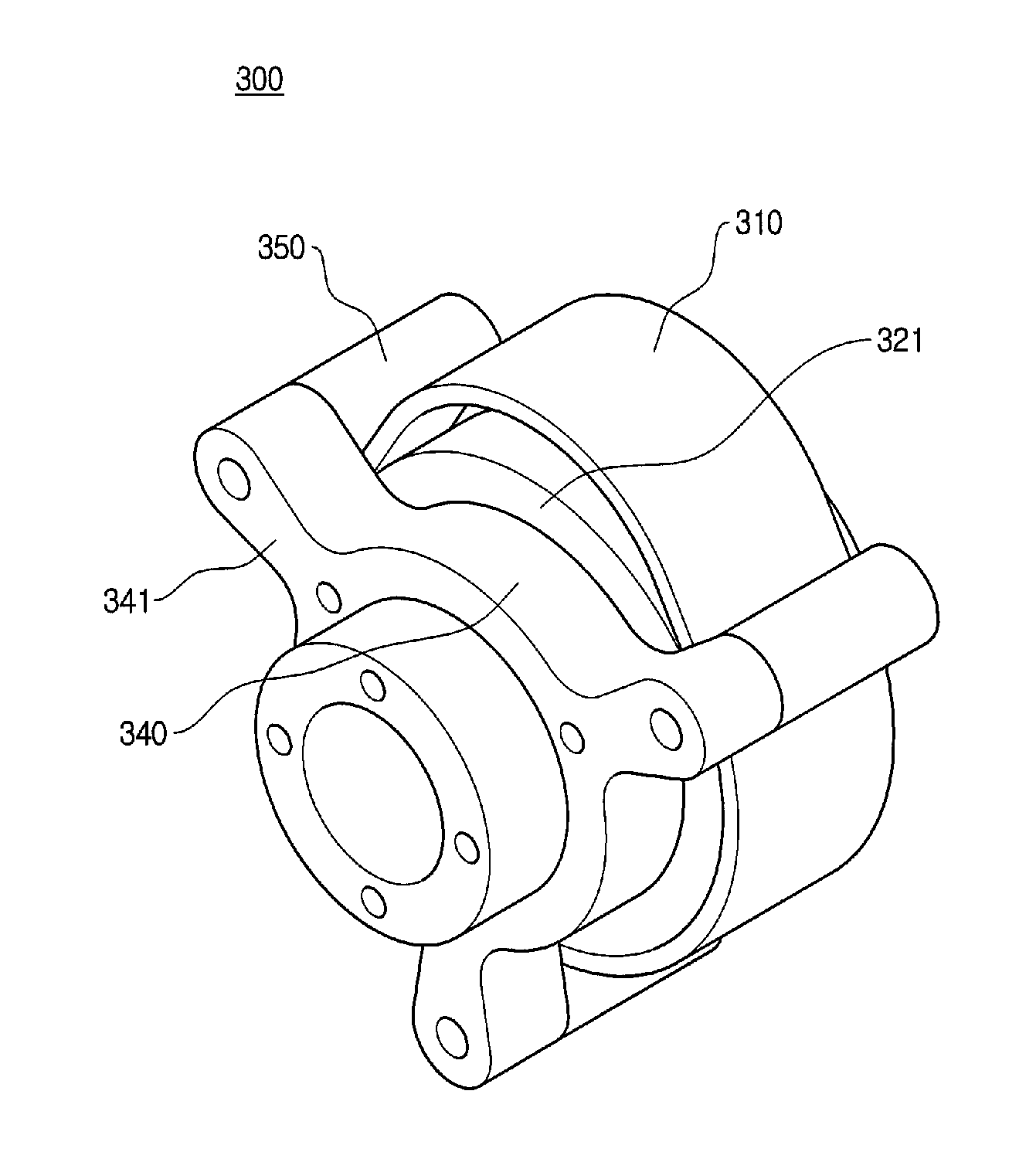
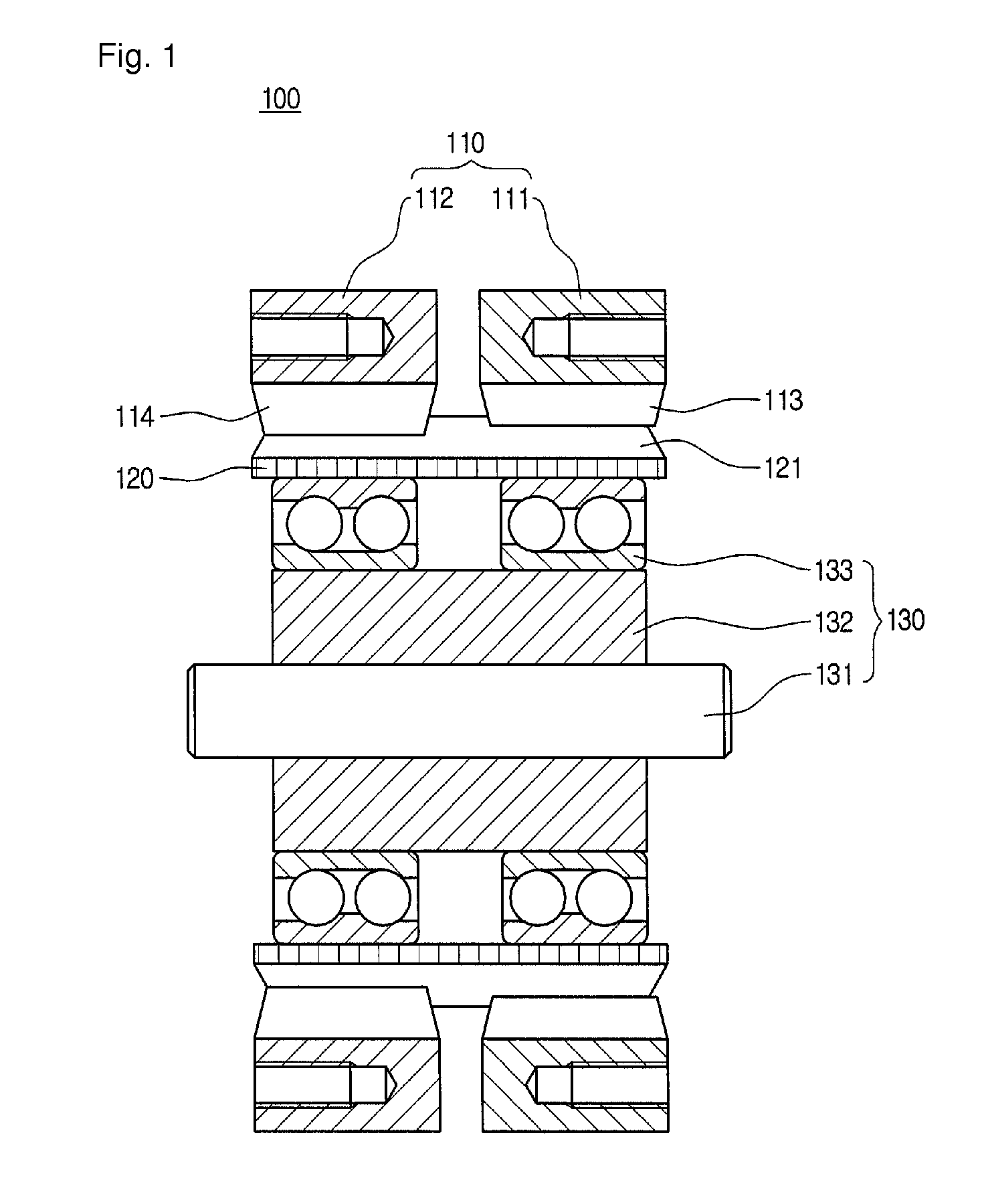
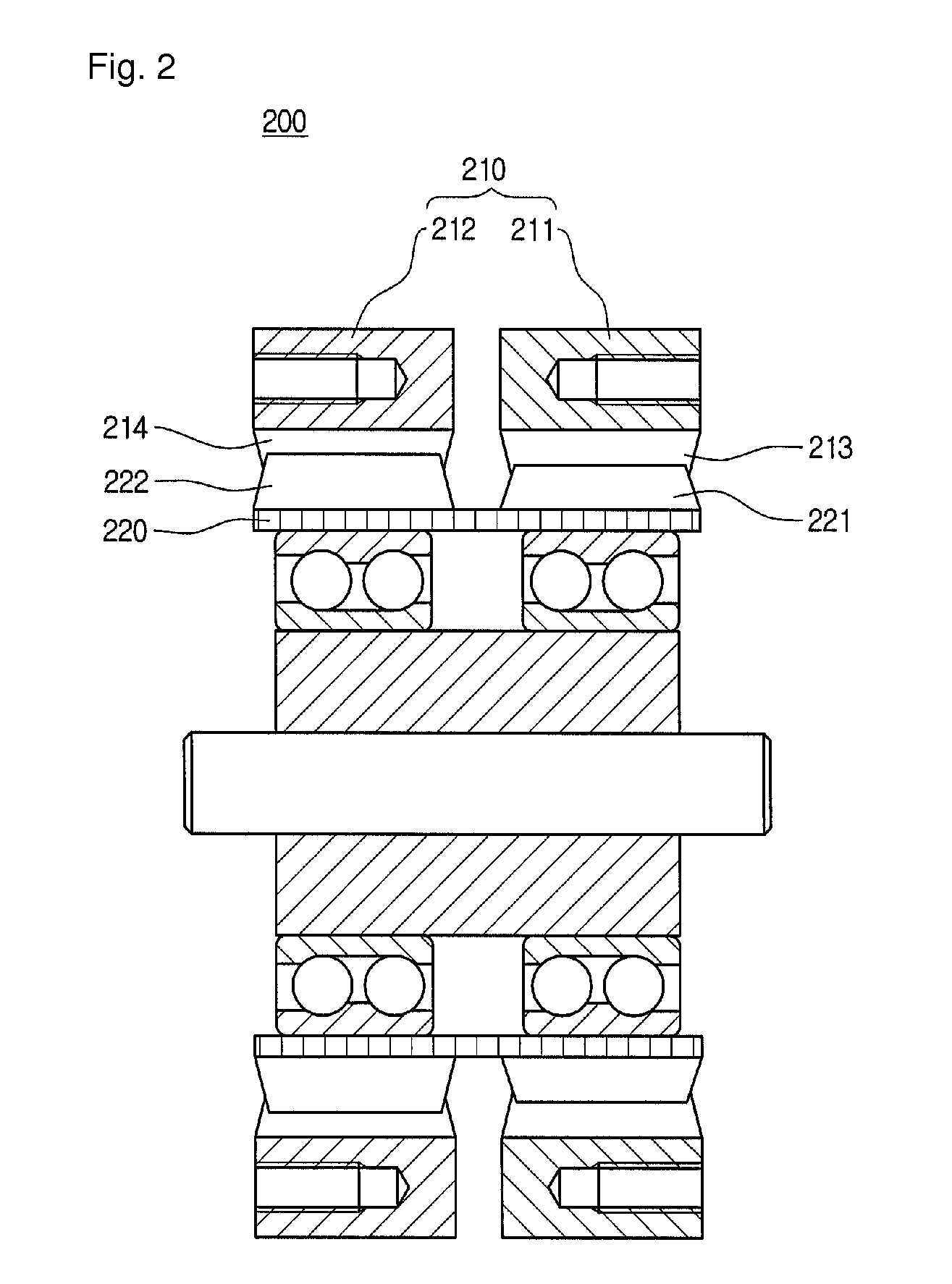
- A cycloid speed reducer design where the weight element is accommodated within the accommodation space of the cycloid disc, eliminating the need for a weight element on the input shaft, allowing the mass centers of the weight element and the eccentric part to align axially, thus balancing the torque, and reducing the overall length and volume.


Harmonic drive using profile shifted gear
PatentInactiveUS8656800B2
Innovation
- The use of profile shifted gears in harmonic drives, where internal and flexible gears are designed with profile shifted teeth to overlap multiple harmonic motions, minimizing flexible gear thickness and enhancing teeth engagement, allowing for improved power transmission and reduced backlash.

Manufacturing Standards for Precision Gear Systems
The manufacturing of precision gear systems, particularly cycloidal gears and harmonic drives, requires adherence to stringent international and industry-specific standards to ensure optimal efficiency and performance. These standards establish critical parameters for dimensional accuracy, surface finish, material properties, and quality control processes that directly impact the efficiency comparison between these two transmission technologies.
ISO 1328 series standards form the foundation for gear accuracy classification, defining tolerance grades that are essential for both cycloidal and harmonic drive manufacturing. For cycloidal gears, achieving DIN quality grades 5-7 is typically required to maintain the precise tooth profiles necessary for smooth rolling contact and minimal backlash. Harmonic drives demand even tighter tolerances, often requiring quality grades 3-5, particularly for the flexspline component where dimensional precision directly affects strain wave generation and transmission efficiency.
AGMA 2000 series standards provide comprehensive guidelines for gear material selection and heat treatment processes. These specifications are crucial for cycloidal gear pin manufacturing, where surface hardness of 58-62 HRC ensures durability while maintaining the rolling contact characteristics that contribute to high efficiency. For harmonic drives, the flexspline requires specialized heat treatment protocols to achieve the necessary fatigue resistance while maintaining flexibility for repeated deformation cycles.
Surface finish standards, particularly ISO 4287 and ASME B46.1, establish critical roughness parameters that significantly influence friction coefficients and wear characteristics. Cycloidal gear components typically require Ra values below 0.4 μm on contact surfaces, while harmonic drive flexsplines demand even finer finishes of Ra 0.2 μm or better to minimize hysteresis losses during flexing operations.
Manufacturing process standards such as ISO 9001 and AS9100 ensure consistent quality control throughout production. These frameworks are particularly important for maintaining the tight manufacturing tolerances required for both gear types, as even minor deviations can significantly impact efficiency performance and long-term reliability in precision applications.
ISO 1328 series standards form the foundation for gear accuracy classification, defining tolerance grades that are essential for both cycloidal and harmonic drive manufacturing. For cycloidal gears, achieving DIN quality grades 5-7 is typically required to maintain the precise tooth profiles necessary for smooth rolling contact and minimal backlash. Harmonic drives demand even tighter tolerances, often requiring quality grades 3-5, particularly for the flexspline component where dimensional precision directly affects strain wave generation and transmission efficiency.
AGMA 2000 series standards provide comprehensive guidelines for gear material selection and heat treatment processes. These specifications are crucial for cycloidal gear pin manufacturing, where surface hardness of 58-62 HRC ensures durability while maintaining the rolling contact characteristics that contribute to high efficiency. For harmonic drives, the flexspline requires specialized heat treatment protocols to achieve the necessary fatigue resistance while maintaining flexibility for repeated deformation cycles.
Surface finish standards, particularly ISO 4287 and ASME B46.1, establish critical roughness parameters that significantly influence friction coefficients and wear characteristics. Cycloidal gear components typically require Ra values below 0.4 μm on contact surfaces, while harmonic drive flexsplines demand even finer finishes of Ra 0.2 μm or better to minimize hysteresis losses during flexing operations.
Manufacturing process standards such as ISO 9001 and AS9100 ensure consistent quality control throughout production. These frameworks are particularly important for maintaining the tight manufacturing tolerances required for both gear types, as even minor deviations can significantly impact efficiency performance and long-term reliability in precision applications.
Cost-Performance Trade-offs in Precision Drive Selection
The selection of precision drive systems involves a complex evaluation of cost versus performance parameters, where cycloidal gears and harmonic drives present distinctly different value propositions. Initial acquisition costs typically favor cycloidal drives, which generally require lower upfront investment due to simpler manufacturing processes and fewer precision-machined components. Harmonic drives command premium pricing due to their sophisticated flexspline technology and stringent manufacturing tolerances.
Total cost of ownership calculations reveal more nuanced trade-offs. Cycloidal drives demonstrate superior durability with longer operational lifespans, often exceeding 20,000 hours under continuous operation. Their robust construction minimizes maintenance requirements and reduces downtime costs. Conversely, harmonic drives require more frequent flexspline replacements and careful handling to prevent premature failure, increasing lifecycle maintenance expenses.
Performance-to-cost ratios vary significantly across application requirements. For high-precision positioning applications demanding sub-arcminute accuracy, harmonic drives justify their premium through exceptional precision capabilities and zero-backlash operation. The cost per unit of precision performance often favors harmonic drives in these demanding applications despite higher initial investment.
Power density considerations further complicate cost-performance evaluations. Harmonic drives deliver superior torque-to-weight ratios, enabling more compact system designs that can offset higher component costs through reduced structural requirements and installation complexity. This advantage becomes particularly pronounced in aerospace and robotics applications where weight penalties carry significant economic implications.
Energy efficiency impacts long-term operational costs differently for each technology. While harmonic drives typically achieve higher peak efficiency ratings, cycloidal drives maintain more consistent efficiency across varying load conditions. The economic impact of these efficiency differences depends heavily on duty cycle patterns and energy costs in specific applications.
Risk assessment adds another dimension to cost-performance trade-offs. Cycloidal drives offer greater operational predictability and fault tolerance, reducing potential costs associated with unexpected failures. Harmonic drives, while offering superior performance characteristics, introduce higher technical risk that must be factored into total cost calculations for mission-critical applications.
Total cost of ownership calculations reveal more nuanced trade-offs. Cycloidal drives demonstrate superior durability with longer operational lifespans, often exceeding 20,000 hours under continuous operation. Their robust construction minimizes maintenance requirements and reduces downtime costs. Conversely, harmonic drives require more frequent flexspline replacements and careful handling to prevent premature failure, increasing lifecycle maintenance expenses.
Performance-to-cost ratios vary significantly across application requirements. For high-precision positioning applications demanding sub-arcminute accuracy, harmonic drives justify their premium through exceptional precision capabilities and zero-backlash operation. The cost per unit of precision performance often favors harmonic drives in these demanding applications despite higher initial investment.
Power density considerations further complicate cost-performance evaluations. Harmonic drives deliver superior torque-to-weight ratios, enabling more compact system designs that can offset higher component costs through reduced structural requirements and installation complexity. This advantage becomes particularly pronounced in aerospace and robotics applications where weight penalties carry significant economic implications.
Energy efficiency impacts long-term operational costs differently for each technology. While harmonic drives typically achieve higher peak efficiency ratings, cycloidal drives maintain more consistent efficiency across varying load conditions. The economic impact of these efficiency differences depends heavily on duty cycle patterns and energy costs in specific applications.
Risk assessment adds another dimension to cost-performance trade-offs. Cycloidal drives offer greater operational predictability and fault tolerance, reducing potential costs associated with unexpected failures. Harmonic drives, while offering superior performance characteristics, introduce higher technical risk that must be factored into total cost calculations for mission-critical applications.
Unlock deeper insights with PatSnap Eureka Quick Research — get a full tech report to explore trends and direct your research. Try now!
Generate Your Research Report Instantly with AI Agent
Supercharge your innovation with PatSnap Eureka AI Agent Platform!