

Defining Multiplexer Contributions to Expanding AI Capabilities
JUL 13, 20258 MIN READ
Generate Your Research Report Instantly with AI Agent
PatSnap Eureka helps you evaluate technical feasibility & market potential.
Multiplexer Evolution and AI Enhancement Goals
Multiplexers have played a pivotal role in the evolution of artificial intelligence, serving as crucial components in expanding AI capabilities. The journey of multiplexer technology in AI began with simple logic gates and has progressed to sophisticated neural network architectures. This evolution has been driven by the need for more efficient data processing and decision-making in AI systems.
The primary goal of multiplexer integration in AI is to enhance the system's ability to handle complex, multi-dimensional data inputs. By allowing AI models to selectively focus on relevant information streams, multiplexers contribute to improved pattern recognition, faster processing speeds, and more accurate predictions. This selective attention mechanism mimics human cognitive processes, enabling AI to prioritize and process information more effectively.
Another key objective is to optimize resource utilization within AI systems. Multiplexers enable dynamic allocation of computational resources, directing processing power where it's most needed at any given moment. This adaptability is crucial for handling the ever-increasing complexity of AI tasks and datasets.
Enhancing AI's scalability is also a central aim of multiplexer integration. As AI applications grow in scope and complexity, the ability to efficiently manage and route vast amounts of data becomes paramount. Multiplexers provide a scalable solution, allowing AI systems to expand their capabilities without proportional increases in hardware requirements.
Improving AI's interpretability and explainability is another significant goal. By incorporating multiplexers that can highlight which inputs are most influential in decision-making processes, researchers aim to create more transparent AI systems. This transparency is crucial for building trust in AI applications, especially in sensitive domains like healthcare and finance.
The evolution of multiplexers in AI also aims to bridge the gap between different AI paradigms. By facilitating the integration of symbolic AI with neural networks, multiplexers contribute to the development of hybrid AI systems that combine the strengths of both approaches. This fusion promises more robust and versatile AI capabilities, capable of handling a wider range of tasks and scenarios.
Looking forward, the continued evolution of multiplexers in AI is expected to focus on developing more energy-efficient architectures, enabling AI deployment on edge devices with limited resources. Additionally, research is likely to explore bio-inspired multiplexer designs that more closely mimic the neural pathways of the human brain, potentially leading to breakthroughs in artificial general intelligence.
The primary goal of multiplexer integration in AI is to enhance the system's ability to handle complex, multi-dimensional data inputs. By allowing AI models to selectively focus on relevant information streams, multiplexers contribute to improved pattern recognition, faster processing speeds, and more accurate predictions. This selective attention mechanism mimics human cognitive processes, enabling AI to prioritize and process information more effectively.
Another key objective is to optimize resource utilization within AI systems. Multiplexers enable dynamic allocation of computational resources, directing processing power where it's most needed at any given moment. This adaptability is crucial for handling the ever-increasing complexity of AI tasks and datasets.
Enhancing AI's scalability is also a central aim of multiplexer integration. As AI applications grow in scope and complexity, the ability to efficiently manage and route vast amounts of data becomes paramount. Multiplexers provide a scalable solution, allowing AI systems to expand their capabilities without proportional increases in hardware requirements.
Improving AI's interpretability and explainability is another significant goal. By incorporating multiplexers that can highlight which inputs are most influential in decision-making processes, researchers aim to create more transparent AI systems. This transparency is crucial for building trust in AI applications, especially in sensitive domains like healthcare and finance.
The evolution of multiplexers in AI also aims to bridge the gap between different AI paradigms. By facilitating the integration of symbolic AI with neural networks, multiplexers contribute to the development of hybrid AI systems that combine the strengths of both approaches. This fusion promises more robust and versatile AI capabilities, capable of handling a wider range of tasks and scenarios.
Looking forward, the continued evolution of multiplexers in AI is expected to focus on developing more energy-efficient architectures, enabling AI deployment on edge devices with limited resources. Additionally, research is likely to explore bio-inspired multiplexer designs that more closely mimic the neural pathways of the human brain, potentially leading to breakthroughs in artificial general intelligence.
AI Market Demand for Advanced Multiplexing
The demand for advanced multiplexing technologies in the AI market has been growing exponentially as artificial intelligence systems become increasingly complex and data-intensive. This surge in demand is driven by the need for more efficient data processing, improved computational capabilities, and enhanced performance in AI applications across various industries.
Multiplexing plays a crucial role in expanding AI capabilities by enabling simultaneous transmission and processing of multiple data streams. This technology allows for more efficient utilization of computational resources, reduced latency, and increased throughput in AI systems. As a result, organizations are actively seeking advanced multiplexing solutions to optimize their AI infrastructure and gain a competitive edge in the market.
The financial sector has emerged as a significant driver of demand for advanced multiplexing in AI applications. Banks and financial institutions are leveraging AI-powered systems for real-time fraud detection, risk assessment, and algorithmic trading. These applications require the processing of vast amounts of data from multiple sources simultaneously, making advanced multiplexing essential for maintaining high performance and low latency.
Healthcare is another sector experiencing a surge in demand for advanced multiplexing in AI systems. Medical imaging analysis, drug discovery, and personalized medicine rely heavily on AI algorithms that process complex, multi-dimensional data. Advanced multiplexing technologies enable healthcare providers to analyze large volumes of patient data, medical images, and genetic information concurrently, leading to faster and more accurate diagnoses and treatment recommendations.
The automotive industry is also driving demand for advanced multiplexing in AI, particularly in the development of autonomous vehicles. Self-driving cars require real-time processing of data from multiple sensors, cameras, and other sources to make split-second decisions. Advanced multiplexing technologies are crucial for integrating and analyzing this diverse data stream efficiently, ensuring the safety and reliability of autonomous vehicles.
As AI continues to penetrate various industries, the demand for advanced multiplexing is expected to grow further. Telecommunications, manufacturing, and smart cities are among the sectors that are increasingly adopting AI-powered solutions, driving the need for more sophisticated multiplexing technologies. This growing demand is spurring innovation in multiplexing techniques, with researchers and companies exploring novel approaches to enhance AI system performance and scalability.
Multiplexing plays a crucial role in expanding AI capabilities by enabling simultaneous transmission and processing of multiple data streams. This technology allows for more efficient utilization of computational resources, reduced latency, and increased throughput in AI systems. As a result, organizations are actively seeking advanced multiplexing solutions to optimize their AI infrastructure and gain a competitive edge in the market.
The financial sector has emerged as a significant driver of demand for advanced multiplexing in AI applications. Banks and financial institutions are leveraging AI-powered systems for real-time fraud detection, risk assessment, and algorithmic trading. These applications require the processing of vast amounts of data from multiple sources simultaneously, making advanced multiplexing essential for maintaining high performance and low latency.
Healthcare is another sector experiencing a surge in demand for advanced multiplexing in AI systems. Medical imaging analysis, drug discovery, and personalized medicine rely heavily on AI algorithms that process complex, multi-dimensional data. Advanced multiplexing technologies enable healthcare providers to analyze large volumes of patient data, medical images, and genetic information concurrently, leading to faster and more accurate diagnoses and treatment recommendations.
The automotive industry is also driving demand for advanced multiplexing in AI, particularly in the development of autonomous vehicles. Self-driving cars require real-time processing of data from multiple sensors, cameras, and other sources to make split-second decisions. Advanced multiplexing technologies are crucial for integrating and analyzing this diverse data stream efficiently, ensuring the safety and reliability of autonomous vehicles.
As AI continues to penetrate various industries, the demand for advanced multiplexing is expected to grow further. Telecommunications, manufacturing, and smart cities are among the sectors that are increasingly adopting AI-powered solutions, driving the need for more sophisticated multiplexing technologies. This growing demand is spurring innovation in multiplexing techniques, with researchers and companies exploring novel approaches to enhance AI system performance and scalability.
Current Multiplexer Technology and Challenges
Multiplexers play a crucial role in expanding AI capabilities by enabling efficient data routing and processing in complex neural network architectures. Current multiplexer technology has made significant strides in recent years, but it still faces several challenges in meeting the ever-increasing demands of AI systems.
One of the primary advancements in multiplexer technology is the development of high-speed, low-latency designs that can handle massive amounts of data in real-time. These multiplexers are capable of routing data between different layers of neural networks with minimal delay, allowing for faster inference and training processes. However, as AI models continue to grow in size and complexity, even these advanced multiplexers struggle to keep up with the data throughput requirements.
Another area of progress is the integration of multiplexers with on-chip memory and processing units. This integration allows for more efficient data movement and reduces the overall power consumption of AI systems. However, the challenge lies in balancing the trade-offs between performance, power efficiency, and chip area utilization.
Scalability remains a significant challenge for current multiplexer technology. As AI models expand to incorporate billions or even trillions of parameters, traditional multiplexer architectures face limitations in terms of routing capacity and signal integrity. Researchers are exploring novel approaches, such as hierarchical multiplexing and optical multiplexing, to address these scalability issues.
The increasing demand for edge AI applications has also posed new challenges for multiplexer technology. Edge devices require compact, low-power multiplexers that can still deliver high performance. Developing multiplexers that can operate efficiently across a wide range of power and performance envelopes is an ongoing area of research and development.
Another critical challenge is the need for adaptive and reconfigurable multiplexers that can dynamically adjust to changing AI workloads. Current static multiplexer designs often struggle to efficiently handle the diverse and evolving nature of AI tasks. Researchers are investigating programmable multiplexers and software-defined networking concepts to create more flexible and adaptable data routing solutions for AI systems.
Reliability and fault tolerance are also becoming increasingly important as AI systems are deployed in critical applications. Current multiplexer technology must evolve to incorporate robust error detection and correction mechanisms, as well as redundancy features to ensure uninterrupted operation in the face of hardware failures or environmental disturbances.
One of the primary advancements in multiplexer technology is the development of high-speed, low-latency designs that can handle massive amounts of data in real-time. These multiplexers are capable of routing data between different layers of neural networks with minimal delay, allowing for faster inference and training processes. However, as AI models continue to grow in size and complexity, even these advanced multiplexers struggle to keep up with the data throughput requirements.
Another area of progress is the integration of multiplexers with on-chip memory and processing units. This integration allows for more efficient data movement and reduces the overall power consumption of AI systems. However, the challenge lies in balancing the trade-offs between performance, power efficiency, and chip area utilization.
Scalability remains a significant challenge for current multiplexer technology. As AI models expand to incorporate billions or even trillions of parameters, traditional multiplexer architectures face limitations in terms of routing capacity and signal integrity. Researchers are exploring novel approaches, such as hierarchical multiplexing and optical multiplexing, to address these scalability issues.
The increasing demand for edge AI applications has also posed new challenges for multiplexer technology. Edge devices require compact, low-power multiplexers that can still deliver high performance. Developing multiplexers that can operate efficiently across a wide range of power and performance envelopes is an ongoing area of research and development.
Another critical challenge is the need for adaptive and reconfigurable multiplexers that can dynamically adjust to changing AI workloads. Current static multiplexer designs often struggle to efficiently handle the diverse and evolving nature of AI tasks. Researchers are investigating programmable multiplexers and software-defined networking concepts to create more flexible and adaptable data routing solutions for AI systems.
Reliability and fault tolerance are also becoming increasingly important as AI systems are deployed in critical applications. Current multiplexer technology must evolve to incorporate robust error detection and correction mechanisms, as well as redundancy features to ensure uninterrupted operation in the face of hardware failures or environmental disturbances.
Existing Multiplexer Solutions for AI
01 AI-enhanced multiplexing for optical networks
AI capabilities are being integrated into multiplexers for optical networks to improve performance and efficiency. These systems use machine learning algorithms to optimize signal routing, reduce latency, and enhance overall network capacity. The AI-driven multiplexers can adapt to changing network conditions in real-time, ensuring optimal data transmission and minimizing signal degradation.- AI-enhanced multiplexing for optical networks: AI capabilities are being integrated into multiplexers for optical networks to improve performance and efficiency. These systems use machine learning algorithms to optimize signal routing, reduce latency, and enhance overall network capacity. The AI-driven multiplexers can adapt to changing network conditions in real-time, ensuring optimal data transmission and minimizing signal degradation.
- Intelligent signal processing in multiplexer systems: Advanced AI algorithms are being employed in multiplexer systems for intelligent signal processing. These AI-powered multiplexers can perform tasks such as noise reduction, signal enhancement, and adaptive filtering. The systems can learn from incoming signals to improve their processing capabilities over time, leading to more efficient and accurate data transmission across various communication channels.
- AI-driven dynamic resource allocation in multiplexers: Multiplexers are incorporating AI capabilities for dynamic resource allocation. These systems use machine learning to predict traffic patterns and automatically adjust bandwidth allocation. This results in more efficient use of network resources, improved quality of service, and the ability to handle varying loads across different channels or users.
- AI-based security enhancements for multiplexed communications: AI is being utilized to enhance security in multiplexed communication systems. These AI-powered multiplexers can detect and mitigate security threats in real-time, such as unauthorized access attempts or data breaches. The systems employ machine learning algorithms to analyze traffic patterns, identify anomalies, and implement adaptive security measures to protect multiplexed data streams.
- Cognitive multiplexing using AI for spectrum management: AI capabilities are enabling cognitive multiplexing systems that can intelligently manage and optimize spectrum usage. These systems use machine learning to analyze spectrum occupancy, predict interference patterns, and dynamically allocate frequency bands. This results in more efficient use of available spectrum, improved coexistence with other wireless systems, and enhanced overall performance in congested electromagnetic environments.
02 Intelligent signal processing in multiplexer systems
Advanced AI algorithms are being employed in multiplexer systems for intelligent signal processing. These capabilities include noise reduction, signal enhancement, and adaptive filtering. The AI-powered multiplexers can analyze incoming signals, identify patterns, and make real-time adjustments to improve signal quality and reduce interference, leading to more reliable data transmission across various communication channels.Expand Specific Solutions03 AI-driven resource allocation in multiplexing
Multiplexers are incorporating AI capabilities for dynamic resource allocation and management. These systems use machine learning to predict traffic patterns, optimize bandwidth utilization, and allocate resources efficiently across multiple channels. The AI-enhanced multiplexers can automatically adjust to varying load conditions, ensuring optimal performance and preventing bottlenecks in data transmission.Expand Specific Solutions04 AI-based security features in multiplexer systems
AI capabilities are being integrated into multiplexers to enhance security measures. These systems use machine learning algorithms to detect and mitigate potential security threats, such as unauthorized access attempts or data breaches. The AI-powered security features can analyze network traffic patterns, identify anomalies, and implement real-time countermeasures to protect sensitive data transmitted through the multiplexer.Expand Specific Solutions05 AI-enabled fault detection and self-healing in multiplexers
Multiplexers are incorporating AI capabilities for advanced fault detection and self-healing mechanisms. These systems use machine learning algorithms to monitor performance metrics, predict potential failures, and automatically implement corrective actions. The AI-driven fault management can significantly reduce downtime, improve system reliability, and optimize maintenance schedules for multiplexer networks.Expand Specific Solutions
Key Players in Multiplexer and AI Industry
The competitive landscape for "Defining Multiplexer Contributions to Expanding AI Capabilities" is characterized by a rapidly evolving market with significant growth potential. The industry is in its early to mid-stage development, with major tech companies and specialized AI chip manufacturers vying for dominance. Market size is expanding as AI applications proliferate across various sectors. Technologically, companies like Intel, IBM, Huawei, and NVIDIA are at the forefront, developing advanced multiplexer designs for AI acceleration. Emerging players such as Ceremorphic and D-Matrix are also making strides with innovative approaches to AI compute efficiency.
Ceremorphic, Inc.
Technical Solution: Ceremorphic has developed a novel AI supercomputing chip called Hierarchical Learning Processor (HLP) that utilizes advanced multiplexing techniques to enhance AI capabilities. The HLP employs a hierarchical architecture with multiple processing elements, including AI and machine learning accelerators, connected through a high-bandwidth network-on-chip. This design allows for efficient data movement and parallel processing, crucial for expanding AI capabilities[1]. The chip incorporates advanced multiplexing strategies at both the hardware and software levels, enabling it to handle complex AI workloads with improved energy efficiency and performance[2]. Ceremorphic's approach includes dynamic task scheduling and resource allocation, which optimizes the utilization of computational resources across different AI models and tasks[3].
Strengths: Highly scalable architecture, energy-efficient design, and ability to handle diverse AI workloads. Weaknesses: Relatively new technology with limited real-world deployment data, potential challenges in software ecosystem development.
Huawei Technologies Co., Ltd.
Technical Solution: Huawei has made significant strides in defining multiplexer contributions to expanding AI capabilities through its Ascend AI processor series. The Ascend chips utilize a unique Da Vinci architecture that incorporates advanced multiplexing techniques at both the hardware and software levels[1]. This architecture employs a multi-core design with specialized AI processing units and a flexible computing engine that can dynamically allocate resources based on workload demands[2]. Huawei's approach includes the use of intelligent multiplexing algorithms that optimize data flow and task scheduling across the chip's various components, resulting in improved performance and energy efficiency for AI applications[3]. The company has also developed a comprehensive software stack, MindSpore, which leverages these multiplexing capabilities to enhance AI model training and inference across diverse scenarios[4].
Strengths: Comprehensive hardware-software integration, strong performance in diverse AI tasks, and extensive ecosystem support. Weaknesses: Geopolitical challenges affecting global market access, potential concerns about data security and privacy.
Core Innovations in Multiplexer Technology
Heterogeneous multi-functional reconfigurable processing-in-memory architecture
PatentPendingUS20240329930A1
Innovation
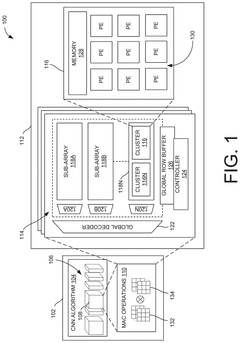
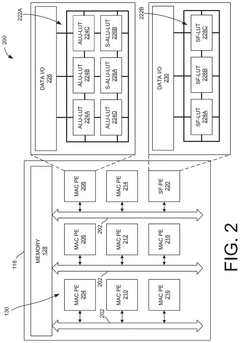
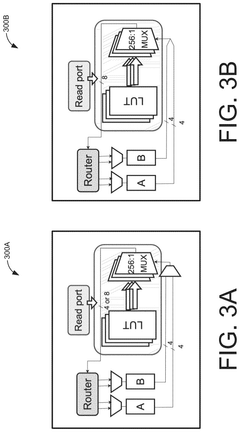
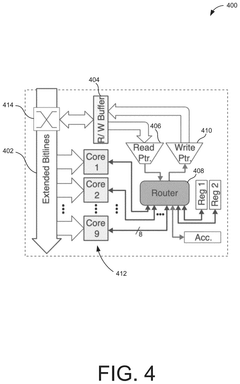
- A heterogeneous multi-functional reconfigurable processing-in-memory (PIM) architecture that uses dynamic random-access memory (DRAM) based multifunctional lookup table (LUT) cores to perform compute-intensive operations like multiply and accumulate (MAC) and activation functions, reducing the number of LUTs required and increasing efficiency.
Systems for Accurate Multiplexing
PatentActiveUS20110089992A1
Innovation
- The implementation of a multiplexer system using asymmetric field effect transistors with floating body terminals and a load structure that includes a clamping mechanism to protect gate oxides, along with pulsed current sources to rapidly turn on and off multiplexer ports, allowing for accurate sensing of high voltage inputs with low power consumption.


Ethical Implications of Enhanced AI Capabilities
The rapid advancement of AI capabilities through multiplexer technologies raises significant ethical concerns that demand careful consideration. As AI systems become more sophisticated and capable of handling complex tasks, questions arise about the potential impact on human autonomy, privacy, and societal structures. One primary ethical concern is the potential for AI systems to make decisions that affect human lives without full transparency or accountability. Enhanced AI capabilities could lead to automated decision-making in critical areas such as healthcare, criminal justice, and financial services, potentially perpetuating biases or making errors with far-reaching consequences.
Another ethical implication is the potential for job displacement and economic disruption. As AI systems become more capable of performing tasks traditionally done by humans, there is a risk of widespread unemployment and economic inequality. This raises questions about the responsibility of companies and governments to mitigate these effects and ensure a just transition for affected workers.
Privacy concerns also come to the forefront as AI systems become more adept at processing and analyzing vast amounts of personal data. The enhanced capabilities of AI powered by multiplexer technologies could lead to unprecedented levels of surveillance and data collection, potentially infringing on individual privacy rights and personal freedoms.
The ethical use of AI in warfare and law enforcement is another critical area of concern. Enhanced AI capabilities could lead to the development of autonomous weapons systems or predictive policing tools that raise questions about human control, accountability, and the potential for unintended consequences.
Furthermore, as AI systems become more sophisticated, there are concerns about the potential for AI to manipulate human behavior or influence decision-making processes. This could have profound implications for democratic processes, consumer behavior, and personal autonomy.
Addressing these ethical implications requires a multifaceted approach involving policymakers, technologists, ethicists, and the public. It is crucial to develop robust ethical frameworks and governance structures to guide the development and deployment of AI systems with enhanced capabilities. This may include implementing transparency measures, establishing clear lines of accountability, and ensuring that AI systems are designed with ethical considerations at their core.
Another ethical implication is the potential for job displacement and economic disruption. As AI systems become more capable of performing tasks traditionally done by humans, there is a risk of widespread unemployment and economic inequality. This raises questions about the responsibility of companies and governments to mitigate these effects and ensure a just transition for affected workers.
Privacy concerns also come to the forefront as AI systems become more adept at processing and analyzing vast amounts of personal data. The enhanced capabilities of AI powered by multiplexer technologies could lead to unprecedented levels of surveillance and data collection, potentially infringing on individual privacy rights and personal freedoms.
The ethical use of AI in warfare and law enforcement is another critical area of concern. Enhanced AI capabilities could lead to the development of autonomous weapons systems or predictive policing tools that raise questions about human control, accountability, and the potential for unintended consequences.
Furthermore, as AI systems become more sophisticated, there are concerns about the potential for AI to manipulate human behavior or influence decision-making processes. This could have profound implications for democratic processes, consumer behavior, and personal autonomy.
Addressing these ethical implications requires a multifaceted approach involving policymakers, technologists, ethicists, and the public. It is crucial to develop robust ethical frameworks and governance structures to guide the development and deployment of AI systems with enhanced capabilities. This may include implementing transparency measures, establishing clear lines of accountability, and ensuring that AI systems are designed with ethical considerations at their core.
Scalability and Performance Metrics
Scalability and performance metrics are crucial aspects in evaluating the contributions of multiplexers to expanding AI capabilities. As AI systems continue to grow in complexity and scale, the ability to efficiently manage and route information becomes increasingly important. Multiplexers play a vital role in this process by enabling the selective transmission of data from multiple input sources to a single output channel.
One key metric for assessing multiplexer performance is throughput, which measures the amount of data that can be processed and routed within a given time frame. High-throughput multiplexers are essential for handling the massive volumes of data required by modern AI systems, particularly in applications such as natural language processing and computer vision. The ability to scale throughput linearly with the number of input channels is a critical factor in determining the overall efficiency of multiplexer-based AI architectures.
Latency is another crucial performance metric, as it directly impacts the responsiveness of AI systems. Low-latency multiplexers can significantly reduce the time required for data to traverse complex neural networks, enabling faster decision-making and real-time processing capabilities. This is particularly important in applications such as autonomous vehicles and robotics, where rapid response times are essential for safe and effective operation.
Energy efficiency is becoming an increasingly important consideration in AI system design, and multiplexers play a significant role in this aspect. Power consumption per bit of data processed is a key metric for evaluating the energy efficiency of multiplexer implementations. As AI systems scale to handle larger datasets and more complex tasks, minimizing energy consumption becomes critical for both environmental and economic reasons.
Scalability is a fundamental requirement for multiplexers in AI applications, as the number of input channels and the complexity of routing requirements continue to grow. The ability to maintain performance levels while scaling up the number of inputs and outputs is essential for supporting the development of increasingly sophisticated AI models. Metrics such as routing flexibility, channel density, and reconfigurability are important factors in assessing the scalability of multiplexer architectures.
Reliability and error resilience are also critical performance metrics for multiplexers in AI systems. As the scale and complexity of AI applications increase, the ability to maintain data integrity and recover from errors becomes increasingly important. Metrics such as bit error rate, signal-to-noise ratio, and fault tolerance are essential for evaluating the robustness of multiplexer implementations in challenging operating environments.
One key metric for assessing multiplexer performance is throughput, which measures the amount of data that can be processed and routed within a given time frame. High-throughput multiplexers are essential for handling the massive volumes of data required by modern AI systems, particularly in applications such as natural language processing and computer vision. The ability to scale throughput linearly with the number of input channels is a critical factor in determining the overall efficiency of multiplexer-based AI architectures.
Latency is another crucial performance metric, as it directly impacts the responsiveness of AI systems. Low-latency multiplexers can significantly reduce the time required for data to traverse complex neural networks, enabling faster decision-making and real-time processing capabilities. This is particularly important in applications such as autonomous vehicles and robotics, where rapid response times are essential for safe and effective operation.
Energy efficiency is becoming an increasingly important consideration in AI system design, and multiplexers play a significant role in this aspect. Power consumption per bit of data processed is a key metric for evaluating the energy efficiency of multiplexer implementations. As AI systems scale to handle larger datasets and more complex tasks, minimizing energy consumption becomes critical for both environmental and economic reasons.
Scalability is a fundamental requirement for multiplexers in AI applications, as the number of input channels and the complexity of routing requirements continue to grow. The ability to maintain performance levels while scaling up the number of inputs and outputs is essential for supporting the development of increasingly sophisticated AI models. Metrics such as routing flexibility, channel density, and reconfigurability are important factors in assessing the scalability of multiplexer architectures.
Reliability and error resilience are also critical performance metrics for multiplexers in AI systems. As the scale and complexity of AI applications increase, the ability to maintain data integrity and recover from errors becomes increasingly important. Metrics such as bit error rate, signal-to-noise ratio, and fault tolerance are essential for evaluating the robustness of multiplexer implementations in challenging operating environments.
Unlock deeper insights with PatSnap Eureka Quick Research — get a full tech report to explore trends and direct your research. Try now!
Generate Your Research Report Instantly with AI Agent
Supercharge your innovation with PatSnap Eureka AI Agent Platform!