

Designing Robust Systems Against Inter Carrier Interference
MAR 17, 20269 MIN READ
Generate Your Research Report Instantly with AI Agent
Patsnap Eureka helps you evaluate technical feasibility & market potential.
ICI Challenges in Communication Systems Background
Inter Carrier Interference represents one of the most significant technical challenges in modern communication systems, particularly as the industry transitions toward higher data rates and more complex modulation schemes. The phenomenon occurs when orthogonality between subcarriers in Orthogonal Frequency Division Multiplexing systems is compromised, leading to signal degradation and reduced system performance. This interference mechanism has become increasingly problematic as communication systems evolve to support demanding applications such as 5G networks, high-speed wireless communications, and advanced digital broadcasting standards.
The historical development of OFDM technology initially promised perfect orthogonality between subcarriers under ideal conditions. However, real-world implementations quickly revealed that various impairments could destroy this orthogonality, creating interference between adjacent subcarriers. Early research in the 1990s identified frequency offset and phase noise as primary contributors to ICI, but the scope of challenges has expanded significantly with technological advancement.
Contemporary communication systems face multiple sources of ICI that were less prevalent in earlier generations. Doppler shifts caused by high-mobility scenarios, such as vehicle-to-vehicle communications and high-speed rail networks, introduce time-varying frequency offsets that continuously disrupt subcarrier orthogonality. Phase noise from local oscillators, particularly in cost-sensitive consumer devices, contributes additional interference that accumulates across the entire frequency spectrum.
The emergence of massive MIMO systems and millimeter-wave communications has introduced new dimensions to the ICI problem. Hardware imperfections become more pronounced at higher frequencies, while the increased number of antenna elements in massive MIMO systems amplifies the impact of any phase or frequency misalignment. Additionally, the push toward lower-cost implementations often necessitates the use of less precise oscillators and analog components, exacerbating ICI-related challenges.
Modern wireless standards, including 5G New Radio and IEEE 802.11ax, incorporate increasingly dense subcarrier spacing and higher-order modulation schemes to achieve greater spectral efficiency. These design choices, while beneficial for data throughput, create systems that are inherently more sensitive to ICI. The tolerance margins for frequency and phase accuracy have tightened considerably, making robust ICI mitigation essential for reliable system operation.
The challenge extends beyond traditional wireless communications to emerging applications such as Internet of Things networks, where power constraints limit the sophistication of frequency synchronization mechanisms. Similarly, satellite communication systems operating in challenging propagation environments face unique ICI challenges related to atmospheric effects and orbital dynamics.
The historical development of OFDM technology initially promised perfect orthogonality between subcarriers under ideal conditions. However, real-world implementations quickly revealed that various impairments could destroy this orthogonality, creating interference between adjacent subcarriers. Early research in the 1990s identified frequency offset and phase noise as primary contributors to ICI, but the scope of challenges has expanded significantly with technological advancement.
Contemporary communication systems face multiple sources of ICI that were less prevalent in earlier generations. Doppler shifts caused by high-mobility scenarios, such as vehicle-to-vehicle communications and high-speed rail networks, introduce time-varying frequency offsets that continuously disrupt subcarrier orthogonality. Phase noise from local oscillators, particularly in cost-sensitive consumer devices, contributes additional interference that accumulates across the entire frequency spectrum.
The emergence of massive MIMO systems and millimeter-wave communications has introduced new dimensions to the ICI problem. Hardware imperfections become more pronounced at higher frequencies, while the increased number of antenna elements in massive MIMO systems amplifies the impact of any phase or frequency misalignment. Additionally, the push toward lower-cost implementations often necessitates the use of less precise oscillators and analog components, exacerbating ICI-related challenges.
Modern wireless standards, including 5G New Radio and IEEE 802.11ax, incorporate increasingly dense subcarrier spacing and higher-order modulation schemes to achieve greater spectral efficiency. These design choices, while beneficial for data throughput, create systems that are inherently more sensitive to ICI. The tolerance margins for frequency and phase accuracy have tightened considerably, making robust ICI mitigation essential for reliable system operation.
The challenge extends beyond traditional wireless communications to emerging applications such as Internet of Things networks, where power constraints limit the sophistication of frequency synchronization mechanisms. Similarly, satellite communication systems operating in challenging propagation environments face unique ICI challenges related to atmospheric effects and orbital dynamics.
Market Demand for ICI-Resistant Communication Solutions
The global telecommunications industry faces unprecedented challenges as data traffic continues to surge exponentially, driven by the proliferation of mobile devices, Internet of Things applications, and emerging technologies such as augmented reality and autonomous vehicles. This explosive growth in data consumption has intensified the demand for more efficient spectrum utilization and higher data transmission rates, making Inter Carrier Interference a critical bottleneck in modern communication systems.
Fifth-generation wireless networks and beyond represent the primary market drivers for ICI-resistant solutions. Mobile network operators are investing heavily in infrastructure upgrades to support massive MIMO systems, millimeter-wave communications, and ultra-dense network deployments. These advanced technologies inherently suffer from increased susceptibility to ICI due to their reliance on closely spaced subcarriers and complex multi-antenna configurations.
The satellite communication sector presents another significant market opportunity for ICI mitigation technologies. Low Earth Orbit satellite constellations are experiencing rapid deployment to provide global broadband coverage, creating substantial interference challenges due to the dynamic nature of satellite movements and the need for seamless handovers between satellites. Commercial satellite operators require robust ICI suppression techniques to maintain service quality and regulatory compliance.
Industrial automation and smart manufacturing applications are driving demand for ultra-reliable low-latency communications, where ICI can severely impact mission-critical operations. Manufacturing facilities implementing Industry 4.0 concepts require wireless communication systems that can operate reliably in harsh electromagnetic environments with minimal interference-induced disruptions.
The automotive industry's transition toward connected and autonomous vehicles creates substantial market potential for ICI-resistant communication solutions. Vehicle-to-everything communication systems must maintain reliable connectivity in highly dynamic environments with multiple interfering sources, making robust ICI mitigation essential for safety-critical applications.
Broadcasting and media industries are transitioning to higher-resolution content delivery and interactive services, requiring more sophisticated modulation schemes that are inherently more sensitive to ICI. Digital television broadcasters and streaming service providers need advanced interference mitigation techniques to ensure consistent service quality across diverse reception conditions.
Regulatory bodies worldwide are implementing stricter spectrum efficiency requirements and interference limits, creating compliance-driven demand for ICI-resistant technologies. These regulatory pressures are particularly pronounced in densely populated regions where spectrum scarcity necessitates more aggressive frequency reuse strategies.
Fifth-generation wireless networks and beyond represent the primary market drivers for ICI-resistant solutions. Mobile network operators are investing heavily in infrastructure upgrades to support massive MIMO systems, millimeter-wave communications, and ultra-dense network deployments. These advanced technologies inherently suffer from increased susceptibility to ICI due to their reliance on closely spaced subcarriers and complex multi-antenna configurations.
The satellite communication sector presents another significant market opportunity for ICI mitigation technologies. Low Earth Orbit satellite constellations are experiencing rapid deployment to provide global broadband coverage, creating substantial interference challenges due to the dynamic nature of satellite movements and the need for seamless handovers between satellites. Commercial satellite operators require robust ICI suppression techniques to maintain service quality and regulatory compliance.
Industrial automation and smart manufacturing applications are driving demand for ultra-reliable low-latency communications, where ICI can severely impact mission-critical operations. Manufacturing facilities implementing Industry 4.0 concepts require wireless communication systems that can operate reliably in harsh electromagnetic environments with minimal interference-induced disruptions.
The automotive industry's transition toward connected and autonomous vehicles creates substantial market potential for ICI-resistant communication solutions. Vehicle-to-everything communication systems must maintain reliable connectivity in highly dynamic environments with multiple interfering sources, making robust ICI mitigation essential for safety-critical applications.
Broadcasting and media industries are transitioning to higher-resolution content delivery and interactive services, requiring more sophisticated modulation schemes that are inherently more sensitive to ICI. Digital television broadcasters and streaming service providers need advanced interference mitigation techniques to ensure consistent service quality across diverse reception conditions.
Regulatory bodies worldwide are implementing stricter spectrum efficiency requirements and interference limits, creating compliance-driven demand for ICI-resistant technologies. These regulatory pressures are particularly pronounced in densely populated regions where spectrum scarcity necessitates more aggressive frequency reuse strategies.
Current ICI Mitigation Limitations and Global Status
Current Inter-Carrier Interference (ICI) mitigation techniques face significant limitations that constrain their effectiveness in modern communication systems. Traditional approaches such as cyclic prefix extension and windowing methods provide only marginal improvements while introducing substantial overhead penalties. These conventional solutions struggle to maintain performance in high-mobility scenarios where Doppler shifts exceed 500 Hz, resulting in error floor effects that cannot be overcome through simple power increases.
The fundamental challenge lies in the trade-off between computational complexity and mitigation effectiveness. Advanced techniques like frequency domain equalization and iterative interference cancellation require processing capabilities that often exceed practical implementation constraints, particularly in battery-powered mobile devices. Current algorithms typically achieve only 15-20 dB interference suppression under moderate channel conditions, falling short of the 30+ dB reduction needed for next-generation applications.
Geographically, ICI mitigation research exhibits distinct regional characteristics. North American institutions focus primarily on OFDM-based solutions for 5G applications, with emphasis on machine learning approaches. European research centers concentrate on mathematical optimization techniques and multi-carrier system design. Asian countries, particularly Japan and South Korea, lead in practical implementation aspects and hardware-software co-design methodologies.
The global development status reveals fragmented progress across different application domains. While terrestrial wireless communications have achieved moderate success with standardized ICI mitigation techniques, satellite communications and underwater acoustic systems remain significantly challenged. Current solutions demonstrate poor scalability when transitioning from laboratory environments to real-world deployment scenarios with multiple interfering sources.
Emerging limitations include inadequate performance in massive MIMO systems where spatial correlation effects compound ICI problems. Additionally, existing techniques show reduced effectiveness in millimeter-wave frequencies where beam management complexity intersects with interference mitigation requirements. The integration of artificial intelligence approaches, while promising, introduces new challenges related to training data requirements and real-time processing constraints that current hardware architectures struggle to address efficiently.
The fundamental challenge lies in the trade-off between computational complexity and mitigation effectiveness. Advanced techniques like frequency domain equalization and iterative interference cancellation require processing capabilities that often exceed practical implementation constraints, particularly in battery-powered mobile devices. Current algorithms typically achieve only 15-20 dB interference suppression under moderate channel conditions, falling short of the 30+ dB reduction needed for next-generation applications.
Geographically, ICI mitigation research exhibits distinct regional characteristics. North American institutions focus primarily on OFDM-based solutions for 5G applications, with emphasis on machine learning approaches. European research centers concentrate on mathematical optimization techniques and multi-carrier system design. Asian countries, particularly Japan and South Korea, lead in practical implementation aspects and hardware-software co-design methodologies.
The global development status reveals fragmented progress across different application domains. While terrestrial wireless communications have achieved moderate success with standardized ICI mitigation techniques, satellite communications and underwater acoustic systems remain significantly challenged. Current solutions demonstrate poor scalability when transitioning from laboratory environments to real-world deployment scenarios with multiple interfering sources.
Emerging limitations include inadequate performance in massive MIMO systems where spatial correlation effects compound ICI problems. Additionally, existing techniques show reduced effectiveness in millimeter-wave frequencies where beam management complexity intersects with interference mitigation requirements. The integration of artificial intelligence approaches, while promising, introduces new challenges related to training data requirements and real-time processing constraints that current hardware architectures struggle to address efficiently.
Existing ICI Cancellation and Suppression Methods
01 OFDM-based ICI cancellation techniques
Orthogonal Frequency Division Multiplexing (OFDM) systems are susceptible to inter-carrier interference caused by frequency offsets and Doppler shifts. Various cancellation techniques have been developed to mitigate ICI in OFDM systems, including self-cancellation schemes, iterative detection methods, and frequency domain equalization. These techniques aim to restore orthogonality between subcarriers and improve system performance by reducing the impact of ICI on signal quality.- OFDM-based ICI cancellation techniques: Orthogonal Frequency Division Multiplexing (OFDM) systems are susceptible to inter-carrier interference caused by frequency offsets and Doppler shifts. Various cancellation techniques have been developed to mitigate ICI in OFDM systems, including self-cancellation schemes, iterative detection methods, and frequency domain equalization. These techniques aim to restore orthogonality between subcarriers and improve system performance by reducing the impact of ICI on signal quality.
- Channel estimation and compensation methods: Accurate channel estimation is crucial for mitigating inter-carrier interference in wireless communication systems. Advanced channel estimation algorithms utilize pilot symbols, training sequences, and adaptive filtering techniques to characterize the channel response. These methods enable the receiver to compensate for channel impairments that cause ICI, including time-varying fading, multipath propagation, and carrier frequency offsets. The estimated channel information is then used to perform equalization and interference suppression.
- Multiple antenna and MIMO techniques for ICI mitigation: Multiple-input multiple-output (MIMO) systems and advanced antenna techniques provide spatial diversity to combat inter-carrier interference. These approaches leverage multiple transmit and receive antennas to create spatial filtering capabilities that can suppress ICI while enhancing desired signal reception. Beamforming, spatial multiplexing, and diversity combining schemes are employed to improve signal-to-interference ratios and overall system capacity in the presence of ICI.
- Carrier frequency offset estimation and correction: Carrier frequency offset is a primary source of inter-carrier interference in communication systems. Various estimation and correction algorithms have been developed to detect and compensate for frequency mismatches between transmitter and receiver oscillators. These techniques include time-domain correlation methods, frequency-domain analysis, and feedback-based tracking loops. Accurate frequency synchronization significantly reduces ICI and maintains subcarrier orthogonality in multi-carrier systems.
- Advanced modulation and coding schemes: Robust modulation and coding techniques are employed to enhance system resilience against inter-carrier interference. These schemes include adaptive modulation that adjusts transmission parameters based on channel conditions, error correction codes that provide redundancy to recover from ICI-induced errors, and interleaving techniques that distribute interference effects across multiple symbols. The combination of these methods improves the reliability of data transmission in the presence of ICI.
02 Channel estimation and compensation methods
Accurate channel estimation is crucial for mitigating inter-carrier interference in wireless communication systems. Advanced channel estimation algorithms utilize pilot symbols, training sequences, and adaptive filtering techniques to track channel variations and compensate for ICI effects. These methods enable receivers to better estimate channel conditions and apply appropriate correction mechanisms to reduce interference between adjacent carriers.Expand Specific Solutions03 Frequency offset estimation and correction
Frequency offset between transmitter and receiver oscillators is a primary cause of inter-carrier interference. Various estimation and correction techniques have been developed to detect and compensate for carrier frequency offsets, including correlation-based methods, maximum likelihood estimation, and feedback control loops. These approaches help maintain carrier synchronization and minimize ICI degradation in communication systems.Expand Specific Solutions04 Multi-antenna and MIMO ICI mitigation
Multiple-input multiple-output (MIMO) systems and multi-antenna configurations offer additional degrees of freedom for combating inter-carrier interference. Spatial processing techniques, beamforming, and diversity combining methods can be employed to suppress ICI while enhancing desired signal reception. These approaches leverage spatial domain characteristics to improve interference rejection capabilities in advanced wireless systems.Expand Specific Solutions05 Windowing and filtering techniques
Time-domain windowing and frequency-domain filtering methods provide effective means to reduce inter-carrier interference by controlling spectral leakage and sidelobe levels. Various window functions and filter designs can be applied to transmitted and received signals to minimize interference between adjacent subcarriers. These techniques help improve spectral efficiency and reduce out-of-band emissions while maintaining acceptable system complexity.Expand Specific Solutions
Key Players in ICI Mitigation Solutions Industry
The inter-carrier interference (ICI) mitigation technology landscape represents a mature yet evolving sector within telecommunications, driven by increasing demand for robust wireless communication systems. The market demonstrates significant growth potential as 5G deployment accelerates globally, with established telecommunications giants like Ericsson, NTT Docomo, and Orange SA leading commercial implementations. Technology maturity varies across different approaches, with traditional filtering methods being well-established while advanced AI-based interference cancellation techniques remain in development phases. Key players span from infrastructure providers like Ericsson and ZTE Corp to semiconductor specialists such as NXP Semiconductors and Sony Group Corp, alongside research institutions including Beihang University and Southeast University contributing fundamental research. The competitive landscape shows strong collaboration between academic institutions and industry leaders, particularly evident in companies like Xiaomi and Lenovo integrating advanced ICI solutions into consumer devices, indicating the technology's transition from specialized applications to mainstream deployment.
Telefonaktiebolaget LM Ericsson
Technical Solution: Ericsson has developed advanced interference coordination techniques for 5G networks, including enhanced Inter-Cell Interference Coordination (eICIC) and Coordinated Multi-Point (CoMP) transmission. Their solution employs dynamic resource allocation algorithms that adaptively adjust transmission parameters based on real-time interference measurements. The system utilizes machine learning algorithms to predict interference patterns and proactively mitigate ICI through intelligent scheduling and power control mechanisms. Ericsson's approach includes advanced signal processing techniques such as successive interference cancellation and sophisticated beamforming algorithms that can dynamically steer antenna patterns to minimize interference between carriers while maximizing signal quality for intended users.
Strengths: Market-leading 5G infrastructure expertise, comprehensive end-to-end solutions, strong R&D capabilities in interference mitigation. Weaknesses: High implementation costs, complex system integration requirements, dependency on operator infrastructure upgrades.
NTT Docomo, Inc.
Technical Solution: NTT Docomo has pioneered carrier aggregation technologies with robust ICI mitigation through their advanced MIMO systems and interference-aware resource scheduling. Their solution implements sophisticated cross-carrier scheduling algorithms that coordinate transmission across multiple frequency bands while minimizing inter-carrier interference. The system incorporates real-time channel quality indicators and interference measurements to dynamically optimize carrier selection and power allocation. Docomo's approach includes innovative techniques such as interference alignment and coordinated beamforming across multiple carriers, enabling efficient spectrum utilization while maintaining high data rates and low latency performance in dense network deployments.
Strengths: Extensive field testing experience, strong integration with existing network infrastructure, proven performance in high-density urban environments. Weaknesses: Limited global market presence, technology primarily optimized for Japanese network conditions, high deployment complexity.
Core Patents in Advanced ICI Mitigation Techniques
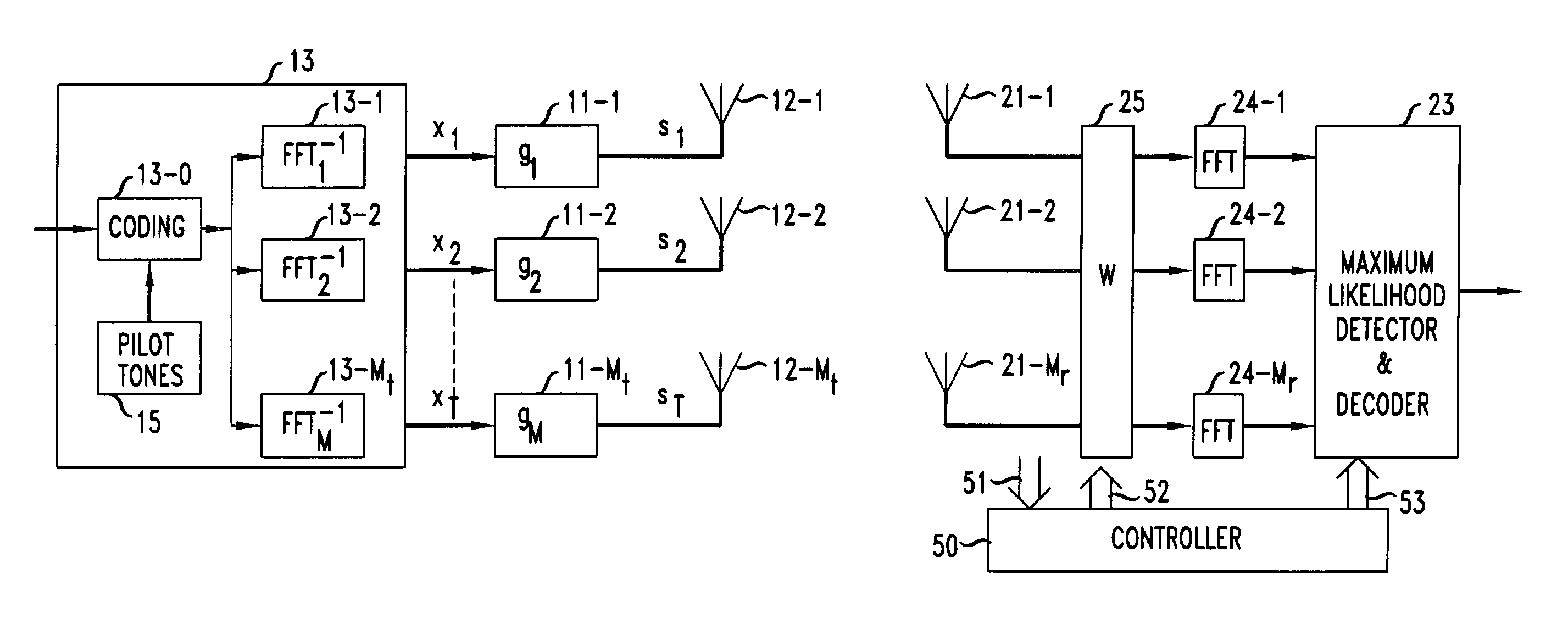
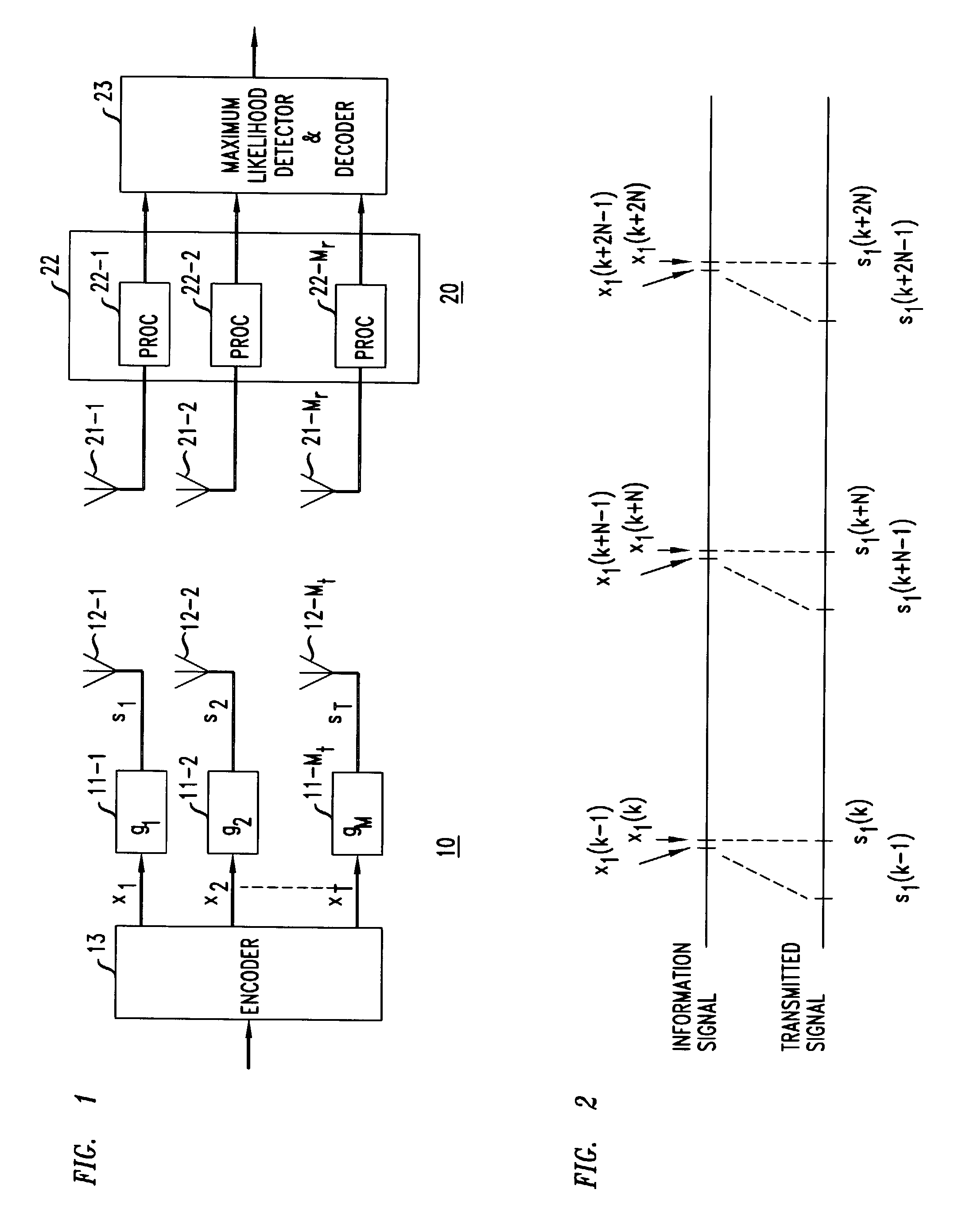
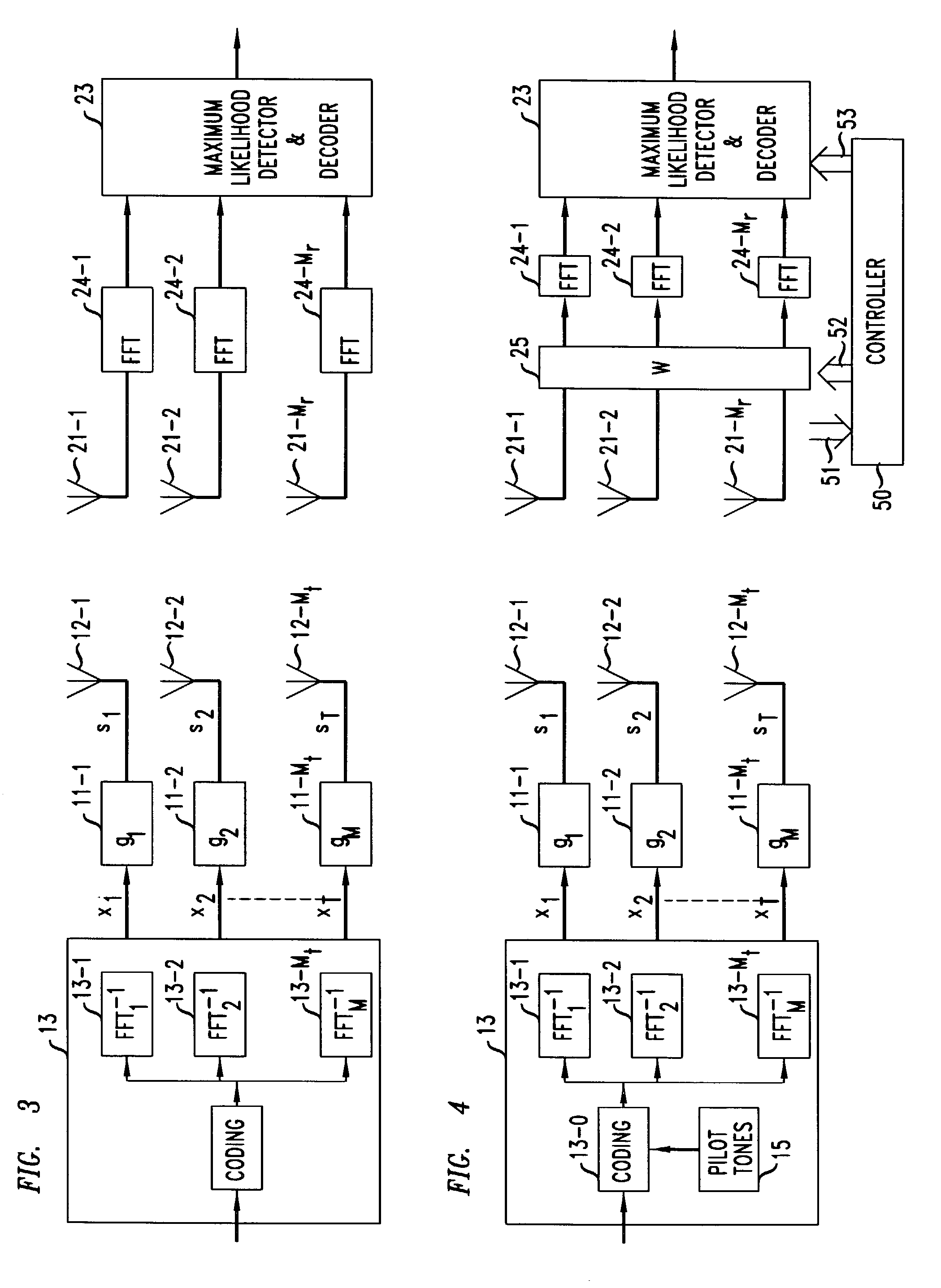
Amelioration in inter-carrier interference in OFDM
PatentInactiveUS7130355B1
Innovation
- A receiver arrangement with a filter that uses pilot tones to determine and interpolate channel coefficients, minimizing ICI by employing estimates from previous blocks, and applying these coefficients to a filter to reduce interference in OFDM systems, both with and without multiple antennas and space-time coding.

Reducing inter-carrier interference in OFDM and ofdma systems by time sample scaling based on cyclic prefix samples
PatentInactiveUS20130170568A1
Innovation
- The method involves detecting and comparing the cyclic prefix of an OFDM symbol with its ending portion to derive fading changing rate parameters, interpolating to estimate inverse fading scalars, and multiplying time-domain samples by these scalars to reduce ICI influence, followed by a frequency domain transform to remove constant fading.


Spectrum Regulation Impact on ICI Solutions
Spectrum regulation frameworks significantly influence the development and deployment of Inter Carrier Interference (ICI) mitigation solutions across different regions and frequency bands. Regulatory bodies such as the FCC, ETSI, and ITU establish emission masks, adjacent channel leakage ratios, and spectral efficiency requirements that directly constrain the design parameters of ICI suppression techniques. These regulations often mandate specific out-of-band emission limits, forcing system designers to implement more sophisticated filtering and windowing approaches that may increase computational complexity but ensure regulatory compliance.
The allocation of guard bands between adjacent carriers represents a critical regulatory decision that fundamentally affects ICI solution strategies. In spectrum-constrained environments where regulators minimize guard band allocations to maximize spectral efficiency, advanced ICI cancellation techniques become essential rather than optional. Conversely, regions with more generous guard band policies may rely on simpler isolation methods, creating divergent technological development paths across different markets.
Dynamic spectrum access regulations are reshaping ICI solution requirements, particularly in cognitive radio and spectrum sharing scenarios. Regulatory frameworks for secondary spectrum usage demand real-time interference monitoring and adaptive mitigation capabilities, driving innovation in machine learning-based ICI detection and cancellation algorithms. These regulations require systems to demonstrate non-harmful interference levels to primary users while maintaining acceptable performance under varying interference conditions.
International harmonization efforts in spectrum regulation create both opportunities and challenges for ICI solution standardization. While harmonized frequency bands enable global deployment of standardized ICI mitigation techniques, regional variations in power limits, modulation constraints, and coexistence requirements necessitate adaptive solutions that can reconfigure based on local regulatory environments.
Emerging regulatory trends toward higher frequency bands and wider channel bandwidths are intensifying ICI challenges while simultaneously enabling more sophisticated mitigation approaches. Millimeter-wave regulations often permit higher power densities and more flexible modulation schemes, allowing for advanced beamforming and spatial filtering techniques that were previously impractical in lower frequency bands subject to stricter regulatory constraints.
The allocation of guard bands between adjacent carriers represents a critical regulatory decision that fundamentally affects ICI solution strategies. In spectrum-constrained environments where regulators minimize guard band allocations to maximize spectral efficiency, advanced ICI cancellation techniques become essential rather than optional. Conversely, regions with more generous guard band policies may rely on simpler isolation methods, creating divergent technological development paths across different markets.
Dynamic spectrum access regulations are reshaping ICI solution requirements, particularly in cognitive radio and spectrum sharing scenarios. Regulatory frameworks for secondary spectrum usage demand real-time interference monitoring and adaptive mitigation capabilities, driving innovation in machine learning-based ICI detection and cancellation algorithms. These regulations require systems to demonstrate non-harmful interference levels to primary users while maintaining acceptable performance under varying interference conditions.
International harmonization efforts in spectrum regulation create both opportunities and challenges for ICI solution standardization. While harmonized frequency bands enable global deployment of standardized ICI mitigation techniques, regional variations in power limits, modulation constraints, and coexistence requirements necessitate adaptive solutions that can reconfigure based on local regulatory environments.
Emerging regulatory trends toward higher frequency bands and wider channel bandwidths are intensifying ICI challenges while simultaneously enabling more sophisticated mitigation approaches. Millimeter-wave regulations often permit higher power densities and more flexible modulation schemes, allowing for advanced beamforming and spatial filtering techniques that were previously impractical in lower frequency bands subject to stricter regulatory constraints.
Performance Standards for ICI-Robust Systems
Establishing comprehensive performance standards for ICI-robust systems requires a multi-dimensional framework that addresses both quantitative metrics and operational requirements. The foundation of these standards lies in defining acceptable interference thresholds, typically measured through Signal-to-Interference-plus-Noise Ratio (SINR) parameters. Industry consensus suggests that robust systems should maintain SINR levels above 20 dB under normal operating conditions, with graceful degradation capabilities when interference exceeds baseline assumptions.
Spectral efficiency metrics form another critical component of performance evaluation. ICI-robust systems must demonstrate maintained throughput performance even under varying interference conditions. The standard benchmark requires systems to achieve at least 85% of theoretical spectral efficiency when operating in environments with moderate ICI levels. This metric ensures that robustness enhancements do not compromise fundamental system capacity.
Latency and processing overhead standards are equally important for practical deployment. Real-time ICI mitigation algorithms must operate within strict timing constraints, typically requiring processing delays below 1 millisecond for critical applications. The computational complexity should remain within acceptable bounds, generally not exceeding 150% of baseline processing requirements for non-robust implementations.
Adaptive response capabilities represent a key performance criterion for modern ICI-robust systems. Standards mandate that systems demonstrate dynamic adjustment capabilities, responding to interference pattern changes within 10-50 milliseconds depending on application requirements. This includes automatic parameter tuning, filter coefficient updates, and modulation scheme adaptations.
Reliability and availability metrics complete the performance framework. ICI-robust systems must maintain 99.9% availability under specified interference scenarios, with mean time between failures exceeding 8760 hours. These standards ensure that robustness features translate into tangible operational benefits rather than merely theoretical improvements in interference handling capabilities.
Spectral efficiency metrics form another critical component of performance evaluation. ICI-robust systems must demonstrate maintained throughput performance even under varying interference conditions. The standard benchmark requires systems to achieve at least 85% of theoretical spectral efficiency when operating in environments with moderate ICI levels. This metric ensures that robustness enhancements do not compromise fundamental system capacity.
Latency and processing overhead standards are equally important for practical deployment. Real-time ICI mitigation algorithms must operate within strict timing constraints, typically requiring processing delays below 1 millisecond for critical applications. The computational complexity should remain within acceptable bounds, generally not exceeding 150% of baseline processing requirements for non-robust implementations.
Adaptive response capabilities represent a key performance criterion for modern ICI-robust systems. Standards mandate that systems demonstrate dynamic adjustment capabilities, responding to interference pattern changes within 10-50 milliseconds depending on application requirements. This includes automatic parameter tuning, filter coefficient updates, and modulation scheme adaptations.
Reliability and availability metrics complete the performance framework. ICI-robust systems must maintain 99.9% availability under specified interference scenarios, with mean time between failures exceeding 8760 hours. These standards ensure that robustness features translate into tangible operational benefits rather than merely theoretical improvements in interference handling capabilities.
Unlock deeper insights with Patsnap Eureka Quick Research — get a full tech report to explore trends and direct your research. Try now!
Generate Your Research Report Instantly with AI Agent
Supercharge your innovation with Patsnap Eureka AI Agent Platform!