

Optimizing Antenna Configurations for Inter Carrier Interference Reduction
MAR 17, 20269 MIN READ
Generate Your Research Report Instantly with AI Agent
Patsnap Eureka helps you evaluate technical feasibility & market potential.
Antenna ICI Reduction Background and Objectives
Inter Carrier Interference (ICI) represents a fundamental challenge in modern wireless communication systems, particularly in Orthogonal Frequency Division Multiplexing (OFDM) and multi-carrier transmission schemes. This interference phenomenon occurs when the orthogonality between subcarriers is disrupted due to various factors including Doppler shifts, frequency offsets, phase noise, and timing synchronization errors. As wireless communication systems evolve toward higher data rates and increased spectral efficiency, the mitigation of ICI has become increasingly critical for maintaining system performance and reliability.
The historical development of ICI mitigation techniques has progressed through several distinct phases. Early approaches focused primarily on digital signal processing methods, including advanced equalization algorithms and interference cancellation techniques implemented at the baseband level. However, these solutions often introduced significant computational complexity and processing delays, limiting their practical implementation in real-time systems.
The emergence of antenna diversity and Multiple-Input Multiple-Output (MIMO) technologies marked a paradigm shift in ICI reduction strategies. Researchers began exploring how intelligent antenna configurations could inherently reduce interference at the physical layer, offering more efficient solutions compared to purely digital approaches. This evolution coincided with the development of adaptive beamforming techniques and spatial filtering methods that leverage multiple antenna elements to suppress unwanted interference signals.
Contemporary wireless standards, including 5G New Radio and beyond, demand unprecedented levels of spectral efficiency and reliability. These requirements have intensified the focus on optimizing antenna configurations as a primary mechanism for ICI reduction. The integration of massive MIMO systems, beamforming technologies, and advanced antenna array geometries presents new opportunities for addressing interference challenges at the source.
The primary objective of optimizing antenna configurations for ICI reduction encompasses multiple technical goals. First, achieving maximum interference suppression while maintaining desired signal quality represents the fundamental performance target. This involves developing antenna array geometries and spacing configurations that naturally minimize cross-coupling between adjacent frequency carriers.
Second, the optimization process aims to enhance system capacity and throughput by reducing the signal-to-interference-plus-noise ratio degradation caused by ICI. This objective directly translates to improved user experience and network efficiency in practical deployment scenarios.
Third, energy efficiency optimization constitutes a critical objective, as antenna-based ICI reduction can potentially reduce the computational burden on digital signal processing units, leading to lower power consumption in mobile devices and base stations.
Finally, the development of robust and adaptive antenna configuration strategies that can dynamically respond to changing channel conditions and interference environments represents a key technological objective for next-generation wireless systems.
The historical development of ICI mitigation techniques has progressed through several distinct phases. Early approaches focused primarily on digital signal processing methods, including advanced equalization algorithms and interference cancellation techniques implemented at the baseband level. However, these solutions often introduced significant computational complexity and processing delays, limiting their practical implementation in real-time systems.
The emergence of antenna diversity and Multiple-Input Multiple-Output (MIMO) technologies marked a paradigm shift in ICI reduction strategies. Researchers began exploring how intelligent antenna configurations could inherently reduce interference at the physical layer, offering more efficient solutions compared to purely digital approaches. This evolution coincided with the development of adaptive beamforming techniques and spatial filtering methods that leverage multiple antenna elements to suppress unwanted interference signals.
Contemporary wireless standards, including 5G New Radio and beyond, demand unprecedented levels of spectral efficiency and reliability. These requirements have intensified the focus on optimizing antenna configurations as a primary mechanism for ICI reduction. The integration of massive MIMO systems, beamforming technologies, and advanced antenna array geometries presents new opportunities for addressing interference challenges at the source.
The primary objective of optimizing antenna configurations for ICI reduction encompasses multiple technical goals. First, achieving maximum interference suppression while maintaining desired signal quality represents the fundamental performance target. This involves developing antenna array geometries and spacing configurations that naturally minimize cross-coupling between adjacent frequency carriers.
Second, the optimization process aims to enhance system capacity and throughput by reducing the signal-to-interference-plus-noise ratio degradation caused by ICI. This objective directly translates to improved user experience and network efficiency in practical deployment scenarios.
Third, energy efficiency optimization constitutes a critical objective, as antenna-based ICI reduction can potentially reduce the computational burden on digital signal processing units, leading to lower power consumption in mobile devices and base stations.
Finally, the development of robust and adaptive antenna configuration strategies that can dynamically respond to changing channel conditions and interference environments represents a key technological objective for next-generation wireless systems.
Market Demand for Enhanced Wireless Communication
The global wireless communication market is experiencing unprecedented growth driven by the proliferation of connected devices and the increasing demand for high-speed, reliable data transmission. Mobile data traffic continues to surge as consumers and enterprises rely heavily on smartphones, tablets, IoT devices, and emerging applications such as augmented reality and virtual reality. This exponential growth in data consumption places tremendous pressure on existing network infrastructure to deliver consistent performance while maintaining service quality.
The deployment of 5G networks worldwide has intensified the need for advanced interference mitigation technologies. As network operators densify their infrastructure to meet capacity demands, the proximity of multiple transmitters and receivers creates complex interference scenarios that significantly impact system performance. Inter-carrier interference has emerged as a critical bottleneck that limits the achievable data rates and coverage quality that end-users expect from next-generation wireless services.
Enterprise customers across various sectors, including manufacturing, healthcare, transportation, and smart cities, are demanding ultra-reliable low-latency communication capabilities. These applications require interference-free transmission channels to ensure mission-critical operations function without disruption. The automotive industry's push toward autonomous vehicles and vehicle-to-everything communication further amplifies the need for robust interference management solutions.
Network operators face mounting pressure to optimize spectrum efficiency while reducing operational expenditures. Traditional approaches to interference management often involve increasing transmission power or deploying additional base stations, both of which significantly increase energy consumption and infrastructure costs. Market demand is shifting toward intelligent antenna configuration solutions that can dynamically adapt to changing interference conditions without requiring substantial hardware investments.
The emergence of massive MIMO systems and beamforming technologies has created new opportunities for sophisticated interference reduction techniques. Service providers are actively seeking solutions that can leverage these advanced antenna arrays to minimize inter-carrier interference while maximizing spectral efficiency. The market increasingly values solutions that can be implemented through software updates rather than hardware replacements, enabling cost-effective upgrades to existing network infrastructure.
Consumer expectations for seamless connectivity across diverse environments, from dense urban areas to rural locations, continue to drive innovation in antenna optimization technologies. The growing adoption of bandwidth-intensive applications and the Internet of Things ecosystem requires wireless networks to maintain consistent performance despite increasing interference challenges.
The deployment of 5G networks worldwide has intensified the need for advanced interference mitigation technologies. As network operators densify their infrastructure to meet capacity demands, the proximity of multiple transmitters and receivers creates complex interference scenarios that significantly impact system performance. Inter-carrier interference has emerged as a critical bottleneck that limits the achievable data rates and coverage quality that end-users expect from next-generation wireless services.
Enterprise customers across various sectors, including manufacturing, healthcare, transportation, and smart cities, are demanding ultra-reliable low-latency communication capabilities. These applications require interference-free transmission channels to ensure mission-critical operations function without disruption. The automotive industry's push toward autonomous vehicles and vehicle-to-everything communication further amplifies the need for robust interference management solutions.
Network operators face mounting pressure to optimize spectrum efficiency while reducing operational expenditures. Traditional approaches to interference management often involve increasing transmission power or deploying additional base stations, both of which significantly increase energy consumption and infrastructure costs. Market demand is shifting toward intelligent antenna configuration solutions that can dynamically adapt to changing interference conditions without requiring substantial hardware investments.
The emergence of massive MIMO systems and beamforming technologies has created new opportunities for sophisticated interference reduction techniques. Service providers are actively seeking solutions that can leverage these advanced antenna arrays to minimize inter-carrier interference while maximizing spectral efficiency. The market increasingly values solutions that can be implemented through software updates rather than hardware replacements, enabling cost-effective upgrades to existing network infrastructure.
Consumer expectations for seamless connectivity across diverse environments, from dense urban areas to rural locations, continue to drive innovation in antenna optimization technologies. The growing adoption of bandwidth-intensive applications and the Internet of Things ecosystem requires wireless networks to maintain consistent performance despite increasing interference challenges.
Current ICI Challenges in Antenna Systems
Inter-carrier interference represents one of the most persistent challenges in modern antenna systems, particularly as wireless communication networks evolve toward higher frequency bands and increased spectral efficiency. The fundamental issue stems from the imperfect orthogonality between adjacent carriers, which becomes increasingly problematic in dense deployment scenarios and high-mobility environments.
Frequency selectivity poses a significant constraint in current antenna configurations. As signals traverse through multipath channels, different frequency components experience varying degrees of attenuation and phase shifts, leading to spectral leakage between adjacent carriers. This phenomenon is particularly pronounced in millimeter-wave systems where atmospheric absorption and scattering effects create non-uniform channel responses across the frequency spectrum.
Spatial correlation between antenna elements introduces another layer of complexity in ICI mitigation. Traditional antenna arrays often suffer from insufficient spatial diversity, resulting in correlated fading patterns that affect multiple carriers simultaneously. The challenge intensifies in compact form factors where antenna spacing constraints limit the achievable decorrelation distance, making it difficult to implement effective spatial filtering techniques.
Timing synchronization errors constitute a critical bottleneck in ICI reduction efforts. Even minor timing offsets between transmitter and receiver can destroy the orthogonality of OFDM subcarriers, causing energy spillover into adjacent frequency bins. This issue becomes more severe in distributed antenna systems where different antenna elements may experience varying propagation delays and processing latencies.
Phase noise from local oscillators presents an additional technical hurdle that current antenna configurations struggle to address effectively. The random phase fluctuations introduce spectral spreading that manifests as ICI, particularly affecting systems operating at higher carrier frequencies where phase noise contributions become more significant relative to the signal power.
Dynamic channel conditions further complicate ICI management in existing antenna systems. Rapid changes in the propagation environment, caused by mobile users or environmental factors, can render static antenna configurations suboptimal. Current adaptive algorithms often lack the responsiveness needed to track these variations in real-time, leading to degraded interference suppression performance.
The integration of massive MIMO technology has introduced new ICI challenges related to pilot contamination and channel estimation accuracy. As the number of antenna elements increases, the overhead associated with channel state information acquisition grows substantially, while imperfect channel knowledge directly translates to residual interference that cannot be effectively canceled through conventional beamforming techniques.
Frequency selectivity poses a significant constraint in current antenna configurations. As signals traverse through multipath channels, different frequency components experience varying degrees of attenuation and phase shifts, leading to spectral leakage between adjacent carriers. This phenomenon is particularly pronounced in millimeter-wave systems where atmospheric absorption and scattering effects create non-uniform channel responses across the frequency spectrum.
Spatial correlation between antenna elements introduces another layer of complexity in ICI mitigation. Traditional antenna arrays often suffer from insufficient spatial diversity, resulting in correlated fading patterns that affect multiple carriers simultaneously. The challenge intensifies in compact form factors where antenna spacing constraints limit the achievable decorrelation distance, making it difficult to implement effective spatial filtering techniques.
Timing synchronization errors constitute a critical bottleneck in ICI reduction efforts. Even minor timing offsets between transmitter and receiver can destroy the orthogonality of OFDM subcarriers, causing energy spillover into adjacent frequency bins. This issue becomes more severe in distributed antenna systems where different antenna elements may experience varying propagation delays and processing latencies.
Phase noise from local oscillators presents an additional technical hurdle that current antenna configurations struggle to address effectively. The random phase fluctuations introduce spectral spreading that manifests as ICI, particularly affecting systems operating at higher carrier frequencies where phase noise contributions become more significant relative to the signal power.
Dynamic channel conditions further complicate ICI management in existing antenna systems. Rapid changes in the propagation environment, caused by mobile users or environmental factors, can render static antenna configurations suboptimal. Current adaptive algorithms often lack the responsiveness needed to track these variations in real-time, leading to degraded interference suppression performance.
The integration of massive MIMO technology has introduced new ICI challenges related to pilot contamination and channel estimation accuracy. As the number of antenna elements increases, the overhead associated with channel state information acquisition grows substantially, while imperfect channel knowledge directly translates to residual interference that cannot be effectively canceled through conventional beamforming techniques.
Existing ICI Mitigation Solutions
01 MIMO antenna configuration for ICI mitigation
Multiple-Input Multiple-Output (MIMO) antenna systems can be configured to reduce inter-carrier interference through spatial diversity and beamforming techniques. By utilizing multiple antennas at both transmitter and receiver ends, the system can exploit spatial dimensions to separate interfering signals and improve signal quality. Advanced MIMO configurations employ precoding matrices and antenna selection algorithms to minimize interference between carriers while maximizing throughput.- MIMO antenna configuration for ICI mitigation: Multiple-Input Multiple-Output (MIMO) antenna systems can be configured to reduce inter-carrier interference through spatial diversity and beamforming techniques. By utilizing multiple antennas at both transmitter and receiver ends, the system can exploit spatial dimensions to separate interfering signals and improve signal quality. Advanced MIMO configurations employ precoding matrices and antenna selection algorithms to minimize interference between carriers while maximizing throughput.
- Frequency domain equalization techniques: Frequency domain equalization methods are employed to compensate for inter-carrier interference in OFDM-based systems. These techniques utilize channel estimation and equalization algorithms in the frequency domain to suppress interference caused by frequency offset, Doppler spread, and multipath propagation. The equalization process involves computing correction factors for each subcarrier to restore orthogonality and reduce interference between adjacent carriers.
- Carrier frequency offset compensation: Carrier frequency offset (CFO) compensation mechanisms are implemented to reduce inter-carrier interference caused by frequency misalignment between transmitter and receiver oscillators. These methods include time-domain and frequency-domain estimation algorithms that detect and correct frequency offsets. Compensation techniques may involve pilot-based estimation, blind estimation methods, or hybrid approaches that combine multiple detection schemes to maintain carrier orthogonality.
- Windowing and filtering methods for sidelobe suppression: Windowing and filtering techniques are applied to reduce spectral leakage and sidelobe interference between carriers. These methods involve applying time-domain window functions or frequency-domain filters to transmitted and received signals to minimize out-of-band emissions and inter-carrier interference. Various window shapes and filter designs can be optimized based on system requirements to balance between interference suppression and spectral efficiency.
- Subcarrier spacing and guard interval optimization: Optimization of subcarrier spacing and guard interval parameters helps mitigate inter-carrier interference in multi-carrier systems. Proper selection of these parameters accounts for channel delay spread, Doppler effects, and system bandwidth requirements. Adaptive schemes can dynamically adjust subcarrier spacing and cyclic prefix length based on channel conditions to maintain orthogonality between carriers and minimize interference while maximizing spectral efficiency.
02 Frequency domain equalization techniques
Frequency domain equalization methods are employed to compensate for inter-carrier interference in OFDM-based systems. These techniques utilize channel estimation and equalization algorithms to correct distortions caused by frequency-selective fading and carrier frequency offsets. The equalization process involves transforming received signals to the frequency domain, applying correction coefficients, and recovering the original transmitted data with reduced interference effects.Expand Specific Solutions03 Carrier frequency offset compensation
Carrier frequency offset (CFO) compensation mechanisms are implemented to reduce inter-carrier interference caused by frequency misalignment between transmitter and receiver oscillators. These methods include time-domain and frequency-domain estimation algorithms that detect and correct frequency offsets. Synchronization techniques such as pilot-based estimation and blind estimation are utilized to track and compensate for dynamic frequency variations in mobile communication environments.Expand Specific Solutions04 Guard interval and cyclic prefix optimization
Optimization of guard intervals and cyclic prefix lengths helps mitigate inter-carrier interference in multicarrier systems. By inserting appropriate guard intervals between symbols, the system can absorb multipath delay spread and prevent inter-symbol interference from affecting adjacent carriers. Adaptive cyclic prefix techniques dynamically adjust the prefix length based on channel conditions to balance overhead and interference suppression performance.Expand Specific Solutions05 Interference cancellation through signal processing
Advanced signal processing techniques are applied to actively cancel inter-carrier interference at the receiver. These methods include successive interference cancellation, parallel interference cancellation, and iterative detection algorithms that estimate and subtract interfering signals from the received signal. Machine learning and adaptive filtering approaches can be incorporated to improve cancellation performance under varying channel conditions and interference scenarios.Expand Specific Solutions
Key Players in Antenna and Wireless Industry
The antenna configuration optimization for inter-carrier interference reduction represents a mature technology domain within the rapidly evolving telecommunications industry. The market demonstrates substantial scale, driven by 5G deployment and increasing spectrum efficiency demands. Technology maturity varies significantly across key players: established telecommunications giants like Ericsson, Huawei, ZTE, and Nokia Solutions & Networks lead with advanced antenna array solutions and beamforming technologies. Semiconductor leaders including Qualcomm and Broadcom contribute sophisticated RF processing capabilities. Consumer electronics manufacturers such as Apple, Xiaomi, and OPPO focus on device-level antenna optimization. Traditional antenna specialists like Kathrein and Hirschmann provide specialized hardware solutions. The competitive landscape shows convergence between infrastructure providers and device manufacturers, with increasing emphasis on AI-driven optimization algorithms and massive MIMO implementations to address interference challenges in dense network environments.
Telefonaktiebolaget LM Ericsson
Technical Solution: Ericsson has developed advanced antenna beamforming and MIMO technologies to mitigate inter-carrier interference. Their solution employs adaptive antenna arrays with sophisticated signal processing algorithms that dynamically adjust beam patterns and polarization to minimize interference between adjacent carriers. The technology includes coordinated multipoint transmission (CoMP) techniques and interference cancellation algorithms that can reduce ICI by up to 15-20dB in dense network deployments. Their antenna systems utilize advanced digital signal processing to perform real-time interference detection and mitigation, enabling optimal spectrum efficiency in multi-carrier environments.
Strengths: Industry-leading beamforming technology, extensive field deployment experience, strong R&D capabilities. Weaknesses: High implementation costs, complex system integration requirements.
ZTE Corp.
Technical Solution: ZTE has developed comprehensive antenna optimization solutions that combine advanced array processing with intelligent interference management algorithms. Their technology employs multi-dimensional antenna configurations with adaptive beamforming capabilities that can simultaneously serve multiple users while minimizing inter-carrier interference. The system incorporates machine learning-based prediction models that anticipate interference patterns and proactively adjust antenna parameters. ZTE's solution achieves significant performance gains through coordinated transmission techniques and advanced signal processing, with demonstrated interference reduction of 10-14dB in multi-carrier scenarios. Their approach is particularly effective in dense urban environments where interference challenges are most severe.
Strengths: Cost-competitive solutions, strong presence in emerging markets, comprehensive product portfolio. Weaknesses: Limited presence in some developed markets, ongoing regulatory challenges in certain regions.
Core Innovations in Antenna ICI Suppression
Configurations corresponding to inter-carrier interference
PatentPendingUS20240187288A1
Innovation
- The implementation of adaptive phase-tracking reference-signal (PT-RS) configurations and ICI reporting mechanisms, where user equipment (UE) receives and transmits configuration information for ICI estimation and reporting, allowing for ICI pre-distortion and PT-RS adaptation based on phase noise levels, enhancing spectral efficiency by adjusting PT-RS density and reporting granularity.


Amelioration in inter-carrier interference in OFDM
PatentInactiveUS7130355B1
Innovation
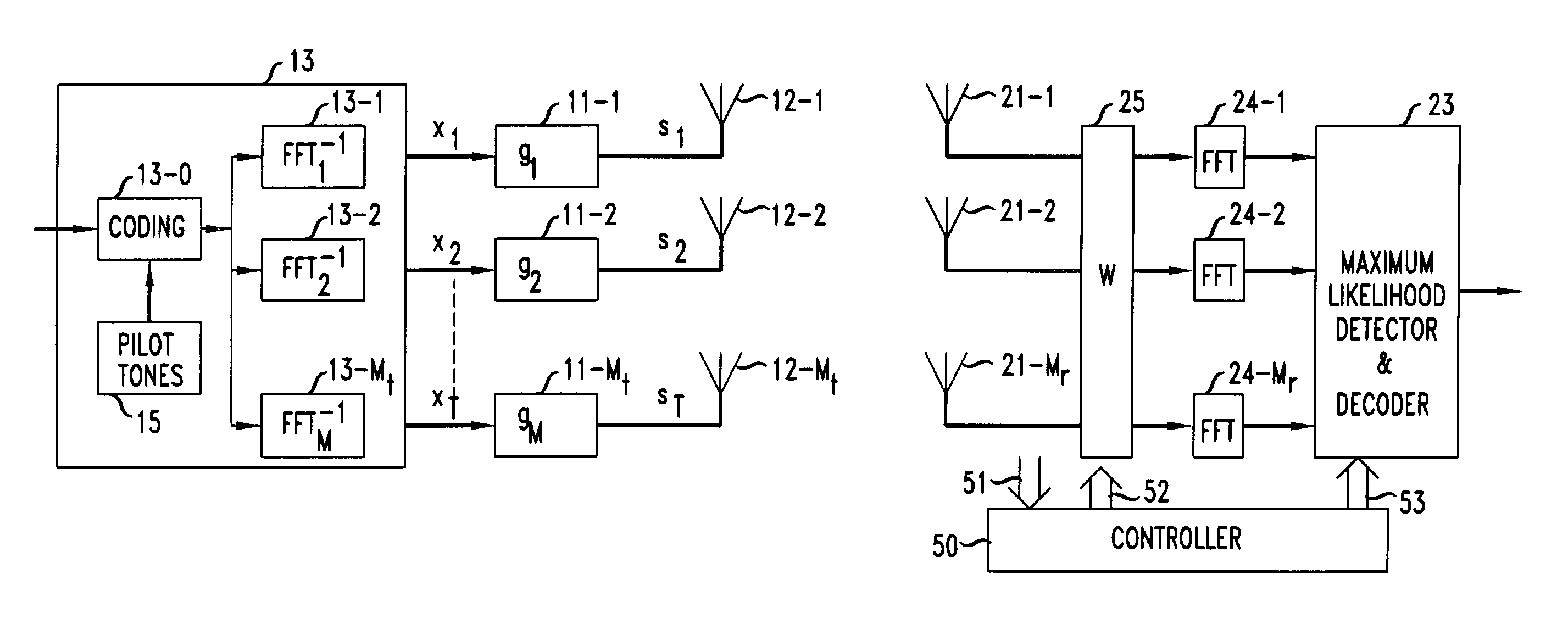
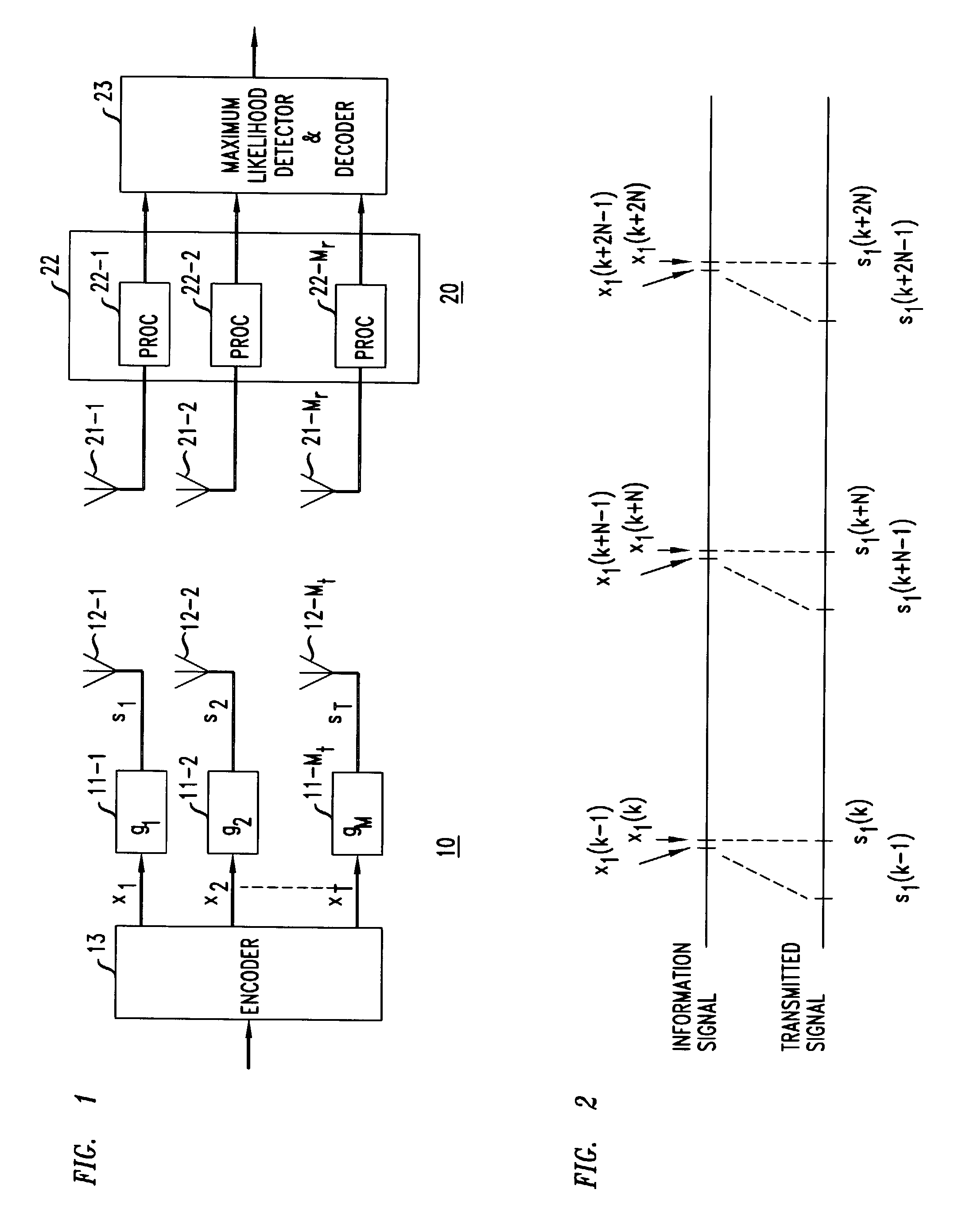
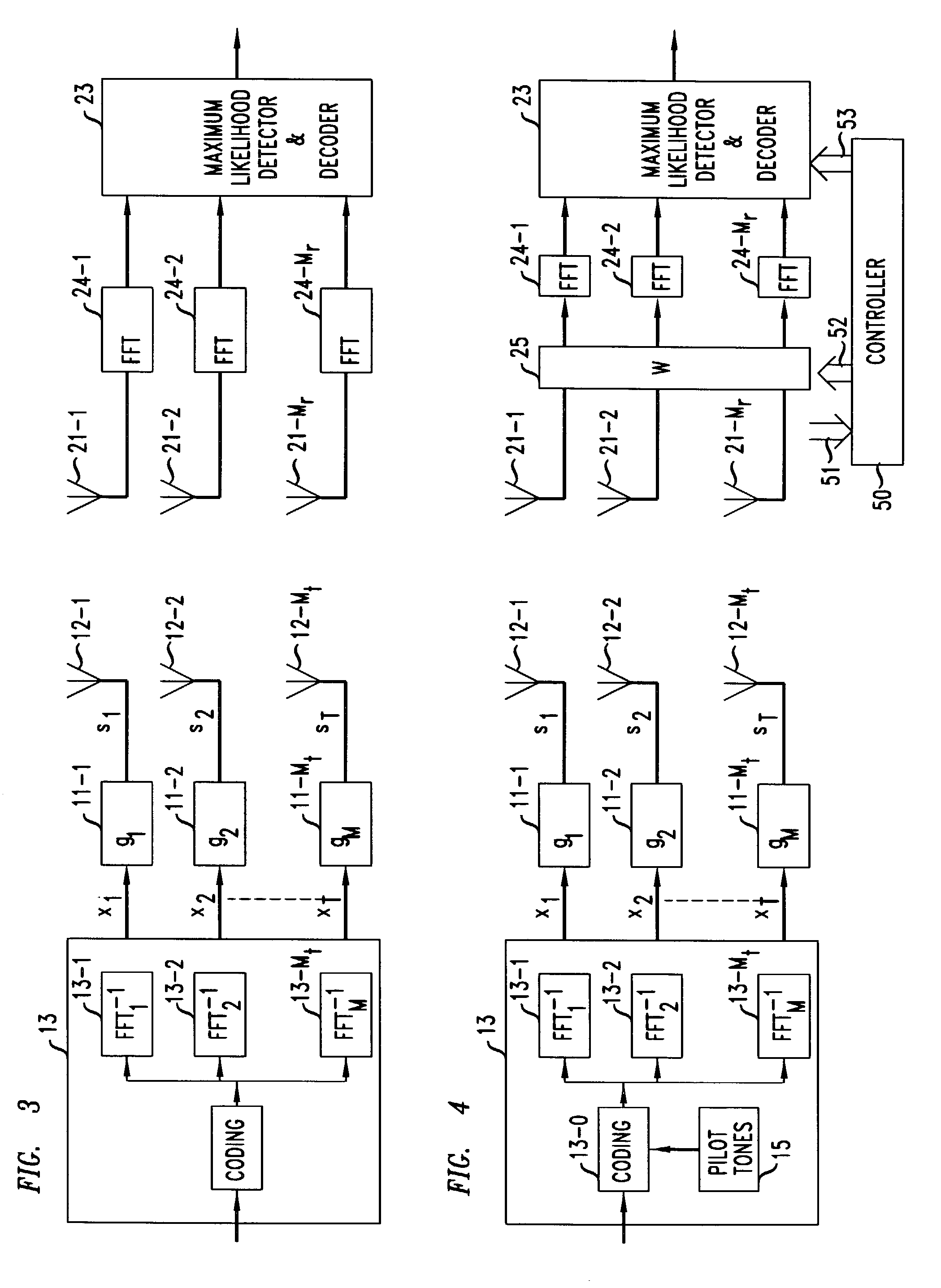
- A receiver arrangement with a filter that uses pilot tones to determine and interpolate channel coefficients, minimizing ICI by employing estimates from previous blocks, and applying these coefficients to a filter to reduce interference in OFDM systems, both with and without multiple antennas and space-time coding.

Spectrum Regulatory Framework Impact
The regulatory landscape governing spectrum allocation and management plays a pivotal role in shaping antenna configuration strategies for inter-carrier interference reduction. National and international regulatory bodies, including the Federal Communications Commission (FCC), International Telecommunication Union (ITU), and regional spectrum authorities, establish fundamental parameters that directly influence how operators can deploy and optimize their antenna systems.
Spectrum licensing frameworks impose strict constraints on transmission power levels, frequency band utilization, and interference thresholds that antenna configurations must accommodate. These regulatory limits often necessitate sophisticated beamforming techniques and spatial diversity implementations to maximize spectral efficiency while maintaining compliance. The transition from exclusive licensing models to shared spectrum paradigms, particularly in bands like 3.5 GHz CBRS, has intensified the need for dynamic antenna optimization capabilities.
Interference protection criteria mandated by regulatory authorities establish quantitative benchmarks that antenna systems must achieve. These include specific signal-to-interference ratios, out-of-band emission limits, and adjacent channel leakage ratios that directly impact antenna element spacing, polarization schemes, and radiation pattern design. Compliance with these criteria often drives the adoption of advanced interference mitigation techniques such as coordinated multipoint transmission and interference alignment algorithms.
Cross-border coordination requirements present additional complexity for antenna optimization, particularly in dense deployment scenarios near international boundaries. Regulatory frameworks mandate specific coordination procedures and interference analysis methodologies that influence antenna tilt optimization, azimuth planning, and power control strategies. These requirements often result in suboptimal configurations from a pure interference reduction perspective.
Emerging regulatory initiatives around dynamic spectrum access and cognitive radio technologies are reshaping antenna configuration paradigms. New frameworks enabling real-time spectrum sensing and adaptive transmission parameters require antenna systems capable of rapid reconfiguration and multi-band operation. This regulatory evolution is driving innovation in software-defined antenna arrays and machine learning-based optimization algorithms that can adapt to changing regulatory constraints while minimizing inter-carrier interference across diverse spectrum environments.
Spectrum licensing frameworks impose strict constraints on transmission power levels, frequency band utilization, and interference thresholds that antenna configurations must accommodate. These regulatory limits often necessitate sophisticated beamforming techniques and spatial diversity implementations to maximize spectral efficiency while maintaining compliance. The transition from exclusive licensing models to shared spectrum paradigms, particularly in bands like 3.5 GHz CBRS, has intensified the need for dynamic antenna optimization capabilities.
Interference protection criteria mandated by regulatory authorities establish quantitative benchmarks that antenna systems must achieve. These include specific signal-to-interference ratios, out-of-band emission limits, and adjacent channel leakage ratios that directly impact antenna element spacing, polarization schemes, and radiation pattern design. Compliance with these criteria often drives the adoption of advanced interference mitigation techniques such as coordinated multipoint transmission and interference alignment algorithms.
Cross-border coordination requirements present additional complexity for antenna optimization, particularly in dense deployment scenarios near international boundaries. Regulatory frameworks mandate specific coordination procedures and interference analysis methodologies that influence antenna tilt optimization, azimuth planning, and power control strategies. These requirements often result in suboptimal configurations from a pure interference reduction perspective.
Emerging regulatory initiatives around dynamic spectrum access and cognitive radio technologies are reshaping antenna configuration paradigms. New frameworks enabling real-time spectrum sensing and adaptive transmission parameters require antenna systems capable of rapid reconfiguration and multi-band operation. This regulatory evolution is driving innovation in software-defined antenna arrays and machine learning-based optimization algorithms that can adapt to changing regulatory constraints while minimizing inter-carrier interference across diverse spectrum environments.
5G/6G Implementation Considerations
The deployment of optimized antenna configurations for inter-carrier interference reduction in 5G networks presents significant implementation challenges that must be carefully addressed in the transition to 6G systems. Current 5G implementations utilize advanced antenna array technologies, including massive MIMO systems with up to 256 antenna elements, which require sophisticated beamforming algorithms to minimize interference between adjacent carriers. The computational complexity of real-time interference mitigation algorithms poses substantial processing demands on baseband units, necessitating specialized hardware architectures and optimized software implementations.
Network operators face considerable infrastructure upgrade costs when implementing advanced antenna configurations. The deployment of dense antenna arrays requires enhanced cooling systems, increased power consumption management, and upgraded backhaul connectivity to support the higher data throughput capabilities. Field trials have demonstrated that optimal antenna spacing and orientation configurations can achieve up to 15-20 dB improvement in signal-to-interference ratios, but these benefits come with increased system complexity and maintenance requirements.
The integration of machine learning-based interference prediction and mitigation algorithms into existing 5G infrastructure presents both opportunities and challenges. Real-time adaptation of antenna parameters based on dynamic interference patterns requires low-latency processing capabilities and seamless coordination between multiple base stations. Current implementations show promising results in urban environments where interference patterns are more predictable, but rural and suburban deployments face additional complexity due to varying propagation conditions.
Looking toward 6G implementation, the evolution toward terahertz frequency bands and ultra-massive MIMO systems will require fundamentally different approaches to antenna configuration optimization. The shorter wavelengths in 6G systems enable more compact antenna arrays but introduce new challenges related to atmospheric absorption and precise beam steering accuracy. Advanced materials and metamaterial-based antenna designs are being explored to achieve the required performance levels while maintaining practical deployment feasibility.
Standardization efforts are currently addressing interoperability concerns between different vendor implementations of optimized antenna systems. The 3GPP specifications for advanced antenna configurations continue to evolve, with particular focus on ensuring backward compatibility with existing 5G deployments while enabling future 6G capabilities. Network slicing architectures must accommodate the varying interference mitigation requirements across different service categories, from enhanced mobile broadband to ultra-reliable low-latency communications.
Network operators face considerable infrastructure upgrade costs when implementing advanced antenna configurations. The deployment of dense antenna arrays requires enhanced cooling systems, increased power consumption management, and upgraded backhaul connectivity to support the higher data throughput capabilities. Field trials have demonstrated that optimal antenna spacing and orientation configurations can achieve up to 15-20 dB improvement in signal-to-interference ratios, but these benefits come with increased system complexity and maintenance requirements.
The integration of machine learning-based interference prediction and mitigation algorithms into existing 5G infrastructure presents both opportunities and challenges. Real-time adaptation of antenna parameters based on dynamic interference patterns requires low-latency processing capabilities and seamless coordination between multiple base stations. Current implementations show promising results in urban environments where interference patterns are more predictable, but rural and suburban deployments face additional complexity due to varying propagation conditions.
Looking toward 6G implementation, the evolution toward terahertz frequency bands and ultra-massive MIMO systems will require fundamentally different approaches to antenna configuration optimization. The shorter wavelengths in 6G systems enable more compact antenna arrays but introduce new challenges related to atmospheric absorption and precise beam steering accuracy. Advanced materials and metamaterial-based antenna designs are being explored to achieve the required performance levels while maintaining practical deployment feasibility.
Standardization efforts are currently addressing interoperability concerns between different vendor implementations of optimized antenna systems. The 3GPP specifications for advanced antenna configurations continue to evolve, with particular focus on ensuring backward compatibility with existing 5G deployments while enabling future 6G capabilities. Network slicing architectures must accommodate the varying interference mitigation requirements across different service categories, from enhanced mobile broadband to ultra-reliable low-latency communications.
Unlock deeper insights with Patsnap Eureka Quick Research — get a full tech report to explore trends and direct your research. Try now!
Generate Your Research Report Instantly with AI Agent
Supercharge your innovation with Patsnap Eureka AI Agent Platform!