Determine Cost-Effective Multipoint Control Unit for Enterprises
MAR 17, 20269 MIN READ
Generate Your Research Report Instantly with AI Agent
Patsnap Eureka helps you evaluate technical feasibility & market potential.
Enterprise MCU Technology Background and Objectives
Multipoint Control Units (MCUs) have evolved significantly since the early days of video conferencing in the 1980s, transforming from hardware-centric, room-based systems to sophisticated software-defined platforms that enable seamless multi-party communication across diverse endpoints. The technology emerged from the fundamental need to bridge multiple communication channels simultaneously, allowing organizations to conduct efficient meetings regardless of geographical constraints.
The evolution of MCU technology has been driven by several key factors including the proliferation of IP networks, advancement in video compression standards, and the increasing demand for remote collaboration tools. Early MCU systems were primarily hardware-based solutions that required substantial capital investment and dedicated infrastructure. However, the shift toward software-based MCUs has democratized access to multipoint conferencing capabilities, making them more accessible to enterprises of varying sizes.
Modern enterprise MCU technology encompasses both traditional hardware appliances and cloud-based software solutions, each offering distinct advantages in terms of scalability, cost-effectiveness, and deployment flexibility. The technology has progressed through multiple generations, from basic audio bridging to sophisticated video mixing, content sharing, and real-time collaboration features that support high-definition video streams and advanced codec support.
The primary objective of contemporary MCU technology research focuses on achieving optimal balance between cost-effectiveness and performance reliability for enterprise deployments. Organizations seek solutions that can accommodate varying participant loads while maintaining consistent audio-visual quality and minimizing operational overhead. Key technical objectives include reducing latency in multi-party communications, optimizing bandwidth utilization across diverse network conditions, and ensuring seamless integration with existing enterprise communication infrastructure.
Cost optimization remains a critical objective, particularly as enterprises evaluate total cost of ownership models that encompass initial deployment costs, ongoing maintenance expenses, and scalability requirements. The technology aims to deliver enterprise-grade reliability while providing flexible licensing models that align with actual usage patterns rather than peak capacity requirements.
Furthermore, the technology objectives extend to supporting hybrid work environments where participants join from various devices and locations, requiring MCUs to handle diverse endpoint capabilities and network conditions while maintaining consistent user experience across all participants.
The evolution of MCU technology has been driven by several key factors including the proliferation of IP networks, advancement in video compression standards, and the increasing demand for remote collaboration tools. Early MCU systems were primarily hardware-based solutions that required substantial capital investment and dedicated infrastructure. However, the shift toward software-based MCUs has democratized access to multipoint conferencing capabilities, making them more accessible to enterprises of varying sizes.
Modern enterprise MCU technology encompasses both traditional hardware appliances and cloud-based software solutions, each offering distinct advantages in terms of scalability, cost-effectiveness, and deployment flexibility. The technology has progressed through multiple generations, from basic audio bridging to sophisticated video mixing, content sharing, and real-time collaboration features that support high-definition video streams and advanced codec support.
The primary objective of contemporary MCU technology research focuses on achieving optimal balance between cost-effectiveness and performance reliability for enterprise deployments. Organizations seek solutions that can accommodate varying participant loads while maintaining consistent audio-visual quality and minimizing operational overhead. Key technical objectives include reducing latency in multi-party communications, optimizing bandwidth utilization across diverse network conditions, and ensuring seamless integration with existing enterprise communication infrastructure.
Cost optimization remains a critical objective, particularly as enterprises evaluate total cost of ownership models that encompass initial deployment costs, ongoing maintenance expenses, and scalability requirements. The technology aims to deliver enterprise-grade reliability while providing flexible licensing models that align with actual usage patterns rather than peak capacity requirements.
Furthermore, the technology objectives extend to supporting hybrid work environments where participants join from various devices and locations, requiring MCUs to handle diverse endpoint capabilities and network conditions while maintaining consistent user experience across all participants.
Market Demand for Cost-Effective Enterprise MCU Solutions
The enterprise communication landscape has undergone significant transformation in recent years, with organizations increasingly seeking unified communication solutions that can support distributed workforces and complex collaboration requirements. The shift toward hybrid work models has intensified demand for reliable, scalable video conferencing infrastructure that can accommodate multiple participants across various locations while maintaining professional-grade audio and video quality.
Cost-effectiveness has emerged as a critical factor in enterprise MCU procurement decisions, particularly as organizations face budget constraints while simultaneously expanding their communication needs. Traditional hardware-based MCU solutions often require substantial upfront investments and ongoing maintenance costs, creating barriers for small to medium-sized enterprises and driving demand for more economical alternatives that do not compromise functionality.
The market demonstrates strong preference for solutions that offer flexible deployment options, including cloud-based, on-premises, and hybrid configurations. Enterprises are increasingly evaluating MCU solutions based on total cost of ownership rather than initial purchase price, considering factors such as licensing fees, bandwidth requirements, maintenance costs, and scalability expenses over the solution lifecycle.
Industry analysis reveals growing demand for MCU solutions that integrate seamlessly with existing enterprise infrastructure, including popular collaboration platforms, directory services, and security frameworks. Organizations prioritize solutions that minimize implementation complexity and reduce the need for specialized technical expertise, as internal IT resources are often stretched across multiple priorities.
The healthcare, education, and financial services sectors have emerged as particularly strong drivers of MCU demand, with each industry presenting unique requirements for participant capacity, security compliance, and integration capabilities. Educational institutions specifically seek cost-effective solutions that can support large-scale virtual classrooms and hybrid learning environments without requiring significant infrastructure investments.
Market research indicates increasing interest in subscription-based pricing models that allow organizations to scale their MCU capabilities based on actual usage patterns rather than peak capacity requirements. This approach enables more predictable budgeting and reduces the financial risk associated with overprovisioning communication infrastructure.
The competitive landscape shows established vendors adapting their offerings to address cost sensitivity while new market entrants focus specifically on delivering enterprise-grade functionality at reduced price points through innovative architectural approaches and streamlined feature sets.
Cost-effectiveness has emerged as a critical factor in enterprise MCU procurement decisions, particularly as organizations face budget constraints while simultaneously expanding their communication needs. Traditional hardware-based MCU solutions often require substantial upfront investments and ongoing maintenance costs, creating barriers for small to medium-sized enterprises and driving demand for more economical alternatives that do not compromise functionality.
The market demonstrates strong preference for solutions that offer flexible deployment options, including cloud-based, on-premises, and hybrid configurations. Enterprises are increasingly evaluating MCU solutions based on total cost of ownership rather than initial purchase price, considering factors such as licensing fees, bandwidth requirements, maintenance costs, and scalability expenses over the solution lifecycle.
Industry analysis reveals growing demand for MCU solutions that integrate seamlessly with existing enterprise infrastructure, including popular collaboration platforms, directory services, and security frameworks. Organizations prioritize solutions that minimize implementation complexity and reduce the need for specialized technical expertise, as internal IT resources are often stretched across multiple priorities.
The healthcare, education, and financial services sectors have emerged as particularly strong drivers of MCU demand, with each industry presenting unique requirements for participant capacity, security compliance, and integration capabilities. Educational institutions specifically seek cost-effective solutions that can support large-scale virtual classrooms and hybrid learning environments without requiring significant infrastructure investments.
Market research indicates increasing interest in subscription-based pricing models that allow organizations to scale their MCU capabilities based on actual usage patterns rather than peak capacity requirements. This approach enables more predictable budgeting and reduces the financial risk associated with overprovisioning communication infrastructure.
The competitive landscape shows established vendors adapting their offerings to address cost sensitivity while new market entrants focus specifically on delivering enterprise-grade functionality at reduced price points through innovative architectural approaches and streamlined feature sets.
Current MCU Technology Status and Cost Challenges
The current landscape of Multipoint Control Unit (MCU) technology presents a complex ecosystem of solutions ranging from traditional hardware-based systems to cloud-native platforms. Traditional MCU architectures rely heavily on dedicated hardware infrastructure, requiring substantial upfront capital investment and ongoing maintenance costs. These systems typically utilize proprietary protocols and specialized processing units designed for real-time media processing, resulting in vendor lock-in scenarios that limit enterprise flexibility.
Software-based MCU solutions have emerged as viable alternatives, leveraging commodity hardware and virtualization technologies to reduce initial deployment costs. However, these solutions often struggle with scalability limitations and performance bottlenecks when handling high-definition video streams across multiple endpoints. The processing overhead associated with software-based transcoding and mixing operations can significantly impact system performance, particularly in large-scale enterprise deployments.
Cloud-based MCU services represent the latest evolution in multipoint conferencing technology, offering elastic scalability and reduced infrastructure management overhead. Major cloud providers have introduced MCU-as-a-Service offerings that promise cost-effective solutions through pay-per-use models. Despite these advantages, enterprises face challenges related to bandwidth costs, latency concerns, and data sovereignty requirements that can substantially impact total cost of ownership.
Cost challenges in MCU deployment extend beyond initial acquisition expenses to encompass operational complexities. Licensing models vary significantly across vendors, with some requiring per-port licensing while others adopt concurrent user-based pricing structures. Bandwidth optimization remains a critical cost factor, as inefficient codec selection and transcoding processes can result in excessive network utilization and associated infrastructure costs.
Integration complexity poses additional financial burdens, particularly for enterprises with heterogeneous communication environments. Compatibility issues between different endpoint types, protocol variations, and quality-of-service requirements often necessitate additional middleware solutions or custom development efforts. These integration challenges can substantially increase deployment timelines and associated professional services costs.
Maintenance and support costs represent ongoing financial considerations that significantly impact long-term MCU ownership economics. Hardware-based solutions require specialized technical expertise for troubleshooting and capacity planning, while software-based alternatives demand continuous updates and security patch management. The rapid evolution of video conferencing standards and codec technologies further compounds these challenges, potentially requiring frequent system upgrades to maintain compatibility and performance standards.
Software-based MCU solutions have emerged as viable alternatives, leveraging commodity hardware and virtualization technologies to reduce initial deployment costs. However, these solutions often struggle with scalability limitations and performance bottlenecks when handling high-definition video streams across multiple endpoints. The processing overhead associated with software-based transcoding and mixing operations can significantly impact system performance, particularly in large-scale enterprise deployments.
Cloud-based MCU services represent the latest evolution in multipoint conferencing technology, offering elastic scalability and reduced infrastructure management overhead. Major cloud providers have introduced MCU-as-a-Service offerings that promise cost-effective solutions through pay-per-use models. Despite these advantages, enterprises face challenges related to bandwidth costs, latency concerns, and data sovereignty requirements that can substantially impact total cost of ownership.
Cost challenges in MCU deployment extend beyond initial acquisition expenses to encompass operational complexities. Licensing models vary significantly across vendors, with some requiring per-port licensing while others adopt concurrent user-based pricing structures. Bandwidth optimization remains a critical cost factor, as inefficient codec selection and transcoding processes can result in excessive network utilization and associated infrastructure costs.
Integration complexity poses additional financial burdens, particularly for enterprises with heterogeneous communication environments. Compatibility issues between different endpoint types, protocol variations, and quality-of-service requirements often necessitate additional middleware solutions or custom development efforts. These integration challenges can substantially increase deployment timelines and associated professional services costs.
Maintenance and support costs represent ongoing financial considerations that significantly impact long-term MCU ownership economics. Hardware-based solutions require specialized technical expertise for troubleshooting and capacity planning, while software-based alternatives demand continuous updates and security patch management. The rapid evolution of video conferencing standards and codec technologies further compounds these challenges, potentially requiring frequent system upgrades to maintain compatibility and performance standards.
Existing Cost-Effective MCU Implementation Solutions
01 Distributed MCU architecture for cost reduction
Implementing distributed multipoint control unit architectures can significantly reduce costs by eliminating the need for centralized expensive hardware. This approach distributes processing and control functions across multiple nodes or endpoints, reducing infrastructure requirements and allowing for scalable deployment. The distributed model enables more efficient resource utilization and reduces the dependency on high-cost centralized servers.- Distributed MCU architecture for cost reduction: Implementing a distributed multipoint control unit architecture can significantly reduce costs by eliminating the need for centralized expensive hardware. This approach distributes processing and control functions across multiple nodes or endpoints, reducing the burden on a single central unit. The distributed architecture allows for scalability and flexibility while maintaining system performance. By leveraging existing network infrastructure and endpoint capabilities, organizations can achieve cost-effective multipoint control without substantial capital investment in dedicated MCU hardware.
- Resource sharing and bandwidth optimization: Cost-effectiveness in multipoint control units can be achieved through intelligent resource sharing and bandwidth optimization techniques. These methods involve dynamic allocation of network resources based on real-time demand, reducing unnecessary bandwidth consumption and infrastructure costs. Advanced algorithms can prioritize traffic, compress data streams, and multiplex connections to maximize the utilization of available resources. This approach minimizes the need for over-provisioning network capacity while maintaining quality of service across multiple endpoints.
- Virtualized MCU implementation: Virtualization technology enables cost-effective multipoint control by running MCU functions on standard server hardware or cloud infrastructure rather than dedicated appliances. This approach reduces capital expenditure on specialized equipment and allows for flexible scaling based on demand. Virtual MCU implementations can leverage existing data center resources and benefit from economies of scale in cloud environments. The virtualized approach also simplifies maintenance, updates, and disaster recovery while reducing operational costs associated with physical hardware management.
- Hybrid peer-to-peer and centralized control: A hybrid approach combining peer-to-peer communication with selective centralized control offers cost-effective multipoint management. This architecture allows direct communication between endpoints for routine operations while utilizing centralized control only for complex coordination tasks. By reducing the processing load on central units and minimizing bandwidth requirements for centralized routing, this approach lowers infrastructure costs. The hybrid model provides flexibility to balance between fully distributed and fully centralized architectures based on specific use case requirements and cost constraints.
- Modular and scalable MCU design: Modular multipoint control unit designs enable cost-effectiveness through incremental capacity expansion and pay-as-you-grow models. These systems allow organizations to start with basic functionality and add modules or capacity as needs increase, avoiding large upfront investments. Modular architectures support hot-swapping of components, simplified maintenance, and targeted upgrades of specific functions without replacing entire systems. This approach reduces total cost of ownership by extending system lifecycle and allowing organizations to align spending with actual usage patterns and business growth.
02 Resource sharing and bandwidth optimization
Cost-effectiveness can be achieved through intelligent resource sharing mechanisms and bandwidth optimization techniques in multipoint control systems. These methods include dynamic allocation of network resources, adaptive bitrate control, and efficient multiplexing strategies that reduce overall bandwidth consumption. By optimizing resource utilization, operational costs are minimized while maintaining service quality across multiple connection points.Expand Specific Solutions03 Simplified control protocols and signaling
Adopting simplified control protocols and streamlined signaling mechanisms reduces the computational complexity and processing requirements of multipoint control units. This approach minimizes hardware specifications needed, leading to lower equipment costs and reduced power consumption. Efficient protocol design also decreases latency and improves overall system performance while maintaining cost-effectiveness.Expand Specific Solutions04 Virtualization and cloud-based MCU solutions
Implementing virtualized or cloud-based multipoint control unit solutions provides significant cost advantages through reduced capital expenditure and operational flexibility. Virtual MCU platforms eliminate the need for dedicated physical hardware and enable pay-as-you-go models. This approach allows for dynamic scaling based on demand, reducing idle resource costs and providing better return on investment through shared infrastructure.Expand Specific Solutions05 Modular design and scalable architecture
Employing modular design principles and scalable architectures in multipoint control units enables cost-effective deployment and expansion. Modular systems allow organizations to start with basic configurations and incrementally add capacity as needed, avoiding over-provisioning costs. This approach supports flexible upgrade paths and reduces total cost of ownership by allowing targeted investments in specific functional modules rather than complete system replacements.Expand Specific Solutions
Key Players in Enterprise MCU Market Analysis
The enterprise multipoint control unit (MCU) market is experiencing significant growth driven by the increasing demand for cost-effective video conferencing solutions across organizations of all sizes. The industry has reached a mature development stage with established market leaders like Cisco Technology, Huawei Technologies, and Hewlett-Packard Development Co. dominating through comprehensive unified communications portfolios. Technology maturity varies significantly among players, with Cisco and Huawei demonstrating advanced cloud-based MCU capabilities and AI-enhanced features, while traditional hardware manufacturers like Siemens AG and Mitsubishi Electric Corp. are transitioning from legacy systems to software-defined solutions. Emerging companies such as New H3C Technologies and Unify GmbH are challenging incumbents with innovative, scalable architectures that reduce deployment costs and improve interoperability, indicating a competitive landscape where technological differentiation and pricing strategies are key success factors.
Cisco Technology, Inc.
Technical Solution: Cisco offers comprehensive MCU solutions through their Webex platform and TelePresence infrastructure. Their MCU technology supports scalable video conferencing with advanced features like automatic layout switching, content sharing optimization, and bandwidth adaptation. The solution integrates seamlessly with existing network infrastructure and provides enterprise-grade security with end-to-end encryption. Cisco's MCU architecture supports multiple protocols including H.323 and SIP, enabling interoperability across different communication systems. Their cloud-based MCU services offer flexible deployment options with pay-as-you-scale pricing models, making it cost-effective for enterprises of varying sizes.
Strengths: Market-leading position with robust security features and excellent network integration capabilities. Weaknesses: Higher initial investment costs and complexity in deployment for smaller organizations.
Huawei Technologies Co., Ltd.
Technical Solution: Huawei provides enterprise MCU solutions through their CloudLink platform, featuring AI-powered video enhancement and intelligent bandwidth management. Their MCU technology incorporates advanced codec optimization that reduces bandwidth consumption by up to 50% while maintaining high video quality. The solution offers hybrid deployment options combining on-premises and cloud infrastructure, providing cost flexibility for enterprises. Huawei's MCU supports up to 1080p HD video conferencing with real-time noise cancellation and automatic speaker tracking. The platform includes comprehensive management tools for IT administrators and offers competitive pricing structures particularly attractive for large-scale enterprise deployments.
Strengths: Cost-competitive solutions with strong AI integration and bandwidth optimization capabilities. Weaknesses: Limited market presence in certain regions due to regulatory restrictions and concerns.
Core Technologies in Enterprise MCU Cost Optimization
Method and system for identifying a multipoint control unit for hosting a conference
PatentWO2008137374A2
Innovation
- A method and system for identifying an optimal MCU by ranking MCUs based on network conditions such as location, latency, and bandwidth, using test pings and historical data to select the most suitable MCU for hosting a conference, and dynamically reassessing conditions before the conference to ensure optimal performance.


System and method for reserving conference resources for a multipoint conference using a priority scheme
PatentInactiveUS7213050B1
Innovation
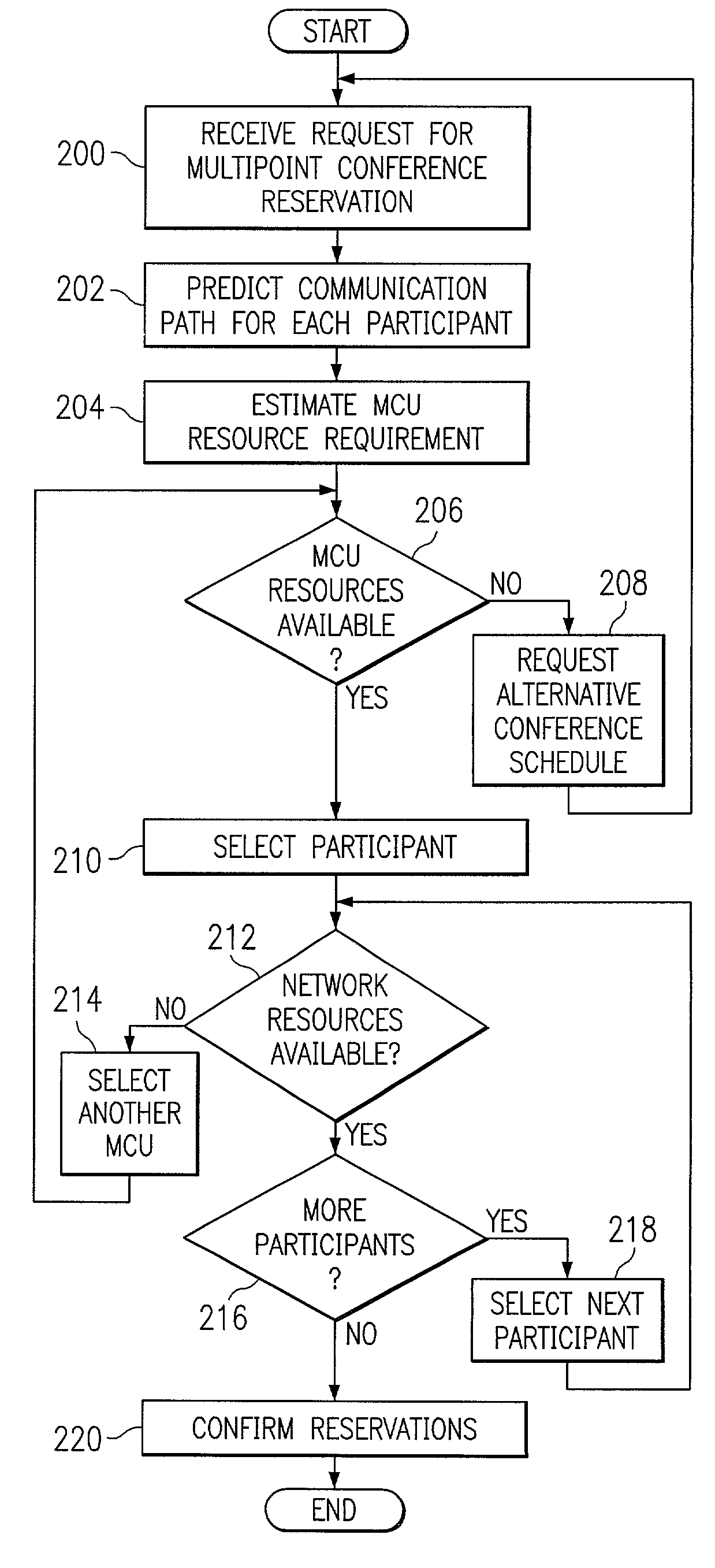
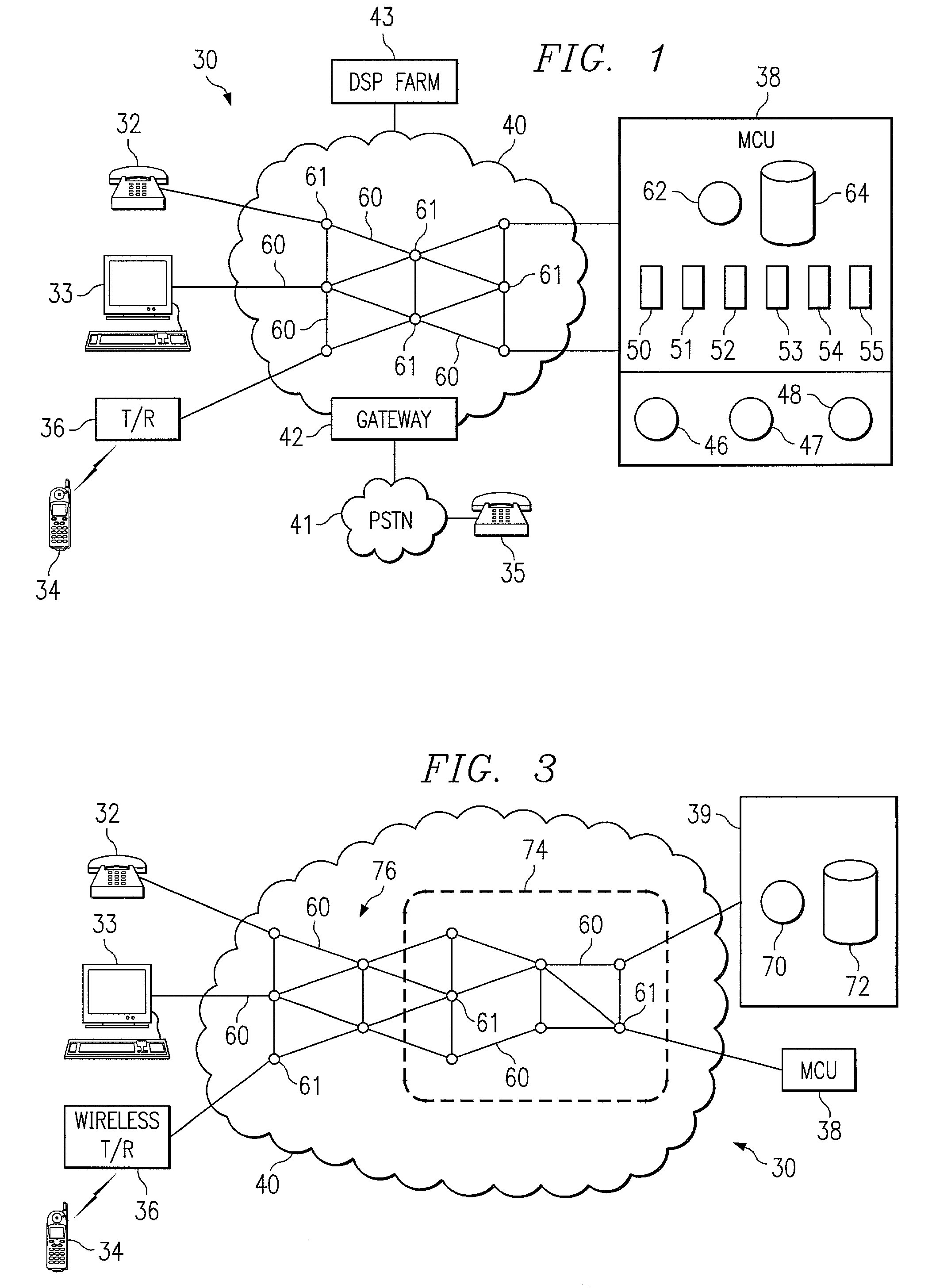
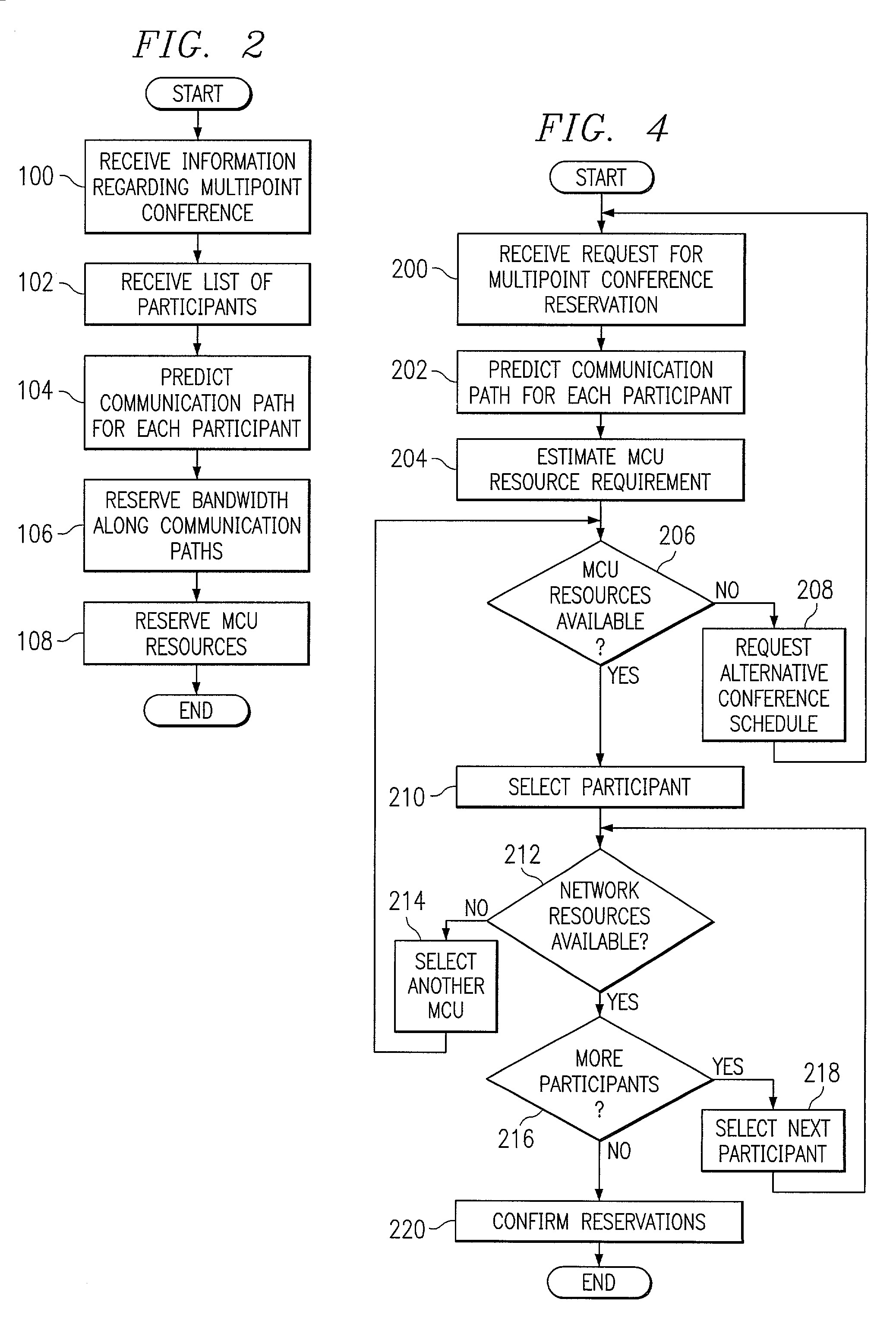
- A method for prioritized reservation of network and MCU resources involves estimating resource requirements, selecting suitable MCUs and communication paths, and reserving bandwidth and DSP resources in advance, with a policy server managing resource allocation and prioritization based on conference type and participant identity.

Enterprise IT Procurement and Budget Considerations
Enterprise procurement of Multipoint Control Units requires careful evaluation of total cost of ownership beyond initial hardware acquisition costs. Organizations must consider licensing fees, maintenance contracts, and ongoing support expenses that can significantly impact the overall investment. Many MCU solutions operate on subscription-based models or require annual licensing renewals, making long-term budget planning essential for sustainable deployment.
Budget allocation strategies should account for scalability requirements and future expansion needs. Enterprises typically experience growth in video conferencing usage, necessitating MCU solutions that can accommodate increasing concurrent sessions without requiring complete system replacement. Cost-effective procurement involves selecting platforms that offer modular licensing or pay-as-you-grow models, allowing organizations to align expenses with actual usage patterns.
Infrastructure integration costs represent a critical procurement consideration often overlooked in initial budget assessments. Legacy system compatibility, network infrastructure upgrades, and integration with existing unified communications platforms can substantially increase implementation expenses. Organizations must evaluate whether their current network bandwidth and quality of service configurations can support additional MCU traffic without degrading performance.
Vendor selection criteria should prioritize long-term partnership value over lowest initial pricing. Established vendors typically offer more comprehensive support structures, regular software updates, and proven track records for security patches. However, emerging vendors may provide competitive pricing and innovative features that align better with specific organizational requirements.
Risk mitigation through redundancy and disaster recovery capabilities adds complexity to budget planning. Mission-critical video communications require backup systems and failover mechanisms, potentially doubling infrastructure costs. Organizations must balance operational continuity requirements against budget constraints while ensuring compliance with internal availability standards.
Training and change management expenses often consume significant portions of MCU implementation budgets. Technical staff require specialized training for system administration, while end-users need education on new conferencing capabilities. Successful deployments typically allocate fifteen to twenty percent of total project budgets for comprehensive training programs and ongoing user support initiatives.
Budget allocation strategies should account for scalability requirements and future expansion needs. Enterprises typically experience growth in video conferencing usage, necessitating MCU solutions that can accommodate increasing concurrent sessions without requiring complete system replacement. Cost-effective procurement involves selecting platforms that offer modular licensing or pay-as-you-grow models, allowing organizations to align expenses with actual usage patterns.
Infrastructure integration costs represent a critical procurement consideration often overlooked in initial budget assessments. Legacy system compatibility, network infrastructure upgrades, and integration with existing unified communications platforms can substantially increase implementation expenses. Organizations must evaluate whether their current network bandwidth and quality of service configurations can support additional MCU traffic without degrading performance.
Vendor selection criteria should prioritize long-term partnership value over lowest initial pricing. Established vendors typically offer more comprehensive support structures, regular software updates, and proven track records for security patches. However, emerging vendors may provide competitive pricing and innovative features that align better with specific organizational requirements.
Risk mitigation through redundancy and disaster recovery capabilities adds complexity to budget planning. Mission-critical video communications require backup systems and failover mechanisms, potentially doubling infrastructure costs. Organizations must balance operational continuity requirements against budget constraints while ensuring compliance with internal availability standards.
Training and change management expenses often consume significant portions of MCU implementation budgets. Technical staff require specialized training for system administration, while end-users need education on new conferencing capabilities. Successful deployments typically allocate fifteen to twenty percent of total project budgets for comprehensive training programs and ongoing user support initiatives.
Scalability and Integration Requirements for Enterprise MCU
Enterprise MCU scalability requirements encompass multiple dimensions that directly impact cost-effectiveness and operational efficiency. Modern enterprises demand systems capable of supporting concurrent sessions ranging from hundreds to thousands of participants across geographically distributed locations. The scalability architecture must accommodate dynamic resource allocation, enabling organizations to scale up during peak usage periods and scale down during low-demand intervals to optimize operational costs.
Horizontal scaling capabilities represent a critical requirement for enterprise MCU deployments. Organizations require systems that can seamlessly add processing nodes to handle increased load without service interruption. This distributed architecture approach ensures that enterprises can expand their video conferencing capacity incrementally, aligning infrastructure investments with actual business growth rather than over-provisioning resources upfront.
Integration requirements for enterprise MCU solutions extend beyond basic connectivity protocols to encompass comprehensive ecosystem compatibility. Modern enterprises operate heterogeneous IT environments requiring MCU systems to integrate seamlessly with existing unified communications platforms, directory services, and authentication systems. Support for standard protocols including SIP, H.323, and WebRTC ensures compatibility across diverse endpoint devices and software applications.
Cloud-hybrid integration capabilities have become increasingly essential for enterprise MCU deployments. Organizations require flexible architectures that can leverage both on-premises infrastructure and cloud resources, enabling dynamic resource allocation based on demand patterns and cost optimization strategies. This hybrid approach allows enterprises to maintain control over sensitive communications while leveraging cloud scalability for peak capacity requirements.
API-driven integration frameworks enable enterprises to embed MCU functionality into existing business applications and workflows. Modern MCU solutions must provide comprehensive REST APIs and SDKs that facilitate custom integrations with enterprise resource planning systems, customer relationship management platforms, and collaboration tools. This integration depth ensures that video conferencing capabilities become seamlessly embedded within existing business processes rather than operating as isolated communication silos.
Quality of service management and bandwidth optimization features represent fundamental scalability requirements for enterprise deployments. MCU systems must intelligently manage network resources, implementing adaptive bitrate algorithms and traffic prioritization to maintain consistent user experience across varying network conditions and participant volumes.
Horizontal scaling capabilities represent a critical requirement for enterprise MCU deployments. Organizations require systems that can seamlessly add processing nodes to handle increased load without service interruption. This distributed architecture approach ensures that enterprises can expand their video conferencing capacity incrementally, aligning infrastructure investments with actual business growth rather than over-provisioning resources upfront.
Integration requirements for enterprise MCU solutions extend beyond basic connectivity protocols to encompass comprehensive ecosystem compatibility. Modern enterprises operate heterogeneous IT environments requiring MCU systems to integrate seamlessly with existing unified communications platforms, directory services, and authentication systems. Support for standard protocols including SIP, H.323, and WebRTC ensures compatibility across diverse endpoint devices and software applications.
Cloud-hybrid integration capabilities have become increasingly essential for enterprise MCU deployments. Organizations require flexible architectures that can leverage both on-premises infrastructure and cloud resources, enabling dynamic resource allocation based on demand patterns and cost optimization strategies. This hybrid approach allows enterprises to maintain control over sensitive communications while leveraging cloud scalability for peak capacity requirements.
API-driven integration frameworks enable enterprises to embed MCU functionality into existing business applications and workflows. Modern MCU solutions must provide comprehensive REST APIs and SDKs that facilitate custom integrations with enterprise resource planning systems, customer relationship management platforms, and collaboration tools. This integration depth ensures that video conferencing capabilities become seamlessly embedded within existing business processes rather than operating as isolated communication silos.
Quality of service management and bandwidth optimization features represent fundamental scalability requirements for enterprise deployments. MCU systems must intelligently manage network resources, implementing adaptive bitrate algorithms and traffic prioritization to maintain consistent user experience across varying network conditions and participant volumes.
Unlock deeper insights with Patsnap Eureka Quick Research — get a full tech report to explore trends and direct your research. Try now!
Generate Your Research Report Instantly with AI Agent
Supercharge your innovation with Patsnap Eureka AI Agent Platform!