

Developing Iron-Air Battery for Consumer Electronics
APR 27, 20269 MIN READ
Generate Your Research Report Instantly with AI Agent
PatSnap Eureka helps you evaluate technical feasibility & market potential.
Iron-Air Battery Technology Background and Development Goals
Iron-air battery technology represents a promising advancement in energy storage systems, leveraging the abundant availability of iron and oxygen to create cost-effective, sustainable power solutions. This electrochemical technology operates through the reversible oxidation and reduction of iron, where iron metal is oxidized to iron oxide during discharge and reduced back to metallic iron during charging. The fundamental appeal lies in utilizing atmospheric oxygen as the cathode reactant, eliminating the need for expensive cathode materials typically required in conventional battery systems.
The historical development of iron-air batteries traces back to the early 20th century, with initial applications primarily focused on large-scale stationary energy storage due to their inherently low energy density and slow reaction kinetics. Traditional iron-air systems were characterized by bulky designs, limited cycle life, and poor round-trip efficiency, making them unsuitable for portable applications. However, recent decades have witnessed significant technological breakthroughs in materials science, nanotechnology, and electrochemical engineering that have revitalized interest in this technology.
The evolution toward consumer electronics applications represents a paradigm shift driven by growing demands for sustainable, low-cost energy storage solutions. Modern iron-air battery development focuses on overcoming historical limitations through advanced electrode architectures, improved electrolyte formulations, and sophisticated air management systems. Key innovations include nanostructured iron electrodes with enhanced surface area, bifunctional air electrodes incorporating advanced catalysts, and novel separator technologies that prevent iron migration while maintaining ionic conductivity.
Current development goals center on achieving energy densities comparable to lithium-ion batteries while maintaining the inherent advantages of iron-air chemistry, including environmental friendliness, material abundance, and cost effectiveness. Specific targets include reaching energy densities exceeding 300 Wh/kg, extending cycle life beyond 1000 charge-discharge cycles, and reducing charging times to practical levels for consumer device applications.
The integration challenges for consumer electronics involve miniaturization of air management systems, development of flexible form factors, and optimization of power delivery characteristics to match the dynamic requirements of modern electronic devices. Success in these areas would position iron-air batteries as a disruptive technology capable of transforming the consumer electronics landscape through sustainable, affordable energy storage solutions.
The historical development of iron-air batteries traces back to the early 20th century, with initial applications primarily focused on large-scale stationary energy storage due to their inherently low energy density and slow reaction kinetics. Traditional iron-air systems were characterized by bulky designs, limited cycle life, and poor round-trip efficiency, making them unsuitable for portable applications. However, recent decades have witnessed significant technological breakthroughs in materials science, nanotechnology, and electrochemical engineering that have revitalized interest in this technology.
The evolution toward consumer electronics applications represents a paradigm shift driven by growing demands for sustainable, low-cost energy storage solutions. Modern iron-air battery development focuses on overcoming historical limitations through advanced electrode architectures, improved electrolyte formulations, and sophisticated air management systems. Key innovations include nanostructured iron electrodes with enhanced surface area, bifunctional air electrodes incorporating advanced catalysts, and novel separator technologies that prevent iron migration while maintaining ionic conductivity.
Current development goals center on achieving energy densities comparable to lithium-ion batteries while maintaining the inherent advantages of iron-air chemistry, including environmental friendliness, material abundance, and cost effectiveness. Specific targets include reaching energy densities exceeding 300 Wh/kg, extending cycle life beyond 1000 charge-discharge cycles, and reducing charging times to practical levels for consumer device applications.
The integration challenges for consumer electronics involve miniaturization of air management systems, development of flexible form factors, and optimization of power delivery characteristics to match the dynamic requirements of modern electronic devices. Success in these areas would position iron-air batteries as a disruptive technology capable of transforming the consumer electronics landscape through sustainable, affordable energy storage solutions.
Consumer Electronics Market Demand for Iron-Air Batteries
The consumer electronics market presents a compelling opportunity for iron-air battery technology, driven by evolving user expectations and sustainability imperatives. Traditional lithium-ion batteries face increasing scrutiny due to supply chain vulnerabilities, environmental concerns, and cost volatility, creating market space for alternative energy storage solutions.
Smartphone manufacturers are experiencing mounting pressure to extend device longevity while reducing environmental impact. Current battery degradation patterns force consumers to replace devices every two to three years, contributing to electronic waste accumulation. Iron-air batteries offer potential solutions through superior cycle life and reduced material toxicity, aligning with circular economy principles increasingly valued by environmentally conscious consumers.
The portable electronics segment demonstrates growing demand for sustainable power solutions. Tablets, e-readers, and wearable devices require batteries that maintain performance across extended usage periods. Iron-air technology's inherent stability and non-toxic composition address consumer safety concerns while potentially reducing manufacturing costs through abundant raw material availability.
Gaming devices and portable computing equipment represent high-value market segments where iron-air batteries could establish initial footholds. These applications often prioritize longevity over energy density, making them suitable testing grounds for iron-air technology despite current limitations in power-to-weight ratios compared to lithium-ion alternatives.
Market research indicates increasing consumer willingness to accept slightly larger device profiles in exchange for significantly extended battery life and environmental benefits. This trend particularly manifests in professional and educational markets where device reliability outweighs portability concerns.
The emerging Internet of Things ecosystem creates additional demand vectors for iron-air batteries. Smart home devices, sensors, and monitoring equipment require long-lasting, maintenance-free power sources. Iron-air batteries' potential for extended shelf life and stable discharge characteristics align well with these applications.
Regulatory pressures across major markets are accelerating demand for sustainable battery technologies. European Union battery regulations and similar initiatives in other regions are pushing manufacturers toward more environmentally responsible energy storage solutions, creating favorable conditions for iron-air battery adoption in consumer electronics applications.
Smartphone manufacturers are experiencing mounting pressure to extend device longevity while reducing environmental impact. Current battery degradation patterns force consumers to replace devices every two to three years, contributing to electronic waste accumulation. Iron-air batteries offer potential solutions through superior cycle life and reduced material toxicity, aligning with circular economy principles increasingly valued by environmentally conscious consumers.
The portable electronics segment demonstrates growing demand for sustainable power solutions. Tablets, e-readers, and wearable devices require batteries that maintain performance across extended usage periods. Iron-air technology's inherent stability and non-toxic composition address consumer safety concerns while potentially reducing manufacturing costs through abundant raw material availability.
Gaming devices and portable computing equipment represent high-value market segments where iron-air batteries could establish initial footholds. These applications often prioritize longevity over energy density, making them suitable testing grounds for iron-air technology despite current limitations in power-to-weight ratios compared to lithium-ion alternatives.
Market research indicates increasing consumer willingness to accept slightly larger device profiles in exchange for significantly extended battery life and environmental benefits. This trend particularly manifests in professional and educational markets where device reliability outweighs portability concerns.
The emerging Internet of Things ecosystem creates additional demand vectors for iron-air batteries. Smart home devices, sensors, and monitoring equipment require long-lasting, maintenance-free power sources. Iron-air batteries' potential for extended shelf life and stable discharge characteristics align well with these applications.
Regulatory pressures across major markets are accelerating demand for sustainable battery technologies. European Union battery regulations and similar initiatives in other regions are pushing manufacturers toward more environmentally responsible energy storage solutions, creating favorable conditions for iron-air battery adoption in consumer electronics applications.
Current State and Challenges of Iron-Air Battery Technology
Iron-air battery technology has emerged as a promising energy storage solution due to its theoretical advantages of high energy density, environmental friendliness, and cost-effectiveness. Currently, the technology exists primarily in research and development phases, with several companies and institutions worldwide pursuing different approaches to commercialize this electrochemical system. The fundamental principle relies on the reversible oxidation and reduction of iron, utilizing ambient oxygen as the cathode reactant.
The global development landscape shows concentrated efforts in North America, Europe, and Asia, with notable research activities in the United States, Germany, China, and Japan. Leading organizations include Form Energy, which focuses on grid-scale applications, and various academic institutions exploring miniaturization for portable applications. However, the adaptation for consumer electronics represents a relatively nascent area compared to stationary energy storage applications.
Several critical technical challenges currently impede the widespread adoption of iron-air batteries in consumer electronics. The most significant obstacle is the inherently slow reaction kinetics of iron oxidation and reduction processes, resulting in limited power density that falls short of consumer device requirements. Typical iron-air systems deliver power densities of 10-50 W/kg, substantially lower than lithium-ion batteries' 200-500 W/kg range.
Cycle life presents another major constraint, as iron electrodes suffer from morphological changes during repeated charge-discharge cycles. The formation of iron oxide layers and electrode degradation typically limit cycle life to fewer than 1000 cycles, inadequate for consumer electronics requiring thousands of cycles over several years of operation.
Electrolyte management poses additional complexity, particularly regarding water balance and pH stability. Iron-air batteries require aqueous electrolytes, making them susceptible to freezing, evaporation, and electrolyte leakage issues that compromise reliability in portable applications. The need for air access also introduces design challenges for sealed consumer devices.
Size and weight optimization remains problematic due to the requirement for air cathodes and electrolyte reservoirs. Current prototypes demonstrate energy densities of 200-400 Wh/kg theoretically, but practical implementations achieve significantly lower values when accounting for packaging, air management systems, and safety components necessary for consumer applications.
Temperature sensitivity further limits applicability, as iron-air battery performance degrades significantly outside the 15-35°C range, affecting usability in diverse environmental conditions typical for consumer electronics.
The global development landscape shows concentrated efforts in North America, Europe, and Asia, with notable research activities in the United States, Germany, China, and Japan. Leading organizations include Form Energy, which focuses on grid-scale applications, and various academic institutions exploring miniaturization for portable applications. However, the adaptation for consumer electronics represents a relatively nascent area compared to stationary energy storage applications.
Several critical technical challenges currently impede the widespread adoption of iron-air batteries in consumer electronics. The most significant obstacle is the inherently slow reaction kinetics of iron oxidation and reduction processes, resulting in limited power density that falls short of consumer device requirements. Typical iron-air systems deliver power densities of 10-50 W/kg, substantially lower than lithium-ion batteries' 200-500 W/kg range.
Cycle life presents another major constraint, as iron electrodes suffer from morphological changes during repeated charge-discharge cycles. The formation of iron oxide layers and electrode degradation typically limit cycle life to fewer than 1000 cycles, inadequate for consumer electronics requiring thousands of cycles over several years of operation.
Electrolyte management poses additional complexity, particularly regarding water balance and pH stability. Iron-air batteries require aqueous electrolytes, making them susceptible to freezing, evaporation, and electrolyte leakage issues that compromise reliability in portable applications. The need for air access also introduces design challenges for sealed consumer devices.
Size and weight optimization remains problematic due to the requirement for air cathodes and electrolyte reservoirs. Current prototypes demonstrate energy densities of 200-400 Wh/kg theoretically, but practical implementations achieve significantly lower values when accounting for packaging, air management systems, and safety components necessary for consumer applications.
Temperature sensitivity further limits applicability, as iron-air battery performance degrades significantly outside the 15-35°C range, affecting usability in diverse environmental conditions typical for consumer electronics.
Current Iron-Air Battery Solutions for Consumer Applications
01 Iron-air battery electrode materials and structures
Development of specialized electrode materials and structures for iron-air batteries, focusing on optimizing the iron electrode composition and morphology to enhance electrochemical performance. These innovations include novel iron-based active materials, electrode architectures, and surface treatments that improve charge-discharge efficiency and cycle stability.- Iron-air battery electrode materials and structures: Development of specialized electrode materials and structures for iron-air batteries, focusing on optimizing the iron electrode composition and morphology to enhance electrochemical performance. These innovations include novel iron-based active materials, electrode architectures, and surface treatments that improve charge-discharge efficiency and cycle stability.
- Air cathode design and oxygen reduction catalysts: Advanced air cathode technologies incorporating efficient oxygen reduction reaction catalysts and optimized porous structures for enhanced oxygen access. These developments focus on improving the air electrode's ability to facilitate oxygen reduction during discharge and oxygen evolution during charge, utilizing various catalyst materials and electrode configurations.
- Electrolyte systems and ionic conductivity enhancement: Specialized electrolyte formulations designed for iron-air battery applications, including aqueous and non-aqueous systems with improved ionic conductivity and stability. These electrolyte innovations address corrosion resistance, pH management, and ion transport optimization to enhance overall battery performance and longevity.
- Battery management and control systems: Integrated battery management systems specifically designed for iron-air batteries, incorporating monitoring, control, and safety features. These systems manage charge-discharge cycles, temperature control, electrolyte circulation, and performance optimization through advanced control algorithms and sensor integration.
- Manufacturing processes and cell assembly methods: Innovative manufacturing techniques and assembly methods for iron-air battery production, including scalable fabrication processes, quality control measures, and cost-effective production strategies. These approaches focus on improving manufacturing efficiency, ensuring consistent performance, and reducing production costs for commercial viability.
02 Air cathode design and oxygen reduction catalysts
Advanced air cathode technologies incorporating efficient oxygen reduction reaction catalysts and optimized porous structures for enhanced oxygen access. These developments focus on improving the air electrode's ability to facilitate oxygen reduction during discharge and oxygen evolution during charge, utilizing various catalyst materials and electrode configurations.Expand Specific Solutions03 Electrolyte systems and ionic conductivity enhancement
Specialized electrolyte formulations designed to optimize ionic conductivity and prevent electrode degradation in iron-air battery systems. These solutions address challenges related to electrolyte stability, ion transport efficiency, and compatibility with both iron and air electrodes to maximize battery performance and longevity.Expand Specific Solutions04 Battery management and control systems
Integrated control and monitoring systems for iron-air batteries that manage charge-discharge cycles, temperature regulation, and performance optimization. These systems include sophisticated algorithms for battery state estimation, safety monitoring, and operational parameter control to ensure reliable and efficient battery operation.Expand Specific Solutions05 Manufacturing processes and cell assembly methods
Innovative manufacturing techniques and assembly processes for producing iron-air battery cells with improved consistency and performance. These methods encompass advanced fabrication technologies, quality control measures, and scalable production approaches that enable cost-effective manufacturing while maintaining high battery quality and reliability.Expand Specific Solutions
Key Players in Iron-Air Battery and Consumer Electronics Industry
The iron-air battery technology for consumer electronics represents an emerging sector within the broader energy storage industry, currently in its early development phase with significant growth potential. The market remains nascent as traditional lithium-ion batteries dominate consumer electronics, but increasing demand for sustainable, cost-effective energy solutions is driving innovation. Technology maturity varies considerably among key players, with Form Energy leading commercial development of iron-air systems, while academic institutions like Zhejiang University, Caltech, and MIT contribute fundamental research. Established electronics manufacturers including Samsung Electronics, Sharp Corp., and Tesla are exploring integration possibilities, though most remain in R&D phases. Major automotive companies like Toyota, BMW, and Hyundai are investigating applications beyond traditional consumer electronics. The competitive landscape shows a mix of specialized battery startups, traditional electronics giants, and research institutions, indicating the technology's potential but highlighting the need for further development to achieve commercial viability in consumer applications.
Form Energy, Inc.
Technical Solution: Form Energy has developed a revolutionary iron-air battery technology that stores electricity for up to 100 hours at system costs competitive with legacy power plants. Their technology uses iron pellets that rust when the battery discharges and then converts the rust back to iron when charging, utilizing oxygen from ambient air. The system operates through a reversible rusting process where iron oxidizes during discharge and reduces during charge cycles. For consumer electronics applications, they are working on miniaturized versions that could provide extended battery life of several days to weeks, addressing the frequent charging limitations of current lithium-ion batteries in smartphones, tablets, and wearable devices.
Strengths: Ultra-long duration energy storage, cost-effective materials using abundant iron, environmentally safe and recyclable. Weaknesses: Lower energy density compared to lithium-ion, slower charge/discharge rates, larger physical footprint requirements.
Toyota Motor Corp.
Technical Solution: Toyota has extended their iron-air battery research beyond automotive applications to develop compact systems for consumer electronics. Their technology focuses on hybrid iron-air configurations that combine iron electrodes with advanced air cathodes featuring platinum-free catalysts to reduce costs. Toyota's consumer electronics iron-air batteries incorporate their proprietary electrolyte management system and modular design allowing for scalable capacity based on device requirements. The system utilizes recycled iron materials and bio-compatible electrolytes, targeting applications in medical devices, portable electronics, and IoT sensors where long-term reliability and environmental safety are critical factors.
Strengths: Proven battery development experience, focus on sustainability and recyclability, robust quality control systems. Weaknesses: Primarily automotive-focused with limited consumer electronics expertise, higher initial development costs, slower market entry timeline.
Core Patents in Iron-Air Battery Technology
Electrode configurations for iron-air electrochemical systems
PatentWO2024081792A1
Innovation
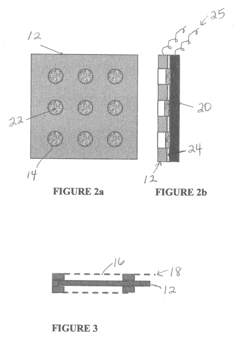
- The design incorporates an iron electrode with a plurality of channels and an interdigitated oxygen evolution reaction electrode, where at least a portion of the oxygen evolution reaction electrode is disposed within the channels perpendicular to the oxygen reduction reaction electrode, optimizing ionic transport and electrical contact.


Iron-air rechargeable battery
PatentActiveUS20120187918A1
Innovation
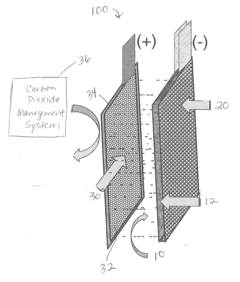
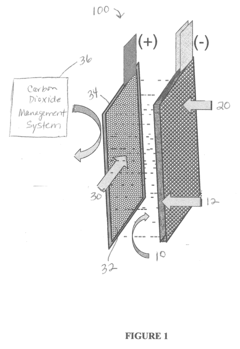
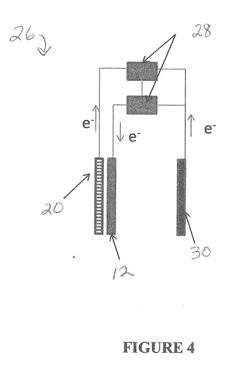
- Incorporating self-assembling organic sulfur-based additives to inhibit hydrogen evolution, using non-toxic bismuth additives to suppress parasitic reactions, integrating a bilayer composite electrode for hydrogen utilization, employing nano-structured corrosion-resistant substrates for the air electrode, and implementing a carbon dioxide management system to enhance efficiency and durability.
Safety Standards for Metal-Air Batteries in Consumer Devices
The development of iron-air batteries for consumer electronics necessitates adherence to comprehensive safety standards specifically designed for metal-air battery systems. Current regulatory frameworks primarily rely on adaptations of lithium-ion battery standards, including IEC 62133 and UL 2054, which require modifications to address the unique characteristics of metal-air chemistries. The electrochemical processes in iron-air batteries involve oxygen reduction and evolution reactions that present distinct safety considerations compared to conventional battery technologies.
Thermal management represents a critical safety parameter for iron-air batteries in consumer devices. These systems must comply with temperature cycling requirements ranging from -20°C to 60°C for consumer applications, with specific attention to thermal runaway prevention mechanisms. The exothermic nature of iron oxidation reactions requires implementation of thermal monitoring systems and fail-safe mechanisms to prevent overheating scenarios that could compromise device integrity or user safety.
Electrolyte containment and corrosion resistance standards are particularly stringent for iron-air batteries due to the alkaline electrolyte systems commonly employed. Safety protocols mandate robust sealing mechanisms to prevent electrolyte leakage, which could cause chemical burns or device damage. Materials compatibility testing must demonstrate long-term stability under various environmental conditions, including humidity exposure and mechanical stress scenarios typical in consumer electronics usage.
Electrical safety standards for iron-air batteries encompass voltage regulation, short-circuit protection, and electromagnetic compatibility requirements. The open-circuit voltage characteristics of iron-air systems necessitate specialized protection circuits to prevent overvoltage conditions during charging cycles. Additionally, the integration of air cathodes requires consideration of moisture ingress protection ratings, typically IP54 or higher, to maintain operational safety in diverse consumer environments.
Certification processes for iron-air batteries in consumer devices involve rigorous testing protocols including abuse testing, environmental stress screening, and long-term reliability assessments. These evaluations must demonstrate compliance with international safety standards while addressing the specific failure modes associated with metal-air battery technologies, ensuring consumer protection and market acceptance.
Thermal management represents a critical safety parameter for iron-air batteries in consumer devices. These systems must comply with temperature cycling requirements ranging from -20°C to 60°C for consumer applications, with specific attention to thermal runaway prevention mechanisms. The exothermic nature of iron oxidation reactions requires implementation of thermal monitoring systems and fail-safe mechanisms to prevent overheating scenarios that could compromise device integrity or user safety.
Electrolyte containment and corrosion resistance standards are particularly stringent for iron-air batteries due to the alkaline electrolyte systems commonly employed. Safety protocols mandate robust sealing mechanisms to prevent electrolyte leakage, which could cause chemical burns or device damage. Materials compatibility testing must demonstrate long-term stability under various environmental conditions, including humidity exposure and mechanical stress scenarios typical in consumer electronics usage.
Electrical safety standards for iron-air batteries encompass voltage regulation, short-circuit protection, and electromagnetic compatibility requirements. The open-circuit voltage characteristics of iron-air systems necessitate specialized protection circuits to prevent overvoltage conditions during charging cycles. Additionally, the integration of air cathodes requires consideration of moisture ingress protection ratings, typically IP54 or higher, to maintain operational safety in diverse consumer environments.
Certification processes for iron-air batteries in consumer devices involve rigorous testing protocols including abuse testing, environmental stress screening, and long-term reliability assessments. These evaluations must demonstrate compliance with international safety standards while addressing the specific failure modes associated with metal-air battery technologies, ensuring consumer protection and market acceptance.
Environmental Impact Assessment of Iron-Air Battery Technology
Iron-air battery technology presents a compelling environmental profile compared to conventional lithium-ion batteries, particularly in the context of consumer electronics applications. The fundamental advantage lies in the abundant availability of iron, which constitutes approximately 5% of the Earth's crust, eliminating concerns about resource scarcity that plague lithium-based systems. This abundance translates to significantly reduced mining pressure and associated environmental degradation typically linked to rare earth element extraction.
The manufacturing process of iron-air batteries demonstrates substantially lower carbon footprint characteristics. Iron production requires less energy-intensive processing compared to lithium extraction and refinement, resulting in approximately 60-70% reduction in manufacturing-related greenhouse gas emissions. Additionally, the absence of cobalt, nickel, and other problematic materials eliminates ethical sourcing concerns and reduces toxic waste generation during production phases.
Lifecycle assessment reveals remarkable advantages in the operational phase. Iron-air batteries exhibit exceptional recyclability, with iron components maintaining their chemical properties through multiple recycling cycles. The technology enables near-complete material recovery rates exceeding 95%, compared to 50-60% recovery rates typical in lithium-ion systems. This circular economy potential significantly reduces long-term environmental burden and resource consumption.
End-of-life management presents minimal environmental challenges. Iron-air batteries contain no hazardous heavy metals or toxic electrolytes that require specialized disposal procedures. The iron electrodes can be directly recycled into steel production or other industrial applications, while the air electrode components are largely composed of carbon-based materials that pose minimal environmental risks.
However, certain environmental considerations require attention. The current energy density limitations of iron-air technology may necessitate larger battery units for equivalent performance, potentially increasing material consumption per device. Manufacturing scalability challenges could temporarily result in higher per-unit environmental costs during initial commercialization phases.
Water usage during manufacturing processes represents another consideration, though significantly lower than lithium processing requirements. The technology's sensitivity to humidity may require controlled manufacturing environments, potentially increasing energy consumption for environmental control systems.
Overall, iron-air battery technology demonstrates superior environmental sustainability metrics across most impact categories, positioning it as an environmentally responsible alternative for consumer electronics applications while supporting global sustainability objectives.
The manufacturing process of iron-air batteries demonstrates substantially lower carbon footprint characteristics. Iron production requires less energy-intensive processing compared to lithium extraction and refinement, resulting in approximately 60-70% reduction in manufacturing-related greenhouse gas emissions. Additionally, the absence of cobalt, nickel, and other problematic materials eliminates ethical sourcing concerns and reduces toxic waste generation during production phases.
Lifecycle assessment reveals remarkable advantages in the operational phase. Iron-air batteries exhibit exceptional recyclability, with iron components maintaining their chemical properties through multiple recycling cycles. The technology enables near-complete material recovery rates exceeding 95%, compared to 50-60% recovery rates typical in lithium-ion systems. This circular economy potential significantly reduces long-term environmental burden and resource consumption.
End-of-life management presents minimal environmental challenges. Iron-air batteries contain no hazardous heavy metals or toxic electrolytes that require specialized disposal procedures. The iron electrodes can be directly recycled into steel production or other industrial applications, while the air electrode components are largely composed of carbon-based materials that pose minimal environmental risks.
However, certain environmental considerations require attention. The current energy density limitations of iron-air technology may necessitate larger battery units for equivalent performance, potentially increasing material consumption per device. Manufacturing scalability challenges could temporarily result in higher per-unit environmental costs during initial commercialization phases.
Water usage during manufacturing processes represents another consideration, though significantly lower than lithium processing requirements. The technology's sensitivity to humidity may require controlled manufacturing environments, potentially increasing energy consumption for environmental control systems.
Overall, iron-air battery technology demonstrates superior environmental sustainability metrics across most impact categories, positioning it as an environmentally responsible alternative for consumer electronics applications while supporting global sustainability objectives.
Unlock deeper insights with PatSnap Eureka Quick Research — get a full tech report to explore trends and direct your research. Try now!
Generate Your Research Report Instantly with AI Agent
Supercharge your innovation with PatSnap Eureka AI Agent Platform!