Developing Smart Material Integration in Biomimetic Actuators
APR 20, 20269 MIN READ
Generate Your Research Report Instantly with AI Agent
Patsnap Eureka helps you evaluate technical feasibility & market potential.
Smart Material Biomimetic Actuator Development Goals
The development of smart material integration in biomimetic actuators represents a convergence of biological inspiration and advanced materials science, aiming to create next-generation actuation systems that replicate the efficiency, adaptability, and multifunctionality observed in natural organisms. This technological pursuit has evolved from early pneumatic and hydraulic systems to sophisticated material-based solutions that can respond dynamically to environmental stimuli while maintaining the elegant simplicity found in biological systems.
The historical trajectory of this field began with fundamental research into biological locomotion mechanisms in the 1960s, progressing through the development of shape memory alloys in the 1980s, and advancing to today's integration of multiple smart material platforms including electroactive polymers, magnetic shape memory alloys, and hybrid composite systems. This evolution reflects an increasing understanding of how biological systems achieve remarkable performance through material property optimization rather than complex mechanical assemblies.
Current technological objectives center on achieving seamless integration between different smart material platforms to create actuators that can simultaneously exhibit multiple biological characteristics such as self-healing, adaptive stiffness modulation, and energy-efficient operation. The primary goal involves developing materials that can transition between different actuation modes based on environmental feedback, mimicking how biological muscles can switch between power and precision modes depending on task requirements.
A critical development target focuses on creating actuators with embedded sensing capabilities that enable real-time performance optimization and fault detection. This biomimetic approach draws inspiration from proprioceptive systems in biological organisms, where sensory feedback continuously informs motor control decisions. The integration challenge involves developing materials that can simultaneously serve as actuators, sensors, and processing elements within a unified system architecture.
The field aims to achieve significant improvements in power-to-weight ratios, response times, and operational lifespans compared to conventional actuator technologies. Specific targets include developing actuators capable of generating forces comparable to biological muscles while operating at frequencies suitable for dynamic applications such as robotics, prosthetics, and adaptive structures.
Long-term objectives encompass the development of self-assembling and self-repairing actuator systems that can adapt their performance characteristics based on usage patterns and environmental conditions. This represents a paradigm shift toward truly autonomous actuator systems that embody the resilience and adaptability characteristics that make biological systems so remarkably effective across diverse operational environments.
The historical trajectory of this field began with fundamental research into biological locomotion mechanisms in the 1960s, progressing through the development of shape memory alloys in the 1980s, and advancing to today's integration of multiple smart material platforms including electroactive polymers, magnetic shape memory alloys, and hybrid composite systems. This evolution reflects an increasing understanding of how biological systems achieve remarkable performance through material property optimization rather than complex mechanical assemblies.
Current technological objectives center on achieving seamless integration between different smart material platforms to create actuators that can simultaneously exhibit multiple biological characteristics such as self-healing, adaptive stiffness modulation, and energy-efficient operation. The primary goal involves developing materials that can transition between different actuation modes based on environmental feedback, mimicking how biological muscles can switch between power and precision modes depending on task requirements.
A critical development target focuses on creating actuators with embedded sensing capabilities that enable real-time performance optimization and fault detection. This biomimetic approach draws inspiration from proprioceptive systems in biological organisms, where sensory feedback continuously informs motor control decisions. The integration challenge involves developing materials that can simultaneously serve as actuators, sensors, and processing elements within a unified system architecture.
The field aims to achieve significant improvements in power-to-weight ratios, response times, and operational lifespans compared to conventional actuator technologies. Specific targets include developing actuators capable of generating forces comparable to biological muscles while operating at frequencies suitable for dynamic applications such as robotics, prosthetics, and adaptive structures.
Long-term objectives encompass the development of self-assembling and self-repairing actuator systems that can adapt their performance characteristics based on usage patterns and environmental conditions. This represents a paradigm shift toward truly autonomous actuator systems that embody the resilience and adaptability characteristics that make biological systems so remarkably effective across diverse operational environments.
Market Demand for Biomimetic Smart Actuator Systems
The global market for biomimetic smart actuator systems is experiencing unprecedented growth driven by increasing demand across multiple high-value sectors. Healthcare applications represent the largest market segment, with surgical robotics requiring precise, biocompatible actuators that can replicate natural muscle movements. The aging global population and rising prevalence of chronic diseases are fueling demand for advanced prosthetics and rehabilitation devices that incorporate smart materials for enhanced functionality and user experience.
Aerospace and defense industries constitute another significant market driver, seeking lightweight, adaptive actuators for morphing aircraft wings, autonomous systems, and space exploration equipment. The commercial aviation sector's focus on fuel efficiency and performance optimization creates substantial opportunities for biomimetic actuators that can dynamically adjust aerodynamic surfaces based on flight conditions.
The robotics industry shows particularly strong growth potential, with humanoid robots and soft robotics applications requiring actuators that mimic biological systems. Industrial automation increasingly demands flexible, intelligent actuators capable of handling delicate tasks while maintaining precision and reliability. Consumer electronics manufacturers are exploring miniaturized biomimetic actuators for haptic feedback systems and adaptive interfaces.
Automotive applications are emerging as a promising market segment, with electric and autonomous vehicles requiring sophisticated actuator systems for adaptive suspension, active aerodynamics, and human-machine interfaces. The transition toward sustainable transportation solutions aligns well with the energy-efficient characteristics of smart material-based actuators.
Market growth is further accelerated by advances in material science, particularly shape memory alloys, electroactive polymers, and piezoelectric materials. These developments enable new applications previously considered technically unfeasible or economically unviable.
Regional demand patterns show strong growth in North America and Europe, driven by established aerospace and medical device industries. Asia-Pacific markets demonstrate rapid expansion, particularly in robotics and consumer electronics applications, supported by significant manufacturing capabilities and technological innovation.
The market faces challenges including high development costs, complex manufacturing processes, and regulatory requirements in medical applications. However, increasing investment in research and development, coupled with growing awareness of biomimetic solutions' advantages, continues to drive market expansion across diverse application domains.
Aerospace and defense industries constitute another significant market driver, seeking lightweight, adaptive actuators for morphing aircraft wings, autonomous systems, and space exploration equipment. The commercial aviation sector's focus on fuel efficiency and performance optimization creates substantial opportunities for biomimetic actuators that can dynamically adjust aerodynamic surfaces based on flight conditions.
The robotics industry shows particularly strong growth potential, with humanoid robots and soft robotics applications requiring actuators that mimic biological systems. Industrial automation increasingly demands flexible, intelligent actuators capable of handling delicate tasks while maintaining precision and reliability. Consumer electronics manufacturers are exploring miniaturized biomimetic actuators for haptic feedback systems and adaptive interfaces.
Automotive applications are emerging as a promising market segment, with electric and autonomous vehicles requiring sophisticated actuator systems for adaptive suspension, active aerodynamics, and human-machine interfaces. The transition toward sustainable transportation solutions aligns well with the energy-efficient characteristics of smart material-based actuators.
Market growth is further accelerated by advances in material science, particularly shape memory alloys, electroactive polymers, and piezoelectric materials. These developments enable new applications previously considered technically unfeasible or economically unviable.
Regional demand patterns show strong growth in North America and Europe, driven by established aerospace and medical device industries. Asia-Pacific markets demonstrate rapid expansion, particularly in robotics and consumer electronics applications, supported by significant manufacturing capabilities and technological innovation.
The market faces challenges including high development costs, complex manufacturing processes, and regulatory requirements in medical applications. However, increasing investment in research and development, coupled with growing awareness of biomimetic solutions' advantages, continues to drive market expansion across diverse application domains.
Current State of Smart Material Integration Challenges
The integration of smart materials into biomimetic actuators faces significant technical barriers that limit widespread commercial adoption. Current manufacturing processes struggle to achieve precise control over material properties at multiple scales, from molecular alignment to macroscopic structure. This multi-scale challenge is particularly pronounced when attempting to replicate the hierarchical organization found in biological systems, where properties emerge from complex interactions between different structural levels.
Material compatibility represents another critical obstacle in smart material integration. Different smart materials often exhibit incompatible thermal expansion coefficients, chemical reactivity, and mechanical properties when combined in a single actuator system. Shape memory alloys, for instance, may require operating temperatures that degrade polymer-based electroactive materials, creating fundamental design conflicts that current engineering approaches cannot fully resolve.
The durability and reliability of integrated smart material systems remain problematic for practical applications. Repeated actuation cycles cause material fatigue, particularly at interfaces between different smart materials where stress concentrations develop. Current testing protocols indicate that most integrated systems experience significant performance degradation after 10,000 to 50,000 cycles, far below the millions of cycles required for commercial viability.
Control system complexity poses substantial challenges for real-time operation of multi-material actuators. Each smart material type responds to different stimuli with distinct time constants and nonlinear behaviors. Developing unified control algorithms that can simultaneously manage piezoelectric ceramics, electroactive polymers, and shape memory components requires sophisticated modeling approaches that current computational resources struggle to implement in real-time applications.
Power consumption and energy efficiency issues significantly constrain the practical deployment of smart material actuators. Many smart materials require high activation voltages or continuous power input to maintain desired positions, resulting in energy densities that are orders of magnitude higher than biological muscle systems. This energy penalty becomes particularly problematic in portable or autonomous applications where power availability is limited.
Manufacturing scalability presents economic barriers to widespread adoption. Current fabrication techniques for integrated smart material systems rely heavily on manual assembly processes and specialized equipment that cannot be easily scaled to high-volume production. The lack of standardized manufacturing protocols across different smart material types further complicates efforts to establish cost-effective production lines for commercial applications.
Material compatibility represents another critical obstacle in smart material integration. Different smart materials often exhibit incompatible thermal expansion coefficients, chemical reactivity, and mechanical properties when combined in a single actuator system. Shape memory alloys, for instance, may require operating temperatures that degrade polymer-based electroactive materials, creating fundamental design conflicts that current engineering approaches cannot fully resolve.
The durability and reliability of integrated smart material systems remain problematic for practical applications. Repeated actuation cycles cause material fatigue, particularly at interfaces between different smart materials where stress concentrations develop. Current testing protocols indicate that most integrated systems experience significant performance degradation after 10,000 to 50,000 cycles, far below the millions of cycles required for commercial viability.
Control system complexity poses substantial challenges for real-time operation of multi-material actuators. Each smart material type responds to different stimuli with distinct time constants and nonlinear behaviors. Developing unified control algorithms that can simultaneously manage piezoelectric ceramics, electroactive polymers, and shape memory components requires sophisticated modeling approaches that current computational resources struggle to implement in real-time applications.
Power consumption and energy efficiency issues significantly constrain the practical deployment of smart material actuators. Many smart materials require high activation voltages or continuous power input to maintain desired positions, resulting in energy densities that are orders of magnitude higher than biological muscle systems. This energy penalty becomes particularly problematic in portable or autonomous applications where power availability is limited.
Manufacturing scalability presents economic barriers to widespread adoption. Current fabrication techniques for integrated smart material systems rely heavily on manual assembly processes and specialized equipment that cannot be easily scaled to high-volume production. The lack of standardized manufacturing protocols across different smart material types further complicates efforts to establish cost-effective production lines for commercial applications.
Existing Smart Material Integration Solutions
01 Shape memory alloys and polymers in biomimetic actuators
Shape memory materials, including alloys and polymers, are integrated into biomimetic actuators to enable reversible shape changes in response to external stimuli such as temperature or electrical signals. These materials can mimic natural muscle contraction and expansion, providing precise control over actuator movement. The integration of shape memory materials allows for compact, lightweight actuator designs with high force-to-weight ratios suitable for robotic and prosthetic applications.- Shape memory alloys and polymers in biomimetic actuators: Shape memory materials, including alloys and polymers, are integrated into biomimetic actuators to enable reversible shape changes in response to external stimuli such as temperature or electrical signals. These materials can mimic natural muscle contraction and expansion, providing efficient actuation mechanisms. The integration allows for compact designs with high force-to-weight ratios and precise control over movement patterns.
- Electroactive polymers for artificial muscle systems: Electroactive polymers serve as artificial muscles in biomimetic actuators by converting electrical energy directly into mechanical motion. These smart materials respond to electrical stimulation by changing shape, size, or stiffness, enabling lifelike movements. The technology provides advantages in terms of flexibility, lightweight construction, and energy efficiency compared to traditional actuator systems.
- Piezoelectric materials for precision actuation: Piezoelectric materials are incorporated into biomimetic actuators to achieve high-precision positioning and rapid response times. These materials generate mechanical displacement when subjected to electric fields, enabling fine control over actuator movements. The integration is particularly useful for applications requiring micro-scale actuation and high-frequency operation in biomimetic systems.
- Hydrogel-based responsive actuators: Hydrogels with stimuli-responsive properties are utilized in biomimetic actuators to create soft, flexible actuation systems. These materials can undergo significant volume changes in response to environmental factors such as pH, temperature, or humidity, mimicking biological tissue behavior. The integration enables the development of biocompatible actuators suitable for medical and robotic applications.
- Composite smart material structures for enhanced performance: Composite structures combining multiple smart materials are designed to optimize actuator performance by leveraging the complementary properties of different materials. These hybrid systems can achieve improved force output, response speed, and durability compared to single-material actuators. The integration approach allows for customization of actuator characteristics to meet specific biomimetic application requirements.
02 Electroactive polymers for artificial muscle systems
Electroactive polymers are utilized as smart materials in biomimetic actuators to create artificial muscle systems that respond to electrical stimulation. These polymers can undergo significant deformation when subjected to electric fields, enabling motion that closely resembles biological muscle behavior. The integration of electroactive polymers provides advantages in terms of flexibility, scalability, and energy efficiency for soft robotic applications.Expand Specific Solutions03 Piezoelectric materials for precision actuation
Piezoelectric materials are incorporated into biomimetic actuators to achieve high-precision motion control through the conversion of electrical energy into mechanical displacement. These materials enable rapid response times and fine positioning capabilities, making them suitable for micro-scale and nano-scale actuation applications. The integration of piezoelectric elements allows for the development of actuators with minimal power consumption and high reliability.Expand Specific Solutions04 Hydrogel-based responsive actuators
Hydrogels are employed as smart materials in biomimetic actuators due to their ability to undergo volumetric changes in response to environmental stimuli such as pH, temperature, or humidity. These materials can absorb and release water, creating expansion and contraction movements that mimic biological tissues. The integration of hydrogels enables the development of soft, biocompatible actuators suitable for medical devices and wearable technologies.Expand Specific Solutions05 Composite material systems for enhanced actuation performance
Composite materials combining multiple smart material types are integrated into biomimetic actuators to achieve enhanced performance characteristics such as increased force output, improved durability, and multi-modal responsiveness. These hybrid systems leverage the complementary properties of different materials to overcome individual limitations. The integration of composite structures allows for customizable actuation profiles tailored to specific application requirements in robotics and automation.Expand Specific Solutions
Key Players in Smart Material and Biomimetic Industry
The smart material integration in biomimetic actuators field represents an emerging technology sector in its early development stage, characterized by significant research activity but limited commercial deployment. The market remains nascent with substantial growth potential as applications span robotics, medical devices, and aerospace systems. Technology maturity varies considerably across the competitive landscape, with leading Chinese research institutions like Zhejiang University, Harbin Institute of Technology, and Xi'an Jiaotong University driving fundamental research in materials science and actuator design. Beihang University and Nanjing University of Aeronautics & Astronautics contribute aerospace-focused innovations, while Huazhong University of Science & Technology and Beijing Institute of Nanoenergy & Nanosystems advance nanotechnology integration. Industrial players including GM Global Technology Operations and AsclepiX Therapeutics represent early commercial applications, though most development remains concentrated in academic settings, indicating the technology requires further maturation before widespread market adoption.
Beihang University
Technical Solution: Beihang University focuses on biomimetic actuators using dielectric elastomers (DEs) combined with smart material integration for aerospace and robotics applications. Their technology incorporates self-healing polymers with embedded conductive networks that mimic biological neural pathways for distributed actuation control. The university has developed actuators that integrate multiple smart material functionalities including self-sensing, self-healing, and adaptive stiffness control through the use of magnetorheological elastomers and electroactive polymers in layered configurations.
Strengths: Self-healing capabilities and distributed control systems, strong aerospace engineering background. Weaknesses: Complex material synthesis processes and limited long-term reliability data for integrated systems.
Huazhong University of Science & Technology
Technical Solution: Huazhong University of Science & Technology has developed innovative biomimetic actuators using liquid crystal elastomers (LCEs) integrated with photoresponsive smart materials for light-driven actuation. Their research combines thermally activated shape memory materials with optically controlled polymers to create actuators that can respond to multiple stimuli simultaneously. The university focuses on creating artificial muscle systems that integrate conductive polymers with biomimetic fiber arrangements, achieving actuation forces comparable to natural muscle tissue while maintaining flexibility and durability through advanced material engineering.
Strengths: Multi-stimuli responsive capabilities and strong biomimetic design principles, innovative use of optical control. Weaknesses: Limited power output compared to traditional actuators and dependency on external light sources.
Core Innovations in Biomimetic Actuator Design
Vapor pressure solid articles and methods for making and using the same
PatentWO2017096068A1
Innovation
- Vapor pressure solid articles composed of matrix materials infused with vaporizable fluids, which expand and contract due to phase transitions, eliminating the need for mechanical components and enabling controlled actuation through electrical heating, allowing for adaptive functionality in 'smart' materials.


Smart soft composite actuator
PatentActiveUS20150001994A1
Innovation
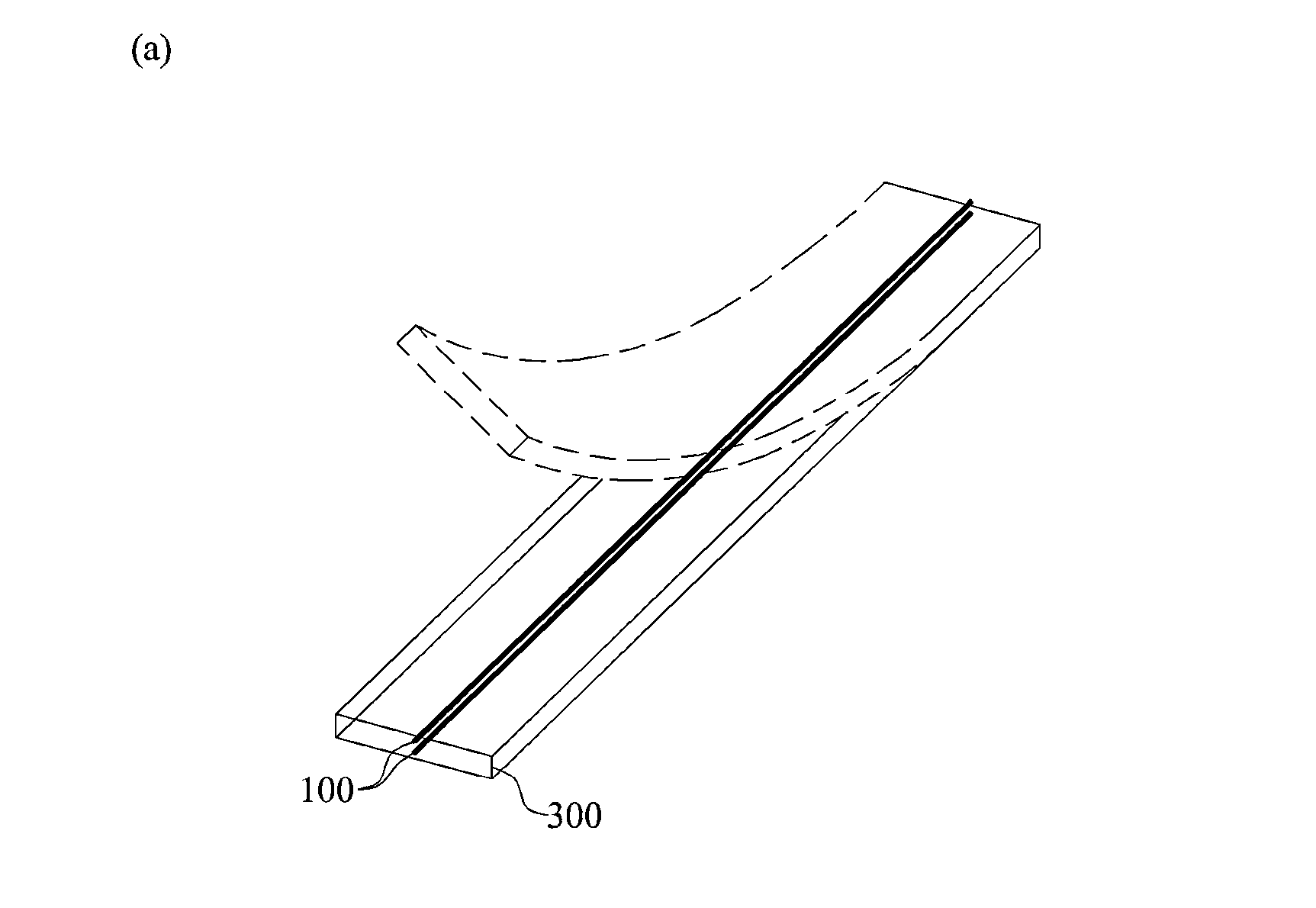
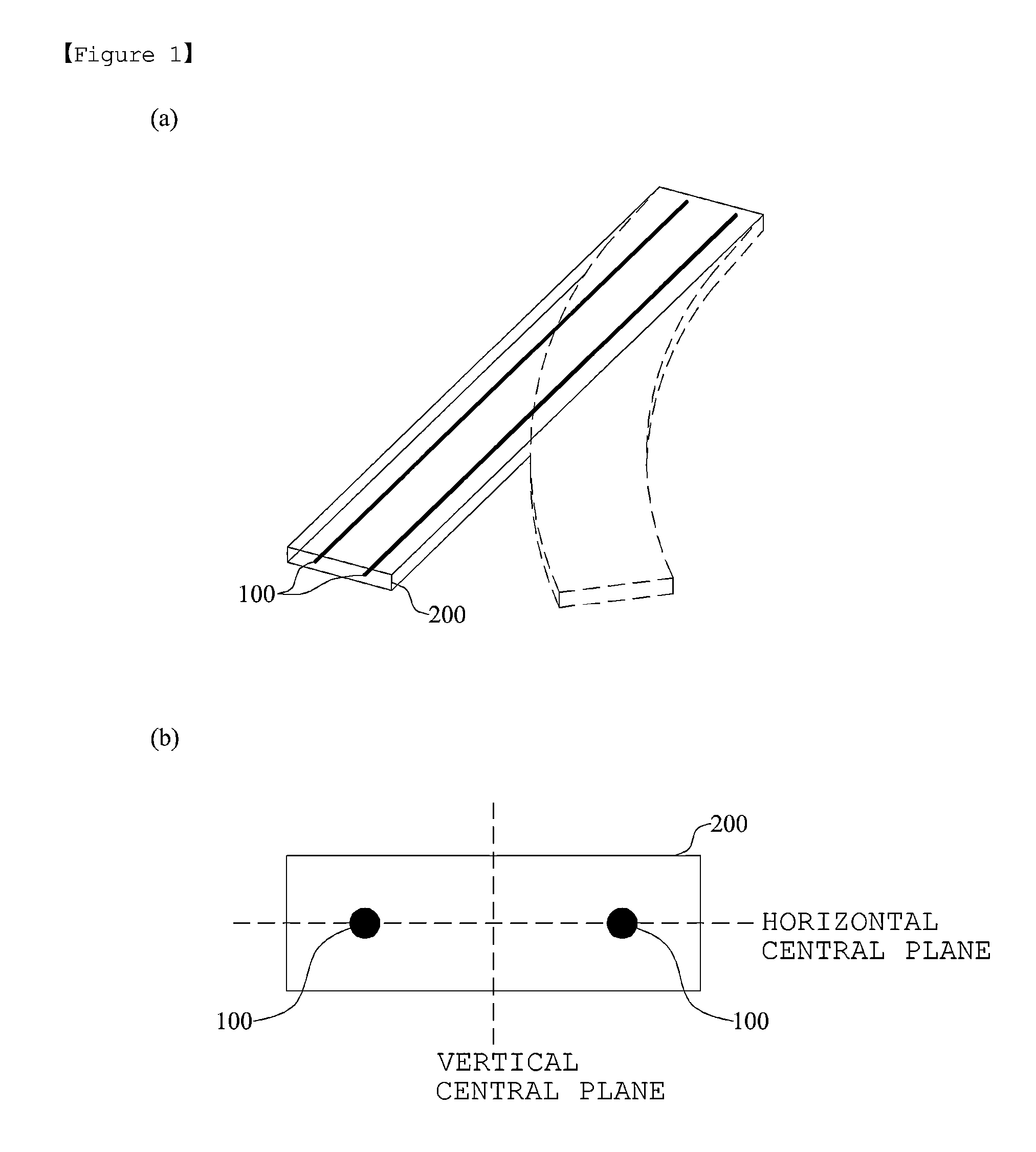
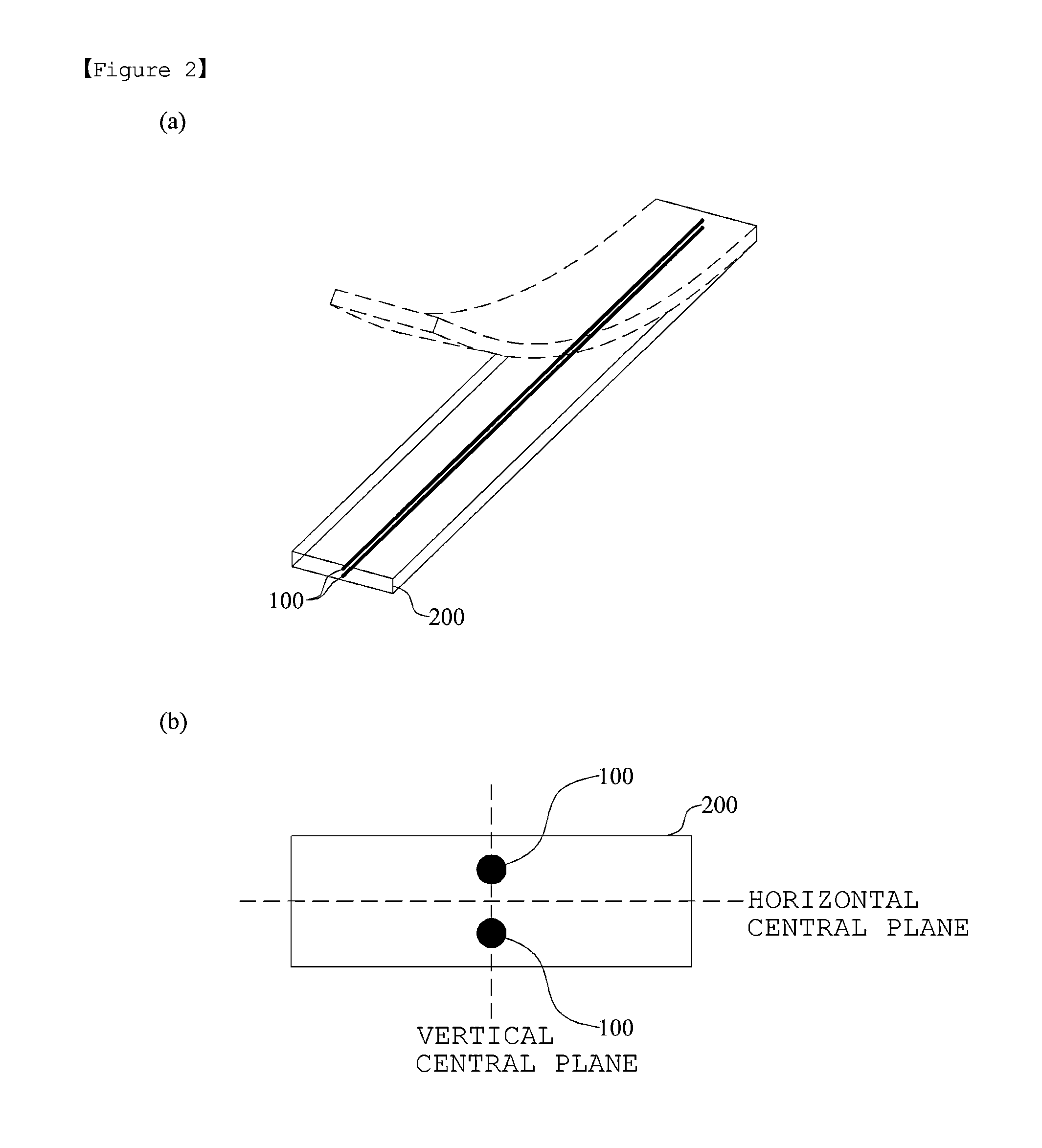
- A smart soft composite actuator is developed, comprising a shape-changing smart material and a directional material within a soft matrix, allowing for controlled in-plane shear, out-of-plane deformation, and twisting by adjusting the position and directionality of the smart and directional materials.

Environmental Impact of Smart Material Manufacturing
The manufacturing of smart materials for biomimetic actuators presents significant environmental challenges that require comprehensive assessment and mitigation strategies. Traditional production methods for shape memory alloys, electroactive polymers, and piezoelectric materials often involve energy-intensive processes, toxic solvents, and rare earth elements extraction, contributing to substantial carbon footprints and ecological disruption.
Shape memory alloy production, particularly for nickel-titanium based actuators, generates considerable environmental impact through mining operations and high-temperature processing requirements. The extraction of titanium involves chloride processes that produce hazardous waste streams, while nickel mining operations can lead to soil contamination and water pollution. Manufacturing facilities typically consume 15-20 MWh of energy per kilogram of processed alloy, resulting in significant greenhouse gas emissions.
Electroactive polymer synthesis presents additional environmental concerns through the use of organic solvents and chemical catalysts. The production of ionic polymer-metal composites requires electroplating processes that generate heavy metal waste, while dielectric elastomers rely on silicone-based materials derived from petroleum feedstocks. Solvent recovery systems and waste treatment facilities are essential but add complexity and cost to manufacturing operations.
Piezoelectric ceramic manufacturing involves high-temperature sintering processes that consume substantial energy and may release volatile compounds. Lead-based piezoelectric materials pose particular environmental risks due to toxicity concerns, driving industry transition toward lead-free alternatives despite performance trade-offs.
Emerging sustainable manufacturing approaches include bio-based polymer synthesis, solvent-free processing techniques, and closed-loop recycling systems. Green chemistry principles are being integrated into smart material production through the development of water-based synthesis routes and renewable feedstock utilization. Life cycle assessment methodologies are increasingly employed to quantify environmental impacts and guide material selection decisions.
The implementation of circular economy principles in smart material manufacturing involves designing for recyclability, developing material recovery processes, and establishing take-back programs for end-of-life actuator systems. Advanced recycling technologies, including chemical depolymerization and selective metal recovery, show promise for reducing raw material demands and minimizing waste generation in future manufacturing operations.
Shape memory alloy production, particularly for nickel-titanium based actuators, generates considerable environmental impact through mining operations and high-temperature processing requirements. The extraction of titanium involves chloride processes that produce hazardous waste streams, while nickel mining operations can lead to soil contamination and water pollution. Manufacturing facilities typically consume 15-20 MWh of energy per kilogram of processed alloy, resulting in significant greenhouse gas emissions.
Electroactive polymer synthesis presents additional environmental concerns through the use of organic solvents and chemical catalysts. The production of ionic polymer-metal composites requires electroplating processes that generate heavy metal waste, while dielectric elastomers rely on silicone-based materials derived from petroleum feedstocks. Solvent recovery systems and waste treatment facilities are essential but add complexity and cost to manufacturing operations.
Piezoelectric ceramic manufacturing involves high-temperature sintering processes that consume substantial energy and may release volatile compounds. Lead-based piezoelectric materials pose particular environmental risks due to toxicity concerns, driving industry transition toward lead-free alternatives despite performance trade-offs.
Emerging sustainable manufacturing approaches include bio-based polymer synthesis, solvent-free processing techniques, and closed-loop recycling systems. Green chemistry principles are being integrated into smart material production through the development of water-based synthesis routes and renewable feedstock utilization. Life cycle assessment methodologies are increasingly employed to quantify environmental impacts and guide material selection decisions.
The implementation of circular economy principles in smart material manufacturing involves designing for recyclability, developing material recovery processes, and establishing take-back programs for end-of-life actuator systems. Advanced recycling technologies, including chemical depolymerization and selective metal recovery, show promise for reducing raw material demands and minimizing waste generation in future manufacturing operations.
Safety Standards for Biomimetic Actuator Applications
The establishment of comprehensive safety standards for biomimetic actuator applications represents a critical foundation for the widespread adoption and commercialization of smart material-integrated systems. Current regulatory frameworks primarily address traditional mechanical actuators, creating significant gaps in addressing the unique characteristics and potential risks associated with biomimetic designs that incorporate shape memory alloys, electroactive polymers, and other responsive materials.
International standardization organizations, including ISO and IEC, are actively developing specialized protocols for biomimetic actuator safety assessment. These emerging standards focus on material biocompatibility, electromagnetic compatibility, and fail-safe mechanisms specific to smart material behaviors. The complexity arises from the need to evaluate both the base material properties and their dynamic responses under various environmental conditions.
Medical device applications demand the most stringent safety protocols, particularly for implantable biomimetic actuators. FDA guidelines now require extensive biocompatibility testing for smart materials, including long-term degradation studies and immune response evaluations. European CE marking requirements have similarly evolved to address the unique challenges posed by adaptive materials that change properties during operation.
Industrial applications face different safety considerations, primarily focusing on operational reliability and worker protection. OSHA and equivalent international bodies are developing guidelines for workplace exposure to electromagnetic fields generated by electroactive polymer actuators and potential chemical emissions from thermally activated smart materials.
The automotive and aerospace sectors have established sector-specific safety standards that address the integration of biomimetic actuators in critical systems. These standards emphasize redundancy requirements, predictable failure modes, and real-time monitoring capabilities to ensure system integrity under extreme operating conditions.
Testing methodologies for biomimetic actuator safety verification continue to evolve, incorporating accelerated aging protocols, cyclic loading assessments, and environmental stress screening procedures. These comprehensive testing frameworks ensure that smart material integration maintains safety performance throughout the expected operational lifetime while accounting for the unique degradation patterns of responsive materials.
International standardization organizations, including ISO and IEC, are actively developing specialized protocols for biomimetic actuator safety assessment. These emerging standards focus on material biocompatibility, electromagnetic compatibility, and fail-safe mechanisms specific to smart material behaviors. The complexity arises from the need to evaluate both the base material properties and their dynamic responses under various environmental conditions.
Medical device applications demand the most stringent safety protocols, particularly for implantable biomimetic actuators. FDA guidelines now require extensive biocompatibility testing for smart materials, including long-term degradation studies and immune response evaluations. European CE marking requirements have similarly evolved to address the unique challenges posed by adaptive materials that change properties during operation.
Industrial applications face different safety considerations, primarily focusing on operational reliability and worker protection. OSHA and equivalent international bodies are developing guidelines for workplace exposure to electromagnetic fields generated by electroactive polymer actuators and potential chemical emissions from thermally activated smart materials.
The automotive and aerospace sectors have established sector-specific safety standards that address the integration of biomimetic actuators in critical systems. These standards emphasize redundancy requirements, predictable failure modes, and real-time monitoring capabilities to ensure system integrity under extreme operating conditions.
Testing methodologies for biomimetic actuator safety verification continue to evolve, incorporating accelerated aging protocols, cyclic loading assessments, and environmental stress screening procedures. These comprehensive testing frameworks ensure that smart material integration maintains safety performance throughout the expected operational lifetime while accounting for the unique degradation patterns of responsive materials.
Unlock deeper insights with Patsnap Eureka Quick Research — get a full tech report to explore trends and direct your research. Try now!
Generate Your Research Report Instantly with AI Agent
Supercharge your innovation with Patsnap Eureka AI Agent Platform!