

Development Timing for Preventative Thermal Runaway Systems
FEB 26, 20269 MIN READ
Generate Your Research Report Instantly with AI Agent
PatSnap Eureka helps you evaluate technical feasibility & market potential.
Thermal Runaway Prevention Background and Objectives
Thermal runaway represents one of the most critical safety challenges in lithium-ion battery technology, characterized by an uncontrolled chain reaction where increasing temperatures trigger further heat generation, potentially leading to fire, explosion, or toxic gas release. This phenomenon occurs when the heat generation rate within a battery cell exceeds the heat dissipation rate, creating a self-sustaining cycle of temperature escalation that can propagate throughout entire battery systems.
The evolution of thermal runaway prevention systems has been driven by the exponential growth of battery applications across multiple sectors. Early battery management systems primarily focused on basic voltage and current monitoring, but the increasing energy density of modern lithium-ion cells and their deployment in high-stakes applications such as electric vehicles, energy storage systems, and aerospace applications have necessitated more sophisticated preventative approaches.
Historical development in this field began with passive safety measures, including flame-retardant electrolytes and ceramic separators designed to shut down cell operation at elevated temperatures. However, these reactive approaches proved insufficient for high-energy applications where thermal events could escalate rapidly beyond containment capabilities.
The technological trajectory has progressively shifted toward predictive and preventative methodologies that can identify thermal runaway precursors before critical temperature thresholds are reached. Advanced sensor integration, including temperature arrays, gas detection systems, and impedance monitoring, has enabled real-time assessment of cell health and early warning capabilities.
Current objectives in preventative thermal runaway systems center on developing multi-layered detection architectures that combine thermal modeling, electrochemical impedance spectroscopy, and machine learning algorithms to predict thermal events with sufficient lead time for intervention. These systems aim to achieve detection sensitivity capable of identifying thermal runaway initiation within seconds rather than minutes, providing adequate response time for protective measures.
The strategic goal encompasses not only detection accuracy but also system integration challenges, including communication protocols between battery management systems and vehicle or grid-level safety systems. Furthermore, the development timeline must address regulatory compliance requirements across different markets while maintaining cost-effectiveness for mass deployment in consumer and industrial applications.
The evolution of thermal runaway prevention systems has been driven by the exponential growth of battery applications across multiple sectors. Early battery management systems primarily focused on basic voltage and current monitoring, but the increasing energy density of modern lithium-ion cells and their deployment in high-stakes applications such as electric vehicles, energy storage systems, and aerospace applications have necessitated more sophisticated preventative approaches.
Historical development in this field began with passive safety measures, including flame-retardant electrolytes and ceramic separators designed to shut down cell operation at elevated temperatures. However, these reactive approaches proved insufficient for high-energy applications where thermal events could escalate rapidly beyond containment capabilities.
The technological trajectory has progressively shifted toward predictive and preventative methodologies that can identify thermal runaway precursors before critical temperature thresholds are reached. Advanced sensor integration, including temperature arrays, gas detection systems, and impedance monitoring, has enabled real-time assessment of cell health and early warning capabilities.
Current objectives in preventative thermal runaway systems center on developing multi-layered detection architectures that combine thermal modeling, electrochemical impedance spectroscopy, and machine learning algorithms to predict thermal events with sufficient lead time for intervention. These systems aim to achieve detection sensitivity capable of identifying thermal runaway initiation within seconds rather than minutes, providing adequate response time for protective measures.
The strategic goal encompasses not only detection accuracy but also system integration challenges, including communication protocols between battery management systems and vehicle or grid-level safety systems. Furthermore, the development timeline must address regulatory compliance requirements across different markets while maintaining cost-effectiveness for mass deployment in consumer and industrial applications.
Market Demand for Battery Safety Systems
The global battery safety systems market is experiencing unprecedented growth driven by the rapid expansion of electric vehicle adoption and energy storage applications. Automotive manufacturers are increasingly prioritizing thermal runaway prevention as a critical safety requirement, particularly following high-profile battery incidents that have heightened regulatory scrutiny and consumer awareness. This heightened focus has created substantial demand for advanced preventative thermal runaway systems across multiple industry segments.
Electric vehicle manufacturers represent the largest demand segment, with major automakers implementing comprehensive battery safety protocols that extend beyond basic thermal management. The integration of preventative thermal runaway systems has become a standard requirement rather than an optional feature, driven by both regulatory compliance and brand protection considerations. Commercial vehicle fleets and public transportation systems are particularly demanding robust safety solutions due to their operational environments and passenger safety responsibilities.
Energy storage system deployments for grid-scale applications constitute another significant demand driver. Utility companies and independent power producers are mandating advanced thermal runaway prevention capabilities for large-scale battery installations, recognizing that system failures can result in substantial economic losses and operational disruptions. Residential and commercial energy storage markets are similarly emphasizing safety features as these systems become more prevalent in populated areas.
The aerospace and marine industries present specialized demand segments with stringent safety requirements. These applications require thermal runaway prevention systems that can operate reliably under extreme environmental conditions while maintaining minimal weight and space footprints. Defense applications further drive demand for ruggedized preventative systems capable of withstanding harsh operational scenarios.
Consumer electronics manufacturers are increasingly incorporating thermal runaway prevention technologies into high-capacity battery applications, particularly for professional equipment and power tools. The proliferation of portable power stations and backup power systems has created additional market demand for compact yet effective preventative solutions.
Regulatory frameworks across major markets are establishing mandatory safety standards that directly influence demand patterns. Insurance companies are beginning to factor thermal runaway prevention capabilities into coverage decisions, creating additional market pressure for comprehensive safety systems. This regulatory and financial ecosystem is accelerating the transition from reactive thermal management approaches to proactive prevention strategies, establishing a robust foundation for sustained market growth.
Electric vehicle manufacturers represent the largest demand segment, with major automakers implementing comprehensive battery safety protocols that extend beyond basic thermal management. The integration of preventative thermal runaway systems has become a standard requirement rather than an optional feature, driven by both regulatory compliance and brand protection considerations. Commercial vehicle fleets and public transportation systems are particularly demanding robust safety solutions due to their operational environments and passenger safety responsibilities.
Energy storage system deployments for grid-scale applications constitute another significant demand driver. Utility companies and independent power producers are mandating advanced thermal runaway prevention capabilities for large-scale battery installations, recognizing that system failures can result in substantial economic losses and operational disruptions. Residential and commercial energy storage markets are similarly emphasizing safety features as these systems become more prevalent in populated areas.
The aerospace and marine industries present specialized demand segments with stringent safety requirements. These applications require thermal runaway prevention systems that can operate reliably under extreme environmental conditions while maintaining minimal weight and space footprints. Defense applications further drive demand for ruggedized preventative systems capable of withstanding harsh operational scenarios.
Consumer electronics manufacturers are increasingly incorporating thermal runaway prevention technologies into high-capacity battery applications, particularly for professional equipment and power tools. The proliferation of portable power stations and backup power systems has created additional market demand for compact yet effective preventative solutions.
Regulatory frameworks across major markets are establishing mandatory safety standards that directly influence demand patterns. Insurance companies are beginning to factor thermal runaway prevention capabilities into coverage decisions, creating additional market pressure for comprehensive safety systems. This regulatory and financial ecosystem is accelerating the transition from reactive thermal management approaches to proactive prevention strategies, establishing a robust foundation for sustained market growth.
Current Thermal Runaway Detection Challenges
Current thermal runaway detection systems face significant technological limitations that hinder their effectiveness in preventing catastrophic battery failures. The primary challenge lies in the inherently reactive nature of existing detection mechanisms, which typically identify thermal events only after the runaway process has already initiated. Most conventional systems rely on temperature threshold monitoring, which introduces critical delays as thermal runaway can propagate rapidly through battery cells within seconds, often faster than detection systems can respond.
Detection accuracy represents another fundamental obstacle in current implementations. Traditional thermal sensors exhibit insufficient sensitivity to detect the subtle precursor signals that precede thermal runaway events. The challenge is compounded by the need to distinguish between normal operational heating and abnormal thermal patterns that indicate impending failure. False positive rates remain problematically high, leading to unnecessary system shutdowns and reduced operational efficiency.
Spatial resolution limitations further constrain detection capabilities. Current sensor arrays often lack the granular monitoring required to pinpoint thermal anomalies at the individual cell level within large battery packs. This limitation is particularly pronounced in electric vehicle applications where hundreds of cells must be monitored simultaneously. The inability to isolate specific problem areas delays targeted intervention and increases the risk of thermal propagation to adjacent cells.
Integration complexity poses substantial technical barriers for widespread deployment. Existing detection systems struggle with seamless integration into diverse battery management architectures, particularly in retrofitting scenarios. The challenge extends to standardization issues, where different manufacturers employ varying detection protocols and communication interfaces, creating compatibility obstacles across platforms.
Real-time processing constraints represent a critical bottleneck in current detection methodologies. The computational demands of analyzing multiple sensor inputs simultaneously often exceed the processing capabilities of embedded systems, particularly when implementing advanced algorithms for predictive analysis. This limitation forces many systems to rely on simplified detection logic that may miss complex thermal patterns.
Environmental interference significantly impacts detection reliability in practical applications. Ambient temperature variations, electromagnetic interference, and mechanical vibrations can compromise sensor accuracy and introduce noise into detection algorithms. These factors are particularly problematic in automotive and aerospace applications where harsh operating conditions are common.
Cost considerations continue to limit the adoption of more sophisticated detection technologies. Advanced sensor arrays and high-performance processing units required for comprehensive thermal monitoring significantly increase system costs, making implementation challenging for cost-sensitive applications. This economic constraint often forces compromises in detection capability and coverage density.
Detection accuracy represents another fundamental obstacle in current implementations. Traditional thermal sensors exhibit insufficient sensitivity to detect the subtle precursor signals that precede thermal runaway events. The challenge is compounded by the need to distinguish between normal operational heating and abnormal thermal patterns that indicate impending failure. False positive rates remain problematically high, leading to unnecessary system shutdowns and reduced operational efficiency.
Spatial resolution limitations further constrain detection capabilities. Current sensor arrays often lack the granular monitoring required to pinpoint thermal anomalies at the individual cell level within large battery packs. This limitation is particularly pronounced in electric vehicle applications where hundreds of cells must be monitored simultaneously. The inability to isolate specific problem areas delays targeted intervention and increases the risk of thermal propagation to adjacent cells.
Integration complexity poses substantial technical barriers for widespread deployment. Existing detection systems struggle with seamless integration into diverse battery management architectures, particularly in retrofitting scenarios. The challenge extends to standardization issues, where different manufacturers employ varying detection protocols and communication interfaces, creating compatibility obstacles across platforms.
Real-time processing constraints represent a critical bottleneck in current detection methodologies. The computational demands of analyzing multiple sensor inputs simultaneously often exceed the processing capabilities of embedded systems, particularly when implementing advanced algorithms for predictive analysis. This limitation forces many systems to rely on simplified detection logic that may miss complex thermal patterns.
Environmental interference significantly impacts detection reliability in practical applications. Ambient temperature variations, electromagnetic interference, and mechanical vibrations can compromise sensor accuracy and introduce noise into detection algorithms. These factors are particularly problematic in automotive and aerospace applications where harsh operating conditions are common.
Cost considerations continue to limit the adoption of more sophisticated detection technologies. Advanced sensor arrays and high-performance processing units required for comprehensive thermal monitoring significantly increase system costs, making implementation challenging for cost-sensitive applications. This economic constraint often forces compromises in detection capability and coverage density.
Existing Preventative Thermal Runaway Solutions
01 Early detection and monitoring systems for thermal runaway prevention
Implementation of advanced sensor networks and monitoring systems that can detect early warning signs of thermal runaway conditions. These systems utilize temperature sensors, voltage monitoring, and pressure detection to identify abnormal conditions before thermal runaway occurs. Real-time data collection and analysis enable proactive intervention and system shutdown procedures to prevent catastrophic failures.- Early detection and monitoring systems for thermal runaway prevention: Systems that incorporate sensors and monitoring technologies to detect early signs of thermal runaway conditions in battery systems. These systems continuously monitor parameters such as temperature, voltage, and pressure to identify abnormal conditions before thermal runaway occurs. Advanced algorithms and data processing techniques are employed to analyze sensor data and trigger preventative actions when threshold values are exceeded.
- Active cooling and thermal management interventions: Technologies that implement active cooling mechanisms and thermal management strategies to prevent thermal runaway propagation. These systems include cooling circuits, heat dissipation structures, and temperature regulation devices that can be activated when elevated temperatures are detected. The interventions help maintain safe operating temperatures and prevent cascading failures across battery cells or modules.
- Predictive modeling and risk assessment algorithms: Advanced computational methods that utilize machine learning and predictive analytics to assess thermal runaway risks and optimize prevention timing. These systems analyze historical data, operating conditions, and degradation patterns to forecast potential thermal events. The algorithms enable proactive maintenance scheduling and intervention strategies based on predicted risk levels and system health status.
- Safety isolation and containment mechanisms: Structural and mechanical systems designed to isolate and contain thermal runaway events when they occur. These mechanisms include physical barriers, venting systems, and cell-to-cell isolation structures that prevent thermal propagation. The containment strategies are timed to activate at specific stages of thermal runaway development to minimize damage and protect surrounding components.
- Integrated control systems for coordinated prevention responses: Comprehensive control architectures that coordinate multiple prevention strategies and determine optimal intervention timing. These systems integrate detection, cooling, isolation, and shutdown functions into a unified framework. The control logic manages the sequence and timing of preventative actions based on real-time system status, ensuring efficient and effective thermal runaway prevention across different operational scenarios.
02 Thermal management and cooling system integration
Development of integrated thermal management solutions that actively regulate temperature within battery systems or energy storage devices. These systems incorporate cooling mechanisms, heat dissipation structures, and thermal barriers to maintain optimal operating temperatures. The timing of thermal management activation is critical to prevent temperature escalation that could lead to thermal runaway events.Expand Specific Solutions03 Predictive algorithms and machine learning for thermal runaway forecasting
Application of artificial intelligence and machine learning algorithms to predict potential thermal runaway events based on historical data and operational patterns. These predictive models analyze multiple parameters including charge cycles, temperature trends, and degradation patterns to forecast risk levels. The systems provide advance warnings allowing for preventative measures to be implemented before critical conditions develop.Expand Specific Solutions04 Safety isolation and containment mechanisms
Design and implementation of physical barriers and isolation systems that contain thermal runaway events and prevent propagation to adjacent cells or modules. These mechanisms include fire-resistant materials, venting systems, and automatic disconnection devices that activate when thermal runaway is detected. The timing of containment activation is crucial to limit damage and prevent cascade failures in multi-cell configurations.Expand Specific Solutions05 Battery management system coordination and emergency protocols
Integration of comprehensive battery management systems that coordinate multiple safety functions and execute emergency protocols when thermal runaway risks are identified. These systems manage charge and discharge rates, balance cell voltages, and implement staged shutdown procedures. The development timing focuses on ensuring rapid response capabilities and seamless coordination between detection, decision-making, and action phases to maximize safety outcomes.Expand Specific Solutions
Key Players in Battery Safety and Thermal Systems
The preventative thermal runaway systems market is in its early growth stage, driven by increasing electric vehicle adoption and stringent safety regulations. The market demonstrates significant expansion potential as battery technology proliferates across automotive, energy storage, and industrial applications. Technology maturity varies considerably among market participants, with established players like Contemporary Amperex Technology, Toyota Motor Corp., and Hyundai Mobis leveraging advanced R&D capabilities and manufacturing scale. Battery specialists such as EVE Energy and Cadenza Innovation focus on innovative cell designs and safety architectures, while materials companies like Aspen Aerogels and 3M Innovative Properties develop thermal barrier solutions. Traditional automotive suppliers including Cummins and component manufacturers are integrating thermal management systems into broader electrification strategies. The competitive landscape spans from mature corporations with extensive resources to specialized technology developers, indicating a dynamic market with diverse technological approaches and varying levels of commercial readiness across different thermal runaway prevention methodologies.
Aspen Aerogels, Inc.
Technical Solution: Aspen Aerogels specializes in advanced aerogel thermal barrier solutions specifically designed for battery thermal runaway prevention. Their PyroThin thermal barriers provide exceptional thermal insulation with thickness as low as 5-10mm while maintaining flexibility for battery pack integration. The company's aerogel materials can withstand temperatures exceeding 1000°C and provide thermal conductivity as low as 0.014 W/mK, significantly slowing thermal propagation between battery cells. Their solutions include both preventative insulation and emergency thermal containment systems.
Strengths: Specialized expertise in aerogel technology, proven thermal performance, lightweight solutions. Weaknesses: Limited to material solutions, requires integration with other detection systems, higher material costs.
Contemporary Amperex Technology Co., Ltd.
Technical Solution: CATL has developed comprehensive thermal runaway prevention systems including advanced Battery Management Systems (BMS) with real-time temperature monitoring, voltage tracking, and predictive analytics. Their Qilin battery technology incorporates multi-level thermal safety design with aerogel insulation materials and rapid cooling systems that can reduce battery temperature by 40°C within seconds. The company implements cell-level thermal barriers and has developed proprietary algorithms for early detection of thermal runaway precursors through electrochemical impedance spectroscopy and gas detection sensors.
Strengths: Leading market position in battery technology, extensive R&D capabilities, proven track record in EV applications. Weaknesses: High development costs, complex integration requirements for existing systems.
Core Technologies in Early Thermal Detection
Architecture and method of thermal runaway prognostics with multi-parameter data fusion
PatentActiveUS12224412B2
Innovation
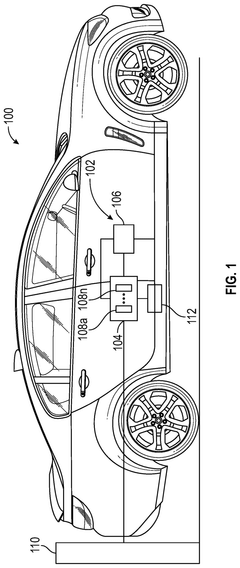
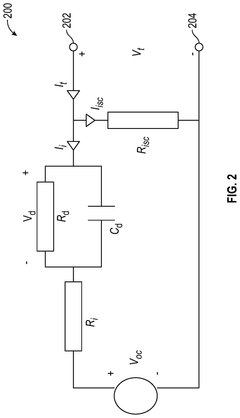
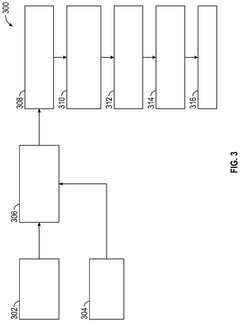
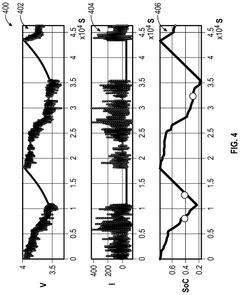
- A method and system that involve obtaining measurements of battery cell parameters over time, determining feature values from these measurements, calculating the likelihood of a thermal runaway event, and taking preventative actions based on this likelihood.
Thermal Runaway and Fire Detection and Prevention Device
PatentInactiveUS20140339920A1
Innovation
- A battery monitoring and control system that measures key parameters like float current, voltage, temperature, hydrogen levels, and smoke particulates, applies time delays to differentiate between temporary deviations and hazardous conditions, and activates alarms only when sustained deviations are detected, with the ability to disconnect the battery from the charging source to prevent thermal runaway and reconnect when safe.


Safety Standards and Regulatory Requirements
The regulatory landscape for preventative thermal runaway systems is rapidly evolving as battery technology advances and deployment scales increase across various industries. Current safety standards primarily focus on post-incident containment rather than prevention, creating a significant gap that new preventative technologies must navigate. The International Electrotechnical Commission (IEC) and Underwriters Laboratories (UL) are actively developing updated standards that will specifically address predictive thermal management systems.
Existing regulations such as UL 9540A for energy storage systems and IEC 62619 for lithium-ion batteries provide foundational safety requirements but lack comprehensive guidelines for preventative thermal runaway detection and mitigation technologies. These standards currently emphasize passive safety measures and emergency response protocols, leaving preventative systems to operate within broader safety frameworks that may not fully capture their unique operational characteristics.
The automotive sector leads regulatory development through ISO 26262 functional safety standards and UN ECE regulations, which increasingly recognize the importance of predictive safety systems. These frameworks establish requirements for fault detection, system reliability, and fail-safe operations that directly impact preventative thermal runaway system design. The aviation industry follows similar principles under DO-178C and DO-254 standards, emphasizing software and hardware reliability for safety-critical systems.
Emerging regulatory trends indicate a shift toward performance-based standards rather than prescriptive requirements, allowing innovative preventative technologies to demonstrate safety through validated testing protocols. The National Fire Protection Association (NFPA) is developing new codes that will likely mandate predictive thermal monitoring for large-scale battery installations, particularly in stationary energy storage applications.
Regional regulatory variations present additional complexity, with European Union regulations emphasizing precautionary principles while North American standards focus on demonstrated performance. Asian markets, particularly China and Japan, are developing parallel regulatory frameworks that may diverge from Western approaches, potentially creating multiple compliance pathways for global manufacturers.
The certification process for preventative thermal runaway systems requires extensive validation testing, including accelerated aging studies, fault injection testing, and real-world performance verification. These requirements significantly impact development timelines and costs, as manufacturers must demonstrate system reliability across diverse operating conditions and failure modes while meeting increasingly stringent safety margins.
Existing regulations such as UL 9540A for energy storage systems and IEC 62619 for lithium-ion batteries provide foundational safety requirements but lack comprehensive guidelines for preventative thermal runaway detection and mitigation technologies. These standards currently emphasize passive safety measures and emergency response protocols, leaving preventative systems to operate within broader safety frameworks that may not fully capture their unique operational characteristics.
The automotive sector leads regulatory development through ISO 26262 functional safety standards and UN ECE regulations, which increasingly recognize the importance of predictive safety systems. These frameworks establish requirements for fault detection, system reliability, and fail-safe operations that directly impact preventative thermal runaway system design. The aviation industry follows similar principles under DO-178C and DO-254 standards, emphasizing software and hardware reliability for safety-critical systems.
Emerging regulatory trends indicate a shift toward performance-based standards rather than prescriptive requirements, allowing innovative preventative technologies to demonstrate safety through validated testing protocols. The National Fire Protection Association (NFPA) is developing new codes that will likely mandate predictive thermal monitoring for large-scale battery installations, particularly in stationary energy storage applications.
Regional regulatory variations present additional complexity, with European Union regulations emphasizing precautionary principles while North American standards focus on demonstrated performance. Asian markets, particularly China and Japan, are developing parallel regulatory frameworks that may diverge from Western approaches, potentially creating multiple compliance pathways for global manufacturers.
The certification process for preventative thermal runaway systems requires extensive validation testing, including accelerated aging studies, fault injection testing, and real-world performance verification. These requirements significantly impact development timelines and costs, as manufacturers must demonstrate system reliability across diverse operating conditions and failure modes while meeting increasingly stringent safety margins.
Development Timeline and Implementation Strategy
The development timeline for preventative thermal runaway systems follows a structured multi-phase approach spanning 18-24 months from initial concept to full deployment. The timeline is strategically divided into four distinct phases: research and development, prototype validation, pilot implementation, and commercial rollout. Each phase incorporates specific milestones and deliverables that ensure systematic progress while maintaining flexibility for iterative improvements based on testing outcomes and market feedback.
Phase one encompasses the initial 6-8 months, focusing on fundamental research, technology selection, and preliminary design. This period involves extensive laboratory testing of thermal sensors, cooling mechanisms, and control algorithms. Critical activities include establishing baseline performance metrics, conducting material compatibility studies, and developing initial system architectures. The phase concludes with proof-of-concept demonstrations and preliminary safety certifications.
The second phase, spanning months 7-12, centers on prototype development and rigorous validation testing. Multiple prototype iterations undergo comprehensive evaluation under various operating conditions, including extreme temperature scenarios and accelerated aging tests. This phase emphasizes system integration, reliability assessment, and performance optimization. Collaboration with potential end-users begins during this period to gather feedback on system requirements and operational constraints.
Phase three involves pilot implementation across selected applications, typically occurring in months 13-18. Limited production runs enable real-world testing while maintaining controlled deployment conditions. This phase focuses on manufacturing process refinement, supply chain establishment, and field performance validation. Regulatory compliance activities intensify, with formal certification processes initiated for target markets and applications.
The final phase encompasses commercial launch preparation and initial market deployment, extending from month 19 through 24. Activities include scaling manufacturing capabilities, establishing distribution channels, and implementing comprehensive quality assurance protocols. Post-deployment monitoring systems are activated to track performance metrics and identify potential improvements for subsequent generations.
Implementation strategy emphasizes parallel development tracks to minimize overall timeline while managing technical risks. Critical path activities receive priority resource allocation, while secondary features undergo concurrent development. Regular milestone reviews ensure alignment with market requirements and technological capabilities, enabling timely adjustments to development priorities and resource allocation strategies.
Phase one encompasses the initial 6-8 months, focusing on fundamental research, technology selection, and preliminary design. This period involves extensive laboratory testing of thermal sensors, cooling mechanisms, and control algorithms. Critical activities include establishing baseline performance metrics, conducting material compatibility studies, and developing initial system architectures. The phase concludes with proof-of-concept demonstrations and preliminary safety certifications.
The second phase, spanning months 7-12, centers on prototype development and rigorous validation testing. Multiple prototype iterations undergo comprehensive evaluation under various operating conditions, including extreme temperature scenarios and accelerated aging tests. This phase emphasizes system integration, reliability assessment, and performance optimization. Collaboration with potential end-users begins during this period to gather feedback on system requirements and operational constraints.
Phase three involves pilot implementation across selected applications, typically occurring in months 13-18. Limited production runs enable real-world testing while maintaining controlled deployment conditions. This phase focuses on manufacturing process refinement, supply chain establishment, and field performance validation. Regulatory compliance activities intensify, with formal certification processes initiated for target markets and applications.
The final phase encompasses commercial launch preparation and initial market deployment, extending from month 19 through 24. Activities include scaling manufacturing capabilities, establishing distribution channels, and implementing comprehensive quality assurance protocols. Post-deployment monitoring systems are activated to track performance metrics and identify potential improvements for subsequent generations.
Implementation strategy emphasizes parallel development tracks to minimize overall timeline while managing technical risks. Critical path activities receive priority resource allocation, while secondary features undergo concurrent development. Regular milestone reviews ensure alignment with market requirements and technological capabilities, enabling timely adjustments to development priorities and resource allocation strategies.
Unlock deeper insights with PatSnap Eureka Quick Research — get a full tech report to explore trends and direct your research. Try now!
Generate Your Research Report Instantly with AI Agent
Supercharge your innovation with PatSnap Eureka AI Agent Platform!