
Dry Vacuum Pumps for Electronics Manufacturing: Improving Process Reliability
MAY 19, 20269 MIN READ
Generate Your Research Report Instantly with AI Agent
Patsnap Eureka helps you evaluate technical feasibility & market potential.
Dry Vacuum Technology Background and Manufacturing Goals
Dry vacuum technology emerged in the 1980s as a revolutionary advancement in vacuum pumping systems, fundamentally transforming manufacturing processes across multiple industries. Unlike traditional oil-sealed rotary pumps, dry vacuum pumps operate without working fluids that could contaminate the process environment, making them particularly suitable for sensitive manufacturing applications where purity is paramount.
The evolution of dry vacuum technology has been driven by increasingly stringent requirements in semiconductor fabrication, flat panel display manufacturing, and photovoltaic cell production. Early dry pump designs focused primarily on eliminating oil contamination, but subsequent developments have emphasized enhanced pumping speed, improved ultimate vacuum levels, and superior chemical compatibility with aggressive process gases.
Modern electronics manufacturing demands vacuum systems capable of handling corrosive gases, maintaining consistent performance across varying process conditions, and delivering exceptional reliability with minimal maintenance requirements. The transition from wet to dry vacuum technology represents a critical enablement for advanced manufacturing processes that require ultra-clean environments and precise process control.
Contemporary dry vacuum pumps incorporate sophisticated design elements including multi-stage compression, advanced sealing technologies, and intelligent control systems. These innovations address the fundamental challenge of achieving high pumping speeds while maintaining chemical resistance and operational reliability in harsh manufacturing environments.
The primary manufacturing goals for dry vacuum technology in electronics production center on achieving superior process reliability through consistent vacuum performance, extended maintenance intervals, and reduced total cost of ownership. Enhanced chemical compatibility ensures reliable operation with reactive process gases commonly used in semiconductor etching and deposition processes.
Process reliability improvements target minimizing unplanned downtime, reducing particle generation, and maintaining stable pumping characteristics throughout extended operating cycles. Advanced dry pump designs incorporate predictive maintenance capabilities and real-time performance monitoring to optimize manufacturing efficiency and prevent unexpected failures that could compromise production schedules.
The strategic objective involves developing vacuum solutions that not only meet current manufacturing requirements but also provide scalability for future process innovations and emerging technologies in electronics manufacturing.
The evolution of dry vacuum technology has been driven by increasingly stringent requirements in semiconductor fabrication, flat panel display manufacturing, and photovoltaic cell production. Early dry pump designs focused primarily on eliminating oil contamination, but subsequent developments have emphasized enhanced pumping speed, improved ultimate vacuum levels, and superior chemical compatibility with aggressive process gases.
Modern electronics manufacturing demands vacuum systems capable of handling corrosive gases, maintaining consistent performance across varying process conditions, and delivering exceptional reliability with minimal maintenance requirements. The transition from wet to dry vacuum technology represents a critical enablement for advanced manufacturing processes that require ultra-clean environments and precise process control.
Contemporary dry vacuum pumps incorporate sophisticated design elements including multi-stage compression, advanced sealing technologies, and intelligent control systems. These innovations address the fundamental challenge of achieving high pumping speeds while maintaining chemical resistance and operational reliability in harsh manufacturing environments.
The primary manufacturing goals for dry vacuum technology in electronics production center on achieving superior process reliability through consistent vacuum performance, extended maintenance intervals, and reduced total cost of ownership. Enhanced chemical compatibility ensures reliable operation with reactive process gases commonly used in semiconductor etching and deposition processes.
Process reliability improvements target minimizing unplanned downtime, reducing particle generation, and maintaining stable pumping characteristics throughout extended operating cycles. Advanced dry pump designs incorporate predictive maintenance capabilities and real-time performance monitoring to optimize manufacturing efficiency and prevent unexpected failures that could compromise production schedules.
The strategic objective involves developing vacuum solutions that not only meet current manufacturing requirements but also provide scalability for future process innovations and emerging technologies in electronics manufacturing.
Market Demand for Reliable Electronics Manufacturing Vacuum
The global electronics manufacturing industry has experienced unprecedented growth, driven by the proliferation of consumer electronics, automotive electronics, and emerging technologies such as artificial intelligence and Internet of Things devices. This expansion has created substantial demand for advanced manufacturing equipment, particularly vacuum systems that ensure process reliability and product quality. Semiconductor fabrication facilities, display panel manufacturers, and electronic component producers require increasingly sophisticated vacuum solutions to meet stringent cleanliness and precision requirements.
Traditional wet vacuum pumps, while historically dominant, present significant limitations in modern electronics manufacturing environments. These systems introduce contamination risks through oil backstreaming, require extensive maintenance protocols, and generate chemical waste that complicates environmental compliance. The industry's shift toward more complex manufacturing processes, including atomic layer deposition, chemical vapor deposition, and plasma etching, demands vacuum systems with superior contamination control and operational stability.
Dry vacuum pump technology addresses these critical market needs by eliminating oil-based lubrication systems and providing contamination-free operation. Manufacturing facilities increasingly recognize that process reliability directly correlates with production yield, equipment uptime, and overall manufacturing costs. The demand for dry vacuum solutions has intensified as electronics manufacturers face pressure to reduce defect rates while increasing production throughput.
The market demand extends beyond traditional semiconductor applications to encompass emerging sectors including flexible electronics, advanced packaging technologies, and next-generation display manufacturing. These applications require vacuum systems capable of handling diverse process gases, maintaining consistent performance across extended operating periods, and providing predictable maintenance schedules that minimize production disruptions.
Regional manufacturing hubs in Asia-Pacific, North America, and Europe are driving significant investment in advanced vacuum technologies. Government initiatives promoting domestic semiconductor manufacturing capabilities have further accelerated demand for reliable vacuum solutions. Electronics manufacturers are increasingly evaluating total cost of ownership rather than initial equipment costs, recognizing that reliable vacuum systems contribute substantially to long-term operational efficiency and product quality consistency.
The growing complexity of electronic devices and miniaturization trends continue to elevate performance requirements for manufacturing equipment, positioning dry vacuum pump technology as an essential component in next-generation electronics production facilities.
Traditional wet vacuum pumps, while historically dominant, present significant limitations in modern electronics manufacturing environments. These systems introduce contamination risks through oil backstreaming, require extensive maintenance protocols, and generate chemical waste that complicates environmental compliance. The industry's shift toward more complex manufacturing processes, including atomic layer deposition, chemical vapor deposition, and plasma etching, demands vacuum systems with superior contamination control and operational stability.
Dry vacuum pump technology addresses these critical market needs by eliminating oil-based lubrication systems and providing contamination-free operation. Manufacturing facilities increasingly recognize that process reliability directly correlates with production yield, equipment uptime, and overall manufacturing costs. The demand for dry vacuum solutions has intensified as electronics manufacturers face pressure to reduce defect rates while increasing production throughput.
The market demand extends beyond traditional semiconductor applications to encompass emerging sectors including flexible electronics, advanced packaging technologies, and next-generation display manufacturing. These applications require vacuum systems capable of handling diverse process gases, maintaining consistent performance across extended operating periods, and providing predictable maintenance schedules that minimize production disruptions.
Regional manufacturing hubs in Asia-Pacific, North America, and Europe are driving significant investment in advanced vacuum technologies. Government initiatives promoting domestic semiconductor manufacturing capabilities have further accelerated demand for reliable vacuum solutions. Electronics manufacturers are increasingly evaluating total cost of ownership rather than initial equipment costs, recognizing that reliable vacuum systems contribute substantially to long-term operational efficiency and product quality consistency.
The growing complexity of electronic devices and miniaturization trends continue to elevate performance requirements for manufacturing equipment, positioning dry vacuum pump technology as an essential component in next-generation electronics production facilities.
Current State and Challenges of Dry Vacuum Pump Systems
Dry vacuum pump systems have become the dominant technology in modern electronics manufacturing, replacing oil-sealed rotary pumps due to their contamination-free operation. These systems typically achieve base pressures ranging from 10^-2 to 10^-3 Torr, which meets the requirements for most semiconductor processes including plasma etching, chemical vapor deposition, and ion implantation. The technology has matured significantly over the past two decades, with major manufacturers achieving pump speeds exceeding 1000 m³/h and operational lifetimes extending beyond 8000 hours under optimal conditions.
Current dry vacuum pump architectures predominantly utilize multi-stage designs combining different pumping mechanisms. Roots-type pumps serve as backing stages, while screw pumps or claw pumps handle the roughing stages. Advanced systems integrate molecular drag stages for enhanced performance in the high vacuum range. These configurations enable consistent pumping performance across the wide pressure ranges required in semiconductor fabrication processes.
Despite technological advances, several critical challenges persist in dry vacuum pump implementation. Particle generation remains a primary concern, as mechanical wear of rotors and stators can introduce contaminants into process chambers. Studies indicate that particle counts can increase by 15-25% during extended operation periods, directly impacting yield rates in critical manufacturing steps. Additionally, thermal management presents ongoing difficulties, with pump operating temperatures often exceeding 150°C, requiring sophisticated cooling systems and contributing to facility energy consumption.
Process gas compatibility continues to challenge system reliability. Corrosive gases used in etching processes, particularly fluorine-based chemistries, cause accelerated wear of pump components and sealing materials. This results in reduced maintenance intervals and increased operational costs. Furthermore, gas condensation within pump chambers during process transitions can lead to performance degradation and unexpected downtime events.
Maintenance complexity represents another significant operational challenge. Modern dry vacuum pumps require specialized procedures for component replacement and calibration, often necessitating complete system shutdown for 12-24 hours. The geographic distribution of technical expertise varies considerably, with advanced maintenance capabilities concentrated in major semiconductor manufacturing regions, creating support disparities for facilities in emerging markets.
Energy efficiency concerns have intensified as manufacturing volumes increase. Current dry vacuum pump systems typically consume 30-50% more power compared to oil-sealed alternatives, contributing substantially to facility operating expenses. Additionally, noise levels exceeding 75 dB in many installations require acoustic enclosures, adding infrastructure complexity and costs to manufacturing environments.
Current dry vacuum pump architectures predominantly utilize multi-stage designs combining different pumping mechanisms. Roots-type pumps serve as backing stages, while screw pumps or claw pumps handle the roughing stages. Advanced systems integrate molecular drag stages for enhanced performance in the high vacuum range. These configurations enable consistent pumping performance across the wide pressure ranges required in semiconductor fabrication processes.
Despite technological advances, several critical challenges persist in dry vacuum pump implementation. Particle generation remains a primary concern, as mechanical wear of rotors and stators can introduce contaminants into process chambers. Studies indicate that particle counts can increase by 15-25% during extended operation periods, directly impacting yield rates in critical manufacturing steps. Additionally, thermal management presents ongoing difficulties, with pump operating temperatures often exceeding 150°C, requiring sophisticated cooling systems and contributing to facility energy consumption.
Process gas compatibility continues to challenge system reliability. Corrosive gases used in etching processes, particularly fluorine-based chemistries, cause accelerated wear of pump components and sealing materials. This results in reduced maintenance intervals and increased operational costs. Furthermore, gas condensation within pump chambers during process transitions can lead to performance degradation and unexpected downtime events.
Maintenance complexity represents another significant operational challenge. Modern dry vacuum pumps require specialized procedures for component replacement and calibration, often necessitating complete system shutdown for 12-24 hours. The geographic distribution of technical expertise varies considerably, with advanced maintenance capabilities concentrated in major semiconductor manufacturing regions, creating support disparities for facilities in emerging markets.
Energy efficiency concerns have intensified as manufacturing volumes increase. Current dry vacuum pump systems typically consume 30-50% more power compared to oil-sealed alternatives, contributing substantially to facility operating expenses. Additionally, noise levels exceeding 75 dB in many installations require acoustic enclosures, adding infrastructure complexity and costs to manufacturing environments.
Existing Solutions for Enhanced Vacuum Process Reliability
01 Vacuum pump design and structural optimization
Improvements in vacuum pump design focus on optimizing internal structures, rotor configurations, and housing designs to enhance operational reliability. These modifications include advanced sealing mechanisms, improved rotor profiles, and optimized clearances to reduce wear and maintain consistent performance over extended operating periods.- Vacuum pump design and structural improvements: Structural enhancements and design modifications in dry vacuum pumps to improve operational reliability. These improvements focus on optimizing pump geometry, rotor configurations, and housing designs to reduce mechanical stress and enhance durability. Advanced engineering approaches help minimize wear and extend operational lifespan while maintaining consistent vacuum performance.
- Process monitoring and control systems: Implementation of advanced monitoring and control systems to enhance process reliability in dry vacuum pump operations. These systems include real-time parameter tracking, automated feedback mechanisms, and predictive maintenance capabilities. Smart control algorithms help optimize pump performance and prevent failures through continuous process adjustment and early warning systems.
- Sealing and contamination prevention technologies: Advanced sealing mechanisms and contamination prevention methods to ensure reliable dry vacuum pump operation. These technologies focus on preventing process gas leakage, maintaining vacuum integrity, and protecting internal components from contamination. Improved sealing systems help maintain consistent performance and reduce maintenance requirements in critical applications.
- Material and component durability enhancements: Development of advanced materials and component treatments to improve the reliability and longevity of dry vacuum pump systems. These enhancements include corrosion-resistant coatings, wear-resistant materials, and specialized surface treatments that can withstand harsh operating conditions. Material innovations help reduce component failure rates and extend service intervals.
- Maintenance and diagnostic methodologies: Systematic approaches to maintenance scheduling and diagnostic procedures for dry vacuum pump systems. These methodologies include condition-based maintenance strategies, fault detection algorithms, and performance assessment techniques. Comprehensive diagnostic tools help identify potential issues before they lead to system failures, ensuring continuous and reliable operation.
02 Process monitoring and control systems
Implementation of advanced monitoring and control systems enables real-time tracking of vacuum pump performance parameters. These systems incorporate sensors, feedback mechanisms, and automated control algorithms to detect anomalies, predict maintenance needs, and maintain optimal operating conditions for enhanced process reliability.Expand Specific Solutions03 Maintenance and preventive care strategies
Systematic maintenance approaches and preventive care protocols are essential for maintaining dry vacuum pump reliability. These strategies include scheduled component replacement, lubrication systems, cleaning procedures, and diagnostic testing methods to prevent unexpected failures and extend equipment lifespan.Expand Specific Solutions04 Material selection and component durability
Selection of appropriate materials and components plays a crucial role in vacuum pump reliability. Advanced materials with enhanced wear resistance, corrosion protection, and thermal stability are utilized in critical components to withstand harsh operating conditions and reduce failure rates.Expand Specific Solutions05 Performance optimization and efficiency enhancement
Techniques for optimizing vacuum pump performance include flow dynamics improvements, energy efficiency enhancements, and operational parameter optimization. These approaches focus on maintaining consistent vacuum levels, reducing power consumption, and minimizing operational variations that could affect process reliability.Expand Specific Solutions
Key Players in Dry Vacuum Pump and Semiconductor Equipment
The dry vacuum pump market for electronics manufacturing is experiencing robust growth driven by increasing semiconductor production and advanced display technologies. The industry has reached a mature stage with established global players dominating the landscape, including Edwards Ltd, Applied Materials, Pfeiffer Vacuum, ULVAC, and Ebara Corp leading technological innovation. Asian manufacturers like LOT Vacuum, Kashiyama Industries, and SKY Technology Development are gaining significant market share, particularly in cost-sensitive segments. Technology maturity varies across applications, with companies like Edwards and Pfeiffer Vacuum offering highly sophisticated solutions for critical semiconductor processes, while emerging players focus on specialized niches. The competitive landscape shows consolidation among tier-one suppliers, with continuous R&D investments driving improvements in pump efficiency, contamination control, and process reliability to meet stringent electronics manufacturing requirements.
EDWARDS LTD
Technical Solution: Edwards develops advanced dry vacuum pump technologies specifically for electronics manufacturing, including scroll pumps and screw pumps with enhanced process reliability features. Their dry pumps eliminate oil contamination risks and provide consistent pumping performance across various semiconductor processes. The company's iXL series dry pumps incorporate intelligent monitoring systems that predict maintenance needs and optimize process parameters in real-time, significantly reducing unplanned downtime in fab environments.
Strengths: Market-leading reliability with proven track record in semiconductor fabs, comprehensive service network. Weaknesses: Higher initial capital investment compared to oil-sealed alternatives, complex maintenance requirements.
Applied Materials, Inc.
Technical Solution: Applied Materials integrates dry vacuum pump solutions into their semiconductor processing equipment, focusing on chamber evacuation systems for CVD, PVD, and etching processes. Their approach emphasizes system-level optimization where dry pumps are matched with specific process requirements to ensure contamination-free environments. The company develops custom pump configurations that maintain ultra-high vacuum levels while handling corrosive process gases, incorporating advanced materials and coatings to extend pump life in harsh manufacturing environments.
Strengths: Deep integration with process equipment, extensive R&D capabilities, strong customer relationships in semiconductor industry. Weaknesses: Limited standalone pump offerings, dependency on overall equipment sales cycles.
Core Innovations in Dry Vacuum Pump Design
Trend Monitoring and Diagnostic Analysis Method for a Vacuum Pump and a Trend Monitoring and Diagnostic Analysis Method for Vacuum Pump and a Trend Monitoring and Diagnostic Analysis System Therefor and Computer-Readable Storage Media Including a Computer Program Which Performs the Method
PatentInactiveUS20080010030A1
Innovation
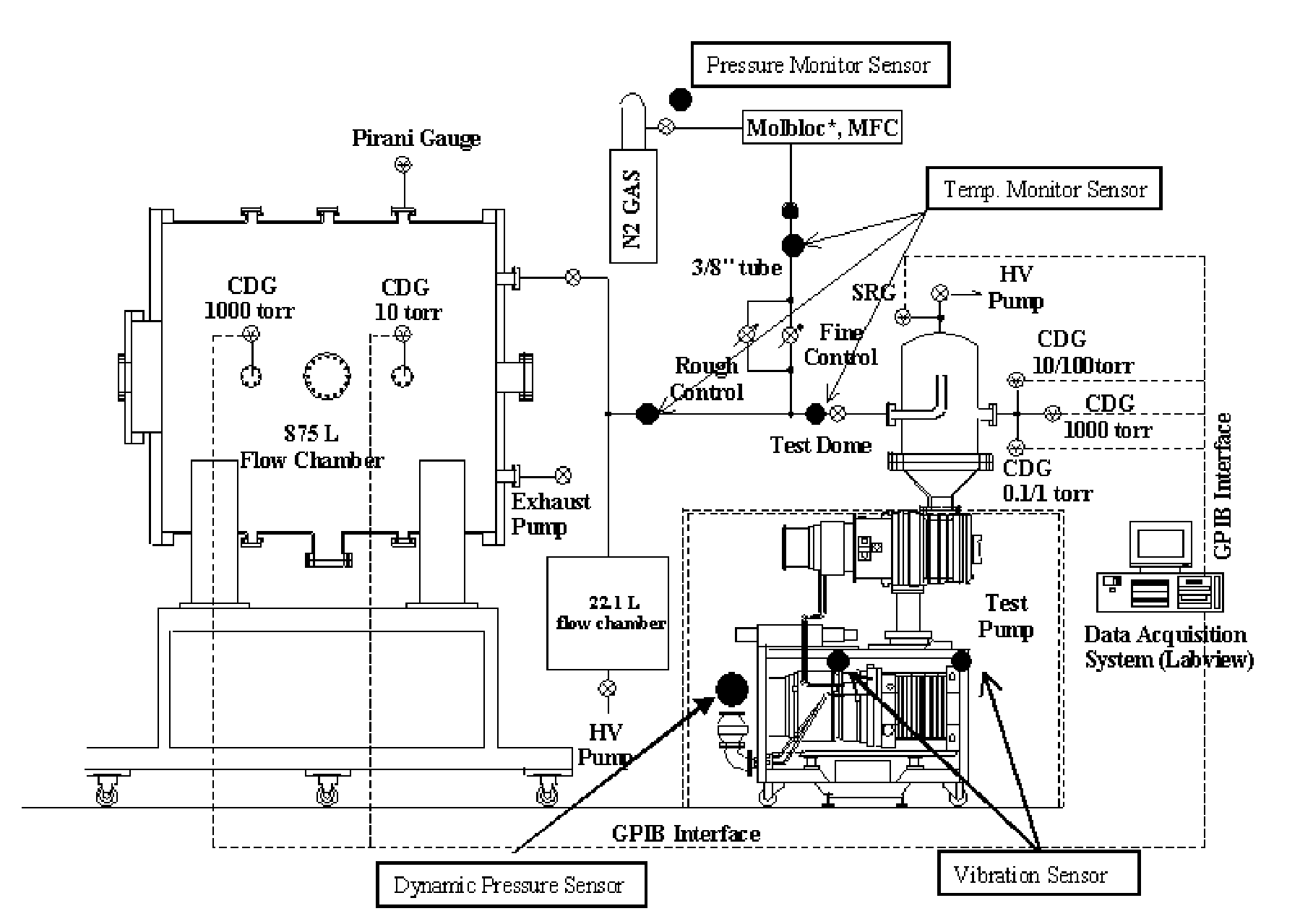
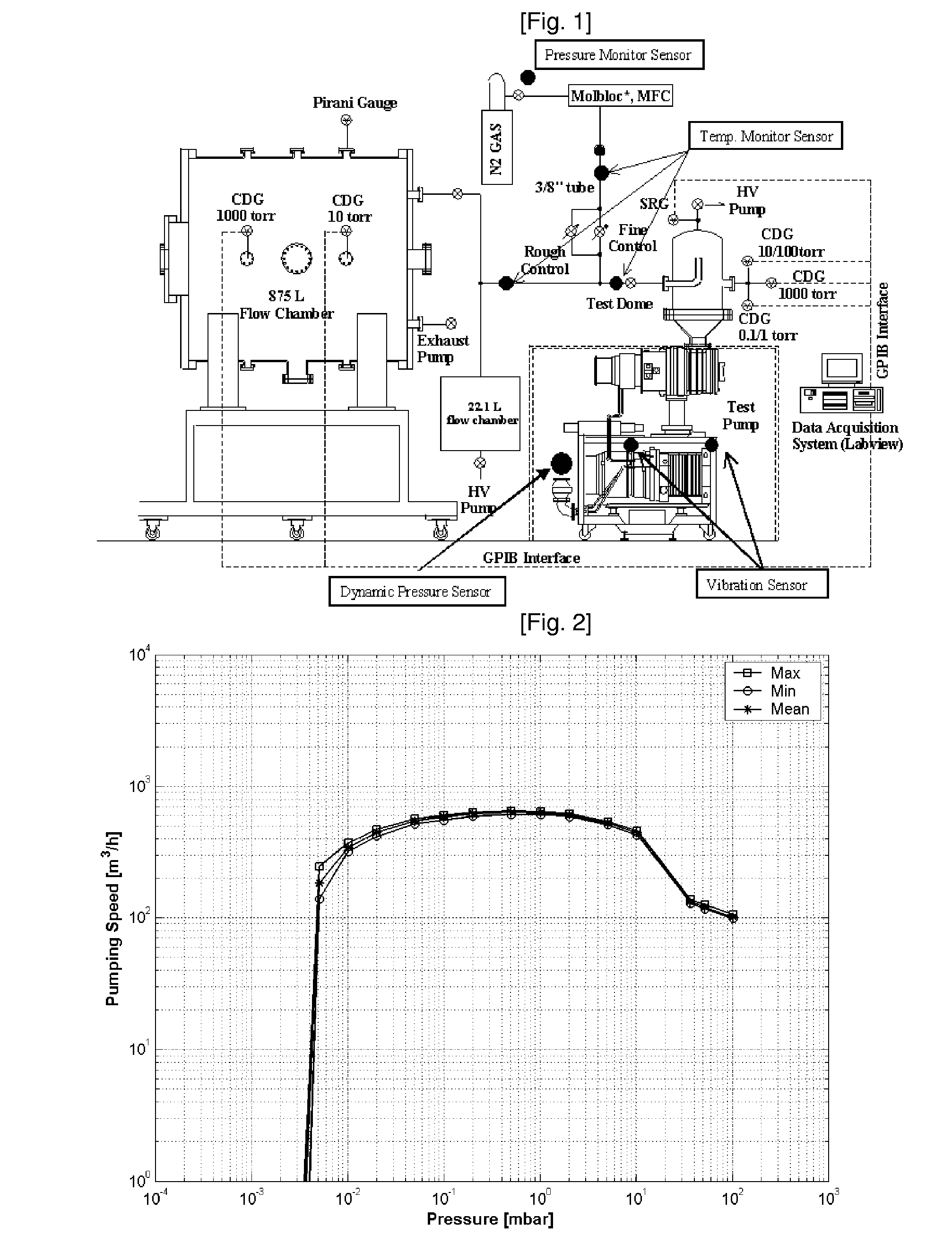
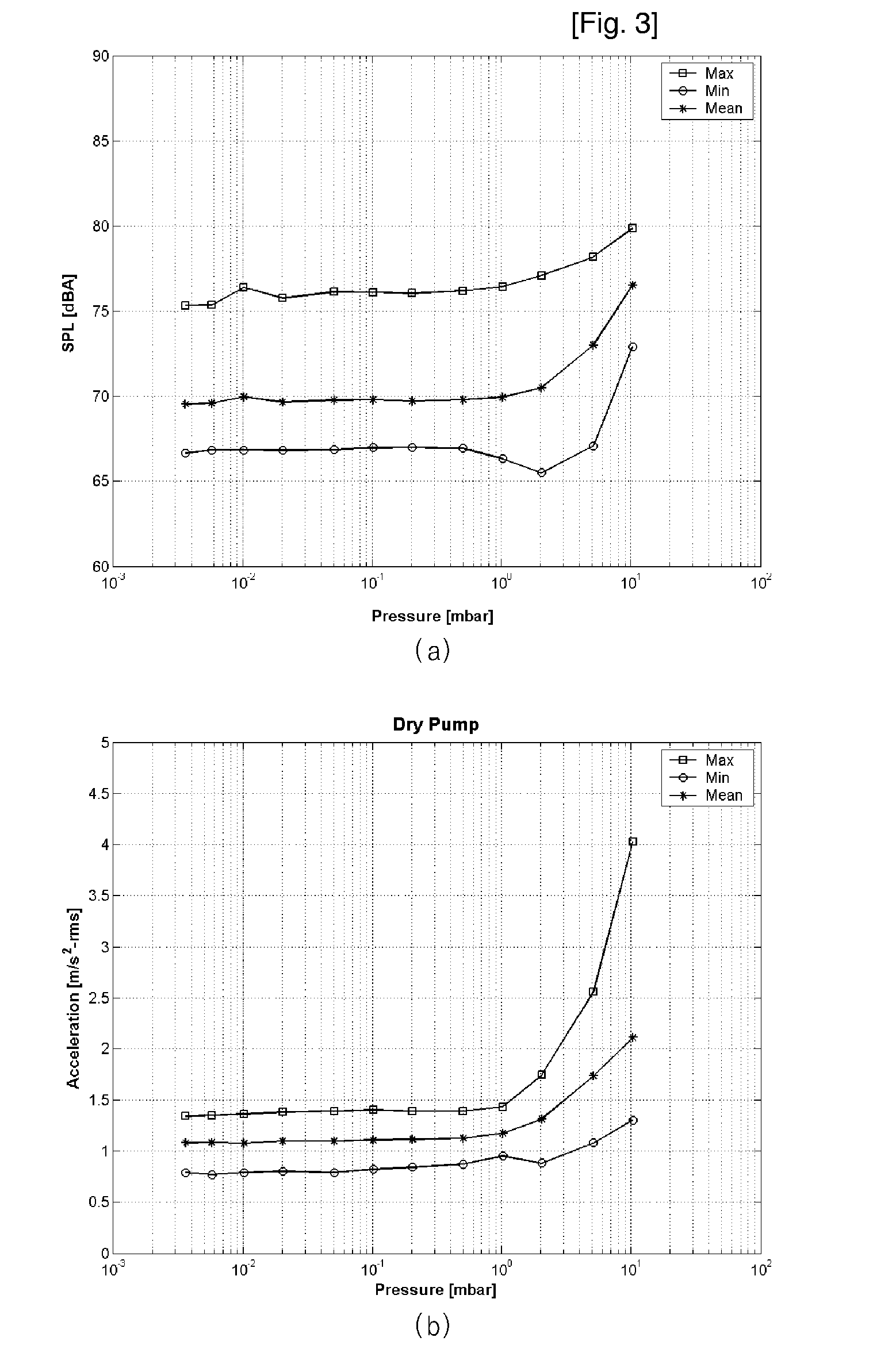
- A trend monitoring and diagnostic analysis method using a linear parametric model-based active diagnostic algorithm that separates idle and gas-loaded operation conditions, sampling state variables, estimating asymptotic upper and lower model parameters, and evaluating pumping speed indicators to detect abnormal conditions effectively.

Complex dry vacuum pump having Roots and screw rotors
PatentActiveEP1882856B1
Innovation
- A complex dry vacuum pump design featuring engaged root and screw rotors with three lobes, power transmission shafts, and gears, along with a motor with a stator coil protected by epoxy resin molding, eliminating the need for a separate can and optimizing rotor balance and gas transfer efficiency.


Environmental Standards for Semiconductor Manufacturing
Environmental standards for semiconductor manufacturing have become increasingly stringent as the industry recognizes the critical relationship between environmental control and process reliability, particularly in applications involving dry vacuum pumps. These standards encompass comprehensive regulations governing air quality, chemical emissions, waste management, and energy consumption within fabrication facilities.
The International Organization for Standardization (ISO) 14001 environmental management system serves as the foundational framework for semiconductor manufacturers, requiring systematic approaches to environmental impact reduction. Additionally, the Semiconductor Industry Association (SIA) has established specific guidelines addressing volatile organic compound (VOC) emissions, perfluorinated compound (PFC) management, and greenhouse gas reduction targets that directly impact dry vacuum pump operations.
Regional environmental regulations significantly influence manufacturing practices, with the European Union's REACH regulation imposing strict controls on chemical substances used in semiconductor processes. Similarly, the U.S. Environmental Protection Agency's National Emission Standards for Hazardous Air Pollutants (NESHAP) establishes maximum allowable emission levels for semiconductor manufacturing facilities, directly affecting vacuum pump exhaust treatment requirements.
Dry vacuum pump systems must comply with particulate emission standards, typically requiring exhaust filtration systems capable of achieving sub-micron particle removal efficiency exceeding 99.97%. Chemical compatibility requirements mandate that pump materials and sealing systems resist degradation from process chemicals while maintaining zero-leakage performance to prevent environmental contamination.
Energy efficiency standards, such as those outlined in ISO 50001, drive the adoption of variable frequency drives and intelligent control systems in dry vacuum pump applications. These requirements promote reduced power consumption while maintaining process performance, aligning with corporate sustainability goals and regulatory compliance mandates.
Waste minimization protocols require comprehensive recycling programs for pump components, including rotor refurbishment and bearing replacement programs that extend equipment lifecycle while reducing environmental impact. Documentation and reporting requirements mandate detailed tracking of energy consumption, emissions data, and waste generation metrics to demonstrate continuous improvement in environmental performance.
The International Organization for Standardization (ISO) 14001 environmental management system serves as the foundational framework for semiconductor manufacturers, requiring systematic approaches to environmental impact reduction. Additionally, the Semiconductor Industry Association (SIA) has established specific guidelines addressing volatile organic compound (VOC) emissions, perfluorinated compound (PFC) management, and greenhouse gas reduction targets that directly impact dry vacuum pump operations.
Regional environmental regulations significantly influence manufacturing practices, with the European Union's REACH regulation imposing strict controls on chemical substances used in semiconductor processes. Similarly, the U.S. Environmental Protection Agency's National Emission Standards for Hazardous Air Pollutants (NESHAP) establishes maximum allowable emission levels for semiconductor manufacturing facilities, directly affecting vacuum pump exhaust treatment requirements.
Dry vacuum pump systems must comply with particulate emission standards, typically requiring exhaust filtration systems capable of achieving sub-micron particle removal efficiency exceeding 99.97%. Chemical compatibility requirements mandate that pump materials and sealing systems resist degradation from process chemicals while maintaining zero-leakage performance to prevent environmental contamination.
Energy efficiency standards, such as those outlined in ISO 50001, drive the adoption of variable frequency drives and intelligent control systems in dry vacuum pump applications. These requirements promote reduced power consumption while maintaining process performance, aligning with corporate sustainability goals and regulatory compliance mandates.
Waste minimization protocols require comprehensive recycling programs for pump components, including rotor refurbishment and bearing replacement programs that extend equipment lifecycle while reducing environmental impact. Documentation and reporting requirements mandate detailed tracking of energy consumption, emissions data, and waste generation metrics to demonstrate continuous improvement in environmental performance.
Process Integration and Contamination Control Strategies
Process integration of dry vacuum pumps in electronics manufacturing requires systematic coordination across multiple process chambers and equipment systems. Modern semiconductor fabrication facilities typically employ centralized vacuum systems that serve multiple process tools simultaneously, necessitating careful pressure balancing and flow management. The integration architecture must account for varying pumping requirements across different processes, from high-throughput etching operations to precision deposition chambers. Advanced control systems utilize real-time monitoring of pressure differentials and gas flow rates to optimize pump performance while maintaining process stability.
Contamination control represents the most critical aspect of dry vacuum pump deployment in electronics manufacturing environments. Particle generation from pump mechanisms poses significant risks to wafer quality, requiring implementation of multi-stage filtration systems and isolation protocols. Molecular contamination control involves managing outgassing from pump materials and preventing backstreaming of lubricants or process byproducts. Strategic placement of cold traps, molecular sieves, and specialized filters creates barrier systems that protect sensitive manufacturing processes from pump-generated contaminants.
Chemical compatibility considerations drive material selection for pump components exposed to aggressive process gases and cleaning chemicals. Fluoropolymer coatings and specialized metallurgy prevent corrosion while minimizing particle generation during exposure to halogen-based etchants and cleaning agents. Regular purging protocols using inert gases help maintain chemical cleanliness between different process runs, preventing cross-contamination between incompatible chemistries.
Maintenance scheduling integration ensures contamination control effectiveness while minimizing production disruptions. Predictive maintenance algorithms analyze pump performance parameters to schedule interventions during planned downtime periods. Contamination monitoring systems track particle levels and chemical residues, triggering maintenance actions before contamination thresholds are exceeded. Clean room protocols for pump servicing include specialized procedures for component handling and system restart validation.
Advanced contamination control strategies incorporate real-time monitoring systems that detect contamination events and automatically implement corrective actions. These systems integrate with facility-wide contamination control networks, providing comprehensive protection across the entire manufacturing environment while optimizing dry vacuum pump performance and reliability.
Contamination control represents the most critical aspect of dry vacuum pump deployment in electronics manufacturing environments. Particle generation from pump mechanisms poses significant risks to wafer quality, requiring implementation of multi-stage filtration systems and isolation protocols. Molecular contamination control involves managing outgassing from pump materials and preventing backstreaming of lubricants or process byproducts. Strategic placement of cold traps, molecular sieves, and specialized filters creates barrier systems that protect sensitive manufacturing processes from pump-generated contaminants.
Chemical compatibility considerations drive material selection for pump components exposed to aggressive process gases and cleaning chemicals. Fluoropolymer coatings and specialized metallurgy prevent corrosion while minimizing particle generation during exposure to halogen-based etchants and cleaning agents. Regular purging protocols using inert gases help maintain chemical cleanliness between different process runs, preventing cross-contamination between incompatible chemistries.
Maintenance scheduling integration ensures contamination control effectiveness while minimizing production disruptions. Predictive maintenance algorithms analyze pump performance parameters to schedule interventions during planned downtime periods. Contamination monitoring systems track particle levels and chemical residues, triggering maintenance actions before contamination thresholds are exceeded. Clean room protocols for pump servicing include specialized procedures for component handling and system restart validation.
Advanced contamination control strategies incorporate real-time monitoring systems that detect contamination events and automatically implement corrective actions. These systems integrate with facility-wide contamination control networks, providing comprehensive protection across the entire manufacturing environment while optimizing dry vacuum pump performance and reliability.
Unlock deeper insights with Patsnap Eureka Quick Research — get a full tech report to explore trends and direct your research. Try now!
Generate Your Research Report Instantly with AI Agent
Supercharge your innovation with Patsnap Eureka AI Agent Platform!