
Optimizing Dry Vacuum Pumps for Semiconductor Manufacturing Yield
MAY 19, 20269 MIN READ
Generate Your Research Report Instantly with AI Agent
Patsnap Eureka helps you evaluate technical feasibility & market potential.
Semiconductor Vacuum Technology Background and Objectives
Semiconductor manufacturing represents one of the most technologically demanding industrial processes, requiring unprecedented levels of precision, cleanliness, and environmental control. The evolution of semiconductor fabrication has been driven by Moore's Law, demanding continuous miniaturization of transistor features from micrometers to nanometers. This relentless scaling has fundamentally transformed manufacturing requirements, particularly in vacuum technology applications.
The historical development of semiconductor vacuum systems began in the 1960s with basic oil-sealed rotary pumps and diffusion pumps. However, as device geometries shrank and contamination sensitivity increased, the industry recognized that traditional wet pumping systems introduced unacceptable levels of hydrocarbon contamination. The transition to dry vacuum pumping technologies emerged in the 1980s as a critical enabler for advanced semiconductor processes.
Modern semiconductor fabrication processes including plasma etching, chemical vapor deposition, physical vapor deposition, and ion implantation all rely heavily on precise vacuum environments. These processes require base pressures ranging from 10^-6 to 10^-9 Torr, with stringent requirements for particle-free and contamination-free environments. The vacuum system performance directly impacts critical manufacturing metrics including yield, throughput, and device reliability.
Current technology nodes at 7nm, 5nm, and emerging 3nm processes have intensified vacuum system requirements exponentially. Advanced materials like high-k dielectrics, metal gates, and complex multi-layer structures demand ultra-clean processing environments where even molecular-level contamination can cause device failures. The economic impact is substantial, as a single contamination event can result in wafer scrapping costs exceeding hundreds of thousands of dollars.
The primary objective of optimizing dry vacuum pumps centers on achieving maximum manufacturing yield through enhanced contamination control, improved process stability, and reduced particle generation. Secondary objectives include minimizing total cost of ownership through extended maintenance intervals, reduced energy consumption, and improved pump reliability. Additionally, next-generation semiconductor processes require vacuum systems capable of handling increasingly aggressive chemistries while maintaining consistent performance over extended operational periods.
Emerging challenges include managing the thermal effects of high-power processes, accommodating larger wafer sizes up to 450mm, and supporting new materials and process chemistries for advanced packaging technologies. The integration of artificial intelligence and predictive maintenance capabilities represents a strategic objective for future vacuum system optimization, enabling proactive performance management and yield enhancement.
The historical development of semiconductor vacuum systems began in the 1960s with basic oil-sealed rotary pumps and diffusion pumps. However, as device geometries shrank and contamination sensitivity increased, the industry recognized that traditional wet pumping systems introduced unacceptable levels of hydrocarbon contamination. The transition to dry vacuum pumping technologies emerged in the 1980s as a critical enabler for advanced semiconductor processes.
Modern semiconductor fabrication processes including plasma etching, chemical vapor deposition, physical vapor deposition, and ion implantation all rely heavily on precise vacuum environments. These processes require base pressures ranging from 10^-6 to 10^-9 Torr, with stringent requirements for particle-free and contamination-free environments. The vacuum system performance directly impacts critical manufacturing metrics including yield, throughput, and device reliability.
Current technology nodes at 7nm, 5nm, and emerging 3nm processes have intensified vacuum system requirements exponentially. Advanced materials like high-k dielectrics, metal gates, and complex multi-layer structures demand ultra-clean processing environments where even molecular-level contamination can cause device failures. The economic impact is substantial, as a single contamination event can result in wafer scrapping costs exceeding hundreds of thousands of dollars.
The primary objective of optimizing dry vacuum pumps centers on achieving maximum manufacturing yield through enhanced contamination control, improved process stability, and reduced particle generation. Secondary objectives include minimizing total cost of ownership through extended maintenance intervals, reduced energy consumption, and improved pump reliability. Additionally, next-generation semiconductor processes require vacuum systems capable of handling increasingly aggressive chemistries while maintaining consistent performance over extended operational periods.
Emerging challenges include managing the thermal effects of high-power processes, accommodating larger wafer sizes up to 450mm, and supporting new materials and process chemistries for advanced packaging technologies. The integration of artificial intelligence and predictive maintenance capabilities represents a strategic objective for future vacuum system optimization, enabling proactive performance management and yield enhancement.
Market Demand for Advanced Semiconductor Manufacturing Equipment
The semiconductor manufacturing industry continues to experience unprecedented growth driven by expanding applications in artificial intelligence, 5G communications, Internet of Things devices, and automotive electronics. This surge in demand has created substantial pressure on semiconductor fabrication facilities to enhance production capacity while maintaining stringent quality standards. Advanced manufacturing equipment, particularly precision vacuum systems, has become critical infrastructure for meeting these evolving market requirements.
Global semiconductor capital expenditure has reached historic levels as foundries and integrated device manufacturers invest heavily in next-generation fabrication capabilities. The transition to smaller process nodes, including 7nm, 5nm, and emerging 3nm technologies, demands increasingly sophisticated manufacturing equipment with enhanced precision and reliability. Dry vacuum pumps represent a fundamental component in this equipment ecosystem, directly impacting wafer processing quality and overall manufacturing yield.
The market demand for advanced semiconductor manufacturing equipment reflects several key technological shifts. Process complexity has intensified significantly as manufacturers pursue higher transistor densities and improved device performance. This complexity translates into more stringent requirements for contamination control, process stability, and equipment uptime. Vacuum systems must deliver consistent performance across extended operating periods while maintaining ultra-clean processing environments essential for high-yield production.
Regional market dynamics further amplify equipment demand as semiconductor manufacturing capacity expands globally. Asia-Pacific regions continue leading capacity expansion initiatives, while North American and European markets focus on strategic reshoring and supply chain resilience. Each regional market presents distinct requirements for equipment performance, regulatory compliance, and operational efficiency standards.
The emergence of specialized semiconductor applications has created additional market segments with unique equipment requirements. Power semiconductors for electric vehicles demand different processing conditions compared to logic chips for mobile devices. Memory technologies, including advanced DRAM and NAND flash architectures, require specialized vacuum processing capabilities. These diverse application requirements drive demand for adaptable, high-performance manufacturing equipment capable of supporting multiple process technologies.
Equipment reliability and total cost of ownership have become primary market drivers as semiconductor manufacturers seek to optimize operational efficiency. Extended equipment lifecycles, reduced maintenance requirements, and improved process consistency directly impact manufacturing economics. Advanced dry vacuum pump technologies that deliver superior reliability while minimizing operational disruptions command premium market positioning and sustained demand growth.
Global semiconductor capital expenditure has reached historic levels as foundries and integrated device manufacturers invest heavily in next-generation fabrication capabilities. The transition to smaller process nodes, including 7nm, 5nm, and emerging 3nm technologies, demands increasingly sophisticated manufacturing equipment with enhanced precision and reliability. Dry vacuum pumps represent a fundamental component in this equipment ecosystem, directly impacting wafer processing quality and overall manufacturing yield.
The market demand for advanced semiconductor manufacturing equipment reflects several key technological shifts. Process complexity has intensified significantly as manufacturers pursue higher transistor densities and improved device performance. This complexity translates into more stringent requirements for contamination control, process stability, and equipment uptime. Vacuum systems must deliver consistent performance across extended operating periods while maintaining ultra-clean processing environments essential for high-yield production.
Regional market dynamics further amplify equipment demand as semiconductor manufacturing capacity expands globally. Asia-Pacific regions continue leading capacity expansion initiatives, while North American and European markets focus on strategic reshoring and supply chain resilience. Each regional market presents distinct requirements for equipment performance, regulatory compliance, and operational efficiency standards.
The emergence of specialized semiconductor applications has created additional market segments with unique equipment requirements. Power semiconductors for electric vehicles demand different processing conditions compared to logic chips for mobile devices. Memory technologies, including advanced DRAM and NAND flash architectures, require specialized vacuum processing capabilities. These diverse application requirements drive demand for adaptable, high-performance manufacturing equipment capable of supporting multiple process technologies.
Equipment reliability and total cost of ownership have become primary market drivers as semiconductor manufacturers seek to optimize operational efficiency. Extended equipment lifecycles, reduced maintenance requirements, and improved process consistency directly impact manufacturing economics. Advanced dry vacuum pump technologies that deliver superior reliability while minimizing operational disruptions command premium market positioning and sustained demand growth.
Current State and Challenges of Dry Vacuum Pump Technology
Dry vacuum pump technology has achieved significant maturity in semiconductor manufacturing applications, with major technological breakthroughs occurring over the past two decades. Current dry vacuum pumps primarily utilize screw, claw, and roots pump configurations, often combined in multi-stage systems to achieve the ultra-high vacuum levels required for advanced semiconductor processes. These systems have largely replaced oil-sealed pumps in critical applications due to their contamination-free operation and compatibility with reactive process gases.
The global dry vacuum pump market is dominated by established players including Edwards Vacuum, Pfeiffer Vacuum, Ebara Corporation, and Busch Vacuum Solutions. These manufacturers have developed sophisticated pump designs incorporating advanced materials, precision engineering, and intelligent control systems. Current technology achieves ultimate pressures in the 10^-3 to 10^-6 Torr range with pumping speeds ranging from hundreds to thousands of liters per second, depending on configuration and application requirements.
Despite technological advances, several critical challenges persist in optimizing dry vacuum pump performance for semiconductor manufacturing. Particle generation remains a primary concern, as mechanical wear and process byproduct accumulation can create contamination sources that directly impact wafer yield. The pumps' internal surfaces and sealing mechanisms are particularly susceptible to degradation when handling corrosive process gases commonly used in etching and deposition processes.
Thermal management presents another significant challenge, as process gas reactions and mechanical friction generate substantial heat loads. Inadequate thermal control can lead to pump performance degradation, increased maintenance requirements, and potential process instability. Current cooling systems often struggle to maintain optimal operating temperatures during high-throughput manufacturing scenarios, particularly in advanced node production environments.
Process gas compatibility continues to evolve as semiconductor manufacturing introduces new chemistries for emerging technologies. Dry vacuum pumps must handle increasingly aggressive gas mixtures while maintaining consistent performance and minimizing byproduct formation. The interaction between pump materials and reactive gases can lead to corrosion, coating deposition, and chemical incompatibilities that affect long-term reliability.
Energy efficiency optimization represents an ongoing challenge as semiconductor fabs seek to reduce operational costs and environmental impact. Current dry vacuum pump systems consume substantial electrical power, and improving efficiency while maintaining performance specifications requires advanced motor technologies, optimized pump geometries, and intelligent control algorithms that can adapt to varying process conditions and load requirements.
The global dry vacuum pump market is dominated by established players including Edwards Vacuum, Pfeiffer Vacuum, Ebara Corporation, and Busch Vacuum Solutions. These manufacturers have developed sophisticated pump designs incorporating advanced materials, precision engineering, and intelligent control systems. Current technology achieves ultimate pressures in the 10^-3 to 10^-6 Torr range with pumping speeds ranging from hundreds to thousands of liters per second, depending on configuration and application requirements.
Despite technological advances, several critical challenges persist in optimizing dry vacuum pump performance for semiconductor manufacturing. Particle generation remains a primary concern, as mechanical wear and process byproduct accumulation can create contamination sources that directly impact wafer yield. The pumps' internal surfaces and sealing mechanisms are particularly susceptible to degradation when handling corrosive process gases commonly used in etching and deposition processes.
Thermal management presents another significant challenge, as process gas reactions and mechanical friction generate substantial heat loads. Inadequate thermal control can lead to pump performance degradation, increased maintenance requirements, and potential process instability. Current cooling systems often struggle to maintain optimal operating temperatures during high-throughput manufacturing scenarios, particularly in advanced node production environments.
Process gas compatibility continues to evolve as semiconductor manufacturing introduces new chemistries for emerging technologies. Dry vacuum pumps must handle increasingly aggressive gas mixtures while maintaining consistent performance and minimizing byproduct formation. The interaction between pump materials and reactive gases can lead to corrosion, coating deposition, and chemical incompatibilities that affect long-term reliability.
Energy efficiency optimization represents an ongoing challenge as semiconductor fabs seek to reduce operational costs and environmental impact. Current dry vacuum pump systems consume substantial electrical power, and improving efficiency while maintaining performance specifications requires advanced motor technologies, optimized pump geometries, and intelligent control algorithms that can adapt to varying process conditions and load requirements.
Existing Dry Vacuum Pump Optimization Solutions
01 Advanced pump design and structural optimization
Improvements in dry vacuum pump design focus on optimizing internal structures, rotor configurations, and chamber geometries to enhance pumping efficiency and reduce manufacturing defects. These design modifications help achieve better vacuum levels while maintaining consistent manufacturing quality and yield rates.- Vacuum pump design optimization and structural improvements: Manufacturing yield can be enhanced through optimized pump designs that incorporate improved structural elements, better sealing mechanisms, and enhanced rotor configurations. These design improvements focus on reducing manufacturing defects, improving component fit and finish, and ensuring consistent performance across production batches. Advanced engineering approaches help minimize material waste and reduce the need for rework during manufacturing processes.
- Manufacturing process control and automation: Implementation of automated manufacturing systems and precise process control mechanisms significantly improves production yield by reducing human error and ensuring consistent quality. Advanced manufacturing techniques include automated assembly lines, precision machining processes, and real-time quality monitoring systems that detect and correct deviations during production. These systems help maintain tight tolerances and reduce scrap rates.
- Material selection and processing techniques: Proper selection of materials and advanced processing techniques contribute to higher manufacturing yields by reducing material defects and improving component durability. This includes the use of specialized alloys, surface treatments, and heat treatment processes that enhance material properties and reduce failure rates during manufacturing. Optimized material handling and processing reduce waste and improve overall production efficiency.
- Quality control and testing methodologies: Comprehensive quality control systems and advanced testing methodologies ensure higher manufacturing yields by identifying defects early in the production process. These include in-line inspection systems, performance testing protocols, and statistical process control methods that monitor critical parameters throughout manufacturing. Early detection and correction of issues prevent defective products from progressing through the production line.
- Production line efficiency and lean manufacturing: Implementation of lean manufacturing principles and production line optimization strategies improve manufacturing yield by eliminating waste, reducing cycle times, and improving overall equipment effectiveness. This includes workflow optimization, preventive maintenance programs, and continuous improvement initiatives that identify and eliminate sources of inefficiency. These approaches help maximize throughput while maintaining quality standards.
02 Manufacturing process control and quality assurance
Implementation of precise manufacturing process controls, including automated assembly techniques, quality monitoring systems, and standardized production procedures to minimize defects and improve overall manufacturing yield. These methods ensure consistent product quality and reduce production waste.Expand Specific Solutions03 Material selection and surface treatment technologies
Utilization of specialized materials and advanced surface treatment methods to enhance pump component durability and performance. These technologies focus on reducing wear, improving corrosion resistance, and extending operational life, which directly impacts manufacturing success rates.Expand Specific Solutions04 Sealing and leak prevention mechanisms
Development of improved sealing technologies and leak prevention systems that are critical for maintaining vacuum integrity. These innovations include advanced gasket designs, magnetic fluid seals, and hermetic sealing methods that enhance manufacturing reliability and product performance.Expand Specific Solutions05 Monitoring and diagnostic systems integration
Integration of real-time monitoring systems and diagnostic capabilities into dry vacuum pumps to track performance parameters and predict maintenance needs. These systems help optimize manufacturing processes by providing feedback on production quality and identifying potential issues early in the manufacturing cycle.Expand Specific Solutions
Key Players in Dry Vacuum Pump and Semiconductor Equipment Market
The dry vacuum pump optimization for semiconductor manufacturing represents a mature yet rapidly evolving market segment driven by increasing chip complexity and yield requirements. The industry is experiencing significant growth, with market expansion fueled by advanced node manufacturing demands and stricter contamination control standards. Technology maturity varies considerably among key players, with established leaders like Edwards Ltd., Pfeiffer Vacuum SAS, and ULVAC Inc. demonstrating advanced dry pump technologies and comprehensive semiconductor solutions. Asian manufacturers including Samsung Electronics, TSMC, and Beijing NAURA are driving innovation through vertical integration strategies, while specialized firms like LOT VACUUM and Kashiyama Industries focus on niche applications. The competitive landscape shows consolidation around companies offering integrated vacuum solutions with real-time monitoring capabilities, predictive maintenance, and enhanced particle management systems, positioning the market in a technology-intensive maturation phase.
Pfeiffer Vacuum SAS
Technical Solution: Pfeiffer Vacuum develops advanced dry vacuum pump technologies specifically optimized for semiconductor manufacturing processes. Their HiPace series turbomolecular pumps combined with backing pumps provide ultra-high vacuum levels essential for semiconductor fabrication. The company's dry pump solutions feature multi-stage roots technology with optimized rotor profiles and advanced sealing systems to minimize particle generation and contamination. Their pumps incorporate intelligent control systems that monitor performance parameters in real-time, enabling predictive maintenance and maximizing uptime. The technology includes specialized coatings on internal components to resist corrosive process gases commonly used in semiconductor etching and deposition processes.
Strengths: Market-leading vacuum technology with proven reliability in semiconductor fabs, excellent contamination control. Weaknesses: Higher initial cost compared to wet pumps, requires specialized maintenance expertise.
EDWARDS LTD
Technical Solution: Edwards develops comprehensive dry vacuum solutions for semiconductor manufacturing through their nXDS and iXM series pumps. Their technology focuses on scroll pump mechanisms that provide oil-free operation essential for maintaining semiconductor process purity. The pumps feature advanced tip seal technology and optimized scroll profiles to maximize pumping efficiency while minimizing power consumption. Edwards integrates smart connectivity features allowing remote monitoring and diagnostics to optimize manufacturing yield. Their dry pump systems include specialized gas ballast systems and purge capabilities to handle reactive process gases. The company's solutions incorporate variable speed drive technology to match pumping performance with process requirements, reducing energy consumption and extending component life while maintaining consistent vacuum levels.
Strengths: Comprehensive product portfolio with strong global service network, excellent energy efficiency. Weaknesses: Complex system integration requirements, sensitivity to process gas composition variations.
Core Innovations in Yield-Enhancing Vacuum Technologies
Pump comprising a proximity sensor
PatentActiveUS20180238328A1
Innovation
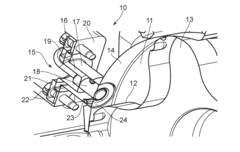
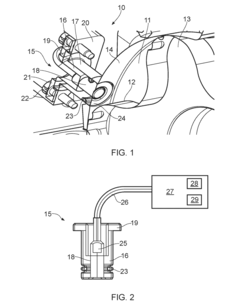
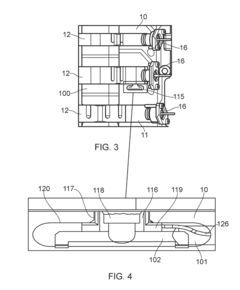
- A sensor system mounted on the stator, connected to a processing circuit, measures the absolute distance between the rotor and stator surfaces in real time, allowing for accurate clearance determination and monitoring of wear or vibrations, with outputs for display, storage, and warning indications to optimize pump performance and predict maintenance needs.
Vacuum exhaust apparatus and drive method of vacuum apparatus
PatentInactiveUS20040173312A1
Innovation
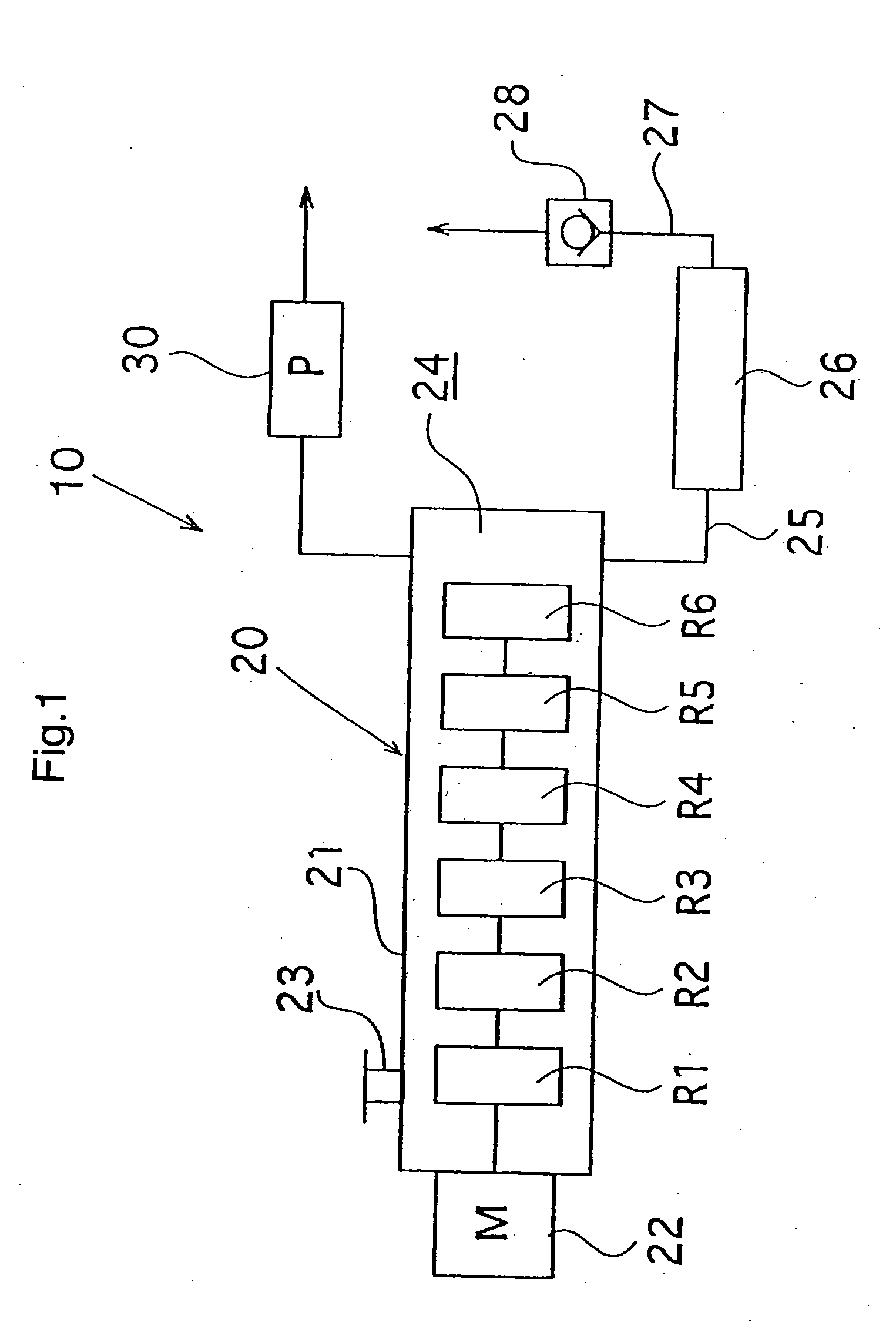
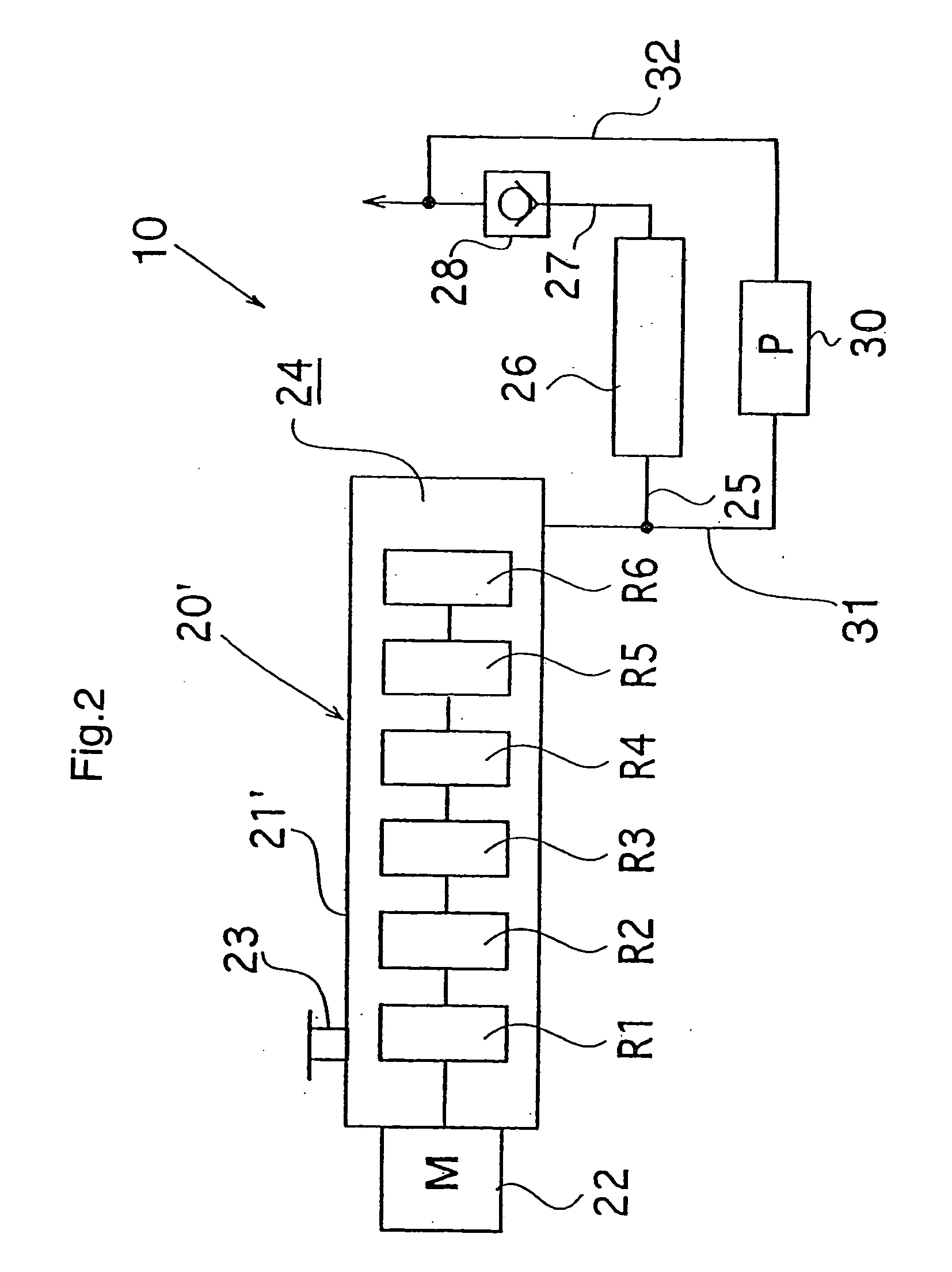
- A vacuum exhaust apparatus is designed with a main pump and an auxiliary pump connected in parallel, where the auxiliary pump has a lower throughput and is used to initially reduce the pressure, followed by the main pump, utilizing a check valve system to manage gas flow efficiently and reduce energy consumption.


Environmental Regulations for Semiconductor Manufacturing
The semiconductor manufacturing industry operates under increasingly stringent environmental regulations that directly impact the design, operation, and optimization of dry vacuum pumps. These regulations primarily focus on emissions control, energy efficiency standards, and waste management protocols that manufacturers must comply with to maintain operational licenses and market access.
Air quality regulations represent the most significant regulatory framework affecting dry vacuum pump operations. The Clean Air Act in the United States and similar legislation in Europe and Asia establish strict limits on volatile organic compound emissions, particulate matter release, and hazardous air pollutants. Dry vacuum pumps must incorporate advanced abatement systems and filtration technologies to ensure exhaust streams meet these stringent emission thresholds, particularly when handling process gases containing fluorinated compounds and other semiconductor-specific chemicals.
Energy efficiency mandates are becoming increasingly prevalent across major semiconductor manufacturing regions. The European Union's Energy Efficiency Directive and similar frameworks in other jurisdictions require industrial equipment to meet specific energy performance standards. This regulatory pressure drives the development of variable frequency drives, intelligent control systems, and heat recovery mechanisms in dry vacuum pump designs to minimize power consumption while maintaining process performance.
Waste management regulations significantly influence pump maintenance and component disposal practices. The Resource Conservation and Recovery Act and international hazardous waste conventions classify many semiconductor process byproducts as regulated materials. Dry vacuum pumps must be designed with features that facilitate proper waste segregation, minimize cross-contamination, and enable compliant disposal of maintenance materials and worn components.
Water usage and discharge regulations are increasingly impacting cooling system designs for dry vacuum pumps. Many jurisdictions now impose strict limits on industrial water consumption and require advanced treatment of process wastewater. This regulatory environment favors air-cooled pump designs and closed-loop cooling systems that minimize water usage and eliminate discharge requirements.
Emerging regulations around greenhouse gas emissions and carbon footprint reporting are beginning to influence equipment selection criteria. Semiconductor manufacturers are increasingly required to track and report scope 2 emissions from electricity consumption, making energy-efficient dry vacuum pump operation a compliance necessity rather than merely an operational optimization opportunity.
Air quality regulations represent the most significant regulatory framework affecting dry vacuum pump operations. The Clean Air Act in the United States and similar legislation in Europe and Asia establish strict limits on volatile organic compound emissions, particulate matter release, and hazardous air pollutants. Dry vacuum pumps must incorporate advanced abatement systems and filtration technologies to ensure exhaust streams meet these stringent emission thresholds, particularly when handling process gases containing fluorinated compounds and other semiconductor-specific chemicals.
Energy efficiency mandates are becoming increasingly prevalent across major semiconductor manufacturing regions. The European Union's Energy Efficiency Directive and similar frameworks in other jurisdictions require industrial equipment to meet specific energy performance standards. This regulatory pressure drives the development of variable frequency drives, intelligent control systems, and heat recovery mechanisms in dry vacuum pump designs to minimize power consumption while maintaining process performance.
Waste management regulations significantly influence pump maintenance and component disposal practices. The Resource Conservation and Recovery Act and international hazardous waste conventions classify many semiconductor process byproducts as regulated materials. Dry vacuum pumps must be designed with features that facilitate proper waste segregation, minimize cross-contamination, and enable compliant disposal of maintenance materials and worn components.
Water usage and discharge regulations are increasingly impacting cooling system designs for dry vacuum pumps. Many jurisdictions now impose strict limits on industrial water consumption and require advanced treatment of process wastewater. This regulatory environment favors air-cooled pump designs and closed-loop cooling systems that minimize water usage and eliminate discharge requirements.
Emerging regulations around greenhouse gas emissions and carbon footprint reporting are beginning to influence equipment selection criteria. Semiconductor manufacturers are increasingly required to track and report scope 2 emissions from electricity consumption, making energy-efficient dry vacuum pump operation a compliance necessity rather than merely an operational optimization opportunity.
Cost-Benefit Analysis of Vacuum System Upgrades
The economic evaluation of vacuum system upgrades in semiconductor manufacturing requires a comprehensive assessment of both immediate capital expenditures and long-term operational benefits. Initial investment costs for advanced dry vacuum pump systems typically range from $200,000 to $800,000 per unit, depending on pumping capacity and technological sophistication. These costs encompass equipment procurement, installation infrastructure modifications, and integration with existing process control systems.
Direct operational cost reductions emerge through multiple channels following system upgrades. Energy efficiency improvements in modern dry vacuum pumps can reduce power consumption by 15-30% compared to legacy systems, translating to annual savings of $50,000-$150,000 per pump depending on facility energy costs and utilization rates. Maintenance cost reductions are equally significant, with newer systems requiring 40-60% fewer scheduled maintenance interventions due to improved component durability and predictive maintenance capabilities.
Yield improvement represents the most substantial financial benefit of vacuum system optimization. Enhanced process stability and contamination control typically increase manufacturing yield by 2-5%, which for a typical 300mm wafer fabrication facility processing 40,000 wafers monthly can generate additional revenue of $8-20 million annually. This yield enhancement stems from reduced particle generation, improved process repeatability, and minimized chamber downtime.
Productivity gains through reduced unplanned downtime provide additional economic value. Modern dry vacuum systems demonstrate 99.5% uptime compared to 97-98% for older systems, reducing costly production interruptions. Each hour of avoided downtime in semiconductor manufacturing can save $100,000-$300,000 in lost production value.
Risk mitigation benefits include reduced exposure to supply chain disruptions and regulatory compliance costs. Upgraded systems typically offer 10-15 year operational lifespans with manufacturer support, compared to 5-8 years for aging equipment. The payback period for comprehensive vacuum system upgrades typically ranges from 18-36 months, with net present value calculations showing positive returns exceeding 25% IRR over the equipment lifecycle when yield improvements and operational efficiencies are fully realized.
Direct operational cost reductions emerge through multiple channels following system upgrades. Energy efficiency improvements in modern dry vacuum pumps can reduce power consumption by 15-30% compared to legacy systems, translating to annual savings of $50,000-$150,000 per pump depending on facility energy costs and utilization rates. Maintenance cost reductions are equally significant, with newer systems requiring 40-60% fewer scheduled maintenance interventions due to improved component durability and predictive maintenance capabilities.
Yield improvement represents the most substantial financial benefit of vacuum system optimization. Enhanced process stability and contamination control typically increase manufacturing yield by 2-5%, which for a typical 300mm wafer fabrication facility processing 40,000 wafers monthly can generate additional revenue of $8-20 million annually. This yield enhancement stems from reduced particle generation, improved process repeatability, and minimized chamber downtime.
Productivity gains through reduced unplanned downtime provide additional economic value. Modern dry vacuum systems demonstrate 99.5% uptime compared to 97-98% for older systems, reducing costly production interruptions. Each hour of avoided downtime in semiconductor manufacturing can save $100,000-$300,000 in lost production value.
Risk mitigation benefits include reduced exposure to supply chain disruptions and regulatory compliance costs. Upgraded systems typically offer 10-15 year operational lifespans with manufacturer support, compared to 5-8 years for aging equipment. The payback period for comprehensive vacuum system upgrades typically ranges from 18-36 months, with net present value calculations showing positive returns exceeding 25% IRR over the equipment lifecycle when yield improvements and operational efficiencies are fully realized.
Unlock deeper insights with Patsnap Eureka Quick Research — get a full tech report to explore trends and direct your research. Try now!
Generate Your Research Report Instantly with AI Agent
Supercharge your innovation with Patsnap Eureka AI Agent Platform!