

Electrostatic Motors vs Direct Drive Systems: Reliability Over Time
MAY 18, 20269 MIN READ
Generate Your Research Report Instantly with AI Agent
PatSnap Eureka helps you evaluate technical feasibility & market potential.
Electrostatic Motor Technology Background and Objectives
Electrostatic motors represent a revolutionary departure from conventional electromagnetic motor designs, utilizing electrostatic forces rather than magnetic fields to generate mechanical motion. This technology traces its origins to the early 18th century when electrostatic generators first demonstrated the potential of electric fields to produce mechanical work. However, practical applications remained limited due to material constraints and power electronics limitations until recent decades.
The fundamental principle underlying electrostatic motors involves the attraction and repulsion of charged surfaces to create rotational or linear motion. Unlike electromagnetic motors that rely on current-carrying conductors in magnetic fields, electrostatic systems operate through the manipulation of electric charges on dielectric surfaces. This approach eliminates the need for permanent magnets, copper windings, and iron cores, potentially offering significant advantages in specific applications.
The evolution of electrostatic motor technology has been closely tied to advances in materials science, particularly the development of high-performance dielectrics and precision manufacturing techniques. Modern electrostatic motors benefit from improved dielectric materials with higher breakdown voltages, better surface treatments for charge retention, and advanced power electronics capable of generating the high voltages required for operation.
Contemporary research focuses on addressing the inherent challenges of electrostatic motor design, including voltage requirements, power density limitations, and environmental sensitivity. The technology has gained renewed interest due to its potential advantages in applications requiring precise control, low electromagnetic interference, and operation in extreme environments where traditional magnetic materials may fail.
The primary technical objectives driving current electrostatic motor development include achieving higher torque densities through improved electrode geometries and dielectric materials, reducing operating voltages to practical levels through innovative design approaches, and enhancing reliability through better understanding of charge dynamics and surface phenomena. Additionally, researchers aim to develop scalable manufacturing processes that can produce electrostatic motors cost-effectively for commercial applications.
The reliability comparison with direct drive systems has become increasingly important as industries seek alternatives to traditional motor technologies. Direct drive systems, while proven and reliable, face limitations in applications requiring ultra-precise positioning, operation in magnetic field-sensitive environments, or extended operation in harsh conditions where magnetic materials may degrade over time.
The fundamental principle underlying electrostatic motors involves the attraction and repulsion of charged surfaces to create rotational or linear motion. Unlike electromagnetic motors that rely on current-carrying conductors in magnetic fields, electrostatic systems operate through the manipulation of electric charges on dielectric surfaces. This approach eliminates the need for permanent magnets, copper windings, and iron cores, potentially offering significant advantages in specific applications.
The evolution of electrostatic motor technology has been closely tied to advances in materials science, particularly the development of high-performance dielectrics and precision manufacturing techniques. Modern electrostatic motors benefit from improved dielectric materials with higher breakdown voltages, better surface treatments for charge retention, and advanced power electronics capable of generating the high voltages required for operation.
Contemporary research focuses on addressing the inherent challenges of electrostatic motor design, including voltage requirements, power density limitations, and environmental sensitivity. The technology has gained renewed interest due to its potential advantages in applications requiring precise control, low electromagnetic interference, and operation in extreme environments where traditional magnetic materials may fail.
The primary technical objectives driving current electrostatic motor development include achieving higher torque densities through improved electrode geometries and dielectric materials, reducing operating voltages to practical levels through innovative design approaches, and enhancing reliability through better understanding of charge dynamics and surface phenomena. Additionally, researchers aim to develop scalable manufacturing processes that can produce electrostatic motors cost-effectively for commercial applications.
The reliability comparison with direct drive systems has become increasingly important as industries seek alternatives to traditional motor technologies. Direct drive systems, while proven and reliable, face limitations in applications requiring ultra-precise positioning, operation in magnetic field-sensitive environments, or extended operation in harsh conditions where magnetic materials may degrade over time.
Market Demand for High-Reliability Direct Drive Applications
The aerospace and defense sectors represent the most demanding markets for high-reliability direct drive applications, where system failures can result in catastrophic consequences. Commercial and military aircraft require precision actuators for flight control surfaces, landing gear mechanisms, and engine control systems that must operate flawlessly across extreme temperature ranges and vibration environments. Space applications demand even higher reliability standards, with satellite positioning systems and spacecraft mechanisms requiring operational lifespans exceeding twenty years without maintenance opportunities.
Industrial automation markets increasingly prioritize reliability as manufacturing processes become more sophisticated and downtime costs escalate. Semiconductor fabrication equipment, precision machine tools, and robotic assembly systems require direct drive solutions that maintain positioning accuracy over millions of operational cycles. The pharmaceutical and biotechnology industries demand contamination-free environments where traditional lubricated systems pose unacceptable risks, driving adoption of maintenance-free direct drive technologies.
Medical device applications constitute a rapidly expanding market segment where reliability directly impacts patient safety. Surgical robotics, diagnostic imaging equipment, and life support systems require actuators that deliver consistent performance with minimal maintenance requirements. Regulatory compliance in medical applications necessitates extensive reliability documentation and failure mode analysis, creating opportunities for technologies that demonstrate superior long-term stability.
Renewable energy systems present substantial market opportunities as wind turbine pitch control and solar tracking mechanisms require reliable operation in harsh environmental conditions. These applications demand systems capable of withstanding temperature cycling, moisture exposure, and continuous operation over decades. The economic viability of renewable installations depends heavily on minimizing maintenance interventions and maximizing system uptime.
The automotive industry's transition toward electric and autonomous vehicles creates new demands for high-reliability direct drive systems. Electric power steering, brake-by-wire systems, and autonomous driving actuators require fail-safe operation with predictable degradation patterns. As vehicle electrification accelerates, traditional hydraulic and pneumatic systems are being replaced by electric alternatives that offer better controllability and energy efficiency.
Market growth drivers include increasing automation across industries, stricter safety regulations, and rising costs associated with system downtime. Organizations are willing to invest in premium solutions that demonstrate superior reliability metrics, particularly when total cost of ownership calculations favor systems with extended operational lifespans and reduced maintenance requirements.
Industrial automation markets increasingly prioritize reliability as manufacturing processes become more sophisticated and downtime costs escalate. Semiconductor fabrication equipment, precision machine tools, and robotic assembly systems require direct drive solutions that maintain positioning accuracy over millions of operational cycles. The pharmaceutical and biotechnology industries demand contamination-free environments where traditional lubricated systems pose unacceptable risks, driving adoption of maintenance-free direct drive technologies.
Medical device applications constitute a rapidly expanding market segment where reliability directly impacts patient safety. Surgical robotics, diagnostic imaging equipment, and life support systems require actuators that deliver consistent performance with minimal maintenance requirements. Regulatory compliance in medical applications necessitates extensive reliability documentation and failure mode analysis, creating opportunities for technologies that demonstrate superior long-term stability.
Renewable energy systems present substantial market opportunities as wind turbine pitch control and solar tracking mechanisms require reliable operation in harsh environmental conditions. These applications demand systems capable of withstanding temperature cycling, moisture exposure, and continuous operation over decades. The economic viability of renewable installations depends heavily on minimizing maintenance interventions and maximizing system uptime.
The automotive industry's transition toward electric and autonomous vehicles creates new demands for high-reliability direct drive systems. Electric power steering, brake-by-wire systems, and autonomous driving actuators require fail-safe operation with predictable degradation patterns. As vehicle electrification accelerates, traditional hydraulic and pneumatic systems are being replaced by electric alternatives that offer better controllability and energy efficiency.
Market growth drivers include increasing automation across industries, stricter safety regulations, and rising costs associated with system downtime. Organizations are willing to invest in premium solutions that demonstrate superior reliability metrics, particularly when total cost of ownership calculations favor systems with extended operational lifespans and reduced maintenance requirements.
Current State and Reliability Challenges of Motor Technologies
The contemporary motor technology landscape is dominated by two primary paradigms: traditional electromagnetic motors with mechanical transmission systems and emerging direct drive solutions. Electromagnetic motors, including AC induction, permanent magnet synchronous, and brushless DC variants, have established themselves as the industrial standard across applications ranging from automotive propulsion to industrial automation. These systems typically require complex mechanical interfaces, including gearboxes, clutches, and transmission assemblies, to achieve desired torque and speed characteristics.
Direct drive systems represent a paradigmatic shift by eliminating intermediate mechanical components, directly coupling the motor to the load. This approach has gained significant traction in applications requiring precise positioning, such as CNC machining, robotics, and wind turbine generators. The technology encompasses various motor types, including torque motors, linear motors, and specialized high-pole-count designs optimized for low-speed, high-torque operation.
Reliability challenges in electromagnetic motor systems primarily stem from mechanical wear components, particularly bearings, brushes in DC motors, and transmission elements. Bearing failures account for approximately 40-50% of motor failures, with issues including lubrication degradation, contamination, and fatigue-induced damage. Thermal management presents another critical challenge, as excessive heat generation leads to insulation breakdown, permanent magnet demagnetization, and reduced operational lifespan.
Direct drive systems face distinct reliability concerns centered on electromagnetic stress and control complexity. The absence of mechanical speed reduction places higher demands on motor control systems, requiring sophisticated feedback mechanisms and power electronics. Electromagnetic bearing systems, while eliminating mechanical contact, introduce challenges related to control stability and power consumption during operation.
Electrostatic motor technology, though less commercially mature, presents unique reliability characteristics. These systems operate on electrostatic forces rather than electromagnetic principles, potentially offering advantages in specific environments where electromagnetic interference is problematic. However, current electrostatic motors face significant challenges including voltage requirements, power density limitations, and environmental sensitivity to humidity and contamination.
The reliability assessment of these technologies reveals trade-offs between mechanical simplicity and control complexity. While direct drive systems reduce mechanical failure modes, they often require more sophisticated control electronics and sensors, potentially shifting reliability concerns from mechanical to electronic domains. Environmental factors, including temperature extremes, vibration, and contamination, affect each technology differently, necessitating application-specific reliability evaluations.
Direct drive systems represent a paradigmatic shift by eliminating intermediate mechanical components, directly coupling the motor to the load. This approach has gained significant traction in applications requiring precise positioning, such as CNC machining, robotics, and wind turbine generators. The technology encompasses various motor types, including torque motors, linear motors, and specialized high-pole-count designs optimized for low-speed, high-torque operation.
Reliability challenges in electromagnetic motor systems primarily stem from mechanical wear components, particularly bearings, brushes in DC motors, and transmission elements. Bearing failures account for approximately 40-50% of motor failures, with issues including lubrication degradation, contamination, and fatigue-induced damage. Thermal management presents another critical challenge, as excessive heat generation leads to insulation breakdown, permanent magnet demagnetization, and reduced operational lifespan.
Direct drive systems face distinct reliability concerns centered on electromagnetic stress and control complexity. The absence of mechanical speed reduction places higher demands on motor control systems, requiring sophisticated feedback mechanisms and power electronics. Electromagnetic bearing systems, while eliminating mechanical contact, introduce challenges related to control stability and power consumption during operation.
Electrostatic motor technology, though less commercially mature, presents unique reliability characteristics. These systems operate on electrostatic forces rather than electromagnetic principles, potentially offering advantages in specific environments where electromagnetic interference is problematic. However, current electrostatic motors face significant challenges including voltage requirements, power density limitations, and environmental sensitivity to humidity and contamination.
The reliability assessment of these technologies reveals trade-offs between mechanical simplicity and control complexity. While direct drive systems reduce mechanical failure modes, they often require more sophisticated control electronics and sensors, potentially shifting reliability concerns from mechanical to electronic domains. Environmental factors, including temperature extremes, vibration, and contamination, affect each technology differently, necessitating application-specific reliability evaluations.
Existing Motor Solutions for Long-Term Reliability
01 Electrostatic motor design and construction methods
Various approaches to designing and constructing electrostatic motors focus on optimizing electrode configurations, dielectric materials, and mechanical structures to improve motor performance and operational reliability. These designs incorporate specific geometric arrangements and material selections to enhance electrostatic field generation and mechanical stability.- Electrostatic motor design and construction methods: Various design approaches and construction techniques for electrostatic motors focus on optimizing electrode configurations, dielectric materials, and mechanical structures to improve motor performance and operational reliability. These methods include specialized rotor and stator designs, voltage control systems, and material selection strategies that enhance the electrostatic force generation and reduce mechanical wear.
- Direct drive system integration and control mechanisms: Direct drive systems eliminate intermediate transmission components by directly coupling the motor to the load, requiring sophisticated control mechanisms to ensure reliable operation. These systems incorporate advanced feedback control, position sensing, and torque management techniques to maintain precise motion control while minimizing mechanical complexity and potential failure points.
- Reliability enhancement through material and structural improvements: Reliability improvements in electrostatic motors and direct drive systems are achieved through advanced materials, protective coatings, and structural modifications that resist environmental factors such as humidity, temperature variations, and mechanical stress. These enhancements focus on preventing dielectric breakdown, reducing friction, and improving long-term operational stability.
- Fault detection and diagnostic systems: Comprehensive monitoring and diagnostic systems are implemented to detect potential failures and performance degradation in electrostatic motors and direct drive systems. These systems utilize various sensing technologies, signal processing algorithms, and predictive maintenance strategies to identify issues before they lead to system failures, thereby improving overall reliability and reducing downtime.
- Power supply and electrical control optimization: Reliable operation of electrostatic motors requires stable high-voltage power supplies and sophisticated electrical control systems that can maintain consistent performance under varying load conditions. These systems incorporate voltage regulation, current limiting, and protection circuits to prevent electrical failures and ensure safe operation while maximizing motor efficiency and longevity.
02 Direct drive system integration and control mechanisms
Direct drive systems eliminate intermediate mechanical components by directly coupling electrostatic motors to loads, requiring sophisticated control mechanisms to maintain precise positioning and torque delivery. These systems incorporate feedback control loops and advanced electronic controllers to ensure reliable operation under varying load conditions.Expand Specific Solutions03 Reliability enhancement through fault detection and monitoring
Advanced monitoring systems and fault detection mechanisms are implemented to identify potential failures before they occur, including sensor networks that monitor electrical parameters, mechanical vibrations, and thermal conditions. These systems enable predictive maintenance and improve overall system reliability through early warning capabilities.Expand Specific Solutions04 Power supply and voltage regulation systems
Specialized power supply circuits and voltage regulation systems are designed to provide stable high-voltage operation for electrostatic motors while maintaining safety and reliability standards. These systems include protection circuits, voltage stabilization mechanisms, and efficient power conversion technologies to ensure consistent motor performance.Expand Specific Solutions05 Mechanical durability and wear resistance improvements
Engineering solutions focus on reducing mechanical wear and improving long-term durability through advanced bearing systems, surface treatments, and material selection. These approaches minimize friction, reduce maintenance requirements, and extend operational lifespan while maintaining precision and reliability in direct drive applications.Expand Specific Solutions
Key Players in Electrostatic and Direct Drive Motor Industry
The electrostatic motors versus direct drive systems market represents an emerging technology sector in early development stages, with significant growth potential driven by sustainability demands and rare earth material constraints. The market remains relatively small compared to traditional motor technologies, but shows promising expansion opportunities across industrial automation, e-mobility, and manufacturing applications. Technology maturity varies considerably among market participants, with established players like Siemens AG, Mitsubishi Electric Corp., NIDEC Corp., and Valeo leading in conventional direct drive systems, while innovative companies such as C-Motive Technologies pioneer electrostatic motor solutions. Traditional automation specialists including Festo SE, Baumüller, and Schaeffler Technologies maintain strong positions in proven direct drive applications, whereas emerging players like AAC Microtech and research institutions such as Wisconsin Alumni Research Foundation explore next-generation electrostatic technologies, creating a competitive landscape characterized by both incremental improvements in established systems and breakthrough innovations in electrostatic alternatives.
Festo SE & Co. KG
Technical Solution: Festo develops pneumatic and electric direct drive systems with emphasis on reliability in automation applications. Their approach combines traditional pneumatic reliability with modern electric direct drive technology, focusing on reduced mechanical complexity and improved maintenance accessibility. The company's systems incorporate condition monitoring, predictive maintenance capabilities, and modular design principles. Festo's reliability strategy includes extensive field testing, component standardization, and design optimization for specific industrial duty cycles. Their direct drive solutions emphasize simplicity in maintenance procedures, component accessibility, and systematic approaches to performance monitoring that enable proactive maintenance scheduling and minimize unexpected failures over extended operational periods.
Advantages: Strong automation industry experience, excellent maintenance accessibility, proven pneumatic reliability principles, comprehensive training and support. Disadvantages: Limited high-performance applications, traditional mechanical wear considerations, dependency on conventional motor technologies.
NIDEC Corp.
Technical Solution: NIDEC Corporation focuses on high-reliability direct drive motor systems, particularly for automotive and industrial applications. Their technology emphasizes bearing longevity, thermal management, and magnetic stability over extended operational periods. The company develops brushless DC motors and permanent magnet synchronous motors with advanced rotor balancing and precision manufacturing techniques. Their reliability engineering includes accelerated life testing, failure mode analysis, and design optimization for specific duty cycles. NIDEC's approach incorporates redundant sensor systems, adaptive control algorithms, and materials engineering to ensure consistent performance degradation patterns and predictable maintenance schedules throughout the motor's operational lifetime.
Advantages: Extensive reliability testing protocols, strong automotive qualification standards, advanced thermal management, global manufacturing consistency. Disadvantages: Traditional magnetic motor limitations, potential demagnetization issues over time, higher complexity in control systems.
Core Technologies in Electrostatic vs Direct Drive Reliability
Electrostatic motor having unipolar drive
PatentWO2021178131A1
Innovation
- Simplifying the driving circuitry by utilizing unipolar drive electronics that operate with a single polarity, eliminating the need for floating gate circuits and reducing the number of semiconductor switches, and incorporating a bidirectional flyback voltage converter to facilitate integration with low-voltage wiring.


Drive calibration method and system
PatentInactiveUS7208857B2
Innovation
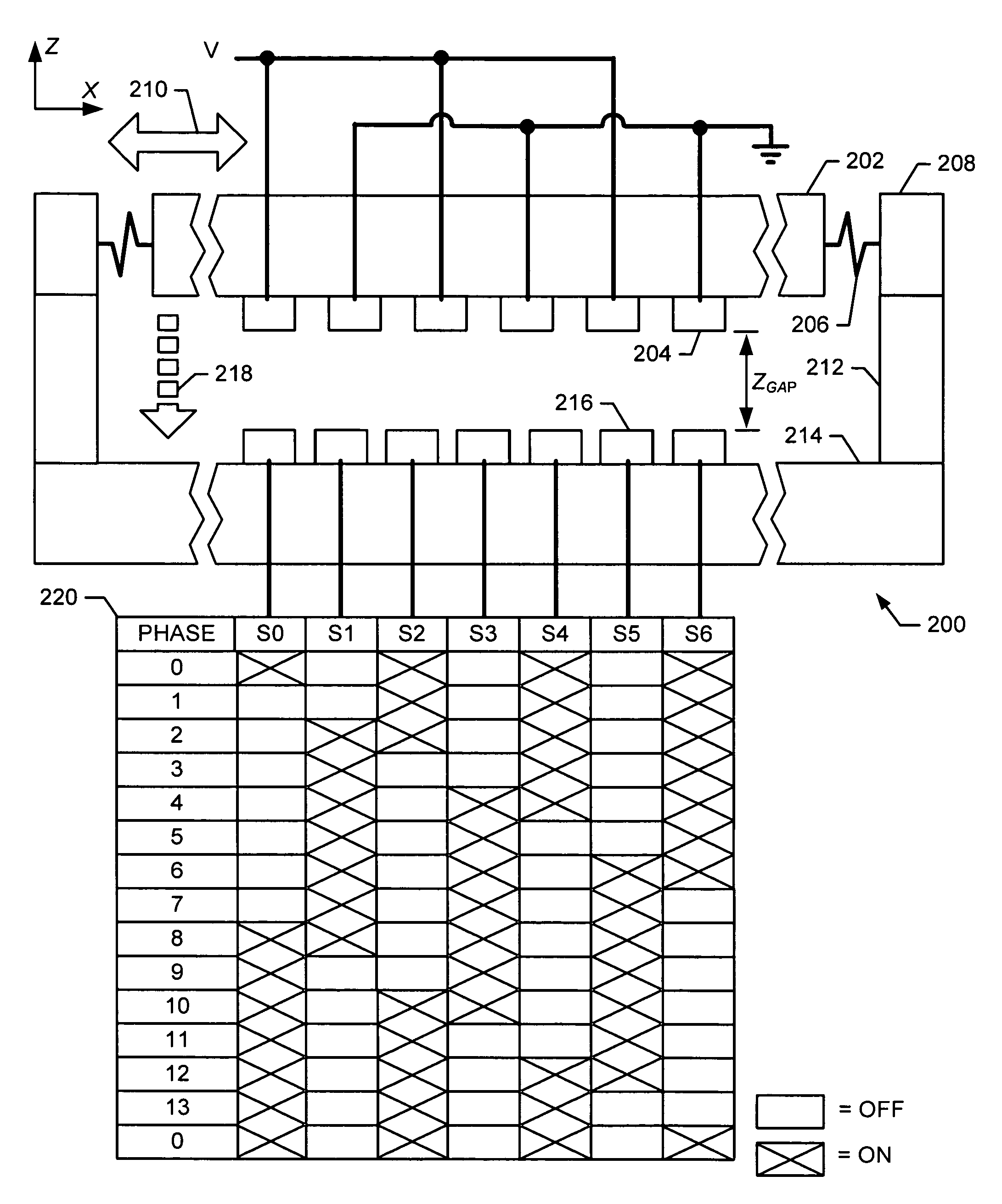
- A calibration method that adjusts the electrode voltage in electrostatic motors to a threshold level, allowing the drive to maintain registration under external accelerations by determining an operational voltage that balances electrostatic and restorative forces, preventing unwanted attraction between mover and stator elements.


Standards and Testing Protocols for Motor Reliability
The establishment of comprehensive standards and testing protocols for motor reliability represents a critical foundation for evaluating the long-term performance characteristics of electrostatic motors versus direct drive systems. Current industry standards primarily focus on electromagnetic motor technologies, creating significant gaps in standardized evaluation methodologies for emerging electrostatic motor applications.
International standards organizations, including IEC and IEEE, have developed fundamental frameworks for motor reliability assessment through standards such as IEC 60034 series and IEEE 112. However, these protocols predominantly address electromagnetic systems and lack specific provisions for electrostatic motor characteristics, including high-voltage insulation degradation, electrostatic field stability, and dielectric material aging patterns.
Testing protocols for electrostatic motors require specialized methodologies that account for unique failure modes not present in conventional systems. Critical parameters include dielectric breakdown voltage testing, corona discharge detection, electrostatic field uniformity measurements, and long-term insulation resistance monitoring. These protocols must operate under controlled environmental conditions, particularly humidity and temperature variations that significantly impact electrostatic system performance.
Accelerated life testing methodologies present particular challenges for electrostatic systems due to their sensitivity to environmental factors. Traditional thermal cycling and mechanical stress testing protocols may not accurately predict electrostatic motor degradation patterns. New testing approaches must incorporate high-voltage stress testing, partial discharge monitoring, and electrostatic field mapping techniques to establish meaningful reliability predictions.
Comparative testing protocols between electrostatic and direct drive systems require standardized metrics that account for different operational principles. Key performance indicators must include mean time between failures, degradation rates under various load conditions, environmental sensitivity factors, and maintenance interval requirements. These metrics enable objective reliability comparisons across different motor technologies.
The development of industry-specific testing standards remains fragmented, with aerospace, automotive, and industrial applications requiring tailored protocols. Electrostatic motors in precision positioning applications demand different reliability criteria compared to high-torque direct drive systems, necessitating flexible testing frameworks that accommodate diverse operational requirements while maintaining standardized evaluation methodologies.
International standards organizations, including IEC and IEEE, have developed fundamental frameworks for motor reliability assessment through standards such as IEC 60034 series and IEEE 112. However, these protocols predominantly address electromagnetic systems and lack specific provisions for electrostatic motor characteristics, including high-voltage insulation degradation, electrostatic field stability, and dielectric material aging patterns.
Testing protocols for electrostatic motors require specialized methodologies that account for unique failure modes not present in conventional systems. Critical parameters include dielectric breakdown voltage testing, corona discharge detection, electrostatic field uniformity measurements, and long-term insulation resistance monitoring. These protocols must operate under controlled environmental conditions, particularly humidity and temperature variations that significantly impact electrostatic system performance.
Accelerated life testing methodologies present particular challenges for electrostatic systems due to their sensitivity to environmental factors. Traditional thermal cycling and mechanical stress testing protocols may not accurately predict electrostatic motor degradation patterns. New testing approaches must incorporate high-voltage stress testing, partial discharge monitoring, and electrostatic field mapping techniques to establish meaningful reliability predictions.
Comparative testing protocols between electrostatic and direct drive systems require standardized metrics that account for different operational principles. Key performance indicators must include mean time between failures, degradation rates under various load conditions, environmental sensitivity factors, and maintenance interval requirements. These metrics enable objective reliability comparisons across different motor technologies.
The development of industry-specific testing standards remains fragmented, with aerospace, automotive, and industrial applications requiring tailored protocols. Electrostatic motors in precision positioning applications demand different reliability criteria compared to high-torque direct drive systems, necessitating flexible testing frameworks that accommodate diverse operational requirements while maintaining standardized evaluation methodologies.
Lifecycle Assessment and Sustainability in Motor Design
The environmental impact assessment of electrostatic motors versus direct drive systems reveals significant differences in their lifecycle sustainability profiles. Electrostatic motors demonstrate superior environmental performance primarily due to their simplified construction, which eliminates the need for rare earth magnets commonly required in direct drive systems. This fundamental design difference reduces dependency on environmentally intensive mining operations and associated supply chain vulnerabilities.
Material composition analysis shows that electrostatic motors utilize predominantly common materials such as aluminum, copper, and standard polymers, resulting in a carbon footprint reduction of approximately 30-40% during manufacturing compared to direct drive systems. The absence of permanent magnets containing neodymium, dysprosium, and other rare earth elements significantly improves the sustainability profile, as these materials require energy-intensive extraction and processing methods.
Energy consumption patterns throughout the operational lifecycle favor electrostatic motors in specific applications. While direct drive systems typically exhibit higher efficiency ratings during peak performance, electrostatic motors maintain more consistent efficiency across varying load conditions. This characteristic translates to reduced energy waste over extended operational periods, particularly in applications with fluctuating demand profiles.
End-of-life considerations present another sustainability advantage for electrostatic motors. The recyclability rate of electrostatic motor components reaches approximately 85-90%, compared to 60-70% for direct drive systems containing rare earth magnets. The complex separation processes required for rare earth element recovery from permanent magnets create additional environmental burdens and economic barriers to effective recycling.
Water usage and chemical processing requirements during manufacturing show marked differences between the two technologies. Electrostatic motor production requires significantly less water-intensive processing, reducing environmental impact in water-stressed regions. Additionally, the elimination of rare earth element processing reduces exposure to toxic chemicals and radioactive materials commonly associated with rare earth mining operations.
The durability characteristics of electrostatic motors contribute positively to their sustainability profile. Extended operational lifespans, often exceeding 25-30 years with minimal maintenance, reduce replacement frequency and associated manufacturing impacts. This longevity factor becomes increasingly important when evaluating total environmental cost over complete product lifecycles.
Material composition analysis shows that electrostatic motors utilize predominantly common materials such as aluminum, copper, and standard polymers, resulting in a carbon footprint reduction of approximately 30-40% during manufacturing compared to direct drive systems. The absence of permanent magnets containing neodymium, dysprosium, and other rare earth elements significantly improves the sustainability profile, as these materials require energy-intensive extraction and processing methods.
Energy consumption patterns throughout the operational lifecycle favor electrostatic motors in specific applications. While direct drive systems typically exhibit higher efficiency ratings during peak performance, electrostatic motors maintain more consistent efficiency across varying load conditions. This characteristic translates to reduced energy waste over extended operational periods, particularly in applications with fluctuating demand profiles.
End-of-life considerations present another sustainability advantage for electrostatic motors. The recyclability rate of electrostatic motor components reaches approximately 85-90%, compared to 60-70% for direct drive systems containing rare earth magnets. The complex separation processes required for rare earth element recovery from permanent magnets create additional environmental burdens and economic barriers to effective recycling.
Water usage and chemical processing requirements during manufacturing show marked differences between the two technologies. Electrostatic motor production requires significantly less water-intensive processing, reducing environmental impact in water-stressed regions. Additionally, the elimination of rare earth element processing reduces exposure to toxic chemicals and radioactive materials commonly associated with rare earth mining operations.
The durability characteristics of electrostatic motors contribute positively to their sustainability profile. Extended operational lifespans, often exceeding 25-30 years with minimal maintenance, reduce replacement frequency and associated manufacturing impacts. This longevity factor becomes increasingly important when evaluating total environmental cost over complete product lifecycles.
Unlock deeper insights with PatSnap Eureka Quick Research — get a full tech report to explore trends and direct your research. Try now!
Generate Your Research Report Instantly with AI Agent
Supercharge your innovation with PatSnap Eureka AI Agent Platform!