Enhancing Battery Life with Optimal Array Configuration
MAR 5, 20269 MIN READ
Generate Your Research Report Instantly with AI Agent
Patsnap Eureka helps you evaluate technical feasibility & market potential.
Battery Array Configuration Background and Objectives
Battery technology has undergone remarkable evolution since the invention of the first electrochemical cells in the 18th century. From Alessandro Volta's voltaic pile to modern lithium-ion systems, the fundamental challenge has remained consistent: maximizing energy storage capacity while ensuring longevity and reliability. The emergence of portable electronics, electric vehicles, and renewable energy storage systems has intensified the demand for advanced battery solutions that can deliver sustained performance over extended operational periods.
The concept of battery array configuration emerged as a critical optimization strategy in the late 20th century, driven by the need to balance power output, energy density, and system reliability. Traditional approaches focused primarily on individual cell chemistry improvements, but the limitations of single-cell performance led researchers to explore sophisticated array architectures. These configurations involve strategic arrangements of multiple battery cells in series, parallel, or hybrid combinations to achieve optimal performance characteristics.
Contemporary battery array design faces unprecedented challenges as applications demand increasingly complex performance profiles. Electric vehicle manufacturers require arrays that can deliver high power for acceleration while maintaining energy efficiency for extended range. Grid-scale energy storage systems need configurations that can handle rapid charge-discharge cycles while maintaining stability over decades of operation. Consumer electronics demand compact arrays that provide all-day power in increasingly miniaturized form factors.
The primary objective of optimal battery array configuration research centers on developing intelligent arrangement strategies that maximize overall system lifespan while meeting specific performance requirements. This involves sophisticated modeling of cell-to-cell interactions, thermal management considerations, and degradation pattern analysis. Advanced configuration algorithms must account for manufacturing variations between individual cells, environmental operating conditions, and dynamic load patterns that vary significantly across different applications.
Modern research initiatives focus on adaptive array management systems that can dynamically reconfigure connections based on real-time performance monitoring. These systems aim to isolate degraded cells, redistribute loads among healthy cells, and optimize charging patterns to minimize stress on individual components. The integration of artificial intelligence and machine learning algorithms enables predictive maintenance strategies that can anticipate failure modes and proactively adjust array configurations to extend overall system life.
The ultimate goal encompasses developing standardized frameworks for array optimization that can be applied across diverse industries and applications. This includes establishing design principles for modular battery systems, creating universal interfaces for cell monitoring and management, and developing cost-effective manufacturing processes for complex array architectures. Success in this domain promises to unlock significant improvements in battery system economics, environmental sustainability, and technological capability across multiple sectors.
The concept of battery array configuration emerged as a critical optimization strategy in the late 20th century, driven by the need to balance power output, energy density, and system reliability. Traditional approaches focused primarily on individual cell chemistry improvements, but the limitations of single-cell performance led researchers to explore sophisticated array architectures. These configurations involve strategic arrangements of multiple battery cells in series, parallel, or hybrid combinations to achieve optimal performance characteristics.
Contemporary battery array design faces unprecedented challenges as applications demand increasingly complex performance profiles. Electric vehicle manufacturers require arrays that can deliver high power for acceleration while maintaining energy efficiency for extended range. Grid-scale energy storage systems need configurations that can handle rapid charge-discharge cycles while maintaining stability over decades of operation. Consumer electronics demand compact arrays that provide all-day power in increasingly miniaturized form factors.
The primary objective of optimal battery array configuration research centers on developing intelligent arrangement strategies that maximize overall system lifespan while meeting specific performance requirements. This involves sophisticated modeling of cell-to-cell interactions, thermal management considerations, and degradation pattern analysis. Advanced configuration algorithms must account for manufacturing variations between individual cells, environmental operating conditions, and dynamic load patterns that vary significantly across different applications.
Modern research initiatives focus on adaptive array management systems that can dynamically reconfigure connections based on real-time performance monitoring. These systems aim to isolate degraded cells, redistribute loads among healthy cells, and optimize charging patterns to minimize stress on individual components. The integration of artificial intelligence and machine learning algorithms enables predictive maintenance strategies that can anticipate failure modes and proactively adjust array configurations to extend overall system life.
The ultimate goal encompasses developing standardized frameworks for array optimization that can be applied across diverse industries and applications. This includes establishing design principles for modular battery systems, creating universal interfaces for cell monitoring and management, and developing cost-effective manufacturing processes for complex array architectures. Success in this domain promises to unlock significant improvements in battery system economics, environmental sustainability, and technological capability across multiple sectors.
Market Demand for Extended Battery Life Solutions
The global demand for extended battery life solutions has reached unprecedented levels, driven by the exponential growth of portable electronic devices, electric vehicles, and renewable energy storage systems. Consumer expectations have evolved significantly, with users demanding devices that can operate for extended periods without frequent charging interruptions. This shift in consumer behavior has created substantial market pressure on manufacturers to develop more efficient battery technologies and optimization strategies.
The smartphone and tablet market represents one of the largest segments driving demand for enhanced battery performance. Modern consumers rely heavily on mobile devices for work, entertainment, and communication, creating a need for batteries that can sustain intensive usage patterns throughout extended periods. Similarly, the wearable technology sector, including smartwatches and fitness trackers, requires compact yet long-lasting power solutions that can maintain functionality across multiple days of continuous operation.
Electric vehicle adoption has emerged as a critical market driver, with range anxiety remaining a primary concern for potential buyers. The automotive industry faces increasing pressure to develop battery systems that can deliver extended driving ranges while maintaining rapid charging capabilities. Fleet operators and individual consumers alike prioritize vehicles with superior battery longevity, creating substantial market opportunities for advanced battery array configurations.
The renewable energy sector presents another significant demand driver, particularly in grid-scale energy storage applications. Utility companies and industrial facilities require battery systems capable of storing large amounts of energy for extended periods while maintaining efficiency and reliability. These applications demand sophisticated array configurations that can optimize energy density and discharge characteristics.
Enterprise and industrial markets have shown growing interest in extended battery life solutions for critical infrastructure applications. Data centers, telecommunications networks, and medical facilities require backup power systems with enhanced reliability and extended operational capabilities. These sectors prioritize battery solutions that can maintain consistent performance over extended discharge cycles.
The Internet of Things ecosystem has created demand for ultra-low-power battery solutions capable of operating for years without replacement. Smart city infrastructure, environmental monitoring systems, and industrial sensors require battery technologies optimized for longevity rather than peak performance, driving innovation in array configuration strategies.
Market research indicates strong growth potential across all these segments, with particular emphasis on solutions that can deliver measurable improvements in battery life through optimized array configurations rather than solely relying on advances in battery chemistry.
The smartphone and tablet market represents one of the largest segments driving demand for enhanced battery performance. Modern consumers rely heavily on mobile devices for work, entertainment, and communication, creating a need for batteries that can sustain intensive usage patterns throughout extended periods. Similarly, the wearable technology sector, including smartwatches and fitness trackers, requires compact yet long-lasting power solutions that can maintain functionality across multiple days of continuous operation.
Electric vehicle adoption has emerged as a critical market driver, with range anxiety remaining a primary concern for potential buyers. The automotive industry faces increasing pressure to develop battery systems that can deliver extended driving ranges while maintaining rapid charging capabilities. Fleet operators and individual consumers alike prioritize vehicles with superior battery longevity, creating substantial market opportunities for advanced battery array configurations.
The renewable energy sector presents another significant demand driver, particularly in grid-scale energy storage applications. Utility companies and industrial facilities require battery systems capable of storing large amounts of energy for extended periods while maintaining efficiency and reliability. These applications demand sophisticated array configurations that can optimize energy density and discharge characteristics.
Enterprise and industrial markets have shown growing interest in extended battery life solutions for critical infrastructure applications. Data centers, telecommunications networks, and medical facilities require backup power systems with enhanced reliability and extended operational capabilities. These sectors prioritize battery solutions that can maintain consistent performance over extended discharge cycles.
The Internet of Things ecosystem has created demand for ultra-low-power battery solutions capable of operating for years without replacement. Smart city infrastructure, environmental monitoring systems, and industrial sensors require battery technologies optimized for longevity rather than peak performance, driving innovation in array configuration strategies.
Market research indicates strong growth potential across all these segments, with particular emphasis on solutions that can deliver measurable improvements in battery life through optimized array configurations rather than solely relying on advances in battery chemistry.
Current Battery Array Limitations and Technical Challenges
Current battery array configurations face significant thermal management challenges that directly impact overall system performance and longevity. Heat generation during charge and discharge cycles creates temperature gradients across battery cells, leading to uneven aging patterns and reduced capacity retention. Traditional array designs often lack adequate thermal dissipation mechanisms, resulting in hotspots that accelerate degradation in specific cells while others remain underutilized.
Cell-to-cell variations present another critical limitation in existing battery arrays. Manufacturing tolerances create inherent differences in capacity, internal resistance, and voltage characteristics among individual cells. These variations become amplified over time, causing some cells to reach full charge or discharge states before others, leading to premature system shutdown and suboptimal energy utilization. Current balancing circuits struggle to compensate for these disparities effectively.
Electrical interconnection methods in conventional arrays introduce parasitic resistances and voltage drops that compromise energy efficiency. Series-parallel configurations often create current imbalances, where certain paths experience higher current densities than others. This uneven current distribution accelerates wear in heavily loaded cells while underutilizing others, reducing the overall array's effective capacity and cycle life.
Mechanical stress and vibration effects pose additional challenges, particularly in mobile applications. Traditional rigid mounting systems fail to accommodate thermal expansion and contraction cycles, creating mechanical stress points that can damage cell casings and internal structures. Poor mechanical design also increases susceptibility to external vibrations, potentially causing internal component displacement and performance degradation.
Monitoring and control system limitations further constrain current battery array performance. Existing battery management systems often rely on simplified voltage and temperature measurements that provide insufficient granularity for optimal control. Limited real-time data processing capabilities prevent dynamic optimization of charging and discharging patterns based on individual cell conditions and usage patterns.
Scalability constraints in current array architectures limit their applicability across different power and energy requirements. Fixed configuration designs lack flexibility to adapt to varying load profiles or to accommodate different cell chemistries within the same system. This inflexibility forces compromises in performance optimization and limits the potential for future upgrades or modifications.
Cell-to-cell variations present another critical limitation in existing battery arrays. Manufacturing tolerances create inherent differences in capacity, internal resistance, and voltage characteristics among individual cells. These variations become amplified over time, causing some cells to reach full charge or discharge states before others, leading to premature system shutdown and suboptimal energy utilization. Current balancing circuits struggle to compensate for these disparities effectively.
Electrical interconnection methods in conventional arrays introduce parasitic resistances and voltage drops that compromise energy efficiency. Series-parallel configurations often create current imbalances, where certain paths experience higher current densities than others. This uneven current distribution accelerates wear in heavily loaded cells while underutilizing others, reducing the overall array's effective capacity and cycle life.
Mechanical stress and vibration effects pose additional challenges, particularly in mobile applications. Traditional rigid mounting systems fail to accommodate thermal expansion and contraction cycles, creating mechanical stress points that can damage cell casings and internal structures. Poor mechanical design also increases susceptibility to external vibrations, potentially causing internal component displacement and performance degradation.
Monitoring and control system limitations further constrain current battery array performance. Existing battery management systems often rely on simplified voltage and temperature measurements that provide insufficient granularity for optimal control. Limited real-time data processing capabilities prevent dynamic optimization of charging and discharging patterns based on individual cell conditions and usage patterns.
Scalability constraints in current array architectures limit their applicability across different power and energy requirements. Fixed configuration designs lack flexibility to adapt to varying load profiles or to accommodate different cell chemistries within the same system. This inflexibility forces compromises in performance optimization and limits the potential for future upgrades or modifications.
Existing Battery Array Optimization Solutions
01 Battery management systems for life extension
Advanced battery management systems monitor and control charging and discharging cycles to optimize battery performance and extend operational life. These systems employ algorithms to prevent overcharging, deep discharge, and thermal stress, which are primary factors in battery degradation. Smart management techniques include state-of-charge estimation, cell balancing, and adaptive charging protocols that adjust based on usage patterns and environmental conditions.- Battery management systems for life optimization: Advanced battery management systems (BMS) can be implemented to monitor and control battery parameters such as voltage, current, temperature, and state of charge. These systems optimize charging and discharging cycles, prevent overcharging and deep discharge, and balance cell voltages to extend overall battery life. Smart algorithms can predict battery degradation patterns and adjust operational parameters accordingly to maximize longevity.
- Advanced electrode materials and compositions: The development of improved electrode materials with enhanced stability and conductivity can significantly extend battery life. Novel cathode and anode compositions with optimized particle sizes, surface treatments, and dopants can reduce degradation mechanisms such as structural collapse and side reactions. These materials maintain better capacity retention over extended charge-discharge cycles and operate more efficiently across wider temperature ranges.
- Electrolyte formulation and additives: Specialized electrolyte formulations incorporating functional additives can improve battery longevity by forming stable solid electrolyte interphase layers, reducing electrolyte decomposition, and preventing metal dissolution. These formulations can include ionic liquids, polymer electrolytes, or specific additive packages that enhance thermal stability and reduce parasitic reactions that contribute to capacity fade over time.
- Thermal management and cooling systems: Effective thermal management systems help maintain optimal operating temperatures for batteries, preventing accelerated degradation caused by excessive heat or cold. These systems may include active cooling mechanisms, phase change materials, heat pipes, or thermal insulation designs that distribute heat evenly and maintain temperature uniformity across battery cells. Proper thermal control reduces stress on battery components and extends operational life.
- Charging protocols and cycle optimization: Optimized charging protocols that control charging rates, voltage limits, and rest periods can significantly impact battery longevity. Multi-stage charging algorithms, pulse charging techniques, and adaptive charging strategies based on battery state and environmental conditions can minimize stress on battery materials. These methods reduce lithium plating, electrolyte decomposition, and mechanical stress that accumulate over repeated cycles.
02 Advanced electrode materials and compositions
Novel electrode materials and compositions are developed to enhance energy density and cycle life. These materials include modified cathode and anode structures with improved electrochemical stability and reduced degradation rates. Innovations in material science focus on optimizing particle size, surface coatings, and crystal structures to minimize capacity fade over repeated charge-discharge cycles.Expand Specific Solutions03 Electrolyte formulations for enhanced stability
Specialized electrolyte formulations are designed to improve battery longevity by reducing side reactions and maintaining ionic conductivity over extended periods. These formulations may include additives, stabilizers, and optimized solvent systems that prevent electrolyte decomposition and electrode passivation. Enhanced electrolyte stability contributes to maintaining battery capacity and preventing premature failure.Expand Specific Solutions04 Thermal management and cooling systems
Effective thermal management systems are implemented to maintain optimal operating temperatures and prevent heat-related degradation. These systems include passive and active cooling mechanisms, heat dissipation structures, and temperature monitoring to ensure batteries operate within safe thermal ranges. Proper thermal control prevents accelerated aging, capacity loss, and safety hazards associated with temperature extremes.Expand Specific Solutions05 Charging protocols and cycle optimization
Optimized charging protocols and cycle management strategies are employed to minimize stress on battery cells and maximize lifespan. These methods include multi-stage charging, pulse charging techniques, and rest periods that allow for ion redistribution and stress relaxation. Intelligent charging algorithms adapt to battery age and condition, adjusting parameters to maintain performance while reducing degradation mechanisms.Expand Specific Solutions
Key Players in Battery Management and Array Systems
The battery life enhancement through optimal array configuration represents a rapidly evolving sector within the broader energy storage industry, currently in its growth phase with significant market expansion driven by electric vehicle adoption and renewable energy integration. The market demonstrates substantial scale, with established players like LG Energy Solution, Samsung SDI, and SK On leading lithium-ion battery manufacturing, while automotive giants including Toyota Industries, Honda Motor, Ford Global Technologies, and GM Global Technology Operations drive application-specific innovations. Technology maturity varies significantly across the competitive landscape, with Korean manufacturers like LG Energy Solution and Samsung SDI achieving high production maturity, while emerging companies such as Microvast and STABL Energy focus on next-generation solutions. Traditional electronics companies including Panasonic and Infineon Technologies contribute semiconductor and power management expertise, while research institutions like Korea Electronics Technology Institute and Oxford University Innovation advance fundamental battery chemistry and configuration optimization technologies.
LG Energy Solution Ltd.
Technical Solution: LG Energy Solution employs advanced cell-to-pack (CTP) technology and optimized array configurations to enhance battery life. Their NCMA (Nickel Cobalt Manganese Aluminum) cathode chemistry combined with intelligent thermal management systems enables up to 20% improvement in energy density while maintaining cycle life exceeding 3000 cycles. The company utilizes AI-driven battery management systems (BMS) that optimize charging patterns and cell balancing across arrays, reducing degradation through predictive algorithms that adjust voltage and current distribution based on individual cell characteristics and operating conditions.
Strengths: Leading market position with proven scalability and advanced manufacturing capabilities. Weaknesses: Higher costs compared to traditional lithium-ion solutions and dependency on rare earth materials.
Samsung SDI Co., Ltd.
Technical Solution: Samsung SDI focuses on solid-state battery technology with optimized array configurations featuring enhanced safety and longevity. Their prismatic cell design incorporates advanced silicon nanowire anodes and proprietary electrolyte formulations that extend cycle life to over 4000 cycles. The company's modular array architecture allows for flexible configuration optimization, utilizing machine learning algorithms to predict optimal cell arrangement patterns that minimize internal resistance and heat generation, thereby extending overall battery pack lifespan by up to 30% compared to conventional configurations.
Strengths: Strong R&D capabilities and innovative solid-state technology leadership. Weaknesses: Limited commercial availability of next-generation technologies and high development costs.
Core Innovations in Optimal Array Configuration Patents
Hybrid power supply and electric vehicle using the same
PatentActiveUS20160023571A1
Innovation
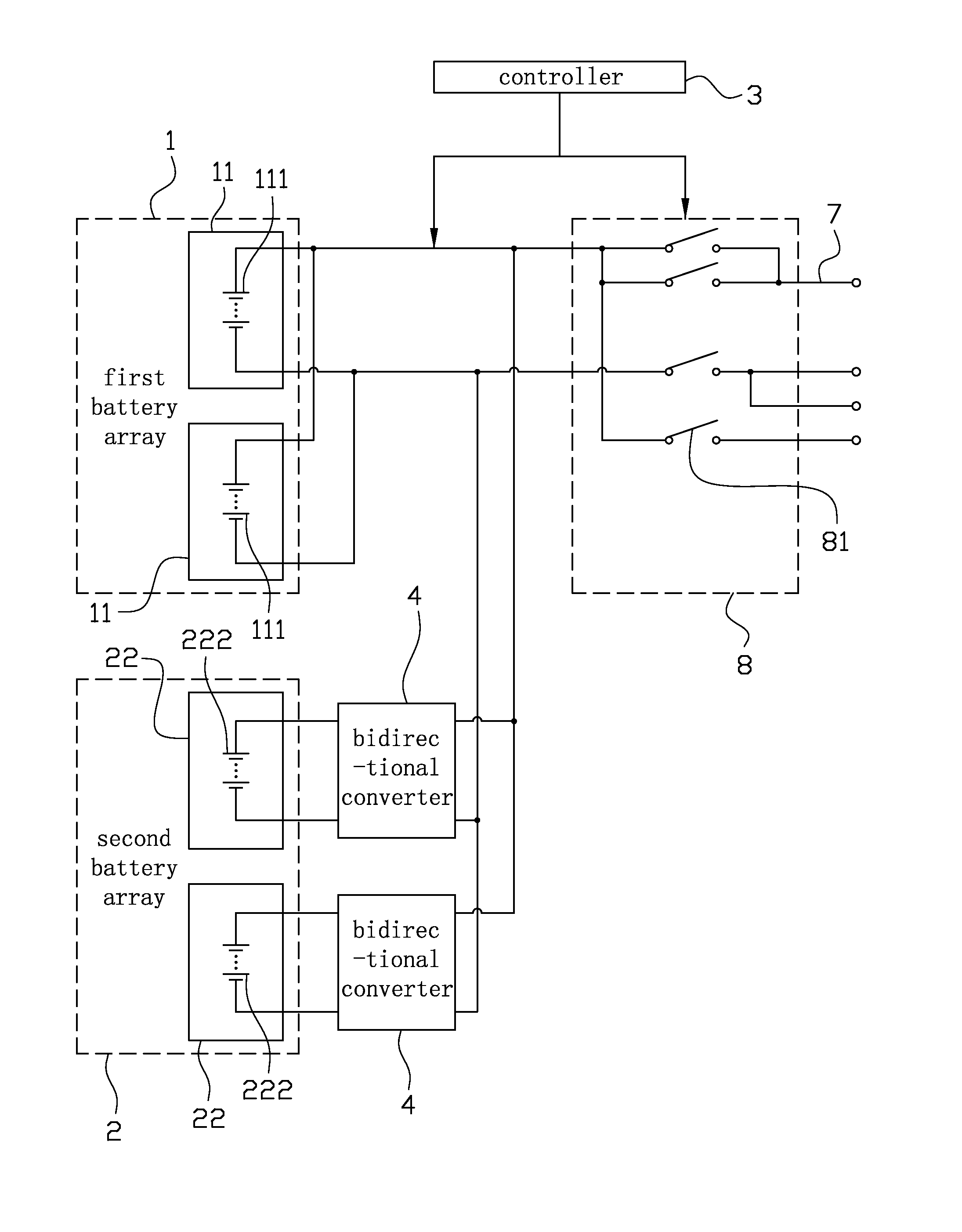
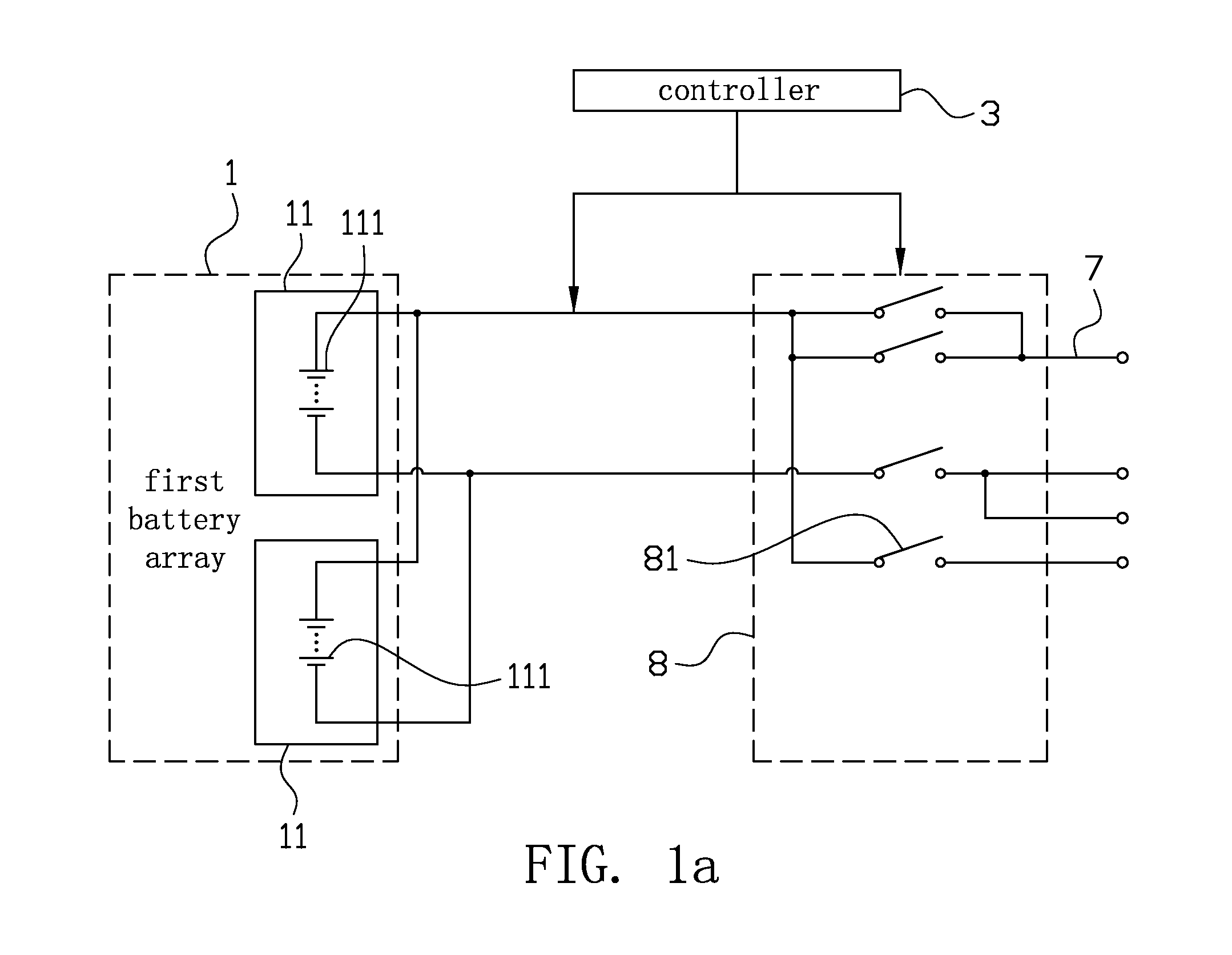
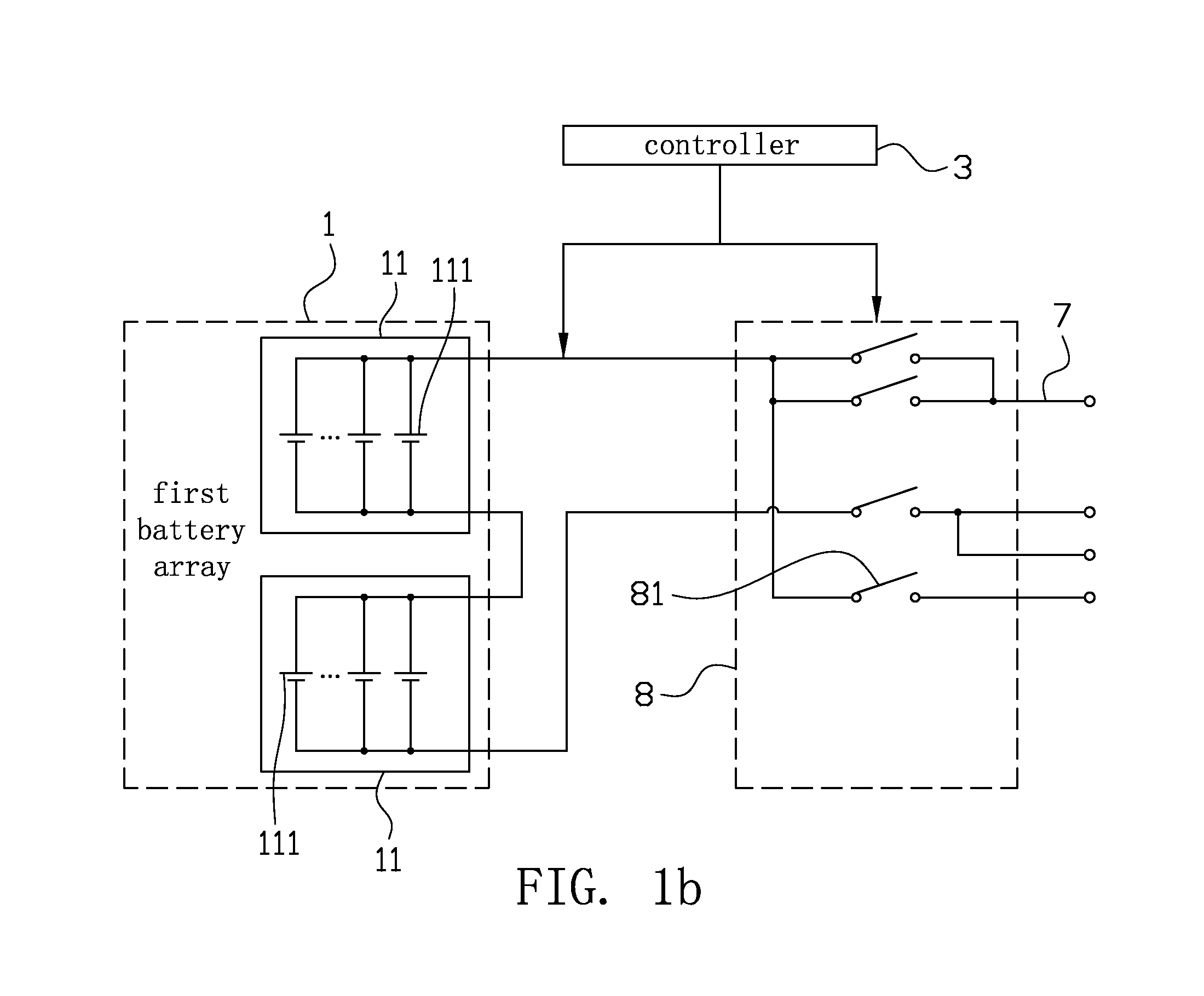
- A hybrid power supply system comprising a first battery array with high-rate charging/discharging performance and a second battery array with greater capacity, connected in parallel via a bidirectional converter, optimizing charge allocation and preventing current circulation to ensure extended vehicle mileage and fast energy recovery.

Systems and methods for managing battery arrays
PatentPendingUS20240222985A1
Innovation
- A battery array management system utilizing a switch array for time-division multiplexing, an optimized DC-DC converter, and a control unit to perform active and passive balancing operations, simplifying the hardware structure and improving integration by using a Schottky diode and MOS transistor synchronous rectification circuit for efficient charging and discharging.


Environmental Impact and Sustainability Considerations
The environmental implications of battery array optimization extend far beyond immediate performance gains, encompassing the entire lifecycle from raw material extraction to end-of-life disposal. Optimal array configurations directly influence resource utilization efficiency, as improved battery life reduces the frequency of replacement cycles and consequently diminishes the demand for critical materials such as lithium, cobalt, and rare earth elements. This reduction in material consumption translates to decreased mining activities and associated environmental degradation.
Manufacturing processes benefit significantly from enhanced battery longevity achieved through optimal configurations. Extended operational lifespans reduce the cumulative carbon footprint per unit of energy delivered, as the embodied energy invested during production is amortized over longer service periods. Advanced array management systems that maximize battery efficiency contribute to lower overall greenhouse gas emissions throughout the product lifecycle.
The circular economy principles gain substantial momentum through optimized battery arrays. Enhanced performance characteristics enable more effective battery repurposing and cascading applications, where batteries initially designed for high-performance applications can subsequently serve in stationary energy storage systems. This extended utility chain maximizes resource value extraction while minimizing waste generation.
Recycling efficiency improves considerably when batteries maintain optimal performance longer, as degraded cells often complicate material recovery processes. Well-maintained battery arrays through proper configuration management preserve cell integrity, facilitating more effective separation and purification of valuable materials during recycling operations.
Regional environmental benefits emerge from reduced transportation requirements associated with fewer replacement cycles. Lower logistics demands decrease associated emissions while reducing packaging waste and distribution infrastructure strain. Additionally, optimal array configurations support grid stability and renewable energy integration, contributing to broader decarbonization objectives and sustainable energy transition goals.
Manufacturing processes benefit significantly from enhanced battery longevity achieved through optimal configurations. Extended operational lifespans reduce the cumulative carbon footprint per unit of energy delivered, as the embodied energy invested during production is amortized over longer service periods. Advanced array management systems that maximize battery efficiency contribute to lower overall greenhouse gas emissions throughout the product lifecycle.
The circular economy principles gain substantial momentum through optimized battery arrays. Enhanced performance characteristics enable more effective battery repurposing and cascading applications, where batteries initially designed for high-performance applications can subsequently serve in stationary energy storage systems. This extended utility chain maximizes resource value extraction while minimizing waste generation.
Recycling efficiency improves considerably when batteries maintain optimal performance longer, as degraded cells often complicate material recovery processes. Well-maintained battery arrays through proper configuration management preserve cell integrity, facilitating more effective separation and purification of valuable materials during recycling operations.
Regional environmental benefits emerge from reduced transportation requirements associated with fewer replacement cycles. Lower logistics demands decrease associated emissions while reducing packaging waste and distribution infrastructure strain. Additionally, optimal array configurations support grid stability and renewable energy integration, contributing to broader decarbonization objectives and sustainable energy transition goals.
Safety Standards and Regulatory Framework for Battery Arrays
Battery array safety standards have evolved significantly as energy storage systems become more prevalent across automotive, grid-scale, and consumer electronics applications. The regulatory landscape encompasses multiple jurisdictions with varying requirements, creating a complex compliance environment for manufacturers seeking to optimize array configurations while maintaining safety integrity.
International standards organizations have established comprehensive frameworks governing battery array design and operation. IEC 62619 provides fundamental safety requirements for lithium-ion batteries in industrial applications, while UL 9540 addresses energy storage systems and equipment safety. These standards specifically address array configuration parameters including cell spacing, thermal management requirements, and electrical isolation protocols that directly impact optimal array design decisions.
Regional regulatory variations significantly influence array configuration strategies. The European Union's Battery Regulation 2023/1542 introduces stringent lifecycle requirements affecting array modularity and repairability considerations. Meanwhile, the United States follows NFPA 855 standards for stationary energy storage installations, emphasizing fire suppression and thermal runaway containment measures that constrain physical array arrangements.
Automotive applications face additional regulatory complexity through UN ECE R100 requirements for electric vehicle battery systems. These regulations mandate specific crash safety protocols and electrical safety measures that influence optimal cell arrangement within battery packs. The integration of functional safety standards ISO 26262 further complicates array design by requiring redundant monitoring systems and fail-safe operational modes.
Emerging regulatory trends focus increasingly on thermal management and gas venting requirements for battery arrays. Recent updates to IEEE 1547 standards for grid-connected energy storage systems emphasize advanced monitoring capabilities and predictive safety measures. These evolving requirements necessitate array configurations that accommodate sophisticated sensor networks and communication systems while maintaining optimal energy density and performance characteristics.
Compliance verification processes require extensive testing protocols that validate array performance under various failure scenarios. Standards mandate specific test procedures for thermal runaway propagation, electrical fault isolation, and mechanical integrity assessments. These testing requirements often drive array design decisions toward more conservative configurations that may compromise theoretical optimization but ensure regulatory compliance and market access across multiple jurisdictions.
International standards organizations have established comprehensive frameworks governing battery array design and operation. IEC 62619 provides fundamental safety requirements for lithium-ion batteries in industrial applications, while UL 9540 addresses energy storage systems and equipment safety. These standards specifically address array configuration parameters including cell spacing, thermal management requirements, and electrical isolation protocols that directly impact optimal array design decisions.
Regional regulatory variations significantly influence array configuration strategies. The European Union's Battery Regulation 2023/1542 introduces stringent lifecycle requirements affecting array modularity and repairability considerations. Meanwhile, the United States follows NFPA 855 standards for stationary energy storage installations, emphasizing fire suppression and thermal runaway containment measures that constrain physical array arrangements.
Automotive applications face additional regulatory complexity through UN ECE R100 requirements for electric vehicle battery systems. These regulations mandate specific crash safety protocols and electrical safety measures that influence optimal cell arrangement within battery packs. The integration of functional safety standards ISO 26262 further complicates array design by requiring redundant monitoring systems and fail-safe operational modes.
Emerging regulatory trends focus increasingly on thermal management and gas venting requirements for battery arrays. Recent updates to IEEE 1547 standards for grid-connected energy storage systems emphasize advanced monitoring capabilities and predictive safety measures. These evolving requirements necessitate array configurations that accommodate sophisticated sensor networks and communication systems while maintaining optimal energy density and performance characteristics.
Compliance verification processes require extensive testing protocols that validate array performance under various failure scenarios. Standards mandate specific test procedures for thermal runaway propagation, electrical fault isolation, and mechanical integrity assessments. These testing requirements often drive array design decisions toward more conservative configurations that may compromise theoretical optimization but ensure regulatory compliance and market access across multiple jurisdictions.
Unlock deeper insights with Patsnap Eureka Quick Research — get a full tech report to explore trends and direct your research. Try now!
Generate Your Research Report Instantly with AI Agent
Supercharge your innovation with Patsnap Eureka AI Agent Platform!