Eutectic Systems vs Epoxy Compounds: Bonding Strength
APR 27, 20269 MIN READ
Generate Your Research Report Instantly with AI Agent
PatSnap Eureka helps you evaluate technical feasibility & market potential.
Eutectic vs Epoxy Bonding Background and Objectives
The evolution of bonding technologies has been fundamentally shaped by the continuous pursuit of stronger, more reliable adhesive solutions across diverse industrial applications. Traditional mechanical fastening methods, while effective in many scenarios, often present limitations in terms of stress distribution, weight considerations, and manufacturing complexity. This has driven the development of advanced chemical bonding systems that can provide superior performance characteristics while enabling more streamlined production processes.
Eutectic bonding systems represent a sophisticated approach to materials joining that leverages the unique properties of eutectic alloys and their phase transformation behaviors. These systems have gained prominence particularly in semiconductor packaging, microelectronics assembly, and precision manufacturing applications where thermal cycling resistance and electrical conductivity are critical requirements. The fundamental principle relies on the formation of intermetallic compounds at specific temperature and composition ratios, creating bonds with exceptional mechanical and thermal properties.
Epoxy-based bonding compounds have established themselves as versatile adhesive solutions across numerous industries, from aerospace and automotive to consumer electronics and construction. The polymer chemistry underlying epoxy systems allows for extensive customization of mechanical properties, curing characteristics, and environmental resistance through careful selection of resin formulations, hardening agents, and additive packages. This flexibility has made epoxy compounds the go-to solution for applications requiring room temperature processing or where substrate compatibility is a primary concern.
The comparative evaluation of bonding strength between eutectic systems and epoxy compounds has become increasingly critical as industries demand higher performance standards and more reliable joining solutions. Factors such as shear strength, tensile strength, fatigue resistance, and long-term durability under various environmental conditions directly impact product reliability and service life. Understanding these performance differentials enables engineers to make informed material selection decisions based on specific application requirements.
The primary objective of this technical investigation centers on establishing comprehensive performance benchmarks for both eutectic and epoxy bonding technologies across multiple strength parameters. This includes quantitative analysis of mechanical properties under standard testing conditions, evaluation of performance degradation under thermal cycling and environmental stress, and assessment of process-related factors that influence final bond quality. Additionally, the study aims to identify optimal application domains for each technology based on their respective strength characteristics and processing requirements.
Eutectic bonding systems represent a sophisticated approach to materials joining that leverages the unique properties of eutectic alloys and their phase transformation behaviors. These systems have gained prominence particularly in semiconductor packaging, microelectronics assembly, and precision manufacturing applications where thermal cycling resistance and electrical conductivity are critical requirements. The fundamental principle relies on the formation of intermetallic compounds at specific temperature and composition ratios, creating bonds with exceptional mechanical and thermal properties.
Epoxy-based bonding compounds have established themselves as versatile adhesive solutions across numerous industries, from aerospace and automotive to consumer electronics and construction. The polymer chemistry underlying epoxy systems allows for extensive customization of mechanical properties, curing characteristics, and environmental resistance through careful selection of resin formulations, hardening agents, and additive packages. This flexibility has made epoxy compounds the go-to solution for applications requiring room temperature processing or where substrate compatibility is a primary concern.
The comparative evaluation of bonding strength between eutectic systems and epoxy compounds has become increasingly critical as industries demand higher performance standards and more reliable joining solutions. Factors such as shear strength, tensile strength, fatigue resistance, and long-term durability under various environmental conditions directly impact product reliability and service life. Understanding these performance differentials enables engineers to make informed material selection decisions based on specific application requirements.
The primary objective of this technical investigation centers on establishing comprehensive performance benchmarks for both eutectic and epoxy bonding technologies across multiple strength parameters. This includes quantitative analysis of mechanical properties under standard testing conditions, evaluation of performance degradation under thermal cycling and environmental stress, and assessment of process-related factors that influence final bond quality. Additionally, the study aims to identify optimal application domains for each technology based on their respective strength characteristics and processing requirements.
Market Demand for Advanced Bonding Solutions
The global adhesive and sealant market continues to experience robust growth driven by expanding applications across multiple industries. Electronics manufacturing represents one of the most demanding sectors, where miniaturization trends and increased component density require bonding solutions that deliver exceptional mechanical strength while maintaining thermal and electrical performance. The semiconductor packaging industry particularly seeks materials that can withstand thermal cycling, provide reliable interconnections, and support advanced packaging architectures.
Automotive electrification has emerged as a significant growth driver, with electric vehicle battery systems requiring specialized bonding materials for thermal management, structural integrity, and safety compliance. Traditional epoxy systems face limitations in high-temperature applications and thermal conductivity requirements, creating opportunities for advanced eutectic formulations that offer superior heat dissipation and mechanical properties under extreme conditions.
Aerospace and defense applications demand bonding solutions that maintain performance across wide temperature ranges while providing long-term reliability. The industry's shift toward lightweight composite structures and advanced materials necessitates adhesives that can accommodate different thermal expansion coefficients and provide durable bonds under mechanical stress and environmental exposure.
The renewable energy sector, particularly solar panel manufacturing and wind turbine assembly, requires bonding materials that withstand prolonged UV exposure, temperature fluctuations, and mechanical fatigue. Current market solutions often compromise between bonding strength and environmental durability, highlighting the need for next-generation formulations.
Medical device manufacturing presents unique requirements for biocompatible bonding solutions that maintain sterility while providing reliable mechanical performance. The growing trend toward miniaturized implantable devices and wearable medical technology creates demand for materials that combine strong adhesion with flexibility and long-term stability in biological environments.
Industrial automation and robotics applications require bonding materials that support precision assembly while maintaining performance under continuous operation cycles. The integration of sensors and electronic components into mechanical systems demands solutions that provide both structural bonding and electrical functionality, driving interest in conductive and thermally efficient formulations that surpass conventional epoxy limitations.
Automotive electrification has emerged as a significant growth driver, with electric vehicle battery systems requiring specialized bonding materials for thermal management, structural integrity, and safety compliance. Traditional epoxy systems face limitations in high-temperature applications and thermal conductivity requirements, creating opportunities for advanced eutectic formulations that offer superior heat dissipation and mechanical properties under extreme conditions.
Aerospace and defense applications demand bonding solutions that maintain performance across wide temperature ranges while providing long-term reliability. The industry's shift toward lightweight composite structures and advanced materials necessitates adhesives that can accommodate different thermal expansion coefficients and provide durable bonds under mechanical stress and environmental exposure.
The renewable energy sector, particularly solar panel manufacturing and wind turbine assembly, requires bonding materials that withstand prolonged UV exposure, temperature fluctuations, and mechanical fatigue. Current market solutions often compromise between bonding strength and environmental durability, highlighting the need for next-generation formulations.
Medical device manufacturing presents unique requirements for biocompatible bonding solutions that maintain sterility while providing reliable mechanical performance. The growing trend toward miniaturized implantable devices and wearable medical technology creates demand for materials that combine strong adhesion with flexibility and long-term stability in biological environments.
Industrial automation and robotics applications require bonding materials that support precision assembly while maintaining performance under continuous operation cycles. The integration of sensors and electronic components into mechanical systems demands solutions that provide both structural bonding and electrical functionality, driving interest in conductive and thermally efficient formulations that surpass conventional epoxy limitations.
Current Bonding Strength Challenges in Eutectic and Epoxy
The bonding strength performance of both eutectic systems and epoxy compounds faces significant technical barriers that limit their widespread adoption in critical applications. These challenges stem from fundamental material properties, processing limitations, and environmental factors that affect long-term reliability.
Eutectic systems encounter primary challenges related to thermal cycling and coefficient of thermal expansion (CTE) mismatch. The inherent brittleness of intermetallic compounds formed during eutectic bonding creates stress concentration points that can lead to crack initiation and propagation under mechanical or thermal stress. Additionally, the formation of kirkendall voids during diffusion processes weakens the bond interface, particularly in high-temperature applications where atomic mobility increases significantly.
Processing temperature requirements present another critical challenge for eutectic systems. The need for precise temperature control during bonding often exceeds 300°C, which can cause thermal damage to sensitive components or substrates. This temperature sensitivity also creates manufacturing complexity, requiring specialized equipment and controlled atmospheres to prevent oxidation and ensure consistent bond quality.
Epoxy compounds face distinct challenges primarily related to moisture absorption and temperature limitations. The hygroscopic nature of most epoxy formulations leads to plasticization effects that significantly reduce mechanical properties and bonding strength over time. This moisture sensitivity becomes particularly problematic in humid environments or applications requiring hermetic sealing.
Thermal degradation represents a fundamental limitation for epoxy systems, with most formulations experiencing significant property deterioration above 150°C. The polymer chain scission and cross-link breakdown at elevated temperatures result in progressive bond strength reduction, limiting their use in high-temperature applications such as automotive engine components or aerospace systems.
Adhesion challenges affect both material systems but manifest differently. Eutectic systems struggle with wetting issues on certain substrate materials, particularly those with native oxide layers or contaminated surfaces. Poor wetting leads to incomplete bonding and reduced effective bonding area, directly impacting overall joint strength.
Epoxy compounds encounter adhesion challenges related to surface preparation requirements and chemical compatibility. The need for precise surface treatments and primer applications adds complexity to manufacturing processes while increasing the potential for process-related defects that compromise bond integrity.
Long-term reliability concerns plague both systems, with eutectic bonds susceptible to fatigue failure under cyclic loading and epoxy bonds experiencing creep deformation under sustained stress. These time-dependent failure modes create uncertainty in service life predictions and require extensive testing protocols to validate performance in critical applications.
Eutectic systems encounter primary challenges related to thermal cycling and coefficient of thermal expansion (CTE) mismatch. The inherent brittleness of intermetallic compounds formed during eutectic bonding creates stress concentration points that can lead to crack initiation and propagation under mechanical or thermal stress. Additionally, the formation of kirkendall voids during diffusion processes weakens the bond interface, particularly in high-temperature applications where atomic mobility increases significantly.
Processing temperature requirements present another critical challenge for eutectic systems. The need for precise temperature control during bonding often exceeds 300°C, which can cause thermal damage to sensitive components or substrates. This temperature sensitivity also creates manufacturing complexity, requiring specialized equipment and controlled atmospheres to prevent oxidation and ensure consistent bond quality.
Epoxy compounds face distinct challenges primarily related to moisture absorption and temperature limitations. The hygroscopic nature of most epoxy formulations leads to plasticization effects that significantly reduce mechanical properties and bonding strength over time. This moisture sensitivity becomes particularly problematic in humid environments or applications requiring hermetic sealing.
Thermal degradation represents a fundamental limitation for epoxy systems, with most formulations experiencing significant property deterioration above 150°C. The polymer chain scission and cross-link breakdown at elevated temperatures result in progressive bond strength reduction, limiting their use in high-temperature applications such as automotive engine components or aerospace systems.
Adhesion challenges affect both material systems but manifest differently. Eutectic systems struggle with wetting issues on certain substrate materials, particularly those with native oxide layers or contaminated surfaces. Poor wetting leads to incomplete bonding and reduced effective bonding area, directly impacting overall joint strength.
Epoxy compounds encounter adhesion challenges related to surface preparation requirements and chemical compatibility. The need for precise surface treatments and primer applications adds complexity to manufacturing processes while increasing the potential for process-related defects that compromise bond integrity.
Long-term reliability concerns plague both systems, with eutectic bonds susceptible to fatigue failure under cyclic loading and epoxy bonds experiencing creep deformation under sustained stress. These time-dependent failure modes create uncertainty in service life predictions and require extensive testing protocols to validate performance in critical applications.
Current Bonding Strength Enhancement Solutions
01 Eutectic mixture formulations for enhanced epoxy bonding
Eutectic systems can be specifically formulated to create optimal bonding conditions for epoxy compounds. These systems utilize the unique melting point characteristics of eutectic mixtures to improve the wetting properties and interfacial adhesion between epoxy resins and substrates. The eutectic composition allows for better penetration and distribution of the epoxy matrix, resulting in stronger mechanical bonds and improved overall adhesive performance.- Eutectic mixture formulations for enhanced epoxy bonding: Eutectic systems can be specifically formulated to create optimal bonding conditions for epoxy compounds. These systems utilize the unique properties of eutectic mixtures, where components melt at lower temperatures than their individual melting points, allowing for better penetration and adhesion of epoxy materials. The eutectic composition provides improved wetting characteristics and enhanced interfacial bonding between substrates and epoxy adhesives.
- Temperature-controlled curing systems for epoxy adhesives: Advanced curing mechanisms that utilize controlled temperature profiles to optimize the cross-linking process in epoxy systems. These methods involve precise thermal management during the curing phase to achieve maximum bonding strength. The temperature control systems ensure uniform heat distribution and prevent thermal stress that could compromise bond integrity.
- Chemical modification of epoxy compounds for improved adhesion: Structural modifications to epoxy compounds through chemical additives and reactive components that enhance bonding performance. These modifications include the incorporation of functional groups that increase reactivity and improve compatibility with various substrate materials. The chemical enhancements result in stronger intermolecular forces and better mechanical properties of the cured adhesive.
- Surface treatment methods for substrate preparation: Specialized surface preparation techniques that optimize substrate surfaces for enhanced epoxy bonding. These methods involve physical and chemical treatments that increase surface energy and create favorable bonding sites. The treatments remove contaminants and create micro-textures that promote mechanical interlocking and chemical adhesion between the epoxy and substrate materials.
- Multi-component adhesive systems with reinforcing agents: Complex adhesive formulations that combine epoxy resins with various reinforcing agents and fillers to achieve superior bonding strength. These systems incorporate nanoparticles, fibers, or other strengthening materials that enhance the mechanical properties of the cured adhesive. The multi-component approach allows for tailored properties such as improved toughness, thermal stability, and resistance to environmental factors.
02 Temperature-controlled curing mechanisms in eutectic-epoxy systems
The curing process of epoxy compounds can be optimized through temperature-controlled mechanisms that leverage eutectic phase transitions. These systems provide precise control over the curing kinetics by utilizing the sharp melting characteristics of eutectic compositions. This approach enables uniform heat distribution during the curing process, leading to more consistent cross-linking density and enhanced mechanical properties of the final bonded structure.Expand Specific Solutions03 Additive systems for improving epoxy adhesion strength
Various additive systems can be incorporated into epoxy formulations to enhance bonding strength through eutectic interactions. These additives work by modifying the surface energy and chemical compatibility between the epoxy matrix and the bonding substrate. The resulting improvements include increased peel strength, shear resistance, and long-term durability of the adhesive joint under various environmental conditions.Expand Specific Solutions04 Microstructural optimization through eutectic phase control
The microstructure of epoxy bonds can be optimized by controlling eutectic phase formation during the bonding process. This approach involves manipulating the crystallization behavior and phase separation characteristics to create favorable microstructural features. The controlled phase formation results in improved stress distribution, reduced crack propagation, and enhanced fatigue resistance of the bonded joints.Expand Specific Solutions05 Surface modification techniques for eutectic-epoxy bonding
Surface modification techniques can be employed to enhance the interaction between eutectic systems and epoxy compounds at the bonding interface. These methods involve chemical or physical treatment of substrates to promote better adhesion and create stronger interfacial bonds. The modifications result in improved wettability, increased surface area for bonding, and enhanced chemical compatibility between the components.Expand Specific Solutions
Key Players in Eutectic and Epoxy Compound Industry
The bonding strength comparison between eutectic systems and epoxy compounds represents a mature technology sector in the growth phase, driven by increasing demand across automotive, electronics, and aerospace industries. The global market for advanced bonding materials exceeds $50 billion, with significant expansion in high-performance applications. Technology maturity varies considerably among market players: established chemical giants like Henkel AG, BASF Coatings, and 3M Innovative Properties demonstrate advanced formulation capabilities, while Japanese specialists including Sekisui Chemical, Dexerials Corp., and Nissan Chemical Corp. lead in precision applications. Companies such as Sika Technology AG and PPG Industries Ohio focus on specialized industrial solutions, whereas Dow Global Technologies and Air Products & Chemicals provide foundational material technologies. The competitive landscape shows consolidation around performance optimization, with emerging applications in electric vehicles and flexible electronics driving innovation toward hybrid bonding systems that combine eutectic and epoxy advantages.
Henkel AG & Co. KGaA
Technical Solution: Henkel develops advanced structural adhesives combining eutectic bonding principles with modified epoxy formulations to achieve superior bonding strength. Their LOCTITE series incorporates eutectic alloy particles within epoxy matrices, creating hybrid systems that leverage the rapid solidification and precise melting points of eutectic systems while maintaining the chemical resistance and gap-filling properties of epoxies. The technology enables bonding strengths exceeding 40 MPa in shear testing, particularly effective for metal-to-metal and dissimilar material bonding applications in automotive and aerospace industries.
Strengths: Market-leading adhesive expertise, extensive R&D capabilities, proven industrial applications. Weaknesses: Higher material costs, complex processing requirements for eutectic-epoxy hybrid systems.
Sika Technology AG
Technical Solution: Sika specializes in structural bonding solutions that compare eutectic soldering systems with high-performance epoxy adhesives for construction and automotive applications. Their SikaPower series demonstrates that while eutectic systems provide excellent thermal and electrical conductivity with bonding strengths around 25-35 MPa, their modified epoxy compounds achieve superior mechanical properties with tensile strengths up to 45 MPa. The company's research focuses on temperature-resistant formulations that maintain bonding integrity across thermal cycling, addressing the brittleness limitations often associated with eutectic joints through flexible epoxy chemistry.
Strengths: Strong construction market presence, excellent thermal performance, proven durability. Weaknesses: Limited applicability in high-temperature eutectic applications, slower curing compared to eutectic systems.
Core Patents in Eutectic-Epoxy Bonding Innovations
Wafer bonding method and wafer stack formed thereby
PatentActiveUS20100072555A1
Innovation
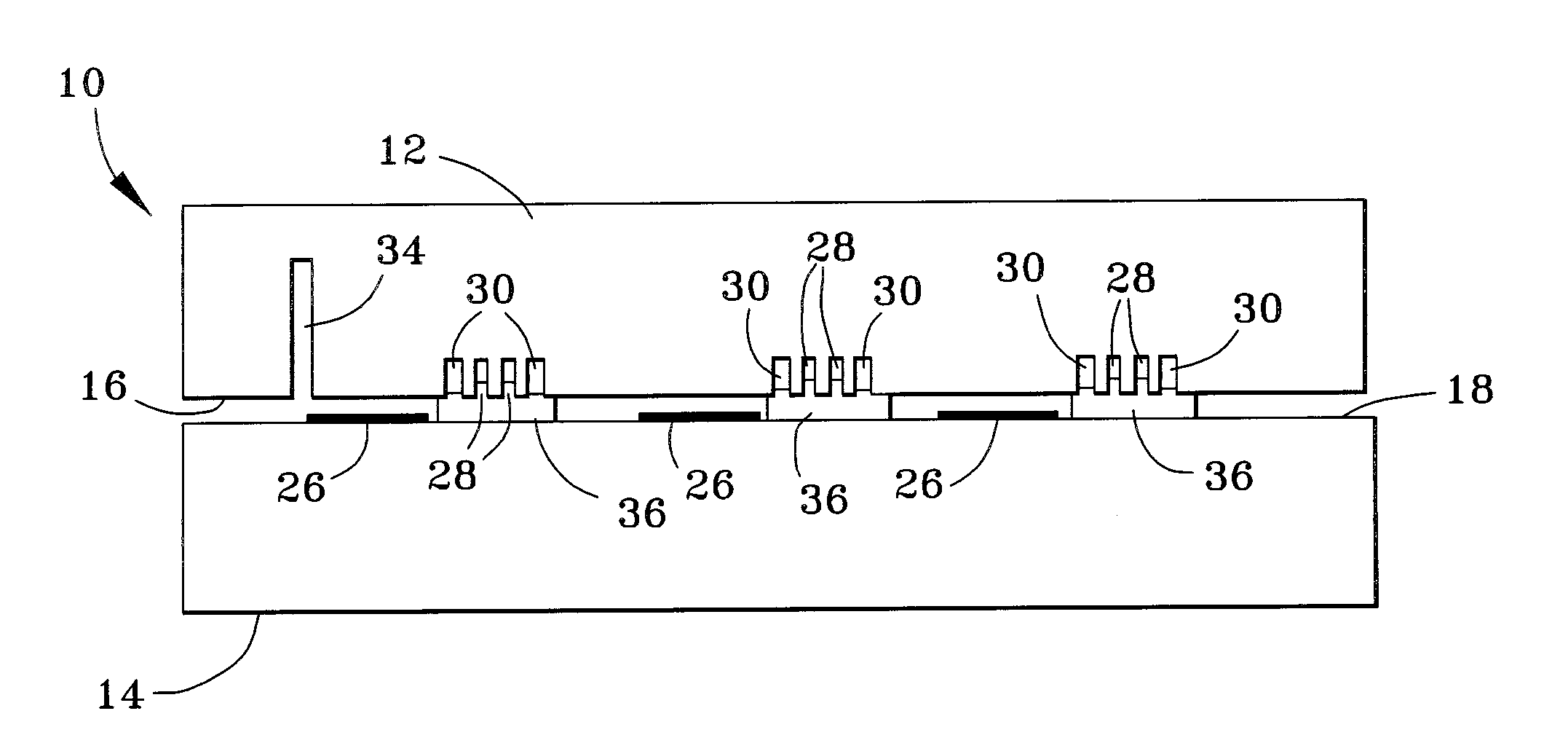
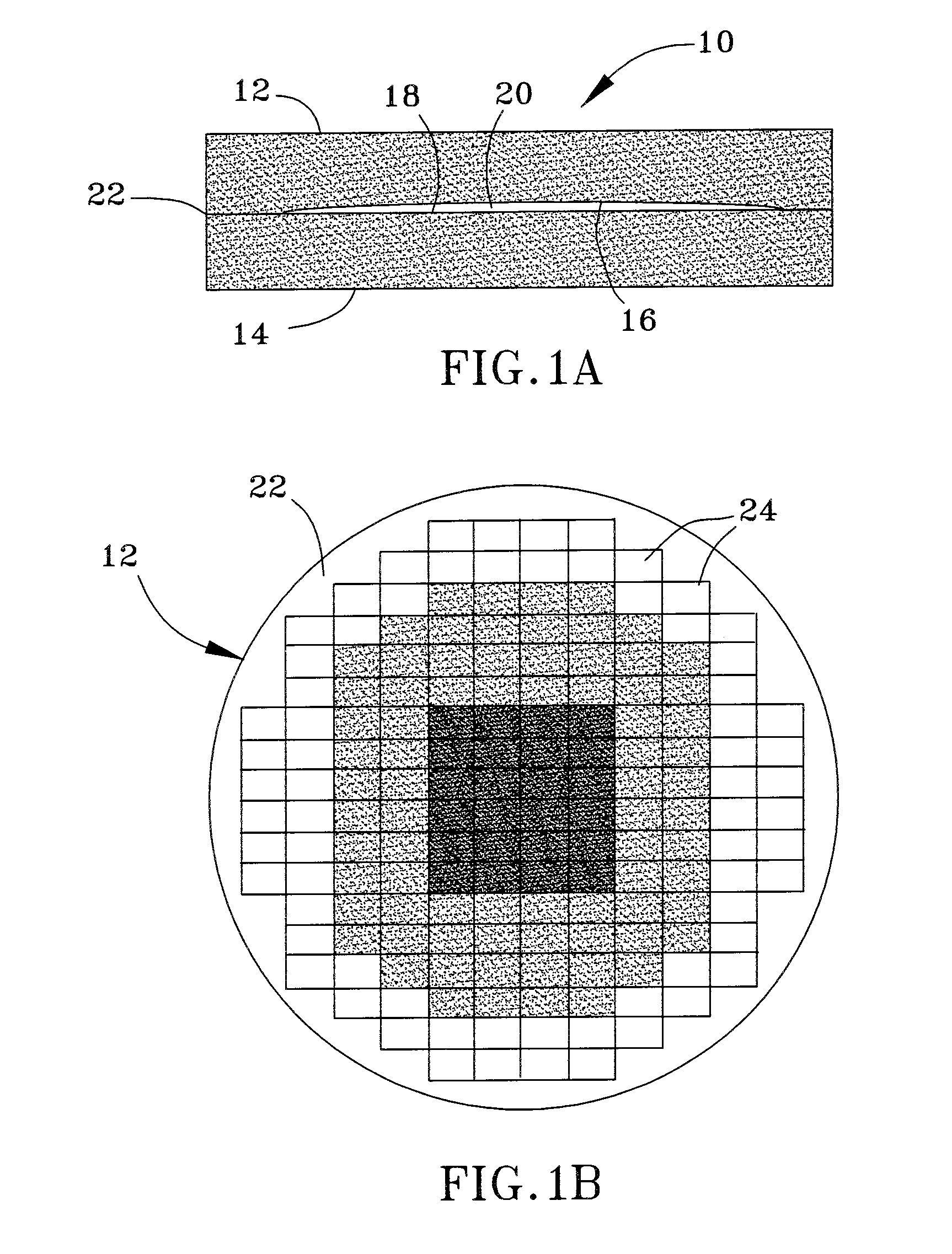
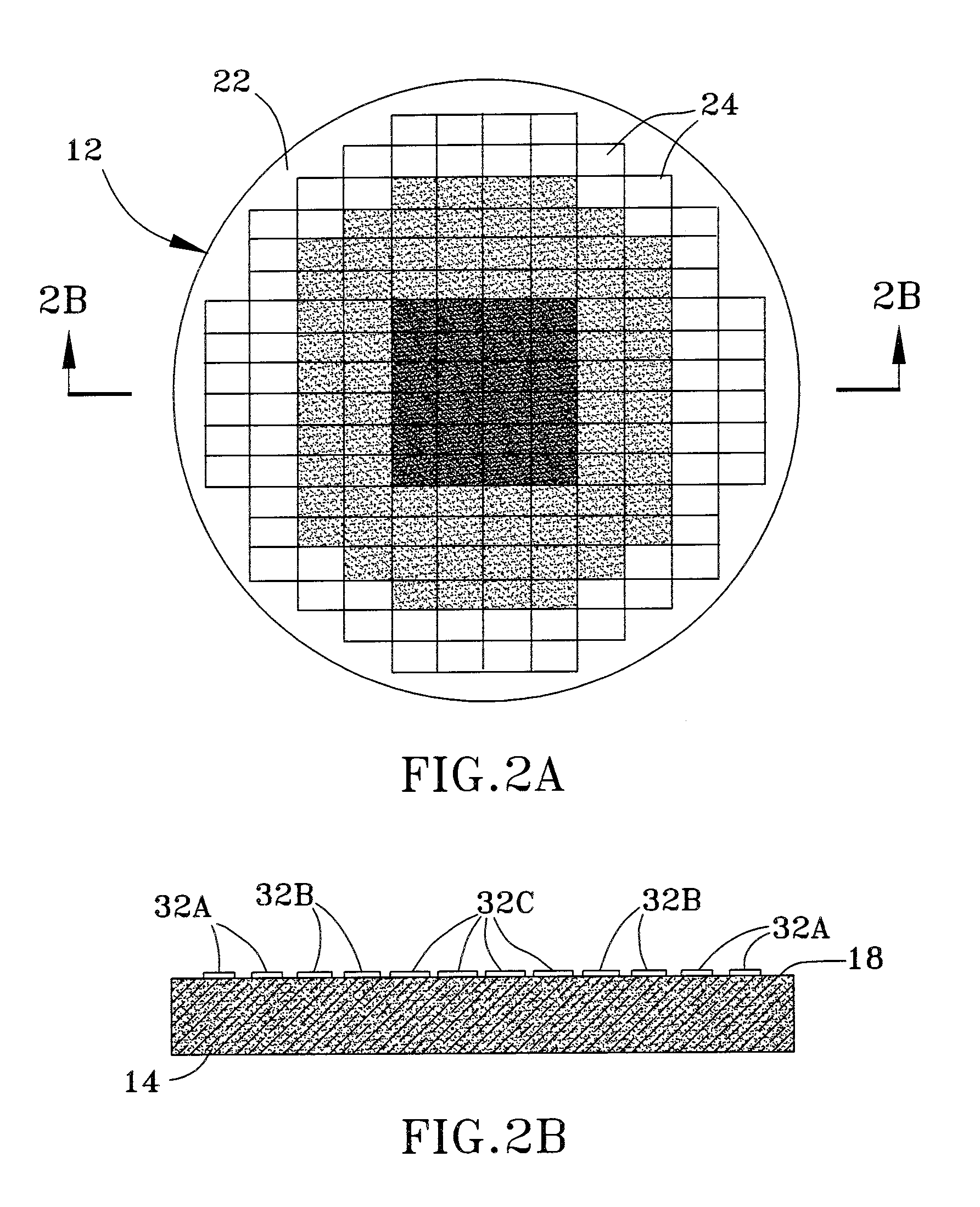
- The process involves creating grooves on one wafer as reflow reservoirs or barriers around bonding sites on the other wafer to control the flow of molten bonding material, ensuring sufficient bonding where needed while preventing excess material from causing electrical shorts, and using bonding stacks of varying lateral surface areas to compensate for curvature-induced gaps.

Flip-chip light emitting diode having connecting electrodes with multiple binding layers including eutectic system with tin
PatentPendingUS20260020399A1
Innovation
- A light-emitting device design featuring a carrier substrate with flip-chip LEDs and an electrode unit comprising multi-layered connecting electrodes, including a stress relieving sublayer, stress transition sublayer, and a binding layer with a tin eutectic system, to enhance bonding strength and reliability.


Environmental Impact of Bonding Material Selection
The environmental implications of bonding material selection between eutectic systems and epoxy compounds represent a critical consideration in modern manufacturing and engineering applications. Both material categories present distinct environmental profiles throughout their lifecycle, from raw material extraction to end-of-life disposal, necessitating comprehensive assessment frameworks for sustainable decision-making.
Eutectic systems typically demonstrate superior environmental performance during the manufacturing phase due to their lower processing temperatures and reduced energy requirements. These alloy-based bonding materials often require minimal thermal input for activation, resulting in decreased carbon emissions during production and application processes. Additionally, many eutectic compositions utilize readily available metallic elements that can be sourced through established recycling networks, reducing dependency on virgin material extraction.
Epoxy compounds present more complex environmental challenges, particularly regarding volatile organic compound emissions during curing processes and the incorporation of petroleum-derived constituents. Traditional epoxy formulations often contain bisphenol-A and other potentially hazardous substances that raise concerns about workplace safety and environmental release. However, recent developments in bio-based epoxy systems and low-emission formulations have begun addressing these environmental drawbacks.
The recyclability and end-of-life management of these bonding materials differ significantly. Eutectic systems generally offer superior recyclability due to their metallic nature, allowing for straightforward separation and reprocessing through established metallurgical techniques. This characteristic aligns with circular economy principles and reduces long-term environmental burden.
Conversely, thermoset epoxy compounds present challenges for recycling due to their cross-linked polymer structure, often requiring energy-intensive chemical or thermal decomposition processes. However, emerging thermoplastic alternatives and chemical recycling technologies are expanding recovery options for epoxy-based assemblies.
Life cycle assessment studies indicate that material selection should consider application-specific factors including service life, performance requirements, and regional disposal infrastructure. While eutectic systems may offer immediate environmental advantages, epoxy compounds might demonstrate superior long-term performance in certain applications, potentially offsetting initial environmental costs through extended service life and reduced replacement frequency.
Eutectic systems typically demonstrate superior environmental performance during the manufacturing phase due to their lower processing temperatures and reduced energy requirements. These alloy-based bonding materials often require minimal thermal input for activation, resulting in decreased carbon emissions during production and application processes. Additionally, many eutectic compositions utilize readily available metallic elements that can be sourced through established recycling networks, reducing dependency on virgin material extraction.
Epoxy compounds present more complex environmental challenges, particularly regarding volatile organic compound emissions during curing processes and the incorporation of petroleum-derived constituents. Traditional epoxy formulations often contain bisphenol-A and other potentially hazardous substances that raise concerns about workplace safety and environmental release. However, recent developments in bio-based epoxy systems and low-emission formulations have begun addressing these environmental drawbacks.
The recyclability and end-of-life management of these bonding materials differ significantly. Eutectic systems generally offer superior recyclability due to their metallic nature, allowing for straightforward separation and reprocessing through established metallurgical techniques. This characteristic aligns with circular economy principles and reduces long-term environmental burden.
Conversely, thermoset epoxy compounds present challenges for recycling due to their cross-linked polymer structure, often requiring energy-intensive chemical or thermal decomposition processes. However, emerging thermoplastic alternatives and chemical recycling technologies are expanding recovery options for epoxy-based assemblies.
Life cycle assessment studies indicate that material selection should consider application-specific factors including service life, performance requirements, and regional disposal infrastructure. While eutectic systems may offer immediate environmental advantages, epoxy compounds might demonstrate superior long-term performance in certain applications, potentially offsetting initial environmental costs through extended service life and reduced replacement frequency.
Thermal Management in High-Strength Bonding Applications
Thermal management represents a critical consideration in high-strength bonding applications, particularly when comparing eutectic systems and epoxy compounds. The thermal behavior of these materials directly influences their bonding performance, durability, and long-term reliability under varying temperature conditions. Understanding thermal characteristics becomes essential for applications requiring sustained mechanical integrity across temperature cycles.
Eutectic systems demonstrate superior thermal conductivity compared to traditional epoxy compounds, typically exhibiting thermal conductivity values ranging from 20-80 W/mK depending on their metallic composition. This enhanced heat dissipation capability prevents localized thermal stress accumulation at bond interfaces, thereby maintaining structural integrity under high-temperature operations. The crystalline structure of eutectic alloys facilitates efficient heat transfer pathways, reducing thermal gradients that could compromise bonding strength.
Epoxy compounds, while offering excellent adhesive properties, generally exhibit lower thermal conductivity values between 0.2-2.0 W/mK. However, thermally conductive fillers such as aluminum oxide, boron nitride, or silver particles can significantly enhance their thermal performance. These modified epoxy formulations achieve thermal conductivity improvements of 5-15 times over baseline values, though still remaining below eutectic system performance levels.
Thermal expansion coefficient matching becomes crucial for maintaining bond integrity during temperature fluctuations. Eutectic systems typically exhibit thermal expansion coefficients closer to metallic substrates, reducing thermal stress at interfaces. Epoxy compounds often demonstrate higher expansion coefficients, potentially creating mechanical stress during thermal cycling that may lead to bond degradation or delamination.
Temperature stability analysis reveals distinct performance characteristics between these bonding approaches. Eutectic systems maintain their mechanical properties at elevated temperatures, often exceeding 200°C operational limits. Epoxy compounds face glass transition temperature constraints, typically limiting continuous operation below 150-180°C for high-performance formulations. This temperature limitation affects their suitability for high-temperature bonding applications requiring sustained thermal exposure.
Heat dissipation efficiency directly correlates with bonding reliability in power electronics and thermal management applications. Eutectic bonding enables direct thermal pathways between components, minimizing thermal resistance and preventing hot spot formation. Epoxy-based solutions require careful thermal design considerations to ensure adequate heat removal while maintaining mechanical bonding requirements.
Eutectic systems demonstrate superior thermal conductivity compared to traditional epoxy compounds, typically exhibiting thermal conductivity values ranging from 20-80 W/mK depending on their metallic composition. This enhanced heat dissipation capability prevents localized thermal stress accumulation at bond interfaces, thereby maintaining structural integrity under high-temperature operations. The crystalline structure of eutectic alloys facilitates efficient heat transfer pathways, reducing thermal gradients that could compromise bonding strength.
Epoxy compounds, while offering excellent adhesive properties, generally exhibit lower thermal conductivity values between 0.2-2.0 W/mK. However, thermally conductive fillers such as aluminum oxide, boron nitride, or silver particles can significantly enhance their thermal performance. These modified epoxy formulations achieve thermal conductivity improvements of 5-15 times over baseline values, though still remaining below eutectic system performance levels.
Thermal expansion coefficient matching becomes crucial for maintaining bond integrity during temperature fluctuations. Eutectic systems typically exhibit thermal expansion coefficients closer to metallic substrates, reducing thermal stress at interfaces. Epoxy compounds often demonstrate higher expansion coefficients, potentially creating mechanical stress during thermal cycling that may lead to bond degradation or delamination.
Temperature stability analysis reveals distinct performance characteristics between these bonding approaches. Eutectic systems maintain their mechanical properties at elevated temperatures, often exceeding 200°C operational limits. Epoxy compounds face glass transition temperature constraints, typically limiting continuous operation below 150-180°C for high-performance formulations. This temperature limitation affects their suitability for high-temperature bonding applications requiring sustained thermal exposure.
Heat dissipation efficiency directly correlates with bonding reliability in power electronics and thermal management applications. Eutectic bonding enables direct thermal pathways between components, minimizing thermal resistance and preventing hot spot formation. Epoxy-based solutions require careful thermal design considerations to ensure adequate heat removal while maintaining mechanical bonding requirements.
Unlock deeper insights with PatSnap Eureka Quick Research — get a full tech report to explore trends and direct your research. Try now!
Generate Your Research Report Instantly with AI Agent
Supercharge your innovation with PatSnap Eureka AI Agent Platform!