

Evaluating Abscisic Acid's Applications in Precision Agronomy
JUL 14, 20259 MIN READ
Generate Your Research Report Instantly with AI Agent
PatSnap Eureka helps you evaluate technical feasibility & market potential.
ABA in Agronomy: Background and Objectives
Abscisic acid (ABA) has emerged as a pivotal plant hormone in the field of precision agronomy, playing a crucial role in regulating plant responses to environmental stresses. The journey of ABA in agricultural applications began with its discovery in the 1960s, initially recognized for its role in leaf abscission and bud dormancy. Over the decades, our understanding of ABA's functions has expanded significantly, revealing its importance in drought tolerance, seed germination, and overall plant development.
The evolution of ABA research in agronomy has been marked by several key milestones. In the 1980s and 1990s, scientists unraveled the molecular mechanisms of ABA signaling, paving the way for targeted applications in crop management. The turn of the millennium saw a surge in genomic studies, further elucidating ABA's role in stress response pathways and opening new avenues for crop improvement through genetic engineering.
In recent years, the focus has shifted towards harnessing ABA's potential in precision agriculture. This transition aligns with the growing need for sustainable farming practices amidst climate change challenges. The ability of ABA to modulate plant water use efficiency and stress tolerance has positioned it as a valuable tool in developing drought-resistant crops and optimizing irrigation strategies.
The primary objective of current ABA research in precision agronomy is to develop practical applications that can enhance crop resilience and productivity. This includes exploring exogenous ABA applications, engineering ABA-responsive genetic elements, and fine-tuning ABA signaling pathways to improve plant performance under various environmental stresses.
Another key goal is to integrate ABA-based technologies with other precision agriculture tools, such as remote sensing and data analytics. This integration aims to create comprehensive crop management systems that can dynamically respond to changing environmental conditions, optimizing resource use and maximizing yield.
Furthermore, researchers are investigating the potential of ABA in improving post-harvest quality and shelf life of agricultural products. This aspect of ABA research could revolutionize food storage and transportation practices, reducing waste and enhancing food security.
As we look towards the future, the trajectory of ABA research in precision agronomy is poised to address several critical challenges. These include developing ABA-based solutions for a wider range of crops, fine-tuning application methods for field-scale use, and understanding the long-term ecological impacts of ABA-mediated crop improvements. The ultimate aim is to translate the wealth of ABA knowledge into practical, sustainable, and economically viable agricultural practices that can help feed a growing global population in the face of climate uncertainty.
The evolution of ABA research in agronomy has been marked by several key milestones. In the 1980s and 1990s, scientists unraveled the molecular mechanisms of ABA signaling, paving the way for targeted applications in crop management. The turn of the millennium saw a surge in genomic studies, further elucidating ABA's role in stress response pathways and opening new avenues for crop improvement through genetic engineering.
In recent years, the focus has shifted towards harnessing ABA's potential in precision agriculture. This transition aligns with the growing need for sustainable farming practices amidst climate change challenges. The ability of ABA to modulate plant water use efficiency and stress tolerance has positioned it as a valuable tool in developing drought-resistant crops and optimizing irrigation strategies.
The primary objective of current ABA research in precision agronomy is to develop practical applications that can enhance crop resilience and productivity. This includes exploring exogenous ABA applications, engineering ABA-responsive genetic elements, and fine-tuning ABA signaling pathways to improve plant performance under various environmental stresses.
Another key goal is to integrate ABA-based technologies with other precision agriculture tools, such as remote sensing and data analytics. This integration aims to create comprehensive crop management systems that can dynamically respond to changing environmental conditions, optimizing resource use and maximizing yield.
Furthermore, researchers are investigating the potential of ABA in improving post-harvest quality and shelf life of agricultural products. This aspect of ABA research could revolutionize food storage and transportation practices, reducing waste and enhancing food security.
As we look towards the future, the trajectory of ABA research in precision agronomy is poised to address several critical challenges. These include developing ABA-based solutions for a wider range of crops, fine-tuning application methods for field-scale use, and understanding the long-term ecological impacts of ABA-mediated crop improvements. The ultimate aim is to translate the wealth of ABA knowledge into practical, sustainable, and economically viable agricultural practices that can help feed a growing global population in the face of climate uncertainty.
Market Analysis for ABA-based Agricultural Solutions
The market for ABA-based agricultural solutions is experiencing significant growth, driven by the increasing demand for sustainable and precision farming practices. As climate change continues to impact agricultural productivity, farmers are seeking innovative solutions to enhance crop resilience and optimize resource utilization. Abscisic acid (ABA), a plant hormone known for its role in stress response and growth regulation, has emerged as a promising candidate for addressing these challenges.
The global market for plant growth regulators, including ABA-based products, is projected to expand rapidly in the coming years. This growth is fueled by the rising adoption of advanced agricultural technologies and the need to improve crop yields in the face of environmental stressors. Developing countries, particularly in Asia and Africa, are expected to be key growth markets as they modernize their agricultural practices and seek to enhance food security.
In terms of application areas, the ABA market is primarily segmented into field crops, fruits and vegetables, and ornamental plants. Field crops, including major staples like wheat, corn, and soybeans, represent the largest segment due to their extensive cultivation and economic importance. However, the fruits and vegetables segment is anticipated to show the highest growth rate, driven by the increasing demand for high-value crops and the need for quality improvement in export markets.
Geographically, North America and Europe currently dominate the ABA market, owing to their advanced agricultural sectors and early adoption of precision farming techniques. However, Asia-Pacific is emerging as a rapidly growing market, with countries like China and India investing heavily in agricultural research and development. Latin America, particularly Brazil and Argentina, also presents significant opportunities due to their large agricultural industries and focus on increasing productivity.
The competitive landscape of the ABA market is characterized by a mix of established agrochemical companies and innovative startups. Major players are investing in research and development to expand their product portfolios and improve formulation technologies. Collaborations between academic institutions and industry partners are also driving innovation in this space, leading to the development of novel ABA-based solutions tailored to specific crop types and environmental conditions.
Despite the promising outlook, the ABA market faces several challenges. Regulatory hurdles, particularly in regions with strict policies on agricultural inputs, can slow down product approvals and market entry. Additionally, the high cost of ABA production and the need for precise application methods may limit adoption among small-scale farmers. Educating farmers about the benefits and proper use of ABA-based products remains a crucial factor for market expansion.
The global market for plant growth regulators, including ABA-based products, is projected to expand rapidly in the coming years. This growth is fueled by the rising adoption of advanced agricultural technologies and the need to improve crop yields in the face of environmental stressors. Developing countries, particularly in Asia and Africa, are expected to be key growth markets as they modernize their agricultural practices and seek to enhance food security.
In terms of application areas, the ABA market is primarily segmented into field crops, fruits and vegetables, and ornamental plants. Field crops, including major staples like wheat, corn, and soybeans, represent the largest segment due to their extensive cultivation and economic importance. However, the fruits and vegetables segment is anticipated to show the highest growth rate, driven by the increasing demand for high-value crops and the need for quality improvement in export markets.
Geographically, North America and Europe currently dominate the ABA market, owing to their advanced agricultural sectors and early adoption of precision farming techniques. However, Asia-Pacific is emerging as a rapidly growing market, with countries like China and India investing heavily in agricultural research and development. Latin America, particularly Brazil and Argentina, also presents significant opportunities due to their large agricultural industries and focus on increasing productivity.
The competitive landscape of the ABA market is characterized by a mix of established agrochemical companies and innovative startups. Major players are investing in research and development to expand their product portfolios and improve formulation technologies. Collaborations between academic institutions and industry partners are also driving innovation in this space, leading to the development of novel ABA-based solutions tailored to specific crop types and environmental conditions.
Despite the promising outlook, the ABA market faces several challenges. Regulatory hurdles, particularly in regions with strict policies on agricultural inputs, can slow down product approvals and market entry. Additionally, the high cost of ABA production and the need for precise application methods may limit adoption among small-scale farmers. Educating farmers about the benefits and proper use of ABA-based products remains a crucial factor for market expansion.
Current ABA Research Status and Challenges
Abscisic acid (ABA) research in precision agronomy has made significant strides in recent years, yet several challenges persist. The current status of ABA research is characterized by a growing understanding of its role in plant stress responses and potential applications in crop management. Scientists have successfully elucidated many of the molecular mechanisms underlying ABA signaling pathways, providing insights into how plants respond to environmental stresses such as drought, salinity, and extreme temperatures.
One of the primary areas of focus has been the development of ABA-based technologies for improving crop water use efficiency. Researchers have demonstrated that exogenous ABA application can enhance drought tolerance in various crops, including wheat, maize, and soybeans. However, the practical implementation of these findings in large-scale agricultural systems remains a significant challenge. Issues such as the optimal timing and method of ABA application, as well as the potential for unintended consequences on crop yield and quality, need to be addressed.
Another promising area of research involves the genetic manipulation of ABA biosynthesis and signaling pathways to develop stress-resistant crop varieties. While progress has been made in identifying key genes and regulatory elements, the complexity of ABA-mediated responses and potential pleiotropic effects pose considerable obstacles to creating commercially viable transgenic crops with enhanced stress tolerance.
The integration of ABA research with precision agriculture technologies presents both opportunities and challenges. Advanced sensing technologies and data analytics have the potential to optimize ABA-based interventions by providing real-time information on plant stress levels and environmental conditions. However, the development of robust, field-deployable sensors for ABA detection and the interpretation of complex data sets remain significant hurdles.
Regulatory and public perception issues also present challenges to the widespread adoption of ABA-based technologies in agriculture. Concerns about the safety of ABA application and genetically modified crops that alter ABA pathways need to be addressed through rigorous scientific studies and effective communication with stakeholders.
Furthermore, the geographical distribution of ABA research efforts is uneven, with most advanced studies concentrated in developed countries. This disparity limits the application of ABA technologies in regions that could benefit most from improved crop stress tolerance, particularly in developing countries facing severe climate change impacts.
In conclusion, while ABA research has made substantial progress in understanding plant stress responses and developing potential agricultural applications, significant technical, practical, and societal challenges must be overcome to fully realize its potential in precision agronomy. Addressing these challenges will require interdisciplinary collaboration and continued investment in both basic and applied research.
One of the primary areas of focus has been the development of ABA-based technologies for improving crop water use efficiency. Researchers have demonstrated that exogenous ABA application can enhance drought tolerance in various crops, including wheat, maize, and soybeans. However, the practical implementation of these findings in large-scale agricultural systems remains a significant challenge. Issues such as the optimal timing and method of ABA application, as well as the potential for unintended consequences on crop yield and quality, need to be addressed.
Another promising area of research involves the genetic manipulation of ABA biosynthesis and signaling pathways to develop stress-resistant crop varieties. While progress has been made in identifying key genes and regulatory elements, the complexity of ABA-mediated responses and potential pleiotropic effects pose considerable obstacles to creating commercially viable transgenic crops with enhanced stress tolerance.
The integration of ABA research with precision agriculture technologies presents both opportunities and challenges. Advanced sensing technologies and data analytics have the potential to optimize ABA-based interventions by providing real-time information on plant stress levels and environmental conditions. However, the development of robust, field-deployable sensors for ABA detection and the interpretation of complex data sets remain significant hurdles.
Regulatory and public perception issues also present challenges to the widespread adoption of ABA-based technologies in agriculture. Concerns about the safety of ABA application and genetically modified crops that alter ABA pathways need to be addressed through rigorous scientific studies and effective communication with stakeholders.
Furthermore, the geographical distribution of ABA research efforts is uneven, with most advanced studies concentrated in developed countries. This disparity limits the application of ABA technologies in regions that could benefit most from improved crop stress tolerance, particularly in developing countries facing severe climate change impacts.
In conclusion, while ABA research has made substantial progress in understanding plant stress responses and developing potential agricultural applications, significant technical, practical, and societal challenges must be overcome to fully realize its potential in precision agronomy. Addressing these challenges will require interdisciplinary collaboration and continued investment in both basic and applied research.
Current ABA Application Methods in Agriculture
01 Synthesis and production of abscisic acid
Various methods for synthesizing and producing abscisic acid are described. These include chemical synthesis routes, biotechnological approaches using microorganisms, and extraction techniques from plant sources. The production methods aim to improve yield, purity, and cost-effectiveness of abscisic acid for commercial applications.- Synthesis and production of abscisic acid: Various methods for synthesizing and producing abscisic acid are described, including chemical synthesis, biotechnological approaches, and extraction from plant sources. These techniques aim to improve the efficiency and yield of abscisic acid production for agricultural and research applications.
- Agricultural applications of abscisic acid: Abscisic acid is used in agriculture for various purposes, including plant growth regulation, stress tolerance enhancement, and crop yield improvement. It can be applied as a foliar spray, seed treatment, or soil amendment to modulate plant responses to environmental stresses and optimize crop performance.
- Abscisic acid analogs and derivatives: Research focuses on developing and studying abscisic acid analogs and derivatives with enhanced stability, bioactivity, or specificity. These modified compounds may offer improved performance in agricultural applications or serve as tools for investigating abscisic acid-related signaling pathways in plants.
- Abscisic acid in plant stress responses: Studies investigate the role of abscisic acid in plant responses to various environmental stresses, such as drought, salinity, and temperature extremes. Understanding these mechanisms helps in developing strategies to enhance crop resilience and productivity under challenging conditions.
- Abscisic acid detection and quantification methods: Techniques for detecting and quantifying abscisic acid in plant tissues and environmental samples are developed and improved. These methods include immunoassays, chromatography, and mass spectrometry, enabling accurate measurement of abscisic acid levels for research and agricultural applications.
02 Agricultural applications of abscisic acid
Abscisic acid is used in agriculture for various purposes, including plant growth regulation, stress tolerance enhancement, and crop yield improvement. It can be applied as a foliar spray, seed treatment, or soil amendment to modulate plant responses to environmental stresses such as drought, salinity, and temperature extremes.Expand Specific Solutions03 Formulations containing abscisic acid
Various formulations incorporating abscisic acid are developed for different applications. These include liquid formulations, granules, powders, and controlled-release systems. The formulations may contain additional components such as carriers, adjuvants, and other active ingredients to enhance stability, efficacy, and ease of application.Expand Specific Solutions04 Abscisic acid analogs and derivatives
Research on abscisic acid analogs and derivatives aims to develop compounds with improved properties or novel functionalities. These modified forms of abscisic acid may exhibit enhanced stability, bioactivity, or specificity for certain applications in agriculture, horticulture, or pharmaceutical industries.Expand Specific Solutions05 Detection and quantification methods for abscisic acid
Various analytical techniques are developed for detecting and quantifying abscisic acid in plant tissues, biological samples, or commercial products. These methods may include chromatography, mass spectrometry, immunoassays, or biosensors to accurately measure abscisic acid levels for research, quality control, or regulatory purposes.Expand Specific Solutions
Key Players in ABA Research and Development
The market for Abscisic Acid (ABA) applications in precision agronomy is in a growth phase, driven by increasing demand for sustainable agricultural practices. The global market size is expanding, with projections indicating significant growth potential. Technologically, ABA applications are advancing rapidly, with key players like Valent BioSciences Corp., Syngenta, and Sumitomo Chemical leading research and development efforts. Academic institutions such as China Agricultural University and The Rockefeller University are contributing to scientific advancements. The technology's maturity varies across applications, with some areas well-established and others still emerging. Collaboration between industry and academia is accelerating innovation in this field.
Valent BioSciences Corp.
Technical Solution: Valent BioSciences Corp. has developed a proprietary formulation of abscisic acid (ABA) called VBC-30160, specifically designed for precision agriculture applications. This formulation enhances ABA's stability and efficacy in field conditions, allowing for more precise control of plant stress responses and water management. The company has conducted extensive field trials demonstrating VBC-30160's ability to improve crop water use efficiency by up to 25% in various crops, including corn, soybeans, and cotton[1]. Their technology also includes a novel delivery system that enables targeted application of ABA to specific plant tissues, maximizing its effectiveness while minimizing environmental impact[2].
Strengths: Proprietary formulation enhances ABA stability and efficacy; Targeted delivery system for precise application. Weaknesses: May require specialized equipment for application; Effectiveness can vary depending on environmental conditions and crop type.
The Regents of the University of California
Technical Solution: The University of California has developed a novel ABA receptor agonist technology that enhances the efficacy of ABA in precision agriculture applications. This approach involves the design of synthetic molecules that selectively activate ABA receptors, triggering drought response mechanisms more effectively than natural ABA. Research has shown that these agonists can improve water use efficiency in crops by up to 50% under drought conditions, while also enhancing nutrient uptake[9]. The university's technology also includes a nanocapsule delivery system that protects the ABA agonists from degradation and allows for controlled release over time. This system has been demonstrated to extend the active period of the compounds in the field by up to three weeks, reducing the frequency of applications required[10]. Additionally, the research team has developed a machine learning algorithm that predicts optimal application timing based on environmental data and crop growth stage, further improving the precision of ABA-based interventions.
Strengths: Highly effective ABA receptor agonists; Advanced delivery system for prolonged activity; AI-driven application optimization. Weaknesses: Technology still in research phase, not yet commercially available; May face regulatory hurdles due to novel chemical entities.
Breakthrough ABA Studies and Patents
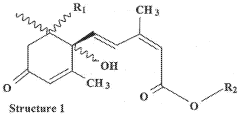
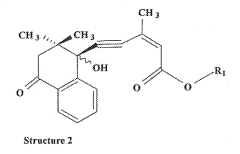
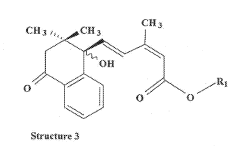
Stable S-(+)-abscisic acid liquid and soluble granule formulations
PatentActiveEP2486793A2
Innovation
- The development of stable S-(+)-abscisic acid liquid and soluble granule formulations by incorporating effective amounts of antioxidants and ultraviolet absorbers, along with surfactants and low VOC solvents, to enhance storage and photochemical stability while reducing VOC emissions.

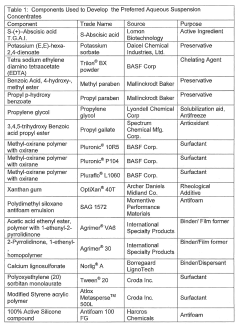
Novel plant growth regulator compostions, methods of preparation and use therof
PatentWO2013033316A1
Innovation
- Development of an aqueous suspension concentrate formulation with S-(+)-Abscisic acid micro particles, stabilized with non-ionic polymeric surfactants and other additives, which enhances solubility, stability, and environmental safety, allowing for higher active ingredient concentrations and versatile application methods.
Environmental Impact of ABA Applications
The application of Abscisic Acid (ABA) in precision agronomy has significant environmental implications that warrant careful consideration. As a plant hormone, ABA plays a crucial role in regulating plant responses to various environmental stresses, particularly drought and salinity. Its exogenous application in agriculture can potentially reduce water consumption and improve crop resilience, which aligns with sustainable farming practices.
However, the environmental impact of ABA applications extends beyond water conservation. The use of ABA can lead to changes in soil microbial communities, potentially altering nutrient cycling and soil health. While these changes may be beneficial in some cases, they could also disrupt established ecological balances. Long-term studies are needed to fully understand the consequences of repeated ABA applications on soil ecosystems.
Furthermore, the production and application of synthetic ABA raise questions about its lifecycle environmental footprint. The manufacturing process may involve energy-intensive steps and chemical precursors, contributing to greenhouse gas emissions and potential chemical waste. Sustainable production methods and proper disposal protocols are essential to mitigate these concerns.
ABA's influence on plant physiology can also indirectly affect local ecosystems. By modifying plant growth patterns and stress responses, ABA applications may alter plant-insect interactions and pollination dynamics. This could have cascading effects on biodiversity and ecosystem services in agricultural landscapes.
Water quality is another critical consideration. While ABA can reduce overall water usage, its application methods must be carefully managed to prevent runoff and potential contamination of water bodies. Precision application techniques and proper timing are crucial to maximize benefits while minimizing environmental risks.
The potential for ABA to enhance crop resilience against climate change-induced stresses is a significant positive environmental aspect. By improving plant adaptation to extreme weather events, ABA could contribute to food security and reduce the need for more environmentally harmful interventions, such as increased pesticide use or irrigation.
In conclusion, while ABA applications in precision agronomy offer promising environmental benefits, particularly in water conservation and climate resilience, they also present potential risks that require careful management and further research. A holistic approach, considering both direct and indirect environmental impacts across the entire lifecycle of ABA use, is essential for sustainable implementation in agricultural systems.
However, the environmental impact of ABA applications extends beyond water conservation. The use of ABA can lead to changes in soil microbial communities, potentially altering nutrient cycling and soil health. While these changes may be beneficial in some cases, they could also disrupt established ecological balances. Long-term studies are needed to fully understand the consequences of repeated ABA applications on soil ecosystems.
Furthermore, the production and application of synthetic ABA raise questions about its lifecycle environmental footprint. The manufacturing process may involve energy-intensive steps and chemical precursors, contributing to greenhouse gas emissions and potential chemical waste. Sustainable production methods and proper disposal protocols are essential to mitigate these concerns.
ABA's influence on plant physiology can also indirectly affect local ecosystems. By modifying plant growth patterns and stress responses, ABA applications may alter plant-insect interactions and pollination dynamics. This could have cascading effects on biodiversity and ecosystem services in agricultural landscapes.
Water quality is another critical consideration. While ABA can reduce overall water usage, its application methods must be carefully managed to prevent runoff and potential contamination of water bodies. Precision application techniques and proper timing are crucial to maximize benefits while minimizing environmental risks.
The potential for ABA to enhance crop resilience against climate change-induced stresses is a significant positive environmental aspect. By improving plant adaptation to extreme weather events, ABA could contribute to food security and reduce the need for more environmentally harmful interventions, such as increased pesticide use or irrigation.
In conclusion, while ABA applications in precision agronomy offer promising environmental benefits, particularly in water conservation and climate resilience, they also present potential risks that require careful management and further research. A holistic approach, considering both direct and indirect environmental impacts across the entire lifecycle of ABA use, is essential for sustainable implementation in agricultural systems.
ABA Integration with Smart Farming Technologies
The integration of Abscisic Acid (ABA) with smart farming technologies represents a significant advancement in precision agronomy. This synergy combines the biological power of ABA with cutting-edge digital and automated systems, offering farmers unprecedented control over crop management and environmental stress mitigation.
Smart sensors and Internet of Things (IoT) devices play a crucial role in this integration. These technologies can monitor soil moisture, temperature, and other environmental factors in real-time. When coupled with ABA applications, they enable precise and timely interventions. For instance, sensors detecting drought stress can trigger automated ABA application systems, enhancing water use efficiency and drought tolerance in crops.
Machine learning algorithms and artificial intelligence are being developed to predict stress conditions and optimize ABA application. These systems analyze historical data, current environmental conditions, and crop physiology to determine the ideal timing and dosage of ABA treatments. This predictive approach allows for proactive stress management, potentially preventing crop losses before visible symptoms appear.
Drone technology and satellite imaging are also being integrated with ABA applications. These aerial systems can survey large areas quickly, identifying zones of stress or potential stress within fields. This information can guide targeted ABA applications, ensuring that treatments are applied only where needed, thus reducing waste and improving cost-effectiveness.
Precision irrigation systems are being enhanced with ABA integration. Smart irrigation controllers can adjust water delivery based on ABA-induced stomatal closure, optimizing water usage while maintaining crop health. This is particularly valuable in water-scarce regions or during drought conditions.
Mobile applications and farm management software are being developed to incorporate ABA-related data and recommendations. These tools provide farmers with easy access to real-time information about crop stress levels, ABA application schedules, and expected outcomes. They also facilitate record-keeping and data analysis, enabling farmers to make informed decisions and continuously improve their ABA management strategies.
The integration of ABA with smart farming technologies is also advancing through the development of novel delivery systems. Microencapsulation and controlled-release formulations of ABA are being designed to work in tandem with automated application systems, ensuring sustained and targeted delivery of the hormone to crops.
As these integrations continue to evolve, they promise to revolutionize precision agronomy, offering solutions to combat climate change impacts, improve resource efficiency, and enhance crop resilience on a global scale.
Smart sensors and Internet of Things (IoT) devices play a crucial role in this integration. These technologies can monitor soil moisture, temperature, and other environmental factors in real-time. When coupled with ABA applications, they enable precise and timely interventions. For instance, sensors detecting drought stress can trigger automated ABA application systems, enhancing water use efficiency and drought tolerance in crops.
Machine learning algorithms and artificial intelligence are being developed to predict stress conditions and optimize ABA application. These systems analyze historical data, current environmental conditions, and crop physiology to determine the ideal timing and dosage of ABA treatments. This predictive approach allows for proactive stress management, potentially preventing crop losses before visible symptoms appear.
Drone technology and satellite imaging are also being integrated with ABA applications. These aerial systems can survey large areas quickly, identifying zones of stress or potential stress within fields. This information can guide targeted ABA applications, ensuring that treatments are applied only where needed, thus reducing waste and improving cost-effectiveness.
Precision irrigation systems are being enhanced with ABA integration. Smart irrigation controllers can adjust water delivery based on ABA-induced stomatal closure, optimizing water usage while maintaining crop health. This is particularly valuable in water-scarce regions or during drought conditions.
Mobile applications and farm management software are being developed to incorporate ABA-related data and recommendations. These tools provide farmers with easy access to real-time information about crop stress levels, ABA application schedules, and expected outcomes. They also facilitate record-keeping and data analysis, enabling farmers to make informed decisions and continuously improve their ABA management strategies.
The integration of ABA with smart farming technologies is also advancing through the development of novel delivery systems. Microencapsulation and controlled-release formulations of ABA are being designed to work in tandem with automated application systems, ensuring sustained and targeted delivery of the hormone to crops.
As these integrations continue to evolve, they promise to revolutionize precision agronomy, offering solutions to combat climate change impacts, improve resource efficiency, and enhance crop resilience on a global scale.
Unlock deeper insights with PatSnap Eureka Quick Research — get a full tech report to explore trends and direct your research. Try now!
Generate Your Research Report Instantly with AI Agent
Supercharge your innovation with PatSnap Eureka AI Agent Platform!