Evaluating Electromagnetic Interference Reduction Methods in Rail Guns
AUG 6, 20259 MIN READ
Generate Your Research Report Instantly with AI Agent
PatSnap Eureka helps you evaluate technical feasibility & market potential.
Rail Gun EMI Background and Objectives
Electromagnetic interference (EMI) has been a persistent challenge in the development and operation of rail guns since their inception. As a revolutionary electromagnetic launch system, rail guns have garnered significant attention in military and scientific circles due to their potential to revolutionize long-range artillery. However, the intense electromagnetic fields generated during their operation pose substantial risks to both the weapon system itself and surrounding electronic equipment.
The primary objective of this technical research report is to comprehensively evaluate the various methods employed to reduce electromagnetic interference in rail guns. This evaluation aims to provide a thorough understanding of the current state of EMI reduction technologies, their effectiveness, and potential areas for further improvement. By doing so, we seek to contribute to the ongoing efforts to enhance the operational reliability and combat effectiveness of rail gun systems.
The evolution of rail gun technology can be traced back to the early 20th century, with significant advancements occurring in the latter half of the century. As the power and capabilities of rail guns have increased, so too has the challenge of managing the electromagnetic interference they produce. This has led to a parallel development of EMI reduction techniques, ranging from shielding methods to advanced materials and circuit designs.
In recent years, the urgency to address EMI issues in rail guns has intensified due to the increasing reliance on sophisticated electronic systems in modern warfare. The integration of rail guns into existing military platforms and their potential deployment in electromagnetic-sensitive environments have further underscored the need for effective EMI mitigation strategies. This has spurred research and development efforts across various disciplines, including materials science, electromagnetic theory, and systems engineering.
The technical goals of this research are multifaceted. Firstly, we aim to identify and categorize the primary sources of electromagnetic interference within rail gun systems. This includes analyzing the electromagnetic fields generated by the main rail current, as well as secondary sources such as power supply systems and switching mechanisms. Secondly, we seek to evaluate the effectiveness of current EMI reduction methods, considering factors such as their impact on system performance, cost-effectiveness, and ease of implementation.
Furthermore, this report will explore emerging technologies and innovative approaches that show promise in addressing EMI challenges in rail guns. By examining cutting-edge research and experimental results, we hope to identify potential breakthroughs that could significantly enhance EMI reduction capabilities. This forward-looking approach is crucial for anticipating future developments in rail gun technology and ensuring that EMI mitigation strategies evolve in tandem with advancements in electromagnetic launch systems.
The primary objective of this technical research report is to comprehensively evaluate the various methods employed to reduce electromagnetic interference in rail guns. This evaluation aims to provide a thorough understanding of the current state of EMI reduction technologies, their effectiveness, and potential areas for further improvement. By doing so, we seek to contribute to the ongoing efforts to enhance the operational reliability and combat effectiveness of rail gun systems.
The evolution of rail gun technology can be traced back to the early 20th century, with significant advancements occurring in the latter half of the century. As the power and capabilities of rail guns have increased, so too has the challenge of managing the electromagnetic interference they produce. This has led to a parallel development of EMI reduction techniques, ranging from shielding methods to advanced materials and circuit designs.
In recent years, the urgency to address EMI issues in rail guns has intensified due to the increasing reliance on sophisticated electronic systems in modern warfare. The integration of rail guns into existing military platforms and their potential deployment in electromagnetic-sensitive environments have further underscored the need for effective EMI mitigation strategies. This has spurred research and development efforts across various disciplines, including materials science, electromagnetic theory, and systems engineering.
The technical goals of this research are multifaceted. Firstly, we aim to identify and categorize the primary sources of electromagnetic interference within rail gun systems. This includes analyzing the electromagnetic fields generated by the main rail current, as well as secondary sources such as power supply systems and switching mechanisms. Secondly, we seek to evaluate the effectiveness of current EMI reduction methods, considering factors such as their impact on system performance, cost-effectiveness, and ease of implementation.
Furthermore, this report will explore emerging technologies and innovative approaches that show promise in addressing EMI challenges in rail guns. By examining cutting-edge research and experimental results, we hope to identify potential breakthroughs that could significantly enhance EMI reduction capabilities. This forward-looking approach is crucial for anticipating future developments in rail gun technology and ensuring that EMI mitigation strategies evolve in tandem with advancements in electromagnetic launch systems.
Military Demand for EMI-Resistant Rail Guns
The military demand for EMI-resistant rail guns has been steadily increasing in recent years, driven by the need for advanced weapon systems capable of operating in complex electromagnetic environments. Rail guns, which use electromagnetic forces to accelerate projectiles to hypersonic speeds, offer significant advantages over traditional artillery in terms of range, accuracy, and destructive power. However, their reliance on high-power electromagnetic systems makes them particularly vulnerable to electromagnetic interference (EMI).
The U.S. Department of Defense has identified EMI-resistant rail guns as a critical technology for maintaining military superiority in future conflicts. This demand is fueled by the growing prevalence of electronic warfare capabilities among potential adversaries, which could potentially disrupt or disable conventional rail gun systems. As a result, there is a pressing need for rail guns that can maintain optimal performance even in the presence of intense electromagnetic disturbances.
Naval applications represent a primary driver for EMI-resistant rail gun development. Modern warships are increasingly equipped with sophisticated electronic systems, creating a challenging electromagnetic environment. The ability to deploy rail guns on naval vessels without compromising other onboard systems or risking EMI-induced malfunctions is crucial for enhancing naval firepower and strategic capabilities.
Ground-based military operations also contribute to the demand for EMI-resistant rail guns. As battlefield environments become more electronically saturated, the ability to deploy rail guns without fear of interference from friendly or enemy electronic systems becomes paramount. This is particularly important in scenarios where rail guns may be used for air defense or long-range precision strikes in conjunction with other electronic warfare assets.
The aerospace sector presents another significant area of demand for EMI-resistant rail guns. The potential integration of rail gun technology into aircraft or space-based platforms necessitates robust EMI protection to ensure reliable operation in the harsh electromagnetic conditions of high-altitude or orbital environments.
Furthermore, the increasing focus on multi-domain operations by major military powers has amplified the need for EMI-resistant rail guns. These weapons must be capable of seamless integration into complex, interconnected battle networks without introducing vulnerabilities or compromising the performance of other systems.
As military strategists anticipate future conflicts characterized by intense electromagnetic spectrum contestation, the demand for rail guns capable of operating effectively in such environments continues to grow. This has spurred significant investment in research and development aimed at enhancing the EMI resistance of rail gun systems, with a focus on innovative shielding technologies, advanced materials, and sophisticated electronic countermeasures.
The U.S. Department of Defense has identified EMI-resistant rail guns as a critical technology for maintaining military superiority in future conflicts. This demand is fueled by the growing prevalence of electronic warfare capabilities among potential adversaries, which could potentially disrupt or disable conventional rail gun systems. As a result, there is a pressing need for rail guns that can maintain optimal performance even in the presence of intense electromagnetic disturbances.
Naval applications represent a primary driver for EMI-resistant rail gun development. Modern warships are increasingly equipped with sophisticated electronic systems, creating a challenging electromagnetic environment. The ability to deploy rail guns on naval vessels without compromising other onboard systems or risking EMI-induced malfunctions is crucial for enhancing naval firepower and strategic capabilities.
Ground-based military operations also contribute to the demand for EMI-resistant rail guns. As battlefield environments become more electronically saturated, the ability to deploy rail guns without fear of interference from friendly or enemy electronic systems becomes paramount. This is particularly important in scenarios where rail guns may be used for air defense or long-range precision strikes in conjunction with other electronic warfare assets.
The aerospace sector presents another significant area of demand for EMI-resistant rail guns. The potential integration of rail gun technology into aircraft or space-based platforms necessitates robust EMI protection to ensure reliable operation in the harsh electromagnetic conditions of high-altitude or orbital environments.
Furthermore, the increasing focus on multi-domain operations by major military powers has amplified the need for EMI-resistant rail guns. These weapons must be capable of seamless integration into complex, interconnected battle networks without introducing vulnerabilities or compromising the performance of other systems.
As military strategists anticipate future conflicts characterized by intense electromagnetic spectrum contestation, the demand for rail guns capable of operating effectively in such environments continues to grow. This has spurred significant investment in research and development aimed at enhancing the EMI resistance of rail gun systems, with a focus on innovative shielding technologies, advanced materials, and sophisticated electronic countermeasures.
EMI Challenges in Rail Gun Systems
Electromagnetic Interference (EMI) presents significant challenges in rail gun systems, impacting their performance, reliability, and operational effectiveness. The high-power electromagnetic fields generated during rail gun operation can interfere with sensitive electronic components, communication systems, and nearby equipment, potentially compromising the overall functionality of the weapon system and associated platforms.
One of the primary EMI challenges in rail gun systems stems from the intense current pulses required to accelerate projectiles. These pulses, often in the range of millions of amperes, create strong magnetic fields that can induce unwanted currents in nearby conductors and electronic circuits. This induced EMI can lead to malfunctions in control systems, sensor arrays, and communication equipment, potentially rendering the rail gun inoperable or reducing its accuracy.
The rapid discharge of capacitor banks, a crucial component in rail gun power systems, also contributes to EMI issues. The sudden release of stored energy creates transient electromagnetic pulses that can propagate through the system and surrounding environment. These pulses may cause voltage spikes, data corruption, and temporary or permanent damage to electronic components if not properly mitigated.
Another significant challenge is the EMI generated by the plasma armature formed during projectile acceleration. As the projectile moves along the rails, it creates a high-temperature plasma that acts as a conductor. This plasma can produce broadband electromagnetic emissions, further complicating EMI mitigation efforts and potentially interfering with radar systems and other sensors on the platform or nearby vessels.
The physical design and layout of rail gun systems also contribute to EMI challenges. The compact nature of modern weapon systems often requires sensitive electronics to be placed in close proximity to high-power components. This proximity increases the risk of EMI coupling and makes shielding and isolation more difficult to implement effectively.
Furthermore, the EMI generated by rail guns can extend beyond the immediate system, potentially affecting other onboard systems or nearby platforms. This extended interference can have implications for joint operations, potentially disrupting communication networks, navigation systems, and coordinated actions between multiple units.
Addressing these EMI challenges requires a multifaceted approach, combining advanced shielding techniques, innovative system designs, and sophisticated EMI suppression technologies. As rail gun technology continues to evolve, overcoming these EMI hurdles remains a critical focus for researchers and engineers, driving the development of more robust and reliable electromagnetic launch systems for future military applications.
One of the primary EMI challenges in rail gun systems stems from the intense current pulses required to accelerate projectiles. These pulses, often in the range of millions of amperes, create strong magnetic fields that can induce unwanted currents in nearby conductors and electronic circuits. This induced EMI can lead to malfunctions in control systems, sensor arrays, and communication equipment, potentially rendering the rail gun inoperable or reducing its accuracy.
The rapid discharge of capacitor banks, a crucial component in rail gun power systems, also contributes to EMI issues. The sudden release of stored energy creates transient electromagnetic pulses that can propagate through the system and surrounding environment. These pulses may cause voltage spikes, data corruption, and temporary or permanent damage to electronic components if not properly mitigated.
Another significant challenge is the EMI generated by the plasma armature formed during projectile acceleration. As the projectile moves along the rails, it creates a high-temperature plasma that acts as a conductor. This plasma can produce broadband electromagnetic emissions, further complicating EMI mitigation efforts and potentially interfering with radar systems and other sensors on the platform or nearby vessels.
The physical design and layout of rail gun systems also contribute to EMI challenges. The compact nature of modern weapon systems often requires sensitive electronics to be placed in close proximity to high-power components. This proximity increases the risk of EMI coupling and makes shielding and isolation more difficult to implement effectively.
Furthermore, the EMI generated by rail guns can extend beyond the immediate system, potentially affecting other onboard systems or nearby platforms. This extended interference can have implications for joint operations, potentially disrupting communication networks, navigation systems, and coordinated actions between multiple units.
Addressing these EMI challenges requires a multifaceted approach, combining advanced shielding techniques, innovative system designs, and sophisticated EMI suppression technologies. As rail gun technology continues to evolve, overcoming these EMI hurdles remains a critical focus for researchers and engineers, driving the development of more robust and reliable electromagnetic launch systems for future military applications.
Current EMI Reduction Solutions for Rail Guns
01 Electromagnetic shielding for rail guns
Rail guns generate significant electromagnetic interference during operation. To mitigate this, various shielding techniques are employed. These may include using conductive materials to encase sensitive components, implementing Faraday cages, or utilizing specialized coatings to absorb electromagnetic waves. Such shielding helps protect both the rail gun's internal components and nearby electronic systems from electromagnetic disruption.- Electromagnetic shielding for rail guns: Rail guns generate significant electromagnetic interference during operation. To mitigate this, various shielding techniques are employed. These may include using conductive materials to encase sensitive components, implementing Faraday cages, or utilizing specialized coatings to absorb electromagnetic waves. Such shielding helps protect both the rail gun's internal components and nearby electronic systems from electromagnetic disruption.
- Electromagnetic pulse mitigation in rail gun systems: The intense electromagnetic fields generated by rail guns can produce electromagnetic pulses (EMPs) that may damage or interfere with nearby electronic equipment. To address this, rail gun designs incorporate EMP mitigation strategies such as pulse-shaping circuits, energy-absorbing materials, and specialized grounding techniques. These measures help contain and dissipate the electromagnetic energy, reducing its impact on surrounding systems.
- Electromagnetic compatibility design for rail gun components: Ensuring electromagnetic compatibility (EMC) within rail gun systems is crucial for their reliable operation. This involves designing and selecting components that can withstand high electromagnetic fields without malfunction. Techniques may include using hardened electronics, optical isolation, and implementing robust EMC testing protocols during development. These measures help maintain the integrity of the rail gun's control and power systems in the presence of strong electromagnetic fields.
- Electromagnetic field management in rail gun power supplies: The power supplies used in rail guns are significant sources of electromagnetic interference. To manage this, advanced power supply designs incorporate features such as electromagnetic field containment, filtering circuits, and strategic component placement. These techniques help minimize the emission of electromagnetic noise from the power supply, reducing its impact on both the rail gun system and surrounding equipment.
- Monitoring and control systems for electromagnetic interference in rail guns: To effectively manage electromagnetic interference in rail gun operations, sophisticated monitoring and control systems are employed. These systems may include real-time electromagnetic field sensors, adaptive control algorithms, and predictive modeling capabilities. By continuously monitoring electromagnetic conditions and adjusting operational parameters, these systems help maintain optimal performance while minimizing harmful interference effects.
02 Electromagnetic pulse mitigation in rail gun systems
The intense electromagnetic pulses produced by rail guns can damage electronic equipment and interfere with communication systems. To address this, rail gun designs incorporate pulse mitigation techniques. These may include using surge protectors, implementing fast-acting switches to redirect excess energy, or employing specialized materials that can absorb and dissipate electromagnetic energy quickly.Expand Specific Solutions03 Electromagnetic compatibility design for rail gun components
Ensuring electromagnetic compatibility within rail gun systems is crucial for their reliable operation. This involves designing components that can function effectively in high electromagnetic environments. Techniques may include using radiation-hardened electronics, implementing proper grounding and isolation methods, and utilizing specialized circuit designs that are resistant to electromagnetic interference.Expand Specific Solutions04 Electromagnetic interference reduction in power supply systems
The power supply systems for rail guns are significant sources of electromagnetic interference. To reduce this, various techniques are employed in their design. These may include using advanced filtering systems, implementing power conditioning circuits, or utilizing specialized capacitor banks that can smooth out power fluctuations. Such measures help minimize the electromagnetic noise generated by the power supply.Expand Specific Solutions05 Electromagnetic signature management for rail guns
Managing the electromagnetic signature of rail guns is important for both operational effectiveness and stealth considerations. This involves techniques to reduce the detectable electromagnetic emissions from the rail gun system. Methods may include using advanced materials to absorb electromagnetic waves, implementing active cancellation systems, or designing the rail gun's geometry to minimize electromagnetic scattering.Expand Specific Solutions
Key Players in Rail Gun EMI Mitigation
The electromagnetic interference reduction in rail guns represents an emerging field with significant potential for growth. The market is in its early stages, with a mix of established defense contractors and specialized research institutions driving innovation. While the market size remains relatively small, it is expected to expand as rail gun technology matures. Companies like Boeing, Thales, and CRRC are leveraging their expertise in defense and rail systems to develop solutions. Academic institutions such as Tsinghua University and Johns Hopkins University are contributing fundamental research. The technology is still evolving, with ongoing efforts to improve efficiency and reliability, indicating a medium level of technological maturity.
The Boeing Co.
Technical Solution: Boeing has focused on developing EMI reduction methods for rail guns through a multi-faceted approach. Their strategy includes the use of advanced composite materials for structural shielding, designed to absorb and reflect electromagnetic waves [2]. Boeing has also implemented sophisticated grounding and bonding techniques to minimize EMI propagation throughout the rail gun system [4]. Furthermore, the company has developed proprietary software algorithms for real-time EMI monitoring and mitigation, allowing for dynamic adjustments during rail gun operation to maintain optimal performance [6].
Strengths: Holistic approach combining materials science, electrical engineering, and software solutions. Weaknesses: Complexity of integration may lead to increased maintenance requirements.
Tsinghua University
Technical Solution: Tsinghua University has conducted extensive research on EMI reduction methods for rail guns, focusing on both theoretical modeling and experimental validation. Their approach includes the development of novel metamaterial-based EMI shielding solutions, designed to provide broadband electromagnetic absorption with minimal weight and thickness [1]. The university has also pioneered advanced numerical methods for accurate prediction of EMI generation and propagation in rail gun systems, enabling more effective mitigation strategies [3]. Furthermore, Tsinghua researchers have explored the use of plasma-based EMI suppression techniques, leveraging the unique properties of ionized gases to absorb and deflect electromagnetic waves in rail gun environments [5].
Strengths: Cutting-edge research in advanced materials and novel EMI suppression techniques. Weaknesses: Some proposed solutions may be at early stages of development, requiring further refinement for practical implementation.
Innovative EMI Shielding Techniques for Rail Guns
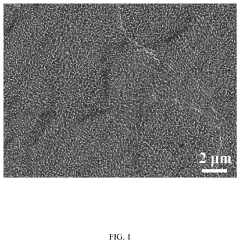
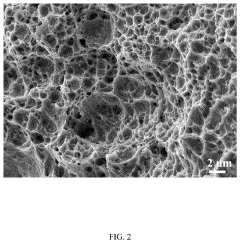
High-toughness heat-resistant aluminum alloy armature material and preparation method thereof
PatentActiveUS20240191324A1
Innovation
- A high-toughness heat-resistant aluminum alloy armature material is developed by heating an aluminum ingot, adding specific elements like Ce, Y, Zr, Mg, and Si, and processing the alloy into spherical powder for selective laser melting, forming nano-scale intermetallic compounds with a net-like skeleton structure within an aluminum matrix.
Environmental Impact of Rail Gun EMI
The electromagnetic interference (EMI) generated by rail guns poses significant environmental concerns that extend beyond the immediate operational area. The high-power electromagnetic pulses produced during rail gun firing can potentially disrupt nearby electronic systems, affect wildlife, and interfere with communication networks. These effects are particularly pronounced in marine environments where rail guns are often deployed on naval vessels.
One of the primary environmental impacts of rail gun EMI is its potential to disrupt marine ecosystems. Marine mammals, which rely heavily on electromagnetic fields for navigation and communication, may experience disorientation or altered behavior patterns due to the intense electromagnetic pulses. This disruption could lead to changes in migration routes, feeding patterns, and reproductive behaviors, potentially affecting entire marine food chains.
Additionally, the EMI from rail guns can interfere with critical navigation and communication systems of nearby vessels and aircraft. This interference may pose safety risks in busy shipping lanes or during military operations, necessitating careful coordination and mitigation strategies. The electromagnetic pulses can also affect weather radar systems and satellite communications, potentially impacting meteorological forecasting and global positioning services.
On land, the environmental impact of rail gun EMI extends to terrestrial ecosystems. Birds and insects that use the Earth's magnetic field for navigation may be particularly susceptible to disorientation. Furthermore, the interference can affect agricultural systems that rely on GPS-guided equipment, potentially disrupting precision farming techniques and crop management.
The cumulative effect of repeated rail gun firings in a specific area may lead to long-term changes in local electromagnetic fields. This alteration could have unforeseen consequences on the behavior and distribution of electromagnetically sensitive species, potentially leading to shifts in ecosystem dynamics.
To address these environmental concerns, ongoing research is focused on developing EMI reduction methods that minimize the ecological impact of rail gun operations. These efforts include improving shielding technologies, optimizing firing sequences to reduce EMI intensity, and developing more environmentally friendly power systems. Additionally, comprehensive environmental impact assessments are being conducted to better understand and mitigate the long-term effects of rail gun EMI on various ecosystems.
One of the primary environmental impacts of rail gun EMI is its potential to disrupt marine ecosystems. Marine mammals, which rely heavily on electromagnetic fields for navigation and communication, may experience disorientation or altered behavior patterns due to the intense electromagnetic pulses. This disruption could lead to changes in migration routes, feeding patterns, and reproductive behaviors, potentially affecting entire marine food chains.
Additionally, the EMI from rail guns can interfere with critical navigation and communication systems of nearby vessels and aircraft. This interference may pose safety risks in busy shipping lanes or during military operations, necessitating careful coordination and mitigation strategies. The electromagnetic pulses can also affect weather radar systems and satellite communications, potentially impacting meteorological forecasting and global positioning services.
On land, the environmental impact of rail gun EMI extends to terrestrial ecosystems. Birds and insects that use the Earth's magnetic field for navigation may be particularly susceptible to disorientation. Furthermore, the interference can affect agricultural systems that rely on GPS-guided equipment, potentially disrupting precision farming techniques and crop management.
The cumulative effect of repeated rail gun firings in a specific area may lead to long-term changes in local electromagnetic fields. This alteration could have unforeseen consequences on the behavior and distribution of electromagnetically sensitive species, potentially leading to shifts in ecosystem dynamics.
To address these environmental concerns, ongoing research is focused on developing EMI reduction methods that minimize the ecological impact of rail gun operations. These efforts include improving shielding technologies, optimizing firing sequences to reduce EMI intensity, and developing more environmentally friendly power systems. Additionally, comprehensive environmental impact assessments are being conducted to better understand and mitigate the long-term effects of rail gun EMI on various ecosystems.
Safety Standards for Rail Gun EMI Control
Safety standards for rail gun electromagnetic interference (EMI) control are crucial for ensuring the safe operation and minimizing potential hazards associated with these advanced weapon systems. The development of comprehensive safety standards requires a multifaceted approach that addresses various aspects of EMI reduction and control.
Firstly, safety standards must establish clear limits for EMI emissions from rail guns. These limits should be based on extensive research and testing to determine the threshold levels at which EMI becomes harmful to personnel, equipment, and surrounding infrastructure. The standards should specify maximum allowable EMI levels across different frequency ranges, taking into account both conducted and radiated emissions.
Secondly, the standards should outline specific shielding requirements for rail gun systems. This includes guidelines for the design and implementation of electromagnetic shielding materials and structures to contain EMI within the rail gun assembly. The standards should specify minimum shielding effectiveness levels and provide recommendations for suitable shielding materials and techniques.
Thirdly, safety standards must address grounding and bonding requirements for rail gun systems. Proper grounding and bonding are essential for minimizing EMI and ensuring the safe dissipation of electromagnetic energy. The standards should provide detailed specifications for grounding systems, including the use of low-impedance paths and the implementation of equipotential bonding techniques.
Furthermore, the safety standards should include guidelines for EMI testing and verification procedures. This involves specifying standardized test methods, equipment, and protocols for measuring EMI emissions from rail guns. The standards should also outline requirements for periodic EMI testing and maintenance to ensure ongoing compliance with safety regulations.
Additionally, the safety standards must address personnel protection measures. This includes specifying safe operating distances for personnel during rail gun operation, as well as requirements for personal protective equipment (PPE) to shield operators and nearby personnel from potential EMI exposure.
Lastly, the standards should incorporate guidelines for EMI mitigation in the surrounding environment. This may include recommendations for the design of EMI-resistant infrastructure in areas where rail guns are deployed, as well as protocols for managing potential EMI interactions with other electronic systems and equipment in the vicinity.
By establishing comprehensive safety standards for rail gun EMI control, regulatory bodies and military organizations can ensure the safe and effective operation of these advanced weapon systems while minimizing potential risks to personnel, equipment, and surrounding infrastructure.
Firstly, safety standards must establish clear limits for EMI emissions from rail guns. These limits should be based on extensive research and testing to determine the threshold levels at which EMI becomes harmful to personnel, equipment, and surrounding infrastructure. The standards should specify maximum allowable EMI levels across different frequency ranges, taking into account both conducted and radiated emissions.
Secondly, the standards should outline specific shielding requirements for rail gun systems. This includes guidelines for the design and implementation of electromagnetic shielding materials and structures to contain EMI within the rail gun assembly. The standards should specify minimum shielding effectiveness levels and provide recommendations for suitable shielding materials and techniques.
Thirdly, safety standards must address grounding and bonding requirements for rail gun systems. Proper grounding and bonding are essential for minimizing EMI and ensuring the safe dissipation of electromagnetic energy. The standards should provide detailed specifications for grounding systems, including the use of low-impedance paths and the implementation of equipotential bonding techniques.
Furthermore, the safety standards should include guidelines for EMI testing and verification procedures. This involves specifying standardized test methods, equipment, and protocols for measuring EMI emissions from rail guns. The standards should also outline requirements for periodic EMI testing and maintenance to ensure ongoing compliance with safety regulations.
Additionally, the safety standards must address personnel protection measures. This includes specifying safe operating distances for personnel during rail gun operation, as well as requirements for personal protective equipment (PPE) to shield operators and nearby personnel from potential EMI exposure.
Lastly, the standards should incorporate guidelines for EMI mitigation in the surrounding environment. This may include recommendations for the design of EMI-resistant infrastructure in areas where rail guns are deployed, as well as protocols for managing potential EMI interactions with other electronic systems and equipment in the vicinity.
By establishing comprehensive safety standards for rail gun EMI control, regulatory bodies and military organizations can ensure the safe and effective operation of these advanced weapon systems while minimizing potential risks to personnel, equipment, and surrounding infrastructure.
Unlock deeper insights with PatSnap Eureka Quick Research — get a full tech report to explore trends and direct your research. Try now!
Generate Your Research Report Instantly with AI Agent
Supercharge your innovation with PatSnap Eureka AI Agent Platform!