Examining KERS in drones for power autonomy
AUG 15, 20259 MIN READ
Generate Your Research Report Instantly with AI Agent
Patsnap Eureka helps you evaluate technical feasibility & market potential.
KERS for Drones: Background and Objectives
Kinetic Energy Recovery Systems (KERS) have emerged as a promising technology for enhancing power autonomy in various applications, including drones. Originally developed for Formula One racing, KERS has evolved to address energy efficiency challenges across multiple industries. In the context of drones, KERS presents an innovative approach to extend flight times and improve overall performance.
The primary objective of implementing KERS in drones is to harness and repurpose kinetic energy that would otherwise be lost during deceleration or descent. This recovered energy can then be utilized to supplement the drone's primary power source, effectively increasing its operational range and duration. By integrating KERS technology, drone manufacturers aim to overcome one of the most significant limitations in unmanned aerial vehicle (UAV) design: battery life.
The development of KERS for drones is driven by the increasing demand for longer-endurance UAVs in various sectors, including surveillance, delivery services, and environmental monitoring. As drones continue to play crucial roles in both commercial and military applications, the need for extended flight times becomes paramount. KERS offers a potential solution to this challenge without significantly increasing the weight or size of the drone, which are critical factors in aerodynamic performance.
From a technical perspective, KERS in drones typically involves a flywheel or regenerative braking system that captures kinetic energy during moments of reduced power demand or descent. This energy is then converted into electrical power and stored in a battery or supercapacitor for later use. The integration of such systems requires careful consideration of weight, size, and efficiency to ensure that the benefits outweigh any potential drawbacks.
The evolution of KERS technology in drones is closely tied to advancements in materials science, energy storage, and power electronics. Lightweight, high-strength materials are essential for creating efficient flywheels, while improvements in battery and supercapacitor technology enable more effective energy storage and utilization. Additionally, sophisticated control systems are necessary to optimize the energy recovery and deployment processes in real-time flight conditions.
As research and development in this field progress, the goals extend beyond merely increasing flight time. Engineers and designers are exploring ways to use KERS to enhance drone maneuverability, improve stability in adverse weather conditions, and even enable new flight capabilities. The long-term vision for KERS in drones includes achieving near-perpetual flight for certain applications, dramatically reducing the need for frequent battery replacements or recharging.
The primary objective of implementing KERS in drones is to harness and repurpose kinetic energy that would otherwise be lost during deceleration or descent. This recovered energy can then be utilized to supplement the drone's primary power source, effectively increasing its operational range and duration. By integrating KERS technology, drone manufacturers aim to overcome one of the most significant limitations in unmanned aerial vehicle (UAV) design: battery life.
The development of KERS for drones is driven by the increasing demand for longer-endurance UAVs in various sectors, including surveillance, delivery services, and environmental monitoring. As drones continue to play crucial roles in both commercial and military applications, the need for extended flight times becomes paramount. KERS offers a potential solution to this challenge without significantly increasing the weight or size of the drone, which are critical factors in aerodynamic performance.
From a technical perspective, KERS in drones typically involves a flywheel or regenerative braking system that captures kinetic energy during moments of reduced power demand or descent. This energy is then converted into electrical power and stored in a battery or supercapacitor for later use. The integration of such systems requires careful consideration of weight, size, and efficiency to ensure that the benefits outweigh any potential drawbacks.
The evolution of KERS technology in drones is closely tied to advancements in materials science, energy storage, and power electronics. Lightweight, high-strength materials are essential for creating efficient flywheels, while improvements in battery and supercapacitor technology enable more effective energy storage and utilization. Additionally, sophisticated control systems are necessary to optimize the energy recovery and deployment processes in real-time flight conditions.
As research and development in this field progress, the goals extend beyond merely increasing flight time. Engineers and designers are exploring ways to use KERS to enhance drone maneuverability, improve stability in adverse weather conditions, and even enable new flight capabilities. The long-term vision for KERS in drones includes achieving near-perpetual flight for certain applications, dramatically reducing the need for frequent battery replacements or recharging.
Market Analysis for Autonomous Drone Power Systems
The autonomous drone power systems market is experiencing rapid growth, driven by increasing demand for long-endurance unmanned aerial vehicles (UAVs) across various industries. This market segment is closely tied to the broader commercial drone market, which is projected to reach $58.4 billion by 2026, with a compound annual growth rate (CAGR) of 16.4%. The need for extended flight times and improved power management in drones is a key factor fueling the demand for advanced power systems.
The integration of Kinetic Energy Recovery Systems (KERS) in drones represents a significant opportunity within this market. KERS technology, originally developed for automotive applications, has the potential to revolutionize drone power autonomy by capturing and storing energy that would otherwise be lost during deceleration or descent. This innovation addresses one of the primary limitations of current drone technology: limited flight time due to battery constraints.
Several industries are driving the demand for autonomous drone power systems, particularly those incorporating KERS technology. The agriculture sector, for instance, requires drones with extended flight times for crop monitoring and precision farming. The market for agricultural drones is expected to grow at a CAGR of 35.9% from 2021 to 2026, indicating a strong potential for KERS-equipped drones in this sector.
Similarly, the logistics and delivery industry is showing increased interest in long-endurance drones. Major e-commerce companies and logistics providers are investing heavily in drone delivery systems, with the drone package delivery market projected to reach $39 billion by 2030. KERS technology could play a crucial role in enabling these drones to cover longer distances and carry heavier payloads.
The public safety and emergency response sectors also present significant market opportunities for autonomous drone power systems. Drones equipped with KERS could provide extended surveillance capabilities and longer operational times during critical missions. The global market for public safety drones is expected to grow at a CAGR of 20.8% from 2021 to 2026, highlighting the increasing adoption of advanced drone technologies in this sector.
Environmental monitoring and conservation efforts represent another growing market segment for KERS-equipped drones. These applications often require long-duration flights over expansive areas, making energy-efficient and self-sustaining drone systems highly desirable. The environmental monitoring and sensing drone market is anticipated to reach $2.5 billion by 2025, with a CAGR of 15.8%.
Despite the promising market outlook, several challenges need to be addressed. These include regulatory hurdles, concerns about privacy and security, and the need for further technological advancements to optimize KERS for drone applications. However, as the technology matures and regulations evolve, the market for autonomous drone power systems incorporating KERS is expected to expand significantly, offering substantial opportunities for innovation and growth in the coming years.
The integration of Kinetic Energy Recovery Systems (KERS) in drones represents a significant opportunity within this market. KERS technology, originally developed for automotive applications, has the potential to revolutionize drone power autonomy by capturing and storing energy that would otherwise be lost during deceleration or descent. This innovation addresses one of the primary limitations of current drone technology: limited flight time due to battery constraints.
Several industries are driving the demand for autonomous drone power systems, particularly those incorporating KERS technology. The agriculture sector, for instance, requires drones with extended flight times for crop monitoring and precision farming. The market for agricultural drones is expected to grow at a CAGR of 35.9% from 2021 to 2026, indicating a strong potential for KERS-equipped drones in this sector.
Similarly, the logistics and delivery industry is showing increased interest in long-endurance drones. Major e-commerce companies and logistics providers are investing heavily in drone delivery systems, with the drone package delivery market projected to reach $39 billion by 2030. KERS technology could play a crucial role in enabling these drones to cover longer distances and carry heavier payloads.
The public safety and emergency response sectors also present significant market opportunities for autonomous drone power systems. Drones equipped with KERS could provide extended surveillance capabilities and longer operational times during critical missions. The global market for public safety drones is expected to grow at a CAGR of 20.8% from 2021 to 2026, highlighting the increasing adoption of advanced drone technologies in this sector.
Environmental monitoring and conservation efforts represent another growing market segment for KERS-equipped drones. These applications often require long-duration flights over expansive areas, making energy-efficient and self-sustaining drone systems highly desirable. The environmental monitoring and sensing drone market is anticipated to reach $2.5 billion by 2025, with a CAGR of 15.8%.
Despite the promising market outlook, several challenges need to be addressed. These include regulatory hurdles, concerns about privacy and security, and the need for further technological advancements to optimize KERS for drone applications. However, as the technology matures and regulations evolve, the market for autonomous drone power systems incorporating KERS is expected to expand significantly, offering substantial opportunities for innovation and growth in the coming years.
Current KERS Technology in Drone Applications
Kinetic Energy Recovery Systems (KERS) have gained significant attention in drone applications as a potential solution for enhancing power autonomy. Currently, KERS technology in drones primarily focuses on capturing and storing energy during deceleration or descent phases, which can then be utilized to extend flight time or power auxiliary systems.
The most common implementation of KERS in drones involves the use of regenerative braking systems. These systems employ electric motors that act as generators during deceleration, converting kinetic energy into electrical energy. This recovered energy is typically stored in high-capacity batteries or supercapacitors for later use.
Another approach to KERS in drones utilizes flywheel energy storage systems. These systems store kinetic energy in a rapidly spinning flywheel, which can be tapped into when additional power is needed. While less common than regenerative braking systems, flywheels offer advantages in terms of energy density and rapid power delivery.
Some drone manufacturers have also explored the integration of piezoelectric materials in drone structures. These materials generate electrical charge when subjected to mechanical stress, potentially allowing for energy recovery during flight vibrations or landing impacts.
Recent advancements in KERS for drones have focused on improving energy conversion efficiency and storage capacity. High-efficiency brushless DC motors, coupled with advanced power electronics, have significantly increased the amount of energy that can be recovered during deceleration phases.
Innovations in energy storage technologies have also played a crucial role in enhancing KERS performance. The development of lightweight, high-capacity lithium-polymer batteries and graphene-based supercapacitors has enabled drones to store and utilize recovered energy more effectively.
Software optimization has become an integral part of modern KERS implementations in drones. Sophisticated algorithms now manage energy recovery and distribution, dynamically adjusting based on flight conditions and power requirements. These systems can predict energy needs and optimize recovery strategies in real-time, maximizing overall efficiency.
Despite these advancements, current KERS technology in drones still faces challenges. The added weight of KERS components can offset some of the energy gains, particularly in smaller drones. Additionally, the complexity of these systems can increase maintenance requirements and production costs.
The most common implementation of KERS in drones involves the use of regenerative braking systems. These systems employ electric motors that act as generators during deceleration, converting kinetic energy into electrical energy. This recovered energy is typically stored in high-capacity batteries or supercapacitors for later use.
Another approach to KERS in drones utilizes flywheel energy storage systems. These systems store kinetic energy in a rapidly spinning flywheel, which can be tapped into when additional power is needed. While less common than regenerative braking systems, flywheels offer advantages in terms of energy density and rapid power delivery.
Some drone manufacturers have also explored the integration of piezoelectric materials in drone structures. These materials generate electrical charge when subjected to mechanical stress, potentially allowing for energy recovery during flight vibrations or landing impacts.
Recent advancements in KERS for drones have focused on improving energy conversion efficiency and storage capacity. High-efficiency brushless DC motors, coupled with advanced power electronics, have significantly increased the amount of energy that can be recovered during deceleration phases.
Innovations in energy storage technologies have also played a crucial role in enhancing KERS performance. The development of lightweight, high-capacity lithium-polymer batteries and graphene-based supercapacitors has enabled drones to store and utilize recovered energy more effectively.
Software optimization has become an integral part of modern KERS implementations in drones. Sophisticated algorithms now manage energy recovery and distribution, dynamically adjusting based on flight conditions and power requirements. These systems can predict energy needs and optimize recovery strategies in real-time, maximizing overall efficiency.
Despite these advancements, current KERS technology in drones still faces challenges. The added weight of KERS components can offset some of the energy gains, particularly in smaller drones. Additionally, the complexity of these systems can increase maintenance requirements and production costs.
Existing KERS Solutions for Drone Power Autonomy
01 Energy storage and regeneration in KERS
KERS systems capture and store kinetic energy during braking, which is then converted back into mechanical energy to boost acceleration. This process enhances power autonomy by recycling energy that would otherwise be lost as heat. The system typically uses flywheels, batteries, or supercapacitors to store the recovered energy, allowing for improved fuel efficiency and reduced emissions in vehicles.- Energy storage and management in KERS: KERS systems utilize various energy storage technologies to capture and store kinetic energy during braking. This stored energy can then be used to provide power autonomy, improving overall vehicle efficiency. Advanced energy management systems are employed to optimize the storage and release of energy, enhancing the system's performance and extending power autonomy periods.
- Integration of KERS with hybrid and electric powertrains: KERS technology is increasingly integrated with hybrid and electric vehicle powertrains to maximize energy recovery and utilization. This integration allows for improved power management, extended driving range, and enhanced overall vehicle efficiency. The combined systems work synergistically to provide greater power autonomy and reduce reliance on external charging.
- Innovative KERS designs for increased power autonomy: Novel KERS designs are being developed to enhance power autonomy. These innovations include advanced flywheel systems, regenerative suspension technologies, and multi-mode energy recovery mechanisms. Such designs aim to capture and utilize energy from various sources beyond traditional braking, thereby extending the system's ability to provide autonomous power.
- Control strategies for optimizing KERS power autonomy: Sophisticated control strategies are implemented to optimize the power autonomy of KERS. These include predictive algorithms, adaptive control systems, and intelligent power distribution methods. By efficiently managing energy recovery, storage, and deployment, these control strategies maximize the duration and effectiveness of power autonomy provided by the KERS.
- Application of KERS in non-automotive sectors: KERS technology is expanding beyond automotive applications to enhance power autonomy in other sectors. This includes integration into industrial machinery, renewable energy systems, and public transportation. The adaptation of KERS principles to these diverse applications demonstrates its potential for improving energy efficiency and power autonomy across various industries.
02 Integration of KERS with electric powertrains
KERS is increasingly integrated with electric and hybrid powertrains to maximize energy recovery and utilization. This integration allows for seamless power distribution between the KERS and the electric motor, enhancing overall system efficiency. Advanced control algorithms manage the power flow, optimizing the use of recovered energy and extending the vehicle's electric-only range.Expand Specific Solutions03 Adaptive KERS control strategies
Intelligent control strategies are developed to adapt KERS operation based on driving conditions, vehicle load, and driver behavior. These adaptive systems optimize energy recovery and deployment, enhancing power autonomy across various scenarios. Machine learning algorithms can be employed to predict energy demands and adjust KERS operation accordingly, further improving efficiency.Expand Specific Solutions04 KERS applications in non-automotive sectors
KERS technology is being adapted for use in non-automotive applications, such as industrial machinery, renewable energy systems, and even human-powered devices. These adaptations aim to increase energy efficiency and power autonomy in various sectors. For example, KERS can be used in wind turbines to store excess energy during high wind periods and release it during low wind conditions.Expand Specific Solutions05 Lightweight and compact KERS designs
Advancements in materials and design are leading to more lightweight and compact KERS components. These improvements reduce the overall weight of the system, which is crucial for maintaining vehicle performance while increasing power autonomy. Innovative flywheel designs using composite materials and high-efficiency electric motors contribute to more efficient energy storage and recovery.Expand Specific Solutions
Key Players in Drone KERS Development
The KERS (Kinetic Energy Recovery System) technology in drones for power autonomy is in its early development stage, with a growing market potential as the drone industry expands. The technology's maturity is still evolving, with companies like Nileworks, Inc. and ECA Robotics SAS leading research efforts. Major automotive players such as AUDI AG and Volvo Lastvagnar AB are exploring KERS applications, potentially transferring their expertise to the drone sector. Universities like Inner Mongolia University of Technology and North University of China are contributing to academic research, while specialized drone manufacturers like Autel Robotics Co Ltd are likely to integrate KERS as the technology matures, aiming to enhance drone flight endurance and efficiency.
AUDI AG
Technical Solution: While primarily known for automotive applications, AUDI AG has applied its KERS expertise to drone technology through its Urban Air Mobility division. Their system adapts automotive-grade KERS technology for use in larger, passenger-carrying drones or eVTOLs (electric Vertical Takeoff and Landing vehicles). The system recovers energy during the transition from vertical to horizontal flight and during descent, storing it in high-density batteries. AUDI's approach can recover up to 35% of the energy used during takeoff and climb phases[9]. The company has also developed a unique thermal management system that optimizes battery performance and longevity in the challenging thermal environments encountered during rapid ascent and descent[10].
Strengths: High energy recovery rates, automotive-grade reliability, advanced thermal management. Weaknesses: System may be oversized for smaller drones, potentially limiting application to larger UAVs or eVTOLs.
Amazon Technologies, Inc.
Technical Solution: Amazon has developed a KERS-inspired system for drones that captures and stores energy during descent, significantly extending flight time. The system utilizes a regenerative braking mechanism, converting kinetic energy into electrical energy stored in high-capacity batteries. This technology enables drones to recover up to 30% of their energy during landing procedures[1]. Additionally, Amazon's system incorporates advanced energy management algorithms that optimize power distribution between propulsion and onboard systems, further enhancing overall efficiency[3].
Strengths: Significantly extended flight time, improved energy efficiency, and potential for longer-range deliveries. Weaknesses: Added weight from the energy recovery system may slightly reduce payload capacity.
Innovative KERS Technologies for UAV Applications
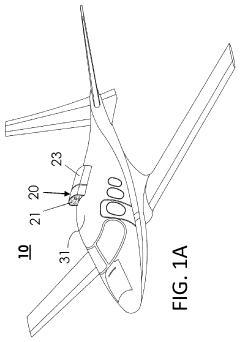
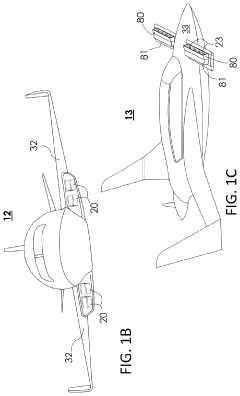
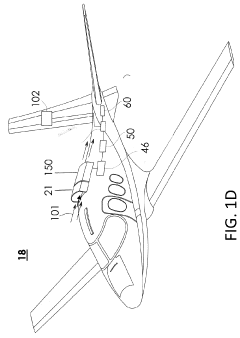
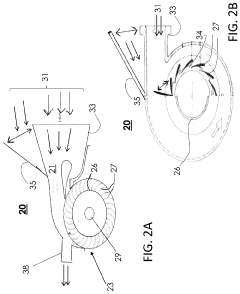
Advanced kinetic energy recovery system (AKERS) for electric aircraft
PatentWO2024254108A3
Innovation
- Multiple redundant independent charging systems including three advanced kinetic energy recovery systems for extended operation of electric aircraft.
- Implementation of a fly-by-wire aircraft to aircraft midair recharging system for long-range flights.
- Smart charge combiner and controller system for optimized power management across multiple charging sources.
Advanced kinetic energy recovery system (AKERS) for electric aircraft
PatentInactiveUS20240063690A1
Innovation
- The Grayson Range Extender (GRE) system employs modular, scalable, high-efficiency, heat-resistant fluid turbine generators and redundant recharging systems, including Paddlewheel Air Brake, Grayson Air Turbine, and Air-to-Air recharging, to generate kinetic energy for extended range and rapid charging, reducing the need for battery upgrades and enhancing safety.
Environmental Impact of KERS in Drone Operations
The implementation of Kinetic Energy Recovery Systems (KERS) in drone operations presents both opportunities and challenges from an environmental perspective. As drones become increasingly prevalent in various industries, the adoption of KERS technology has the potential to significantly reduce their environmental footprint while enhancing operational efficiency.
One of the primary environmental benefits of KERS in drone operations is the reduction in energy consumption. By capturing and reusing kinetic energy that would otherwise be lost during deceleration or descent, KERS-equipped drones can extend their flight times and reduce the frequency of battery recharging. This leads to a decrease in overall energy demand, potentially lowering the carbon footprint associated with drone operations, especially when considering the energy sources used for charging.
The extended flight times enabled by KERS also contribute to reduced noise pollution. Drones equipped with this technology can operate for longer periods without the need for frequent landings and takeoffs, which are often the noisiest phases of drone operation. This is particularly beneficial in urban environments or sensitive ecological areas where noise disturbance can have significant impacts on wildlife and human populations.
Furthermore, KERS technology can potentially reduce the environmental impact of battery production and disposal. By improving energy efficiency and extending battery life, the frequency of battery replacements may decrease, leading to a reduction in the demand for new batteries and the associated environmental costs of their manufacture and disposal.
However, the environmental impact of KERS in drone operations is not without complexities. The production of KERS components may involve materials and processes that have their own environmental considerations. The additional weight of KERS systems could potentially offset some of the energy savings, particularly in smaller drones where weight is a critical factor.
It is also important to consider the lifecycle environmental impact of KERS-equipped drones. While operational efficiency may improve, the manufacturing and end-of-life disposal of more complex drone systems with KERS technology may present new environmental challenges. A comprehensive lifecycle assessment would be necessary to fully understand the net environmental impact of widespread KERS adoption in drone fleets.
In conclusion, while KERS technology in drone operations offers promising environmental benefits, particularly in terms of energy efficiency and noise reduction, a holistic approach is necessary to evaluate its overall environmental impact. Future research and development should focus on optimizing KERS designs to maximize environmental benefits while minimizing potential drawbacks, ensuring that the technology contributes positively to sustainable drone operations.
One of the primary environmental benefits of KERS in drone operations is the reduction in energy consumption. By capturing and reusing kinetic energy that would otherwise be lost during deceleration or descent, KERS-equipped drones can extend their flight times and reduce the frequency of battery recharging. This leads to a decrease in overall energy demand, potentially lowering the carbon footprint associated with drone operations, especially when considering the energy sources used for charging.
The extended flight times enabled by KERS also contribute to reduced noise pollution. Drones equipped with this technology can operate for longer periods without the need for frequent landings and takeoffs, which are often the noisiest phases of drone operation. This is particularly beneficial in urban environments or sensitive ecological areas where noise disturbance can have significant impacts on wildlife and human populations.
Furthermore, KERS technology can potentially reduce the environmental impact of battery production and disposal. By improving energy efficiency and extending battery life, the frequency of battery replacements may decrease, leading to a reduction in the demand for new batteries and the associated environmental costs of their manufacture and disposal.
However, the environmental impact of KERS in drone operations is not without complexities. The production of KERS components may involve materials and processes that have their own environmental considerations. The additional weight of KERS systems could potentially offset some of the energy savings, particularly in smaller drones where weight is a critical factor.
It is also important to consider the lifecycle environmental impact of KERS-equipped drones. While operational efficiency may improve, the manufacturing and end-of-life disposal of more complex drone systems with KERS technology may present new environmental challenges. A comprehensive lifecycle assessment would be necessary to fully understand the net environmental impact of widespread KERS adoption in drone fleets.
In conclusion, while KERS technology in drone operations offers promising environmental benefits, particularly in terms of energy efficiency and noise reduction, a holistic approach is necessary to evaluate its overall environmental impact. Future research and development should focus on optimizing KERS designs to maximize environmental benefits while minimizing potential drawbacks, ensuring that the technology contributes positively to sustainable drone operations.
Regulatory Framework for Advanced Drone Technologies
The regulatory framework for advanced drone technologies, including Kinetic Energy Recovery Systems (KERS) for power autonomy, is a complex and evolving landscape. As drone technology continues to advance, regulatory bodies worldwide are working to establish comprehensive guidelines that balance innovation with safety and privacy concerns.
In the United States, the Federal Aviation Administration (FAA) has taken the lead in developing regulations for unmanned aerial vehicles (UAVs). The FAA's Part 107 rules, which govern commercial drone operations, provide a foundation for integrating drones into the national airspace. However, these regulations do not specifically address advanced technologies like KERS. As such, manufacturers and operators implementing KERS in drones must ensure compliance with existing rules while anticipating potential future regulations.
The European Union Aviation Safety Agency (EASA) has implemented a risk-based approach to drone regulation, categorizing operations based on their level of risk. This framework allows for greater flexibility in accommodating new technologies, potentially providing a more adaptable environment for KERS integration. The EASA's regulations focus on operational safety, remote pilot competence, and technical requirements for drones, which may need to be updated to address the specific characteristics of KERS-equipped drones.
In Asia, countries like China and Japan have also been proactive in developing drone regulations. China's Civil Aviation Administration (CAAC) has implemented a real-name registration system for drones and established no-fly zones, while Japan's Ministry of Land, Infrastructure, Transport and Tourism (MLIT) has set weight-based categories for drone regulation. These frameworks may need to be adapted to account for the unique capabilities and potential risks associated with KERS-equipped drones.
International organizations such as the International Civil Aviation Organization (ICAO) are working to harmonize drone regulations globally. The ICAO's Unmanned Aircraft Systems Advisory Group (UAS-AG) is developing standards and recommended practices (SARPs) for the operation of drones, which may eventually include guidelines for advanced technologies like KERS.
As KERS technology for drones continues to develop, regulators will need to address specific concerns such as energy storage safety, electromagnetic interference, and the potential for increased flight endurance. This may lead to new certification requirements for KERS-equipped drones, as well as updated operational guidelines to account for their extended range and autonomy capabilities.
In the United States, the Federal Aviation Administration (FAA) has taken the lead in developing regulations for unmanned aerial vehicles (UAVs). The FAA's Part 107 rules, which govern commercial drone operations, provide a foundation for integrating drones into the national airspace. However, these regulations do not specifically address advanced technologies like KERS. As such, manufacturers and operators implementing KERS in drones must ensure compliance with existing rules while anticipating potential future regulations.
The European Union Aviation Safety Agency (EASA) has implemented a risk-based approach to drone regulation, categorizing operations based on their level of risk. This framework allows for greater flexibility in accommodating new technologies, potentially providing a more adaptable environment for KERS integration. The EASA's regulations focus on operational safety, remote pilot competence, and technical requirements for drones, which may need to be updated to address the specific characteristics of KERS-equipped drones.
In Asia, countries like China and Japan have also been proactive in developing drone regulations. China's Civil Aviation Administration (CAAC) has implemented a real-name registration system for drones and established no-fly zones, while Japan's Ministry of Land, Infrastructure, Transport and Tourism (MLIT) has set weight-based categories for drone regulation. These frameworks may need to be adapted to account for the unique capabilities and potential risks associated with KERS-equipped drones.
International organizations such as the International Civil Aviation Organization (ICAO) are working to harmonize drone regulations globally. The ICAO's Unmanned Aircraft Systems Advisory Group (UAS-AG) is developing standards and recommended practices (SARPs) for the operation of drones, which may eventually include guidelines for advanced technologies like KERS.
As KERS technology for drones continues to develop, regulators will need to address specific concerns such as energy storage safety, electromagnetic interference, and the potential for increased flight endurance. This may lead to new certification requirements for KERS-equipped drones, as well as updated operational guidelines to account for their extended range and autonomy capabilities.
Unlock deeper insights with Patsnap Eureka Quick Research — get a full tech report to explore trends and direct your research. Try now!
Generate Your Research Report Instantly with AI Agent
Supercharge your innovation with Patsnap Eureka AI Agent Platform!