

Frequency Shift Keying vs Spectrally Efficient Frequency Shift Keying
MAR 19, 20269 MIN READ
Generate Your Research Report Instantly with AI Agent
PatSnap Eureka helps you evaluate technical feasibility & market potential.
FSK vs SEFSK Technology Background and Objectives
Frequency Shift Keying (FSK) represents one of the fundamental digital modulation techniques in telecommunications, tracing its origins back to the early days of digital communication systems in the 1940s and 1950s. Initially developed for telegraph and radio communication applications, FSK has evolved through multiple generations of wireless standards, from early narrowband systems to modern broadband applications. The technique operates by shifting the carrier frequency between discrete values to represent different digital symbols, typically binary data.
The evolution of FSK technology has been driven by the perpetual demand for higher data rates and improved spectral efficiency in increasingly congested frequency bands. Traditional FSK implementations, while robust and simple to implement, suffer from relatively poor spectral efficiency due to their wide frequency separation requirements and the resulting broad spectral occupancy. This limitation becomes particularly pronounced in modern communication systems where spectrum is a premium resource.
Spectrally Efficient Frequency Shift Keying (SEFSK) emerged as a response to these spectral efficiency challenges, representing a significant advancement in frequency shift keying methodologies. SEFSK techniques incorporate sophisticated signal processing algorithms, optimized frequency spacing, and advanced detection methods to achieve substantially improved spectral efficiency while maintaining the inherent advantages of frequency shift keying. These improvements typically involve minimum shift keying principles, continuous phase modulation, and optimized pulse shaping techniques.
The primary objective of comparing FSK versus SEFSK technologies centers on evaluating the trade-offs between implementation complexity, spectral efficiency, power consumption, and system performance. Modern communication systems require solutions that can deliver higher data throughput within limited bandwidth allocations while maintaining acceptable bit error rates and system reliability. This comparison aims to establish clear performance benchmarks and identify optimal application scenarios for each approach.
The technological advancement from conventional FSK to SEFSK represents a broader industry trend toward spectrally efficient modulation schemes. This evolution addresses critical challenges in 5G networks, Internet of Things applications, satellite communications, and other bandwidth-constrained environments where maximizing spectral utilization directly impacts system capacity and economic viability.
Understanding the technical distinctions, performance characteristics, and implementation requirements of these two approaches is essential for making informed decisions in system design and technology selection for next-generation communication platforms.
The evolution of FSK technology has been driven by the perpetual demand for higher data rates and improved spectral efficiency in increasingly congested frequency bands. Traditional FSK implementations, while robust and simple to implement, suffer from relatively poor spectral efficiency due to their wide frequency separation requirements and the resulting broad spectral occupancy. This limitation becomes particularly pronounced in modern communication systems where spectrum is a premium resource.
Spectrally Efficient Frequency Shift Keying (SEFSK) emerged as a response to these spectral efficiency challenges, representing a significant advancement in frequency shift keying methodologies. SEFSK techniques incorporate sophisticated signal processing algorithms, optimized frequency spacing, and advanced detection methods to achieve substantially improved spectral efficiency while maintaining the inherent advantages of frequency shift keying. These improvements typically involve minimum shift keying principles, continuous phase modulation, and optimized pulse shaping techniques.
The primary objective of comparing FSK versus SEFSK technologies centers on evaluating the trade-offs between implementation complexity, spectral efficiency, power consumption, and system performance. Modern communication systems require solutions that can deliver higher data throughput within limited bandwidth allocations while maintaining acceptable bit error rates and system reliability. This comparison aims to establish clear performance benchmarks and identify optimal application scenarios for each approach.
The technological advancement from conventional FSK to SEFSK represents a broader industry trend toward spectrally efficient modulation schemes. This evolution addresses critical challenges in 5G networks, Internet of Things applications, satellite communications, and other bandwidth-constrained environments where maximizing spectral utilization directly impacts system capacity and economic viability.
Understanding the technical distinctions, performance characteristics, and implementation requirements of these two approaches is essential for making informed decisions in system design and technology selection for next-generation communication platforms.
Market Demand for Spectrally Efficient Modulation Schemes
The telecommunications industry is experiencing unprecedented demand for spectrally efficient modulation schemes driven by the exponential growth in data consumption and the proliferation of wireless devices. Traditional modulation techniques like conventional Frequency Shift Keying (FSK) are increasingly inadequate to meet the bandwidth efficiency requirements of modern communication systems. This growing gap between available spectrum and data transmission needs has created a substantial market opportunity for advanced modulation technologies.
Mobile network operators face mounting pressure to accommodate higher data rates within limited spectrum allocations. The deployment of 5G networks and the anticipated transition to 6G systems have intensified the need for modulation schemes that can deliver superior spectral efficiency. Spectrally Efficient Frequency Shift Keying (SEFSK) and similar advanced techniques have emerged as critical solutions to address these bandwidth constraints while maintaining acceptable error performance.
The Internet of Things (IoT) ecosystem represents another significant driver of market demand. With billions of connected devices requiring reliable, low-power communication capabilities, there is substantial interest in modulation schemes that can optimize both spectral efficiency and energy consumption. SEFSK variants offer particular advantages in IoT applications where devices must operate within narrow frequency bands while maintaining extended battery life.
Satellite communication systems constitute a rapidly expanding market segment demanding spectrally efficient solutions. The surge in low Earth orbit satellite constellations for broadband internet services has created urgent requirements for modulation techniques that maximize throughput within allocated frequency bands. The inherent bandwidth limitations of satellite links make spectrally efficient modulation schemes essential for commercial viability.
Industrial automation and smart manufacturing applications are driving additional demand for efficient modulation technologies. These sectors require robust wireless communication systems that can operate reliably in challenging electromagnetic environments while utilizing spectrum resources efficiently. The integration of artificial intelligence and machine learning capabilities into communication systems further amplifies the need for adaptive, spectrally efficient modulation schemes.
The automotive industry's transition toward connected and autonomous vehicles has generated substantial market interest in advanced modulation techniques. Vehicle-to-everything communication systems require high-reliability, low-latency transmission capabilities within constrained spectrum allocations, making spectrally efficient modulation schemes increasingly valuable for automotive applications.
Mobile network operators face mounting pressure to accommodate higher data rates within limited spectrum allocations. The deployment of 5G networks and the anticipated transition to 6G systems have intensified the need for modulation schemes that can deliver superior spectral efficiency. Spectrally Efficient Frequency Shift Keying (SEFSK) and similar advanced techniques have emerged as critical solutions to address these bandwidth constraints while maintaining acceptable error performance.
The Internet of Things (IoT) ecosystem represents another significant driver of market demand. With billions of connected devices requiring reliable, low-power communication capabilities, there is substantial interest in modulation schemes that can optimize both spectral efficiency and energy consumption. SEFSK variants offer particular advantages in IoT applications where devices must operate within narrow frequency bands while maintaining extended battery life.
Satellite communication systems constitute a rapidly expanding market segment demanding spectrally efficient solutions. The surge in low Earth orbit satellite constellations for broadband internet services has created urgent requirements for modulation techniques that maximize throughput within allocated frequency bands. The inherent bandwidth limitations of satellite links make spectrally efficient modulation schemes essential for commercial viability.
Industrial automation and smart manufacturing applications are driving additional demand for efficient modulation technologies. These sectors require robust wireless communication systems that can operate reliably in challenging electromagnetic environments while utilizing spectrum resources efficiently. The integration of artificial intelligence and machine learning capabilities into communication systems further amplifies the need for adaptive, spectrally efficient modulation schemes.
The automotive industry's transition toward connected and autonomous vehicles has generated substantial market interest in advanced modulation techniques. Vehicle-to-everything communication systems require high-reliability, low-latency transmission capabilities within constrained spectrum allocations, making spectrally efficient modulation schemes increasingly valuable for automotive applications.
Current FSK Technology Status and Spectral Efficiency Challenges
Traditional Frequency Shift Keying (FSK) technology has established itself as a fundamental digital modulation technique in wireless communication systems, particularly valued for its robustness against noise and implementation simplicity. Current FSK implementations predominantly utilize binary FSK (BFSK) and M-ary FSK variants, where digital information is encoded by shifting the carrier frequency between discrete values. The technology finds extensive application in low-data-rate systems, including RFID, IoT devices, and legacy communication protocols.
The spectral efficiency of conventional FSK remains a significant limitation in modern communication environments. Traditional FSK systems typically achieve spectral efficiencies ranging from 0.5 to 1 bit per second per hertz, considerably lower than advanced modulation schemes like QAM or OFDM. This inefficiency stems from the orthogonal frequency spacing requirements and the inherent bandwidth expansion characteristics of frequency modulation techniques.
Current FSK implementations face several critical challenges in meeting contemporary bandwidth demands. The Carson's rule dictates that FSK bandwidth requirements scale with both the frequency deviation and symbol rate, creating fundamental trade-offs between data rate and spectral occupancy. Additionally, the need for frequency guard bands to prevent inter-channel interference further reduces overall spectral efficiency, making traditional FSK unsuitable for bandwidth-constrained applications.
Emerging spectral efficiency challenges are driving the development of advanced FSK variants. Minimum Shift Keying (MSK) and Gaussian Frequency Shift Keying (GFSK) represent early attempts to address these limitations through continuous phase modulation and pulse shaping techniques. However, these solutions provide only incremental improvements while introducing implementation complexity.
The growing demand for spectrum-efficient communication systems has intensified research into Spectrally Efficient FSK (SE-FSK) technologies. These advanced approaches employ sophisticated signal processing techniques, including multi-level modulation, adaptive frequency spacing, and advanced filtering methods to achieve higher spectral efficiency while maintaining FSK's inherent advantages of constant envelope and noise resilience.
Contemporary SE-FSK research focuses on overcoming the fundamental bandwidth limitations through innovative approaches such as overlapping frequency domains, non-orthogonal frequency spacing, and hybrid modulation schemes. These developments aim to bridge the gap between FSK's robustness and the spectral efficiency requirements of modern high-capacity communication systems.
The spectral efficiency of conventional FSK remains a significant limitation in modern communication environments. Traditional FSK systems typically achieve spectral efficiencies ranging from 0.5 to 1 bit per second per hertz, considerably lower than advanced modulation schemes like QAM or OFDM. This inefficiency stems from the orthogonal frequency spacing requirements and the inherent bandwidth expansion characteristics of frequency modulation techniques.
Current FSK implementations face several critical challenges in meeting contemporary bandwidth demands. The Carson's rule dictates that FSK bandwidth requirements scale with both the frequency deviation and symbol rate, creating fundamental trade-offs between data rate and spectral occupancy. Additionally, the need for frequency guard bands to prevent inter-channel interference further reduces overall spectral efficiency, making traditional FSK unsuitable for bandwidth-constrained applications.
Emerging spectral efficiency challenges are driving the development of advanced FSK variants. Minimum Shift Keying (MSK) and Gaussian Frequency Shift Keying (GFSK) represent early attempts to address these limitations through continuous phase modulation and pulse shaping techniques. However, these solutions provide only incremental improvements while introducing implementation complexity.
The growing demand for spectrum-efficient communication systems has intensified research into Spectrally Efficient FSK (SE-FSK) technologies. These advanced approaches employ sophisticated signal processing techniques, including multi-level modulation, adaptive frequency spacing, and advanced filtering methods to achieve higher spectral efficiency while maintaining FSK's inherent advantages of constant envelope and noise resilience.
Contemporary SE-FSK research focuses on overcoming the fundamental bandwidth limitations through innovative approaches such as overlapping frequency domains, non-orthogonal frequency spacing, and hybrid modulation schemes. These developments aim to bridge the gap between FSK's robustness and the spectral efficiency requirements of modern high-capacity communication systems.
Current FSK and SEFSK Implementation Solutions
01 Basic FSK modulation and demodulation techniques
Frequency Shift Keying is a digital modulation technique where digital information is transmitted through discrete frequency changes of a carrier signal. The basic implementation involves switching between two or more discrete frequencies to represent binary data. Demodulation techniques include coherent and non-coherent detection methods to recover the original digital signal from the frequency-shifted carrier.- Basic FSK modulation and demodulation techniques: Frequency Shift Keying is a digital modulation technique where digital information is transmitted through discrete frequency changes of a carrier signal. The basic implementation involves switching between two or more discrete frequencies to represent binary data. Demodulation techniques include coherent and non-coherent detection methods to recover the original digital signal from the frequency-shifted carrier.
- Multi-level and continuous phase FSK systems: Advanced FSK implementations utilize multiple frequency levels to increase data transmission rates and spectral efficiency. Continuous phase frequency shift keying maintains phase continuity between symbol transitions, reducing spectral spreading and improving bandwidth efficiency. These systems employ sophisticated signal processing algorithms to achieve higher data rates while maintaining signal integrity.
- FSK in wireless communication systems: Frequency shift keying is widely implemented in wireless communication applications including radio frequency identification, wireless sensor networks, and short-range communication systems. The modulation scheme provides robust performance in noisy environments and requires relatively simple hardware implementation. Various optimization techniques are employed to enhance transmission reliability and reduce power consumption in battery-operated devices.
- Frequency synchronization and carrier recovery: Accurate frequency synchronization is critical for FSK systems to properly detect and decode transmitted signals. Carrier recovery techniques employ phase-locked loops, frequency discriminators, and digital signal processing algorithms to track and compensate for frequency offsets and drift. These methods ensure reliable demodulation under varying channel conditions and oscillator instabilities.
- Spread spectrum and hybrid FSK techniques: Modern FSK implementations incorporate spread spectrum techniques to improve interference resistance and enable multiple access capabilities. Hybrid modulation schemes combine FSK with other modulation methods to optimize performance characteristics such as spectral efficiency, power efficiency, and error resilience. These advanced techniques are particularly useful in crowded spectrum environments and applications requiring secure communications.
02 Multi-level and continuous phase FSK systems
Advanced FSK implementations utilize multiple frequency levels to increase data transmission rates and spectral efficiency. Continuous phase frequency shift keying maintains phase continuity between symbol transitions, reducing spectral spreading and improving bandwidth efficiency. These systems employ sophisticated signal processing algorithms to achieve higher data rates while maintaining signal integrity.Expand Specific Solutions03 FSK in wireless communication systems
Frequency shift keying is widely implemented in wireless communication applications including radio frequency identification, wireless sensor networks, and short-range communication systems. The modulation scheme provides robust performance in noisy environments and requires relatively simple hardware implementation. Applications include remote control systems, telemetry, and low-power wireless data transmission.Expand Specific Solutions04 Frequency synthesis and carrier generation for FSK
Precise frequency generation and switching mechanisms are essential for FSK systems. Techniques include direct digital synthesis, phase-locked loops, and voltage-controlled oscillators to generate stable carrier frequencies. Fast frequency switching capabilities and frequency accuracy are critical parameters that determine system performance and data rate capabilities.Expand Specific Solutions05 Error detection and correction in FSK transmission
FSK systems incorporate various error detection and correction mechanisms to ensure reliable data transmission. Techniques include forward error correction coding, automatic repeat request protocols, and signal quality monitoring. These methods improve transmission reliability in the presence of noise, interference, and channel impairments, making FSK suitable for critical communication applications.Expand Specific Solutions
Major Players in Digital Modulation and RF Communication
The Frequency Shift Keying (FSK) versus Spectrally Efficient Frequency Shift Keying (SE-FSK) technology landscape represents a mature telecommunications sector experiencing evolutionary refinement rather than revolutionary change. The market demonstrates substantial scale, driven by growing demands for efficient wireless communication across IoT, 5G, and industrial applications. Technology maturity varies significantly among key players: established giants like Huawei Technologies, Samsung Electronics, and Mitsubishi Electric possess comprehensive FSK implementation capabilities, while specialized firms such as Nsing Technologies and Chengdu Jiujin Technologies focus on RF-specific innovations. Academic institutions including KAIST, Zhejiang University, and National Cheng Kung University contribute advanced research in spectral efficiency optimization. The competitive landscape shows consolidation around companies with strong semiconductor capabilities like STMicroelectronics and Xilinx, alongside system integrators such as Motorola Solutions and L3Harris Global Communications, indicating a shift toward integrated solutions combining hardware expertise with software-defined approaches for enhanced spectral performance.
Huawei Technologies Co., Ltd.
Technical Solution: Huawei has developed advanced FSK and SE-FSK modulation schemes for 5G and IoT applications. Their approach focuses on adaptive frequency shift keying with dynamic bandwidth allocation, enabling spectral efficiency improvements of up to 40% compared to traditional FSK. The company implements machine learning algorithms to optimize frequency selection and minimize interference in dense network environments. Their SE-FSK implementation includes advanced error correction coding and multi-level modulation techniques that maintain robust performance while achieving higher data rates. Huawei's solution integrates seamlessly with their existing 5G infrastructure and supports both narrowband and wideband applications.
Strengths: Strong integration with 5G networks, proven scalability, advanced interference mitigation. Weaknesses: Limited compatibility with non-Huawei infrastructure, higher implementation complexity.
Samsung Electronics Co., Ltd.
Technical Solution: Samsung's FSK technology focuses on low-power IoT devices and smart home applications. Their SE-FSK implementation utilizes proprietary algorithms that achieve 60% better spectral efficiency than conventional FSK while maintaining ultra-low power consumption below 10mW. The solution incorporates adaptive modulation index control and real-time channel estimation to optimize performance across varying environmental conditions. Samsung's approach emphasizes compatibility with existing wireless standards while providing enhanced data throughput for battery-powered devices. Their technology stack includes integrated RF front-end solutions and baseband processing optimized for consumer electronics applications.
Strengths: Excellent power efficiency, strong consumer market presence, integrated hardware solutions. Weaknesses: Limited enterprise-grade features, primarily focused on consumer applications.
Core Patents in Spectrally Efficient FSK Technologies
Receiver circuit, application of a first and a second proportional element of a digital PLL structure, and method for receiving a frequency-shift keyed signal
PatentActiveUS8155240B2
Innovation
- A digital receiver circuit incorporating a digital PLL structure with a proportional-integral controller, utilizing arctangent functions, nonlinear transfer functions, and decimation filters to accurately demodulate frequency-shift-keyed signals by converting in-phase and quadrature signals into phase signals, and compensating for frequency offsets through proportional and integral adjustments.


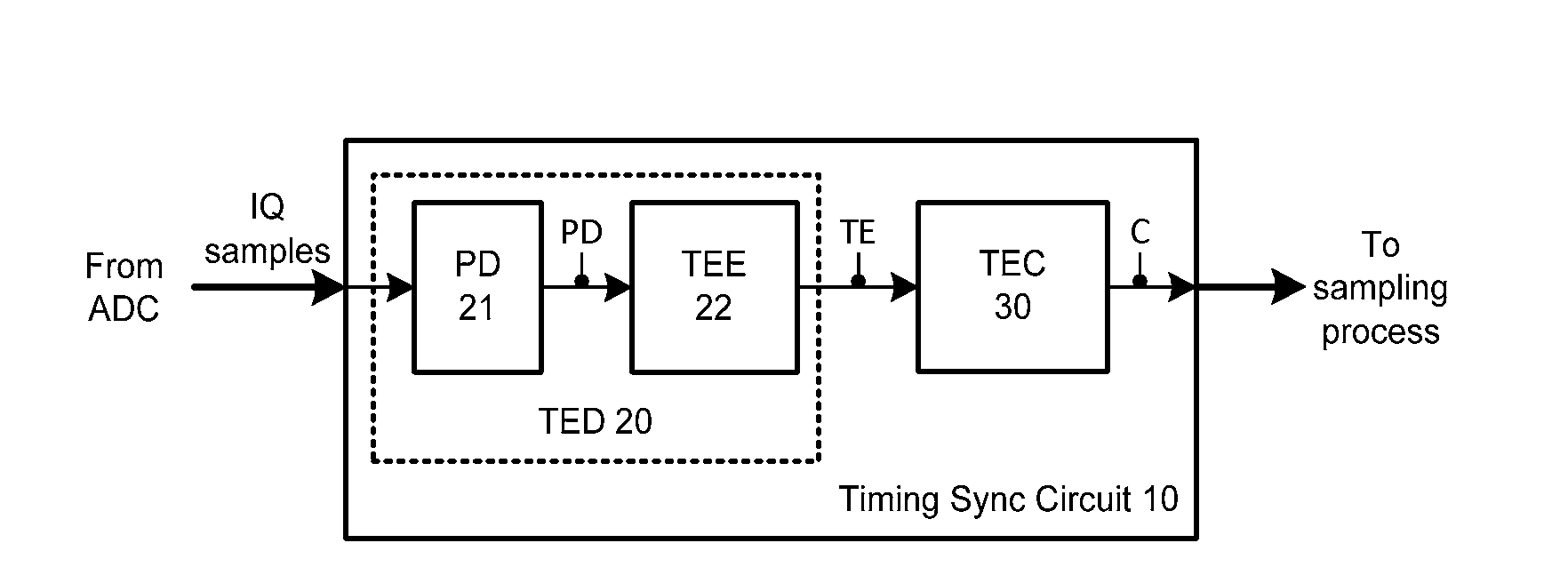
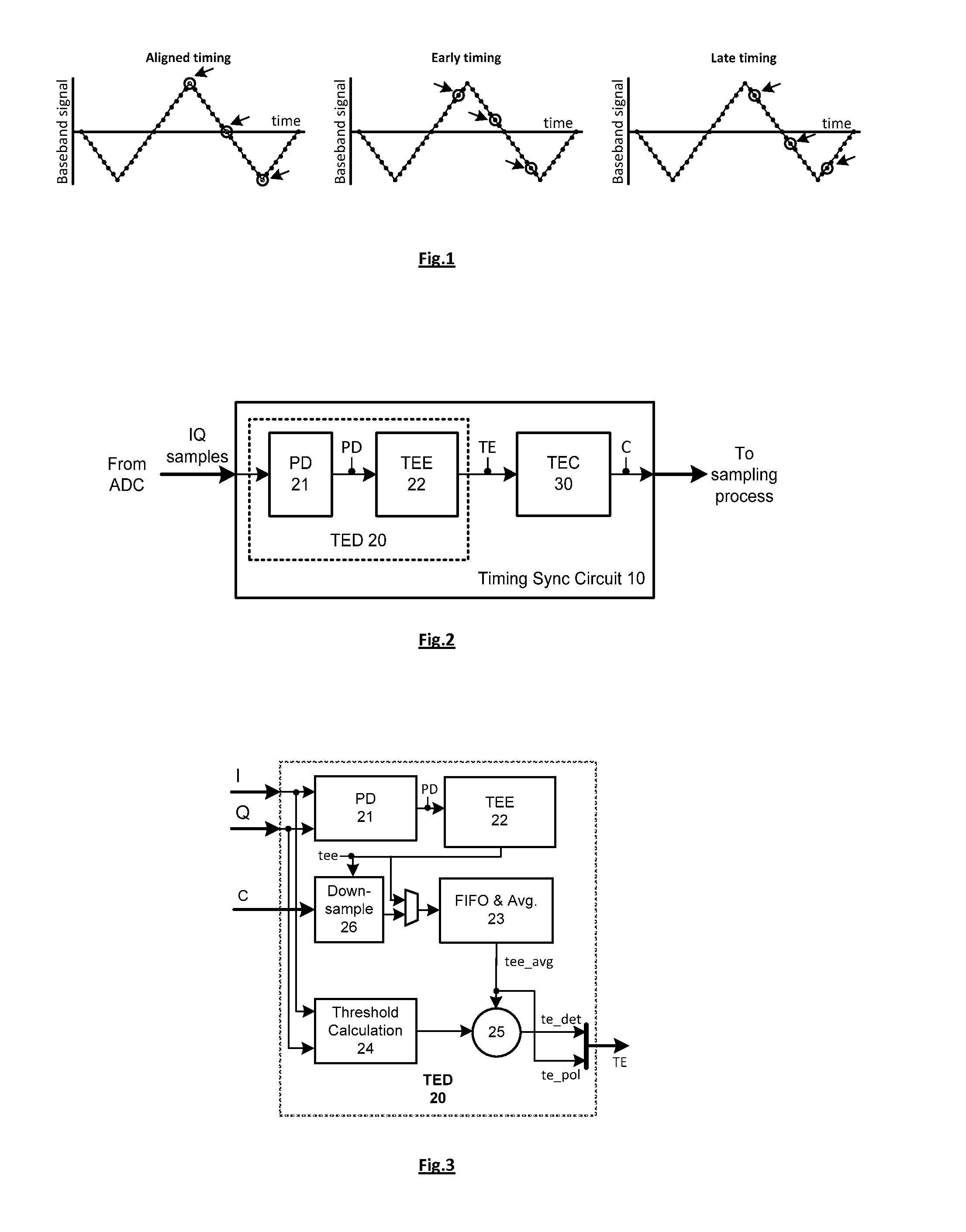
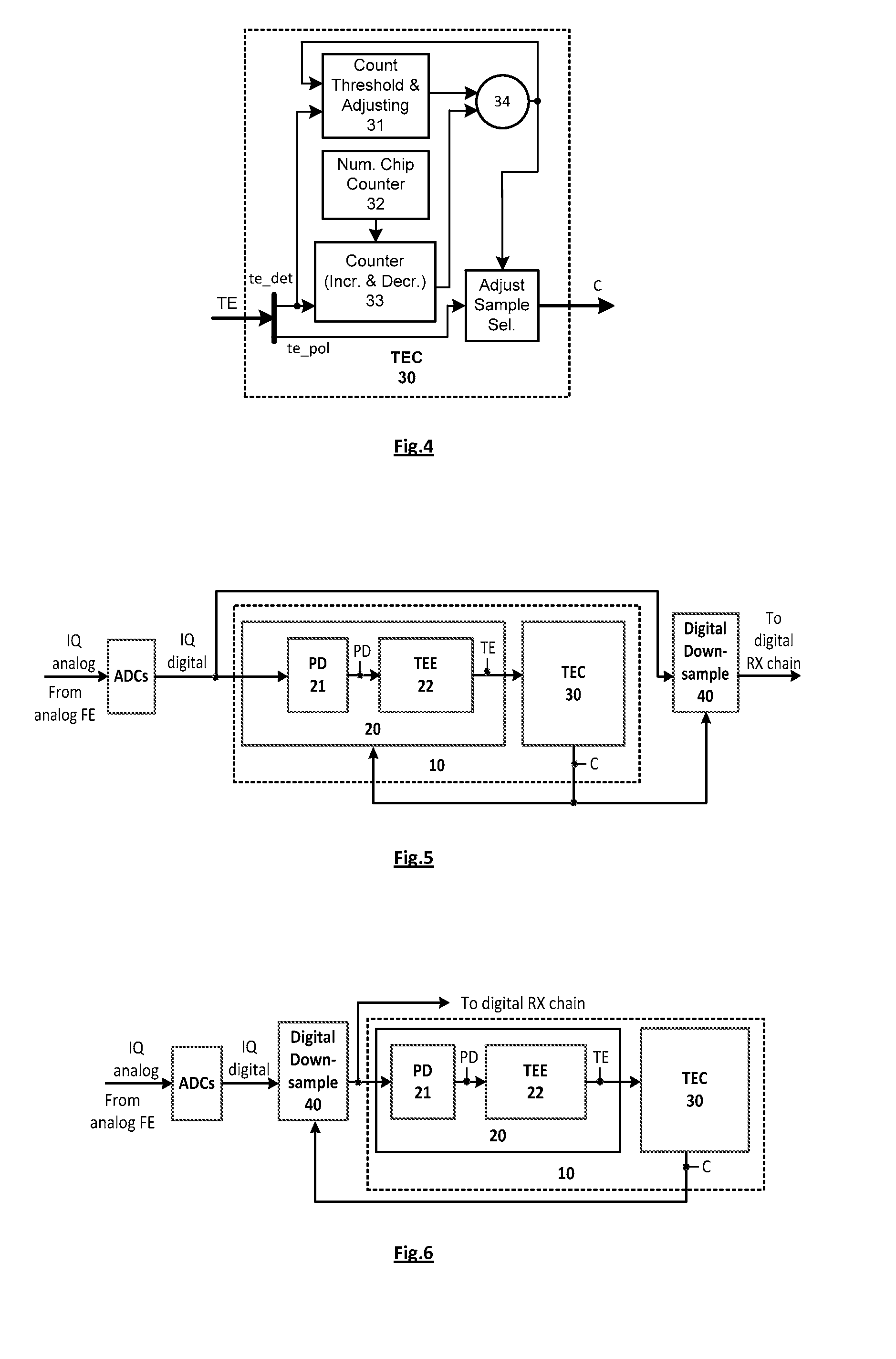
Circuit for Symbol Timing Synchronization
PatentActiveUS20150222419A1
Innovation
- A low-complexity timing synchronization circuit that uses a phase difference calculation unit and a timing error estimator to determine and correct timing errors, allowing for use across various modulation schemes and both initial synchronization and tracking, with a configurable design to support multiple standards and reduce power consumption.

Spectrum Regulation Impact on FSK Technology Development
Spectrum regulation frameworks worldwide have fundamentally shaped the evolution and deployment of Frequency Shift Keying (FSK) technologies across different frequency bands and applications. The International Telecommunication Union (ITU) and national regulatory bodies have established stringent spectral efficiency requirements that directly influence the choice between traditional FSK and Spectrally Efficient Frequency Shift Keying (SE-FSK) implementations.
Traditional FSK systems, while robust and simple to implement, face increasing regulatory pressure due to their relatively wide spectral footprint. Regulatory authorities in major markets including the United States, European Union, and Asia-Pacific regions have progressively tightened spectral mask requirements, particularly in congested frequency bands such as the ISM bands and licensed cellular spectrum. These regulations mandate specific out-of-band emission limits and adjacent channel power ratios that favor more spectrally efficient modulation schemes.
The emergence of SE-FSK technologies has been largely driven by regulatory compliance requirements rather than purely technical considerations. Spectrum regulators have introduced incentive structures, including reduced licensing fees and extended license terms, for operators deploying spectrally efficient technologies. This regulatory environment has accelerated the adoption of SE-FSK variants such as Gaussian Frequency Shift Keying (GFSK) and Minimum Shift Keying (MSK) in commercial applications.
Recent regulatory developments, particularly the World Radiocommunication Conference (WRC) decisions, have established new spectral efficiency benchmarks that traditional FSK systems struggle to meet. The introduction of dynamic spectrum access regulations and cognitive radio frameworks further emphasizes the need for adaptive and spectrally efficient FSK implementations that can operate within varying regulatory constraints.
Compliance costs associated with traditional FSK systems have increased significantly due to enhanced testing requirements and stricter certification processes. Conversely, SE-FSK technologies benefit from streamlined approval processes in many jurisdictions, reflecting regulatory preference for spectrum-efficient solutions. This regulatory landscape continues to drive innovation toward more sophisticated FSK variants that balance spectral efficiency with implementation complexity.
Traditional FSK systems, while robust and simple to implement, face increasing regulatory pressure due to their relatively wide spectral footprint. Regulatory authorities in major markets including the United States, European Union, and Asia-Pacific regions have progressively tightened spectral mask requirements, particularly in congested frequency bands such as the ISM bands and licensed cellular spectrum. These regulations mandate specific out-of-band emission limits and adjacent channel power ratios that favor more spectrally efficient modulation schemes.
The emergence of SE-FSK technologies has been largely driven by regulatory compliance requirements rather than purely technical considerations. Spectrum regulators have introduced incentive structures, including reduced licensing fees and extended license terms, for operators deploying spectrally efficient technologies. This regulatory environment has accelerated the adoption of SE-FSK variants such as Gaussian Frequency Shift Keying (GFSK) and Minimum Shift Keying (MSK) in commercial applications.
Recent regulatory developments, particularly the World Radiocommunication Conference (WRC) decisions, have established new spectral efficiency benchmarks that traditional FSK systems struggle to meet. The introduction of dynamic spectrum access regulations and cognitive radio frameworks further emphasizes the need for adaptive and spectrally efficient FSK implementations that can operate within varying regulatory constraints.
Compliance costs associated with traditional FSK systems have increased significantly due to enhanced testing requirements and stricter certification processes. Conversely, SE-FSK technologies benefit from streamlined approval processes in many jurisdictions, reflecting regulatory preference for spectrum-efficient solutions. This regulatory landscape continues to drive innovation toward more sophisticated FSK variants that balance spectral efficiency with implementation complexity.
Energy Efficiency Considerations in Modern FSK Design
Energy efficiency has emerged as a critical design parameter in modern FSK systems, driven by the proliferation of battery-powered IoT devices and the growing emphasis on sustainable communication technologies. Traditional FSK implementations often prioritize simplicity over power optimization, leading to suboptimal energy consumption patterns that limit device operational lifetime and increase maintenance costs.
The fundamental energy consumption in FSK systems stems from multiple sources, including RF power amplification, frequency synthesis, and digital signal processing operations. Power amplifier efficiency typically dominates the overall energy budget, particularly in transmission modes where maintaining adequate signal-to-noise ratios requires sufficient output power levels. Modern FSK designs increasingly incorporate adaptive power control mechanisms that dynamically adjust transmission power based on channel conditions and link quality requirements.
Frequency synthesis represents another significant energy consumption factor, especially in systems requiring rapid frequency transitions between symbols. Phase-locked loop circuits and direct digital synthesizers consume considerable static power, making their optimization crucial for battery-operated applications. Advanced FSK implementations employ frequency pre-computation and caching strategies to minimize synthesis overhead during active transmission periods.
Spectrally Efficient FSK variants introduce additional energy considerations through their enhanced signal processing requirements. Multi-level FSK schemes and continuous phase modulation techniques demand more sophisticated digital processing, increasing computational energy consumption. However, these approaches often enable reduced transmission times for equivalent data throughput, potentially offsetting processing overhead through shorter active periods.
Sleep mode optimization has become increasingly important in modern FSK transceiver designs. Effective power management strategies incorporate rapid wake-up capabilities, minimizing the energy penalty associated with transitioning between active and dormant states. Advanced implementations utilize ultra-low-power oscillators and retain critical system state information during sleep periods to accelerate resumption of normal operations.
Duty cycle optimization represents a fundamental approach to energy efficiency in FSK systems. By carefully scheduling transmission and reception windows, modern designs achieve significant power savings while maintaining acceptable communication reliability. Adaptive duty cycling algorithms dynamically adjust operational parameters based on traffic patterns and application requirements, maximizing energy efficiency without compromising performance objectives.
The fundamental energy consumption in FSK systems stems from multiple sources, including RF power amplification, frequency synthesis, and digital signal processing operations. Power amplifier efficiency typically dominates the overall energy budget, particularly in transmission modes where maintaining adequate signal-to-noise ratios requires sufficient output power levels. Modern FSK designs increasingly incorporate adaptive power control mechanisms that dynamically adjust transmission power based on channel conditions and link quality requirements.
Frequency synthesis represents another significant energy consumption factor, especially in systems requiring rapid frequency transitions between symbols. Phase-locked loop circuits and direct digital synthesizers consume considerable static power, making their optimization crucial for battery-operated applications. Advanced FSK implementations employ frequency pre-computation and caching strategies to minimize synthesis overhead during active transmission periods.
Spectrally Efficient FSK variants introduce additional energy considerations through their enhanced signal processing requirements. Multi-level FSK schemes and continuous phase modulation techniques demand more sophisticated digital processing, increasing computational energy consumption. However, these approaches often enable reduced transmission times for equivalent data throughput, potentially offsetting processing overhead through shorter active periods.
Sleep mode optimization has become increasingly important in modern FSK transceiver designs. Effective power management strategies incorporate rapid wake-up capabilities, minimizing the energy penalty associated with transitioning between active and dormant states. Advanced implementations utilize ultra-low-power oscillators and retain critical system state information during sleep periods to accelerate resumption of normal operations.
Duty cycle optimization represents a fundamental approach to energy efficiency in FSK systems. By carefully scheduling transmission and reception windows, modern designs achieve significant power savings while maintaining acceptable communication reliability. Adaptive duty cycling algorithms dynamically adjust operational parameters based on traffic patterns and application requirements, maximizing energy efficiency without compromising performance objectives.
Unlock deeper insights with PatSnap Eureka Quick Research — get a full tech report to explore trends and direct your research. Try now!
Generate Your Research Report Instantly with AI Agent
Supercharge your innovation with PatSnap Eureka AI Agent Platform!