

Integrate Frequency Shift Keying for Energy Efficient Communication
MAR 19, 20269 MIN READ
Generate Your Research Report Instantly with AI Agent
PatSnap Eureka helps you evaluate technical feasibility & market potential.
FSK Integration Background and Energy Efficiency Goals
Frequency Shift Keying (FSK) has emerged as a cornerstone modulation technique in wireless communication systems, tracing its origins back to early telegraph systems in the 19th century. The fundamental principle involves encoding digital information by shifting between discrete carrier frequencies, making it inherently robust against amplitude variations and noise interference. This characteristic has positioned FSK as an attractive solution for modern Internet of Things (IoT) applications, where reliable communication under challenging conditions is paramount.
The evolution of FSK technology has been driven by the exponential growth in connected devices and the corresponding demand for energy-efficient communication protocols. Traditional communication methods often prioritize data throughput over power consumption, creating significant challenges for battery-powered devices that must operate for extended periods without maintenance. The integration of FSK addresses this fundamental trade-off by offering a modulation scheme that maintains acceptable data rates while dramatically reducing power requirements.
Contemporary FSK implementations have evolved beyond simple binary frequency shifting to encompass multi-level FSK variants and adaptive frequency selection algorithms. These advancements enable dynamic optimization of communication parameters based on channel conditions, interference levels, and energy constraints. The technology has particularly gained traction in Low Power Wide Area Networks (LPWAN), where devices must transmit small data packets over considerable distances while preserving battery life for years.
The primary energy efficiency goals for FSK integration center on minimizing transmission power requirements while maintaining communication reliability and coverage. Modern FSK systems target power consumption reductions of 60-80% compared to traditional modulation schemes, achieved through optimized frequency selection, reduced transmission duty cycles, and intelligent power management algorithms. These objectives align with global sustainability initiatives and the practical requirements of massive IoT deployments.
Advanced FSK integration strategies focus on cross-layer optimization, where physical layer modulation parameters are coordinated with medium access control protocols and application-specific requirements. This holistic approach enables unprecedented energy efficiency by eliminating redundant operations, optimizing transmission scheduling, and implementing predictive power management based on communication patterns and environmental conditions.
The evolution of FSK technology has been driven by the exponential growth in connected devices and the corresponding demand for energy-efficient communication protocols. Traditional communication methods often prioritize data throughput over power consumption, creating significant challenges for battery-powered devices that must operate for extended periods without maintenance. The integration of FSK addresses this fundamental trade-off by offering a modulation scheme that maintains acceptable data rates while dramatically reducing power requirements.
Contemporary FSK implementations have evolved beyond simple binary frequency shifting to encompass multi-level FSK variants and adaptive frequency selection algorithms. These advancements enable dynamic optimization of communication parameters based on channel conditions, interference levels, and energy constraints. The technology has particularly gained traction in Low Power Wide Area Networks (LPWAN), where devices must transmit small data packets over considerable distances while preserving battery life for years.
The primary energy efficiency goals for FSK integration center on minimizing transmission power requirements while maintaining communication reliability and coverage. Modern FSK systems target power consumption reductions of 60-80% compared to traditional modulation schemes, achieved through optimized frequency selection, reduced transmission duty cycles, and intelligent power management algorithms. These objectives align with global sustainability initiatives and the practical requirements of massive IoT deployments.
Advanced FSK integration strategies focus on cross-layer optimization, where physical layer modulation parameters are coordinated with medium access control protocols and application-specific requirements. This holistic approach enables unprecedented energy efficiency by eliminating redundant operations, optimizing transmission scheduling, and implementing predictive power management based on communication patterns and environmental conditions.
Market Demand for Energy Efficient FSK Communication
The global telecommunications industry is experiencing unprecedented demand for energy-efficient communication solutions, driven by the exponential growth of IoT devices, wireless sensor networks, and mobile communications. Traditional communication methods consume substantial power, creating significant operational costs and environmental concerns. This growing awareness has positioned energy-efficient FSK communication as a critical technology for sustainable wireless infrastructure development.
IoT applications represent the largest market segment driving FSK adoption, particularly in smart city implementations, industrial automation, and environmental monitoring systems. These applications require long-term deployment with minimal maintenance, making energy efficiency paramount. Battery-powered sensors and remote monitoring devices benefit significantly from FSK's inherent power efficiency characteristics, enabling extended operational lifespans without frequent battery replacements.
The automotive industry presents another substantial market opportunity, especially with the proliferation of connected vehicles and autonomous driving systems. Vehicle-to-everything communication protocols increasingly demand low-power, reliable data transmission methods. FSK modulation offers robust performance in challenging electromagnetic environments while maintaining energy efficiency standards required for automotive applications.
Healthcare sector demand continues expanding, particularly for wearable medical devices and remote patient monitoring systems. These applications require continuous operation with minimal power consumption, making energy-efficient FSK communication essential for practical deployment. The aging global population and increased focus on preventive healthcare further amplify this market demand.
Industrial automation and smart manufacturing sectors increasingly adopt wireless communication solutions for equipment monitoring, predictive maintenance, and process optimization. Energy-efficient FSK communication enables cost-effective deployment of numerous sensors and actuators without extensive power infrastructure modifications.
Regulatory pressures and environmental sustainability initiatives across various industries create additional market drivers. Government mandates for reduced carbon footprints and energy consumption targets push organizations toward adopting more efficient communication technologies. This regulatory landscape particularly benefits FSK implementation in large-scale deployments where cumulative energy savings become substantial.
The market demand is further intensified by the need for reliable communication in remote and harsh environments where power availability is limited. Applications in agriculture, environmental monitoring, and infrastructure surveillance require robust, energy-efficient communication solutions that FSK technology can effectively provide.
IoT applications represent the largest market segment driving FSK adoption, particularly in smart city implementations, industrial automation, and environmental monitoring systems. These applications require long-term deployment with minimal maintenance, making energy efficiency paramount. Battery-powered sensors and remote monitoring devices benefit significantly from FSK's inherent power efficiency characteristics, enabling extended operational lifespans without frequent battery replacements.
The automotive industry presents another substantial market opportunity, especially with the proliferation of connected vehicles and autonomous driving systems. Vehicle-to-everything communication protocols increasingly demand low-power, reliable data transmission methods. FSK modulation offers robust performance in challenging electromagnetic environments while maintaining energy efficiency standards required for automotive applications.
Healthcare sector demand continues expanding, particularly for wearable medical devices and remote patient monitoring systems. These applications require continuous operation with minimal power consumption, making energy-efficient FSK communication essential for practical deployment. The aging global population and increased focus on preventive healthcare further amplify this market demand.
Industrial automation and smart manufacturing sectors increasingly adopt wireless communication solutions for equipment monitoring, predictive maintenance, and process optimization. Energy-efficient FSK communication enables cost-effective deployment of numerous sensors and actuators without extensive power infrastructure modifications.
Regulatory pressures and environmental sustainability initiatives across various industries create additional market drivers. Government mandates for reduced carbon footprints and energy consumption targets push organizations toward adopting more efficient communication technologies. This regulatory landscape particularly benefits FSK implementation in large-scale deployments where cumulative energy savings become substantial.
The market demand is further intensified by the need for reliable communication in remote and harsh environments where power availability is limited. Applications in agriculture, environmental monitoring, and infrastructure surveillance require robust, energy-efficient communication solutions that FSK technology can effectively provide.
Current FSK Implementation Status and Energy Challenges
Frequency Shift Keying (FSK) has established itself as a fundamental modulation technique in wireless communication systems, particularly valued for its robustness and simplicity. Current FSK implementations span across diverse applications, from low-power IoT devices to satellite communications, demonstrating varying degrees of energy efficiency optimization. The technology has evolved from basic binary FSK to more sophisticated variants including Minimum Shift Keying (MSK) and Gaussian FSK (GFSK), each addressing specific performance and power consumption requirements.
Modern FSK implementations face significant energy efficiency challenges that limit their deployment in battery-constrained environments. Traditional FSK transceivers typically consume substantial power during frequency synthesis and signal processing operations. The voltage-controlled oscillators (VCOs) required for frequency generation often operate continuously, contributing to baseline power consumption even during idle periods. Additionally, the need for precise frequency control and stability demands power-hungry phase-locked loops (PLLs) and crystal oscillators.
Contemporary FSK systems struggle with the trade-off between data rate and energy consumption. Higher data rates necessitate wider frequency deviations and faster frequency switching, which increases power requirements for frequency synthesizers and amplifiers. The spectral efficiency limitations of FSK compared to more advanced modulation schemes create additional energy overhead when attempting to achieve comparable throughput performance.
Digital signal processing requirements in modern FSK implementations present another energy challenge. Real-time demodulation algorithms, error correction coding, and adaptive filtering consume significant computational resources, particularly in software-defined radio implementations. The analog-to-digital converters and digital signal processors required for these operations contribute substantially to overall system power consumption.
Interference mitigation and frequency agility features in current FSK systems add complexity and energy overhead. Adaptive frequency hopping, dynamic channel selection, and interference cancellation algorithms require continuous monitoring and processing capabilities that increase power consumption. These features, while enhancing communication reliability, create tension between performance and energy efficiency objectives.
The integration challenges extend to system-level implementations where FSK modules must coexist with other communication protocols and processing units. Power management coordination, clock domain crossing, and shared resource allocation create additional energy inefficiencies that compound the inherent limitations of traditional FSK architectures.
Modern FSK implementations face significant energy efficiency challenges that limit their deployment in battery-constrained environments. Traditional FSK transceivers typically consume substantial power during frequency synthesis and signal processing operations. The voltage-controlled oscillators (VCOs) required for frequency generation often operate continuously, contributing to baseline power consumption even during idle periods. Additionally, the need for precise frequency control and stability demands power-hungry phase-locked loops (PLLs) and crystal oscillators.
Contemporary FSK systems struggle with the trade-off between data rate and energy consumption. Higher data rates necessitate wider frequency deviations and faster frequency switching, which increases power requirements for frequency synthesizers and amplifiers. The spectral efficiency limitations of FSK compared to more advanced modulation schemes create additional energy overhead when attempting to achieve comparable throughput performance.
Digital signal processing requirements in modern FSK implementations present another energy challenge. Real-time demodulation algorithms, error correction coding, and adaptive filtering consume significant computational resources, particularly in software-defined radio implementations. The analog-to-digital converters and digital signal processors required for these operations contribute substantially to overall system power consumption.
Interference mitigation and frequency agility features in current FSK systems add complexity and energy overhead. Adaptive frequency hopping, dynamic channel selection, and interference cancellation algorithms require continuous monitoring and processing capabilities that increase power consumption. These features, while enhancing communication reliability, create tension between performance and energy efficiency objectives.
The integration challenges extend to system-level implementations where FSK modules must coexist with other communication protocols and processing units. Power management coordination, clock domain crossing, and shared resource allocation create additional energy inefficiencies that compound the inherent limitations of traditional FSK architectures.
Existing FSK Energy Optimization Solutions
01 Continuous Phase Modulation for Energy Efficiency
Continuous phase modulation techniques, including continuous phase frequency shift keying (CPFSK), can improve energy efficiency in communication systems by maintaining constant envelope signals. This approach reduces power consumption and improves spectral efficiency by minimizing phase discontinuities during frequency transitions. The technique is particularly beneficial for battery-powered devices and wireless communication systems where energy conservation is critical.- Continuous Phase Modulation for Energy Efficiency: Continuous phase modulation techniques, including continuous phase frequency shift keying (CPFSK), can improve energy efficiency in communication systems by maintaining constant envelope signals. This approach reduces power consumption and improves spectral efficiency by minimizing phase discontinuities during frequency transitions. The technique is particularly beneficial for battery-powered devices and wireless communication systems where energy conservation is critical.
- Minimum Shift Keying (MSK) Implementation: Minimum shift keying represents a special form of frequency shift keying that achieves improved energy efficiency through optimized modulation index and continuous phase characteristics. This modulation scheme provides better spectral efficiency and reduced power requirements compared to conventional FSK methods. The technique enables more efficient use of available bandwidth while maintaining low power consumption in transmitter circuits.
- Adaptive Modulation and Power Control: Adaptive modulation techniques dynamically adjust FSK parameters based on channel conditions to optimize energy efficiency. These systems can modify transmission power levels, modulation depth, and data rates in response to signal quality and distance requirements. By adapting to varying conditions, these methods reduce unnecessary power consumption while maintaining reliable communication links.
- Low Power FSK Transceiver Design: Specialized transceiver architectures designed for FSK modulation incorporate energy-saving features such as duty cycling, sleep modes, and optimized circuit topologies. These designs focus on reducing current consumption during both active transmission and standby periods. Integration of power management circuits and efficient oscillator designs contribute to overall system energy efficiency in FSK-based communication devices.
- Multi-level FSK and Spectral Efficiency: Multi-level frequency shift keying schemes enable transmission of multiple bits per symbol, improving spectral efficiency and reducing energy per bit. These advanced modulation techniques allow for higher data rates without proportional increases in power consumption. By encoding more information in each transmitted symbol, the overall energy efficiency of the communication system is enhanced while maintaining acceptable error rates.
02 Minimum Shift Keying (MSK) Implementation
Minimum shift keying represents a special form of frequency shift keying that achieves improved energy efficiency through optimized modulation index and continuous phase characteristics. This modulation scheme provides better spectral efficiency and reduced power requirements compared to conventional FSK methods. The technique enables more efficient use of available bandwidth while maintaining low power consumption in transmitter circuits.Expand Specific Solutions03 Adaptive Modulation and Power Control
Adaptive modulation techniques dynamically adjust FSK parameters based on channel conditions to optimize energy efficiency. These systems can modify transmission power levels, modulation depth, and data rates in response to signal quality and distance requirements. By adapting to varying conditions, these methods minimize unnecessary power expenditure while maintaining reliable communication links.Expand Specific Solutions04 Low Power FSK Transceiver Design
Specialized transceiver architectures designed for FSK modulation incorporate energy-saving features such as duty cycling, sleep modes, and optimized circuit topologies. These designs focus on reducing current consumption during both active transmission and standby periods. Integration of low-power components and efficient signal processing algorithms further enhances overall system energy efficiency for IoT and sensor network applications.Expand Specific Solutions05 Multi-level FSK and Spectral Efficiency
Multi-level frequency shift keying schemes enable higher data rates within the same bandwidth, improving energy efficiency per transmitted bit. By encoding multiple bits per symbol, these advanced modulation techniques reduce the energy required for transmitting a given amount of data. The approach balances complexity with improved throughput and reduced power consumption in modern communication systems.Expand Specific Solutions
Key Players in FSK and Low Power Communication Industry
The Frequency Shift Keying (FSK) for energy-efficient communication market is experiencing rapid growth driven by increasing demand for low-power wireless solutions across IoT, automotive, and telecommunications sectors. The industry is in a mature development stage with established players like Qualcomm, Huawei, and Ericsson leading infrastructure development, while companies such as NEC, Siemens, and Continental Automotive drive automotive applications. Technology maturity varies significantly across segments, with telecommunications applications showing high maturity through contributions from ZTE and Motorola Solutions, while emerging applications in smart energy and industrial IoT remain in development phases. Research institutions like Southeast University and Harbin Engineering University continue advancing theoretical foundations, while companies like NuCurrent and Xilinx focus on specialized hardware implementations, creating a diverse competitive landscape spanning from fundamental research to commercial deployment.
Telefonaktiebolaget LM Ericsson
Technical Solution: Ericsson has developed FSK-based communication protocols specifically designed for energy-constrained network environments. Their solution employs continuous phase FSK with adaptive modulation index control, achieving up to 45% power reduction in cellular IoT applications. The company's approach integrates FSK with their proprietary sleep-wake scheduling algorithms, enabling devices to maintain connectivity while minimizing active transmission time. Their implementation includes sophisticated error detection and correction mechanisms that work synergistically with FSK modulation to ensure reliable communication even at reduced power levels, making it particularly suitable for smart city and industrial IoT deployments.
Strengths: Telecom infrastructure expertise, proven network-scale deployment, robust error handling. Weaknesses: Focus primarily on cellular applications, limited flexibility for custom implementations.
Huawei Technologies Co., Ltd.
Technical Solution: Huawei has implemented FSK-based energy-efficient communication solutions primarily for their 5G infrastructure and IoT applications. Their technical approach involves orthogonal FSK with intelligent power control algorithms that can reduce energy consumption by 35-50% in low-data-rate scenarios. The company has developed proprietary FSK variants that incorporate machine learning-based channel prediction to optimize frequency selection and transmission power dynamically. Their solution includes advanced signal processing techniques that maintain communication quality while operating at reduced power levels, particularly effective in massive IoT deployments where thousands of devices need to communicate efficiently.
Strengths: Strong R&D capabilities, comprehensive 5G integration, AI-enhanced optimization. Weaknesses: Geopolitical restrictions in some markets, complex implementation requirements.
Core FSK Energy Efficiency Patents and Innovations
Continuous phase frequency shift keying modulation during wireless transmissions in a closed system while minimizing power consumption
PatentInactiveUS20070112397A1
Innovation
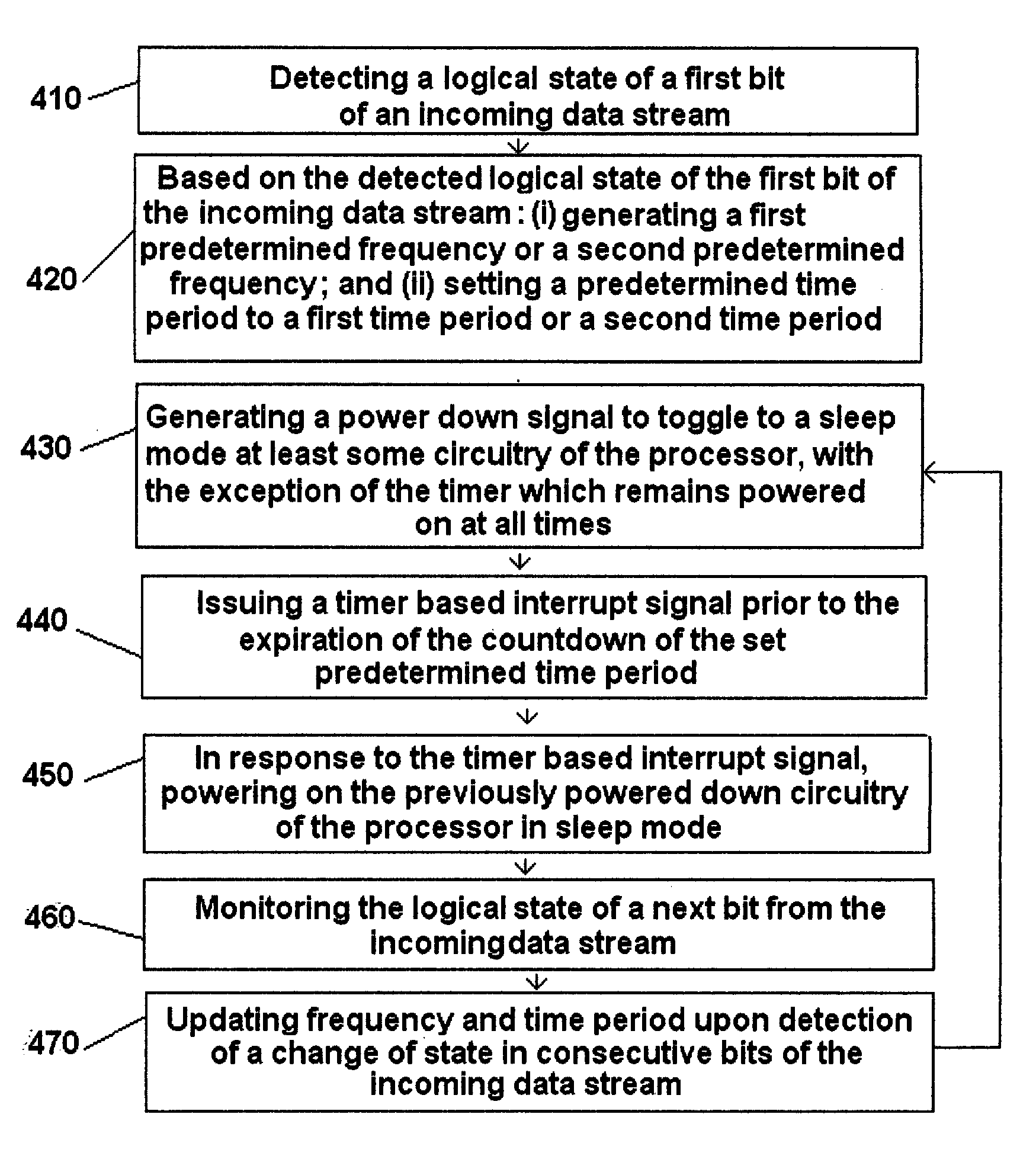
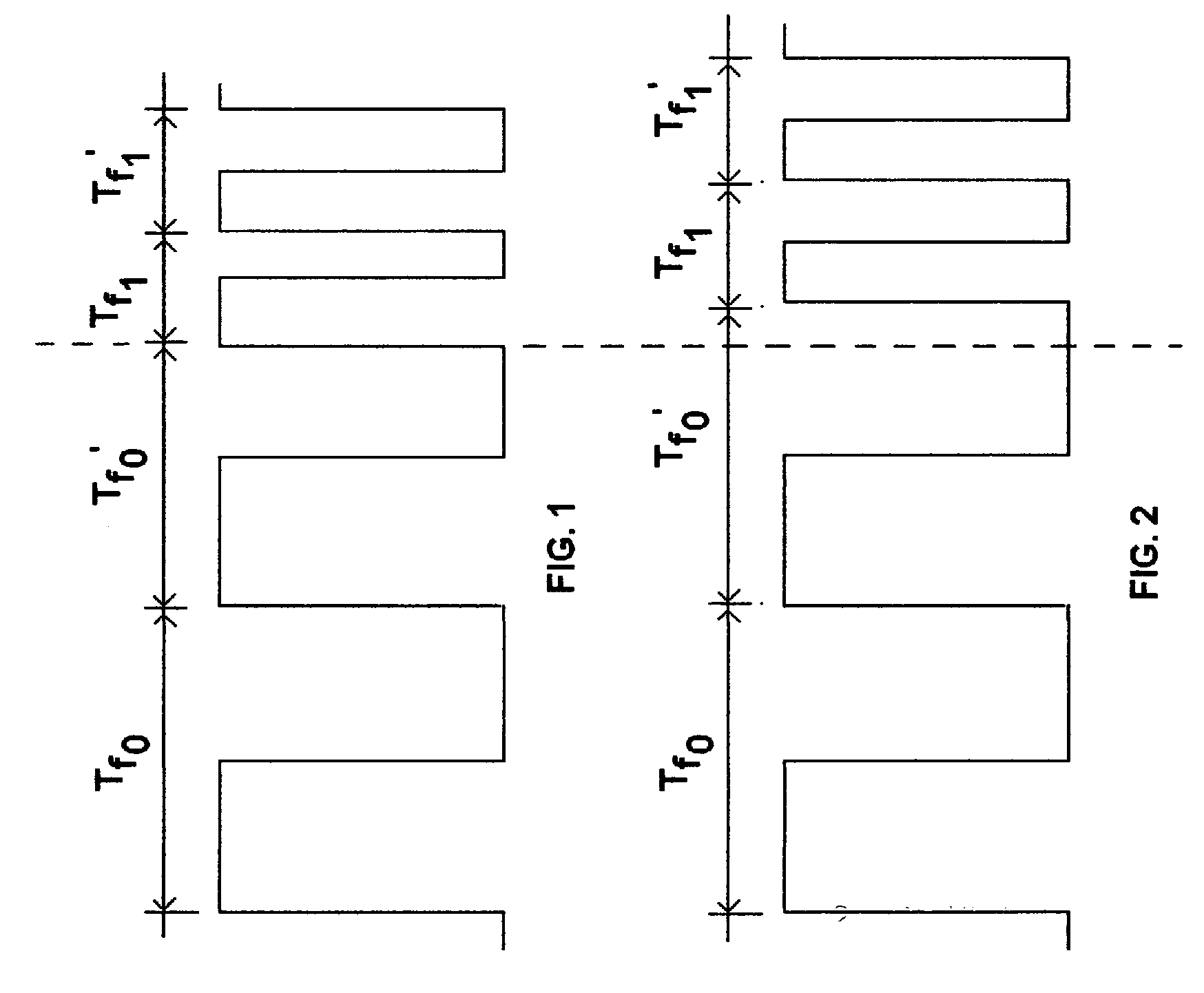
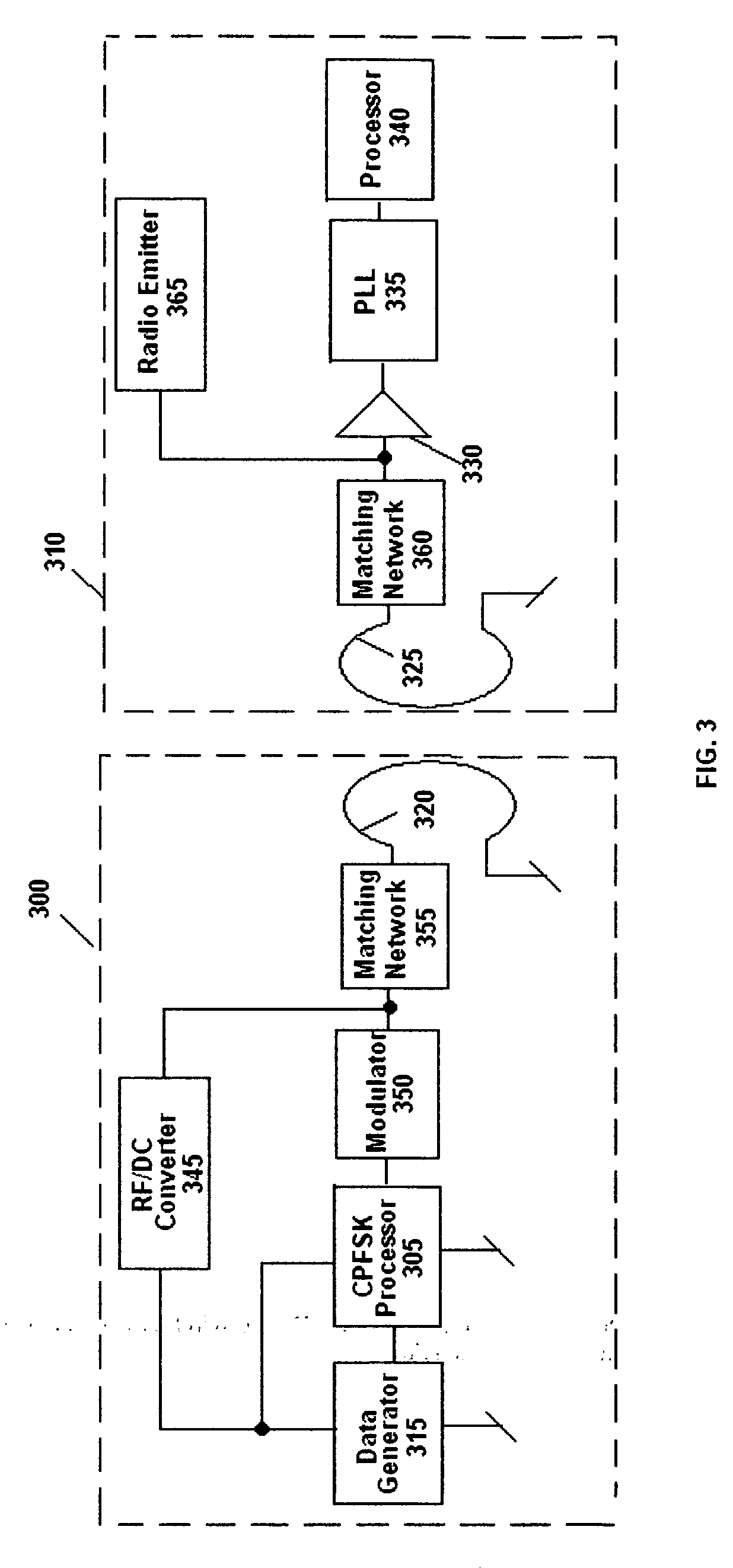
- Implementing a dedicated processor for continuous phase frequency shift keying modulation that toggles between frequencies based on a timer, allowing circuitry to enter a sleep mode during predetermined time periods to minimize power consumption and ensure zero phase crossover, thereby eliminating the need for physical switches and enhancing transmission robustness.

Low-Power Frequency-Shift Keying (FSK) Wireless Transmitters
PatentActiveUS20180287839A1
Innovation
- A low-power wireless transmitter architecture using binary frequency-shift keying (BFSK) with mixing and image rejection techniques, eliminating the need for fast frequency-locked loop (FLL) settling time, allowing for efficient frequency switching and reduced power consumption.


Spectrum Regulation and FSK Frequency Allocation
Spectrum regulation for FSK-based energy efficient communication systems operates within a complex framework of international and national frequency allocation policies. The International Telecommunication Union (ITU) establishes global spectrum allocation guidelines through Radio Regulations, which define frequency bands suitable for various communication services. FSK implementations must comply with these regulations while optimizing for energy efficiency, creating a delicate balance between regulatory compliance and performance objectives.
The primary frequency bands allocated for FSK communication include the Industrial, Scientific, and Medical (ISM) bands at 433 MHz, 868 MHz, and 2.4 GHz, along with Sub-GHz bands that offer superior propagation characteristics for energy-constrained applications. These unlicensed bands provide opportunities for FSK deployment without extensive licensing procedures, though they impose strict power limitations and duty cycle restrictions that directly impact energy efficiency strategies.
Regional variations in spectrum allocation significantly influence FSK system design. European ETSI standards permit different power levels and bandwidth allocations compared to FCC regulations in North America, while Asian markets follow distinct regulatory frameworks. These variations necessitate adaptive FSK implementations that can dynamically adjust frequency allocation and modulation parameters based on geographical deployment requirements.
Energy efficient FSK systems must navigate spectrum sharing challenges within allocated bands. Cognitive radio techniques enable dynamic spectrum access, allowing FSK transceivers to identify and utilize temporarily available frequency slots while avoiding interference with primary users. This approach maximizes spectrum utilization efficiency while maintaining energy conservation through intelligent frequency selection algorithms.
Emerging regulatory trends toward more flexible spectrum management, including dynamic spectrum allocation and spectrum sharing frameworks, present new opportunities for FSK-based systems. These developments enable more sophisticated frequency allocation strategies that can adapt to real-time spectrum conditions, potentially improving both energy efficiency and communication reliability through optimized frequency utilization patterns.
The primary frequency bands allocated for FSK communication include the Industrial, Scientific, and Medical (ISM) bands at 433 MHz, 868 MHz, and 2.4 GHz, along with Sub-GHz bands that offer superior propagation characteristics for energy-constrained applications. These unlicensed bands provide opportunities for FSK deployment without extensive licensing procedures, though they impose strict power limitations and duty cycle restrictions that directly impact energy efficiency strategies.
Regional variations in spectrum allocation significantly influence FSK system design. European ETSI standards permit different power levels and bandwidth allocations compared to FCC regulations in North America, while Asian markets follow distinct regulatory frameworks. These variations necessitate adaptive FSK implementations that can dynamically adjust frequency allocation and modulation parameters based on geographical deployment requirements.
Energy efficient FSK systems must navigate spectrum sharing challenges within allocated bands. Cognitive radio techniques enable dynamic spectrum access, allowing FSK transceivers to identify and utilize temporarily available frequency slots while avoiding interference with primary users. This approach maximizes spectrum utilization efficiency while maintaining energy conservation through intelligent frequency selection algorithms.
Emerging regulatory trends toward more flexible spectrum management, including dynamic spectrum allocation and spectrum sharing frameworks, present new opportunities for FSK-based systems. These developments enable more sophisticated frequency allocation strategies that can adapt to real-time spectrum conditions, potentially improving both energy efficiency and communication reliability through optimized frequency utilization patterns.
Environmental Impact of Energy Efficient FSK Systems
The environmental implications of energy-efficient Frequency Shift Keying systems extend far beyond immediate power consumption metrics, encompassing a comprehensive lifecycle assessment that reveals significant ecological benefits. These systems contribute to substantial reductions in carbon footprint through decreased energy demands across communication networks, particularly in large-scale deployments where cumulative energy savings translate to measurable environmental improvements.
Energy-efficient FSK implementations demonstrate remarkable potential for reducing electronic waste generation through extended device operational lifespans. The lower power requirements inherent in optimized FSK systems reduce thermal stress on electronic components, thereby extending hardware longevity and decreasing the frequency of device replacements. This extended lifecycle directly correlates with reduced manufacturing demands and associated environmental costs, including raw material extraction, production energy consumption, and transportation emissions.
The deployment of energy-efficient FSK systems in Internet of Things applications presents particularly compelling environmental advantages. Battery-powered sensor networks utilizing optimized FSK modulation can achieve operational lifespans extending several years without battery replacement, significantly reducing hazardous battery waste and the environmental burden associated with frequent maintenance cycles in remote or distributed installations.
Manufacturing considerations reveal additional environmental benefits through simplified circuit designs enabled by energy-efficient FSK implementations. Reduced complexity in power management circuitry translates to lower material requirements, decreased production energy consumption, and simplified manufacturing processes that generate fewer industrial byproducts and waste streams.
The scalability of environmental benefits becomes increasingly pronounced in massive communication deployments. Cellular base stations, satellite communication systems, and data center interconnects implementing energy-efficient FSK protocols can achieve aggregate power reductions measured in megawatts, corresponding to substantial decreases in grid electricity demand and associated greenhouse gas emissions from power generation facilities.
Regulatory compliance advantages emerge as environmental standards become increasingly stringent across global markets. Energy-efficient FSK systems facilitate adherence to emerging environmental regulations while supporting corporate sustainability initiatives and carbon neutrality commitments that are becoming standard requirements in technology procurement processes.
Energy-efficient FSK implementations demonstrate remarkable potential for reducing electronic waste generation through extended device operational lifespans. The lower power requirements inherent in optimized FSK systems reduce thermal stress on electronic components, thereby extending hardware longevity and decreasing the frequency of device replacements. This extended lifecycle directly correlates with reduced manufacturing demands and associated environmental costs, including raw material extraction, production energy consumption, and transportation emissions.
The deployment of energy-efficient FSK systems in Internet of Things applications presents particularly compelling environmental advantages. Battery-powered sensor networks utilizing optimized FSK modulation can achieve operational lifespans extending several years without battery replacement, significantly reducing hazardous battery waste and the environmental burden associated with frequent maintenance cycles in remote or distributed installations.
Manufacturing considerations reveal additional environmental benefits through simplified circuit designs enabled by energy-efficient FSK implementations. Reduced complexity in power management circuitry translates to lower material requirements, decreased production energy consumption, and simplified manufacturing processes that generate fewer industrial byproducts and waste streams.
The scalability of environmental benefits becomes increasingly pronounced in massive communication deployments. Cellular base stations, satellite communication systems, and data center interconnects implementing energy-efficient FSK protocols can achieve aggregate power reductions measured in megawatts, corresponding to substantial decreases in grid electricity demand and associated greenhouse gas emissions from power generation facilities.
Regulatory compliance advantages emerge as environmental standards become increasingly stringent across global markets. Energy-efficient FSK systems facilitate adherence to emerging environmental regulations while supporting corporate sustainability initiatives and carbon neutrality commitments that are becoming standard requirements in technology procurement processes.
Unlock deeper insights with PatSnap Eureka Quick Research — get a full tech report to explore trends and direct your research. Try now!
Generate Your Research Report Instantly with AI Agent
Supercharge your innovation with PatSnap Eureka AI Agent Platform!