

Graph-Constrained Reasoning in Educational Technology Development
MAR 17, 202610 MIN READ
Generate Your Research Report Instantly with AI Agent
PatSnap Eureka helps you evaluate technical feasibility & market potential.
Graph-Constrained Reasoning in EdTech Background and Goals
Graph-constrained reasoning represents a paradigm shift in educational technology development, emerging from the intersection of artificial intelligence, cognitive science, and educational psychology. This approach leverages structured knowledge representations through graph-based models to enhance learning experiences and educational outcomes. The technology builds upon decades of research in knowledge graphs, semantic networks, and constraint satisfaction problems, adapting these foundational concepts to address the unique challenges of educational environments.
The evolution of graph-constrained reasoning in education traces back to early expert systems and intelligent tutoring systems of the 1980s, which utilized rule-based knowledge representations. However, modern implementations have evolved significantly, incorporating advanced machine learning techniques, natural language processing, and real-time adaptive algorithms. This progression reflects the growing understanding that educational content and learner interactions can be effectively modeled as complex, interconnected networks of concepts, skills, and relationships.
Contemporary educational technology faces mounting pressure to deliver personalized, adaptive, and effective learning experiences at scale. Traditional approaches often struggle with the complexity of individual learning paths, prerequisite knowledge mapping, and dynamic content sequencing. Graph-constrained reasoning addresses these limitations by providing a structured framework for representing educational content as interconnected knowledge networks, where constraints define valid learning pathways and reasoning processes guide adaptive decision-making.
The primary technical objectives of implementing graph-constrained reasoning in educational technology encompass several critical areas. First, the development of comprehensive knowledge graph architectures that accurately represent subject matter domains, learning objectives, and skill dependencies. Second, the creation of sophisticated constraint mechanisms that ensure pedagogically sound learning sequences while accommodating individual learner differences and preferences.
Advanced reasoning algorithms constitute another fundamental goal, enabling systems to make intelligent decisions about content presentation, difficulty progression, and remediation strategies. These algorithms must process complex relationships between concepts, assess learner competencies in real-time, and generate personalized learning recommendations that respect both educational best practices and individual learning constraints.
The technology also aims to achieve seamless integration with existing educational platforms and learning management systems, ensuring practical deployment across diverse educational contexts. This includes developing standardized interfaces, maintaining compatibility with educational data standards, and supporting scalable implementation across institutions of varying technological sophistication.
Ultimately, graph-constrained reasoning in educational technology seeks to transform how educational content is structured, delivered, and adapted to individual learners, creating more effective and engaging educational experiences through intelligent, constraint-aware systems.
The evolution of graph-constrained reasoning in education traces back to early expert systems and intelligent tutoring systems of the 1980s, which utilized rule-based knowledge representations. However, modern implementations have evolved significantly, incorporating advanced machine learning techniques, natural language processing, and real-time adaptive algorithms. This progression reflects the growing understanding that educational content and learner interactions can be effectively modeled as complex, interconnected networks of concepts, skills, and relationships.
Contemporary educational technology faces mounting pressure to deliver personalized, adaptive, and effective learning experiences at scale. Traditional approaches often struggle with the complexity of individual learning paths, prerequisite knowledge mapping, and dynamic content sequencing. Graph-constrained reasoning addresses these limitations by providing a structured framework for representing educational content as interconnected knowledge networks, where constraints define valid learning pathways and reasoning processes guide adaptive decision-making.
The primary technical objectives of implementing graph-constrained reasoning in educational technology encompass several critical areas. First, the development of comprehensive knowledge graph architectures that accurately represent subject matter domains, learning objectives, and skill dependencies. Second, the creation of sophisticated constraint mechanisms that ensure pedagogically sound learning sequences while accommodating individual learner differences and preferences.
Advanced reasoning algorithms constitute another fundamental goal, enabling systems to make intelligent decisions about content presentation, difficulty progression, and remediation strategies. These algorithms must process complex relationships between concepts, assess learner competencies in real-time, and generate personalized learning recommendations that respect both educational best practices and individual learning constraints.
The technology also aims to achieve seamless integration with existing educational platforms and learning management systems, ensuring practical deployment across diverse educational contexts. This includes developing standardized interfaces, maintaining compatibility with educational data standards, and supporting scalable implementation across institutions of varying technological sophistication.
Ultimately, graph-constrained reasoning in educational technology seeks to transform how educational content is structured, delivered, and adapted to individual learners, creating more effective and engaging educational experiences through intelligent, constraint-aware systems.
Market Demand for Intelligent Educational Systems
The global educational technology market has experienced unprecedented growth, driven by digital transformation initiatives and the increasing recognition of personalized learning benefits. Traditional educational approaches face mounting pressure to adapt to diverse learning styles, varying cognitive abilities, and the need for scalable, effective instruction delivery. This transformation has created substantial demand for intelligent educational systems that can provide adaptive, personalized learning experiences.
Graph-constrained reasoning represents a critical technological advancement addressing these market needs by enabling educational systems to model complex relationships between learning concepts, student knowledge states, and pedagogical strategies. Educational institutions worldwide are actively seeking solutions that can automatically construct and maintain knowledge graphs representing curriculum structures, prerequisite relationships, and learning pathways. This demand stems from the recognition that effective learning requires understanding the interconnected nature of knowledge domains.
The market demand is particularly pronounced in higher education and professional training sectors, where complex subject matter requires sophisticated reasoning capabilities. Universities and corporate training programs are investing heavily in systems that can dynamically adjust learning paths based on individual student progress and conceptual understanding. These organizations require platforms capable of reasoning over educational content graphs to identify optimal learning sequences and detect knowledge gaps.
K-12 education markets demonstrate growing interest in intelligent tutoring systems that leverage graph-based reasoning to provide personalized instruction at scale. School districts face increasing pressure to improve learning outcomes while managing diverse student populations and limited resources. Graph-constrained reasoning technologies offer promising solutions by enabling automated curriculum mapping, prerequisite tracking, and adaptive content recommendation.
The corporate learning and development sector represents another significant market opportunity, with organizations seeking intelligent systems capable of mapping complex skill requirements to learning resources. Professional certification programs and continuing education providers require sophisticated reasoning capabilities to ensure learners acquire necessary competencies in logical sequences.
Emerging markets in developing countries present substantial growth potential, as educational institutions seek cost-effective solutions to deliver quality education despite resource constraints. Graph-constrained reasoning technologies can enable these institutions to provide personalized learning experiences without requiring extensive human expertise in curriculum design and instructional planning.
The market demand extends beyond traditional educational institutions to include educational technology companies, content publishers, and assessment providers who require intelligent systems for content organization, recommendation, and evaluation. These stakeholders recognize that graph-constrained reasoning capabilities are essential for developing next-generation educational products that can compete in increasingly sophisticated markets.
Graph-constrained reasoning represents a critical technological advancement addressing these market needs by enabling educational systems to model complex relationships between learning concepts, student knowledge states, and pedagogical strategies. Educational institutions worldwide are actively seeking solutions that can automatically construct and maintain knowledge graphs representing curriculum structures, prerequisite relationships, and learning pathways. This demand stems from the recognition that effective learning requires understanding the interconnected nature of knowledge domains.
The market demand is particularly pronounced in higher education and professional training sectors, where complex subject matter requires sophisticated reasoning capabilities. Universities and corporate training programs are investing heavily in systems that can dynamically adjust learning paths based on individual student progress and conceptual understanding. These organizations require platforms capable of reasoning over educational content graphs to identify optimal learning sequences and detect knowledge gaps.
K-12 education markets demonstrate growing interest in intelligent tutoring systems that leverage graph-based reasoning to provide personalized instruction at scale. School districts face increasing pressure to improve learning outcomes while managing diverse student populations and limited resources. Graph-constrained reasoning technologies offer promising solutions by enabling automated curriculum mapping, prerequisite tracking, and adaptive content recommendation.
The corporate learning and development sector represents another significant market opportunity, with organizations seeking intelligent systems capable of mapping complex skill requirements to learning resources. Professional certification programs and continuing education providers require sophisticated reasoning capabilities to ensure learners acquire necessary competencies in logical sequences.
Emerging markets in developing countries present substantial growth potential, as educational institutions seek cost-effective solutions to deliver quality education despite resource constraints. Graph-constrained reasoning technologies can enable these institutions to provide personalized learning experiences without requiring extensive human expertise in curriculum design and instructional planning.
The market demand extends beyond traditional educational institutions to include educational technology companies, content publishers, and assessment providers who require intelligent systems for content organization, recommendation, and evaluation. These stakeholders recognize that graph-constrained reasoning capabilities are essential for developing next-generation educational products that can compete in increasingly sophisticated markets.
Current State of Graph Reasoning in Educational Applications
Graph-constrained reasoning in educational applications has emerged as a sophisticated approach to modeling and analyzing complex learning relationships. Current implementations primarily focus on knowledge graph construction, where educational concepts, learning objectives, and student interactions are represented as interconnected nodes and edges. Leading platforms such as Khan Academy and Coursera have integrated basic graph-based recommendation systems that map prerequisite relationships between courses and topics.
The predominant technical approach involves constructing domain-specific knowledge graphs that capture hierarchical relationships between educational concepts. These graphs typically encode prerequisite dependencies, conceptual similarities, and learning pathways. Major educational technology companies like Pearson and McGraw-Hill have developed proprietary graph databases that store millions of educational relationships, enabling personalized learning path generation and adaptive assessment delivery.
Contemporary graph reasoning implementations face significant scalability challenges when processing real-time student interaction data. Current systems struggle with dynamic graph updates as new learning relationships emerge from student behavior patterns. Most existing solutions rely on static graph structures that require periodic rebuilding, limiting their responsiveness to evolving educational contexts and individual learning trajectories.
Advanced research institutions have pioneered graph neural network applications for educational reasoning, particularly in automated curriculum design and learning outcome prediction. Stanford's Open Learning Initiative and MIT's OpenCourseWare project have demonstrated promising results using graph convolutional networks to identify optimal learning sequences and predict student performance across interconnected course modules.
The integration of natural language processing with graph reasoning represents the current frontier in educational technology development. Recent implementations combine knowledge graphs with transformer-based models to enable sophisticated question-answering systems and intelligent tutoring applications. These hybrid approaches show particular promise in handling complex reasoning tasks that require understanding both explicit educational relationships and implicit contextual dependencies within learning materials.
The predominant technical approach involves constructing domain-specific knowledge graphs that capture hierarchical relationships between educational concepts. These graphs typically encode prerequisite dependencies, conceptual similarities, and learning pathways. Major educational technology companies like Pearson and McGraw-Hill have developed proprietary graph databases that store millions of educational relationships, enabling personalized learning path generation and adaptive assessment delivery.
Contemporary graph reasoning implementations face significant scalability challenges when processing real-time student interaction data. Current systems struggle with dynamic graph updates as new learning relationships emerge from student behavior patterns. Most existing solutions rely on static graph structures that require periodic rebuilding, limiting their responsiveness to evolving educational contexts and individual learning trajectories.
Advanced research institutions have pioneered graph neural network applications for educational reasoning, particularly in automated curriculum design and learning outcome prediction. Stanford's Open Learning Initiative and MIT's OpenCourseWare project have demonstrated promising results using graph convolutional networks to identify optimal learning sequences and predict student performance across interconnected course modules.
The integration of natural language processing with graph reasoning represents the current frontier in educational technology development. Recent implementations combine knowledge graphs with transformer-based models to enable sophisticated question-answering systems and intelligent tutoring applications. These hybrid approaches show particular promise in handling complex reasoning tasks that require understanding both explicit educational relationships and implicit contextual dependencies within learning materials.
Existing Graph-Based Educational Reasoning Solutions
01 Knowledge graph construction and reasoning methods
Methods for constructing knowledge graphs with constrained reasoning capabilities, including techniques for building graph structures that incorporate logical constraints, semantic relationships, and inference rules. These approaches enable more accurate and efficient reasoning by limiting the search space through predefined constraints and relationships between entities and concepts.- Knowledge graph construction and reasoning methods: Methods for constructing knowledge graphs with constrained reasoning capabilities, including techniques for building graph structures that incorporate logical constraints and rules. These approaches enable systematic organization of entities and relationships while maintaining consistency through constraint enforcement during graph construction and updates.
- Graph neural networks with constraint integration: Neural network architectures designed to perform reasoning over graph-structured data while respecting predefined constraints. These systems combine deep learning approaches with graph-based representations, allowing models to learn patterns while adhering to structural or logical constraints embedded in the graph topology.
- Constraint satisfaction in graph-based inference: Techniques for performing inference and reasoning tasks on graphs while satisfying multiple constraints simultaneously. These methods address optimization problems where solutions must respect graph structure constraints, including path constraints, connectivity requirements, and attribute restrictions during the reasoning process.
- Query processing with graph constraints: Systems for processing queries over graph databases that incorporate constraint checking and validation. These approaches enable efficient retrieval and reasoning over graph data while ensuring results satisfy specified constraints, including temporal constraints, access control restrictions, and semantic consistency requirements.
- Multi-modal graph reasoning with constraints: Methods for reasoning across multiple types of graph representations and data modalities while maintaining cross-modal constraints. These techniques enable integration of different graph structures and data types, ensuring consistency and constraint satisfaction across heterogeneous graph-based knowledge representations during reasoning tasks.
02 Graph neural networks with constraint mechanisms
Neural network architectures specifically designed for graph-structured data that incorporate constraint mechanisms during the reasoning process. These systems use attention mechanisms, message passing, and constraint propagation to perform reasoning tasks while respecting structural and logical constraints inherent in the graph representation.Expand Specific Solutions03 Multi-hop reasoning with graph constraints
Techniques for performing multi-hop reasoning across graph structures while maintaining consistency with defined constraints. These methods enable traversal of multiple nodes and edges in a graph to derive conclusions, while ensuring that intermediate steps and final results comply with structural, temporal, or logical constraints embedded in the graph.Expand Specific Solutions04 Constraint-based graph query and retrieval
Systems and methods for querying and retrieving information from graph databases using constraint-based reasoning. These approaches allow users to specify complex constraints and conditions that must be satisfied during the search process, enabling more precise and relevant results by filtering and ranking based on structural and semantic constraints.Expand Specific Solutions05 Explainable reasoning with graph constraints
Approaches for providing interpretable and explainable reasoning results in graph-based systems by leveraging constraint information. These methods generate human-understandable explanations for reasoning outcomes by tracing the constraint satisfaction process, highlighting relevant graph paths, and identifying which constraints were critical in reaching specific conclusions.Expand Specific Solutions
Key Players in EdTech and Graph AI Industry
The graph-constrained reasoning in educational technology development field represents an emerging market at the early growth stage, characterized by increasing integration of AI-driven reasoning systems with educational platforms. The market demonstrates significant expansion potential as institutions seek personalized learning solutions that leverage structured knowledge representations. Technology maturity varies considerably across market participants, with established tech giants like IBM, Microsoft, and Huawei leading in foundational AI and cloud infrastructure capabilities. Chinese companies including Alipay, iFlytek, and specialized education firms like Fujian Tianquan Education Technology are advancing domain-specific applications. Academic institutions such as Northwestern Polytechnical University, Xidian University, and Xi'an Jiaotong University contribute crucial research foundations. While core graph reasoning technologies are maturing, their educational applications remain in developmental phases, with companies like Quizlet and Riiid pioneering practical implementations in adaptive learning systems.
International Business Machines Corp.
Technical Solution: IBM has developed Watson Education, which leverages graph-based knowledge representation to model educational content relationships and student learning pathways. Their approach uses knowledge graphs to represent curriculum dependencies, prerequisite relationships, and learning objectives interconnections. The system employs graph neural networks to perform reasoning over these educational structures, enabling personalized learning path recommendations and adaptive content delivery. IBM's solution integrates natural language processing with graph reasoning to analyze student responses and provide contextual feedback. The platform utilizes constraint satisfaction algorithms to ensure learning sequences respect pedagogical dependencies while optimizing for individual student needs and learning styles.
Strengths: Strong enterprise-grade infrastructure and extensive AI research capabilities. Weaknesses: High implementation costs and complexity may limit adoption in smaller educational institutions.
Microsoft Technology Licensing LLC
Technical Solution: Microsoft has implemented graph-constrained reasoning in their Education platform through Microsoft Graph API integration with learning management systems. Their approach models educational entities including students, courses, assignments, and learning resources as interconnected graph structures. The system uses constraint-based reasoning to enforce academic policies, prerequisite requirements, and scheduling dependencies. Microsoft's solution employs machine learning algorithms that operate on these educational graphs to predict student performance, identify at-risk learners, and recommend intervention strategies. The platform integrates with Office 365 Education to provide seamless workflow management while maintaining educational constraints and compliance requirements.
Strengths: Seamless integration with existing Microsoft ecosystem and strong cloud infrastructure. Weaknesses: Vendor lock-in concerns and potential privacy issues with data collection.
Core Innovations in Educational Graph Constraint Methods
System for creating a reasoning graph and for ranking of its nodes
PatentActiveUS10503791B2
Innovation
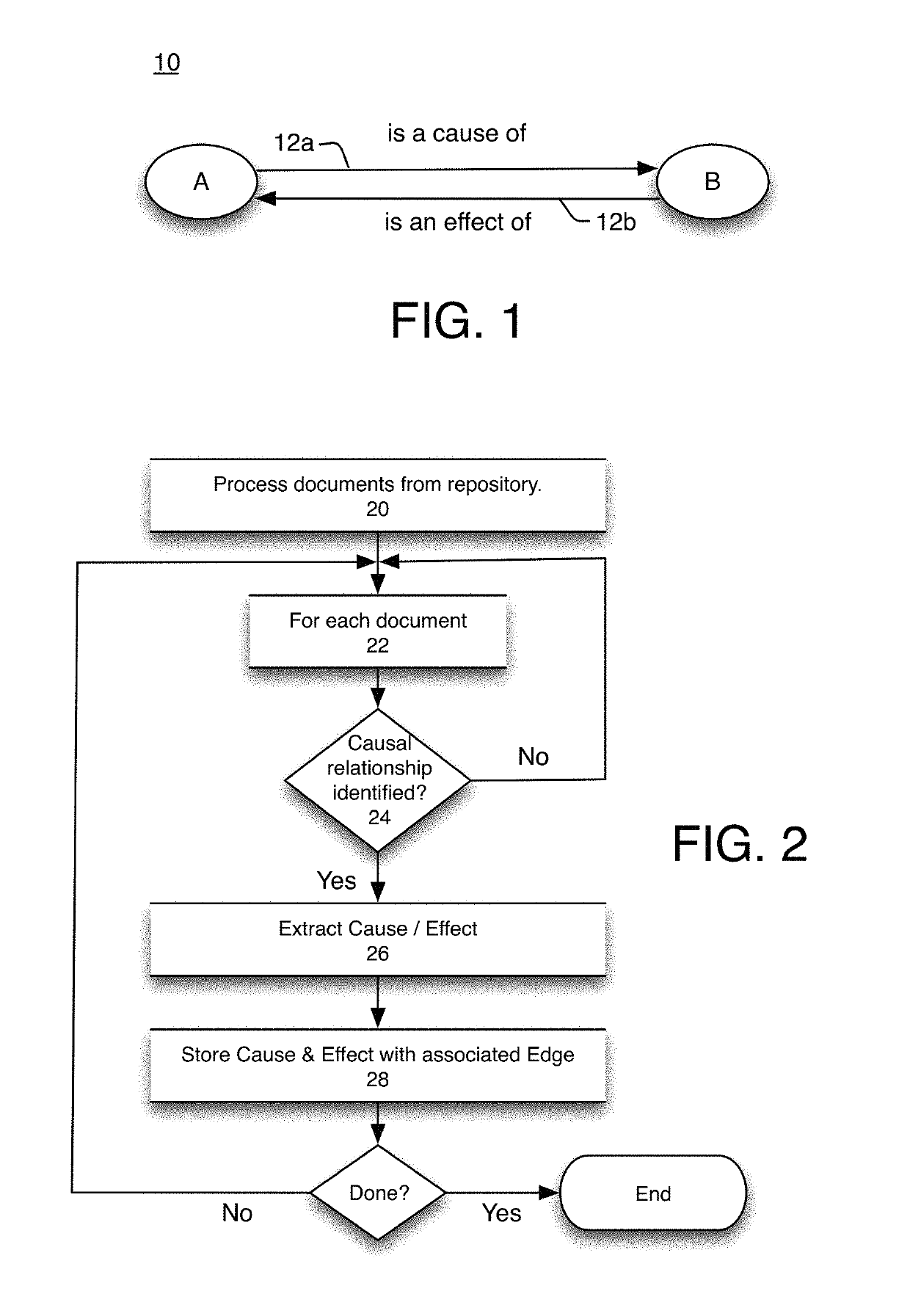
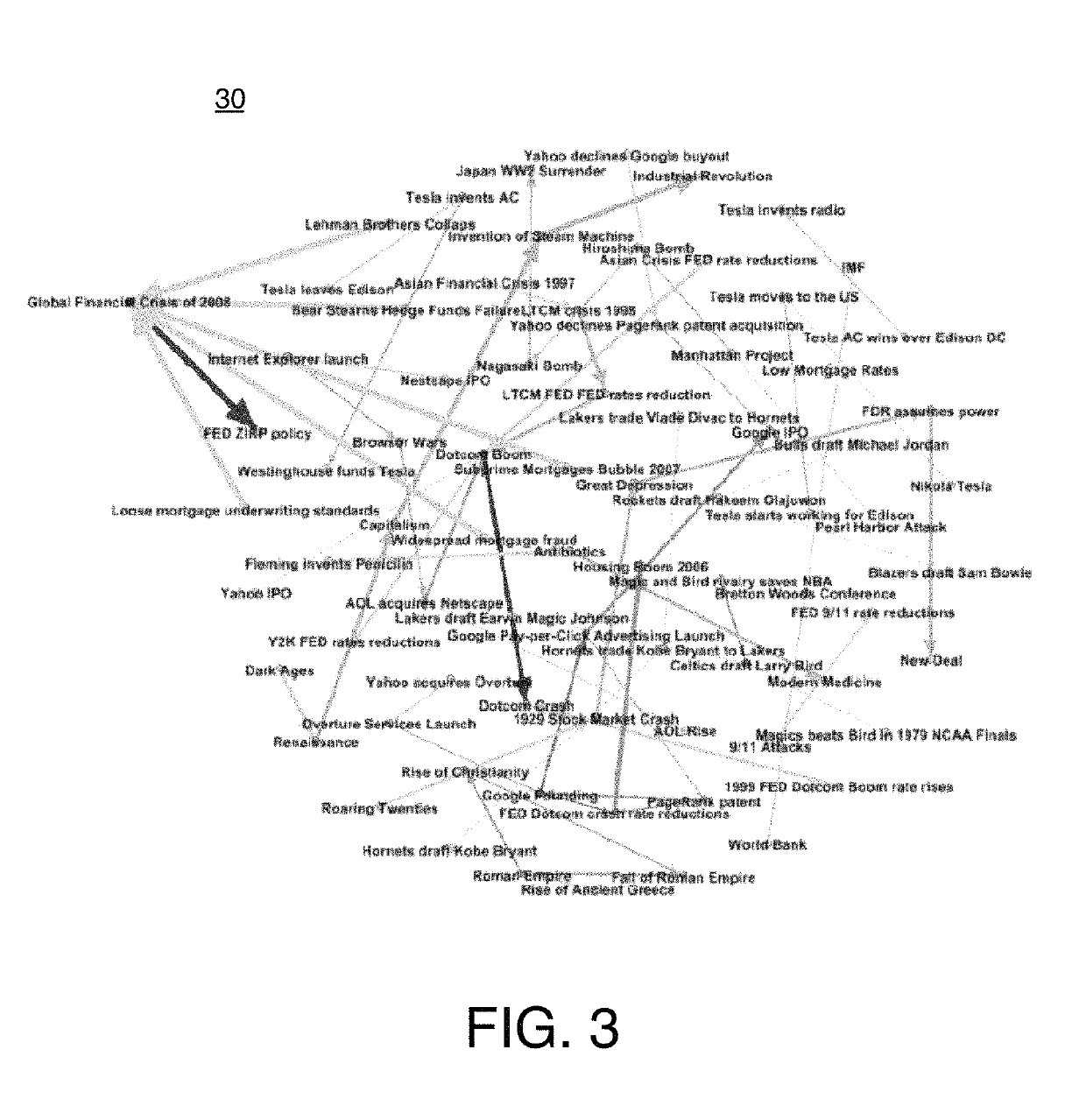
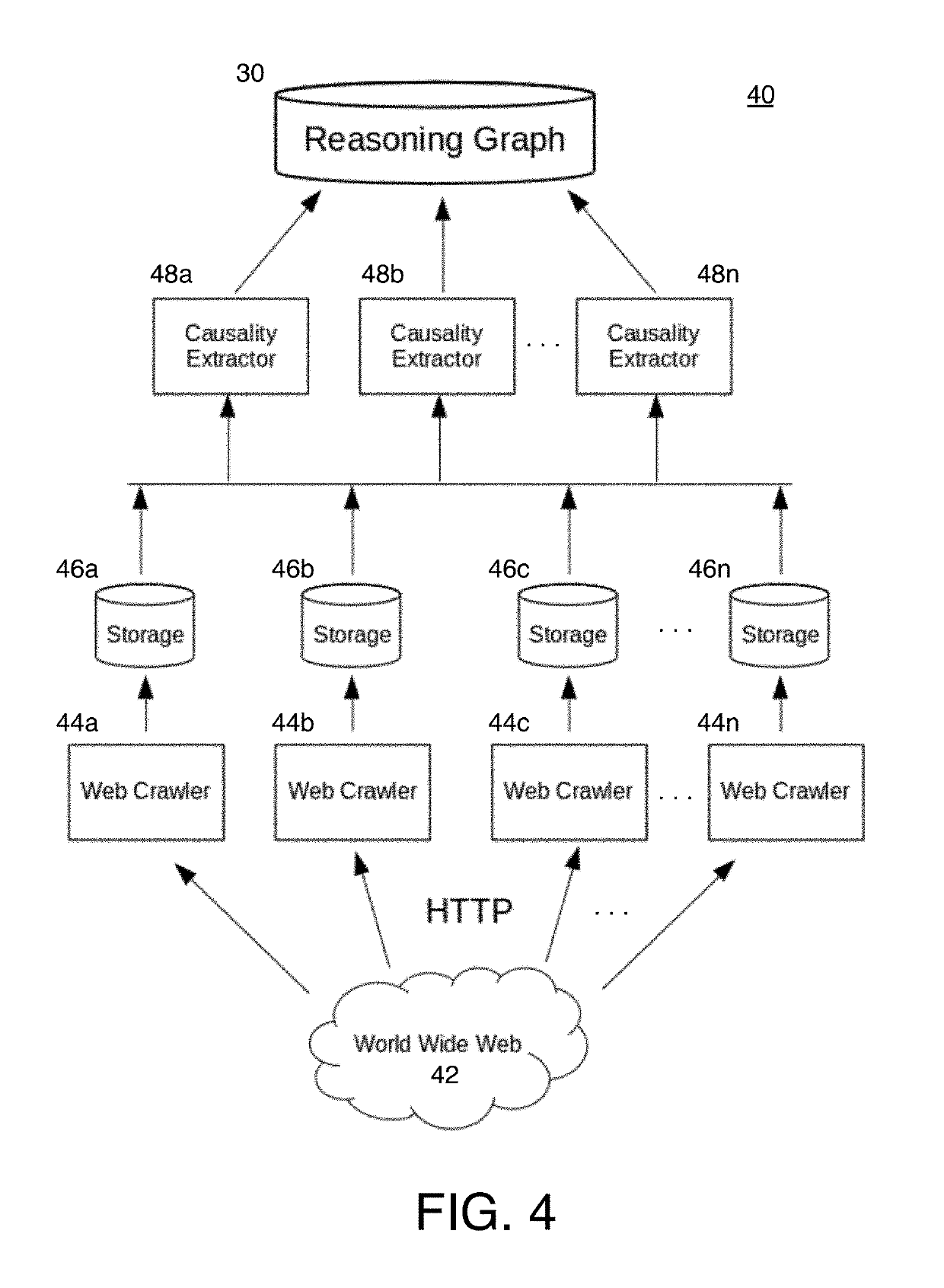
- The creation of a Reasoning Graph that collects and aggregates inferences and causality relationships from vast quantities of text, allowing computers to reason by analyzing and ranking nodes representing concepts, conditions, events, and properties, using crawlers, causality extractors, and deep learning networks to identify and extract cause/effect pairs and derive logical inferences.
Fact generation system using educational videos featuring a real-time tutor in an online learning platform and using integrated programmatic control and specialized guided and constrained artificial intelligence
PatentPendingUS20260024453A1
Innovation
- An AI-driven educational fact generation system that integrates programmatic control and guided, constrained AI to generate educational content featuring a real-time tutor, utilizing deep learning techniques and personalized virtual characters to align with educational standards and enhance engagement through shock value.


Educational Data Privacy and Compliance Framework
Educational data privacy and compliance frameworks represent critical infrastructure components for implementing graph-constrained reasoning systems in educational technology environments. The intersection of advanced reasoning capabilities with stringent data protection requirements creates unique challenges that demand specialized regulatory approaches and technical safeguards.
Current educational data privacy landscapes are governed by multiple overlapping regulatory frameworks, including FERPA in the United States, GDPR in Europe, and COPPA for child-specific protections. These regulations establish fundamental principles around data minimization, purpose limitation, and user consent that directly impact how graph-based reasoning systems can collect, process, and store educational information. The complexity increases when considering cross-border data transfers and multi-jurisdictional compliance requirements.
Graph-constrained reasoning systems in education typically process highly sensitive information including student performance data, learning behavioral patterns, social interaction networks, and predictive analytics outcomes. The interconnected nature of graph structures means that seemingly anonymized data points can potentially be re-identified through relationship analysis, creating novel privacy risks that traditional compliance frameworks may not adequately address.
Technical compliance mechanisms must incorporate privacy-by-design principles directly into graph reasoning architectures. This includes implementing differential privacy techniques for graph data, developing secure multi-party computation protocols for distributed reasoning, and establishing data lineage tracking systems that maintain compliance audit trails throughout the reasoning process. Edge-level and node-level access controls become essential for ensuring that reasoning operations respect individual privacy preferences and regulatory constraints.
Emerging compliance challenges include algorithmic transparency requirements, where educational institutions must explain reasoning decisions that affect student outcomes. Graph-based systems present particular difficulties in providing interpretable explanations while maintaining the privacy of underlying data relationships. Additionally, the right to data portability and deletion under various privacy regulations requires sophisticated graph modification techniques that preserve reasoning integrity while removing specific data elements.
Industry best practices are evolving toward federated learning approaches that enable graph reasoning across institutional boundaries without centralizing sensitive data. Homomorphic encryption and secure aggregation protocols allow collaborative reasoning while maintaining local data sovereignty. These technical solutions must be coupled with comprehensive governance frameworks that define data sharing agreements, liability allocation, and incident response procedures across educational technology ecosystems.
Current educational data privacy landscapes are governed by multiple overlapping regulatory frameworks, including FERPA in the United States, GDPR in Europe, and COPPA for child-specific protections. These regulations establish fundamental principles around data minimization, purpose limitation, and user consent that directly impact how graph-based reasoning systems can collect, process, and store educational information. The complexity increases when considering cross-border data transfers and multi-jurisdictional compliance requirements.
Graph-constrained reasoning systems in education typically process highly sensitive information including student performance data, learning behavioral patterns, social interaction networks, and predictive analytics outcomes. The interconnected nature of graph structures means that seemingly anonymized data points can potentially be re-identified through relationship analysis, creating novel privacy risks that traditional compliance frameworks may not adequately address.
Technical compliance mechanisms must incorporate privacy-by-design principles directly into graph reasoning architectures. This includes implementing differential privacy techniques for graph data, developing secure multi-party computation protocols for distributed reasoning, and establishing data lineage tracking systems that maintain compliance audit trails throughout the reasoning process. Edge-level and node-level access controls become essential for ensuring that reasoning operations respect individual privacy preferences and regulatory constraints.
Emerging compliance challenges include algorithmic transparency requirements, where educational institutions must explain reasoning decisions that affect student outcomes. Graph-based systems present particular difficulties in providing interpretable explanations while maintaining the privacy of underlying data relationships. Additionally, the right to data portability and deletion under various privacy regulations requires sophisticated graph modification techniques that preserve reasoning integrity while removing specific data elements.
Industry best practices are evolving toward federated learning approaches that enable graph reasoning across institutional boundaries without centralizing sensitive data. Homomorphic encryption and secure aggregation protocols allow collaborative reasoning while maintaining local data sovereignty. These technical solutions must be coupled with comprehensive governance frameworks that define data sharing agreements, liability allocation, and incident response procedures across educational technology ecosystems.
Personalized Learning Ethics and Algorithmic Fairness
The integration of graph-constrained reasoning systems in educational technology raises fundamental ethical questions about algorithmic fairness and personalized learning delivery. As these systems increasingly influence educational pathways through sophisticated knowledge graph analysis and constraint-based recommendations, ensuring equitable treatment across diverse student populations becomes paramount. The complexity of graph-based educational models, which map relationships between concepts, learning objectives, and student performance data, creates multiple layers where bias can emerge and propagate throughout the learning ecosystem.
Algorithmic fairness in graph-constrained educational systems presents unique challenges compared to traditional machine learning applications. The interconnected nature of knowledge graphs means that biased representations in one domain can cascade through related educational concepts, potentially amplifying disparities in learning opportunities. For instance, if historical data embedded in the graph structure reflects socioeconomic or cultural biases, the reasoning algorithms may inadvertently perpetuate these inequities by constraining certain student groups to limited learning paths or resources.
The personalization mechanisms inherent in these systems must balance individual optimization with collective fairness principles. Graph-constrained reasoning algorithms often prioritize efficiency and performance metrics, which may conflict with fairness objectives such as demographic parity or equalized opportunity across different student subgroups. This tension becomes particularly acute when the system must allocate limited educational resources or determine prerequisite pathways that could significantly impact long-term academic outcomes.
Privacy considerations intersect critically with fairness concerns in graph-based educational technologies. The rich relational data required for effective graph-constrained reasoning often includes sensitive information about student backgrounds, learning disabilities, and social connections. Protecting this information while maintaining algorithmic transparency necessary for fairness auditing creates a complex technical and ethical challenge that requires careful architectural design and governance frameworks.
Emerging regulatory frameworks and ethical guidelines are beginning to address these concerns through requirements for algorithmic auditing, bias testing, and fairness metrics specifically tailored to educational contexts. However, the dynamic nature of graph-constrained systems, where reasoning patterns evolve based on new data and interactions, complicates traditional fairness assessment approaches and necessitates continuous monitoring and adjustment mechanisms to ensure sustained ethical compliance in personalized learning environments.
Algorithmic fairness in graph-constrained educational systems presents unique challenges compared to traditional machine learning applications. The interconnected nature of knowledge graphs means that biased representations in one domain can cascade through related educational concepts, potentially amplifying disparities in learning opportunities. For instance, if historical data embedded in the graph structure reflects socioeconomic or cultural biases, the reasoning algorithms may inadvertently perpetuate these inequities by constraining certain student groups to limited learning paths or resources.
The personalization mechanisms inherent in these systems must balance individual optimization with collective fairness principles. Graph-constrained reasoning algorithms often prioritize efficiency and performance metrics, which may conflict with fairness objectives such as demographic parity or equalized opportunity across different student subgroups. This tension becomes particularly acute when the system must allocate limited educational resources or determine prerequisite pathways that could significantly impact long-term academic outcomes.
Privacy considerations intersect critically with fairness concerns in graph-based educational technologies. The rich relational data required for effective graph-constrained reasoning often includes sensitive information about student backgrounds, learning disabilities, and social connections. Protecting this information while maintaining algorithmic transparency necessary for fairness auditing creates a complex technical and ethical challenge that requires careful architectural design and governance frameworks.
Emerging regulatory frameworks and ethical guidelines are beginning to address these concerns through requirements for algorithmic auditing, bias testing, and fairness metrics specifically tailored to educational contexts. However, the dynamic nature of graph-constrained systems, where reasoning patterns evolve based on new data and interactions, complicates traditional fairness assessment approaches and necessitates continuous monitoring and adjustment mechanisms to ensure sustained ethical compliance in personalized learning environments.
Unlock deeper insights with PatSnap Eureka Quick Research — get a full tech report to explore trends and direct your research. Try now!
Generate Your Research Report Instantly with AI Agent
Supercharge your innovation with PatSnap Eureka AI Agent Platform!