

Graph-Constrained Reasoning in Immersive Digital Experience Design
MAR 17, 202610 MIN READ
Generate Your Research Report Instantly with AI Agent
PatSnap Eureka helps you evaluate technical feasibility & market potential.
Graph-Constrained Reasoning in Digital Experience Background and Goals
Graph-constrained reasoning represents a paradigmatic shift in how digital experiences are conceptualized, designed, and delivered across immersive platforms. This technological approach emerged from the convergence of graph theory, artificial intelligence, and human-computer interaction principles, addressing the growing complexity of modern digital ecosystems where users demand seamless, contextually aware, and personalized experiences.
The historical development of this field traces back to early knowledge representation systems in the 1980s, which utilized graph structures to model relationships between entities. However, the application to immersive digital experience design gained momentum with the proliferation of virtual reality, augmented reality, and mixed reality technologies in the 2010s. The exponential growth of interconnected digital touchpoints necessitated more sophisticated reasoning mechanisms that could navigate complex relationship networks while maintaining computational efficiency.
Traditional digital experience design approaches often relied on linear or hierarchical models that struggled to capture the multidimensional nature of user interactions in immersive environments. Graph-constrained reasoning addresses these limitations by leveraging graph-based data structures to represent complex relationships between users, content, contexts, and system components. This approach enables more nuanced decision-making processes that consider multiple interconnected factors simultaneously.
The primary technical objectives of implementing graph-constrained reasoning in immersive digital experience design encompass several critical areas. First, achieving real-time contextual adaptation where systems can dynamically adjust experiences based on user behavior patterns, environmental conditions, and social interactions represented as graph nodes and edges. Second, enabling scalable personalization that maintains consistency across multiple interaction modalities while respecting privacy constraints and computational limitations.
Furthermore, the technology aims to facilitate seamless cross-platform experience continuity, where user journeys can transition smoothly between different immersive environments while preserving context and maintaining engagement quality. This requires sophisticated graph traversal algorithms that can identify optimal paths through complex experience networks while adhering to predefined constraints such as user preferences, system capabilities, and business rules.
The evolution toward graph-constrained reasoning also addresses the critical challenge of managing cognitive load in immersive environments. By structuring decision-making processes around graph-based models, systems can better predict user intentions, reduce interface complexity, and provide more intuitive interaction paradigms that align with natural human reasoning patterns.
The historical development of this field traces back to early knowledge representation systems in the 1980s, which utilized graph structures to model relationships between entities. However, the application to immersive digital experience design gained momentum with the proliferation of virtual reality, augmented reality, and mixed reality technologies in the 2010s. The exponential growth of interconnected digital touchpoints necessitated more sophisticated reasoning mechanisms that could navigate complex relationship networks while maintaining computational efficiency.
Traditional digital experience design approaches often relied on linear or hierarchical models that struggled to capture the multidimensional nature of user interactions in immersive environments. Graph-constrained reasoning addresses these limitations by leveraging graph-based data structures to represent complex relationships between users, content, contexts, and system components. This approach enables more nuanced decision-making processes that consider multiple interconnected factors simultaneously.
The primary technical objectives of implementing graph-constrained reasoning in immersive digital experience design encompass several critical areas. First, achieving real-time contextual adaptation where systems can dynamically adjust experiences based on user behavior patterns, environmental conditions, and social interactions represented as graph nodes and edges. Second, enabling scalable personalization that maintains consistency across multiple interaction modalities while respecting privacy constraints and computational limitations.
Furthermore, the technology aims to facilitate seamless cross-platform experience continuity, where user journeys can transition smoothly between different immersive environments while preserving context and maintaining engagement quality. This requires sophisticated graph traversal algorithms that can identify optimal paths through complex experience networks while adhering to predefined constraints such as user preferences, system capabilities, and business rules.
The evolution toward graph-constrained reasoning also addresses the critical challenge of managing cognitive load in immersive environments. By structuring decision-making processes around graph-based models, systems can better predict user intentions, reduce interface complexity, and provide more intuitive interaction paradigms that align with natural human reasoning patterns.
Market Demand for Immersive Digital Experience Solutions
The immersive digital experience market has experienced unprecedented growth driven by technological convergence and evolving consumer expectations. Virtual reality, augmented reality, mixed reality, and extended reality technologies have matured sufficiently to enable sophisticated applications across entertainment, education, healthcare, retail, and enterprise training sectors. This technological foundation creates substantial demand for more intelligent and contextually aware immersive systems.
Consumer behavior patterns indicate increasing preference for personalized, interactive digital experiences that adapt dynamically to user preferences and environmental contexts. Traditional static content delivery models prove insufficient for meeting these sophisticated user expectations. The demand extends beyond simple visual immersion to encompass intelligent systems capable of understanding complex relationships between users, content, and environmental factors.
Enterprise adoption represents a particularly robust demand driver, with organizations seeking immersive solutions for remote collaboration, training simulations, and data visualization. Manufacturing companies require immersive systems that can represent complex operational relationships and constraints. Healthcare institutions demand training environments that accurately model anatomical relationships and procedural dependencies. Educational institutions seek platforms capable of representing knowledge graphs through immersive interfaces.
The gaming and entertainment industries continue driving innovation demand, requiring systems that can manage complex narrative structures, character relationships, and world-building elements through graph-based reasoning. Social media platforms increasingly incorporate immersive features, necessitating sophisticated content recommendation and user interaction management systems that understand social network dynamics.
Market research indicates strong demand for solutions addressing current limitations in immersive experience personalization and contextual awareness. Organizations consistently report challenges in creating immersive experiences that maintain logical consistency while adapting to user behavior patterns. The inability of existing systems to reason about complex relationships between multiple variables creates significant market opportunities for graph-constrained reasoning solutions.
Emerging applications in smart cities, digital twins, and metaverse platforms further amplify demand for immersive systems capable of representing and reasoning about complex interconnected relationships. These applications require sophisticated understanding of spatial, temporal, and logical constraints that traditional immersive technologies cannot adequately address through conventional approaches.
Consumer behavior patterns indicate increasing preference for personalized, interactive digital experiences that adapt dynamically to user preferences and environmental contexts. Traditional static content delivery models prove insufficient for meeting these sophisticated user expectations. The demand extends beyond simple visual immersion to encompass intelligent systems capable of understanding complex relationships between users, content, and environmental factors.
Enterprise adoption represents a particularly robust demand driver, with organizations seeking immersive solutions for remote collaboration, training simulations, and data visualization. Manufacturing companies require immersive systems that can represent complex operational relationships and constraints. Healthcare institutions demand training environments that accurately model anatomical relationships and procedural dependencies. Educational institutions seek platforms capable of representing knowledge graphs through immersive interfaces.
The gaming and entertainment industries continue driving innovation demand, requiring systems that can manage complex narrative structures, character relationships, and world-building elements through graph-based reasoning. Social media platforms increasingly incorporate immersive features, necessitating sophisticated content recommendation and user interaction management systems that understand social network dynamics.
Market research indicates strong demand for solutions addressing current limitations in immersive experience personalization and contextual awareness. Organizations consistently report challenges in creating immersive experiences that maintain logical consistency while adapting to user behavior patterns. The inability of existing systems to reason about complex relationships between multiple variables creates significant market opportunities for graph-constrained reasoning solutions.
Emerging applications in smart cities, digital twins, and metaverse platforms further amplify demand for immersive systems capable of representing and reasoning about complex interconnected relationships. These applications require sophisticated understanding of spatial, temporal, and logical constraints that traditional immersive technologies cannot adequately address through conventional approaches.
Current State and Challenges of Graph Reasoning in Digital Design
Graph-constrained reasoning in immersive digital experience design represents an emerging intersection of computational graph theory, artificial intelligence, and human-computer interaction. Currently, the field operates within a fragmented landscape where traditional graph reasoning approaches struggle to accommodate the dynamic, multi-dimensional nature of immersive environments. Most existing systems rely on static graph structures that fail to capture the temporal and contextual complexities inherent in virtual and augmented reality experiences.
The predominant technical approaches center around knowledge graphs and scene graphs, which provide foundational frameworks for representing spatial relationships and semantic connections within digital environments. However, these conventional methods exhibit significant limitations when applied to real-time immersive scenarios. Current graph reasoning systems typically process information sequentially, creating bottlenecks that compromise the responsiveness essential for maintaining user immersion and presence.
A critical challenge lies in the computational complexity of real-time graph traversal and inference within resource-constrained environments. Modern VR and AR systems demand sub-20 millisecond response times to prevent motion sickness and maintain user engagement, yet existing graph reasoning algorithms often require substantially longer processing periods. This temporal constraint forces developers to implement simplified reasoning models that sacrifice accuracy and contextual understanding for performance.
The integration of multi-modal data streams presents another substantial obstacle. Immersive experiences incorporate visual, auditory, haptic, and spatial information simultaneously, requiring graph structures capable of representing heterogeneous data types and their complex interdependencies. Current graph reasoning frameworks lack standardized approaches for handling such multi-dimensional information fusion, leading to inconsistent implementation strategies across different platforms and applications.
Scalability concerns further compound these technical challenges. As immersive environments become increasingly complex, incorporating larger numbers of interactive objects, dynamic lighting systems, and sophisticated physics simulations, the underlying graph structures grow exponentially in size and complexity. Traditional graph databases and reasoning engines struggle to maintain performance levels when managing graphs containing millions of nodes and relationships, particularly when supporting multiple concurrent users in shared virtual spaces.
The absence of standardized ontologies and semantic frameworks specifically designed for immersive experiences creates additional barriers to effective graph reasoning implementation. While general-purpose knowledge representation standards exist, they inadequately address the unique requirements of spatial computing, temporal state management, and user interaction modeling within three-dimensional environments.
The predominant technical approaches center around knowledge graphs and scene graphs, which provide foundational frameworks for representing spatial relationships and semantic connections within digital environments. However, these conventional methods exhibit significant limitations when applied to real-time immersive scenarios. Current graph reasoning systems typically process information sequentially, creating bottlenecks that compromise the responsiveness essential for maintaining user immersion and presence.
A critical challenge lies in the computational complexity of real-time graph traversal and inference within resource-constrained environments. Modern VR and AR systems demand sub-20 millisecond response times to prevent motion sickness and maintain user engagement, yet existing graph reasoning algorithms often require substantially longer processing periods. This temporal constraint forces developers to implement simplified reasoning models that sacrifice accuracy and contextual understanding for performance.
The integration of multi-modal data streams presents another substantial obstacle. Immersive experiences incorporate visual, auditory, haptic, and spatial information simultaneously, requiring graph structures capable of representing heterogeneous data types and their complex interdependencies. Current graph reasoning frameworks lack standardized approaches for handling such multi-dimensional information fusion, leading to inconsistent implementation strategies across different platforms and applications.
Scalability concerns further compound these technical challenges. As immersive environments become increasingly complex, incorporating larger numbers of interactive objects, dynamic lighting systems, and sophisticated physics simulations, the underlying graph structures grow exponentially in size and complexity. Traditional graph databases and reasoning engines struggle to maintain performance levels when managing graphs containing millions of nodes and relationships, particularly when supporting multiple concurrent users in shared virtual spaces.
The absence of standardized ontologies and semantic frameworks specifically designed for immersive experiences creates additional barriers to effective graph reasoning implementation. While general-purpose knowledge representation standards exist, they inadequately address the unique requirements of spatial computing, temporal state management, and user interaction modeling within three-dimensional environments.
Existing Graph-Constrained Reasoning Solutions for Digital Design
01 Knowledge graph construction and reasoning methods
Methods for constructing knowledge graphs with constrained reasoning capabilities, including techniques for building graph structures that incorporate logical constraints and rules. These approaches enable systematic organization of entities and relationships while maintaining consistency through constraint enforcement during graph construction and updates.- Knowledge graph construction and reasoning methods: Methods for constructing knowledge graphs with constrained reasoning capabilities, including techniques for building graph structures that incorporate logical constraints and rules. These approaches enable systematic organization of entities and relationships while maintaining consistency through constraint enforcement during graph construction and updates.
- Graph neural networks with constraint integration: Neural network architectures designed to perform reasoning on graph-structured data while respecting predefined constraints. These systems combine deep learning approaches with graph-based representations, allowing models to learn patterns while adhering to structural or logical constraints embedded in the graph topology.
- Constraint satisfaction in graph-based inference: Techniques for performing inference and reasoning tasks on graphs while satisfying multiple constraints simultaneously. These methods address optimization problems where solutions must respect graph structure limitations, resource constraints, or logical rules during the reasoning process.
- Multi-modal graph reasoning with constraints: Systems that integrate multiple data modalities within graph structures while applying reasoning under various constraints. These approaches handle heterogeneous information sources and perform cross-modal reasoning while maintaining consistency across different representation types and constraint domains.
- Temporal and dynamic graph constraint reasoning: Methods for reasoning over time-varying graphs where constraints evolve dynamically. These techniques handle temporal dependencies and changing relationships while ensuring that reasoning processes respect both temporal constraints and graph structural properties throughout different time steps.
02 Graph neural networks with constraint integration
Neural network architectures designed to perform reasoning over graph-structured data while respecting predefined constraints. These systems combine deep learning approaches with graph-based representations, allowing models to learn patterns while adhering to structural or logical constraints embedded in the graph topology.Expand Specific Solutions03 Constraint satisfaction in graph-based inference
Techniques for performing inference and reasoning tasks on graphs while satisfying multiple constraints simultaneously. These methods address optimization problems where solutions must respect graph structure constraints, including path constraints, connectivity requirements, and attribute restrictions during the reasoning process.Expand Specific Solutions04 Query processing with graph constraints
Systems for processing queries over graph databases that incorporate constraint-based reasoning to filter and retrieve relevant information. These approaches enable efficient query execution by leveraging graph structure and applying constraints to narrow search spaces and improve result accuracy.Expand Specific Solutions05 Multi-modal reasoning with graph representations
Frameworks that utilize graph structures to perform reasoning across multiple data modalities while maintaining consistency through constraints. These systems integrate different types of information into unified graph representations and apply constraint-based reasoning to derive insights and make inferences across modalities.Expand Specific Solutions
Key Players in Graph Computing and Immersive Experience Industry
The graph-constrained reasoning in immersive digital experience design field represents an emerging technological domain currently in its early development stage, with significant growth potential driven by the convergence of AI, computer graphics, and human-computer interaction technologies. The market demonstrates substantial expansion opportunities as digital transformation accelerates across entertainment, education, and enterprise sectors. Technology maturity varies considerably among key players, with established tech giants like Microsoft, IBM, and Adobe leading in foundational AI and graphics capabilities, while specialized entities such as DreamWorks Animation and Sony Interactive Entertainment excel in content creation applications. Research institutions including Carnegie Mellon University, Chinese universities (Huazhong University of Science & Technology, Tianjin University), and corporate labs like NEC Laboratories America are advancing core algorithmic innovations. The competitive landscape shows a mix of mature infrastructure providers and emerging application developers, indicating a technology transition phase where fundamental research is being translated into commercial solutions for next-generation immersive experiences.
Microsoft Technology Licensing LLC
Technical Solution: Microsoft develops comprehensive graph-constrained reasoning solutions for immersive digital experiences through their Mixed Reality platform and Azure Cognitive Services. Their approach integrates spatial computing with knowledge graphs to enable contextual understanding in AR/VR environments. The system utilizes HoloLens spatial mapping combined with semantic knowledge graphs to create intelligent object recognition and interaction frameworks. Their DirectX raytracing technology enhances visual fidelity while maintaining real-time performance constraints. Microsoft's solution employs machine learning models that can reason about spatial relationships and user intentions within immersive environments, enabling natural interaction paradigms through gesture recognition and voice commands integrated with contextual graph reasoning.
Strengths: Comprehensive ecosystem integration, strong enterprise adoption, robust cloud infrastructure. Weaknesses: High computational requirements, limited cross-platform compatibility outside Microsoft ecosystem.
DreamWorks Animation LLC
Technical Solution: DreamWorks Animation develops graph-constrained reasoning systems for cinematic virtual production and immersive storytelling experiences. Their approach combines traditional animation pipelines with real-time rendering constraints, enabling directors to visualize and modify scenes interactively during production. The system employs hierarchical constraint graphs that maintain character rigging integrity while allowing for dynamic scene composition and camera movement. DreamWorks integrates motion capture data with procedural animation systems, using constraint-based blending to create natural character movements in virtual environments. Their platform supports collaborative virtual production workflows where multiple artists can work simultaneously in shared immersive spaces while maintaining asset consistency and narrative coherence through distributed constraint solving algorithms and real-time synchronization protocols.
Strengths: Industry-leading animation expertise, high-quality visual output, strong storytelling integration. Weaknesses: High computational costs, specialized for entertainment industry, limited real-time consumer applications.
Core Innovations in Graph Reasoning for Immersive Experiences
System for creating a reasoning graph and for ranking of its nodes
PatentActiveUS10503791B2
Innovation
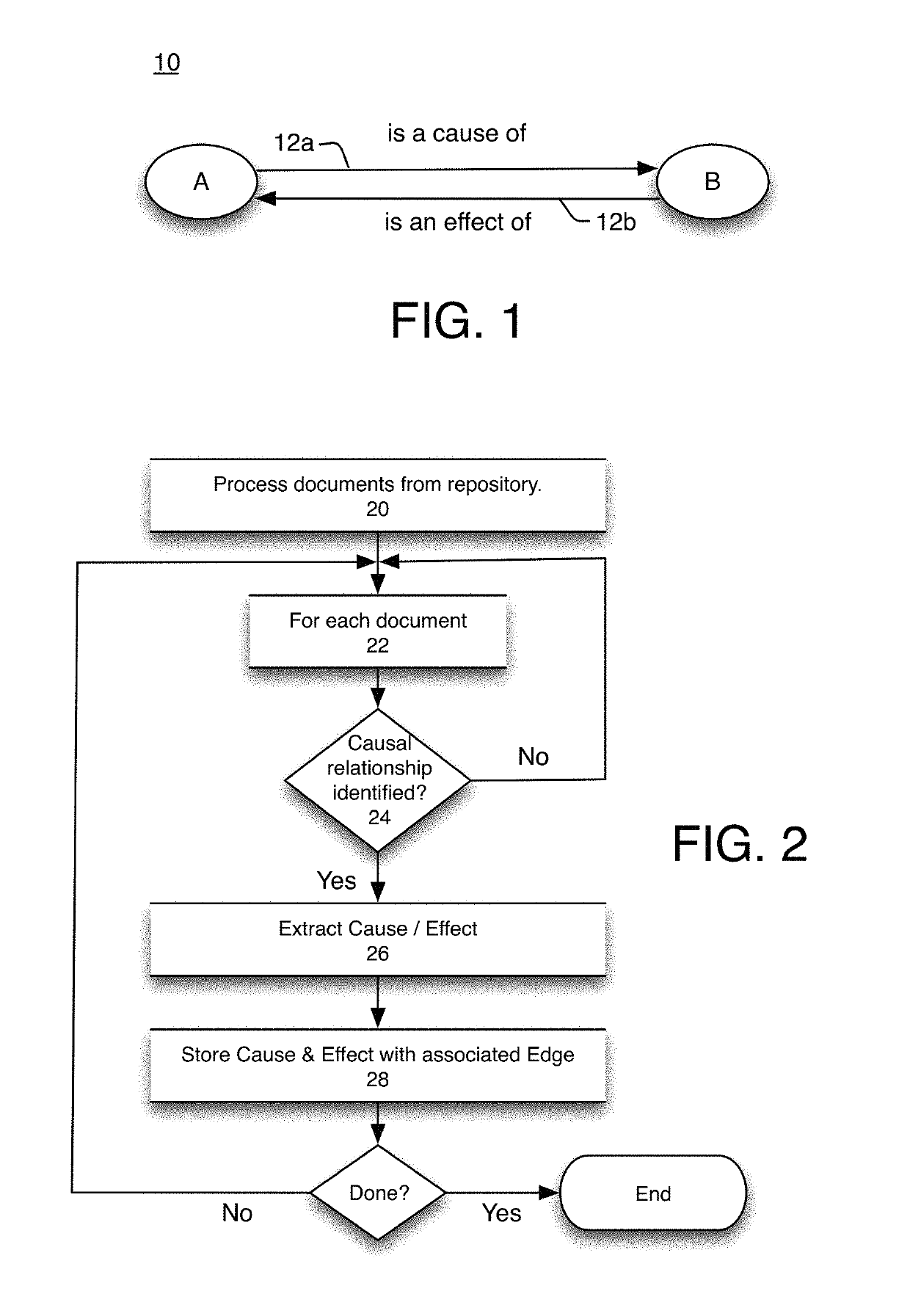
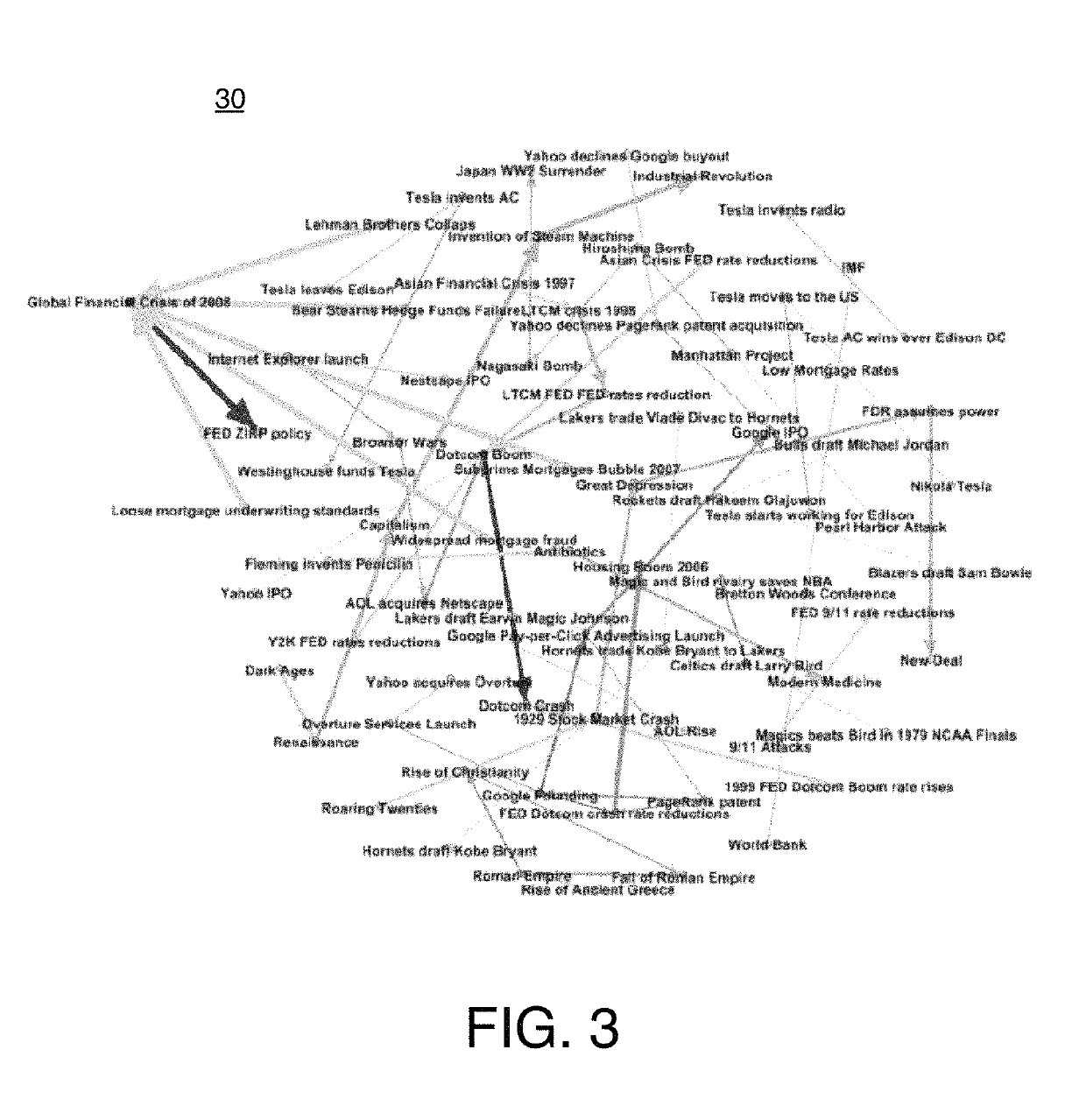
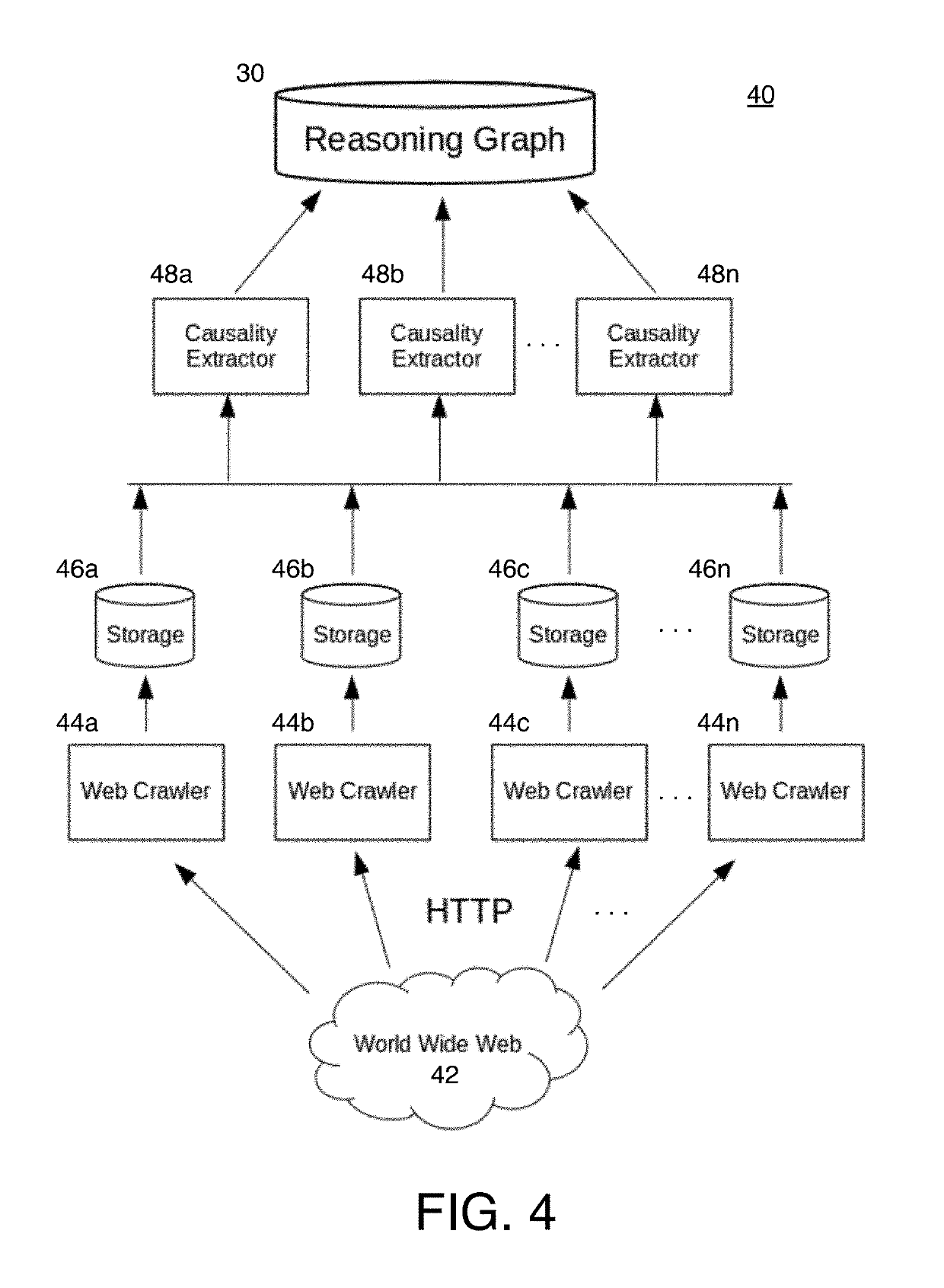
- The creation of a Reasoning Graph that collects and aggregates inferences and causality relationships from vast quantities of text, allowing computers to reason by analyzing and ranking nodes representing concepts, conditions, events, and properties, using crawlers, causality extractors, and deep learning networks to identify and extract cause/effect pairs and derive logical inferences.
Information Processing Systems, Reasoning Modules, and Reasoning System Design Methods
PatentInactiveUS20160371592A1
Innovation
- An information processing system is designed with a working memory that uses semantic graphs and reasoning modules configured to process abstractions based on domain ontologies, where reifiers instantiate data into OWL representations, and reasoning modules apply rules for subsumption and composite processing to classify and infer new knowledge.


Privacy and Data Protection in Graph-Based Digital Systems
Privacy and data protection represent critical considerations in graph-based digital systems that support immersive experience design. These systems inherently collect, process, and analyze vast amounts of user behavioral data, interaction patterns, and personal preferences to construct comprehensive knowledge graphs that inform reasoning algorithms. The interconnected nature of graph structures amplifies privacy risks, as individual data points become nodes that can reveal sensitive information through relationship analysis and inference patterns.
Graph-based reasoning systems in immersive environments face unique privacy challenges due to their multi-dimensional data collection capabilities. These systems capture not only explicit user inputs but also implicit behavioral signals such as gaze patterns, movement trajectories, interaction frequencies, and contextual preferences. The graph structure enables sophisticated inference mechanisms that can potentially expose private information through node clustering, path analysis, and relationship mapping, even when individual data points appear anonymized.
Current regulatory frameworks including GDPR, CCPA, and emerging digital privacy legislation impose stringent requirements on graph-based systems. These regulations mandate explicit consent mechanisms, data minimization principles, and the right to erasure, which present technical challenges for graph architectures where data interdependencies are fundamental to system functionality. Compliance requires implementing privacy-preserving graph algorithms that maintain reasoning capabilities while protecting individual privacy rights.
Differential privacy techniques have emerged as promising solutions for graph-based systems, introducing controlled noise to graph structures while preserving statistical properties necessary for reasoning algorithms. Federated learning approaches enable distributed graph construction without centralizing sensitive user data, allowing immersive systems to benefit from collective intelligence while maintaining data locality and user control.
Homomorphic encryption and secure multi-party computation protocols offer advanced protection mechanisms for graph-based reasoning, enabling computation on encrypted graph data without exposing underlying information. These cryptographic approaches allow immersive systems to perform complex reasoning operations while maintaining end-to-end privacy protection, though computational overhead remains a significant implementation challenge.
The implementation of privacy-preserving graph systems requires careful balance between data utility and protection levels. Organizations must establish clear data governance frameworks, implement robust access controls, and deploy continuous monitoring systems to ensure ongoing compliance with evolving privacy regulations while maintaining the sophisticated reasoning capabilities essential for immersive digital experiences.
Graph-based reasoning systems in immersive environments face unique privacy challenges due to their multi-dimensional data collection capabilities. These systems capture not only explicit user inputs but also implicit behavioral signals such as gaze patterns, movement trajectories, interaction frequencies, and contextual preferences. The graph structure enables sophisticated inference mechanisms that can potentially expose private information through node clustering, path analysis, and relationship mapping, even when individual data points appear anonymized.
Current regulatory frameworks including GDPR, CCPA, and emerging digital privacy legislation impose stringent requirements on graph-based systems. These regulations mandate explicit consent mechanisms, data minimization principles, and the right to erasure, which present technical challenges for graph architectures where data interdependencies are fundamental to system functionality. Compliance requires implementing privacy-preserving graph algorithms that maintain reasoning capabilities while protecting individual privacy rights.
Differential privacy techniques have emerged as promising solutions for graph-based systems, introducing controlled noise to graph structures while preserving statistical properties necessary for reasoning algorithms. Federated learning approaches enable distributed graph construction without centralizing sensitive user data, allowing immersive systems to benefit from collective intelligence while maintaining data locality and user control.
Homomorphic encryption and secure multi-party computation protocols offer advanced protection mechanisms for graph-based reasoning, enabling computation on encrypted graph data without exposing underlying information. These cryptographic approaches allow immersive systems to perform complex reasoning operations while maintaining end-to-end privacy protection, though computational overhead remains a significant implementation challenge.
The implementation of privacy-preserving graph systems requires careful balance between data utility and protection levels. Organizations must establish clear data governance frameworks, implement robust access controls, and deploy continuous monitoring systems to ensure ongoing compliance with evolving privacy regulations while maintaining the sophisticated reasoning capabilities essential for immersive digital experiences.
User Experience Ethics in Immersive Digital Environment Design
The integration of graph-constrained reasoning within immersive digital environments raises fundamental ethical questions that demand careful consideration throughout the design process. As these systems become increasingly sophisticated in their ability to process complex relational data and influence user behavior, designers must grapple with the moral implications of their technological choices.
Privacy emerges as a paramount concern when implementing graph-based reasoning systems in immersive environments. These systems inherently collect and analyze vast networks of user interactions, behavioral patterns, and personal preferences to construct comprehensive knowledge graphs. The granular nature of data collection in virtual and augmented reality environments amplifies privacy risks, as biometric data, spatial movements, and emotional responses become integral components of the reasoning framework.
Algorithmic transparency presents another critical ethical dimension. Graph-constrained reasoning systems often operate as black boxes, making decisions based on complex network relationships that may be incomprehensible to users. This opacity becomes particularly problematic in immersive environments where users may be unaware of how their actions are being interpreted and used to influence their future experiences.
The concept of user agency requires redefinition within graph-constrained immersive systems. Traditional notions of informed consent become inadequate when dealing with dynamic knowledge graphs that continuously evolve and adapt. Users may consent to initial data collection without fully understanding how their information will be interconnected with other data points or how these connections might influence their digital experiences over time.
Bias amplification through graph structures poses significant ethical challenges. Historical data embedded within knowledge graphs can perpetuate societal biases, leading to discriminatory outcomes in immersive environments. When these biases influence spatial design, content recommendations, or social interactions within virtual spaces, they can reinforce harmful stereotypes and limit user opportunities.
The psychological impact of graph-constrained reasoning systems demands ethical scrutiny. Immersive environments powered by sophisticated reasoning capabilities can create highly persuasive experiences that may manipulate user emotions and decision-making processes. The potential for addiction, dependency, and psychological harm increases when graph-based systems optimize for engagement metrics rather than user wellbeing.
Establishing ethical frameworks for graph-constrained reasoning in immersive design requires interdisciplinary collaboration between technologists, ethicists, and user experience professionals. These frameworks must address data governance, algorithmic accountability, user empowerment, and the long-term societal implications of increasingly intelligent immersive systems.
Privacy emerges as a paramount concern when implementing graph-based reasoning systems in immersive environments. These systems inherently collect and analyze vast networks of user interactions, behavioral patterns, and personal preferences to construct comprehensive knowledge graphs. The granular nature of data collection in virtual and augmented reality environments amplifies privacy risks, as biometric data, spatial movements, and emotional responses become integral components of the reasoning framework.
Algorithmic transparency presents another critical ethical dimension. Graph-constrained reasoning systems often operate as black boxes, making decisions based on complex network relationships that may be incomprehensible to users. This opacity becomes particularly problematic in immersive environments where users may be unaware of how their actions are being interpreted and used to influence their future experiences.
The concept of user agency requires redefinition within graph-constrained immersive systems. Traditional notions of informed consent become inadequate when dealing with dynamic knowledge graphs that continuously evolve and adapt. Users may consent to initial data collection without fully understanding how their information will be interconnected with other data points or how these connections might influence their digital experiences over time.
Bias amplification through graph structures poses significant ethical challenges. Historical data embedded within knowledge graphs can perpetuate societal biases, leading to discriminatory outcomes in immersive environments. When these biases influence spatial design, content recommendations, or social interactions within virtual spaces, they can reinforce harmful stereotypes and limit user opportunities.
The psychological impact of graph-constrained reasoning systems demands ethical scrutiny. Immersive environments powered by sophisticated reasoning capabilities can create highly persuasive experiences that may manipulate user emotions and decision-making processes. The potential for addiction, dependency, and psychological harm increases when graph-based systems optimize for engagement metrics rather than user wellbeing.
Establishing ethical frameworks for graph-constrained reasoning in immersive design requires interdisciplinary collaboration between technologists, ethicists, and user experience professionals. These frameworks must address data governance, algorithmic accountability, user empowerment, and the long-term societal implications of increasingly intelligent immersive systems.
Unlock deeper insights with PatSnap Eureka Quick Research — get a full tech report to explore trends and direct your research. Try now!
Generate Your Research Report Instantly with AI Agent
Supercharge your innovation with PatSnap Eureka AI Agent Platform!