

Hastelloy Applications Transforming Structural Innovations
JUL 10, 20259 MIN READ
Generate Your Research Report Instantly with AI Agent
PatSnap Eureka helps you evaluate technical feasibility & market potential.
Hastelloy Evolution and Objectives
Hastelloy, a family of nickel-chromium-based superalloys, has undergone significant evolution since its inception in the 1920s. Initially developed to resist corrosion in chemical processing environments, Hastelloy has expanded its applications to various industries, transforming structural innovations across multiple sectors.
The evolution of Hastelloy began with the introduction of Hastelloy A, primarily designed for sulfuric acid resistance. Subsequent iterations, such as Hastelloy B and C, improved upon the original formula, enhancing resistance to reducing and oxidizing environments, respectively. As industrial demands grew more complex, newer grades like Hastelloy X and N were developed to address high-temperature applications and molten salt environments.
In recent decades, the focus has shifted towards optimizing Hastelloy for specific industry needs. For instance, Hastelloy C-22 was created to combat localized corrosion in chemical processing, while Hastelloy G-30 was engineered for phosphoric acid production. These advancements have led to the development of highly specialized alloys capable of withstanding extreme conditions in aerospace, nuclear, and petrochemical industries.
The primary objective of Hastelloy's ongoing evolution is to push the boundaries of material performance in increasingly demanding environments. Current research aims to enhance the alloy's resistance to high-temperature oxidation, improve its mechanical properties at elevated temperatures, and extend its lifespan in corrosive settings. Additionally, there is a growing emphasis on developing Hastelloy variants that are more cost-effective and easier to fabricate, without compromising their superior properties.
Another key objective is to expand Hastelloy's applications in emerging technologies. This includes its potential use in renewable energy systems, such as concentrated solar power plants and advanced nuclear reactors. The alloy's unique properties make it an attractive candidate for these cutting-edge applications, where materials must withstand extreme temperatures and corrosive environments for extended periods.
Furthermore, the evolution of Hastelloy is increasingly focused on sustainability and environmental considerations. Researchers are exploring ways to optimize the alloy's composition to reduce the use of scarce or environmentally sensitive elements while maintaining or improving its performance characteristics. This aligns with the growing global emphasis on sustainable manufacturing and responsible resource utilization.
As Hastelloy continues to evolve, its impact on structural innovations is expected to grow. The alloy's ability to withstand extreme conditions enables the design of more efficient and durable systems across various industries. From aerospace components that can operate at higher temperatures to chemical processing equipment with extended lifespans, Hastelloy's ongoing development promises to unlock new possibilities in engineering and design, driving technological advancements across multiple sectors.
The evolution of Hastelloy began with the introduction of Hastelloy A, primarily designed for sulfuric acid resistance. Subsequent iterations, such as Hastelloy B and C, improved upon the original formula, enhancing resistance to reducing and oxidizing environments, respectively. As industrial demands grew more complex, newer grades like Hastelloy X and N were developed to address high-temperature applications and molten salt environments.
In recent decades, the focus has shifted towards optimizing Hastelloy for specific industry needs. For instance, Hastelloy C-22 was created to combat localized corrosion in chemical processing, while Hastelloy G-30 was engineered for phosphoric acid production. These advancements have led to the development of highly specialized alloys capable of withstanding extreme conditions in aerospace, nuclear, and petrochemical industries.
The primary objective of Hastelloy's ongoing evolution is to push the boundaries of material performance in increasingly demanding environments. Current research aims to enhance the alloy's resistance to high-temperature oxidation, improve its mechanical properties at elevated temperatures, and extend its lifespan in corrosive settings. Additionally, there is a growing emphasis on developing Hastelloy variants that are more cost-effective and easier to fabricate, without compromising their superior properties.
Another key objective is to expand Hastelloy's applications in emerging technologies. This includes its potential use in renewable energy systems, such as concentrated solar power plants and advanced nuclear reactors. The alloy's unique properties make it an attractive candidate for these cutting-edge applications, where materials must withstand extreme temperatures and corrosive environments for extended periods.
Furthermore, the evolution of Hastelloy is increasingly focused on sustainability and environmental considerations. Researchers are exploring ways to optimize the alloy's composition to reduce the use of scarce or environmentally sensitive elements while maintaining or improving its performance characteristics. This aligns with the growing global emphasis on sustainable manufacturing and responsible resource utilization.
As Hastelloy continues to evolve, its impact on structural innovations is expected to grow. The alloy's ability to withstand extreme conditions enables the design of more efficient and durable systems across various industries. From aerospace components that can operate at higher temperatures to chemical processing equipment with extended lifespans, Hastelloy's ongoing development promises to unlock new possibilities in engineering and design, driving technological advancements across multiple sectors.
Market Demand Analysis
The market demand for Hastelloy applications in structural innovations has been experiencing significant growth in recent years. This surge is primarily driven by the increasing need for high-performance materials in extreme environments across various industries. Hastelloy, a family of nickel-chromium-based superalloys, offers exceptional resistance to corrosion, oxidation, and high-temperature degradation, making it an ideal choice for demanding applications.
In the oil and gas sector, the exploration of deeper offshore reserves and the development of unconventional resources have created a strong demand for Hastelloy components. These materials are crucial for withstanding the harsh conditions encountered in subsea equipment, downhole tools, and processing facilities. The chemical processing industry also represents a substantial market for Hastelloy, as it requires materials that can resist aggressive chemicals and maintain structural integrity under extreme temperatures and pressures.
The aerospace and defense industries have shown a growing interest in Hastelloy for its ability to withstand high temperatures and maintain strength in critical components such as turbine blades, exhaust systems, and rocket engine parts. As aircraft manufacturers strive for more fuel-efficient engines operating at higher temperatures, the demand for Hastelloy in these applications is expected to rise.
In the power generation sector, particularly in nuclear and renewable energy, Hastelloy finds applications in heat exchangers, piping systems, and reactor components. The push for cleaner energy sources and the need for materials that can withstand the corrosive environments in these applications contribute to the increasing demand for Hastelloy-based solutions.
The automotive industry, while not a traditional market for Hastelloy, is showing potential for growth as manufacturers explore advanced materials for high-performance vehicles and emission control systems. The material's resistance to high-temperature oxidation makes it suitable for exhaust components and turbocharger parts in high-performance engines.
Market analysts project that the global Hastelloy market will continue to expand at a compound annual growth rate (CAGR) of around 5-7% over the next five years. This growth is attributed to the ongoing industrialization in emerging economies, increased investment in infrastructure projects, and the continuous development of new applications in existing industries.
However, the high cost of Hastelloy compared to conventional materials remains a limiting factor for widespread adoption. This has led to a trend of selective use in critical components where the performance benefits justify the increased cost. As a result, there is a growing focus on research and development to optimize Hastelloy alloys for specific applications, potentially opening new market opportunities and driving further innovation in structural design.
In the oil and gas sector, the exploration of deeper offshore reserves and the development of unconventional resources have created a strong demand for Hastelloy components. These materials are crucial for withstanding the harsh conditions encountered in subsea equipment, downhole tools, and processing facilities. The chemical processing industry also represents a substantial market for Hastelloy, as it requires materials that can resist aggressive chemicals and maintain structural integrity under extreme temperatures and pressures.
The aerospace and defense industries have shown a growing interest in Hastelloy for its ability to withstand high temperatures and maintain strength in critical components such as turbine blades, exhaust systems, and rocket engine parts. As aircraft manufacturers strive for more fuel-efficient engines operating at higher temperatures, the demand for Hastelloy in these applications is expected to rise.
In the power generation sector, particularly in nuclear and renewable energy, Hastelloy finds applications in heat exchangers, piping systems, and reactor components. The push for cleaner energy sources and the need for materials that can withstand the corrosive environments in these applications contribute to the increasing demand for Hastelloy-based solutions.
The automotive industry, while not a traditional market for Hastelloy, is showing potential for growth as manufacturers explore advanced materials for high-performance vehicles and emission control systems. The material's resistance to high-temperature oxidation makes it suitable for exhaust components and turbocharger parts in high-performance engines.
Market analysts project that the global Hastelloy market will continue to expand at a compound annual growth rate (CAGR) of around 5-7% over the next five years. This growth is attributed to the ongoing industrialization in emerging economies, increased investment in infrastructure projects, and the continuous development of new applications in existing industries.
However, the high cost of Hastelloy compared to conventional materials remains a limiting factor for widespread adoption. This has led to a trend of selective use in critical components where the performance benefits justify the increased cost. As a result, there is a growing focus on research and development to optimize Hastelloy alloys for specific applications, potentially opening new market opportunities and driving further innovation in structural design.
Technical Challenges
Hastelloy, a family of nickel-chromium-based superalloys, has been at the forefront of structural innovations in various industries. However, its applications face several technical challenges that require ongoing research and development efforts.
One of the primary challenges in Hastelloy applications is its high cost. The complex manufacturing process and the use of expensive alloying elements contribute to the elevated price point of Hastelloy materials. This cost factor often limits its widespread adoption, particularly in industries where cost-effectiveness is a crucial consideration.
The machining of Hastelloy presents another significant challenge. Due to its high strength and work-hardening characteristics, Hastelloy is notoriously difficult to machine. This results in increased tool wear, longer processing times, and higher production costs. Developing improved machining techniques and tools specifically designed for Hastelloy is an ongoing area of research.
Welding Hastelloy components also poses technical difficulties. The material's susceptibility to hot cracking and its tendency to form brittle intermetallic phases during welding processes can compromise the integrity of the welded joints. Overcoming these welding challenges requires specialized techniques and equipment, as well as highly skilled operators.
The high-temperature performance of Hastelloy, while generally excellent, still has room for improvement. In extreme environments, such as those found in aerospace and nuclear applications, there is a constant demand for materials that can withstand even higher temperatures and more corrosive conditions. Enhancing the high-temperature capabilities of Hastelloy without sacrificing its other beneficial properties remains a significant challenge.
Corrosion resistance, although a hallmark of Hastelloy, can still be problematic in certain aggressive environments. Developing new Hastelloy grades or surface treatments to combat specific types of corrosion, particularly in emerging industrial applications, is an ongoing challenge for materials scientists and engineers.
The long-term stability and degradation of Hastelloy under various service conditions is another area of concern. Understanding and predicting how these alloys behave over extended periods, especially in complex, multi-stress environments, is crucial for ensuring the safety and reliability of critical components.
Lastly, the recyclability and environmental impact of Hastelloy present challenges in an increasingly eco-conscious world. Developing efficient recycling processes for Hastelloy and finding ways to reduce its environmental footprint throughout its lifecycle are becoming increasingly important considerations in its application and development.
One of the primary challenges in Hastelloy applications is its high cost. The complex manufacturing process and the use of expensive alloying elements contribute to the elevated price point of Hastelloy materials. This cost factor often limits its widespread adoption, particularly in industries where cost-effectiveness is a crucial consideration.
The machining of Hastelloy presents another significant challenge. Due to its high strength and work-hardening characteristics, Hastelloy is notoriously difficult to machine. This results in increased tool wear, longer processing times, and higher production costs. Developing improved machining techniques and tools specifically designed for Hastelloy is an ongoing area of research.
Welding Hastelloy components also poses technical difficulties. The material's susceptibility to hot cracking and its tendency to form brittle intermetallic phases during welding processes can compromise the integrity of the welded joints. Overcoming these welding challenges requires specialized techniques and equipment, as well as highly skilled operators.
The high-temperature performance of Hastelloy, while generally excellent, still has room for improvement. In extreme environments, such as those found in aerospace and nuclear applications, there is a constant demand for materials that can withstand even higher temperatures and more corrosive conditions. Enhancing the high-temperature capabilities of Hastelloy without sacrificing its other beneficial properties remains a significant challenge.
Corrosion resistance, although a hallmark of Hastelloy, can still be problematic in certain aggressive environments. Developing new Hastelloy grades or surface treatments to combat specific types of corrosion, particularly in emerging industrial applications, is an ongoing challenge for materials scientists and engineers.
The long-term stability and degradation of Hastelloy under various service conditions is another area of concern. Understanding and predicting how these alloys behave over extended periods, especially in complex, multi-stress environments, is crucial for ensuring the safety and reliability of critical components.
Lastly, the recyclability and environmental impact of Hastelloy present challenges in an increasingly eco-conscious world. Developing efficient recycling processes for Hastelloy and finding ways to reduce its environmental footprint throughout its lifecycle are becoming increasingly important considerations in its application and development.
Current Hastelloy Solutions
01 Composition and properties of Hastelloy alloys
Hastelloy is a family of nickel-based superalloys known for their excellent corrosion resistance and high-temperature strength. These alloys typically contain varying amounts of chromium, molybdenum, and other elements to enhance their performance in harsh environments. The specific composition and properties can be tailored for different applications, such as chemical processing, aerospace, and nuclear industries.- Composition and properties of Hastelloy alloys: Hastelloy is a family of nickel-based superalloys known for their excellent corrosion resistance and high-temperature strength. These alloys typically contain varying amounts of chromium, molybdenum, and other elements to enhance their performance in extreme environments. The specific composition and properties can be tailored for different applications, such as chemical processing, aerospace, and nuclear industries.
- Manufacturing processes for Hastelloy components: Various manufacturing processes are employed to produce Hastelloy components, including casting, forging, and powder metallurgy techniques. Advanced manufacturing methods, such as additive manufacturing or 3D printing, are also being explored to create complex Hastelloy parts with improved performance characteristics. Heat treatment and surface finishing processes are often applied to optimize the material's properties for specific applications.
- Applications of Hastelloy in corrosive environments: Hastelloy alloys are widely used in industries where corrosion resistance is critical. They are employed in chemical processing equipment, such as reactors, heat exchangers, and piping systems, where exposure to aggressive chemicals is common. Hastelloy components are also utilized in offshore oil and gas production, desalination plants, and pollution control systems due to their ability to withstand harsh, corrosive environments.
- High-temperature applications of Hastelloy: Hastelloy alloys exhibit excellent mechanical properties at elevated temperatures, making them suitable for high-temperature applications. They are used in gas turbine components, furnace equipment, and heat treatment systems. The alloys maintain their strength and corrosion resistance at temperatures exceeding 1000°C, making them valuable in aerospace, power generation, and industrial heating applications.
- Welding and joining techniques for Hastelloy: Specialized welding and joining techniques are employed for Hastelloy components to maintain their corrosion resistance and mechanical properties. These include gas tungsten arc welding (GTAW), gas metal arc welding (GMAW), and electron beam welding. Post-weld heat treatments are often applied to restore the material's properties and reduce residual stresses. Proper selection of filler materials and welding parameters is crucial to ensure the integrity of Hastelloy joints in demanding applications.
02 Manufacturing processes for Hastelloy components
Various manufacturing processes are employed to produce Hastelloy components, including casting, forging, and powder metallurgy techniques. Advanced manufacturing methods, such as additive manufacturing or 3D printing, are also being explored to create complex Hastelloy parts with improved performance characteristics. Heat treatment processes are often used to optimize the microstructure and properties of the final products.Expand Specific Solutions03 Applications of Hastelloy in corrosive environments
Hastelloy alloys are widely used in industries where corrosion resistance is critical. They are particularly effective in handling aggressive chemicals, acids, and high-temperature environments. Common applications include chemical processing equipment, heat exchangers, valves, and piping systems in petrochemical plants, as well as components for nuclear reactors and waste treatment facilities.Expand Specific Solutions04 Welding and joining techniques for Hastelloy
Specialized welding and joining techniques are required for Hastelloy components due to their unique composition and properties. These may include gas tungsten arc welding (GTAW), gas metal arc welding (GMAW), and electron beam welding. Proper selection of filler materials and post-weld heat treatments are crucial to maintain the alloy's corrosion resistance and mechanical properties in the welded areas.Expand Specific Solutions05 Surface treatment and coating of Hastelloy
Various surface treatment and coating techniques are applied to Hastelloy components to further enhance their performance or provide additional functionality. These may include electroplating, thermal spraying, or the application of specialized coatings to improve wear resistance, thermal barrier properties, or electrical conductivity. Surface treatments can also be used to modify the surface chemistry or topography for specific applications.Expand Specific Solutions
Key Industry Players
The Hastelloy applications market is in a growth phase, driven by increasing demand for corrosion-resistant materials in various industries. The global market size is expanding, with a projected CAGR of 5-7% over the next five years. Technological maturity varies across applications, with established players like Northrop Grumman and Rolls-Royce leading in aerospace, while companies such as Kobe Steel and Baoshan Iron & Steel focus on industrial applications. Emerging players like Renaissance Fusion are exploring innovative uses in fusion energy. Research institutions, including the University of Science & Technology Beijing and Harbin Institute of Technology, are contributing to advancements in Hastelloy alloy development and applications.
Northrop Grumman Systems Corp.
Technical Solution: Northrop Grumman has integrated Hastelloy into advanced defense and aerospace systems, focusing on its exceptional properties for high-stress environments. The company utilizes Hastelloy in missile components, radar systems, and electronic warfare equipment where resistance to heat and corrosion is paramount [13]. Northrop Grumman's research has led to the development of Hastelloy-based composite materials that combine the alloy's corrosion resistance with enhanced strength-to-weight ratios [14]. They have also pioneered the use of Hastelloy in additive manufacturing for defense applications, enabling rapid prototyping and production of complex geometries [15].
Strengths: Expertise in defense and aerospace applications, advanced composite development, and integration with cutting-edge manufacturing techniques. Weaknesses: High costs associated with specialized defense applications, potential export restrictions, and limited civilian market applications.
Kobe Steel, Ltd.
Technical Solution: Kobe Steel has developed advanced Hastelloy alloys with improved corrosion resistance and mechanical properties for structural applications. Their proprietary manufacturing process involves precise control of alloying elements and heat treatment to optimize microstructure [1]. The company has successfully applied these Hastelloy materials in chemical processing equipment, offshore oil and gas platforms, and nuclear power plants [2]. Kobe Steel's Hastelloy products demonstrate superior resistance to pitting, crevice corrosion, and stress corrosion cracking in aggressive environments compared to conventional nickel-based alloys [3].
Strengths: Excellent corrosion resistance, high temperature strength, and versatility for various industrial applications. Weaknesses: Higher cost compared to standard stainless steels, limited availability, and complex fabrication processes.
Innovative Hastelloy Patents
Intermediate Strength Alloys for High Temperature Service in Liquid-Salt Cooled Energy Systems
PatentActiveUS20150197832A1
Innovation
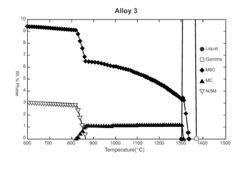
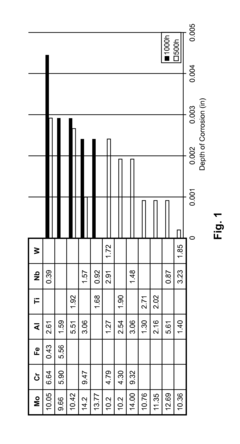
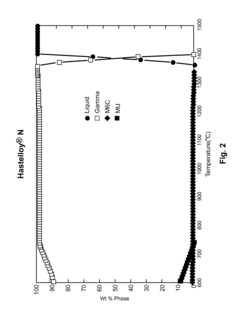
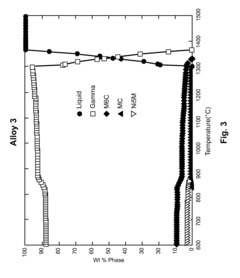
- Development of a new alloy with a composition of 6 to 8.5 Cr, 5.5 to 13.5 Mo, 0.4 to 7.5 W, 1 to 2 Ti, 0.7 to 0.85 Mn, 0.05 to 0.3 Al, up to 0.1 Co, 0.08 to 0.5 C, 1 to 5 Ta, 1 to 4 Nb, 1 to 3 Hf, and balance Ni, which provides improved high-temperature strength, creep resistance, and corrosion resistance through solid solution strengthening and carbide precipitation mechanisms.
Method for manufacturing superconducting coils and device
PatentWO2023194229A1
Innovation
- A multistage coating method involving a rotating structure with sequential layer formations in cold and hot chambers, using physical and chemical vapor deposition techniques to deposit superconducting and low-resistivity materials, with optional electropolishing and repeated layer stacking to create a patterned groove structure.


Environmental Impact Assessment
The environmental impact assessment of Hastelloy applications in structural innovations reveals both positive and negative implications. On the positive side, Hastelloy's exceptional corrosion resistance and durability contribute to extended product lifecycles, reducing the need for frequent replacements and minimizing waste generation. This longevity translates to reduced raw material consumption and energy expenditure associated with manufacturing and transportation over time.
Furthermore, Hastelloy's superior performance in harsh environments enables more efficient and reliable operations in industries such as chemical processing, oil and gas, and renewable energy. This efficiency can lead to reduced energy consumption and fewer emissions during industrial processes, indirectly benefiting the environment.
However, the production of Hastelloy alloys involves energy-intensive processes and the use of rare and valuable metals, including nickel, molybdenum, and chromium. The mining and refining of these elements can have significant environmental impacts, including habitat disruption, water pollution, and greenhouse gas emissions. Additionally, the high-temperature manufacturing processes required for Hastelloy production contribute to carbon emissions and energy consumption.
The recyclability of Hastelloy is a notable environmental consideration. While the alloy is technically recyclable, the complex composition can make the recycling process challenging and energy-intensive. This factor may limit the material's circularity and contribute to potential waste accumulation if not properly managed at the end of its lifecycle.
In terms of toxicity, Hastelloy is generally considered inert and non-toxic in its solid form. However, during manufacturing, welding, or grinding processes, fine particles or fumes may be generated, potentially posing health risks to workers and requiring stringent safety measures. Proper handling and disposal protocols are essential to mitigate any potential environmental contamination.
The application of Hastelloy in structural innovations may also indirectly impact the environment through improved efficiency and safety in critical infrastructure. For instance, its use in advanced heat exchangers or chemical reactors can lead to more efficient processes, reducing overall energy consumption and emissions in various industries.
Furthermore, Hastelloy's superior performance in harsh environments enables more efficient and reliable operations in industries such as chemical processing, oil and gas, and renewable energy. This efficiency can lead to reduced energy consumption and fewer emissions during industrial processes, indirectly benefiting the environment.
However, the production of Hastelloy alloys involves energy-intensive processes and the use of rare and valuable metals, including nickel, molybdenum, and chromium. The mining and refining of these elements can have significant environmental impacts, including habitat disruption, water pollution, and greenhouse gas emissions. Additionally, the high-temperature manufacturing processes required for Hastelloy production contribute to carbon emissions and energy consumption.
The recyclability of Hastelloy is a notable environmental consideration. While the alloy is technically recyclable, the complex composition can make the recycling process challenging and energy-intensive. This factor may limit the material's circularity and contribute to potential waste accumulation if not properly managed at the end of its lifecycle.
In terms of toxicity, Hastelloy is generally considered inert and non-toxic in its solid form. However, during manufacturing, welding, or grinding processes, fine particles or fumes may be generated, potentially posing health risks to workers and requiring stringent safety measures. Proper handling and disposal protocols are essential to mitigate any potential environmental contamination.
The application of Hastelloy in structural innovations may also indirectly impact the environment through improved efficiency and safety in critical infrastructure. For instance, its use in advanced heat exchangers or chemical reactors can lead to more efficient processes, reducing overall energy consumption and emissions in various industries.
Cost-Benefit Analysis
The cost-benefit analysis of Hastelloy applications in structural innovations reveals a complex interplay of economic factors and performance advantages. Initially, the high cost of Hastelloy alloys presents a significant barrier to entry for many projects. The raw material expenses and specialized manufacturing processes contribute to a substantially higher upfront investment compared to traditional structural materials like steel or aluminum.
However, the long-term benefits of Hastelloy applications often outweigh these initial costs, particularly in demanding environments. The exceptional corrosion resistance of Hastelloy significantly extends the lifespan of structural components, reducing the frequency and cost of replacements. This durability translates into lower maintenance expenses and decreased downtime, which can result in substantial operational savings over time.
In industries such as chemical processing, oil and gas, and marine engineering, where exposure to corrosive substances is common, Hastelloy's superior performance can prevent costly failures and potential safety hazards. The material's ability to withstand extreme temperatures and pressures also enables innovative designs that may not be feasible with conventional materials, potentially leading to improved efficiency and productivity.
Energy-intensive industries benefit from Hastelloy's excellent heat resistance and thermal stability. These properties allow for the design of more efficient heat exchangers and reactors, potentially reducing energy consumption and associated costs. Additionally, the material's resistance to stress corrosion cracking can prevent catastrophic failures in high-pressure systems, mitigating the risk of expensive shutdowns and environmental incidents.
When considering lifecycle costs, Hastelloy applications often demonstrate a favorable return on investment. While the initial expenditure is higher, the reduced need for repairs, replacements, and unplanned maintenance can result in significant long-term savings. This is particularly evident in critical infrastructure projects where reliability and longevity are paramount.
However, the cost-benefit ratio varies depending on the specific application and operating conditions. In less demanding environments or short-term projects, the benefits of Hastelloy may not justify the increased costs. Therefore, a thorough analysis of the intended use, expected lifespan, and potential risks is crucial in determining the economic viability of Hastelloy applications in structural innovations.
However, the long-term benefits of Hastelloy applications often outweigh these initial costs, particularly in demanding environments. The exceptional corrosion resistance of Hastelloy significantly extends the lifespan of structural components, reducing the frequency and cost of replacements. This durability translates into lower maintenance expenses and decreased downtime, which can result in substantial operational savings over time.
In industries such as chemical processing, oil and gas, and marine engineering, where exposure to corrosive substances is common, Hastelloy's superior performance can prevent costly failures and potential safety hazards. The material's ability to withstand extreme temperatures and pressures also enables innovative designs that may not be feasible with conventional materials, potentially leading to improved efficiency and productivity.
Energy-intensive industries benefit from Hastelloy's excellent heat resistance and thermal stability. These properties allow for the design of more efficient heat exchangers and reactors, potentially reducing energy consumption and associated costs. Additionally, the material's resistance to stress corrosion cracking can prevent catastrophic failures in high-pressure systems, mitigating the risk of expensive shutdowns and environmental incidents.
When considering lifecycle costs, Hastelloy applications often demonstrate a favorable return on investment. While the initial expenditure is higher, the reduced need for repairs, replacements, and unplanned maintenance can result in significant long-term savings. This is particularly evident in critical infrastructure projects where reliability and longevity are paramount.
However, the cost-benefit ratio varies depending on the specific application and operating conditions. In less demanding environments or short-term projects, the benefits of Hastelloy may not justify the increased costs. Therefore, a thorough analysis of the intended use, expected lifespan, and potential risks is crucial in determining the economic viability of Hastelloy applications in structural innovations.
Unlock deeper insights with PatSnap Eureka Quick Research — get a full tech report to explore trends and direct your research. Try now!
Generate Your Research Report Instantly with AI Agent
Supercharge your innovation with PatSnap Eureka AI Agent Platform!