

How Advanced Geometries Transform Thermal Metamaterial Efficiency
APR 29, 20269 MIN READ
Generate Your Research Report Instantly with AI Agent
PatSnap Eureka helps you evaluate technical feasibility & market potential.
Advanced Geometry Thermal Metamaterial Background and Objectives
Thermal metamaterials represent a revolutionary class of artificially engineered materials that manipulate heat flow through precisely designed microstructures rather than relying solely on bulk material properties. These materials have emerged from the convergence of metamaterial science, thermal physics, and advanced manufacturing technologies, offering unprecedented control over thermal transport phenomena that was previously impossible with conventional materials.
The evolution of thermal metamaterials traces back to the broader metamaterial concept introduced in electromagnetics during the early 2000s. However, the application to thermal management gained significant momentum around 2008 when researchers began exploring analogies between electromagnetic and thermal wave propagation. This transition marked a paradigm shift from passive thermal management approaches to active thermal manipulation through geometric design.
Advanced geometries serve as the fundamental building blocks that enable thermal metamaterials to achieve extraordinary thermal properties. Unlike traditional materials where thermal conductivity is primarily determined by atomic structure and composition, thermal metamaterials derive their unique characteristics from carefully engineered geometric patterns at micro and nano scales. These geometries can include periodic lattices, hierarchical structures, gradient designs, and topologically optimized configurations that create specific thermal pathways.
The geometric complexity in thermal metamaterials has evolved from simple periodic structures to sophisticated multi-scale architectures. Early designs focused on basic unit cell repetitions, while contemporary approaches incorporate fractal geometries, bio-inspired structures, and machine learning-optimized configurations. This evolution reflects the growing understanding that thermal efficiency can be dramatically enhanced through strategic geometric manipulation.
Current research objectives center on achieving thermal functionalities that surpass natural material limitations. Primary goals include developing thermal cloaking devices that redirect heat flow around sensitive components, creating thermal concentrators that focus thermal energy for enhanced heat transfer, and designing thermal diodes that enable unidirectional heat flow. Additionally, researchers aim to achieve negative thermal expansion, ultra-high thermal conductivity, and programmable thermal properties through geometric control.
The technological targets extend beyond fundamental thermal properties to encompass practical applications in electronics cooling, energy harvesting, building thermal management, and aerospace thermal protection systems. The ultimate objective involves creating adaptive thermal metamaterials whose geometric configurations can be dynamically altered to provide real-time thermal property modulation, representing the next frontier in intelligent thermal management systems.
The evolution of thermal metamaterials traces back to the broader metamaterial concept introduced in electromagnetics during the early 2000s. However, the application to thermal management gained significant momentum around 2008 when researchers began exploring analogies between electromagnetic and thermal wave propagation. This transition marked a paradigm shift from passive thermal management approaches to active thermal manipulation through geometric design.
Advanced geometries serve as the fundamental building blocks that enable thermal metamaterials to achieve extraordinary thermal properties. Unlike traditional materials where thermal conductivity is primarily determined by atomic structure and composition, thermal metamaterials derive their unique characteristics from carefully engineered geometric patterns at micro and nano scales. These geometries can include periodic lattices, hierarchical structures, gradient designs, and topologically optimized configurations that create specific thermal pathways.
The geometric complexity in thermal metamaterials has evolved from simple periodic structures to sophisticated multi-scale architectures. Early designs focused on basic unit cell repetitions, while contemporary approaches incorporate fractal geometries, bio-inspired structures, and machine learning-optimized configurations. This evolution reflects the growing understanding that thermal efficiency can be dramatically enhanced through strategic geometric manipulation.
Current research objectives center on achieving thermal functionalities that surpass natural material limitations. Primary goals include developing thermal cloaking devices that redirect heat flow around sensitive components, creating thermal concentrators that focus thermal energy for enhanced heat transfer, and designing thermal diodes that enable unidirectional heat flow. Additionally, researchers aim to achieve negative thermal expansion, ultra-high thermal conductivity, and programmable thermal properties through geometric control.
The technological targets extend beyond fundamental thermal properties to encompass practical applications in electronics cooling, energy harvesting, building thermal management, and aerospace thermal protection systems. The ultimate objective involves creating adaptive thermal metamaterials whose geometric configurations can be dynamically altered to provide real-time thermal property modulation, representing the next frontier in intelligent thermal management systems.
Market Demand for High-Efficiency Thermal Management Solutions
The global thermal management market is experiencing unprecedented growth driven by the increasing complexity and miniaturization of electronic devices across multiple industries. Data centers, which consume substantial energy for cooling operations, represent one of the most significant demand drivers for advanced thermal solutions. The proliferation of high-performance computing, artificial intelligence workloads, and cloud services has intensified the need for more efficient heat dissipation technologies that can maintain optimal operating temperatures while reducing energy consumption.
Electric vehicle manufacturers face mounting pressure to develop more efficient battery thermal management systems as range anxiety and charging speed remain critical consumer concerns. Advanced thermal metamaterials with sophisticated geometries offer promising solutions for creating more uniform temperature distributions across battery packs, potentially extending battery life and improving safety margins. The automotive sector's transition toward electrification has created substantial market opportunities for innovative thermal management technologies.
Consumer electronics manufacturers continuously seek thinner, lighter devices with enhanced performance capabilities, creating a fundamental challenge in thermal design. Smartphones, laptops, and wearable devices require increasingly sophisticated thermal solutions that can efficiently dissipate heat within severely constrained form factors. Traditional thermal management approaches often fall short of meeting these demanding requirements, driving interest in metamaterial-based solutions.
The aerospace and defense industries demand thermal management solutions capable of operating under extreme conditions while maintaining reliability and performance. Satellite systems, avionics, and military electronics require precise temperature control to ensure mission-critical functionality. Advanced geometric designs in thermal metamaterials can provide tailored thermal properties that conventional materials cannot achieve.
Industrial applications including power electronics, renewable energy systems, and manufacturing equipment represent substantial market segments requiring enhanced thermal management capabilities. Power conversion systems, solar inverters, and industrial machinery generate significant heat loads that must be effectively managed to maintain efficiency and prevent premature failure.
The telecommunications infrastructure expansion, particularly with the deployment of advanced wireless networks, has created additional demand for efficient thermal solutions. Base stations and network equipment require reliable thermal management to maintain signal quality and equipment longevity in diverse environmental conditions.
Electric vehicle manufacturers face mounting pressure to develop more efficient battery thermal management systems as range anxiety and charging speed remain critical consumer concerns. Advanced thermal metamaterials with sophisticated geometries offer promising solutions for creating more uniform temperature distributions across battery packs, potentially extending battery life and improving safety margins. The automotive sector's transition toward electrification has created substantial market opportunities for innovative thermal management technologies.
Consumer electronics manufacturers continuously seek thinner, lighter devices with enhanced performance capabilities, creating a fundamental challenge in thermal design. Smartphones, laptops, and wearable devices require increasingly sophisticated thermal solutions that can efficiently dissipate heat within severely constrained form factors. Traditional thermal management approaches often fall short of meeting these demanding requirements, driving interest in metamaterial-based solutions.
The aerospace and defense industries demand thermal management solutions capable of operating under extreme conditions while maintaining reliability and performance. Satellite systems, avionics, and military electronics require precise temperature control to ensure mission-critical functionality. Advanced geometric designs in thermal metamaterials can provide tailored thermal properties that conventional materials cannot achieve.
Industrial applications including power electronics, renewable energy systems, and manufacturing equipment represent substantial market segments requiring enhanced thermal management capabilities. Power conversion systems, solar inverters, and industrial machinery generate significant heat loads that must be effectively managed to maintain efficiency and prevent premature failure.
The telecommunications infrastructure expansion, particularly with the deployment of advanced wireless networks, has created additional demand for efficient thermal solutions. Base stations and network equipment require reliable thermal management to maintain signal quality and equipment longevity in diverse environmental conditions.
Current State and Challenges in Thermal Metamaterial Geometries
The current landscape of thermal metamaterial geometries represents a rapidly evolving field where sophisticated structural designs are being developed to achieve unprecedented control over heat flow. Contemporary research focuses on periodic and quasi-periodic arrangements of unit cells that can manipulate thermal conductivity through carefully engineered geometric parameters. These structures typically employ combinations of high and low thermal conductivity materials arranged in specific patterns to create effective thermal properties that differ significantly from their constituent materials.
Recent advances have demonstrated that complex three-dimensional geometries, including gyroid structures, lattice frameworks, and hierarchical designs, can achieve thermal conductivities ranging from near-zero to highly directional values. Researchers have successfully implemented geometries such as split-ring resonators, helical structures, and gradient-index configurations that enable thermal cloaking, focusing, and rectification functionalities. The integration of additive manufacturing technologies has expanded the feasible geometric complexity, allowing for the fabrication of intricate internal structures previously impossible to manufacture.
Despite these promising developments, several critical challenges persist in the field. Manufacturing precision remains a significant bottleneck, as thermal metamaterial performance is highly sensitive to geometric tolerances and surface quality. Current fabrication techniques struggle to achieve the sub-millimeter precision required for optimal thermal manipulation, particularly in three-dimensional structures with complex internal geometries. Material interface quality and thermal contact resistance introduce additional complications that can significantly degrade theoretical performance predictions.
Computational modeling presents another substantial challenge, as the multi-scale nature of thermal metamaterials requires sophisticated simulation approaches that can capture both microscopic geometric details and macroscopic thermal behavior. The computational cost of accurately modeling complex geometries with fine mesh resolution often becomes prohibitive, limiting the exploration of optimal designs. Additionally, the coupling between thermal, mechanical, and electromagnetic properties in many geometric configurations creates complex interdependencies that are difficult to predict and control.
Scale-up challenges represent a critical barrier to practical implementation, as most demonstrated thermal metamaterial geometries have been limited to laboratory-scale prototypes. The transition from proof-of-concept demonstrations to large-scale applications requires addressing issues of manufacturing scalability, cost-effectiveness, and structural integrity under real-world operating conditions. Furthermore, the integration of thermal metamaterials with existing thermal management systems presents compatibility challenges that must be resolved for widespread adoption.
Recent advances have demonstrated that complex three-dimensional geometries, including gyroid structures, lattice frameworks, and hierarchical designs, can achieve thermal conductivities ranging from near-zero to highly directional values. Researchers have successfully implemented geometries such as split-ring resonators, helical structures, and gradient-index configurations that enable thermal cloaking, focusing, and rectification functionalities. The integration of additive manufacturing technologies has expanded the feasible geometric complexity, allowing for the fabrication of intricate internal structures previously impossible to manufacture.
Despite these promising developments, several critical challenges persist in the field. Manufacturing precision remains a significant bottleneck, as thermal metamaterial performance is highly sensitive to geometric tolerances and surface quality. Current fabrication techniques struggle to achieve the sub-millimeter precision required for optimal thermal manipulation, particularly in three-dimensional structures with complex internal geometries. Material interface quality and thermal contact resistance introduce additional complications that can significantly degrade theoretical performance predictions.
Computational modeling presents another substantial challenge, as the multi-scale nature of thermal metamaterials requires sophisticated simulation approaches that can capture both microscopic geometric details and macroscopic thermal behavior. The computational cost of accurately modeling complex geometries with fine mesh resolution often becomes prohibitive, limiting the exploration of optimal designs. Additionally, the coupling between thermal, mechanical, and electromagnetic properties in many geometric configurations creates complex interdependencies that are difficult to predict and control.
Scale-up challenges represent a critical barrier to practical implementation, as most demonstrated thermal metamaterial geometries have been limited to laboratory-scale prototypes. The transition from proof-of-concept demonstrations to large-scale applications requires addressing issues of manufacturing scalability, cost-effectiveness, and structural integrity under real-world operating conditions. Furthermore, the integration of thermal metamaterials with existing thermal management systems presents compatibility challenges that must be resolved for widespread adoption.
Existing Geometric Solutions for Thermal Efficiency Enhancement
01 Metamaterial structure design for thermal management
Advanced metamaterial structures are designed with specific geometric patterns and configurations to control thermal properties. These structures utilize periodic arrangements of unit cells with engineered thermal conductivity properties to achieve desired heat transfer characteristics. The design focuses on creating materials with tailored thermal responses through careful manipulation of the metamaterial's internal architecture.- Metamaterial structure design for thermal management: Advanced metamaterial structures are designed with specific geometric patterns and configurations to control thermal properties. These structures utilize periodic arrangements of unit cells with engineered thermal conductivity properties to achieve desired heat transfer characteristics. The design focuses on optimizing the microstructure geometry to enhance thermal efficiency through controlled heat flow paths.
- Thermal conductivity enhancement mechanisms: Various mechanisms are employed to enhance thermal conductivity in metamaterials, including the use of high thermal conductivity materials, optimized material distribution, and engineered interfaces. These approaches focus on creating efficient heat conduction pathways while maintaining the metamaterial's unique properties. The enhancement is achieved through careful selection of constituent materials and their arrangement.
- Thermal insulation and barrier properties: Metamaterials are designed to provide superior thermal insulation by creating structures that minimize heat transfer through conduction, convection, and radiation. These materials incorporate air gaps, low thermal conductivity components, and reflective surfaces to achieve high thermal resistance. The design principles focus on disrupting heat flow paths while maintaining structural integrity.
- Active thermal control systems: Active thermal management systems integrate metamaterials with controllable elements to dynamically adjust thermal properties. These systems can switch between different thermal states, regulate temperature distribution, and respond to external stimuli. The technology enables real-time thermal property modulation for adaptive thermal management applications.
- Manufacturing and fabrication techniques: Specialized manufacturing processes are developed to produce thermal metamaterials with precise control over their microstructure and properties. These techniques include additive manufacturing, precision machining, and assembly methods that enable the creation of complex three-dimensional structures. The fabrication approaches ensure consistent thermal performance and scalability for practical applications.
02 Thermal conductivity enhancement mechanisms
Various mechanisms are employed to enhance the thermal conductivity of metamaterials, including the use of high thermal conductivity materials, optimized heat transfer pathways, and engineered interfaces. These approaches focus on maximizing heat transfer efficiency while maintaining the unique properties of the metamaterial structure.Expand Specific Solutions03 Thermal insulation and barrier properties
Metamaterials are engineered to provide superior thermal insulation capabilities by creating structures that minimize heat transfer through conduction, convection, and radiation. These materials feature specially designed void patterns and material compositions that create effective thermal barriers while maintaining structural integrity.Expand Specific Solutions04 Active thermal control systems
Dynamic thermal management systems incorporate metamaterials with controllable thermal properties that can be actively adjusted based on environmental conditions or operational requirements. These systems enable real-time thermal regulation through various control mechanisms and adaptive material properties.Expand Specific Solutions05 Manufacturing and fabrication techniques
Specialized manufacturing processes are developed to create thermal metamaterials with precise control over their microstructure and thermal properties. These techniques include advanced fabrication methods that enable the production of complex geometries and multi-scale structures necessary for optimal thermal performance.Expand Specific Solutions
Key Players in Advanced Thermal Metamaterial Industry
The thermal metamaterial field is experiencing rapid growth driven by advanced geometric innovations, with the market transitioning from early research to commercial applications. Technology maturity varies significantly across players, with established industrial giants like Siemens AG, Applied Materials, and Samsung Electronics leading in manufacturing capabilities and practical implementations. Research institutions including Purdue Research Foundation, Chinese Academy of Sciences' Institute of Mechanics, and major universities like Xi'an Jiaotong University and Huazhong University of Science & Technology are pioneering fundamental breakthroughs in geometric optimization. Mid-tier companies such as NGK Corp. and specialized firms like Hefei Zhongke Zhongming Technology are bridging the gap between research and commercialization. The competitive landscape shows a healthy ecosystem where academic research institutions drive innovation while industrial players focus on scalable manufacturing and market deployment, indicating the technology is approaching commercial viability.
Siemens Energy Global GmbH & Co. KG
Technical Solution: Siemens Energy develops thermal metamaterials for power generation and industrial applications, focusing on geometric designs that enhance heat exchanger efficiency and turbine cooling systems. Their metamaterial solutions feature complex internal channel geometries, lattice structures, and surface texturing that increase heat transfer coefficients by 200-400% while reducing pressure losses. The company's approach involves computational optimization of unit cell geometries, including gyroid structures, triply periodic minimal surfaces, and bio-inspired designs that maximize surface area-to-volume ratios. Their thermal metamaterials are manufactured using additive manufacturing techniques that enable creation of previously impossible geometric configurations, including internal cooling channels with variable cross-sections and integrated heat transfer enhancement features.
Strengths: Deep expertise in thermal systems and industrial-scale manufacturing capabilities. Weaknesses: Limited focus on emerging applications outside traditional energy sectors.
Applied Materials, Inc.
Technical Solution: Applied Materials develops advanced thermal metamaterial solutions through precision nanofabrication and atomic layer deposition technologies. Their approach focuses on creating engineered periodic structures with sub-wavelength features that enable unprecedented thermal conductivity control. The company's thermal metamaterials utilize sophisticated geometric patterns including gradient index structures, phononic crystals, and hierarchical architectures that can achieve thermal conductivities ranging from near-zero to over 10 times that of conventional materials. Their manufacturing processes enable precise control over feature dimensions down to single nanometer scales, allowing for optimization of phonon transport properties through geometric engineering of unit cell parameters, interface densities, and structural anisotropy.
Strengths: Industry-leading nanofabrication capabilities and scalable manufacturing processes. Weaknesses: High production costs and complex integration requirements for commercial applications.
Core Geometric Innovations in Thermal Metamaterial Patents
Enhanced Power Conversion Efficiency from Thermoelectric Metamaterials
PatentInactiveUS20160181498A1
Innovation
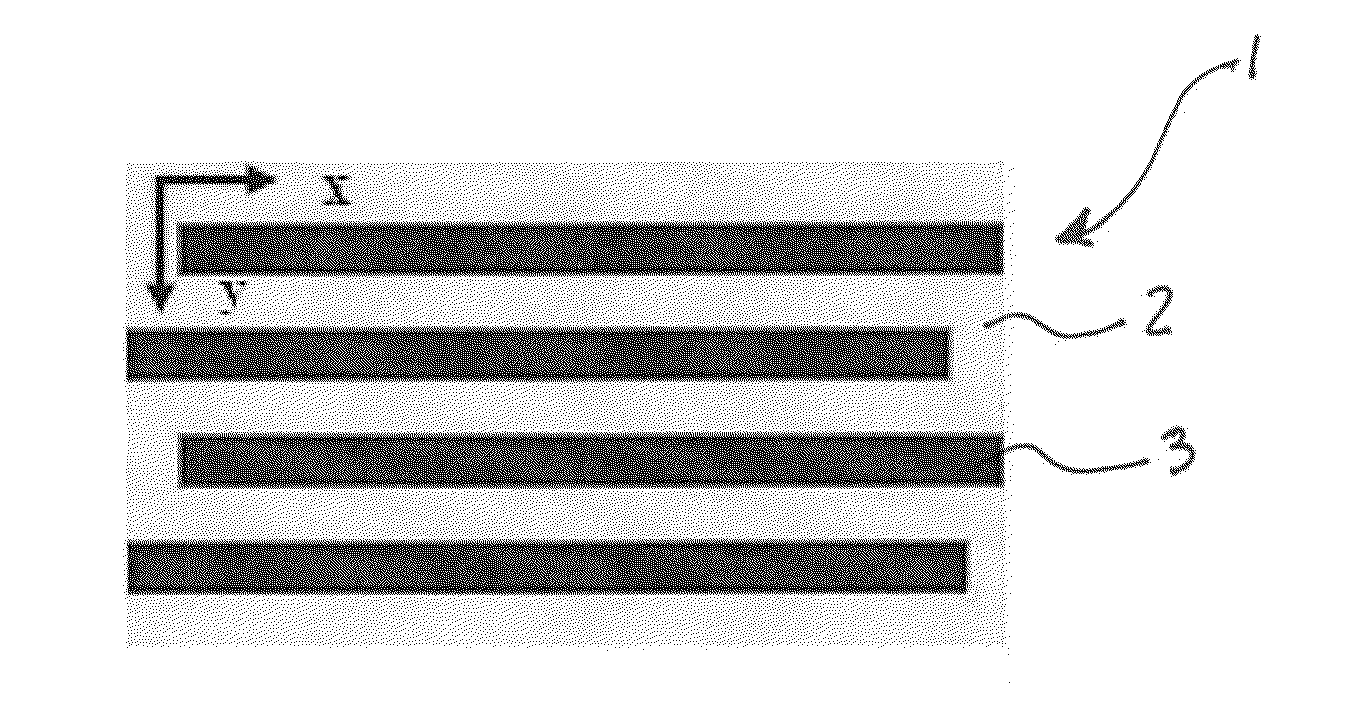
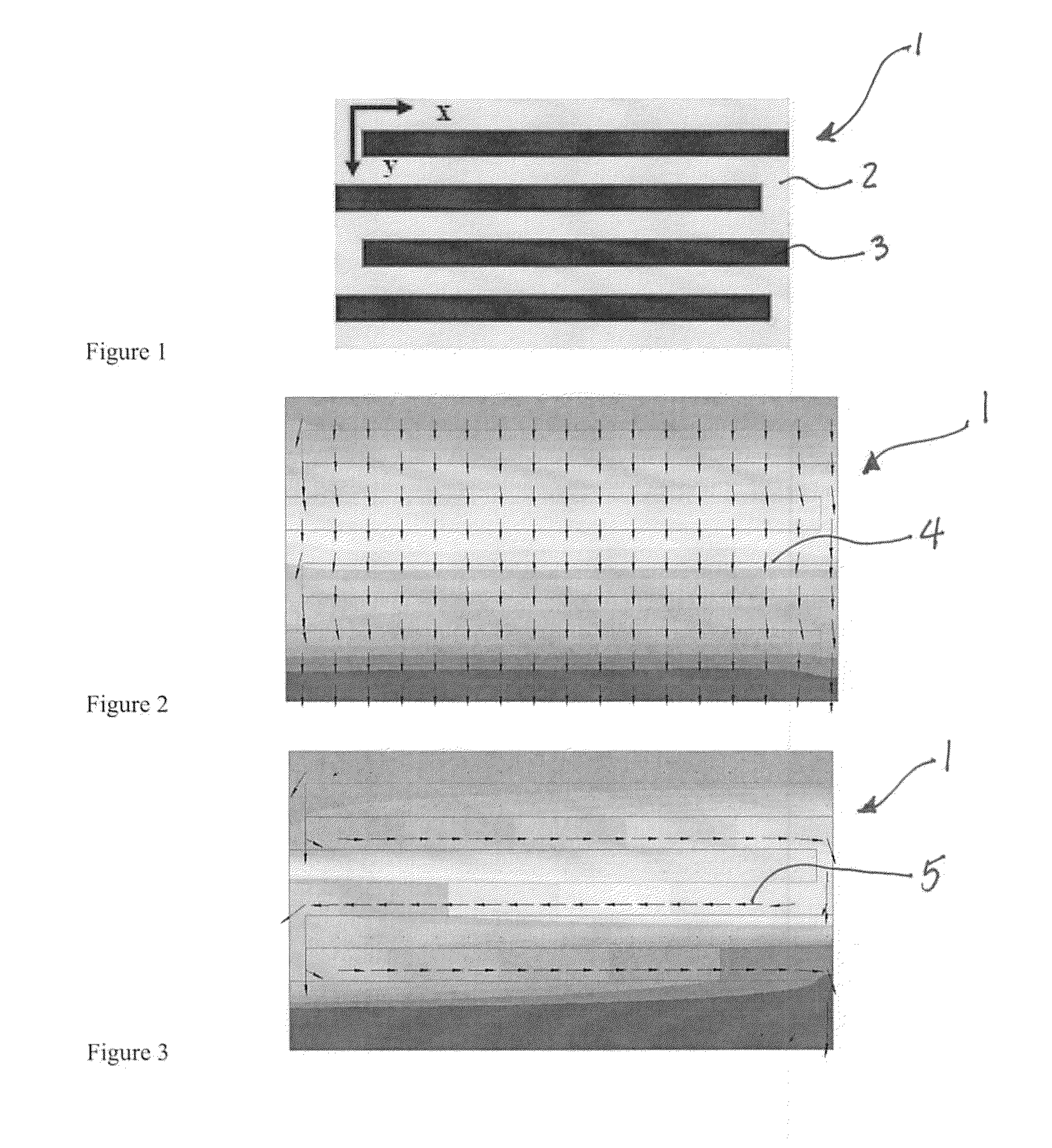
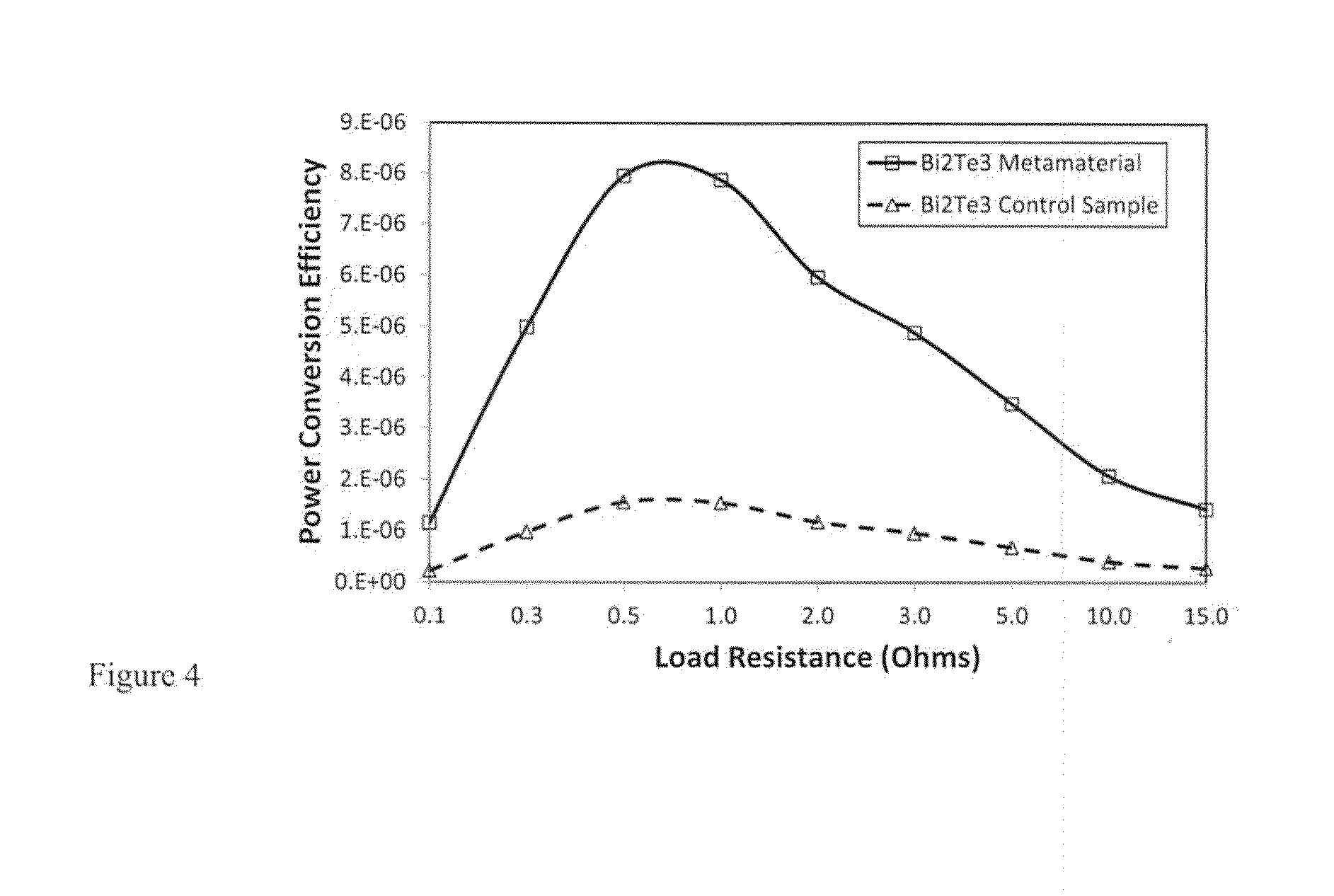
- The development of thermoelectric metamaterials with selectively arranged component materials, such as dielectrics, semiconductors, and metals, in specific geometrical configurations to decouple thermal and electrical conductivity, allowing for tunable effective thermal conductivity and maintaining a constant power factor, thereby enhancing the figure of merit and power conversion efficiency.
Manufacturing Constraints for Complex Geometric Structures
The manufacturing of complex geometric structures for thermal metamaterials presents significant challenges that directly impact the practical implementation of advanced designs. Traditional manufacturing methods such as machining, casting, and molding are fundamentally limited when dealing with intricate internal architectures, multi-scale features, and non-uniform geometries that characterize high-performance thermal metamaterials. These conventional approaches struggle to achieve the precise dimensional tolerances required for effective thermal manipulation, particularly when dealing with feature sizes approaching the microscale.
Additive manufacturing technologies have emerged as the primary enabler for complex thermal metamaterial geometries, yet they introduce their own set of constraints. Selective laser melting and electron beam melting processes face limitations in minimum feature resolution, typically ranging from 100 to 500 micrometers depending on the material system. Surface roughness inherent to powder-based processes can significantly affect thermal contact resistance and overall performance, requiring post-processing treatments that may compromise delicate geometric features.
Material compatibility represents another critical constraint, as the limited range of materials available for advanced manufacturing processes restricts design flexibility. Many theoretical thermal metamaterial designs assume ideal material properties that may not be achievable with manufactureable materials. The thermal conductivity, mechanical strength, and chemical stability of available materials often force compromises in geometric optimization, leading to performance degradation compared to theoretical predictions.
Support structure requirements in additive manufacturing impose additional geometric limitations, particularly for overhanging features and enclosed cavities common in thermal metamaterial designs. These support structures must be removed post-manufacturing, potentially damaging delicate features or leaving residual material that affects thermal performance. The accessibility for support removal becomes increasingly challenging as geometric complexity increases.
Scale-dependent manufacturing constraints create a hierarchy of limitations across different size ranges. While macro-scale features may be readily manufacturable, achieving consistent quality in micro-scale details remains challenging. This multi-scale manufacturing challenge is particularly relevant for thermal metamaterials that rely on precise geometric relationships across multiple length scales to achieve desired thermal properties.
Quality control and dimensional verification present ongoing challenges for complex geometries, as traditional measurement techniques may be inadequate for internal structures and intricate features. Advanced characterization methods such as micro-CT scanning are required but may not provide sufficient resolution for the smallest features critical to thermal performance.
Additive manufacturing technologies have emerged as the primary enabler for complex thermal metamaterial geometries, yet they introduce their own set of constraints. Selective laser melting and electron beam melting processes face limitations in minimum feature resolution, typically ranging from 100 to 500 micrometers depending on the material system. Surface roughness inherent to powder-based processes can significantly affect thermal contact resistance and overall performance, requiring post-processing treatments that may compromise delicate geometric features.
Material compatibility represents another critical constraint, as the limited range of materials available for advanced manufacturing processes restricts design flexibility. Many theoretical thermal metamaterial designs assume ideal material properties that may not be achievable with manufactureable materials. The thermal conductivity, mechanical strength, and chemical stability of available materials often force compromises in geometric optimization, leading to performance degradation compared to theoretical predictions.
Support structure requirements in additive manufacturing impose additional geometric limitations, particularly for overhanging features and enclosed cavities common in thermal metamaterial designs. These support structures must be removed post-manufacturing, potentially damaging delicate features or leaving residual material that affects thermal performance. The accessibility for support removal becomes increasingly challenging as geometric complexity increases.
Scale-dependent manufacturing constraints create a hierarchy of limitations across different size ranges. While macro-scale features may be readily manufacturable, achieving consistent quality in micro-scale details remains challenging. This multi-scale manufacturing challenge is particularly relevant for thermal metamaterials that rely on precise geometric relationships across multiple length scales to achieve desired thermal properties.
Quality control and dimensional verification present ongoing challenges for complex geometries, as traditional measurement techniques may be inadequate for internal structures and intricate features. Advanced characterization methods such as micro-CT scanning are required but may not provide sufficient resolution for the smallest features critical to thermal performance.
Computational Design Tools for Metamaterial Geometry Optimization
The development of computational design tools has revolutionized the optimization of metamaterial geometries, enabling researchers to explore complex structural configurations that were previously impossible to analyze through traditional methods. These sophisticated software platforms integrate advanced algorithms with physics-based simulations to predict and enhance thermal metamaterial performance across multiple design parameters simultaneously.
Modern computational frameworks leverage topology optimization algorithms that systematically modify material distribution within defined design domains. These tools employ gradient-based optimization methods, genetic algorithms, and machine learning approaches to identify optimal geometric configurations that maximize thermal manipulation efficiency. The integration of multi-objective optimization capabilities allows designers to balance competing requirements such as thermal conductivity control, mechanical stability, and manufacturing feasibility.
Finite element analysis software specifically adapted for metamaterial design incorporates specialized solvers for heat transfer equations and phonon transport phenomena. These platforms enable real-time visualization of thermal field distributions and provide quantitative metrics for evaluating design performance. Advanced meshing algorithms accommodate the complex geometries typical of metamaterial structures, ensuring accurate simulation results even for intricate lattice configurations and hierarchical designs.
Machine learning integration represents a significant advancement in computational design tools, with neural networks trained on extensive datasets of geometry-performance relationships. These AI-enhanced platforms can predict thermal properties of novel configurations without requiring full simulations, dramatically accelerating the design iteration process. Deep learning models have demonstrated particular effectiveness in identifying non-intuitive geometric patterns that yield superior thermal manipulation capabilities.
Parametric design environments enable systematic exploration of design spaces through automated geometry generation and performance evaluation. These tools support multi-scale optimization, simultaneously considering unit cell geometry, lattice arrangement, and overall metamaterial architecture. Cloud-based computational resources have made high-performance optimization accessible to broader research communities, facilitating collaborative development of increasingly sophisticated thermal metamaterial designs.
Modern computational frameworks leverage topology optimization algorithms that systematically modify material distribution within defined design domains. These tools employ gradient-based optimization methods, genetic algorithms, and machine learning approaches to identify optimal geometric configurations that maximize thermal manipulation efficiency. The integration of multi-objective optimization capabilities allows designers to balance competing requirements such as thermal conductivity control, mechanical stability, and manufacturing feasibility.
Finite element analysis software specifically adapted for metamaterial design incorporates specialized solvers for heat transfer equations and phonon transport phenomena. These platforms enable real-time visualization of thermal field distributions and provide quantitative metrics for evaluating design performance. Advanced meshing algorithms accommodate the complex geometries typical of metamaterial structures, ensuring accurate simulation results even for intricate lattice configurations and hierarchical designs.
Machine learning integration represents a significant advancement in computational design tools, with neural networks trained on extensive datasets of geometry-performance relationships. These AI-enhanced platforms can predict thermal properties of novel configurations without requiring full simulations, dramatically accelerating the design iteration process. Deep learning models have demonstrated particular effectiveness in identifying non-intuitive geometric patterns that yield superior thermal manipulation capabilities.
Parametric design environments enable systematic exploration of design spaces through automated geometry generation and performance evaluation. These tools support multi-scale optimization, simultaneously considering unit cell geometry, lattice arrangement, and overall metamaterial architecture. Cloud-based computational resources have made high-performance optimization accessible to broader research communities, facilitating collaborative development of increasingly sophisticated thermal metamaterial designs.
Unlock deeper insights with PatSnap Eureka Quick Research — get a full tech report to explore trends and direct your research. Try now!
Generate Your Research Report Instantly with AI Agent
Supercharge your innovation with PatSnap Eureka AI Agent Platform!