

Quantify Heat Transfer Efficiency in Active Thermal Metamaterials
APR 29, 20269 MIN READ
Generate Your Research Report Instantly with AI Agent
PatSnap Eureka helps you evaluate technical feasibility & market potential.
Active Thermal Metamaterials Background and Heat Transfer Goals
Active thermal metamaterials represent a revolutionary advancement in thermal management technology, emerging from the convergence of metamaterial science and active thermal control systems. These engineered structures possess the unique capability to dynamically manipulate heat flow through external stimuli, transcending the limitations of passive thermal materials. Unlike conventional thermal management solutions that rely on static material properties, active thermal metamaterials can adaptively modify their thermal conductivity, heat capacity, and thermal diffusivity in real-time.
The development of active thermal metamaterials has been driven by the increasing demand for precise thermal control in advanced applications ranging from electronics cooling to energy harvesting systems. Traditional thermal management approaches often struggle with dynamic thermal loads and varying environmental conditions, creating a critical need for materials that can respond intelligently to changing thermal requirements.
The fundamental principle underlying active thermal metamaterials lies in their ability to switch between different thermal states through various activation mechanisms. These mechanisms include electrical stimulation, magnetic field application, mechanical deformation, or chemical reactions. The metamaterial structure typically consists of unit cells containing phase-change materials, shape-memory alloys, or other responsive elements that can alter the material's thermal properties upon activation.
Current research focuses on achieving unprecedented levels of thermal control, with goals extending beyond simple on-off switching to continuous modulation of thermal properties. The primary objective involves developing materials capable of achieving thermal conductivity ratios exceeding 100:1 between active and inactive states, while maintaining rapid response times typically under one second.
Heat transfer efficiency quantification in these systems presents unique challenges due to the dynamic nature of the materials. Traditional steady-state thermal analysis methods prove inadequate for characterizing materials whose properties change continuously. The goals encompass developing comprehensive metrics that capture both the magnitude of thermal property modulation and the temporal characteristics of the switching process.
Key performance targets include achieving directional thermal conductivity control, enabling heat flow steering, and implementing thermal cloaking capabilities. Advanced applications aim for spatially programmable thermal properties, where different regions of the same material can exhibit distinct thermal behaviors simultaneously. These ambitious goals require sophisticated control systems and precise characterization methodologies to validate performance claims and optimize material designs for specific applications.
The development of active thermal metamaterials has been driven by the increasing demand for precise thermal control in advanced applications ranging from electronics cooling to energy harvesting systems. Traditional thermal management approaches often struggle with dynamic thermal loads and varying environmental conditions, creating a critical need for materials that can respond intelligently to changing thermal requirements.
The fundamental principle underlying active thermal metamaterials lies in their ability to switch between different thermal states through various activation mechanisms. These mechanisms include electrical stimulation, magnetic field application, mechanical deformation, or chemical reactions. The metamaterial structure typically consists of unit cells containing phase-change materials, shape-memory alloys, or other responsive elements that can alter the material's thermal properties upon activation.
Current research focuses on achieving unprecedented levels of thermal control, with goals extending beyond simple on-off switching to continuous modulation of thermal properties. The primary objective involves developing materials capable of achieving thermal conductivity ratios exceeding 100:1 between active and inactive states, while maintaining rapid response times typically under one second.
Heat transfer efficiency quantification in these systems presents unique challenges due to the dynamic nature of the materials. Traditional steady-state thermal analysis methods prove inadequate for characterizing materials whose properties change continuously. The goals encompass developing comprehensive metrics that capture both the magnitude of thermal property modulation and the temporal characteristics of the switching process.
Key performance targets include achieving directional thermal conductivity control, enabling heat flow steering, and implementing thermal cloaking capabilities. Advanced applications aim for spatially programmable thermal properties, where different regions of the same material can exhibit distinct thermal behaviors simultaneously. These ambitious goals require sophisticated control systems and precise characterization methodologies to validate performance claims and optimize material designs for specific applications.
Market Demand for Advanced Thermal Management Solutions
The global thermal management market is experiencing unprecedented growth driven by the increasing complexity and miniaturization of electronic devices across multiple industries. Data centers, which consume substantial energy for cooling operations, represent a critical application area where advanced thermal management solutions can deliver significant operational cost reductions and energy efficiency improvements. The semiconductor industry faces mounting pressure to address thermal challenges as chip densities continue to increase, creating demand for innovative heat dissipation technologies.
Electric vehicle manufacturers are actively seeking advanced thermal management systems to optimize battery performance and extend operational lifespan. The aerospace and defense sectors require lightweight, high-performance thermal solutions for mission-critical applications where traditional cooling methods prove inadequate. Consumer electronics manufacturers face the dual challenge of managing heat generation while maintaining compact form factors and aesthetic appeal.
Active thermal metamaterials present a transformative opportunity to address these market needs through programmable thermal properties and dynamic heat transfer control. Unlike passive thermal management solutions, these materials can adapt their thermal conductivity in real-time, enabling precise temperature regulation and energy optimization. The ability to quantify heat transfer efficiency in these materials directly addresses industry requirements for predictable, measurable thermal performance.
The renewable energy sector, particularly solar panel and wind turbine applications, demonstrates growing interest in adaptive thermal management systems that can respond to varying environmental conditions. Industrial manufacturing processes requiring precise temperature control represent another significant market segment where quantifiable thermal efficiency improvements translate directly to production quality and cost savings.
Market research indicates strong demand for thermal management solutions that offer both high performance and energy efficiency. The convergence of Internet of Things technologies with thermal management creates opportunities for smart, responsive systems that can optimize performance based on real-time conditions. Active thermal metamaterials with quantifiable heat transfer characteristics position themselves as enabling technologies for next-generation thermal management applications across these diverse market segments.
Electric vehicle manufacturers are actively seeking advanced thermal management systems to optimize battery performance and extend operational lifespan. The aerospace and defense sectors require lightweight, high-performance thermal solutions for mission-critical applications where traditional cooling methods prove inadequate. Consumer electronics manufacturers face the dual challenge of managing heat generation while maintaining compact form factors and aesthetic appeal.
Active thermal metamaterials present a transformative opportunity to address these market needs through programmable thermal properties and dynamic heat transfer control. Unlike passive thermal management solutions, these materials can adapt their thermal conductivity in real-time, enabling precise temperature regulation and energy optimization. The ability to quantify heat transfer efficiency in these materials directly addresses industry requirements for predictable, measurable thermal performance.
The renewable energy sector, particularly solar panel and wind turbine applications, demonstrates growing interest in adaptive thermal management systems that can respond to varying environmental conditions. Industrial manufacturing processes requiring precise temperature control represent another significant market segment where quantifiable thermal efficiency improvements translate directly to production quality and cost savings.
Market research indicates strong demand for thermal management solutions that offer both high performance and energy efficiency. The convergence of Internet of Things technologies with thermal management creates opportunities for smart, responsive systems that can optimize performance based on real-time conditions. Active thermal metamaterials with quantifiable heat transfer characteristics position themselves as enabling technologies for next-generation thermal management applications across these diverse market segments.
Current State and Challenges in Thermal Metamaterial Quantification
The quantification of heat transfer efficiency in active thermal metamaterials represents a rapidly evolving field that has gained significant momentum over the past decade. Current research efforts primarily focus on developing standardized measurement protocols and establishing reliable metrics for evaluating thermal performance. However, the field faces substantial challenges in creating universally accepted quantification frameworks that can accurately capture the complex thermal behaviors exhibited by these engineered materials.
Existing quantification approaches predominantly rely on traditional thermal characterization methods, including steady-state thermal conductivity measurements, transient thermal analysis, and infrared thermography. These conventional techniques often prove inadequate for capturing the dynamic and tunable nature of active thermal metamaterials, which can exhibit time-dependent thermal properties and spatially varying heat transfer characteristics. The limitation becomes particularly pronounced when attempting to quantify materials with programmable thermal responses or those incorporating active control elements.
A major technical challenge lies in the development of real-time measurement capabilities that can track rapid changes in thermal properties. Current instrumentation typically operates on timescales that may not align with the response times of active thermal metamaterials, creating gaps in understanding their true performance characteristics. Additionally, the heterogeneous nature of metamaterial structures introduces complexity in defining representative measurement volumes and establishing appropriate boundary conditions for thermal testing.
The standardization of performance metrics remains another critical challenge. While traditional materials can be characterized using well-established parameters such as thermal conductivity and thermal diffusivity, active thermal metamaterials require new metrics that account for their adaptive capabilities, switching speeds, and energy consumption during operation. The absence of industry-wide standards hampers comparative analysis between different metamaterial designs and impedes technology transfer from research laboratories to practical applications.
Computational modeling approaches face their own set of limitations in accurately predicting thermal performance. Current simulation tools often struggle to capture the multiphysics interactions present in active thermal metamaterials, particularly when mechanical actuation, electrical control, or phase change mechanisms are involved. The computational complexity increases exponentially when attempting to model large-scale metamaterial arrays with individual element control, making comprehensive performance prediction computationally prohibitive.
Furthermore, the integration of sensing and feedback systems necessary for quantifying real-time performance introduces additional technical hurdles. The placement of temperature sensors within metamaterial structures can disrupt thermal pathways and alter the very properties being measured, creating measurement artifacts that compromise data accuracy.
Existing quantification approaches predominantly rely on traditional thermal characterization methods, including steady-state thermal conductivity measurements, transient thermal analysis, and infrared thermography. These conventional techniques often prove inadequate for capturing the dynamic and tunable nature of active thermal metamaterials, which can exhibit time-dependent thermal properties and spatially varying heat transfer characteristics. The limitation becomes particularly pronounced when attempting to quantify materials with programmable thermal responses or those incorporating active control elements.
A major technical challenge lies in the development of real-time measurement capabilities that can track rapid changes in thermal properties. Current instrumentation typically operates on timescales that may not align with the response times of active thermal metamaterials, creating gaps in understanding their true performance characteristics. Additionally, the heterogeneous nature of metamaterial structures introduces complexity in defining representative measurement volumes and establishing appropriate boundary conditions for thermal testing.
The standardization of performance metrics remains another critical challenge. While traditional materials can be characterized using well-established parameters such as thermal conductivity and thermal diffusivity, active thermal metamaterials require new metrics that account for their adaptive capabilities, switching speeds, and energy consumption during operation. The absence of industry-wide standards hampers comparative analysis between different metamaterial designs and impedes technology transfer from research laboratories to practical applications.
Computational modeling approaches face their own set of limitations in accurately predicting thermal performance. Current simulation tools often struggle to capture the multiphysics interactions present in active thermal metamaterials, particularly when mechanical actuation, electrical control, or phase change mechanisms are involved. The computational complexity increases exponentially when attempting to model large-scale metamaterial arrays with individual element control, making comprehensive performance prediction computationally prohibitive.
Furthermore, the integration of sensing and feedback systems necessary for quantifying real-time performance introduces additional technical hurdles. The placement of temperature sensors within metamaterial structures can disrupt thermal pathways and alter the very properties being measured, creating measurement artifacts that compromise data accuracy.
Existing Methods for Heat Transfer Efficiency Measurement
01 Metamaterial structure design for enhanced thermal conductivity
Advanced metamaterial structures with engineered periodic arrangements and geometric configurations can significantly enhance thermal conductivity and heat transfer efficiency. These structures utilize specific lattice designs, unit cell arrangements, and material distribution patterns to create optimized thermal pathways that exceed conventional material limitations.- Metamaterial structure design for enhanced thermal conductivity: Advanced metamaterial structures with engineered periodic arrangements and geometric configurations can significantly enhance thermal conductivity and heat transfer efficiency. These structures utilize specific lattice designs, unit cell arrangements, and material distributions to create optimized thermal pathways that exceed conventional material limitations.
- Active control mechanisms for thermal property modulation: Implementation of active control systems that can dynamically adjust thermal properties through external stimuli such as electric fields, magnetic fields, or mechanical actuation. These mechanisms enable real-time optimization of heat transfer characteristics and thermal conductivity based on operational requirements.
- Phase change materials integration in metamaterial systems: Incorporation of phase change materials within metamaterial frameworks to enhance thermal energy storage and transfer capabilities. This approach leverages latent heat effects and thermal switching properties to achieve superior heat management performance in various temperature ranges.
- Composite material architectures for thermal enhancement: Development of composite metamaterial architectures that combine multiple materials with complementary thermal properties to achieve enhanced overall heat transfer efficiency. These systems utilize material property gradients and interfacial engineering to optimize thermal performance.
- Thermal interface optimization and surface engineering: Advanced surface engineering techniques and thermal interface optimization methods that improve heat transfer at material boundaries and contact surfaces. These approaches focus on reducing thermal resistance and enhancing heat flux through engineered surface topographies and interface materials.
02 Active control mechanisms for thermal metamaterials
Implementation of active control systems enables dynamic modulation of thermal properties in metamaterials. These mechanisms include external field applications, phase change materials integration, and responsive elements that allow real-time adjustment of heat transfer characteristics based on environmental conditions or operational requirements.Expand Specific Solutions03 Multi-scale thermal management optimization
Optimization strategies that operate across multiple length scales from nano to macro levels to maximize heat transfer efficiency. This approach involves hierarchical structuring, surface modification techniques, and interface engineering to minimize thermal resistance and enhance overall system performance.Expand Specific Solutions04 Composite metamaterial thermal enhancement
Development of composite metamaterial systems that combine multiple materials with complementary thermal properties to achieve superior heat transfer performance. These composites leverage synergistic effects between different material phases and engineered interfaces to optimize thermal conductivity pathways.Expand Specific Solutions05 Thermal metamaterial manufacturing and fabrication techniques
Advanced manufacturing processes and fabrication methods specifically designed for creating thermal metamaterials with precise control over structural features and thermal properties. These techniques enable scalable production of complex geometries while maintaining the desired heat transfer enhancement characteristics.Expand Specific Solutions
Key Players in Metamaterials and Thermal Engineering Industry
The active thermal metamaterials field for heat transfer efficiency quantification represents an emerging technology sector in early development stages with significant growth potential. The market remains nascent but shows promising expansion driven by applications across automotive, electronics, and energy sectors. Technology maturity varies considerably among key players, with established corporations like Toyota Motor Corp., ExxonMobil Technology & Engineering Co., and Toshiba Corp. leveraging substantial R&D resources to advance practical applications. Academic institutions including Tsinghua University, Beihang University, and Purdue Research Foundation are pioneering fundamental research breakthroughs. Industrial materials companies such as ArcelorMittal SA and Furukawa Electric Co. are developing manufacturing capabilities, while specialized firms like Exergyn Ltd. and Fractal Heatsink Technologies LLC focus on niche applications. The competitive landscape indicates a technology transition from laboratory research to commercial viability, with diverse stakeholders contributing across the innovation spectrum.
Toyota Motor Corp.
Technical Solution: Toyota has invested in active thermal metamaterials research for automotive thermal management applications, particularly focusing on battery cooling systems and engine heat recovery. Their approach involves developing metamaterial-based heat exchangers with enhanced surface structures that improve heat transfer efficiency while reducing weight and volume. The company has established testing protocols and measurement techniques to quantify thermal performance improvements, including standardized methods for evaluating heat transfer coefficients and thermal resistance characteristics in automotive operating conditions.
Strengths: Strong automotive application focus with practical implementation experience and cost-effective manufacturing processes. Weaknesses: Limited scope beyond automotive applications and conservative approach to radical metamaterial innovations.
Honeywell International Technologies Ltd.
Technical Solution: Honeywell has developed active thermal metamaterials for aerospace and industrial applications, focusing on adaptive thermal management systems that respond to changing environmental conditions. Their technology incorporates smart materials with controllable thermal properties, enabling real-time optimization of heat transfer efficiency. The company's approach includes sophisticated measurement and control systems that continuously monitor thermal performance parameters, allowing for precise quantification of heat transfer rates and thermal conductivity variations in complex operating environments such as aircraft engines and industrial processing equipment.
Strengths: Extensive experience in harsh environment applications and robust control systems integration. Weaknesses: High development costs and complex system requirements may limit widespread adoption.
Core Innovations in Active Thermal Metamaterial Design
Thermal metamaterials for directional emission in heat transfer systems
PatentActiveUS20240142184A1
Innovation
- The use of thermal metamaterials in the form of grating structures on the outer surface of emitter devices, which are engineered to direct heat in specific angles and directions to multiple receiver devices, enhancing efficiency and reducing design complexity by steering thermal radiation to desired locations.


Enhanced Power Conversion Efficiency from Thermoelectric Metamaterials
PatentInactiveUS20160181498A1
Innovation
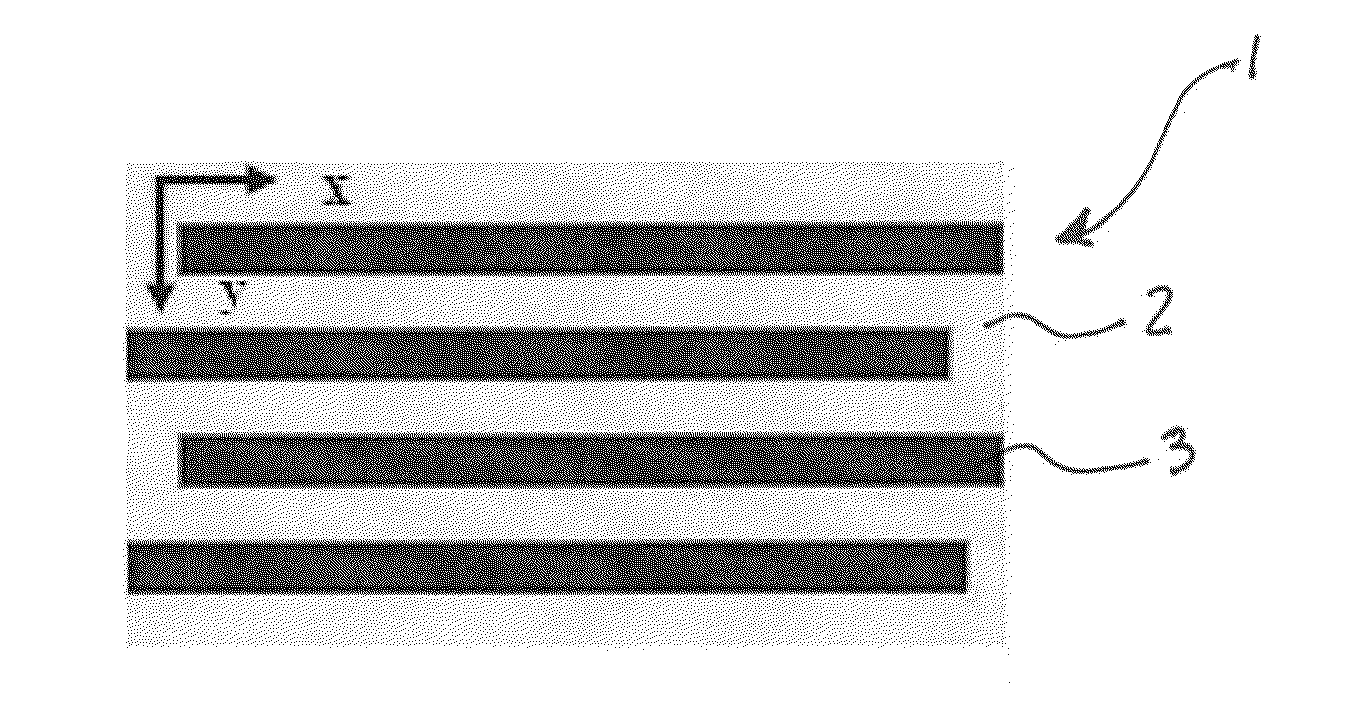
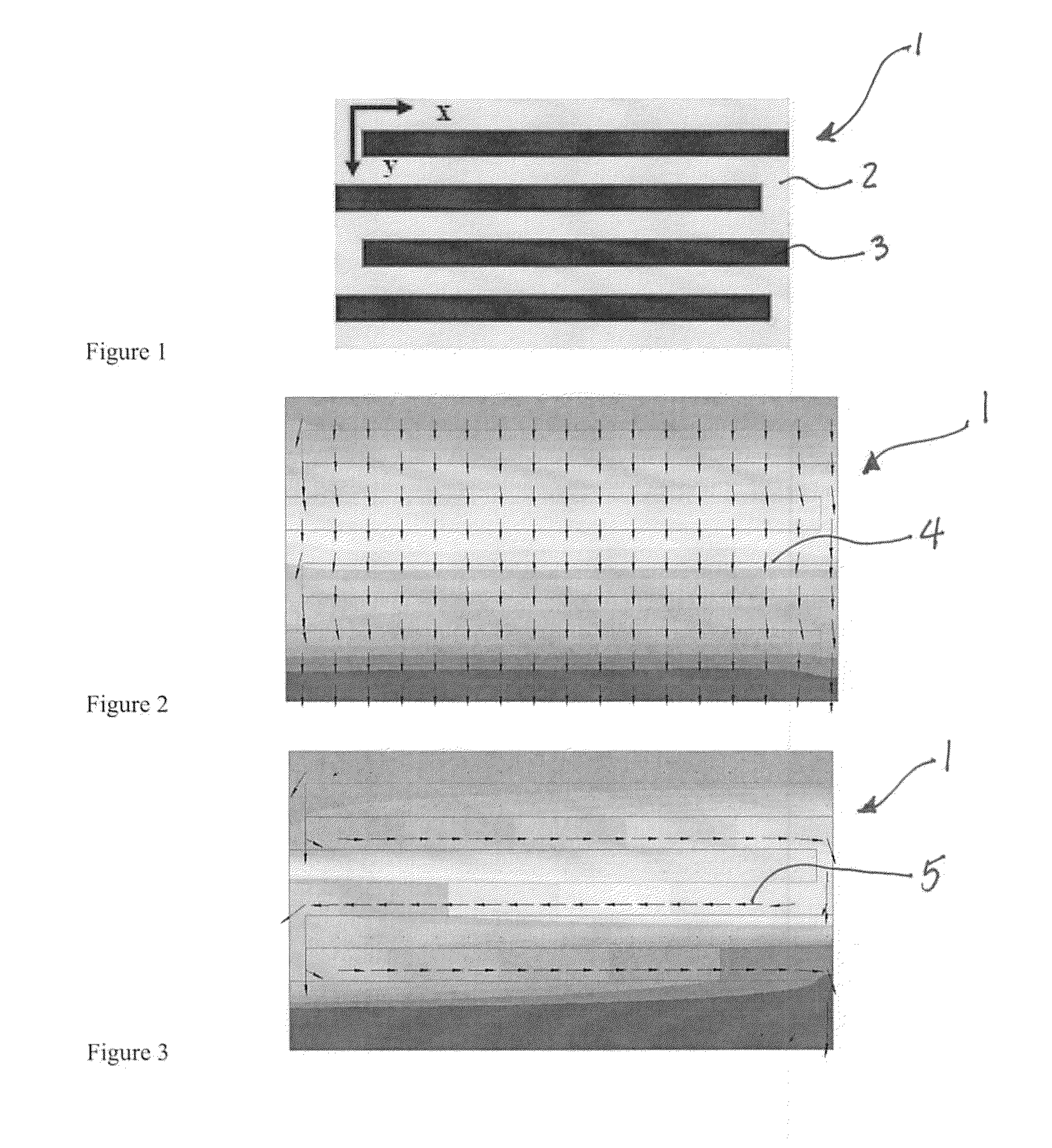
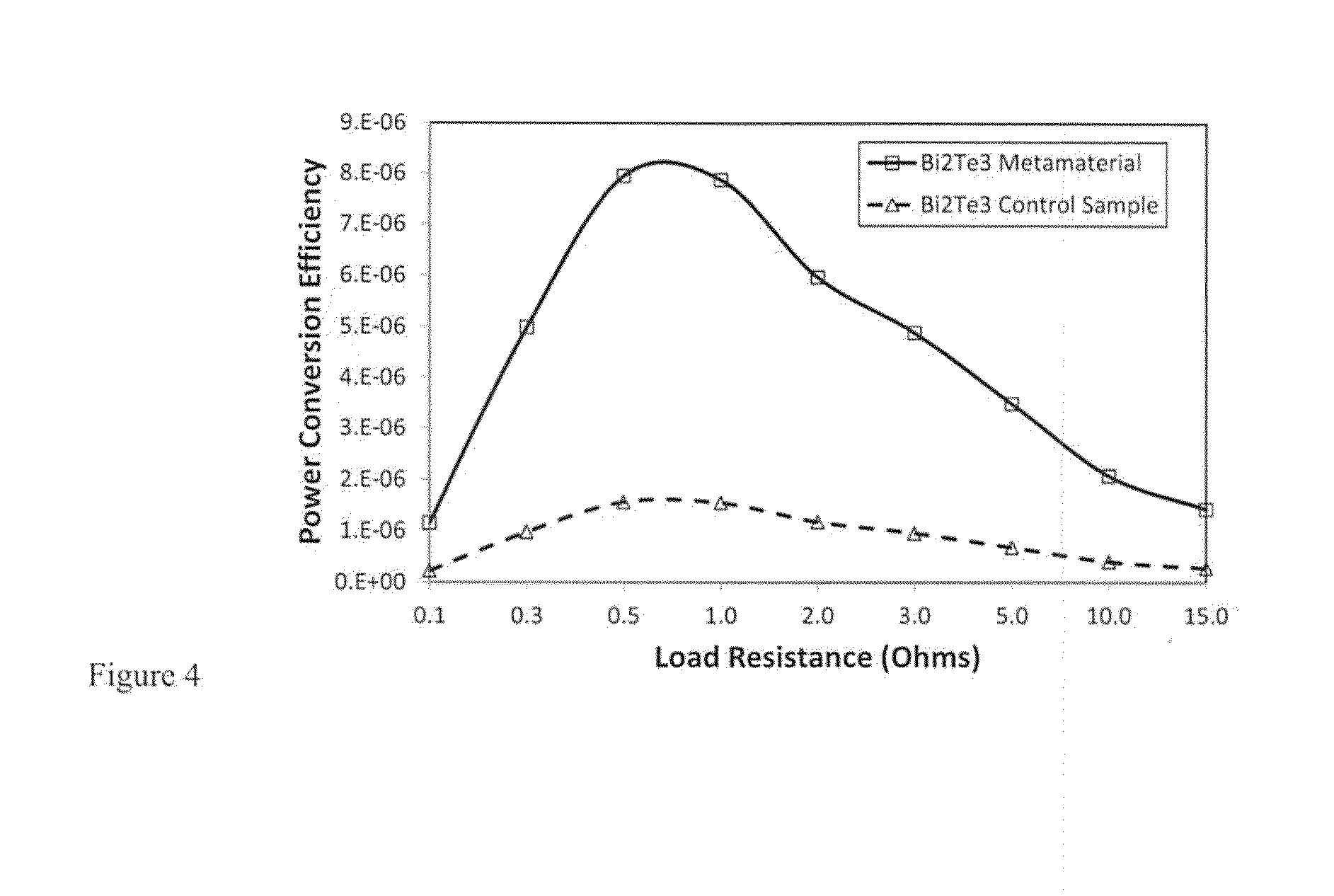
- The development of thermoelectric metamaterials with selectively arranged component materials, such as dielectrics, semiconductors, and metals, in specific geometrical configurations to decouple thermal and electrical conductivity, allowing for tunable effective thermal conductivity and maintaining a constant power factor, thereby enhancing the figure of merit and power conversion efficiency.
Standardization Framework for Thermal Metamaterial Testing
The establishment of a comprehensive standardization framework for thermal metamaterial testing represents a critical need in advancing the field of active thermal metamaterials and their heat transfer efficiency quantification. Currently, the absence of unified testing protocols creates significant barriers to meaningful comparison of research results across different institutions and commercial applications.
International standardization bodies including ISO, ASTM, and IEEE have begun preliminary discussions on thermal metamaterial characterization standards. The proposed framework encompasses multiple testing domains: thermal conductivity measurement protocols, dynamic thermal response evaluation, and active control system performance metrics. These standards must address the unique challenges posed by metamaterials' anisotropic properties and their ability to dynamically modulate thermal behavior.
Key measurement parameters requiring standardization include effective thermal conductivity tensors, thermal diffusivity under various activation states, and response time characteristics for active switching mechanisms. The framework must also establish protocols for environmental testing conditions, including temperature ranges, humidity levels, and electromagnetic interference considerations that could affect active control systems.
Sample preparation and geometric specifications present another critical standardization area. The framework should define minimum sample dimensions, surface finish requirements, and mounting procedures to ensure reproducible measurements. Given the often complex internal structures of thermal metamaterials, non-destructive characterization methods must also be standardized to verify structural integrity before and after testing.
Calibration procedures for specialized measurement equipment represent an essential component of the standardization framework. This includes protocols for thermal imaging systems, specialized heat flux sensors, and dynamic thermal property measurement apparatus. The framework must establish traceability chains to national measurement standards and define uncertainty quantification methods specific to metamaterial testing.
The proposed standardization framework should incorporate both steady-state and transient measurement protocols, recognizing that active thermal metamaterials exhibit time-dependent behavior. This includes establishing standard test sequences for evaluating switching speeds, thermal memory effects, and long-term stability under repeated activation cycles.
International standardization bodies including ISO, ASTM, and IEEE have begun preliminary discussions on thermal metamaterial characterization standards. The proposed framework encompasses multiple testing domains: thermal conductivity measurement protocols, dynamic thermal response evaluation, and active control system performance metrics. These standards must address the unique challenges posed by metamaterials' anisotropic properties and their ability to dynamically modulate thermal behavior.
Key measurement parameters requiring standardization include effective thermal conductivity tensors, thermal diffusivity under various activation states, and response time characteristics for active switching mechanisms. The framework must also establish protocols for environmental testing conditions, including temperature ranges, humidity levels, and electromagnetic interference considerations that could affect active control systems.
Sample preparation and geometric specifications present another critical standardization area. The framework should define minimum sample dimensions, surface finish requirements, and mounting procedures to ensure reproducible measurements. Given the often complex internal structures of thermal metamaterials, non-destructive characterization methods must also be standardized to verify structural integrity before and after testing.
Calibration procedures for specialized measurement equipment represent an essential component of the standardization framework. This includes protocols for thermal imaging systems, specialized heat flux sensors, and dynamic thermal property measurement apparatus. The framework must establish traceability chains to national measurement standards and define uncertainty quantification methods specific to metamaterial testing.
The proposed standardization framework should incorporate both steady-state and transient measurement protocols, recognizing that active thermal metamaterials exhibit time-dependent behavior. This includes establishing standard test sequences for evaluating switching speeds, thermal memory effects, and long-term stability under repeated activation cycles.
Energy Efficiency Standards and Environmental Impact Assessment
The development of active thermal metamaterials for enhanced heat transfer efficiency must align with evolving energy efficiency standards across multiple jurisdictions. Current international frameworks, including ISO 50001 energy management systems and ASHRAE 90.1 building energy codes, are beginning to incorporate advanced thermal management technologies. These standards typically require minimum coefficient of performance (COP) values and thermal conductivity benchmarks that active thermal metamaterials must exceed to gain regulatory approval.
Emerging energy efficiency regulations specifically target dynamic thermal systems, establishing performance thresholds for adaptive heat transfer materials. The European Union's Energy Efficiency Directive 2012/27/EU and its amendments increasingly recognize metamaterial-based solutions, requiring quantifiable improvements of at least 15-20% over conventional thermal management systems. Similarly, the U.S. Department of Energy's Advanced Manufacturing Office has established preliminary guidelines for metamaterial thermal devices, mandating comprehensive efficiency documentation and standardized testing protocols.
Environmental impact assessment frameworks for active thermal metamaterials encompass multiple sustainability dimensions. Life cycle assessment (LCA) methodologies, following ISO 14040 standards, evaluate material extraction, manufacturing processes, operational energy consumption, and end-of-life disposal impacts. The carbon footprint analysis reveals that while metamaterial production may initially require energy-intensive fabrication processes, the operational efficiency gains typically result in net positive environmental benefits within 2-3 years of deployment.
Regulatory bodies increasingly demand comprehensive environmental documentation, including embodied energy calculations, recyclability assessments, and toxicity evaluations of constituent materials. The REACH regulation in Europe and similar chemical safety frameworks globally scrutinize novel metamaterial compositions, particularly those incorporating rare earth elements or engineered nanostructures. Environmental impact assessments must demonstrate that enhanced thermal performance justifies any potential ecological concerns associated with advanced material synthesis.
Sustainability metrics for active thermal metamaterials include energy payback time, global warming potential reduction, and resource depletion indicators. Current assessments suggest that optimized metamaterial systems can achieve 25-40% reductions in overall energy consumption compared to traditional thermal management approaches, while maintaining compliance with increasingly stringent environmental protection standards across major markets.
Emerging energy efficiency regulations specifically target dynamic thermal systems, establishing performance thresholds for adaptive heat transfer materials. The European Union's Energy Efficiency Directive 2012/27/EU and its amendments increasingly recognize metamaterial-based solutions, requiring quantifiable improvements of at least 15-20% over conventional thermal management systems. Similarly, the U.S. Department of Energy's Advanced Manufacturing Office has established preliminary guidelines for metamaterial thermal devices, mandating comprehensive efficiency documentation and standardized testing protocols.
Environmental impact assessment frameworks for active thermal metamaterials encompass multiple sustainability dimensions. Life cycle assessment (LCA) methodologies, following ISO 14040 standards, evaluate material extraction, manufacturing processes, operational energy consumption, and end-of-life disposal impacts. The carbon footprint analysis reveals that while metamaterial production may initially require energy-intensive fabrication processes, the operational efficiency gains typically result in net positive environmental benefits within 2-3 years of deployment.
Regulatory bodies increasingly demand comprehensive environmental documentation, including embodied energy calculations, recyclability assessments, and toxicity evaluations of constituent materials. The REACH regulation in Europe and similar chemical safety frameworks globally scrutinize novel metamaterial compositions, particularly those incorporating rare earth elements or engineered nanostructures. Environmental impact assessments must demonstrate that enhanced thermal performance justifies any potential ecological concerns associated with advanced material synthesis.
Sustainability metrics for active thermal metamaterials include energy payback time, global warming potential reduction, and resource depletion indicators. Current assessments suggest that optimized metamaterial systems can achieve 25-40% reductions in overall energy consumption compared to traditional thermal management approaches, while maintaining compliance with increasingly stringent environmental protection standards across major markets.
Unlock deeper insights with PatSnap Eureka Quick Research — get a full tech report to explore trends and direct your research. Try now!
Generate Your Research Report Instantly with AI Agent
Supercharge your innovation with PatSnap Eureka AI Agent Platform!