How Blade Battery Innovations Stimulate Policy Changes
AUG 7, 202510 MIN READ
Generate Your Research Report Instantly with AI Agent
PatSnap Eureka helps you evaluate technical feasibility & market potential.
Blade Battery Background and Objectives
The blade battery, a revolutionary innovation in lithium-ion battery technology, has emerged as a game-changer in the electric vehicle (EV) industry. Developed by BYD, a leading Chinese automotive manufacturer, the blade battery represents a significant leap forward in addressing key challenges faced by traditional lithium-ion batteries, particularly in terms of safety, energy density, and cost-effectiveness.
The primary objective of the blade battery technology is to enhance the safety of electric vehicles while simultaneously improving their performance and affordability. This innovative battery design aims to mitigate the risk of thermal runaway, a critical safety concern in conventional lithium-ion batteries that can lead to fires or explosions. By utilizing lithium iron phosphate (LFP) chemistry and a unique structural design, the blade battery significantly reduces the likelihood of such incidents, thereby increasing consumer confidence in EV adoption.
The development of the blade battery can be traced back to the early 2010s when BYD began exploring alternative battery technologies to overcome the limitations of existing lithium-ion batteries. The company's research focused on improving safety, energy density, and production efficiency. After years of intensive research and development, BYD unveiled the blade battery in 2020, marking a pivotal moment in the evolution of EV battery technology.
From a technical perspective, the blade battery's innovative design involves long, thin cells that are arranged in a parallel configuration, resembling a blade. This structure allows for more efficient space utilization within the battery pack, resulting in higher energy density and improved thermal management. The use of LFP chemistry further enhances safety and longevity, albeit at the expense of some energy density compared to other lithium-ion chemistries.
The introduction of the blade battery has sparked a renewed interest in LFP batteries, which had previously been overshadowed by nickel-based chemistries due to their higher energy density. This shift in focus has prompted other manufacturers to explore similar technologies, potentially reshaping the competitive landscape of the EV battery market.
As the blade battery gains traction, it is expected to drive significant changes in EV design and manufacturing processes. The technology's emphasis on safety and cost-effectiveness aligns well with growing consumer demands and regulatory requirements for safer, more affordable electric vehicles. This alignment positions the blade battery as a catalyst for policy changes in the automotive industry, particularly in areas related to battery safety standards and EV adoption incentives.
Looking ahead, the blade battery technology is poised to play a crucial role in accelerating the global transition to electric mobility. Its potential to address key barriers to EV adoption, such as safety concerns and high costs, makes it a compelling solution for both manufacturers and consumers. As research and development in this field continue, further improvements in energy density and manufacturing efficiency are anticipated, potentially leading to even more significant advancements in EV technology and policy frameworks.
The primary objective of the blade battery technology is to enhance the safety of electric vehicles while simultaneously improving their performance and affordability. This innovative battery design aims to mitigate the risk of thermal runaway, a critical safety concern in conventional lithium-ion batteries that can lead to fires or explosions. By utilizing lithium iron phosphate (LFP) chemistry and a unique structural design, the blade battery significantly reduces the likelihood of such incidents, thereby increasing consumer confidence in EV adoption.
The development of the blade battery can be traced back to the early 2010s when BYD began exploring alternative battery technologies to overcome the limitations of existing lithium-ion batteries. The company's research focused on improving safety, energy density, and production efficiency. After years of intensive research and development, BYD unveiled the blade battery in 2020, marking a pivotal moment in the evolution of EV battery technology.
From a technical perspective, the blade battery's innovative design involves long, thin cells that are arranged in a parallel configuration, resembling a blade. This structure allows for more efficient space utilization within the battery pack, resulting in higher energy density and improved thermal management. The use of LFP chemistry further enhances safety and longevity, albeit at the expense of some energy density compared to other lithium-ion chemistries.
The introduction of the blade battery has sparked a renewed interest in LFP batteries, which had previously been overshadowed by nickel-based chemistries due to their higher energy density. This shift in focus has prompted other manufacturers to explore similar technologies, potentially reshaping the competitive landscape of the EV battery market.
As the blade battery gains traction, it is expected to drive significant changes in EV design and manufacturing processes. The technology's emphasis on safety and cost-effectiveness aligns well with growing consumer demands and regulatory requirements for safer, more affordable electric vehicles. This alignment positions the blade battery as a catalyst for policy changes in the automotive industry, particularly in areas related to battery safety standards and EV adoption incentives.
Looking ahead, the blade battery technology is poised to play a crucial role in accelerating the global transition to electric mobility. Its potential to address key barriers to EV adoption, such as safety concerns and high costs, makes it a compelling solution for both manufacturers and consumers. As research and development in this field continue, further improvements in energy density and manufacturing efficiency are anticipated, potentially leading to even more significant advancements in EV technology and policy frameworks.
Market Demand Analysis for Blade Batteries
The market demand for blade batteries has been experiencing significant growth, driven by the rapid expansion of the electric vehicle (EV) industry and increasing concerns about battery safety. As a key innovation in lithium-ion battery technology, blade batteries offer improved safety, energy density, and longevity compared to traditional battery designs. This has led to a surge in demand from automakers and energy storage system manufacturers.
The global EV market, which is the primary driver for blade battery demand, is projected to grow at a compound annual growth rate (CAGR) of over 20% in the coming years. This growth is fueled by government incentives, stricter emissions regulations, and increasing consumer acceptance of electric vehicles. As blade batteries address many of the safety concerns associated with conventional lithium-ion batteries, they are becoming increasingly attractive to EV manufacturers looking to enhance the safety and performance of their vehicles.
In addition to the automotive sector, the energy storage market is also contributing to the rising demand for blade batteries. Grid-scale energy storage systems and residential battery solutions are adopting blade battery technology due to its improved safety profile and higher energy density. This market segment is expected to grow substantially as countries invest in renewable energy infrastructure and seek to improve grid stability.
The demand for blade batteries is not limited to developed markets. Emerging economies, particularly in Asia and South America, are showing increased interest in electric vehicles and energy storage solutions. This is creating new opportunities for blade battery manufacturers to expand their market reach and establish partnerships with local automotive and energy companies.
However, the market demand for blade batteries is not without challenges. The higher production costs associated with this new technology may initially limit its adoption in price-sensitive market segments. Additionally, the need for specialized manufacturing facilities and processes could create supply chain bottlenecks as demand increases.
Despite these challenges, the overall market outlook for blade batteries remains positive. As production scales up and costs decrease, blade batteries are expected to capture an increasing share of the lithium-ion battery market. This trend is likely to accelerate as more automakers and energy storage providers recognize the benefits of this technology and incorporate it into their product lines.
The growing market demand for blade batteries is also stimulating policy changes. Governments and regulatory bodies are taking note of the safety improvements offered by this technology and are considering updates to battery safety standards and certification processes. This could potentially lead to more stringent requirements for battery safety in electric vehicles and energy storage systems, further driving the adoption of blade batteries and similar advanced technologies.
The global EV market, which is the primary driver for blade battery demand, is projected to grow at a compound annual growth rate (CAGR) of over 20% in the coming years. This growth is fueled by government incentives, stricter emissions regulations, and increasing consumer acceptance of electric vehicles. As blade batteries address many of the safety concerns associated with conventional lithium-ion batteries, they are becoming increasingly attractive to EV manufacturers looking to enhance the safety and performance of their vehicles.
In addition to the automotive sector, the energy storage market is also contributing to the rising demand for blade batteries. Grid-scale energy storage systems and residential battery solutions are adopting blade battery technology due to its improved safety profile and higher energy density. This market segment is expected to grow substantially as countries invest in renewable energy infrastructure and seek to improve grid stability.
The demand for blade batteries is not limited to developed markets. Emerging economies, particularly in Asia and South America, are showing increased interest in electric vehicles and energy storage solutions. This is creating new opportunities for blade battery manufacturers to expand their market reach and establish partnerships with local automotive and energy companies.
However, the market demand for blade batteries is not without challenges. The higher production costs associated with this new technology may initially limit its adoption in price-sensitive market segments. Additionally, the need for specialized manufacturing facilities and processes could create supply chain bottlenecks as demand increases.
Despite these challenges, the overall market outlook for blade batteries remains positive. As production scales up and costs decrease, blade batteries are expected to capture an increasing share of the lithium-ion battery market. This trend is likely to accelerate as more automakers and energy storage providers recognize the benefits of this technology and incorporate it into their product lines.
The growing market demand for blade batteries is also stimulating policy changes. Governments and regulatory bodies are taking note of the safety improvements offered by this technology and are considering updates to battery safety standards and certification processes. This could potentially lead to more stringent requirements for battery safety in electric vehicles and energy storage systems, further driving the adoption of blade batteries and similar advanced technologies.
Current State and Challenges of Blade Battery Technology
Blade battery technology has made significant strides in recent years, revolutionizing the electric vehicle (EV) industry. Currently, blade batteries are at the forefront of EV battery innovation, offering improved safety, energy density, and cost-effectiveness. These batteries utilize lithium iron phosphate (LiFePO4) chemistry, which provides enhanced thermal stability and reduced risk of thermal runaway compared to traditional lithium-ion batteries.
The current state of blade battery technology is characterized by rapid advancements in manufacturing processes and material science. Major automakers and battery manufacturers have invested heavily in research and development, resulting in increased production capacity and improved battery performance. Blade batteries now offer energy densities approaching 200 Wh/kg, with some prototypes reaching even higher levels. This progress has enabled EVs to achieve longer driving ranges and faster charging times, addressing key consumer concerns.
Despite these achievements, blade battery technology still faces several challenges. One of the primary obstacles is the need for further improvements in energy density to compete with the latest nickel-rich lithium-ion batteries. While blade batteries excel in safety and longevity, they still lag behind in terms of overall energy storage capacity per unit volume. This limitation can impact vehicle design and performance, particularly for high-end and long-range EV models.
Another significant challenge is the optimization of production processes to reduce costs and increase scalability. Although blade batteries have shown promise in terms of cost-effectiveness, achieving economies of scale remains crucial for widespread adoption. Manufacturers are working to streamline production lines and improve automation to drive down costs and increase output.
The integration of blade batteries into existing vehicle platforms also presents technical hurdles. Automakers must redesign their battery pack architectures and cooling systems to accommodate the unique form factor and thermal characteristics of blade batteries. This adaptation process requires substantial engineering efforts and may slow down the adoption rate in some segments of the automotive industry.
Furthermore, the raw material supply chain for blade batteries poses potential challenges. The increased demand for lithium iron phosphate and other key materials may lead to supply constraints and price volatility. Securing a stable and sustainable supply of these materials is essential for the long-term viability of blade battery technology.
Lastly, standardization and regulatory compliance remain ongoing challenges. As blade battery technology evolves, industry standards and safety regulations must keep pace to ensure consistent quality and performance across different manufacturers and applications. This process requires collaboration between industry stakeholders, regulatory bodies, and policymakers to establish comprehensive guidelines for the production, testing, and implementation of blade batteries in EVs.
The current state of blade battery technology is characterized by rapid advancements in manufacturing processes and material science. Major automakers and battery manufacturers have invested heavily in research and development, resulting in increased production capacity and improved battery performance. Blade batteries now offer energy densities approaching 200 Wh/kg, with some prototypes reaching even higher levels. This progress has enabled EVs to achieve longer driving ranges and faster charging times, addressing key consumer concerns.
Despite these achievements, blade battery technology still faces several challenges. One of the primary obstacles is the need for further improvements in energy density to compete with the latest nickel-rich lithium-ion batteries. While blade batteries excel in safety and longevity, they still lag behind in terms of overall energy storage capacity per unit volume. This limitation can impact vehicle design and performance, particularly for high-end and long-range EV models.
Another significant challenge is the optimization of production processes to reduce costs and increase scalability. Although blade batteries have shown promise in terms of cost-effectiveness, achieving economies of scale remains crucial for widespread adoption. Manufacturers are working to streamline production lines and improve automation to drive down costs and increase output.
The integration of blade batteries into existing vehicle platforms also presents technical hurdles. Automakers must redesign their battery pack architectures and cooling systems to accommodate the unique form factor and thermal characteristics of blade batteries. This adaptation process requires substantial engineering efforts and may slow down the adoption rate in some segments of the automotive industry.
Furthermore, the raw material supply chain for blade batteries poses potential challenges. The increased demand for lithium iron phosphate and other key materials may lead to supply constraints and price volatility. Securing a stable and sustainable supply of these materials is essential for the long-term viability of blade battery technology.
Lastly, standardization and regulatory compliance remain ongoing challenges. As blade battery technology evolves, industry standards and safety regulations must keep pace to ensure consistent quality and performance across different manufacturers and applications. This process requires collaboration between industry stakeholders, regulatory bodies, and policymakers to establish comprehensive guidelines for the production, testing, and implementation of blade batteries in EVs.
Current Blade Battery Solutions
01 Battery management system updates
Policy changes related to blade batteries may involve updates to battery management systems. These updates can include improvements in monitoring, control, and optimization of battery performance and safety. Such systems may incorporate advanced algorithms for better energy distribution and thermal management.- Battery management system updates: Policy changes related to blade batteries may involve updates to battery management systems. These updates can include improvements in monitoring, control, and optimization of battery performance, safety features, and longevity.
- Safety regulations and compliance: Changes in blade battery policies may focus on enhancing safety regulations and ensuring compliance with new standards. This can include modifications to manufacturing processes, storage, transportation, and disposal procedures to mitigate risks associated with blade batteries.
- Energy storage and grid integration: Policy changes may address the integration of blade batteries into energy storage systems and power grids. This can involve new guidelines for connecting blade battery systems to the grid, load balancing, and optimizing energy distribution.
- Environmental impact and recycling: New policies may focus on reducing the environmental impact of blade batteries and improving recycling processes. This can include guidelines for sustainable production, efficient resource utilization, and end-of-life management of blade batteries.
- Standardization and interoperability: Policy changes may aim to establish industry-wide standards for blade batteries, ensuring interoperability between different manufacturers and systems. This can include standardized communication protocols, physical dimensions, and performance metrics.
02 Safety protocol enhancements
Changes in blade battery policies often focus on enhancing safety protocols. This can include implementing new safety features, improving failure detection mechanisms, and establishing more stringent testing procedures. These enhancements aim to minimize risks associated with battery operation and potential malfunctions.Expand Specific Solutions03 Data security and privacy measures
With the increasing connectivity of battery systems, policy changes may address data security and privacy concerns. This can involve implementing encryption protocols, secure data transmission methods, and access control mechanisms to protect sensitive battery-related information and user data.Expand Specific Solutions04 Environmental and recycling regulations
Policy changes may introduce or modify regulations regarding the environmental impact and recycling of blade batteries. This can include guidelines for proper disposal, recycling processes, and the use of more environmentally friendly materials in battery production.Expand Specific Solutions05 Performance standards and certification
New policies may establish or update performance standards and certification requirements for blade batteries. This can involve setting benchmarks for energy density, charging speed, longevity, and overall efficiency. Compliance with these standards may become mandatory for manufacturers and suppliers.Expand Specific Solutions
Key Players in Blade Battery Industry
The blade battery innovation landscape is evolving rapidly, with the market in a growth phase characterized by increasing demand and technological advancements. The global market size for blade batteries is expanding, driven by the growing electric vehicle sector and renewable energy storage needs. Technologically, blade batteries are progressing from early-stage development to more mature implementations, with companies like LG Energy Solution, SVOLT Energy Technology, and Samsung Electronics leading the charge. These firms are investing heavily in R&D to improve energy density, safety, and charging speeds. The competitive landscape is intensifying as both established players and new entrants vie for market share, with companies like Robert Bosch GmbH and Hyundai Mobis also making significant strides in this space.
LG Energy Solution Ltd.
Technical Solution: LG Energy Solution has developed its own version of Blade Battery technology, focusing on high-nickel cathodes to achieve higher energy density. Their approach combines the structural benefits of blade-type cells with advanced NMC (Nickel Manganese Cobalt) chemistry[5]. The company has implemented a novel stacking method that allows for more efficient use of space within the battery pack, resulting in volumetric energy density improvements of up to 20% compared to conventional prismatic cells[6]. LG's Blade Batteries also incorporate advanced thermal management systems, using a combination of liquid cooling and phase-change materials to maintain optimal operating temperatures and extend battery life[7]. The company has reported significant improvements in fast-charging capabilities, with some prototypes achieving 80% charge in under 20 minutes[8].
Strengths: High energy density, fast-charging capabilities, and advanced thermal management. Weaknesses: Potential higher costs due to the use of nickel and cobalt in the cathode material.
Panasonic EV Energy Co., Ltd.
Technical Solution: Panasonic EV Energy has developed a unique approach to Blade Battery technology, focusing on high silicon-content anodes and advanced manufacturing techniques. The company's Blade Batteries utilize silicon-dominant anodes, which offer significantly higher energy density compared to traditional graphite anodes[17]. Panasonic has implemented a proprietary manufacturing process that addresses the volume expansion issues typically associated with silicon anodes, enabling stable cycling performance[18]. The company's Blade Batteries also incorporate a novel electrolyte formulation that enhances the formation of a stable solid-electrolyte interphase (SEI) layer, further improving battery longevity[19]. Panasonic has reported energy density improvements of up to 30% compared to their current lithium-ion batteries, with the potential for even higher gains as the technology evolves[20]. The company is also focusing on reducing the cobalt content in their cathode materials to improve sustainability and reduce costs.
Strengths: High energy density, improved cycling stability, and potential for cost reduction. Weaknesses: Challenges in scaling up production of silicon-dominant anodes and potential issues with long-term stability.
Core Innovations in Blade Battery Technology
Power storage apparatus
PatentPendingUS20240222984A1
Innovation
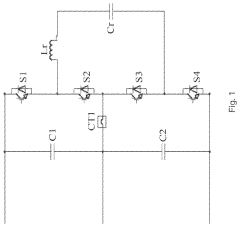
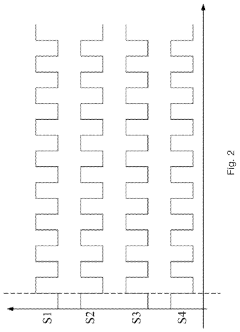
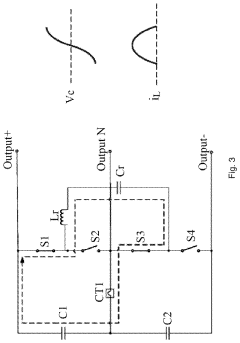
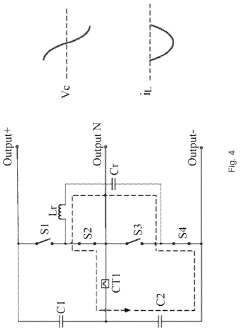
- A power storage apparatus with a resonant circuit and switch configuration, along with a control module that adjusts switching frequencies and duty ratios to balance voltage differences between modules, and includes a frequency control module to dynamically manage charging and discharging based on real-time data and temperature variations.
Method for connecting multiple battery cells of a battery and battery system having a battery with multiple battery cells and multiple battery-cell-monitoring modules which are respectively assigned to a battery cell
PatentWO2016030119A1
Innovation
- A method where a single first control variable and a single second control variable are specified for all battery cells, with update frequencies adjusted as a monotonically increasing function of the control deviation between the generated and desired output voltages, minimizing switching state changes and associated losses.


Policy Implications of Blade Battery Innovations
The introduction of blade battery technology has sparked significant policy changes across various sectors, reflecting the broader implications of this innovation on energy storage, electric vehicles, and environmental sustainability. Governments worldwide are reassessing their regulatory frameworks to accommodate and promote the adoption of blade batteries, recognizing their potential to revolutionize the electric vehicle industry and contribute to climate change mitigation efforts.
One of the primary policy shifts stimulated by blade battery innovations is the revision of safety standards for electric vehicles. The enhanced safety features of blade batteries, particularly their resistance to thermal runaway, have prompted regulatory bodies to update their safety protocols and testing procedures. This has led to the development of more stringent safety requirements for battery systems in electric vehicles, potentially accelerating the transition away from traditional lithium-ion batteries.
Environmental policies have also been influenced by the emergence of blade battery technology. The improved energy density and longer lifespan of blade batteries align with governmental goals to reduce carbon emissions and promote sustainable transportation. As a result, policymakers are introducing more aggressive targets for electric vehicle adoption and are implementing incentives to encourage manufacturers to incorporate blade battery technology into their product lines.
The economic implications of blade battery innovations have stimulated changes in industrial policies. Governments are now focusing on creating supportive ecosystems for the research, development, and production of advanced battery technologies. This includes offering tax incentives, grants, and subsidies to companies investing in blade battery manufacturing facilities, as well as funding research initiatives to further improve the technology.
Furthermore, the potential of blade batteries to enhance grid stability and energy storage capabilities has led to policy changes in the power sector. Regulators are updating grid integration standards to accommodate the unique characteristics of blade batteries, such as their ability to provide rapid response times and longer duration storage. This is resulting in new regulations that encourage the deployment of blade battery-based energy storage systems in both residential and utility-scale applications.
International trade policies are also being influenced by blade battery innovations. As countries recognize the strategic importance of advanced battery technologies, there is a growing trend towards protectionist measures aimed at securing domestic supply chains for critical battery materials and components. This has led to the implementation of new trade agreements, export controls, and investment screening mechanisms focused on battery technologies and related industries.
In conclusion, the ripple effects of blade battery innovations on policy landscapes are far-reaching, touching upon safety regulations, environmental initiatives, industrial strategies, energy sector planning, and international trade relations. As the technology continues to evolve, it is likely to drive further policy adaptations, shaping the future of energy storage and electric mobility on a global scale.
One of the primary policy shifts stimulated by blade battery innovations is the revision of safety standards for electric vehicles. The enhanced safety features of blade batteries, particularly their resistance to thermal runaway, have prompted regulatory bodies to update their safety protocols and testing procedures. This has led to the development of more stringent safety requirements for battery systems in electric vehicles, potentially accelerating the transition away from traditional lithium-ion batteries.
Environmental policies have also been influenced by the emergence of blade battery technology. The improved energy density and longer lifespan of blade batteries align with governmental goals to reduce carbon emissions and promote sustainable transportation. As a result, policymakers are introducing more aggressive targets for electric vehicle adoption and are implementing incentives to encourage manufacturers to incorporate blade battery technology into their product lines.
The economic implications of blade battery innovations have stimulated changes in industrial policies. Governments are now focusing on creating supportive ecosystems for the research, development, and production of advanced battery technologies. This includes offering tax incentives, grants, and subsidies to companies investing in blade battery manufacturing facilities, as well as funding research initiatives to further improve the technology.
Furthermore, the potential of blade batteries to enhance grid stability and energy storage capabilities has led to policy changes in the power sector. Regulators are updating grid integration standards to accommodate the unique characteristics of blade batteries, such as their ability to provide rapid response times and longer duration storage. This is resulting in new regulations that encourage the deployment of blade battery-based energy storage systems in both residential and utility-scale applications.
International trade policies are also being influenced by blade battery innovations. As countries recognize the strategic importance of advanced battery technologies, there is a growing trend towards protectionist measures aimed at securing domestic supply chains for critical battery materials and components. This has led to the implementation of new trade agreements, export controls, and investment screening mechanisms focused on battery technologies and related industries.
In conclusion, the ripple effects of blade battery innovations on policy landscapes are far-reaching, touching upon safety regulations, environmental initiatives, industrial strategies, energy sector planning, and international trade relations. As the technology continues to evolve, it is likely to drive further policy adaptations, shaping the future of energy storage and electric mobility on a global scale.
Environmental Impact Assessment
The environmental impact assessment of blade battery innovations and their influence on policy changes reveals significant implications for sustainability and regulatory frameworks. These advancements in battery technology have prompted a reevaluation of environmental policies, particularly in the context of electric vehicle (EV) production and energy storage systems.
Blade batteries, characterized by their improved energy density and reduced cobalt content, offer substantial environmental benefits compared to traditional lithium-ion batteries. The decreased reliance on cobalt mining addresses concerns related to resource depletion and unethical labor practices in cobalt-rich regions. This shift has led policymakers to reconsider regulations surrounding battery material sourcing and supply chain transparency.
The enhanced safety features of blade batteries, including improved thermal management and reduced risk of thermal runaway, have influenced safety standards and certification processes for EVs. Regulatory bodies are now adapting their guidelines to accommodate these technological advancements, potentially leading to more stringent safety requirements across the industry.
The longer lifespan and improved recyclability of blade batteries align with circular economy principles, prompting policymakers to revise end-of-life regulations for EV batteries. This has resulted in the development of more comprehensive recycling programs and extended producer responsibility initiatives, aimed at minimizing the environmental impact of battery disposal.
The increased energy density of blade batteries contributes to the overall efficiency of EVs, potentially reducing their carbon footprint throughout their lifecycle. This improvement has led to discussions about adjusting emissions standards and incentives for low-emission vehicles, as policymakers seek to encourage the adoption of more environmentally friendly transportation options.
The manufacturing process of blade batteries, which often requires less energy and produces fewer emissions compared to traditional battery production, has sparked debates about industrial emissions regulations. Policymakers are considering revisions to manufacturing standards to promote cleaner production methods across the battery industry.
As blade battery technology continues to evolve, it is likely to drive further policy changes related to grid integration and energy storage. The potential for these batteries to enhance the stability and capacity of renewable energy systems may lead to new regulations supporting the expansion of clean energy infrastructure.
In conclusion, the environmental impact assessment of blade battery innovations highlights their potential to catalyze significant policy changes across multiple sectors. As this technology continues to mature, it is expected to play a crucial role in shaping environmental regulations and sustainability initiatives in the coming years.
Blade batteries, characterized by their improved energy density and reduced cobalt content, offer substantial environmental benefits compared to traditional lithium-ion batteries. The decreased reliance on cobalt mining addresses concerns related to resource depletion and unethical labor practices in cobalt-rich regions. This shift has led policymakers to reconsider regulations surrounding battery material sourcing and supply chain transparency.
The enhanced safety features of blade batteries, including improved thermal management and reduced risk of thermal runaway, have influenced safety standards and certification processes for EVs. Regulatory bodies are now adapting their guidelines to accommodate these technological advancements, potentially leading to more stringent safety requirements across the industry.
The longer lifespan and improved recyclability of blade batteries align with circular economy principles, prompting policymakers to revise end-of-life regulations for EV batteries. This has resulted in the development of more comprehensive recycling programs and extended producer responsibility initiatives, aimed at minimizing the environmental impact of battery disposal.
The increased energy density of blade batteries contributes to the overall efficiency of EVs, potentially reducing their carbon footprint throughout their lifecycle. This improvement has led to discussions about adjusting emissions standards and incentives for low-emission vehicles, as policymakers seek to encourage the adoption of more environmentally friendly transportation options.
The manufacturing process of blade batteries, which often requires less energy and produces fewer emissions compared to traditional battery production, has sparked debates about industrial emissions regulations. Policymakers are considering revisions to manufacturing standards to promote cleaner production methods across the battery industry.
As blade battery technology continues to evolve, it is likely to drive further policy changes related to grid integration and energy storage. The potential for these batteries to enhance the stability and capacity of renewable energy systems may lead to new regulations supporting the expansion of clean energy infrastructure.
In conclusion, the environmental impact assessment of blade battery innovations highlights their potential to catalyze significant policy changes across multiple sectors. As this technology continues to mature, it is expected to play a crucial role in shaping environmental regulations and sustainability initiatives in the coming years.
Unlock deeper insights with PatSnap Eureka Quick Research — get a full tech report to explore trends and direct your research. Try now!
Generate Your Research Report Instantly with AI Agent
Supercharge your innovation with PatSnap Eureka AI Agent Platform!