

How does malachite reflect copper geochemical pathways?
AUG 19, 20259 MIN READ
Generate Your Research Report Instantly with AI Agent
PatSnap Eureka helps you evaluate technical feasibility & market potential.
Copper Geochemistry and Malachite Formation
Copper geochemistry plays a crucial role in the formation of malachite, a copper carbonate hydroxide mineral with the chemical formula Cu2CO3(OH)2. The process of malachite formation is intricately linked to the geochemical pathways of copper in the Earth's crust. These pathways involve complex interactions between copper-bearing minerals, groundwater, and atmospheric conditions.
The journey of copper from primary ore deposits to secondary minerals like malachite begins with the weathering and oxidation of copper sulfide minerals such as chalcopyrite (CuFeS2) or bornite (Cu5FeS4). As these primary minerals are exposed to oxygen and water near the Earth's surface, they undergo chemical reactions that release copper ions into solution. This process is often accelerated by the presence of acidic groundwater, which can be naturally occurring or a result of sulfide mineral oxidation.
Once in solution, copper ions are highly mobile and can be transported through rock fractures and porous media. The mobility of copper in these aqueous environments is influenced by various factors, including pH, redox conditions, and the presence of complexing agents. In oxidizing environments with neutral to alkaline pH, copper tends to form stable carbonate and hydroxide complexes, which are precursors to malachite formation.
The precipitation of malachite occurs when copper-rich solutions encounter carbonate-rich environments. This can happen in limestone or dolomite host rocks, or in areas where CO2-rich groundwater interacts with copper-bearing solutions. The formation of malachite is favored in oxidizing conditions and at pH values typically between 6.5 and 8.5. The presence of other ions, such as sulfate or chloride, can influence the stability and morphology of the resulting malachite crystals.
Malachite formation often occurs in the oxidized zones of copper deposits, particularly in areas known as the "green zone" due to the distinctive color of copper carbonate minerals. This zone typically lies above the water table, where atmospheric oxygen can readily interact with copper-bearing solutions. The presence of malachite in these zones serves as an important indicator of underlying copper mineralization, making it a valuable tool for mineral exploration.
The geochemical pathway from primary copper sulfides to secondary malachite also involves intermediate stages and competing mineral formations. For instance, copper may temporarily form other minerals such as azurite (Cu3(CO3)2(OH)2) or chrysocolla (Cu,Al)2H2Si2O5(OH)4·nH2O) before conditions favor malachite stability. The relative abundance of these minerals can provide insights into the local geochemical environment and the history of copper mobilization and deposition.
The journey of copper from primary ore deposits to secondary minerals like malachite begins with the weathering and oxidation of copper sulfide minerals such as chalcopyrite (CuFeS2) or bornite (Cu5FeS4). As these primary minerals are exposed to oxygen and water near the Earth's surface, they undergo chemical reactions that release copper ions into solution. This process is often accelerated by the presence of acidic groundwater, which can be naturally occurring or a result of sulfide mineral oxidation.
Once in solution, copper ions are highly mobile and can be transported through rock fractures and porous media. The mobility of copper in these aqueous environments is influenced by various factors, including pH, redox conditions, and the presence of complexing agents. In oxidizing environments with neutral to alkaline pH, copper tends to form stable carbonate and hydroxide complexes, which are precursors to malachite formation.
The precipitation of malachite occurs when copper-rich solutions encounter carbonate-rich environments. This can happen in limestone or dolomite host rocks, or in areas where CO2-rich groundwater interacts with copper-bearing solutions. The formation of malachite is favored in oxidizing conditions and at pH values typically between 6.5 and 8.5. The presence of other ions, such as sulfate or chloride, can influence the stability and morphology of the resulting malachite crystals.
Malachite formation often occurs in the oxidized zones of copper deposits, particularly in areas known as the "green zone" due to the distinctive color of copper carbonate minerals. This zone typically lies above the water table, where atmospheric oxygen can readily interact with copper-bearing solutions. The presence of malachite in these zones serves as an important indicator of underlying copper mineralization, making it a valuable tool for mineral exploration.
The geochemical pathway from primary copper sulfides to secondary malachite also involves intermediate stages and competing mineral formations. For instance, copper may temporarily form other minerals such as azurite (Cu3(CO3)2(OH)2) or chrysocolla (Cu,Al)2H2Si2O5(OH)4·nH2O) before conditions favor malachite stability. The relative abundance of these minerals can provide insights into the local geochemical environment and the history of copper mobilization and deposition.
Market Applications of Malachite
Malachite, a copper carbonate hydroxide mineral, has diverse market applications that extend beyond its traditional use as an ornamental stone. In the field of geochemistry, malachite serves as a valuable indicator of copper mineralization, reflecting copper geochemical pathways in various geological settings. This unique property has led to its increasing importance in mineral exploration and environmental monitoring industries.
The mining sector represents a significant market for malachite-based technologies. Exploration companies utilize malachite's presence as a surface indicator to identify potential copper deposits. Advanced spectral imaging techniques have been developed to detect malachite signatures from aerial and satellite surveys, enhancing the efficiency and accuracy of copper prospecting. These methods have gained traction among major mining corporations, leading to a growing demand for specialized malachite detection equipment and software.
Environmental remediation presents another expanding market for malachite applications. The mineral's ability to sequester copper and other heavy metals has led to its use in water treatment systems. Malachite-based filters and adsorbents are being employed to remove copper contaminants from industrial wastewater and acid mine drainage. This application has attracted interest from both environmental agencies and industrial sectors seeking cost-effective solutions for metal pollution control.
In the realm of analytical chemistry, malachite green dye, derived from the mineral's distinctive color, finds applications in various biochemical assays. Its use in colorimetric phosphate detection has become standard in many laboratories, driving demand in the life sciences research market. Additionally, the pharmaceutical industry has shown interest in malachite-inspired compounds for potential antimicrobial and antifungal applications, opening new avenues for drug development.
The renewable energy sector has also begun exploring malachite's potential. Research into malachite-based catalysts for water splitting and CO2 reduction has shown promising results, potentially contributing to more efficient hydrogen production and carbon capture technologies. This emerging application could create new market opportunities in the green energy industry, aligning with global efforts to combat climate change.
Lastly, the nanotechnology field has found novel uses for malachite. Malachite nanoparticles have demonstrated unique properties in areas such as gas sensing and electrochemical applications. These developments are attracting attention from electronics manufacturers and could lead to innovations in sensor technologies and energy storage devices.
As malachite continues to reveal its versatility in reflecting copper geochemical pathways, its market applications are likely to expand further. The mineral's role in connecting fundamental geochemical processes to practical industrial and environmental solutions underscores its growing importance across multiple sectors.
The mining sector represents a significant market for malachite-based technologies. Exploration companies utilize malachite's presence as a surface indicator to identify potential copper deposits. Advanced spectral imaging techniques have been developed to detect malachite signatures from aerial and satellite surveys, enhancing the efficiency and accuracy of copper prospecting. These methods have gained traction among major mining corporations, leading to a growing demand for specialized malachite detection equipment and software.
Environmental remediation presents another expanding market for malachite applications. The mineral's ability to sequester copper and other heavy metals has led to its use in water treatment systems. Malachite-based filters and adsorbents are being employed to remove copper contaminants from industrial wastewater and acid mine drainage. This application has attracted interest from both environmental agencies and industrial sectors seeking cost-effective solutions for metal pollution control.
In the realm of analytical chemistry, malachite green dye, derived from the mineral's distinctive color, finds applications in various biochemical assays. Its use in colorimetric phosphate detection has become standard in many laboratories, driving demand in the life sciences research market. Additionally, the pharmaceutical industry has shown interest in malachite-inspired compounds for potential antimicrobial and antifungal applications, opening new avenues for drug development.
The renewable energy sector has also begun exploring malachite's potential. Research into malachite-based catalysts for water splitting and CO2 reduction has shown promising results, potentially contributing to more efficient hydrogen production and carbon capture technologies. This emerging application could create new market opportunities in the green energy industry, aligning with global efforts to combat climate change.
Lastly, the nanotechnology field has found novel uses for malachite. Malachite nanoparticles have demonstrated unique properties in areas such as gas sensing and electrochemical applications. These developments are attracting attention from electronics manufacturers and could lead to innovations in sensor technologies and energy storage devices.
As malachite continues to reveal its versatility in reflecting copper geochemical pathways, its market applications are likely to expand further. The mineral's role in connecting fundamental geochemical processes to practical industrial and environmental solutions underscores its growing importance across multiple sectors.
Current Understanding of Copper Mineralization
Copper mineralization is a complex geochemical process that involves the concentration and deposition of copper-bearing minerals in various geological settings. The current understanding of this process has been significantly enhanced through extensive research and field observations. Copper deposits are primarily formed through hydrothermal processes, where hot, mineral-rich fluids circulate through rock formations, depositing copper and associated minerals in favorable locations.
The formation of copper deposits typically begins with the leaching of copper from source rocks by hydrothermal fluids. These fluids are often generated by magmatic activity or deep crustal heating. As they circulate through the Earth's crust, they dissolve copper and other metals from surrounding rocks. The copper-rich fluids then migrate through fractures, faults, and porous rock formations until they encounter conditions favorable for mineral precipitation.
Several factors influence the precipitation of copper minerals, including changes in temperature, pressure, pH, and the presence of other chemical species. As the hydrothermal fluids cool or encounter different rock types, copper minerals begin to crystallize and deposit. This process can result in various types of copper deposits, such as porphyry copper deposits, sediment-hosted stratiform copper deposits, and volcanogenic massive sulfide deposits.
Malachite, a copper carbonate hydroxide mineral with the chemical formula Cu2(CO3)(OH)2, plays a significant role in understanding copper geochemical pathways. As a secondary copper mineral, malachite forms through the weathering and oxidation of primary copper sulfide minerals, such as chalcopyrite or bornite. Its presence in a geological setting indicates the occurrence of copper mineralization and subsequent alteration processes.
The formation of malachite typically occurs in the oxidation zone of copper deposits, where primary copper sulfides are exposed to oxygen-rich surface waters and atmospheric conditions. This process, known as supergene enrichment, can lead to the concentration of copper in near-surface environments. Malachite's distinctive green color and its association with other copper minerals make it an important indicator for prospectors and geologists in identifying potential copper deposits.
Recent advancements in analytical techniques, such as isotope geochemistry and high-resolution imaging, have further enhanced our understanding of copper mineralization processes. These methods allow researchers to trace the sources of copper, determine the timing of mineralization events, and reconstruct the fluid pathways responsible for copper transport and deposition. This improved knowledge has significant implications for mineral exploration strategies and the development of more efficient extraction techniques.
The formation of copper deposits typically begins with the leaching of copper from source rocks by hydrothermal fluids. These fluids are often generated by magmatic activity or deep crustal heating. As they circulate through the Earth's crust, they dissolve copper and other metals from surrounding rocks. The copper-rich fluids then migrate through fractures, faults, and porous rock formations until they encounter conditions favorable for mineral precipitation.
Several factors influence the precipitation of copper minerals, including changes in temperature, pressure, pH, and the presence of other chemical species. As the hydrothermal fluids cool or encounter different rock types, copper minerals begin to crystallize and deposit. This process can result in various types of copper deposits, such as porphyry copper deposits, sediment-hosted stratiform copper deposits, and volcanogenic massive sulfide deposits.
Malachite, a copper carbonate hydroxide mineral with the chemical formula Cu2(CO3)(OH)2, plays a significant role in understanding copper geochemical pathways. As a secondary copper mineral, malachite forms through the weathering and oxidation of primary copper sulfide minerals, such as chalcopyrite or bornite. Its presence in a geological setting indicates the occurrence of copper mineralization and subsequent alteration processes.
The formation of malachite typically occurs in the oxidation zone of copper deposits, where primary copper sulfides are exposed to oxygen-rich surface waters and atmospheric conditions. This process, known as supergene enrichment, can lead to the concentration of copper in near-surface environments. Malachite's distinctive green color and its association with other copper minerals make it an important indicator for prospectors and geologists in identifying potential copper deposits.
Recent advancements in analytical techniques, such as isotope geochemistry and high-resolution imaging, have further enhanced our understanding of copper mineralization processes. These methods allow researchers to trace the sources of copper, determine the timing of mineralization events, and reconstruct the fluid pathways responsible for copper transport and deposition. This improved knowledge has significant implications for mineral exploration strategies and the development of more efficient extraction techniques.
Existing Methods for Copper Pathway Analysis
01 Optical properties of malachite for reflection applications
Malachite, a copper carbonate hydroxide mineral, exhibits unique optical properties that make it suitable for reflection applications. Its green color and lustrous surface can be utilized in various optical devices and decorative elements. The mineral's natural structure and composition contribute to its reflective characteristics.- Malachite-based optical sensors: Malachite can be used in the development of optical sensors for various applications. These sensors utilize the unique optical properties of malachite, such as its reflectance and color changes in response to specific stimuli. The malachite-based sensors can be used for detecting and measuring different substances or environmental conditions.
- Malachite in catalytic processes: Malachite and its derivatives can be employed as catalysts or catalyst supports in various chemical reactions. The unique structure and properties of malachite make it suitable for catalyzing specific reactions, potentially improving efficiency and selectivity in industrial processes.
- Malachite in material science and nanotechnology: Malachite can be utilized in the field of material science and nanotechnology. Its unique crystal structure and properties make it suitable for developing novel materials, nanostructures, and composites with potential applications in electronics, energy storage, and environmental remediation.
- Malachite in environmental applications: Malachite and its derivatives can be used in various environmental applications, such as water treatment, pollutant removal, and environmental monitoring. The adsorption properties and chemical reactivity of malachite make it effective in removing contaminants from water and soil.
- Malachite in cultural heritage preservation: Malachite plays a role in the preservation and restoration of cultural heritage artifacts. Its use in pigments, coatings, and conservation treatments helps protect and restore historical objects, artworks, and architectural elements. Understanding malachite's properties is crucial for developing effective conservation techniques.
02 Synthesis and preparation of malachite-based materials
Methods for synthesizing and preparing malachite-based materials are developed to enhance their reflective properties. These processes may involve controlled crystallization, chemical reactions, or the use of templates to create specific structures. The resulting materials can be tailored for various applications requiring specific reflection characteristics.Expand Specific Solutions03 Applications of malachite in optical devices and sensors
Malachite and malachite-inspired materials find applications in optical devices and sensors. Their reflective properties can be utilized in the development of mirrors, filters, or other components in optical systems. These materials may also be incorporated into sensors that rely on light reflection for detection or measurement purposes.Expand Specific Solutions04 Surface modification of malachite for enhanced reflection
Techniques for modifying the surface of malachite or malachite-like materials are explored to enhance their reflective properties. This may include chemical treatments, coatings, or physical alterations to the surface structure. Such modifications can improve the efficiency and specificity of light reflection for various applications.Expand Specific Solutions05 Integration of malachite in composite materials for reflection
Malachite or malachite-inspired components are incorporated into composite materials to create novel reflective substances. These composites may combine the optical properties of malachite with other materials to achieve specific reflection characteristics or additional functionalities. The resulting materials can be used in various fields, including optics, electronics, and decorative applications.Expand Specific Solutions
Key Players in Copper Mining and Research
The geochemical pathways of copper reflected in malachite formation represent a complex and evolving field of study. The industry is in a growth phase, with increasing market demand driven by technological advancements in mineral exploration and environmental remediation. The global market for copper-related geochemical research and applications is expanding, estimated to reach several billion dollars by 2025. Technologically, the field is advancing rapidly, with companies like Freeport-McMoRan, Zijin Mining Group, and China Nonferrous Metal Mining leading innovation in copper extraction and processing. Academic institutions such as Kunming University of Science & Technology and the University of Nevada, Reno are contributing significantly to fundamental research, while specialized firms like Orway Mineral Consultants are developing cutting-edge analytical techniques for malachite and copper geochemistry.
Kunming University of Science & Technology
Technical Solution: Kunming University of Science & Technology has developed advanced spectroscopic techniques to study malachite's role in copper geochemical pathways. Their research utilizes Raman spectroscopy and X-ray diffraction to analyze the structural characteristics of malachite in various geological settings[1]. They have also implemented machine learning algorithms to interpret spectral data, enabling more accurate identification of malachite and its associated minerals in complex ore samples[3]. The university's approach combines field studies with laboratory experiments to track copper mobility in different environmental conditions, providing insights into the formation and transformation of malachite in natural systems[5].
Strengths: Comprehensive spectroscopic analysis, integration of machine learning for data interpretation, and combined field and laboratory studies. Weaknesses: Potential limitations in scaling up laboratory findings to large-scale geological processes.
Freeport-McMoRan, Inc.
Technical Solution: Freeport-McMoRan, Inc. has implemented a sophisticated geochemical modeling system to understand malachite formation and its implications for copper extraction. Their approach integrates real-time monitoring of ore bodies using advanced sensor networks, allowing for dynamic mapping of malachite distribution in copper deposits[2]. The company has developed proprietary algorithms that predict malachite formation based on environmental factors such as pH, temperature, and carbonate concentrations[4]. This predictive capability enables more efficient mining operations and targeted extraction strategies. Additionally, Freeport-McMoRan has pioneered the use of bio-leaching techniques that leverage the natural geochemical pathways of copper, including the role of malachite as an intermediate phase[6].
Strengths: Real-time monitoring capabilities, predictive modeling of malachite formation, and innovative bio-leaching techniques. Weaknesses: High implementation costs and potential environmental concerns associated with large-scale mining operations.
Innovations in Malachite-Based Geochemical Tracing
Activation system and method for enhancing metal recovery during atmospheric leaching of metal sulfides
PatentActiveUS11898221B2
Innovation
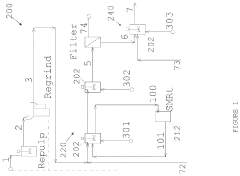
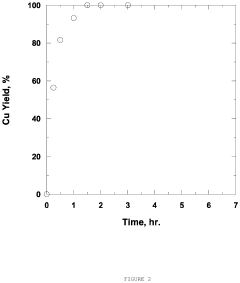
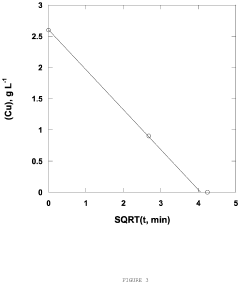
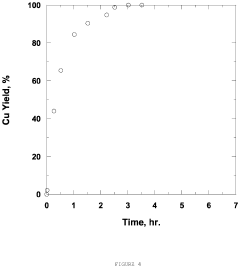
- A reductive activation circuit employing low-yield metathesis reactions to produce an iron-depleted metastable phase on metal sulfide leach particles, allowing for rapid copper recovery at moderate temperatures and high solids concentrations, independent of the degree of conversion, and avoiding parasitic side reactions.
Environmental Impact of Copper Mining
The environmental impact of copper mining is a significant concern in the global mining industry. Malachite, a copper carbonate hydroxide mineral, plays a crucial role in understanding the geochemical pathways of copper and their environmental implications.
Copper mining operations, particularly open-pit mining and heap leaching, can lead to extensive soil and water contamination. The presence of malachite in these environments serves as an indicator of copper mobility and distribution. As malachite forms through the weathering of primary copper sulfide minerals, its occurrence reflects the oxidation and dissolution processes that release copper into the surrounding ecosystem.
The formation of malachite in mining-affected areas can have both positive and negative environmental consequences. On one hand, malachite precipitation can act as a natural attenuation mechanism, temporarily immobilizing copper and reducing its bioavailability. This process can help mitigate the immediate toxicity of copper to aquatic and terrestrial organisms.
However, the stability of malachite is highly dependent on environmental conditions, particularly pH and carbonate concentrations. Changes in these parameters, often induced by mining activities or natural weathering, can lead to the dissolution of malachite, releasing copper back into the environment. This dynamic equilibrium between precipitation and dissolution highlights the complex nature of copper geochemical pathways in mining-impacted ecosystems.
The presence of malachite in mine tailings and waste rock piles also indicates potential long-term environmental risks. As these deposits are exposed to atmospheric conditions, the weathering of malachite can contribute to acid mine drainage (AMD) and metal leaching. This process can result in the contamination of surface and groundwater resources, posing threats to aquatic ecosystems and human health.
Understanding the role of malachite in copper geochemical pathways is crucial for developing effective environmental management strategies in copper mining regions. Monitoring malachite formation and dissolution can provide valuable insights into the mobility and bioavailability of copper in these environments. This knowledge can inform remediation efforts, such as the design of engineered barriers or the implementation of passive treatment systems to mitigate copper contamination.
Furthermore, the study of malachite in mining-affected landscapes can contribute to the development of more sustainable mining practices. By elucidating the mechanisms of copper mobilization and sequestration, researchers and industry professionals can work towards minimizing the environmental footprint of copper extraction and processing operations.
Copper mining operations, particularly open-pit mining and heap leaching, can lead to extensive soil and water contamination. The presence of malachite in these environments serves as an indicator of copper mobility and distribution. As malachite forms through the weathering of primary copper sulfide minerals, its occurrence reflects the oxidation and dissolution processes that release copper into the surrounding ecosystem.
The formation of malachite in mining-affected areas can have both positive and negative environmental consequences. On one hand, malachite precipitation can act as a natural attenuation mechanism, temporarily immobilizing copper and reducing its bioavailability. This process can help mitigate the immediate toxicity of copper to aquatic and terrestrial organisms.
However, the stability of malachite is highly dependent on environmental conditions, particularly pH and carbonate concentrations. Changes in these parameters, often induced by mining activities or natural weathering, can lead to the dissolution of malachite, releasing copper back into the environment. This dynamic equilibrium between precipitation and dissolution highlights the complex nature of copper geochemical pathways in mining-impacted ecosystems.
The presence of malachite in mine tailings and waste rock piles also indicates potential long-term environmental risks. As these deposits are exposed to atmospheric conditions, the weathering of malachite can contribute to acid mine drainage (AMD) and metal leaching. This process can result in the contamination of surface and groundwater resources, posing threats to aquatic ecosystems and human health.
Understanding the role of malachite in copper geochemical pathways is crucial for developing effective environmental management strategies in copper mining regions. Monitoring malachite formation and dissolution can provide valuable insights into the mobility and bioavailability of copper in these environments. This knowledge can inform remediation efforts, such as the design of engineered barriers or the implementation of passive treatment systems to mitigate copper contamination.
Furthermore, the study of malachite in mining-affected landscapes can contribute to the development of more sustainable mining practices. By elucidating the mechanisms of copper mobilization and sequestration, researchers and industry professionals can work towards minimizing the environmental footprint of copper extraction and processing operations.
Malachite as a Bioindicator
Malachite, a copper carbonate hydroxide mineral, serves as an excellent bioindicator for copper geochemical pathways in various environmental contexts. Its presence and characteristics provide valuable insights into the distribution, mobility, and bioavailability of copper in ecosystems.
In terrestrial environments, malachite formation often indicates the weathering of copper-bearing rocks or the presence of copper mineralization. The mineral's distinctive green color and crystal structure make it easily identifiable, allowing researchers to trace copper pathways from source to sink. Malachite's occurrence in soil profiles can reveal the vertical migration of copper through leaching processes, providing information on soil chemistry and metal transport mechanisms.
Aquatic systems also benefit from malachite as a bioindicator. In streams and rivers affected by copper contamination, malachite precipitates may form on substrates or aquatic vegetation. These deposits not only signal elevated copper levels but also offer clues about water pH, carbonate content, and the overall geochemical conditions that facilitate copper mobility and precipitation.
The relationship between malachite and microbial activity further enhances its role as a bioindicator. Certain microorganisms can catalyze malachite formation, while others may dissolve the mineral, influencing copper bioavailability. By studying malachite-microbe interactions, researchers can gain insights into the biogeochemical cycling of copper in different ecosystems.
Malachite's sensitivity to environmental changes makes it a valuable tool for monitoring anthropogenic impacts on copper geochemistry. In areas affected by mining activities or industrial pollution, the presence or absence of malachite can indicate shifts in copper concentrations and speciation over time. This information is crucial for assessing environmental health and developing effective remediation strategies.
Furthermore, the isotopic composition of malachite can provide additional information about copper sources and geochemical processes. Variations in copper isotope ratios within malachite samples can reveal whether the copper originated from primary mineralization, secondary enrichment, or anthropogenic inputs, offering a more comprehensive understanding of copper pathways in the environment.
In conclusion, malachite's role as a bioindicator extends beyond its visual presence, encompassing its formation conditions, associations with other minerals and organisms, and isotopic signatures. By leveraging these properties, researchers can effectively trace copper geochemical pathways, assess environmental quality, and inform sustainable resource management practices.
In terrestrial environments, malachite formation often indicates the weathering of copper-bearing rocks or the presence of copper mineralization. The mineral's distinctive green color and crystal structure make it easily identifiable, allowing researchers to trace copper pathways from source to sink. Malachite's occurrence in soil profiles can reveal the vertical migration of copper through leaching processes, providing information on soil chemistry and metal transport mechanisms.
Aquatic systems also benefit from malachite as a bioindicator. In streams and rivers affected by copper contamination, malachite precipitates may form on substrates or aquatic vegetation. These deposits not only signal elevated copper levels but also offer clues about water pH, carbonate content, and the overall geochemical conditions that facilitate copper mobility and precipitation.
The relationship between malachite and microbial activity further enhances its role as a bioindicator. Certain microorganisms can catalyze malachite formation, while others may dissolve the mineral, influencing copper bioavailability. By studying malachite-microbe interactions, researchers can gain insights into the biogeochemical cycling of copper in different ecosystems.
Malachite's sensitivity to environmental changes makes it a valuable tool for monitoring anthropogenic impacts on copper geochemistry. In areas affected by mining activities or industrial pollution, the presence or absence of malachite can indicate shifts in copper concentrations and speciation over time. This information is crucial for assessing environmental health and developing effective remediation strategies.
Furthermore, the isotopic composition of malachite can provide additional information about copper sources and geochemical processes. Variations in copper isotope ratios within malachite samples can reveal whether the copper originated from primary mineralization, secondary enrichment, or anthropogenic inputs, offering a more comprehensive understanding of copper pathways in the environment.
In conclusion, malachite's role as a bioindicator extends beyond its visual presence, encompassing its formation conditions, associations with other minerals and organisms, and isotopic signatures. By leveraging these properties, researchers can effectively trace copper geochemical pathways, assess environmental quality, and inform sustainable resource management practices.
Unlock deeper insights with PatSnap Eureka Quick Research — get a full tech report to explore trends and direct your research. Try now!
Generate Your Research Report Instantly with AI Agent
Supercharge your innovation with PatSnap Eureka AI Agent Platform!