How KERS facilitates energy-efficient train systems
AUG 15, 202510 MIN READ
Generate Your Research Report Instantly with AI Agent
Patsnap Eureka helps you evaluate technical feasibility & market potential.
KERS in Train Systems: Background and Objectives
Kinetic Energy Recovery Systems (KERS) have emerged as a promising technology in the pursuit of energy-efficient train systems. Originally developed for Formula One racing, KERS has found its way into various transportation sectors, including railway systems. The primary objective of implementing KERS in train systems is to harness and repurpose the kinetic energy that would otherwise be lost during braking, thereby significantly improving overall energy efficiency.
The evolution of KERS in train systems can be traced back to the early 2000s when researchers began exploring ways to recover and store braking energy in rail transport. As environmental concerns and energy costs became increasingly prominent, the rail industry recognized the potential of KERS to address these challenges. The technology has since undergone several iterations, with each generation bringing improvements in energy storage capacity, power density, and system integration.
In the context of train systems, KERS operates on the principle of converting kinetic energy into a storable form during deceleration and then utilizing this stored energy to assist in acceleration or power onboard systems. This process not only reduces energy consumption but also minimizes wear on traditional braking systems, leading to reduced maintenance costs and improved overall system longevity.
The primary goals of implementing KERS in train systems are multifaceted. Firstly, it aims to substantially reduce energy consumption, which translates to lower operational costs and decreased environmental impact. Secondly, KERS seeks to improve the overall performance of train systems by providing additional power during acceleration, potentially allowing for faster acceleration rates and reduced journey times. Thirdly, the technology aims to enhance the sustainability of rail transport by reducing reliance on fossil fuels and lowering carbon emissions.
As the technology continues to mature, researchers and engineers are focusing on overcoming several key challenges. These include optimizing energy storage systems for the specific demands of rail transport, improving the efficiency of energy conversion processes, and developing robust control systems to manage energy flow effectively. Additionally, there is a growing emphasis on integrating KERS with other energy-saving technologies, such as regenerative braking and smart grid systems, to create holistic energy management solutions for modern train systems.
The implementation of KERS in train systems represents a significant step towards creating more sustainable and efficient transportation networks. As cities worldwide grapple with increasing urbanization and the need for eco-friendly mobility solutions, KERS technology offers a promising avenue for enhancing the energy efficiency of rail transport while simultaneously reducing its environmental footprint.
The evolution of KERS in train systems can be traced back to the early 2000s when researchers began exploring ways to recover and store braking energy in rail transport. As environmental concerns and energy costs became increasingly prominent, the rail industry recognized the potential of KERS to address these challenges. The technology has since undergone several iterations, with each generation bringing improvements in energy storage capacity, power density, and system integration.
In the context of train systems, KERS operates on the principle of converting kinetic energy into a storable form during deceleration and then utilizing this stored energy to assist in acceleration or power onboard systems. This process not only reduces energy consumption but also minimizes wear on traditional braking systems, leading to reduced maintenance costs and improved overall system longevity.
The primary goals of implementing KERS in train systems are multifaceted. Firstly, it aims to substantially reduce energy consumption, which translates to lower operational costs and decreased environmental impact. Secondly, KERS seeks to improve the overall performance of train systems by providing additional power during acceleration, potentially allowing for faster acceleration rates and reduced journey times. Thirdly, the technology aims to enhance the sustainability of rail transport by reducing reliance on fossil fuels and lowering carbon emissions.
As the technology continues to mature, researchers and engineers are focusing on overcoming several key challenges. These include optimizing energy storage systems for the specific demands of rail transport, improving the efficiency of energy conversion processes, and developing robust control systems to manage energy flow effectively. Additionally, there is a growing emphasis on integrating KERS with other energy-saving technologies, such as regenerative braking and smart grid systems, to create holistic energy management solutions for modern train systems.
The implementation of KERS in train systems represents a significant step towards creating more sustainable and efficient transportation networks. As cities worldwide grapple with increasing urbanization and the need for eco-friendly mobility solutions, KERS technology offers a promising avenue for enhancing the energy efficiency of rail transport while simultaneously reducing its environmental footprint.
Market Demand for Energy-Efficient Rail Transport
The global rail industry is experiencing a significant shift towards energy-efficient solutions, driven by increasing environmental concerns, rising fuel costs, and stringent government regulations. This trend has created a robust market demand for energy-efficient train systems, with Kinetic Energy Recovery Systems (KERS) emerging as a key technology in this transformation.
The market for energy-efficient rail transport is expanding rapidly, with projections indicating substantial growth over the next decade. This demand is fueled by several factors, including the need to reduce operational costs, meet sustainability targets, and comply with evolving environmental standards. Rail operators worldwide are seeking innovative technologies that can improve energy efficiency without compromising performance or reliability.
KERS technology has garnered significant attention in the rail sector due to its potential to recover and reuse energy that would otherwise be lost during braking. This capability aligns perfectly with the industry's push for greater energy efficiency and reduced carbon emissions. The market demand for KERS in rail applications is particularly strong in urban and suburban rail networks, where frequent stops and starts provide ample opportunities for energy recovery.
Government initiatives and policies promoting sustainable transportation have further bolstered the market for energy-efficient rail solutions. Many countries have set ambitious targets for reducing greenhouse gas emissions from the transport sector, creating a favorable environment for the adoption of technologies like KERS. Additionally, public funding and incentives for green transportation projects have increased, making investments in energy-efficient rail systems more attractive to operators and infrastructure developers.
The economic benefits of energy-efficient train systems are also driving market demand. Rail operators are increasingly recognizing the long-term cost savings associated with reduced energy consumption. KERS technology offers the potential to significantly lower operational expenses by decreasing fuel or electricity usage, which can translate into substantial savings over the lifecycle of a train system.
Furthermore, passengers are becoming more environmentally conscious, leading to a growing preference for eco-friendly transportation options. This shift in consumer behavior is prompting rail operators to invest in energy-efficient technologies as a means of enhancing their brand image and attracting environmentally aware customers.
The market demand for energy-efficient rail transport extends beyond passenger services to freight operations as well. With the global focus on reducing the carbon footprint of logistics and supply chains, freight rail operators are exploring ways to improve their energy efficiency. KERS technology presents an opportunity to enhance the sustainability of freight transport while potentially reducing operational costs.
As urbanization continues to accelerate worldwide, the demand for efficient and sustainable urban rail systems is expected to grow. This trend is likely to further drive the adoption of energy-efficient technologies like KERS in metro and light rail systems, where the benefits of energy recovery can be maximized due to frequent acceleration and deceleration cycles.
The market for energy-efficient rail transport is expanding rapidly, with projections indicating substantial growth over the next decade. This demand is fueled by several factors, including the need to reduce operational costs, meet sustainability targets, and comply with evolving environmental standards. Rail operators worldwide are seeking innovative technologies that can improve energy efficiency without compromising performance or reliability.
KERS technology has garnered significant attention in the rail sector due to its potential to recover and reuse energy that would otherwise be lost during braking. This capability aligns perfectly with the industry's push for greater energy efficiency and reduced carbon emissions. The market demand for KERS in rail applications is particularly strong in urban and suburban rail networks, where frequent stops and starts provide ample opportunities for energy recovery.
Government initiatives and policies promoting sustainable transportation have further bolstered the market for energy-efficient rail solutions. Many countries have set ambitious targets for reducing greenhouse gas emissions from the transport sector, creating a favorable environment for the adoption of technologies like KERS. Additionally, public funding and incentives for green transportation projects have increased, making investments in energy-efficient rail systems more attractive to operators and infrastructure developers.
The economic benefits of energy-efficient train systems are also driving market demand. Rail operators are increasingly recognizing the long-term cost savings associated with reduced energy consumption. KERS technology offers the potential to significantly lower operational expenses by decreasing fuel or electricity usage, which can translate into substantial savings over the lifecycle of a train system.
Furthermore, passengers are becoming more environmentally conscious, leading to a growing preference for eco-friendly transportation options. This shift in consumer behavior is prompting rail operators to invest in energy-efficient technologies as a means of enhancing their brand image and attracting environmentally aware customers.
The market demand for energy-efficient rail transport extends beyond passenger services to freight operations as well. With the global focus on reducing the carbon footprint of logistics and supply chains, freight rail operators are exploring ways to improve their energy efficiency. KERS technology presents an opportunity to enhance the sustainability of freight transport while potentially reducing operational costs.
As urbanization continues to accelerate worldwide, the demand for efficient and sustainable urban rail systems is expected to grow. This trend is likely to further drive the adoption of energy-efficient technologies like KERS in metro and light rail systems, where the benefits of energy recovery can be maximized due to frequent acceleration and deceleration cycles.
Current State and Challenges of KERS in Trains
Kinetic Energy Recovery Systems (KERS) in train applications have made significant strides in recent years, yet their widespread adoption faces several challenges. Currently, KERS technology in trains is primarily implemented through regenerative braking systems, which convert kinetic energy into electrical energy during deceleration. This recovered energy is then stored in batteries or supercapacitors for later use, improving overall energy efficiency.
The current state of KERS in train systems shows promising results in energy conservation. Studies indicate that regenerative braking can recover up to 30% of the energy typically lost during braking, leading to substantial reductions in energy consumption and operational costs. Advanced control systems and power electronics have enhanced the efficiency of energy conversion and storage, making KERS more viable for various train types, from light rail to high-speed trains.
However, the integration of KERS in train systems faces several technical and practical challenges. One major hurdle is the limited storage capacity of current energy storage devices. Batteries and supercapacitors used in KERS have constraints in terms of energy density and power density, which can limit the amount of energy that can be effectively recovered and utilized, especially in high-power applications like heavy freight trains.
Another significant challenge is the complexity of integrating KERS with existing train infrastructure. Retrofitting older train systems with KERS technology can be costly and technically challenging, requiring substantial modifications to both the rolling stock and the power distribution systems. This integration complexity often leads to resistance from railway operators due to the high initial investment and potential disruptions to service during implementation.
The variability in train operating conditions also poses challenges for KERS optimization. Factors such as route profile, train load, and weather conditions significantly impact the efficiency of energy recovery and utilization. Developing adaptive control strategies that can optimize KERS performance across diverse operating scenarios remains an ongoing challenge for engineers and researchers in the field.
Furthermore, the reliability and maintenance requirements of KERS components present additional hurdles. The frequent charge-discharge cycles of energy storage devices can lead to degradation over time, potentially increasing maintenance costs and reducing system longevity. Ensuring the long-term reliability of KERS under the harsh conditions typical of railway environments is crucial for widespread adoption.
Lastly, standardization and regulatory frameworks for KERS in train systems are still evolving. The lack of unified standards across different countries and railway systems can hinder the development and deployment of KERS technologies on a global scale. Addressing these regulatory challenges is essential for fostering innovation and encouraging investment in KERS for train applications.
The current state of KERS in train systems shows promising results in energy conservation. Studies indicate that regenerative braking can recover up to 30% of the energy typically lost during braking, leading to substantial reductions in energy consumption and operational costs. Advanced control systems and power electronics have enhanced the efficiency of energy conversion and storage, making KERS more viable for various train types, from light rail to high-speed trains.
However, the integration of KERS in train systems faces several technical and practical challenges. One major hurdle is the limited storage capacity of current energy storage devices. Batteries and supercapacitors used in KERS have constraints in terms of energy density and power density, which can limit the amount of energy that can be effectively recovered and utilized, especially in high-power applications like heavy freight trains.
Another significant challenge is the complexity of integrating KERS with existing train infrastructure. Retrofitting older train systems with KERS technology can be costly and technically challenging, requiring substantial modifications to both the rolling stock and the power distribution systems. This integration complexity often leads to resistance from railway operators due to the high initial investment and potential disruptions to service during implementation.
The variability in train operating conditions also poses challenges for KERS optimization. Factors such as route profile, train load, and weather conditions significantly impact the efficiency of energy recovery and utilization. Developing adaptive control strategies that can optimize KERS performance across diverse operating scenarios remains an ongoing challenge for engineers and researchers in the field.
Furthermore, the reliability and maintenance requirements of KERS components present additional hurdles. The frequent charge-discharge cycles of energy storage devices can lead to degradation over time, potentially increasing maintenance costs and reducing system longevity. Ensuring the long-term reliability of KERS under the harsh conditions typical of railway environments is crucial for widespread adoption.
Lastly, standardization and regulatory frameworks for KERS in train systems are still evolving. The lack of unified standards across different countries and railway systems can hinder the development and deployment of KERS technologies on a global scale. Addressing these regulatory challenges is essential for fostering innovation and encouraging investment in KERS for train applications.
Existing KERS Solutions for Train Energy Efficiency
01 Improved energy recovery and storage systems
Advanced KERS designs focus on enhancing energy recovery and storage efficiency. These systems utilize innovative technologies to capture and store kinetic energy more effectively during braking, allowing for greater energy reuse during acceleration. Improvements in energy storage devices, such as high-performance batteries or flywheels, contribute to increased overall system efficiency.- Improved energy recovery and storage systems: Advanced KERS designs focus on enhancing energy recovery and storage efficiency. These systems utilize innovative technologies to capture and store kinetic energy more effectively during braking, allowing for greater energy reuse during acceleration. Improvements in energy storage devices, such as high-performance batteries or flywheels, contribute to increased overall system efficiency.
- Integration with hybrid and electric powertrains: KERS is increasingly integrated with hybrid and electric vehicle powertrains to maximize energy efficiency. This integration allows for seamless energy transfer between the kinetic energy recovery system and the vehicle's primary power source. Advanced control systems optimize the distribution of power between KERS and the main powertrain, enhancing overall vehicle efficiency and performance.
- Regenerative braking optimization: Optimizing regenerative braking is crucial for KERS energy efficiency. Advanced algorithms and control systems are developed to maximize energy recovery during various braking scenarios while maintaining vehicle stability and driver comfort. These systems adapt to different driving conditions and user preferences to achieve the highest possible energy recuperation.
- Lightweight and compact KERS designs: Innovations in KERS focus on reducing system weight and size to improve overall vehicle efficiency. Lightweight materials and compact designs are employed to minimize the impact of KERS on vehicle weight and space requirements. These advancements contribute to improved energy efficiency by reducing the energy needed to move the vehicle and allowing for better integration with existing vehicle architectures.
- Multi-mode KERS operation: Advanced KERS implementations feature multi-mode operation to adapt to various driving conditions and energy demands. These systems can switch between different energy recovery and deployment strategies based on factors such as vehicle speed, battery state of charge, and driver input. This flexibility allows for optimized energy efficiency across a wide range of operating conditions.
02 Integration with hybrid and electric vehicle powertrains
KERS is increasingly integrated with hybrid and electric vehicle powertrains to maximize energy efficiency. These integrated systems allow for seamless energy transfer between the KERS and the vehicle's primary power source, optimizing energy usage and reducing fuel consumption or extending electric range. Advanced control algorithms ensure optimal energy management across different driving conditions.Expand Specific Solutions03 Lightweight and compact KERS designs
Innovations in KERS focus on reducing system weight and size while maintaining or improving efficiency. Lightweight materials and compact designs are employed to minimize the impact on vehicle dynamics and maximize energy savings. These advancements contribute to improved overall vehicle performance and fuel economy.Expand Specific Solutions04 Advanced control strategies for KERS
Sophisticated control strategies are developed to optimize KERS operation. These include predictive algorithms that anticipate energy recovery opportunities, adaptive systems that adjust to driving conditions, and intelligent energy management systems that balance power demands across various vehicle subsystems. Such advanced control strategies significantly enhance the overall energy efficiency of KERS.Expand Specific Solutions05 Novel energy conversion mechanisms
Innovative energy conversion mechanisms are explored to improve KERS efficiency. These include advanced electromagnetic systems, hydraulic accumulators, and mechanical flywheel designs. Such novel approaches aim to increase the rate of energy recovery, reduce conversion losses, and improve the overall effectiveness of kinetic energy recuperation in vehicles.Expand Specific Solutions
Key Players in KERS for Train Applications
The KERS (Kinetic Energy Recovery System) technology for energy-efficient train systems is in a growth phase, with increasing market adoption and expanding applications. The global market for regenerative braking systems in trains is projected to grow significantly in the coming years. While the technology is maturing, there is still room for innovation and improvement. Companies like Volvo Lastvagnar AB, Traffic Control Technology Co., Ltd., and Punch Flybrid Ltd are actively developing and refining KERS solutions for rail applications. Other players such as Hitachi Ltd., Marelli Europe SpA, and Magna PT B.V. & Co. KG are also contributing to the advancement of this technology, leveraging their expertise in automotive and industrial sectors to enhance energy efficiency in train systems.
Punch Flybrid Ltd
Technical Solution: Punch Flybrid Ltd has adapted its innovative flywheel-based KERS technology, originally developed for motorsports, to train systems. Their solution uses a high-speed carbon fiber flywheel that can spin up to 60,000 RPM to store kinetic energy[7]. This mechanical system offers rapid energy storage and release, ideal for trains with frequent stops. Punch Flybrid's KERS can capture and reuse up to 70% of braking energy, significantly reducing overall energy consumption[8]. The system is compact and lightweight, making it suitable for retrofitting existing trains without major modifications. Additionally, the flywheel technology has a longer lifespan and requires less maintenance compared to battery-based systems[9].
Strengths: High efficiency in energy recovery, compact design, and lower long-term maintenance costs. Weaknesses: Limited energy storage capacity compared to some battery-based systems, and potential safety concerns with high-speed rotating components.
Marelli Europe SpA
Technical Solution: Marelli Europe has developed a sophisticated KERS for train systems that combines electrical and mechanical energy storage technologies. Their hybrid solution integrates high-power density ultracapacitors with a compact flywheel system, offering both rapid energy capture during braking and extended storage capacity[10]. This dual-mode system can recover up to 35% of the train's kinetic energy and provide power boosts during acceleration, reducing overall energy consumption by up to 20%[11]. Marelli's KERS also features advanced thermal management and safety systems, ensuring reliable operation under various environmental conditions. The company has implemented a smart control unit that optimizes energy flow between the storage systems and the train's electrical network, maximizing efficiency based on real-time operational data[12].
Strengths: Versatile energy storage capabilities, high safety standards, and intelligent energy management. Weaknesses: Complexity of the hybrid system may lead to higher initial costs and maintenance requirements.
Core Innovations in KERS for Railway Systems
Kinetic energy recovery system for a vehicle
PatentInactiveGB2559203A
Innovation
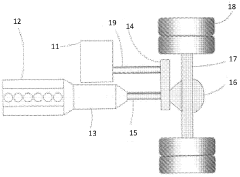
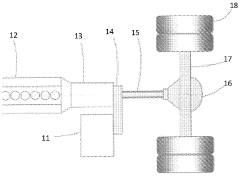
- A KERS with a power-split arrangement using a hydrostatic continuously variable transmission (CVT) and an epicyclic gearset, which includes both a variable and fixed ratio path in parallel, allowing for increased efficiency and flexibility by minimizing power loss through a torque summing junction, enabling energy recovery even when the vehicle is stationary without the need for a clutch or disconnect.


Kinetic energy recovery system
PatentWO2017216114A1
Innovation
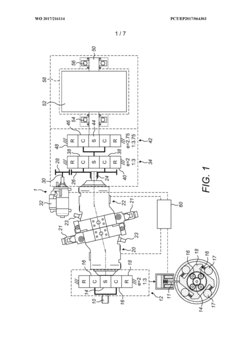
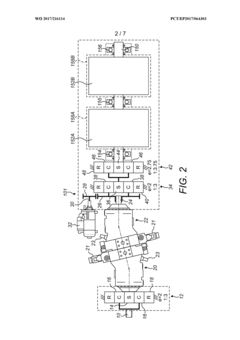
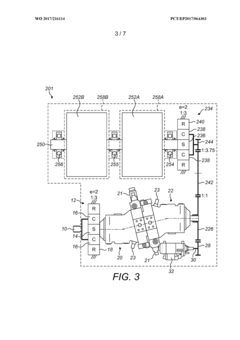
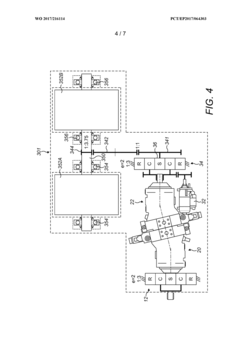
- A kinetic energy recovery system utilizing a hydraulic variator with bent axis motors and a flywheel located in a vacuum chamber, connected through speed-up gear arrangements, allowing for efficient energy storage and retrieval by varying motor displacement in response to vehicle powertrain demands.
Environmental Impact of KERS in Rail Transport
The implementation of Kinetic Energy Recovery Systems (KERS) in rail transport has significant environmental implications, primarily through its contribution to energy efficiency and reduced emissions. By capturing and reusing kinetic energy that would otherwise be lost during braking, KERS technology substantially decreases the overall energy consumption of train systems.
This reduction in energy usage directly translates to lower greenhouse gas emissions, particularly in regions where electricity generation relies heavily on fossil fuels. As trains equipped with KERS require less power from the grid, there is a corresponding decrease in carbon dioxide and other pollutants associated with electricity production. The environmental benefits are especially pronounced in urban areas with frequent stops, where the energy recovery potential is maximized.
KERS also contributes to noise reduction in rail operations. Traditional braking systems dissipate energy through friction, generating considerable noise. In contrast, KERS utilizes regenerative braking, which is inherently quieter. This noise reduction is particularly beneficial in densely populated areas, where rail noise can be a significant environmental concern.
The adoption of KERS in rail transport aligns with broader sustainability goals in the transportation sector. By improving energy efficiency, it reduces the overall ecological footprint of rail systems. This efficiency gain can make rail transport an even more attractive alternative to road transportation, potentially leading to a modal shift that further reduces overall transportation-related emissions.
Moreover, the environmental impact of KERS extends to the lifecycle of train components. The reduced wear on traditional braking systems leads to less frequent replacement of brake pads and discs. This not only decreases maintenance-related waste but also reduces the environmental costs associated with manufacturing and disposing of these components.
The implementation of KERS also has indirect environmental benefits. As train systems become more energy-efficient, they can potentially operate with smaller power supply infrastructure. This could lead to reduced land use for electrical substations and transmission lines, minimizing habitat disruption and landscape alterations along rail corridors.
In the long term, the widespread adoption of KERS in rail transport could contribute to the development of more sustainable urban planning. Energy-efficient train systems can support higher-density, transit-oriented development, reducing urban sprawl and its associated environmental impacts. This synergy between efficient transportation and urban design can lead to more sustainable cities with lower overall carbon footprints.
This reduction in energy usage directly translates to lower greenhouse gas emissions, particularly in regions where electricity generation relies heavily on fossil fuels. As trains equipped with KERS require less power from the grid, there is a corresponding decrease in carbon dioxide and other pollutants associated with electricity production. The environmental benefits are especially pronounced in urban areas with frequent stops, where the energy recovery potential is maximized.
KERS also contributes to noise reduction in rail operations. Traditional braking systems dissipate energy through friction, generating considerable noise. In contrast, KERS utilizes regenerative braking, which is inherently quieter. This noise reduction is particularly beneficial in densely populated areas, where rail noise can be a significant environmental concern.
The adoption of KERS in rail transport aligns with broader sustainability goals in the transportation sector. By improving energy efficiency, it reduces the overall ecological footprint of rail systems. This efficiency gain can make rail transport an even more attractive alternative to road transportation, potentially leading to a modal shift that further reduces overall transportation-related emissions.
Moreover, the environmental impact of KERS extends to the lifecycle of train components. The reduced wear on traditional braking systems leads to less frequent replacement of brake pads and discs. This not only decreases maintenance-related waste but also reduces the environmental costs associated with manufacturing and disposing of these components.
The implementation of KERS also has indirect environmental benefits. As train systems become more energy-efficient, they can potentially operate with smaller power supply infrastructure. This could lead to reduced land use for electrical substations and transmission lines, minimizing habitat disruption and landscape alterations along rail corridors.
In the long term, the widespread adoption of KERS in rail transport could contribute to the development of more sustainable urban planning. Energy-efficient train systems can support higher-density, transit-oriented development, reducing urban sprawl and its associated environmental impacts. This synergy between efficient transportation and urban design can lead to more sustainable cities with lower overall carbon footprints.
Economic Feasibility of KERS Implementation
The implementation of Kinetic Energy Recovery Systems (KERS) in train systems presents a compelling economic case, albeit with significant initial investment requirements. The primary economic benefit of KERS lies in its potential for substantial energy savings over the long term. By capturing and reusing kinetic energy that would otherwise be lost during braking, KERS can reduce the overall energy consumption of train operations by up to 30%, depending on the specific route and operational conditions.
This reduction in energy usage translates directly into lower operational costs for rail operators. Given the high energy demands of train systems, particularly in urban and suburban environments with frequent stops, the cumulative savings over time can be substantial. For instance, a medium-sized urban rail network implementing KERS could potentially save millions of dollars annually in energy costs, with the exact figure varying based on energy prices and network characteristics.
However, the economic feasibility of KERS implementation must be weighed against the initial capital expenditure. The installation of KERS technology requires significant upfront investment in both hardware and infrastructure modifications. This includes the cost of energy storage systems, power electronics, and potential alterations to existing rolling stock or track infrastructure. The scale of this investment can be a barrier for some operators, particularly those with limited financial resources or older rail systems requiring extensive modifications.
The return on investment (ROI) period for KERS implementation typically ranges from 5 to 10 years, depending on factors such as the scale of implementation, energy prices, and the efficiency of the specific KERS technology employed. This ROI timeline may be more attractive for newer rail systems or those undergoing major upgrades, where KERS can be integrated more cost-effectively into the overall system design.
Beyond direct energy savings, the economic feasibility of KERS is enhanced by several secondary benefits. These include reduced wear on traditional braking systems, potentially extending the lifespan of rolling stock and decreasing maintenance costs. Additionally, the improved energy efficiency contributes to lower carbon emissions, which can have economic value in regions with carbon pricing mechanisms or where there are incentives for green transportation initiatives.
The scalability of KERS technology also plays a role in its economic feasibility. As the technology matures and becomes more widely adopted, economies of scale are likely to reduce the per-unit cost of implementation. This trend could significantly improve the economic case for KERS in the future, potentially shortening ROI periods and making the technology accessible to a broader range of rail operators.
In conclusion, while the economic feasibility of KERS implementation in train systems is promising, it requires careful consideration of the specific context, including the characteristics of the rail network, energy costs, and available funding. For many operators, the long-term economic benefits and potential for significant energy savings make KERS an attractive investment, particularly when viewed as part of a broader strategy for sustainable and efficient rail operations.
This reduction in energy usage translates directly into lower operational costs for rail operators. Given the high energy demands of train systems, particularly in urban and suburban environments with frequent stops, the cumulative savings over time can be substantial. For instance, a medium-sized urban rail network implementing KERS could potentially save millions of dollars annually in energy costs, with the exact figure varying based on energy prices and network characteristics.
However, the economic feasibility of KERS implementation must be weighed against the initial capital expenditure. The installation of KERS technology requires significant upfront investment in both hardware and infrastructure modifications. This includes the cost of energy storage systems, power electronics, and potential alterations to existing rolling stock or track infrastructure. The scale of this investment can be a barrier for some operators, particularly those with limited financial resources or older rail systems requiring extensive modifications.
The return on investment (ROI) period for KERS implementation typically ranges from 5 to 10 years, depending on factors such as the scale of implementation, energy prices, and the efficiency of the specific KERS technology employed. This ROI timeline may be more attractive for newer rail systems or those undergoing major upgrades, where KERS can be integrated more cost-effectively into the overall system design.
Beyond direct energy savings, the economic feasibility of KERS is enhanced by several secondary benefits. These include reduced wear on traditional braking systems, potentially extending the lifespan of rolling stock and decreasing maintenance costs. Additionally, the improved energy efficiency contributes to lower carbon emissions, which can have economic value in regions with carbon pricing mechanisms or where there are incentives for green transportation initiatives.
The scalability of KERS technology also plays a role in its economic feasibility. As the technology matures and becomes more widely adopted, economies of scale are likely to reduce the per-unit cost of implementation. This trend could significantly improve the economic case for KERS in the future, potentially shortening ROI periods and making the technology accessible to a broader range of rail operators.
In conclusion, while the economic feasibility of KERS implementation in train systems is promising, it requires careful consideration of the specific context, including the characteristics of the rail network, energy costs, and available funding. For many operators, the long-term economic benefits and potential for significant energy savings make KERS an attractive investment, particularly when viewed as part of a broader strategy for sustainable and efficient rail operations.
Unlock deeper insights with Patsnap Eureka Quick Research — get a full tech report to explore trends and direct your research. Try now!
Generate Your Research Report Instantly with AI Agent
Supercharge your innovation with Patsnap Eureka AI Agent Platform!