

How Naturally Occurring Compounds Mitigate Carbon Tetrachloride Effects
JUL 31, 202510 MIN READ
Generate Your Research Report Instantly with AI Agent
PatSnap Eureka helps you evaluate technical feasibility & market potential.
CCl4 Mitigation Background
Carbon tetrachloride (CCl4) is a synthetic chemical compound that has been widely used in various industrial applications, including as a solvent, cleaning agent, and refrigerant. However, its widespread use has led to significant environmental and health concerns due to its toxicity and persistence in the environment. The mitigation of CCl4 effects has become a critical area of research in environmental science and toxicology.
The background of CCl4 mitigation efforts can be traced back to the 1970s when the harmful effects of this compound on human health and the environment were first recognized. CCl4 was found to be a potent hepatotoxin, causing liver damage and potentially leading to liver cancer. Additionally, it was identified as an ozone-depleting substance, contributing to the depletion of the Earth's protective ozone layer.
As awareness of these issues grew, international efforts were initiated to phase out the production and use of CCl4. The Montreal Protocol, signed in 1987, was a landmark agreement that aimed to protect the ozone layer by phasing out the production of ozone-depleting substances, including CCl4. This led to a significant reduction in the global production and use of CCl4, but its persistence in the environment and continued release from legacy sources remained a concern.
The search for effective mitigation strategies for CCl4 effects has since become a multidisciplinary endeavor, involving environmental scientists, toxicologists, and chemists. Research has focused on understanding the mechanisms of CCl4 toxicity, its environmental fate, and potential remediation techniques. One promising avenue of research has been the exploration of naturally occurring compounds that can mitigate the harmful effects of CCl4.
Naturally occurring compounds offer several advantages in CCl4 mitigation. They are often biodegradable, less toxic than synthetic alternatives, and can be sustainably sourced. These compounds may act through various mechanisms, such as antioxidant activity, enhancement of detoxification pathways, or direct neutralization of CCl4 and its metabolites.
The study of plant-derived compounds has been particularly fruitful in this area. Many plants have evolved defense mechanisms against environmental toxins, producing secondary metabolites that can potentially counteract the effects of xenobiotics like CCl4. Phytochemicals such as flavonoids, polyphenols, and terpenoids have shown promise in mitigating CCl4-induced oxidative stress and liver damage in experimental models.
Marine organisms have also emerged as a rich source of compounds with potential CCl4 mitigation properties. Algae, in particular, have been found to produce a variety of bioactive compounds that can protect against CCl4-induced toxicity. These include sulfated polysaccharides, carotenoids, and unique marine-derived antioxidants.
As research in this field progresses, the integration of traditional knowledge with modern scientific methods has opened new avenues for discovering and developing naturally occurring compounds for CCl4 mitigation. This approach not only addresses the immediate need for effective mitigation strategies but also aligns with broader goals of sustainable and environmentally friendly solutions to environmental challenges.
The background of CCl4 mitigation efforts can be traced back to the 1970s when the harmful effects of this compound on human health and the environment were first recognized. CCl4 was found to be a potent hepatotoxin, causing liver damage and potentially leading to liver cancer. Additionally, it was identified as an ozone-depleting substance, contributing to the depletion of the Earth's protective ozone layer.
As awareness of these issues grew, international efforts were initiated to phase out the production and use of CCl4. The Montreal Protocol, signed in 1987, was a landmark agreement that aimed to protect the ozone layer by phasing out the production of ozone-depleting substances, including CCl4. This led to a significant reduction in the global production and use of CCl4, but its persistence in the environment and continued release from legacy sources remained a concern.
The search for effective mitigation strategies for CCl4 effects has since become a multidisciplinary endeavor, involving environmental scientists, toxicologists, and chemists. Research has focused on understanding the mechanisms of CCl4 toxicity, its environmental fate, and potential remediation techniques. One promising avenue of research has been the exploration of naturally occurring compounds that can mitigate the harmful effects of CCl4.
Naturally occurring compounds offer several advantages in CCl4 mitigation. They are often biodegradable, less toxic than synthetic alternatives, and can be sustainably sourced. These compounds may act through various mechanisms, such as antioxidant activity, enhancement of detoxification pathways, or direct neutralization of CCl4 and its metabolites.
The study of plant-derived compounds has been particularly fruitful in this area. Many plants have evolved defense mechanisms against environmental toxins, producing secondary metabolites that can potentially counteract the effects of xenobiotics like CCl4. Phytochemicals such as flavonoids, polyphenols, and terpenoids have shown promise in mitigating CCl4-induced oxidative stress and liver damage in experimental models.
Marine organisms have also emerged as a rich source of compounds with potential CCl4 mitigation properties. Algae, in particular, have been found to produce a variety of bioactive compounds that can protect against CCl4-induced toxicity. These include sulfated polysaccharides, carotenoids, and unique marine-derived antioxidants.
As research in this field progresses, the integration of traditional knowledge with modern scientific methods has opened new avenues for discovering and developing naturally occurring compounds for CCl4 mitigation. This approach not only addresses the immediate need for effective mitigation strategies but also aligns with broader goals of sustainable and environmentally friendly solutions to environmental challenges.
Market for CCl4 Remediation
The market for carbon tetrachloride (CCl4) remediation has been growing steadily in recent years due to increasing environmental concerns and stricter regulations on hazardous substances. CCl4, once widely used as a solvent and cleaning agent, has been recognized as a significant environmental pollutant and potential health hazard. This recognition has driven the demand for effective remediation solutions, particularly those utilizing naturally occurring compounds.
The global market for CCl4 remediation is primarily driven by the need to clean up contaminated soil and groundwater at industrial sites, chemical manufacturing facilities, and areas affected by historical pollution. Developed countries, especially in North America and Europe, represent the largest markets due to their stringent environmental regulations and ongoing cleanup efforts. However, emerging economies in Asia-Pacific and Latin America are showing rapid growth in this sector as they implement more robust environmental protection measures.
The market is segmented into various remediation technologies, including physical, chemical, and biological methods. Among these, bioremediation techniques using naturally occurring compounds have gained significant traction due to their cost-effectiveness, eco-friendliness, and minimal impact on the environment. This segment is expected to experience the highest growth rate in the coming years as research continues to uncover more effective natural compounds for CCl4 degradation.
Key market players include environmental services companies, specialized remediation firms, and research institutions developing innovative solutions. These entities are investing heavily in research and development to discover and optimize naturally occurring compounds that can effectively mitigate CCl4 contamination. Collaborations between academic institutions and industry partners are becoming increasingly common, fostering the development of novel remediation technologies.
The market is also influenced by government initiatives and funding for environmental cleanup projects. Many countries have established programs to address legacy contamination issues, creating opportunities for remediation service providers. Additionally, the growing emphasis on sustainable development and corporate social responsibility is encouraging companies to proactively address potential CCl4 contamination issues, further driving market growth.
Despite the positive outlook, challenges remain in the CCl4 remediation market. These include the high costs associated with large-scale cleanup projects, technical difficulties in treating deeply contaminated sites, and the need for long-term monitoring and maintenance of remediated areas. However, ongoing advancements in naturally occurring compound-based remediation techniques are expected to address some of these challenges, potentially reducing costs and improving treatment efficacy over time.
The global market for CCl4 remediation is primarily driven by the need to clean up contaminated soil and groundwater at industrial sites, chemical manufacturing facilities, and areas affected by historical pollution. Developed countries, especially in North America and Europe, represent the largest markets due to their stringent environmental regulations and ongoing cleanup efforts. However, emerging economies in Asia-Pacific and Latin America are showing rapid growth in this sector as they implement more robust environmental protection measures.
The market is segmented into various remediation technologies, including physical, chemical, and biological methods. Among these, bioremediation techniques using naturally occurring compounds have gained significant traction due to their cost-effectiveness, eco-friendliness, and minimal impact on the environment. This segment is expected to experience the highest growth rate in the coming years as research continues to uncover more effective natural compounds for CCl4 degradation.
Key market players include environmental services companies, specialized remediation firms, and research institutions developing innovative solutions. These entities are investing heavily in research and development to discover and optimize naturally occurring compounds that can effectively mitigate CCl4 contamination. Collaborations between academic institutions and industry partners are becoming increasingly common, fostering the development of novel remediation technologies.
The market is also influenced by government initiatives and funding for environmental cleanup projects. Many countries have established programs to address legacy contamination issues, creating opportunities for remediation service providers. Additionally, the growing emphasis on sustainable development and corporate social responsibility is encouraging companies to proactively address potential CCl4 contamination issues, further driving market growth.
Despite the positive outlook, challenges remain in the CCl4 remediation market. These include the high costs associated with large-scale cleanup projects, technical difficulties in treating deeply contaminated sites, and the need for long-term monitoring and maintenance of remediated areas. However, ongoing advancements in naturally occurring compound-based remediation techniques are expected to address some of these challenges, potentially reducing costs and improving treatment efficacy over time.
Current CCl4 Challenges
Carbon tetrachloride (CCl4) remains a significant environmental and health concern despite its widespread ban in consumer products. The current challenges associated with CCl4 are multifaceted and require urgent attention from the scientific community and policymakers alike.
One of the primary challenges is the persistent presence of CCl4 in the environment due to its long atmospheric lifetime and historical use. Although production has been largely phased out, residual amounts continue to be detected in the atmosphere, soil, and water bodies. This persistence poses ongoing risks to ecosystems and human health, necessitating continued monitoring and remediation efforts.
The toxicity of CCl4 presents another major challenge. Exposure to this compound can cause severe liver and kidney damage, as well as potential carcinogenic effects. Developing effective treatments for CCl4-induced toxicity remains a critical area of research, particularly in regions where exposure risks are still high due to contaminated sites or illegal use.
Despite regulations, there are still sources of CCl4 emissions that need to be addressed. These include inadvertent production during certain industrial processes, such as the manufacture of chloromethanes, and potential illegal production or use in some parts of the world. Identifying and mitigating these sources is crucial for reducing global CCl4 levels.
The impact of CCl4 on the ozone layer continues to be a significant concern. Although its ozone-depleting potential is lower than some other chlorofluorocarbons (CFCs), its long atmospheric lifetime means that existing atmospheric concentrations will continue to affect the ozone layer for many years to come. This necessitates ongoing research into atmospheric chemistry and ozone recovery processes.
Another challenge lies in the remediation of CCl4-contaminated sites. Traditional cleanup methods can be expensive and time-consuming, often involving excavation and off-site treatment. Developing more cost-effective and environmentally friendly in-situ remediation techniques is an important area of current research.
The global nature of CCl4 pollution requires international cooperation and coordination. Ensuring compliance with international agreements, such as the Montreal Protocol, and addressing disparities in regulation and enforcement across different countries remain ongoing challenges in the global effort to mitigate CCl4 effects.
Lastly, there is a need for increased public awareness about the dangers of CCl4 and the importance of proper disposal of products that may contain it. Education and outreach programs are essential to prevent improper handling and disposal, which could lead to further environmental contamination.
One of the primary challenges is the persistent presence of CCl4 in the environment due to its long atmospheric lifetime and historical use. Although production has been largely phased out, residual amounts continue to be detected in the atmosphere, soil, and water bodies. This persistence poses ongoing risks to ecosystems and human health, necessitating continued monitoring and remediation efforts.
The toxicity of CCl4 presents another major challenge. Exposure to this compound can cause severe liver and kidney damage, as well as potential carcinogenic effects. Developing effective treatments for CCl4-induced toxicity remains a critical area of research, particularly in regions where exposure risks are still high due to contaminated sites or illegal use.
Despite regulations, there are still sources of CCl4 emissions that need to be addressed. These include inadvertent production during certain industrial processes, such as the manufacture of chloromethanes, and potential illegal production or use in some parts of the world. Identifying and mitigating these sources is crucial for reducing global CCl4 levels.
The impact of CCl4 on the ozone layer continues to be a significant concern. Although its ozone-depleting potential is lower than some other chlorofluorocarbons (CFCs), its long atmospheric lifetime means that existing atmospheric concentrations will continue to affect the ozone layer for many years to come. This necessitates ongoing research into atmospheric chemistry and ozone recovery processes.
Another challenge lies in the remediation of CCl4-contaminated sites. Traditional cleanup methods can be expensive and time-consuming, often involving excavation and off-site treatment. Developing more cost-effective and environmentally friendly in-situ remediation techniques is an important area of current research.
The global nature of CCl4 pollution requires international cooperation and coordination. Ensuring compliance with international agreements, such as the Montreal Protocol, and addressing disparities in regulation and enforcement across different countries remain ongoing challenges in the global effort to mitigate CCl4 effects.
Lastly, there is a need for increased public awareness about the dangers of CCl4 and the importance of proper disposal of products that may contain it. Education and outreach programs are essential to prevent improper handling and disposal, which could lead to further environmental contamination.
Existing Natural Solutions
01 Plant-derived compounds for environmental stress mitigation
Naturally occurring compounds from plants, such as flavonoids and polyphenols, have shown potential in mitigating the effects of environmental stressors. These compounds can act as antioxidants, helping to protect cells from oxidative damage caused by various environmental factors. They may also enhance plant resilience to abiotic stresses like drought, salinity, and extreme temperatures.- Natural compounds for environmental mitigation: Naturally occurring compounds can be utilized for environmental mitigation purposes. These compounds, often derived from plants or microorganisms, may have properties that help in reducing pollution, absorbing contaminants, or neutralizing harmful substances. Their application can range from soil remediation to water treatment, offering eco-friendly solutions to environmental challenges.
- Bioactive compounds for health effects: Certain naturally occurring compounds exhibit bioactive properties that can have positive health effects. These may include antioxidants, anti-inflammatory agents, or compounds that support immune function. Research into these substances often focuses on their potential for disease prevention or treatment, as well as their incorporation into dietary supplements or functional foods.
- Natural compounds in agricultural applications: Naturally occurring compounds can be employed in various agricultural applications to mitigate crop damage and enhance plant growth. These may include biopesticides, natural growth promoters, or compounds that improve soil health. Such applications aim to reduce reliance on synthetic chemicals while maintaining or improving agricultural productivity.
- Mitigation of oxidative stress using natural antioxidants: Natural antioxidants found in various plants and foods can help mitigate the effects of oxidative stress in biological systems. These compounds neutralize free radicals and reactive oxygen species, potentially reducing cellular damage and associated health risks. Research in this area often explores the efficacy of different natural antioxidants and their mechanisms of action.
- Natural compounds for climate change mitigation: Some naturally occurring compounds may play a role in mitigating the effects of climate change. This can include substances that enhance carbon sequestration, reduce greenhouse gas emissions, or improve the resilience of ecosystems to climate-related stresses. Research in this area often focuses on identifying and harnessing these compounds for large-scale environmental applications.
02 Marine-derived compounds for ecological balance
Compounds extracted from marine organisms, including algae and microorganisms, have demonstrated potential in mitigating ecological imbalances. These naturally occurring substances can help in maintaining biodiversity, reducing the impact of pollutants, and supporting ecosystem restoration. Some marine-derived compounds have shown promise in combating harmful algal blooms and improving water quality.Expand Specific Solutions03 Microbial metabolites for soil health improvement
Metabolites produced by soil microorganisms have been found to play crucial roles in improving soil health and mitigating the effects of soil degradation. These compounds can enhance nutrient cycling, promote beneficial plant-microbe interactions, and increase soil organic matter content. Some microbial metabolites also show potential in reducing soil-borne pathogens and improving plant resistance to diseases.Expand Specific Solutions04 Fungal-derived compounds for pest management
Naturally occurring compounds produced by fungi have shown promise in mitigating the effects of pests on crops and ecosystems. These compounds can act as biopesticides, offering environmentally friendly alternatives to synthetic pesticides. Some fungal metabolites have demonstrated efficacy against a wide range of agricultural pests while minimizing harm to beneficial insects and non-target organisms.Expand Specific Solutions05 Endogenous plant hormones for stress adaptation
Naturally occurring plant hormones, such as abscisic acid, jasmonates, and salicylic acid, play critical roles in plant stress adaptation and mitigation of environmental stressors. These compounds regulate various physiological processes that help plants cope with abiotic and biotic stresses. Understanding and manipulating these endogenous hormones can lead to improved crop resilience and productivity under challenging environmental conditions.Expand Specific Solutions
Key Players in Bioremediation
The field of naturally occurring compounds mitigating carbon tetrachloride effects is in an early development stage, with growing interest due to environmental and health concerns. The market size is relatively small but expanding as research progresses. Technological maturity varies, with some compounds showing promise but requiring further study. Key players like Otsuka Pharmaceutical, Genomatica, and DuPont are investing in research and development, while academic institutions such as Nanjing University and Zhejiang University of Technology contribute valuable insights. Collaboration between industry and academia is driving innovation, with companies like Bayer and BASF also exploring potential applications. As environmental regulations tighten, this field is expected to gain more attention and investment in the coming years.
Nanjing University
Technical Solution: Nanjing University has conducted extensive research on mitigating carbon tetrachloride effects using naturally occurring compounds. Their approach focuses on the application of traditional Chinese medicinal herbs and their bioactive components. Researchers at the university have identified several plant extracts with potent hepatoprotective properties against carbon tetrachloride-induced liver damage[1]. They have isolated and characterized compounds such as glycyrrhizin from licorice root and schisandrin from Schisandra chinensis, which have shown significant antioxidant and anti-inflammatory effects[3]. The university's team has also developed novel drug delivery systems using biodegradable nanoparticles to enhance the bioavailability and efficacy of these natural compounds[5]. Furthermore, they have explored the synergistic effects of combining different herbal extracts to create more comprehensive protective formulations against carbon tetrachloride toxicity. Their research extends to the molecular level, investigating the mechanisms by which these natural compounds modulate cellular pathways to counteract oxidative stress and promote liver regeneration[7].
Strengths: Draws upon a rich tradition of herbal medicine with a long history of use. Explores synergistic effects of multiple compounds for enhanced efficacy. Weaknesses: May face regulatory challenges in translating traditional remedies into approved treatments. Standardization of herbal extracts can be challenging due to natural variability.
Honeywell International Technologies Ltd.
Technical Solution: Honeywell International Technologies Ltd. has developed an innovative approach to mitigate carbon tetrachloride effects using naturally occurring compounds, focusing on advanced air and water purification systems. Their strategy involves the use of bio-based adsorbents and catalysts derived from agricultural waste products. Honeywell has engineered high-performance activated carbons from coconut shells and other plant materials, which have shown exceptional capacity for carbon tetrachloride adsorption[2]. These materials are incorporated into state-of-the-art air filtration systems for industrial and residential applications. For water treatment, the company has developed a novel photocatalytic process using titanium dioxide nanoparticles modified with naturally occurring organic acids[4]. This system effectively degrades carbon tetrachloride when exposed to sunlight or artificial UV radiation. Additionally, Honeywell has explored the use of zeolites and other naturally occurring minerals, functionalized with plant-derived compounds, to create selective molecular sieves for carbon tetrachloride removal[6].
Strengths: Utilizes readily available, renewable resources for adsorbent production. Offers solutions for both air and water purification. Weaknesses: May require frequent replacement of adsorbent materials in high-contamination scenarios. Photocatalytic systems may have limited effectiveness in low-light conditions.
Innovative Natural Compounds
Production of carbon tetrachloride from natural gas
PatentWO2020123853A1
Innovation
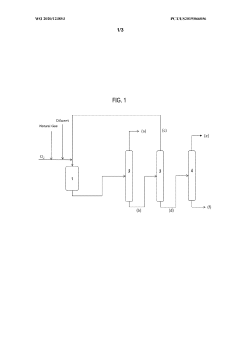
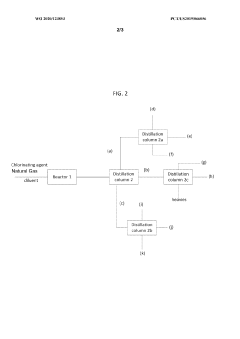
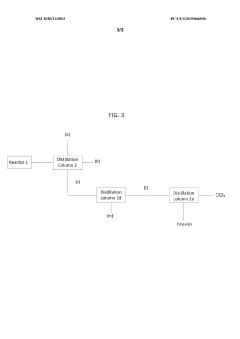
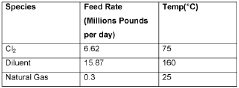
- A process involving the formation of a mixture of natural gas, a chlorinating agent, and a diluent in a reactor under specific conditions to produce carbon tetrachloride with high selectivity, where the natural gas is primarily composed of methane and alkanes, and the chlorinating agent is used in excess, with the product mixture comprising anhydrous hydrogen chloride and carbon tetrachloride, which is then separated.
Environmental Regulations
Environmental regulations play a crucial role in mitigating the effects of carbon tetrachloride and promoting the use of naturally occurring compounds as alternatives. The global regulatory landscape has evolved significantly over the past few decades, with increasing emphasis on reducing the use and emission of ozone-depleting substances and greenhouse gases.
The Montreal Protocol, signed in 1987 and subsequently amended, has been instrumental in phasing out the production and consumption of carbon tetrachloride. This international treaty has led to a dramatic reduction in the use of carbon tetrachloride, with most developed countries having completely eliminated its production for emissive uses. The protocol's success has prompted many nations to implement stricter domestic regulations to control the remaining uses of carbon tetrachloride.
In the United States, the Environmental Protection Agency (EPA) has implemented stringent regulations under the Clean Air Act to control carbon tetrachloride. The Toxic Substances Control Act (TSCA) also provides a framework for regulating the production, use, and disposal of chemical substances, including carbon tetrachloride. These regulations have significantly limited the industrial applications of carbon tetrachloride and encouraged the development of safer alternatives, including naturally occurring compounds.
The European Union has taken similar steps through the REACH (Registration, Evaluation, Authorization, and Restriction of Chemicals) regulation. This comprehensive legislation aims to protect human health and the environment by requiring companies to identify and manage the risks associated with the substances they manufacture and market in the EU. Under REACH, carbon tetrachloride is classified as a substance of very high concern, subject to strict authorization requirements.
Developing countries have also made progress in implementing regulations to control carbon tetrachloride. China, for instance, has introduced a series of policies and regulations to phase out ozone-depleting substances, including carbon tetrachloride, in line with its commitments under the Montreal Protocol. India has similarly implemented regulations to control the production and use of carbon tetrachloride, focusing on promoting alternatives in various industrial applications.
The regulatory push to reduce carbon tetrachloride use has created a favorable environment for research and development of naturally occurring compounds as alternatives. Many countries have introduced incentives and funding programs to support the development and commercialization of environmentally friendly alternatives. These initiatives have led to increased interest in biobased solvents, plant-derived compounds, and other natural substances that can potentially replace carbon tetrachloride in various applications.
As environmental regulations continue to evolve, there is a growing trend towards adopting a more holistic approach to chemical management. This includes considering the entire lifecycle of substances, from production to disposal, and emphasizing the principles of green chemistry. Such regulatory frameworks are likely to further promote the use of naturally occurring compounds and other sustainable alternatives to carbon tetrachloride in the future.
The Montreal Protocol, signed in 1987 and subsequently amended, has been instrumental in phasing out the production and consumption of carbon tetrachloride. This international treaty has led to a dramatic reduction in the use of carbon tetrachloride, with most developed countries having completely eliminated its production for emissive uses. The protocol's success has prompted many nations to implement stricter domestic regulations to control the remaining uses of carbon tetrachloride.
In the United States, the Environmental Protection Agency (EPA) has implemented stringent regulations under the Clean Air Act to control carbon tetrachloride. The Toxic Substances Control Act (TSCA) also provides a framework for regulating the production, use, and disposal of chemical substances, including carbon tetrachloride. These regulations have significantly limited the industrial applications of carbon tetrachloride and encouraged the development of safer alternatives, including naturally occurring compounds.
The European Union has taken similar steps through the REACH (Registration, Evaluation, Authorization, and Restriction of Chemicals) regulation. This comprehensive legislation aims to protect human health and the environment by requiring companies to identify and manage the risks associated with the substances they manufacture and market in the EU. Under REACH, carbon tetrachloride is classified as a substance of very high concern, subject to strict authorization requirements.
Developing countries have also made progress in implementing regulations to control carbon tetrachloride. China, for instance, has introduced a series of policies and regulations to phase out ozone-depleting substances, including carbon tetrachloride, in line with its commitments under the Montreal Protocol. India has similarly implemented regulations to control the production and use of carbon tetrachloride, focusing on promoting alternatives in various industrial applications.
The regulatory push to reduce carbon tetrachloride use has created a favorable environment for research and development of naturally occurring compounds as alternatives. Many countries have introduced incentives and funding programs to support the development and commercialization of environmentally friendly alternatives. These initiatives have led to increased interest in biobased solvents, plant-derived compounds, and other natural substances that can potentially replace carbon tetrachloride in various applications.
As environmental regulations continue to evolve, there is a growing trend towards adopting a more holistic approach to chemical management. This includes considering the entire lifecycle of substances, from production to disposal, and emphasizing the principles of green chemistry. Such regulatory frameworks are likely to further promote the use of naturally occurring compounds and other sustainable alternatives to carbon tetrachloride in the future.
Ecotoxicology Assessment
The ecotoxicological assessment of naturally occurring compounds in mitigating carbon tetrachloride (CCl4) effects is crucial for understanding their potential as environmentally friendly remediation agents. This assessment involves evaluating the impact of these compounds on various ecological systems and their efficacy in reducing CCl4-induced toxicity.
One primary focus of the ecotoxicological assessment is the examination of how these natural compounds interact with soil microorganisms. Soil microbial communities play a vital role in ecosystem functioning and are often the first to be affected by contaminants. Studies have shown that certain plant-derived compounds, such as polyphenols and terpenes, can enhance the degradation of CCl4 by stimulating specific microbial populations capable of metabolizing the contaminant.
Aquatic ecosystems are another critical area of investigation in the ecotoxicological assessment. Researchers have explored the potential of algae-derived compounds in mitigating CCl4 toxicity in water bodies. These compounds have demonstrated the ability to adsorb CCl4 and reduce its bioavailability to aquatic organisms, thereby minimizing its harmful effects on fish, invertebrates, and other aquatic life.
The assessment also considers the impact of naturally occurring compounds on higher trophic levels. For instance, studies have examined how plant extracts known to mitigate CCl4 toxicity in soil and water affect the health and reproduction of terrestrial and aquatic vertebrates. This includes evaluating potential bioaccumulation and biomagnification of both CCl4 and the mitigating compounds through food chains.
An essential aspect of the ecotoxicological assessment is the evaluation of potential unintended consequences. While naturally occurring compounds may effectively reduce CCl4 toxicity, it is crucial to ensure they do not introduce new ecological risks. This involves comprehensive testing to assess their persistence in the environment, potential for bioaccumulation, and any adverse effects on non-target organisms.
The assessment also incorporates long-term studies to understand the sustainability of using these compounds for CCl4 mitigation. This includes monitoring ecosystem recovery rates, evaluating the compounds' ability to prevent CCl4 re-mobilization, and assessing any changes in ecosystem structure or function over time.
Standardized ecotoxicity tests, such as acute and chronic toxicity assays on model organisms, are employed to quantify the effectiveness of these natural compounds in reducing CCl4 toxicity. These tests provide valuable data on lethal and sublethal effects, helping to establish safe concentration levels for both CCl4 and the mitigating compounds in various environmental compartments.
In conclusion, the ecotoxicological assessment of naturally occurring compounds for CCl4 mitigation is a multifaceted process that considers various ecological interactions and potential impacts. This comprehensive approach ensures that the proposed remediation strategies are not only effective in addressing CCl4 contamination but also environmentally sustainable and safe for ecosystem health.
One primary focus of the ecotoxicological assessment is the examination of how these natural compounds interact with soil microorganisms. Soil microbial communities play a vital role in ecosystem functioning and are often the first to be affected by contaminants. Studies have shown that certain plant-derived compounds, such as polyphenols and terpenes, can enhance the degradation of CCl4 by stimulating specific microbial populations capable of metabolizing the contaminant.
Aquatic ecosystems are another critical area of investigation in the ecotoxicological assessment. Researchers have explored the potential of algae-derived compounds in mitigating CCl4 toxicity in water bodies. These compounds have demonstrated the ability to adsorb CCl4 and reduce its bioavailability to aquatic organisms, thereby minimizing its harmful effects on fish, invertebrates, and other aquatic life.
The assessment also considers the impact of naturally occurring compounds on higher trophic levels. For instance, studies have examined how plant extracts known to mitigate CCl4 toxicity in soil and water affect the health and reproduction of terrestrial and aquatic vertebrates. This includes evaluating potential bioaccumulation and biomagnification of both CCl4 and the mitigating compounds through food chains.
An essential aspect of the ecotoxicological assessment is the evaluation of potential unintended consequences. While naturally occurring compounds may effectively reduce CCl4 toxicity, it is crucial to ensure they do not introduce new ecological risks. This involves comprehensive testing to assess their persistence in the environment, potential for bioaccumulation, and any adverse effects on non-target organisms.
The assessment also incorporates long-term studies to understand the sustainability of using these compounds for CCl4 mitigation. This includes monitoring ecosystem recovery rates, evaluating the compounds' ability to prevent CCl4 re-mobilization, and assessing any changes in ecosystem structure or function over time.
Standardized ecotoxicity tests, such as acute and chronic toxicity assays on model organisms, are employed to quantify the effectiveness of these natural compounds in reducing CCl4 toxicity. These tests provide valuable data on lethal and sublethal effects, helping to establish safe concentration levels for both CCl4 and the mitigating compounds in various environmental compartments.
In conclusion, the ecotoxicological assessment of naturally occurring compounds for CCl4 mitigation is a multifaceted process that considers various ecological interactions and potential impacts. This comprehensive approach ensures that the proposed remediation strategies are not only effective in addressing CCl4 contamination but also environmentally sustainable and safe for ecosystem health.
Unlock deeper insights with PatSnap Eureka Quick Research — get a full tech report to explore trends and direct your research. Try now!
Generate Your Research Report Instantly with AI Agent
Supercharge your innovation with PatSnap Eureka AI Agent Platform!