

How Nitrification Interacts With Denitrification Processes?
SEP 10, 20259 MIN READ
Generate Your Research Report Instantly with AI Agent
PatSnap Eureka helps you evaluate technical feasibility & market potential.
Nitrification-Denitrification Background and Research Objectives
Nitrification and denitrification represent two fundamental biogeochemical processes in the global nitrogen cycle that have evolved over billions of years. Historically, these processes were studied separately until the 1970s when researchers began to recognize their intricate interconnections. The nitrification process, involving the oxidation of ammonia to nitrite and subsequently to nitrate, emerged approximately 2.5 billion years ago following the Great Oxidation Event. Denitrification, which reduces nitrate back to atmospheric nitrogen, likely evolved even earlier in anaerobic environments.
Recent technological advancements in molecular biology, stable isotope analysis, and microsensor technology have revolutionized our understanding of these processes, revealing complex interactions previously unrecognized. The evolution of these techniques has enabled researchers to identify specialized microorganisms and intermediate compounds that serve as critical links between nitrification and denitrification pathways.
Current trends indicate a growing recognition of these processes as a continuum rather than discrete phenomena. The discovery of organisms capable of performing complete ammonia oxidation (comammox) and anaerobic ammonia oxidation (anammox) has fundamentally altered our conceptual framework. Additionally, the identification of nitrite as a pivotal intermediate compound has highlighted the dynamic interface between these processes.
The primary objective of this technical research is to elucidate the molecular, biochemical, and ecological mechanisms governing the interactions between nitrification and denitrification processes. Specifically, we aim to identify the environmental factors that regulate the balance between these processes, characterize the microbial communities involved in these interactions, and quantify the rates of nitrogen transformation at the interface of aerobic and anaerobic zones.
Furthermore, this research seeks to develop predictive models that can accurately simulate nitrogen cycling in various ecosystems, from agricultural soils to wastewater treatment systems. By understanding these interactions, we can optimize nitrogen removal in engineered systems, mitigate greenhouse gas emissions (particularly nitrous oxide), and develop strategies to enhance nitrogen use efficiency in agricultural settings.
The technological goals include developing novel monitoring tools capable of real-time measurement of nitrification-denitrification interactions, creating bioreactors that strategically exploit these interactions for improved nitrogen removal, and formulating mathematical models that accurately predict nitrogen transformation rates under varying environmental conditions. These advancements will contribute significantly to addressing global challenges related to water quality, climate change, and sustainable agriculture.
Recent technological advancements in molecular biology, stable isotope analysis, and microsensor technology have revolutionized our understanding of these processes, revealing complex interactions previously unrecognized. The evolution of these techniques has enabled researchers to identify specialized microorganisms and intermediate compounds that serve as critical links between nitrification and denitrification pathways.
Current trends indicate a growing recognition of these processes as a continuum rather than discrete phenomena. The discovery of organisms capable of performing complete ammonia oxidation (comammox) and anaerobic ammonia oxidation (anammox) has fundamentally altered our conceptual framework. Additionally, the identification of nitrite as a pivotal intermediate compound has highlighted the dynamic interface between these processes.
The primary objective of this technical research is to elucidate the molecular, biochemical, and ecological mechanisms governing the interactions between nitrification and denitrification processes. Specifically, we aim to identify the environmental factors that regulate the balance between these processes, characterize the microbial communities involved in these interactions, and quantify the rates of nitrogen transformation at the interface of aerobic and anaerobic zones.
Furthermore, this research seeks to develop predictive models that can accurately simulate nitrogen cycling in various ecosystems, from agricultural soils to wastewater treatment systems. By understanding these interactions, we can optimize nitrogen removal in engineered systems, mitigate greenhouse gas emissions (particularly nitrous oxide), and develop strategies to enhance nitrogen use efficiency in agricultural settings.
The technological goals include developing novel monitoring tools capable of real-time measurement of nitrification-denitrification interactions, creating bioreactors that strategically exploit these interactions for improved nitrogen removal, and formulating mathematical models that accurately predict nitrogen transformation rates under varying environmental conditions. These advancements will contribute significantly to addressing global challenges related to water quality, climate change, and sustainable agriculture.
Market Applications and Environmental Demand Analysis
The global market for nitrification and denitrification technologies has experienced significant growth in recent years, driven primarily by increasing environmental regulations and growing concerns about water quality. The wastewater treatment sector represents the largest application area, with municipal facilities accounting for approximately 60% of the market share, followed by industrial applications at 30%.
Water treatment facilities worldwide are facing stricter nitrogen discharge limits, creating substantial demand for advanced nitrification-denitrification systems. The European Union's Water Framework Directive and the United States Environmental Protection Agency's Clean Water Act amendments have established increasingly stringent standards for nitrogen compounds in effluent discharge, directly stimulating market growth.
Agricultural runoff management represents another rapidly expanding market segment, growing at nearly 8% annually. As awareness of agricultural nitrogen pollution increases, farmers and agricultural corporations are investing in technologies that can mitigate nitrogen losses from fields while simultaneously improving soil health through optimized nitrogen cycling processes.
The aquaculture industry has emerged as a particularly promising application area, with the market expected to double in size over the next decade. Recirculating aquaculture systems rely heavily on balanced nitrification-denitrification processes to maintain water quality while minimizing water usage and environmental impact.
Ecological restoration projects focused on wetlands, rivers, and coastal zones represent a smaller but rapidly growing market segment. These projects increasingly incorporate engineered solutions that leverage natural nitrification-denitrification processes to improve ecosystem health and resilience.
The biogas and renewable energy sectors have also begun integrating nitrification-denitrification technologies into their processes, particularly for treating digestate and other nitrogen-rich byproducts. This integration allows for more complete nutrient recovery while reducing environmental impacts.
From a geographical perspective, North America and Europe currently dominate the market with approximately 65% combined market share, though the Asia-Pacific region is experiencing the fastest growth rate at 12% annually. China's recent environmental policy shifts have created particularly strong demand growth, with significant investments in municipal wastewater infrastructure incorporating advanced biological nitrogen removal systems.
Climate change mitigation efforts are creating new market opportunities as well, with carbon credit systems beginning to recognize the value of reduced nitrous oxide emissions achieved through optimized nitrification-denitrification management. This emerging market driver could significantly expand applications beyond traditional water treatment contexts.
Water treatment facilities worldwide are facing stricter nitrogen discharge limits, creating substantial demand for advanced nitrification-denitrification systems. The European Union's Water Framework Directive and the United States Environmental Protection Agency's Clean Water Act amendments have established increasingly stringent standards for nitrogen compounds in effluent discharge, directly stimulating market growth.
Agricultural runoff management represents another rapidly expanding market segment, growing at nearly 8% annually. As awareness of agricultural nitrogen pollution increases, farmers and agricultural corporations are investing in technologies that can mitigate nitrogen losses from fields while simultaneously improving soil health through optimized nitrogen cycling processes.
The aquaculture industry has emerged as a particularly promising application area, with the market expected to double in size over the next decade. Recirculating aquaculture systems rely heavily on balanced nitrification-denitrification processes to maintain water quality while minimizing water usage and environmental impact.
Ecological restoration projects focused on wetlands, rivers, and coastal zones represent a smaller but rapidly growing market segment. These projects increasingly incorporate engineered solutions that leverage natural nitrification-denitrification processes to improve ecosystem health and resilience.
The biogas and renewable energy sectors have also begun integrating nitrification-denitrification technologies into their processes, particularly for treating digestate and other nitrogen-rich byproducts. This integration allows for more complete nutrient recovery while reducing environmental impacts.
From a geographical perspective, North America and Europe currently dominate the market with approximately 65% combined market share, though the Asia-Pacific region is experiencing the fastest growth rate at 12% annually. China's recent environmental policy shifts have created particularly strong demand growth, with significant investments in municipal wastewater infrastructure incorporating advanced biological nitrogen removal systems.
Climate change mitigation efforts are creating new market opportunities as well, with carbon credit systems beginning to recognize the value of reduced nitrous oxide emissions achieved through optimized nitrification-denitrification management. This emerging market driver could significantly expand applications beyond traditional water treatment contexts.
Current Technical Challenges in Nitrogen Cycle Management
The management of nitrogen cycling processes presents significant technical challenges due to the complex interplay between nitrification and denitrification. Current nitrogen management systems struggle with precise control over these microbial processes, particularly in agricultural settings where nitrogen losses can reach 50-70% of applied fertilizers. This inefficiency results in substantial economic losses and environmental degradation through groundwater contamination and greenhouse gas emissions.
A primary technical challenge involves monitoring and controlling the environmental conditions that govern nitrification-denitrification interactions. Oxygen concentration serves as a critical parameter, with nitrification requiring aerobic conditions while denitrification occurs under anaerobic conditions. Creating controlled micro-environments that facilitate both processes in sequence remains difficult in field applications, especially given the spatial and temporal variability of soil conditions.
Temperature and pH fluctuations further complicate nitrogen cycle management. Nitrifying bacteria operate optimally between 25-30°C and pH 7.5-8.0, while denitrifying bacteria prefer slightly different conditions. Climate change exacerbates these challenges by introducing greater temperature extremes and precipitation variability, disrupting the delicate balance between these processes.
Carbon availability represents another significant technical hurdle. Denitrification requires sufficient organic carbon as an electron donor, while nitrification does not. Developing systems that provide appropriate carbon-to-nitrogen ratios for optimizing both processes simultaneously remains technically challenging, particularly in engineered systems like wastewater treatment plants.
Microbial community dynamics add another layer of complexity. The diversity and abundance of nitrifying and denitrifying microorganisms vary significantly across environments and respond differently to management interventions. Current technologies lack the precision to selectively enhance beneficial microbial populations while suppressing those contributing to nitrogen losses.
Sensor technology limitations hinder real-time monitoring of nitrogen transformation processes. Existing sensors for measuring various nitrogen species (NH₄⁺, NO₂⁻, NO₃⁻) and dissolved oxygen often lack the sensitivity, specificity, or durability required for continuous field deployment, particularly in harsh environments like agricultural soils or wastewater treatment facilities.
Integration of these processes into sustainable management systems presents perhaps the greatest challenge. Developing technologies that can simultaneously optimize nitrogen use efficiency, minimize environmental impacts, and remain economically viable requires interdisciplinary approaches that bridge microbiology, soil science, engineering, and economics. Current solutions often address only one aspect of this complex system, leading to suboptimal outcomes and unintended consequences in nitrogen cycle management.
A primary technical challenge involves monitoring and controlling the environmental conditions that govern nitrification-denitrification interactions. Oxygen concentration serves as a critical parameter, with nitrification requiring aerobic conditions while denitrification occurs under anaerobic conditions. Creating controlled micro-environments that facilitate both processes in sequence remains difficult in field applications, especially given the spatial and temporal variability of soil conditions.
Temperature and pH fluctuations further complicate nitrogen cycle management. Nitrifying bacteria operate optimally between 25-30°C and pH 7.5-8.0, while denitrifying bacteria prefer slightly different conditions. Climate change exacerbates these challenges by introducing greater temperature extremes and precipitation variability, disrupting the delicate balance between these processes.
Carbon availability represents another significant technical hurdle. Denitrification requires sufficient organic carbon as an electron donor, while nitrification does not. Developing systems that provide appropriate carbon-to-nitrogen ratios for optimizing both processes simultaneously remains technically challenging, particularly in engineered systems like wastewater treatment plants.
Microbial community dynamics add another layer of complexity. The diversity and abundance of nitrifying and denitrifying microorganisms vary significantly across environments and respond differently to management interventions. Current technologies lack the precision to selectively enhance beneficial microbial populations while suppressing those contributing to nitrogen losses.
Sensor technology limitations hinder real-time monitoring of nitrogen transformation processes. Existing sensors for measuring various nitrogen species (NH₄⁺, NO₂⁻, NO₃⁻) and dissolved oxygen often lack the sensitivity, specificity, or durability required for continuous field deployment, particularly in harsh environments like agricultural soils or wastewater treatment facilities.
Integration of these processes into sustainable management systems presents perhaps the greatest challenge. Developing technologies that can simultaneously optimize nitrogen use efficiency, minimize environmental impacts, and remain economically viable requires interdisciplinary approaches that bridge microbiology, soil science, engineering, and economics. Current solutions often address only one aspect of this complex system, leading to suboptimal outcomes and unintended consequences in nitrogen cycle management.
Established Methodologies for Nitrification-Denitrification Coupling
01 Simultaneous nitrification-denitrification processes
Simultaneous nitrification and denitrification (SND) processes allow both reactions to occur in the same reactor under controlled conditions. This approach optimizes nitrogen removal by creating microenvironments where aerobic nitrifying bacteria and anaerobic denitrifying bacteria can coexist. The process typically involves maintaining dissolved oxygen at intermediate levels to create aerobic and anoxic zones within microbial flocs or biofilms, enabling efficient nitrogen transformation while reducing operational costs and space requirements.- Simultaneous nitrification-denitrification processes: Simultaneous nitrification-denitrification (SND) processes allow both reactions to occur in the same reactor, optimizing nitrogen removal efficiency. These systems typically employ specialized microbial communities that can perform both processes under carefully controlled conditions. The interaction between nitrifying and denitrifying bacteria in these systems creates synergistic effects that enhance overall nitrogen removal while reducing operational costs and space requirements.
- Reactor design for optimized process interaction: Specialized reactor designs facilitate the interaction between nitrification and denitrification processes. These designs create distinct aerobic and anoxic zones within a single system or connect multiple reactors in series to optimize the nitrogen transformation pathway. Advanced reactor configurations incorporate features like internal recirculation, baffles, or membrane separation to enhance the synergy between the two processes while maintaining ideal conditions for each microbial community.
- Microbial community management for nitrogen cycling: Managing the microbial communities involved in nitrification and denitrification is crucial for effective process interaction. This includes selecting and enriching specific bacterial strains, controlling competition between nitrifiers and denitrifiers, and maintaining appropriate population balances. Strategies involve bioaugmentation, biofilm development on carriers, and creating environmental conditions that favor the growth of desired microorganisms while ensuring effective communication and nutrient exchange between different functional groups.
- Environmental factors affecting process interaction: Environmental factors significantly influence the interaction between nitrification and denitrification processes. These include dissolved oxygen concentration, carbon-to-nitrogen ratio, pH, temperature, and the presence of inhibitory compounds. Optimal process interaction requires careful monitoring and control of these parameters to create conditions where both processes can occur efficiently, either in separate zones or simultaneously in the same environment, depending on the treatment system design.
- Advanced control strategies for process optimization: Advanced control strategies enhance the interaction between nitrification and denitrification processes. These include real-time monitoring systems, automated feedback control, artificial intelligence applications, and mathematical modeling of process interactions. Such strategies allow for dynamic adjustment of operational parameters based on influent characteristics and process performance, optimizing the balance between the two processes and maximizing nitrogen removal efficiency while minimizing resource consumption.
02 Advanced reactor designs for nitrogen removal
Specialized reactor configurations enhance the interaction between nitrification and denitrification processes. These designs include sequencing batch reactors (SBRs), membrane bioreactors (MBRs), and moving bed biofilm reactors (MBBRs) that create optimal conditions for both processes. Some innovative designs incorporate compartmentalized zones with different oxygen levels or utilize carrier materials to support biofilm growth, allowing for more efficient nitrogen removal while minimizing the footprint of treatment facilities.Expand Specific Solutions03 Microbial community optimization for nitrogen cycling
The effectiveness of combined nitrification-denitrification systems depends heavily on the composition and activity of microbial communities. Techniques to optimize these communities include bioaugmentation with specific bacterial strains, controlling the carbon-to-nitrogen ratio, and maintaining appropriate environmental conditions such as pH and temperature. Some approaches focus on enriching for particular functional groups of microorganisms or promoting the growth of organisms capable of performing both nitrification and denitrification, such as certain heterotrophic nitrifiers or aerobic denitrifiers.Expand Specific Solutions04 Control parameters affecting nitrification-denitrification interaction
Several operational parameters significantly influence the interaction between nitrification and denitrification processes. These include dissolved oxygen concentration, carbon source availability, hydraulic retention time, and sludge age. Maintaining optimal dissolved oxygen levels is particularly critical, as excessive aeration inhibits denitrification while insufficient oxygen limits nitrification. Advanced control strategies often employ real-time monitoring systems with feedback loops to adjust these parameters dynamically, ensuring stable and efficient nitrogen removal across varying influent conditions.Expand Specific Solutions05 Novel technologies for enhanced nitrogen removal
Emerging technologies are improving the interaction between nitrification and denitrification processes. These include partial nitrification-denitrification, anammox processes, and granular sludge systems. Some innovations incorporate electrochemical methods to stimulate microbial activity or utilize specific additives to enhance process stability. Other approaches focus on energy-efficient nitrogen removal by minimizing aeration requirements or recovering resources from the treatment process, such as utilizing nitrous oxide as an energy source or recovering nitrogen compounds as fertilizers.Expand Specific Solutions
Key Research Institutions and Industry Players
The nitrification-denitrification process market is in a growth phase, driven by increasing global water treatment needs and environmental regulations. The market size is expanding significantly, with projections showing continued growth due to rising industrial wastewater concerns and municipal treatment requirements. Technologically, the field demonstrates varying maturity levels across applications. Leading companies like Veolia Water Solutions, FCC Aqualia, and CECEP Guozhen have established commercial-scale solutions, while research institutions including Columbia University, Beijing University of Technology, and Nanjing University are advancing fundamental understanding. Hitachi, DuPont, and BASF are developing innovative process enhancements, particularly in catalyst technology and energy efficiency. The integration of these processes with emerging technologies like real-time monitoring and automation represents the frontier of development in this critical environmental technology sector.
Veolia Water Solutions & Technologies Support SAS
Technical Solution: Veolia has developed advanced biological nutrient removal (BNR) systems that optimize the interaction between nitrification and denitrification processes. Their ANITA™ Mox technology utilizes anammox bacteria to perform simultaneous partial nitrification and anaerobic ammonium oxidation, significantly reducing the oxygen demand compared to conventional nitrification-denitrification. This single-stage process converts ammonium directly to nitrogen gas, bypassing the complete nitrification to nitrate. Veolia's Exelys™ thermal hydrolysis technology enhances the availability of carbon sources for denitrification by breaking down complex organic compounds, addressing one of the key limitations in achieving efficient denitrification. Their process control systems employ real-time monitoring of dissolved oxygen, ammonium, nitrate, and organic carbon levels to optimize the balance between nitrification and denitrification zones, maximizing nitrogen removal while minimizing energy consumption.
Strengths: Reduced energy consumption (up to 60% less than conventional systems); lower carbon footprint; smaller plant footprint; reduced sludge production; adaptable to various wastewater compositions. Weaknesses: Higher initial capital investment; requires specialized expertise for operation; sensitive to temperature fluctuations; potential nitrous oxide emissions if process control is suboptimal.
CECEP Guozhen Environmental Protection Technology Co., Ltd.
Technical Solution: CECEP Guozhen has pioneered the SNAD (Simultaneous Nitrification, Anammox and Denitrification) process for wastewater treatment, particularly targeting high-ammonia industrial effluents. Their technology creates microenvironments within a single reactor where aerobic nitrifiers, anammox bacteria, and denitrifiers coexist in a carefully controlled oxygen gradient. The outer biofilm layers contain nitrifying bacteria that convert ammonia to nitrite under aerobic conditions, while the inner layers host anammox bacteria that convert the remaining ammonia and produced nitrite directly to nitrogen gas. Denitrifying bacteria in anoxic zones convert any nitrate formed back to nitrogen gas using organic carbon as an electron donor. CECEP Guozhen's implementation includes advanced aeration control systems that maintain precise dissolved oxygen levels (typically 0.3-0.8 mg/L) to create these stratified microbial communities. Their process reduces the need for external carbon sources by up to 80% compared to conventional nitrification-denitrification systems, making it particularly suitable for nitrogen-rich, carbon-limited wastewaters.
Strengths: Significantly reduced operational costs through lower aeration requirements and minimal external carbon addition; compact system footprint; effective for high-strength ammonia wastewaters; lower sludge production. Weaknesses: Requires sophisticated control systems; long start-up periods (2-3 months) for establishing stable microbial communities; sensitive to inhibitory compounds; performance can be affected by temperature fluctuations.
Critical Microbial Mechanisms and Pathway Interactions
Method of Denitrifying Wastewater
PatentActiveUS20090236283A1
Innovation
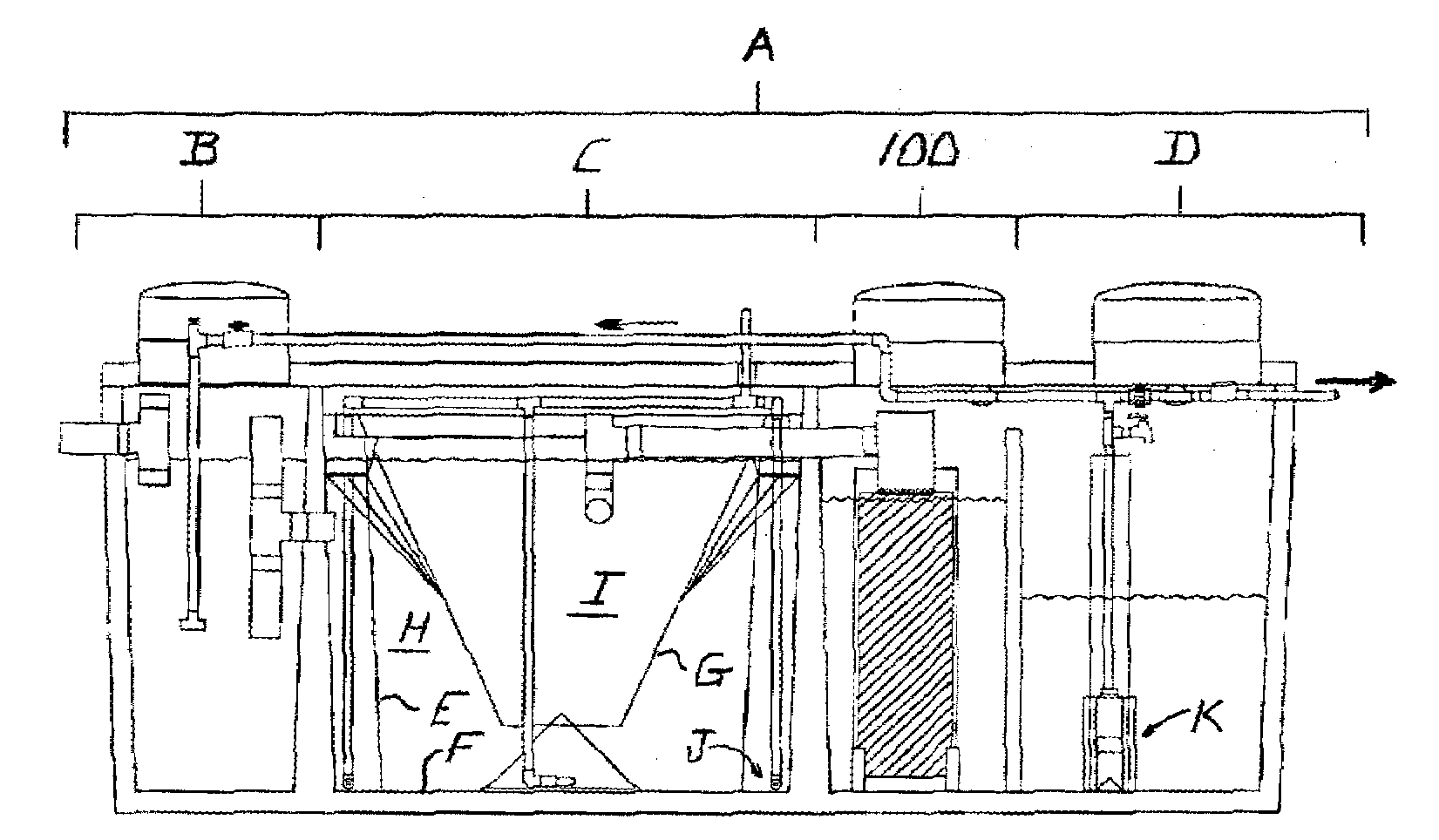
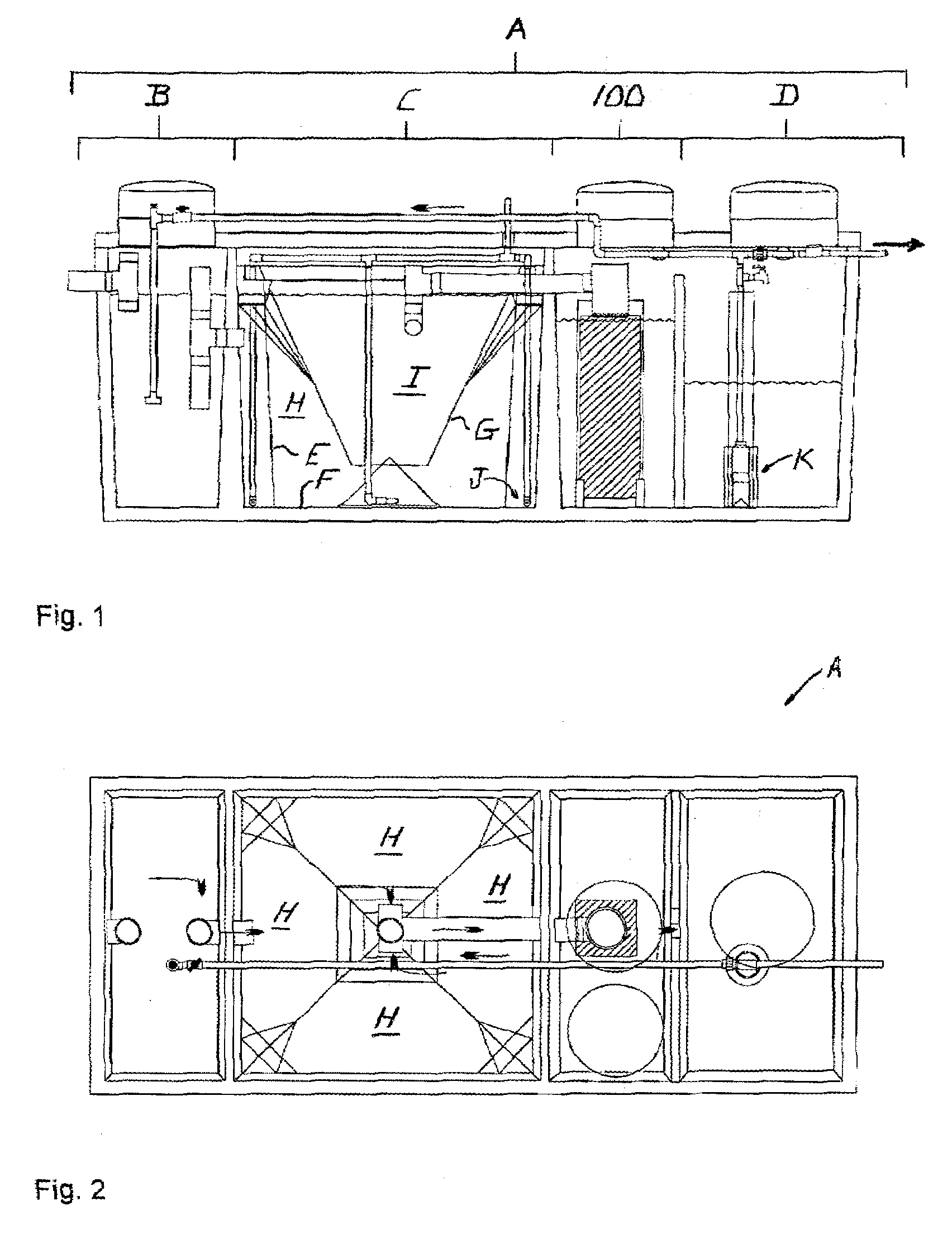
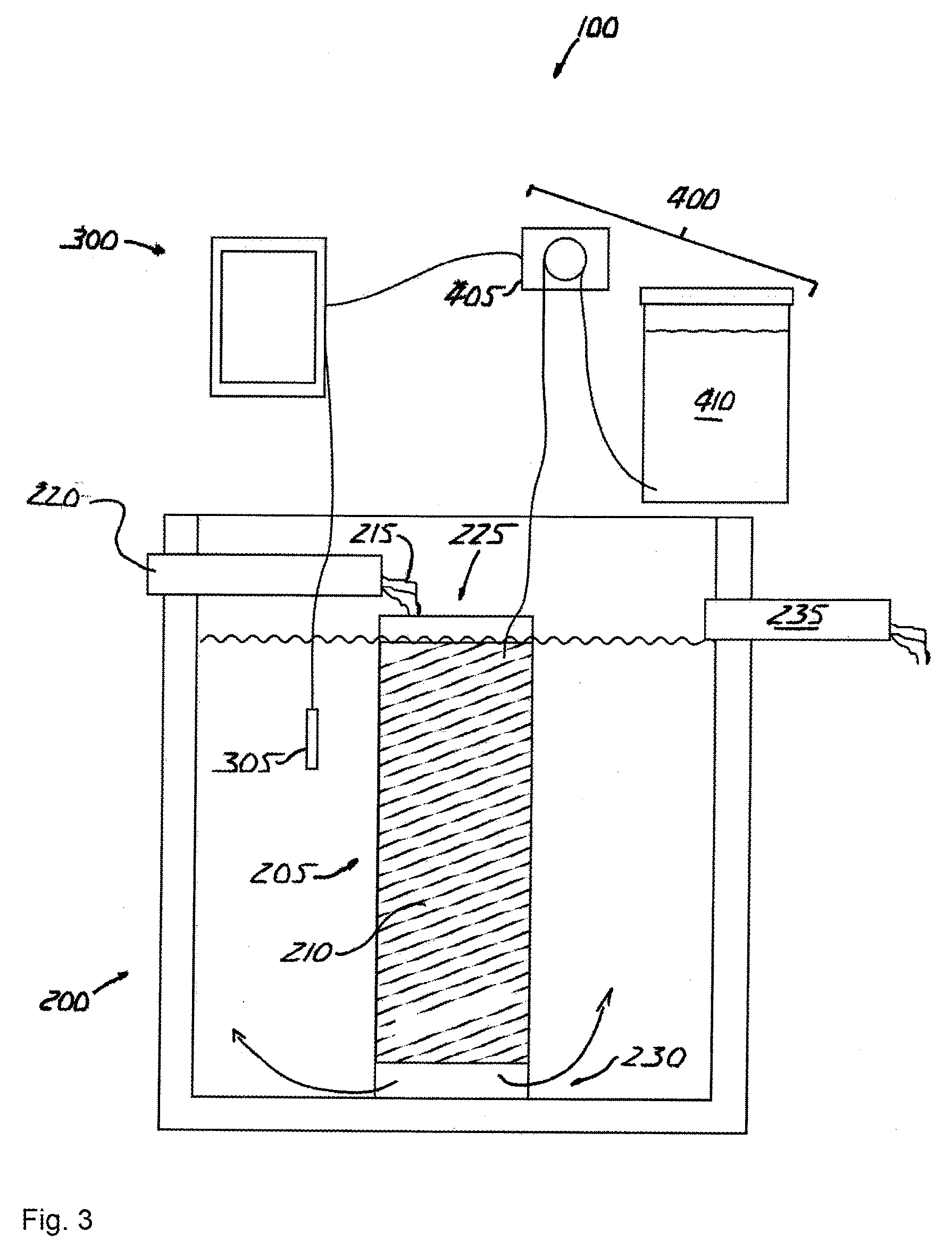
- Employing a non-toxic, unregulated carbon source like diacetin, a mixture of glycerol acetates, which provides a readily available form of acetate for denitrifying bacteria, promoting optimal denitrification by depleting dissolved oxygen and converting nitrate to nitrogen gas without the drawbacks of other carbon sources.

Nutrients Removal from Water/Wastewater Using Simultaneous Treatment By An Anammox/PAO Reactor (STAR)
PatentActiveUS20140346109A1
Innovation
- The development of a Simultaneous Treatment of Anammox-PAOs Reactor (STAR) coupled with an Anaerobic Lateral Unit (ALU), which utilizes specific microbial populations and synergistic interactions to achieve simultaneous biological removal of ammonia and phosphates with minimal carbon and oxygen requirements, reducing construction area and operational complexity.


Regulatory Framework for Nitrogen Management Systems
The regulatory landscape governing nitrogen management has evolved significantly in response to growing concerns about environmental impacts of nitrogen pollution. At the international level, frameworks such as the United Nations Framework Convention on Climate Change (UNFCCC) and the Convention on Long-range Transboundary Air Pollution (CLRTAP) establish broad guidelines for nitrogen emissions control. These frameworks recognize the critical interplay between nitrification and denitrification processes in both natural and engineered systems.
In the United States, the Clean Water Act (CWA) and the Clean Air Act (CAA) provide the primary regulatory foundation for nitrogen management. The Environmental Protection Agency (EPA) has established specific nitrogen discharge limits for wastewater treatment facilities, with particular attention to Total Nitrogen (TN) parameters that account for both nitrification and denitrification dynamics. The National Pollutant Discharge Elimination System (NPDES) permits typically specify ammonia-nitrogen limits that necessitate effective nitrification, while also addressing nitrate concerns through denitrification requirements.
The European Union has implemented the Nitrates Directive (91/676/EEC) and the Water Framework Directive (2000/60/EC), which collectively establish comprehensive nitrogen management protocols. These directives require member states to designate Nitrate Vulnerable Zones (NVZs) and implement action programs that optimize the nitrification-denitrification balance in agricultural and wastewater management contexts.
Regulatory approaches in Asia vary considerably, with Japan and South Korea adopting stringent nitrogen removal standards similar to European models, while developing nations often implement less comprehensive frameworks. China's recent Five-Year Plans have increasingly emphasized nitrogen management, particularly focusing on optimizing nitrification-denitrification processes in wastewater treatment to address severe eutrophication issues in major water bodies.
Best Available Technology (BAT) standards are increasingly incorporated into regulatory frameworks worldwide, requiring implementation of advanced biological nitrogen removal systems that effectively harness the nitrification-denitrification relationship. These standards typically mandate specific process controls, monitoring protocols, and performance metrics that account for seasonal variations in microbial activity affecting both processes.
Emerging regulatory trends include the development of nutrient trading programs and watershed-based permitting approaches that recognize the interconnected nature of nitrogen cycling across ecosystems. These market-based mechanisms aim to optimize nitrogen management at ecosystem scales rather than facility-specific levels, acknowledging that nitrification and denitrification processes transcend individual treatment systems and agricultural operations.
In the United States, the Clean Water Act (CWA) and the Clean Air Act (CAA) provide the primary regulatory foundation for nitrogen management. The Environmental Protection Agency (EPA) has established specific nitrogen discharge limits for wastewater treatment facilities, with particular attention to Total Nitrogen (TN) parameters that account for both nitrification and denitrification dynamics. The National Pollutant Discharge Elimination System (NPDES) permits typically specify ammonia-nitrogen limits that necessitate effective nitrification, while also addressing nitrate concerns through denitrification requirements.
The European Union has implemented the Nitrates Directive (91/676/EEC) and the Water Framework Directive (2000/60/EC), which collectively establish comprehensive nitrogen management protocols. These directives require member states to designate Nitrate Vulnerable Zones (NVZs) and implement action programs that optimize the nitrification-denitrification balance in agricultural and wastewater management contexts.
Regulatory approaches in Asia vary considerably, with Japan and South Korea adopting stringent nitrogen removal standards similar to European models, while developing nations often implement less comprehensive frameworks. China's recent Five-Year Plans have increasingly emphasized nitrogen management, particularly focusing on optimizing nitrification-denitrification processes in wastewater treatment to address severe eutrophication issues in major water bodies.
Best Available Technology (BAT) standards are increasingly incorporated into regulatory frameworks worldwide, requiring implementation of advanced biological nitrogen removal systems that effectively harness the nitrification-denitrification relationship. These standards typically mandate specific process controls, monitoring protocols, and performance metrics that account for seasonal variations in microbial activity affecting both processes.
Emerging regulatory trends include the development of nutrient trading programs and watershed-based permitting approaches that recognize the interconnected nature of nitrogen cycling across ecosystems. These market-based mechanisms aim to optimize nitrogen management at ecosystem scales rather than facility-specific levels, acknowledging that nitrification and denitrification processes transcend individual treatment systems and agricultural operations.
Climate Impact Assessment of Nitrogen Transformation Processes
The intricate relationship between nitrification and denitrification processes significantly influences global climate patterns through their impact on greenhouse gas emissions and nitrogen cycling. These microbial-mediated transformations collectively contribute approximately 10-15% of global greenhouse gas emissions, with nitrous oxide (N2O) being particularly concerning due to its 298 times greater warming potential compared to carbon dioxide over a 100-year timeframe.
Nitrification, which converts ammonium to nitrate via nitrite intermediates, releases N2O as a byproduct, especially under oxygen-limited conditions. When nitrification occurs incompletely, it can substantially increase N2O emissions from agricultural soils and aquatic systems. Research indicates that nitrification-derived N2O emissions may account for up to 70% of total N2O emissions in certain ecosystems, particularly those with fluctuating oxygen availability.
Denitrification, the anaerobic reduction of nitrate to atmospheric nitrogen, also produces N2O as an intermediate. The climate impact of this process varies significantly based on environmental conditions, with soil moisture, temperature, and carbon availability being key determinants. Recent studies demonstrate that the ratio of N2O to N2 produced during denitrification increases under acidic conditions and with higher nitrate concentrations, potentially exacerbating climate impacts.
The interaction zone between these processes creates particularly vulnerable "hotspots" for enhanced N2O emissions. In agricultural systems, the application of ammonium-based fertilizers stimulates nitrification, while the resulting nitrate can undergo denitrification in anaerobic microsites, creating a coupled process that maximizes N2O production. Climate models suggest that warming temperatures may accelerate both processes but at different rates, potentially disrupting their balance and further increasing emissions.
Aquatic systems represent another critical domain where these interactions influence climate. In estuaries and coastal zones, nitrification in the water column provides nitrate for denitrification in sediments. This coupling can either mitigate or exacerbate N2O emissions depending on oxygen gradients and organic matter availability. Ocean acidification may further alter these dynamics by affecting the microbial communities responsible for these transformations.
Climate feedback mechanisms also exist, as warming temperatures generally accelerate microbial processes, potentially increasing nitrogen transformation rates. However, extreme weather events associated with climate change, such as droughts and floods, create highly variable moisture conditions that can lead to emission pulses when nitrification and denitrification processes occur in sequence rather than in balance.
Nitrification, which converts ammonium to nitrate via nitrite intermediates, releases N2O as a byproduct, especially under oxygen-limited conditions. When nitrification occurs incompletely, it can substantially increase N2O emissions from agricultural soils and aquatic systems. Research indicates that nitrification-derived N2O emissions may account for up to 70% of total N2O emissions in certain ecosystems, particularly those with fluctuating oxygen availability.
Denitrification, the anaerobic reduction of nitrate to atmospheric nitrogen, also produces N2O as an intermediate. The climate impact of this process varies significantly based on environmental conditions, with soil moisture, temperature, and carbon availability being key determinants. Recent studies demonstrate that the ratio of N2O to N2 produced during denitrification increases under acidic conditions and with higher nitrate concentrations, potentially exacerbating climate impacts.
The interaction zone between these processes creates particularly vulnerable "hotspots" for enhanced N2O emissions. In agricultural systems, the application of ammonium-based fertilizers stimulates nitrification, while the resulting nitrate can undergo denitrification in anaerobic microsites, creating a coupled process that maximizes N2O production. Climate models suggest that warming temperatures may accelerate both processes but at different rates, potentially disrupting their balance and further increasing emissions.
Aquatic systems represent another critical domain where these interactions influence climate. In estuaries and coastal zones, nitrification in the water column provides nitrate for denitrification in sediments. This coupling can either mitigate or exacerbate N2O emissions depending on oxygen gradients and organic matter availability. Ocean acidification may further alter these dynamics by affecting the microbial communities responsible for these transformations.
Climate feedback mechanisms also exist, as warming temperatures generally accelerate microbial processes, potentially increasing nitrogen transformation rates. However, extreme weather events associated with climate change, such as droughts and floods, create highly variable moisture conditions that can lead to emission pulses when nitrification and denitrification processes occur in sequence rather than in balance.
Unlock deeper insights with PatSnap Eureka Quick Research — get a full tech report to explore trends and direct your research. Try now!
Generate Your Research Report Instantly with AI Agent
Supercharge your innovation with PatSnap Eureka AI Agent Platform!