

How to Adapt Machine Olfaction for Pharmaceutical Applications
APR 29, 20269 MIN READ
Generate Your Research Report Instantly with AI Agent
PatSnap Eureka helps you evaluate technical feasibility & market potential.
Machine Olfaction in Pharma Background and Objectives
Machine olfaction, also known as electronic nose technology, represents a rapidly evolving field that mimics biological olfactory systems through sensor arrays and pattern recognition algorithms. This technology has emerged from decades of research in chemical sensing, beginning with early gas chromatography applications in the 1960s and evolving into sophisticated multi-sensor platforms capable of detecting and identifying complex volatile organic compounds. The fundamental principle involves converting chemical information into electrical signals, which are then processed using advanced computational methods to create distinctive odor fingerprints.
The pharmaceutical industry presents unique challenges and opportunities for machine olfaction implementation. Traditional quality control methods in pharmaceutical manufacturing rely heavily on human sensory evaluation, chromatographic analysis, and spectroscopic techniques, which can be time-consuming, subjective, and require extensive sample preparation. The integration of electronic nose systems offers potential solutions for real-time monitoring, non-destructive testing, and automated quality assessment throughout the pharmaceutical value chain.
Current technological developments in machine olfaction have achieved significant milestones in sensitivity, selectivity, and miniaturization. Modern sensor technologies including metal oxide semiconductors, conducting polymers, surface acoustic wave devices, and biomimetic sensors have demonstrated detection capabilities at parts-per-billion levels. Machine learning algorithms, particularly deep learning networks, have enhanced pattern recognition accuracy and enabled the identification of complex odor signatures that were previously undetectable through conventional analytical methods.
The primary objectives for adapting machine olfaction in pharmaceutical applications encompass several critical areas. Quality control represents the most immediate application, where electronic nose systems can monitor raw material authenticity, detect contamination, and verify product consistency during manufacturing processes. Process optimization constitutes another key objective, enabling real-time monitoring of chemical reactions, fermentation processes, and environmental conditions that affect pharmaceutical production.
Regulatory compliance and safety monitoring form essential objectives, particularly in sterile manufacturing environments where traditional sampling methods may introduce contamination risks. Machine olfaction systems can provide continuous monitoring capabilities without compromising product integrity or manufacturing sterility. Additionally, the technology aims to enhance supply chain security by enabling rapid authentication of pharmaceutical products and detection of counterfeit medications through unique chemical signatures.
The long-term vision encompasses developing specialized sensor platforms tailored specifically for pharmaceutical compounds, creating standardized protocols for regulatory acceptance, and establishing comprehensive databases of pharmaceutical odor signatures. These objectives align with the industry's broader goals of implementing Industry 4.0 technologies, improving manufacturing efficiency, and ensuring consistent product quality while reducing operational costs and human intervention in critical quality control processes.
The pharmaceutical industry presents unique challenges and opportunities for machine olfaction implementation. Traditional quality control methods in pharmaceutical manufacturing rely heavily on human sensory evaluation, chromatographic analysis, and spectroscopic techniques, which can be time-consuming, subjective, and require extensive sample preparation. The integration of electronic nose systems offers potential solutions for real-time monitoring, non-destructive testing, and automated quality assessment throughout the pharmaceutical value chain.
Current technological developments in machine olfaction have achieved significant milestones in sensitivity, selectivity, and miniaturization. Modern sensor technologies including metal oxide semiconductors, conducting polymers, surface acoustic wave devices, and biomimetic sensors have demonstrated detection capabilities at parts-per-billion levels. Machine learning algorithms, particularly deep learning networks, have enhanced pattern recognition accuracy and enabled the identification of complex odor signatures that were previously undetectable through conventional analytical methods.
The primary objectives for adapting machine olfaction in pharmaceutical applications encompass several critical areas. Quality control represents the most immediate application, where electronic nose systems can monitor raw material authenticity, detect contamination, and verify product consistency during manufacturing processes. Process optimization constitutes another key objective, enabling real-time monitoring of chemical reactions, fermentation processes, and environmental conditions that affect pharmaceutical production.
Regulatory compliance and safety monitoring form essential objectives, particularly in sterile manufacturing environments where traditional sampling methods may introduce contamination risks. Machine olfaction systems can provide continuous monitoring capabilities without compromising product integrity or manufacturing sterility. Additionally, the technology aims to enhance supply chain security by enabling rapid authentication of pharmaceutical products and detection of counterfeit medications through unique chemical signatures.
The long-term vision encompasses developing specialized sensor platforms tailored specifically for pharmaceutical compounds, creating standardized protocols for regulatory acceptance, and establishing comprehensive databases of pharmaceutical odor signatures. These objectives align with the industry's broader goals of implementing Industry 4.0 technologies, improving manufacturing efficiency, and ensuring consistent product quality while reducing operational costs and human intervention in critical quality control processes.
Market Demand for Electronic Nose in Drug Industry
The pharmaceutical industry is experiencing unprecedented demand for advanced quality control and analytical technologies, with electronic nose systems emerging as a critical solution for addressing complex olfactory challenges in drug development and manufacturing. This demand stems from the industry's need to ensure product quality, safety, and regulatory compliance while reducing costs and improving efficiency throughout the drug lifecycle.
Quality control applications represent the largest market segment for electronic nose technology in pharmaceuticals. Traditional analytical methods often fail to detect subtle odor variations that can indicate contamination, degradation, or formulation inconsistencies. Electronic nose systems provide rapid, non-destructive testing capabilities that can identify these issues in real-time, significantly reducing the risk of batch failures and product recalls.
The growing emphasis on personalized medicine and complex drug formulations has created additional market opportunities. As pharmaceutical companies develop increasingly sophisticated drug delivery systems, including inhalation therapies and oral formulations, the need for precise odor profiling and taste masking verification has intensified. Electronic nose technology offers the sensitivity and specificity required to optimize these formulations.
Regulatory compliance drives substantial market demand, particularly in regions with stringent pharmaceutical standards. Electronic nose systems can provide consistent, objective measurements that support regulatory submissions and facilitate faster approval processes. The technology's ability to generate reproducible data across different manufacturing sites makes it particularly valuable for multinational pharmaceutical companies.
Process monitoring and optimization applications are gaining traction as manufacturers seek to implement continuous manufacturing approaches. Electronic nose systems can monitor fermentation processes, detect contamination in biopharmaceutical production, and ensure consistent product quality during scale-up operations. This capability is especially valuable for biologics and biosimilar manufacturers.
The market demand is further amplified by the pharmaceutical industry's digital transformation initiatives. Integration of electronic nose data with artificial intelligence and machine learning platforms enables predictive analytics and automated decision-making, creating additional value propositions for pharmaceutical manufacturers seeking competitive advantages in drug development and production efficiency.
Quality control applications represent the largest market segment for electronic nose technology in pharmaceuticals. Traditional analytical methods often fail to detect subtle odor variations that can indicate contamination, degradation, or formulation inconsistencies. Electronic nose systems provide rapid, non-destructive testing capabilities that can identify these issues in real-time, significantly reducing the risk of batch failures and product recalls.
The growing emphasis on personalized medicine and complex drug formulations has created additional market opportunities. As pharmaceutical companies develop increasingly sophisticated drug delivery systems, including inhalation therapies and oral formulations, the need for precise odor profiling and taste masking verification has intensified. Electronic nose technology offers the sensitivity and specificity required to optimize these formulations.
Regulatory compliance drives substantial market demand, particularly in regions with stringent pharmaceutical standards. Electronic nose systems can provide consistent, objective measurements that support regulatory submissions and facilitate faster approval processes. The technology's ability to generate reproducible data across different manufacturing sites makes it particularly valuable for multinational pharmaceutical companies.
Process monitoring and optimization applications are gaining traction as manufacturers seek to implement continuous manufacturing approaches. Electronic nose systems can monitor fermentation processes, detect contamination in biopharmaceutical production, and ensure consistent product quality during scale-up operations. This capability is especially valuable for biologics and biosimilar manufacturers.
The market demand is further amplified by the pharmaceutical industry's digital transformation initiatives. Integration of electronic nose data with artificial intelligence and machine learning platforms enables predictive analytics and automated decision-making, creating additional value propositions for pharmaceutical manufacturers seeking competitive advantages in drug development and production efficiency.
Current State of Olfactory Sensors in Pharmaceutical QC
The pharmaceutical industry currently employs various olfactory sensor technologies for quality control applications, with electronic nose (e-nose) systems representing the most mature and widely adopted solution. These systems typically integrate arrays of metal oxide semiconductor sensors, conducting polymer sensors, or quartz crystal microbalance sensors to detect and analyze volatile organic compounds emitted by pharmaceutical products. Major pharmaceutical manufacturers have successfully implemented e-nose technology for raw material authentication, contamination detection, and finished product quality assessment.
Metal oxide semiconductor sensors dominate the current landscape due to their robust performance and cost-effectiveness. These sensors operate by measuring resistance changes when target molecules interact with the sensor surface, enabling detection of impurities, solvent residues, and degradation products in pharmaceutical formulations. Leading sensor manufacturers like Figaro Engineering and Sensirion have developed specialized variants optimized for pharmaceutical environments, featuring enhanced sensitivity ranges and improved selectivity for common pharmaceutical compounds.
Conducting polymer-based sensors represent another significant technology segment, offering superior sensitivity for detecting trace-level contaminants and volatile impurities. Companies such as Airsense Analytics and Alpha MOS have commercialized sophisticated e-nose platforms specifically designed for pharmaceutical quality control, incorporating advanced pattern recognition algorithms and machine learning capabilities for compound identification and classification.
Current implementation challenges include sensor drift over time, cross-sensitivity issues, and the need for frequent recalibration in pharmaceutical manufacturing environments. Temperature and humidity variations significantly impact sensor performance, requiring sophisticated environmental compensation mechanisms. Additionally, the complex chemical matrices present in pharmaceutical products often create interference patterns that complicate accurate analyte identification.
Recent technological advances have introduced surface acoustic wave sensors and optical-based olfactory systems, showing promising results in pharmaceutical applications. These emerging technologies offer improved stability and reduced maintenance requirements compared to traditional sensor arrays. However, their adoption remains limited due to higher costs and the need for specialized expertise in implementation and operation.
The regulatory landscape presents both opportunities and constraints for olfactory sensor deployment in pharmaceutical quality control. While these systems are increasingly recognized as valuable process analytical technology tools, they require extensive validation and documentation to meet FDA and EMA requirements for pharmaceutical manufacturing applications.
Metal oxide semiconductor sensors dominate the current landscape due to their robust performance and cost-effectiveness. These sensors operate by measuring resistance changes when target molecules interact with the sensor surface, enabling detection of impurities, solvent residues, and degradation products in pharmaceutical formulations. Leading sensor manufacturers like Figaro Engineering and Sensirion have developed specialized variants optimized for pharmaceutical environments, featuring enhanced sensitivity ranges and improved selectivity for common pharmaceutical compounds.
Conducting polymer-based sensors represent another significant technology segment, offering superior sensitivity for detecting trace-level contaminants and volatile impurities. Companies such as Airsense Analytics and Alpha MOS have commercialized sophisticated e-nose platforms specifically designed for pharmaceutical quality control, incorporating advanced pattern recognition algorithms and machine learning capabilities for compound identification and classification.
Current implementation challenges include sensor drift over time, cross-sensitivity issues, and the need for frequent recalibration in pharmaceutical manufacturing environments. Temperature and humidity variations significantly impact sensor performance, requiring sophisticated environmental compensation mechanisms. Additionally, the complex chemical matrices present in pharmaceutical products often create interference patterns that complicate accurate analyte identification.
Recent technological advances have introduced surface acoustic wave sensors and optical-based olfactory systems, showing promising results in pharmaceutical applications. These emerging technologies offer improved stability and reduced maintenance requirements compared to traditional sensor arrays. However, their adoption remains limited due to higher costs and the need for specialized expertise in implementation and operation.
The regulatory landscape presents both opportunities and constraints for olfactory sensor deployment in pharmaceutical quality control. While these systems are increasingly recognized as valuable process analytical technology tools, they require extensive validation and documentation to meet FDA and EMA requirements for pharmaceutical manufacturing applications.
Existing E-Nose Solutions for Drug Manufacturing
01 Electronic nose systems and sensor arrays
Electronic nose systems utilize arrays of chemical sensors to detect and identify odors by mimicking the human olfactory system. These systems employ multiple sensor types that respond differently to various volatile compounds, creating unique response patterns for different odors. The sensor arrays can include metal oxide sensors, conducting polymer sensors, or other chemical detection technologies that work together to provide comprehensive odor analysis capabilities.- Electronic nose systems and sensor arrays: Electronic nose systems utilize arrays of chemical sensors to detect and identify odors by mimicking the human olfactory system. These systems employ multiple sensor types that respond differently to various volatile compounds, creating unique response patterns for different odors. The sensor arrays can include metal oxide sensors, conducting polymer sensors, or other chemical detection elements that work together to provide comprehensive odor analysis capabilities.
- Gas detection and analysis devices: Specialized devices designed for detecting and analyzing specific gases or volatile organic compounds in various environments. These systems focus on identifying particular chemical signatures and concentrations, often used for safety monitoring, quality control, or environmental assessment. The devices typically incorporate advanced sensing technologies and signal processing algorithms to provide accurate and reliable gas identification and quantification.
- Artificial olfactory recognition algorithms: Machine learning and pattern recognition algorithms specifically developed for processing olfactory sensor data and identifying odor patterns. These computational methods analyze complex sensor response patterns to classify and recognize different odors, often incorporating neural networks, statistical analysis, or other artificial intelligence techniques to improve recognition accuracy and reliability over time.
- Portable and handheld olfactory devices: Compact, portable systems designed for field use and real-time odor detection applications. These devices prioritize mobility and ease of use while maintaining detection capabilities, often featuring wireless connectivity, battery operation, and simplified user interfaces. They are commonly used for on-site testing, personal safety monitoring, or mobile quality assessment applications.
- Multi-sensor integration and data fusion: Advanced systems that combine multiple sensing modalities and data sources to enhance olfactory detection capabilities. These approaches integrate various sensor technologies, environmental parameters, and processing methods to improve accuracy and reduce false positives. The systems often include sophisticated data fusion algorithms that correlate information from different sensors to provide more reliable and comprehensive odor analysis results.
02 Gas detection and analysis devices
Specialized devices designed for detecting and analyzing specific gases or volatile organic compounds in various environments. These systems focus on identifying particular chemical signatures and can be used for environmental monitoring, industrial safety, or quality control applications. The devices often incorporate advanced signal processing algorithms to distinguish between different gas compositions and concentrations.Expand Specific Solutions03 Artificial olfactory sensing mechanisms
Advanced sensing mechanisms that replicate biological olfactory processes through artificial means. These systems use biomimetic approaches to detect and process odor information, often incorporating machine learning algorithms to improve recognition accuracy over time. The mechanisms can adapt to new odor patterns and provide real-time analysis of complex chemical mixtures.Expand Specific Solutions04 Portable and miniaturized olfaction systems
Compact and portable devices designed for field applications and mobile odor detection. These systems prioritize miniaturization while maintaining detection accuracy, making them suitable for handheld applications, wearable devices, or integration into larger systems. The portable nature allows for on-site analysis without requiring laboratory equipment.Expand Specific Solutions05 Smart olfactory networks and IoT integration
Networked olfactory systems that can communicate and share odor detection data across multiple nodes or devices. These systems integrate with Internet of Things platforms to enable remote monitoring, data logging, and centralized analysis of odor information from distributed sensor networks. The smart connectivity allows for comprehensive environmental monitoring and automated response systems.Expand Specific Solutions
Key Players in Machine Olfaction and Pharma Tech
The machine olfaction market for pharmaceutical applications is in an emerging growth phase, with significant expansion potential driven by increasing demand for quality control, drug authentication, and therapeutic monitoring solutions. The market demonstrates substantial scale opportunities as pharmaceutical companies seek advanced analytical tools for compound identification, contamination detection, and process optimization. Technology maturity varies considerably across key players, with established fragrance and flavor companies like Givaudan SA, Firmenich SA, and International Flavors & Fragrances leading in chemical sensing expertise, while pharmaceutical giants such as Sanofi and Arena Pharmaceuticals drive application-specific requirements. Specialized digital olfaction companies like Realnose Inc. and Sensory Cloud Inc. are pioneering next-generation platforms, supported by research institutions including California Institute of Technology and Duke University advancing fundamental sensor technologies. The competitive landscape reflects a convergence of traditional chemical analysis expertise with emerging digital sensing capabilities, positioning the sector for accelerated pharmaceutical integration.
Sanofi
Technical Solution: Sanofi has developed advanced machine olfaction systems specifically designed for pharmaceutical quality control and drug development processes. Their technology integrates electronic nose sensors with artificial intelligence algorithms to detect and analyze volatile organic compounds released by pharmaceutical products. The system can identify contamination, verify product authenticity, and monitor drug stability through odor fingerprinting. Their approach combines multiple sensor arrays including metal oxide semiconductors, conducting polymers, and quartz crystal microbalances to create comprehensive chemical profiles. The AI-driven analysis enables real-time monitoring of manufacturing processes and can detect deviations in drug formulations before they become quality issues. This technology has been particularly effective in tablet coating processes and sterile manufacturing environments where traditional analytical methods may be insufficient.
Strengths: Established pharmaceutical expertise, comprehensive sensor integration, real-time monitoring capabilities. Weaknesses: High implementation costs, requires extensive calibration for different drug types.
Realnose, Inc.
Technical Solution: Realnose has specialized in developing machine olfaction solutions specifically tailored for pharmaceutical applications, focusing on drug authentication and quality verification. Their proprietary electronic nose technology employs advanced chemical sensor arrays combined with sophisticated pattern recognition algorithms to create unique olfactory fingerprints for pharmaceutical products. The system can detect counterfeit medications, verify batch consistency, and monitor drug stability throughout the supply chain. Their technology utilizes biomimetic sensors that replicate human olfactory responses, enabling more intuitive interpretation of results for pharmaceutical professionals. The platform includes cloud-based analytics that allow for remote monitoring and data sharing across multiple manufacturing sites. Machine learning algorithms continuously improve detection accuracy by analyzing patterns from thousands of pharmaceutical samples, making it particularly effective for identifying subtle variations in drug formulations that could indicate quality issues or counterfeiting attempts.
Strengths: Specialized pharmaceutical focus, cloud-based analytics platform, biomimetic sensor design for intuitive results. Weaknesses: Smaller company with limited resources, newer technology requiring market validation.
Core Innovations in Chemical Sensor Arrays
Multi-Parametric Machine Olfaction
PatentPendingUS20240255483A1
Innovation
- A system incorporating an array of chemical, pressure, and temperature sensors, along with a temporal airflow modulator, which provides sniffed vapors in a temporally-modulated sequence through multiple air paths, enhancing odor classification by incorporating spatiotemporal time signatures and physical properties.


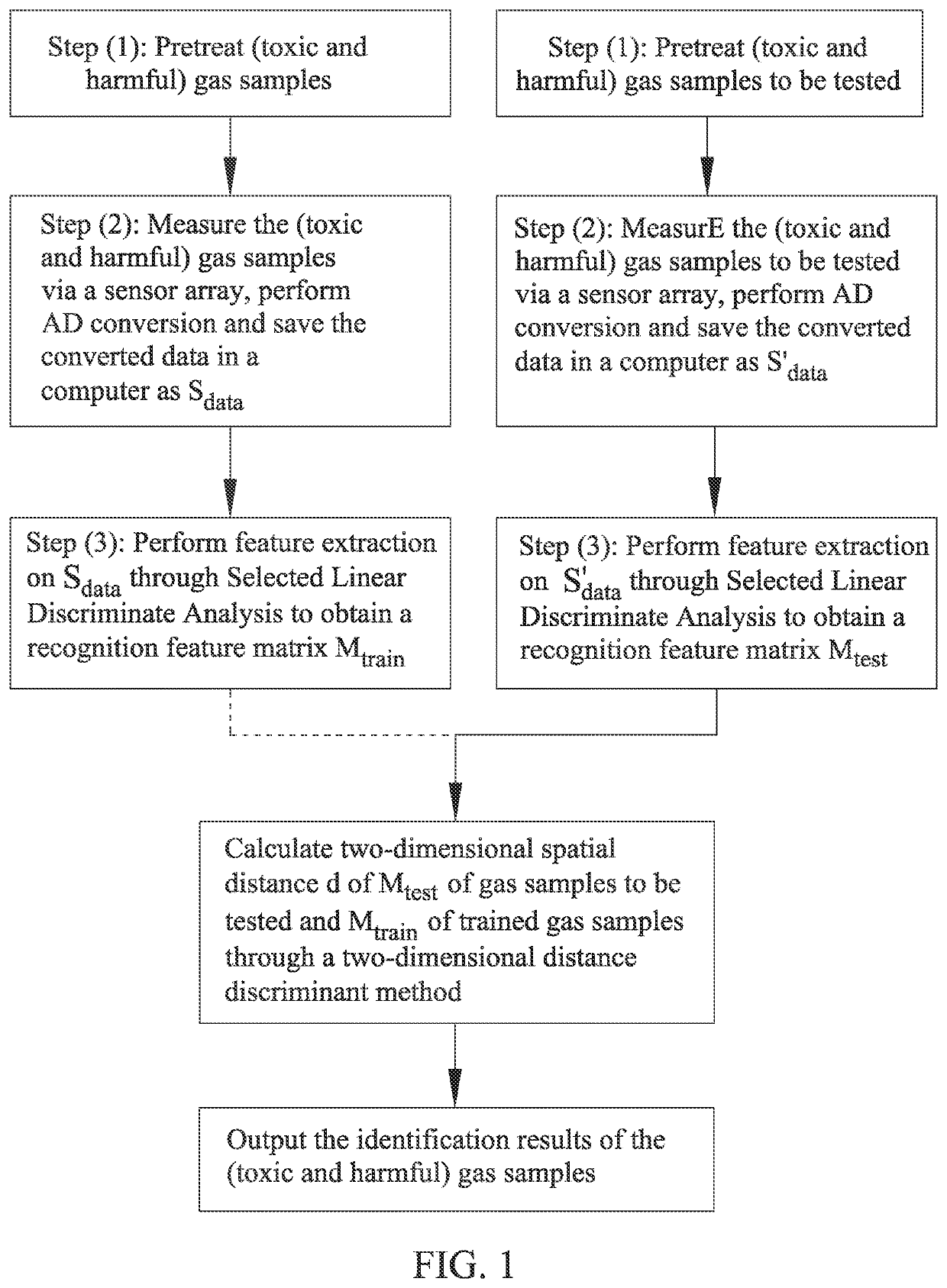
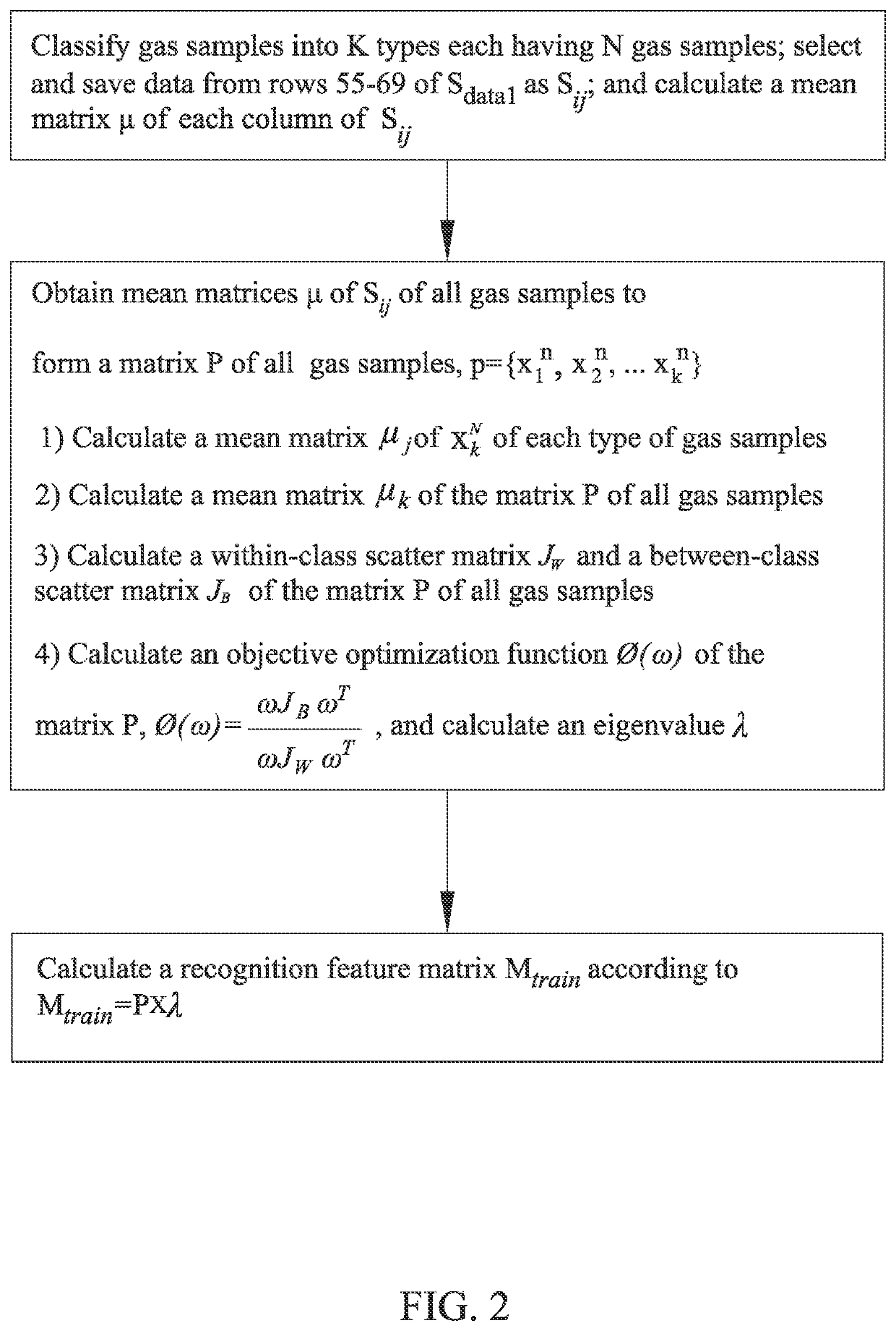
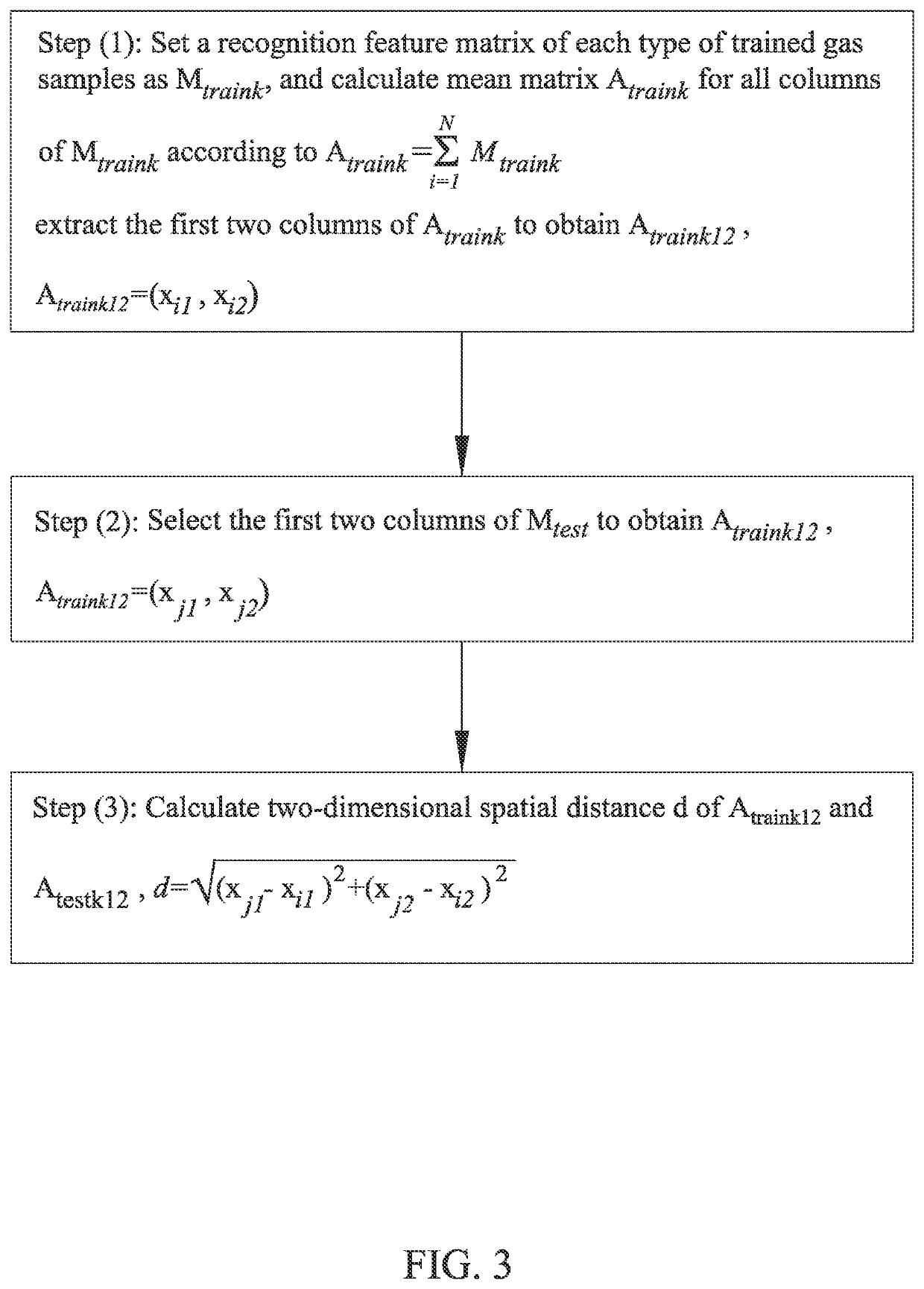
Method for detecting and identifying toxic and harmful gases based on machine olfaction
PatentActiveUS11408875B2
Innovation
- A method utilizing a machine olfactory system with Selected Linear Discriminate Analysis (SLDA) and a two-dimensional distance discriminant method to analyze gas samples, constructing an odor information base for identification.

FDA Regulatory Framework for Electronic Sensing
The FDA regulatory framework for electronic sensing devices in pharmaceutical applications represents a complex and evolving landscape that directly impacts the deployment of machine olfaction technologies. Currently, the FDA classifies electronic sensing devices based on their intended use, risk profile, and the nature of pharmaceutical applications they support.
Electronic nose systems intended for pharmaceutical quality control fall under different regulatory pathways depending on their specific application. Devices used for raw material identification and contamination detection are typically regulated as analytical instruments under FDA's device classification system. However, when these systems are integrated into critical manufacturing processes or used for final product release testing, they may require more stringent validation protocols and potentially fall under Class II medical device regulations.
The FDA's Process Analytical Technology (PAT) guidance framework provides the primary regulatory foundation for implementing electronic sensing technologies in pharmaceutical manufacturing. This framework encourages the use of innovative analytical methods, including electronic olfaction, provided they demonstrate equivalent or superior performance to traditional methods. The guidance emphasizes real-time monitoring capabilities and risk-based approaches to quality assurance.
Validation requirements for machine olfaction systems in pharmaceutical applications must demonstrate analytical method validation parameters including specificity, accuracy, precision, linearity, range, and robustness. The FDA requires comprehensive documentation of sensor calibration procedures, drift compensation mechanisms, and environmental control measures that ensure consistent performance across different operational conditions.
Recent FDA initiatives have shown increased openness to novel sensing technologies, particularly those supporting continuous manufacturing and real-time release testing. The agency has established specific pathways for emerging technologies through its Emerging Technology Program, which provides enhanced communication channels for developers of innovative analytical systems including electronic nose technologies.
Compliance challenges primarily center around data integrity requirements, particularly FDA's 21 CFR Part 11 regulations governing electronic records and signatures. Machine olfaction systems must incorporate robust data management capabilities, audit trails, and security measures that meet pharmaceutical industry standards for electronic documentation and traceability throughout the product lifecycle.
Electronic nose systems intended for pharmaceutical quality control fall under different regulatory pathways depending on their specific application. Devices used for raw material identification and contamination detection are typically regulated as analytical instruments under FDA's device classification system. However, when these systems are integrated into critical manufacturing processes or used for final product release testing, they may require more stringent validation protocols and potentially fall under Class II medical device regulations.
The FDA's Process Analytical Technology (PAT) guidance framework provides the primary regulatory foundation for implementing electronic sensing technologies in pharmaceutical manufacturing. This framework encourages the use of innovative analytical methods, including electronic olfaction, provided they demonstrate equivalent or superior performance to traditional methods. The guidance emphasizes real-time monitoring capabilities and risk-based approaches to quality assurance.
Validation requirements for machine olfaction systems in pharmaceutical applications must demonstrate analytical method validation parameters including specificity, accuracy, precision, linearity, range, and robustness. The FDA requires comprehensive documentation of sensor calibration procedures, drift compensation mechanisms, and environmental control measures that ensure consistent performance across different operational conditions.
Recent FDA initiatives have shown increased openness to novel sensing technologies, particularly those supporting continuous manufacturing and real-time release testing. The agency has established specific pathways for emerging technologies through its Emerging Technology Program, which provides enhanced communication channels for developers of innovative analytical systems including electronic nose technologies.
Compliance challenges primarily center around data integrity requirements, particularly FDA's 21 CFR Part 11 regulations governing electronic records and signatures. Machine olfaction systems must incorporate robust data management capabilities, audit trails, and security measures that meet pharmaceutical industry standards for electronic documentation and traceability throughout the product lifecycle.
GMP Compliance for Automated Olfactory Systems
Good Manufacturing Practice (GMP) compliance represents a critical regulatory framework that automated olfactory systems must adhere to when deployed in pharmaceutical manufacturing environments. The integration of machine olfaction technology into pharmaceutical processes requires strict adherence to FDA, EMA, and other international regulatory standards that govern pharmaceutical production quality and safety.
Automated olfactory systems in pharmaceutical applications must demonstrate validation protocols that establish their reliability, accuracy, and consistency in detecting chemical compounds and contaminants. These systems require comprehensive qualification procedures including Installation Qualification (IQ), Operational Qualification (OQ), and Performance Qualification (PQ) to ensure they meet predetermined specifications and function reliably within the pharmaceutical manufacturing environment.
Data integrity requirements for GMP-compliant olfactory systems demand robust electronic record-keeping capabilities with audit trails, electronic signatures, and secure data storage mechanisms. The systems must maintain complete traceability of all measurements, calibrations, and maintenance activities while preventing unauthorized data modification or deletion. This includes implementing 21 CFR Part 11 compliance for electronic records and signatures.
Calibration and maintenance protocols for automated olfactory systems must follow strict documentation procedures with predefined schedules and acceptance criteria. Regular calibration using certified reference standards ensures measurement accuracy and traceability to national or international standards. Preventive maintenance programs must be established with detailed procedures, spare parts management, and change control processes.
Environmental monitoring capabilities of these systems must align with pharmaceutical cleanroom classifications and contamination control strategies. The olfactory sensors and associated equipment must be designed for easy cleaning and sanitization without compromising measurement integrity. Materials of construction should be compatible with pharmaceutical cleaning agents and sterilization procedures.
Risk management approaches following ICH Q9 guidelines must be implemented to identify potential failure modes of automated olfactory systems and their impact on product quality. This includes establishing appropriate alarm systems, backup procedures, and contingency plans to maintain continuous monitoring capabilities during system maintenance or unexpected failures.
Automated olfactory systems in pharmaceutical applications must demonstrate validation protocols that establish their reliability, accuracy, and consistency in detecting chemical compounds and contaminants. These systems require comprehensive qualification procedures including Installation Qualification (IQ), Operational Qualification (OQ), and Performance Qualification (PQ) to ensure they meet predetermined specifications and function reliably within the pharmaceutical manufacturing environment.
Data integrity requirements for GMP-compliant olfactory systems demand robust electronic record-keeping capabilities with audit trails, electronic signatures, and secure data storage mechanisms. The systems must maintain complete traceability of all measurements, calibrations, and maintenance activities while preventing unauthorized data modification or deletion. This includes implementing 21 CFR Part 11 compliance for electronic records and signatures.
Calibration and maintenance protocols for automated olfactory systems must follow strict documentation procedures with predefined schedules and acceptance criteria. Regular calibration using certified reference standards ensures measurement accuracy and traceability to national or international standards. Preventive maintenance programs must be established with detailed procedures, spare parts management, and change control processes.
Environmental monitoring capabilities of these systems must align with pharmaceutical cleanroom classifications and contamination control strategies. The olfactory sensors and associated equipment must be designed for easy cleaning and sanitization without compromising measurement integrity. Materials of construction should be compatible with pharmaceutical cleaning agents and sterilization procedures.
Risk management approaches following ICH Q9 guidelines must be implemented to identify potential failure modes of automated olfactory systems and their impact on product quality. This includes establishing appropriate alarm systems, backup procedures, and contingency plans to maintain continuous monitoring capabilities during system maintenance or unexpected failures.
Unlock deeper insights with PatSnap Eureka Quick Research — get a full tech report to explore trends and direct your research. Try now!
Generate Your Research Report Instantly with AI Agent
Supercharge your innovation with PatSnap Eureka AI Agent Platform!