

How to Analyze Float Valve Flexibility for Large Scale Projects
FEB 11, 20269 MIN READ
Generate Your Research Report Instantly with AI Agent
PatSnap Eureka helps you evaluate technical feasibility & market potential.
Float Valve Technology Background and Project Objectives
Float valve technology has evolved significantly since its inception in the late 19th century, transitioning from simple mechanical devices to sophisticated control systems integral to modern industrial operations. Originally designed for basic liquid level control in residential applications, float valves have undergone substantial refinement to meet the demanding requirements of large-scale industrial projects across sectors including water treatment, petrochemical processing, power generation, and manufacturing facilities.
The fundamental operating principle remains consistent: a buoyant element responds to liquid level changes, mechanically actuating a valve mechanism to regulate flow. However, contemporary float valve systems incorporate advanced materials, precision engineering, and integrated monitoring capabilities that extend far beyond their historical predecessors. Modern designs must accommodate extreme operating conditions, corrosive environments, high-pressure systems, and stringent safety standards while maintaining reliable performance over extended operational lifespans.
In large-scale project contexts, float valve flexibility has emerged as a critical performance parameter that directly impacts system reliability, operational efficiency, and maintenance costs. Flexibility encompasses multiple dimensions including mechanical responsiveness, adaptability to varying flow rates and pressure conditions, compatibility with diverse fluid characteristics, and integration capability with automated control systems. The ability to accurately analyze and predict float valve flexibility during the design and procurement phases has become essential for project success.
The primary objective of analyzing float valve flexibility for large-scale projects is to establish comprehensive evaluation methodologies that enable engineers to predict valve performance under diverse operational scenarios before system deployment. This involves developing quantitative assessment frameworks that consider mechanical properties, hydrodynamic behavior, material characteristics, and system-level interactions. Such analysis aims to minimize operational disruptions, optimize maintenance schedules, reduce lifecycle costs, and ensure compliance with safety and environmental regulations.
Furthermore, this technical investigation seeks to bridge the gap between theoretical valve specifications and real-world performance in complex industrial environments. By establishing robust analytical approaches, project teams can make informed decisions regarding valve selection, system design optimization, and risk mitigation strategies that are specifically tailored to the unique requirements of large-scale installations.
The fundamental operating principle remains consistent: a buoyant element responds to liquid level changes, mechanically actuating a valve mechanism to regulate flow. However, contemporary float valve systems incorporate advanced materials, precision engineering, and integrated monitoring capabilities that extend far beyond their historical predecessors. Modern designs must accommodate extreme operating conditions, corrosive environments, high-pressure systems, and stringent safety standards while maintaining reliable performance over extended operational lifespans.
In large-scale project contexts, float valve flexibility has emerged as a critical performance parameter that directly impacts system reliability, operational efficiency, and maintenance costs. Flexibility encompasses multiple dimensions including mechanical responsiveness, adaptability to varying flow rates and pressure conditions, compatibility with diverse fluid characteristics, and integration capability with automated control systems. The ability to accurately analyze and predict float valve flexibility during the design and procurement phases has become essential for project success.
The primary objective of analyzing float valve flexibility for large-scale projects is to establish comprehensive evaluation methodologies that enable engineers to predict valve performance under diverse operational scenarios before system deployment. This involves developing quantitative assessment frameworks that consider mechanical properties, hydrodynamic behavior, material characteristics, and system-level interactions. Such analysis aims to minimize operational disruptions, optimize maintenance schedules, reduce lifecycle costs, and ensure compliance with safety and environmental regulations.
Furthermore, this technical investigation seeks to bridge the gap between theoretical valve specifications and real-world performance in complex industrial environments. By establishing robust analytical approaches, project teams can make informed decisions regarding valve selection, system design optimization, and risk mitigation strategies that are specifically tailored to the unique requirements of large-scale installations.
Market Demand for Large Scale Float Valve Applications
The global demand for float valves in large-scale industrial applications has experienced substantial growth driven by expanding infrastructure development and increasing automation requirements across multiple sectors. Water treatment facilities, petrochemical plants, power generation stations, and large-scale manufacturing operations represent the primary demand drivers, where reliable liquid level control systems are critical for operational efficiency and safety compliance.
Industrial water management constitutes a significant portion of the market demand, particularly in regions experiencing rapid urbanization and industrial expansion. Municipal water supply systems, wastewater treatment plants, and desalination facilities require robust float valve solutions capable of handling high flow rates and maintaining precise level control under varying operational conditions. The growing emphasis on water conservation and efficient resource management has further intensified the need for advanced float valve technologies that offer superior flexibility and reliability.
The petrochemical and oil refining industries represent another major demand segment, where float valves play essential roles in storage tank management, process control systems, and safety shutdown mechanisms. These applications demand valves that can withstand harsh chemical environments, extreme temperatures, and high-pressure conditions while maintaining consistent performance over extended operational periods. The increasing complexity of refining processes and stricter environmental regulations have elevated requirements for valve flexibility and adaptability.
Power generation facilities, including thermal, nuclear, and renewable energy plants, require sophisticated float valve systems for cooling water management, condensate handling, and auxiliary systems. The global transition toward cleaner energy sources has created new demand patterns, with emerging applications in concentrated solar power plants and geothermal facilities requiring specialized float valve solutions with enhanced flexibility characteristics.
The mining and mineral processing sector has emerged as a growing market segment, where large-scale operations demand durable float valves capable of handling abrasive slurries and corrosive fluids. Similarly, the food and beverage industry's expansion, particularly in developing economies, has generated increased demand for hygienic float valve designs that meet stringent sanitary standards while offering operational flexibility for diverse product handling requirements.
Industrial water management constitutes a significant portion of the market demand, particularly in regions experiencing rapid urbanization and industrial expansion. Municipal water supply systems, wastewater treatment plants, and desalination facilities require robust float valve solutions capable of handling high flow rates and maintaining precise level control under varying operational conditions. The growing emphasis on water conservation and efficient resource management has further intensified the need for advanced float valve technologies that offer superior flexibility and reliability.
The petrochemical and oil refining industries represent another major demand segment, where float valves play essential roles in storage tank management, process control systems, and safety shutdown mechanisms. These applications demand valves that can withstand harsh chemical environments, extreme temperatures, and high-pressure conditions while maintaining consistent performance over extended operational periods. The increasing complexity of refining processes and stricter environmental regulations have elevated requirements for valve flexibility and adaptability.
Power generation facilities, including thermal, nuclear, and renewable energy plants, require sophisticated float valve systems for cooling water management, condensate handling, and auxiliary systems. The global transition toward cleaner energy sources has created new demand patterns, with emerging applications in concentrated solar power plants and geothermal facilities requiring specialized float valve solutions with enhanced flexibility characteristics.
The mining and mineral processing sector has emerged as a growing market segment, where large-scale operations demand durable float valves capable of handling abrasive slurries and corrosive fluids. Similarly, the food and beverage industry's expansion, particularly in developing economies, has generated increased demand for hygienic float valve designs that meet stringent sanitary standards while offering operational flexibility for diverse product handling requirements.
Current Float Valve Flexibility Analysis Challenges
Float valve flexibility analysis in large-scale projects faces significant technical and operational challenges that impede accurate performance prediction and system optimization. The complexity stems from the intricate interplay between mechanical design parameters, fluid dynamics, and operational variability across diverse industrial applications.
One primary challenge involves the lack of standardized methodologies for quantifying flexibility metrics. Different industries employ varying definitions of flexibility, ranging from response time under load fluctuations to adaptability across multiple operating conditions. This inconsistency creates difficulties in establishing universal benchmarks and comparison frameworks, particularly when projects span multiple facilities or geographical regions with distinct operational requirements.
Scale-related complications present another critical obstacle. Laboratory testing conditions rarely replicate the actual operating environments of large-scale installations, where factors such as extreme pressure variations, temperature gradients, and fluid contamination significantly impact valve performance. The extrapolation of small-scale test data to industrial applications introduces substantial uncertainty, often resulting in performance gaps between predicted and actual flexibility characteristics.
Data acquisition and monitoring infrastructure limitations further constrain analysis capabilities. Many existing installations lack comprehensive sensor networks capable of capturing real-time flexibility parameters under dynamic conditions. The absence of high-resolution operational data prevents detailed correlation analysis between design specifications and actual performance, making it difficult to validate analytical models or identify degradation patterns over extended operational periods.
Computational modeling challenges also persist despite advances in simulation technologies. Accurately modeling the complex interactions between valve components, fluid behavior, and system-level dynamics requires significant computational resources and sophisticated multiphysics approaches. Current simulation tools often necessitate simplifying assumptions that may compromise accuracy, particularly when analyzing transient responses or extreme operating scenarios critical to flexibility assessment.
Integration with existing project management frameworks poses additional difficulties. Float valve flexibility analysis requires coordination across multiple engineering disciplines, including mechanical design, process engineering, and control systems. The fragmented nature of traditional project workflows often results in isolated analyses that fail to capture system-level flexibility implications, leading to suboptimal design decisions and potential operational limitations in deployed systems.
One primary challenge involves the lack of standardized methodologies for quantifying flexibility metrics. Different industries employ varying definitions of flexibility, ranging from response time under load fluctuations to adaptability across multiple operating conditions. This inconsistency creates difficulties in establishing universal benchmarks and comparison frameworks, particularly when projects span multiple facilities or geographical regions with distinct operational requirements.
Scale-related complications present another critical obstacle. Laboratory testing conditions rarely replicate the actual operating environments of large-scale installations, where factors such as extreme pressure variations, temperature gradients, and fluid contamination significantly impact valve performance. The extrapolation of small-scale test data to industrial applications introduces substantial uncertainty, often resulting in performance gaps between predicted and actual flexibility characteristics.
Data acquisition and monitoring infrastructure limitations further constrain analysis capabilities. Many existing installations lack comprehensive sensor networks capable of capturing real-time flexibility parameters under dynamic conditions. The absence of high-resolution operational data prevents detailed correlation analysis between design specifications and actual performance, making it difficult to validate analytical models or identify degradation patterns over extended operational periods.
Computational modeling challenges also persist despite advances in simulation technologies. Accurately modeling the complex interactions between valve components, fluid behavior, and system-level dynamics requires significant computational resources and sophisticated multiphysics approaches. Current simulation tools often necessitate simplifying assumptions that may compromise accuracy, particularly when analyzing transient responses or extreme operating scenarios critical to flexibility assessment.
Integration with existing project management frameworks poses additional difficulties. Float valve flexibility analysis requires coordination across multiple engineering disciplines, including mechanical design, process engineering, and control systems. The fragmented nature of traditional project workflows often results in isolated analyses that fail to capture system-level flexibility implications, leading to suboptimal design decisions and potential operational limitations in deployed systems.
Existing Float Valve Flexibility Analysis Solutions
01 Flexible arm or lever mechanisms for float valves
Float valves can incorporate flexible arms or lever mechanisms that allow for adjustable movement and positioning of the float element. These flexible components enable the valve to adapt to varying water levels and flow conditions while maintaining proper sealing. The flexibility in the arm design allows for compensation of manufacturing tolerances and provides smoother operation throughout the valve's range of motion.- Flexible arm or lever mechanisms for float valves: Float valves can incorporate flexible arms or lever mechanisms that allow for adjustable movement and positioning of the float element. These flexible components enable the valve to adapt to varying water levels and flow conditions while maintaining proper sealing. The flexibility in the arm design allows for compensation of manufacturing tolerances and provides smoother operation throughout the valve's range of motion.
- Elastic or resilient sealing elements: Float valves utilize elastic or resilient sealing materials that provide flexibility in the sealing interface. These materials can deform and conform to seating surfaces, ensuring reliable shut-off even with minor surface irregularities or pressure variations. The elastic properties allow the seal to maintain contact pressure while accommodating thermal expansion and mechanical wear over time.
- Pivoting or articulated float assemblies: Float valve designs incorporate pivoting or articulated float assemblies that provide multiple degrees of freedom in movement. These configurations allow the float to respond flexibly to water level changes while minimizing binding or sticking. The articulated design enables the valve to function effectively in installations with limited space or non-standard mounting orientations.
- Flexible diaphragm or membrane actuation: Float valves employ flexible diaphragms or membranes as actuation elements that respond to pressure changes and float position. These flexible components provide smooth, proportional control of valve opening and closing while isolating the valve mechanism from the fluid. The membrane design allows for compact construction and reduces the number of moving parts subject to wear.
- Adjustable linkage systems with flexible connections: Float valves feature adjustable linkage systems with flexible connection points that allow for customization of valve response characteristics. These systems enable fine-tuning of the relationship between float position and valve opening, accommodating different flow requirements and installation conditions. The flexible connections reduce stress concentrations and improve durability under cyclic loading conditions.
02 Elastic or resilient sealing elements
Float valve designs incorporate elastic or resilient sealing materials that provide flexibility in the sealing interface. These materials can deform and adapt to seating surfaces, ensuring reliable shut-off even with minor surface irregularities or wear. The use of flexible sealing elements improves the valve's ability to maintain a tight seal across different operating pressures and temperatures.Expand Specific Solutions03 Pivoting or articulated float assemblies
Float valve assemblies can feature pivoting or articulated connections that allow the float to move with multiple degrees of freedom. This flexibility enables the float to respond more effectively to turbulent water conditions and varying fill rates. The articulated design reduces binding and sticking issues while improving the overall responsiveness of the valve mechanism.Expand Specific Solutions04 Flexible diaphragm or membrane actuation
Some float valve designs utilize flexible diaphragms or membranes as the primary actuation element. These flexible components respond to pressure changes or float position to control valve opening and closing. The diaphragm design provides inherent flexibility that accommodates pressure variations and allows for precise flow control with minimal mechanical complexity.Expand Specific Solutions05 Adjustable mounting and installation flexibility
Float valve systems incorporate features that provide flexibility in mounting orientation and installation configurations. These designs allow for adjustment of the valve position, float travel distance, and actuation points to accommodate different tank geometries and application requirements. The installation flexibility enables the valve to be adapted to various environments without requiring specialized components.Expand Specific Solutions
Major Players in Industrial Float Valve Manufacturing
The float valve flexibility analysis for large-scale projects represents a maturing technical field experiencing steady growth, driven by expanding applications in hydropower, aerospace, and industrial systems. The market demonstrates significant scale, particularly in infrastructure development and energy sectors, with major hydropower initiatives and industrial automation driving demand. Technology maturity varies across segments, with established players like Dalian University of Technology, Chongqing University, and Harbin Engineering University advancing fundamental research, while China Three Gorges Corp. and China Institute of Water Resources & Hydropower Research lead large-scale implementation. Industrial manufacturers including Robert Bosch GmbH, Baker Hughes Co., BELIMO Holding AG, and AVENTICS Corp. provide commercial solutions, alongside specialized suppliers like TLV Co. Ltd. and Hans Sasserath & Co. KG. The competitive landscape shows convergence between academic innovation and industrial application, with aerospace contributors Hamilton Sundstrand Corp. and Safran Aero Boosters NV pushing performance boundaries for critical applications.
Dalian University of Technology
Technical Solution: Dalian University of Technology has developed academic research frameworks for analyzing float valve flexibility in large-scale hydraulic projects, particularly focusing on hydropower and water resource management systems. Their approach employs multi-scale modeling techniques that bridge micro-level material properties with macro-level system behavior. Research teams utilize experimental validation combined with theoretical mechanics to establish flexibility prediction models accounting for geometric nonlinearity and contact mechanics in float valve mechanisms. The university's methodology incorporates uncertainty quantification methods to address variability in manufacturing tolerances and operational parameters across large valve populations. Their technical contributions include development of reduced-order models that enable rapid flexibility assessment without extensive computational resources, making the approach scalable for projects involving hundreds of valve installations in dam and irrigation infrastructure.
Strengths: Strong theoretical foundation, cost-effective modeling approaches suitable for resource-constrained projects. Weaknesses: Limited industrial implementation experience, may lack validation in diverse operational environments beyond hydraulic applications.
Baker Hughes Co.
Technical Solution: Baker Hughes has developed comprehensive float valve analysis methodologies for large-scale oil and gas projects, incorporating computational fluid dynamics (CFD) simulation and finite element analysis (FEA) to evaluate valve flexibility under various operating conditions. Their approach integrates real-time monitoring systems with predictive analytics to assess valve performance across different pressure ranges and flow rates. The company employs advanced materials testing protocols to determine elastomer deformation characteristics and spring constant variations in float mechanisms. Their technical solution includes multi-physics modeling that accounts for thermal expansion, pressure cycling effects, and material fatigue over extended operational periods, enabling accurate prediction of valve response flexibility in subsea and downhole applications spanning thousands of wells.
Strengths: Extensive field validation data from global operations, integrated digital twin capabilities for real-time flexibility monitoring. Weaknesses: High implementation costs for comprehensive analysis systems, requires specialized expertise for complex modeling scenarios.
Core Technologies in Large Scale Valve Flexibility Assessment
Methodology for analysis of valve dynamic closure performance
PatentInactiveUS20220058319A1
Innovation
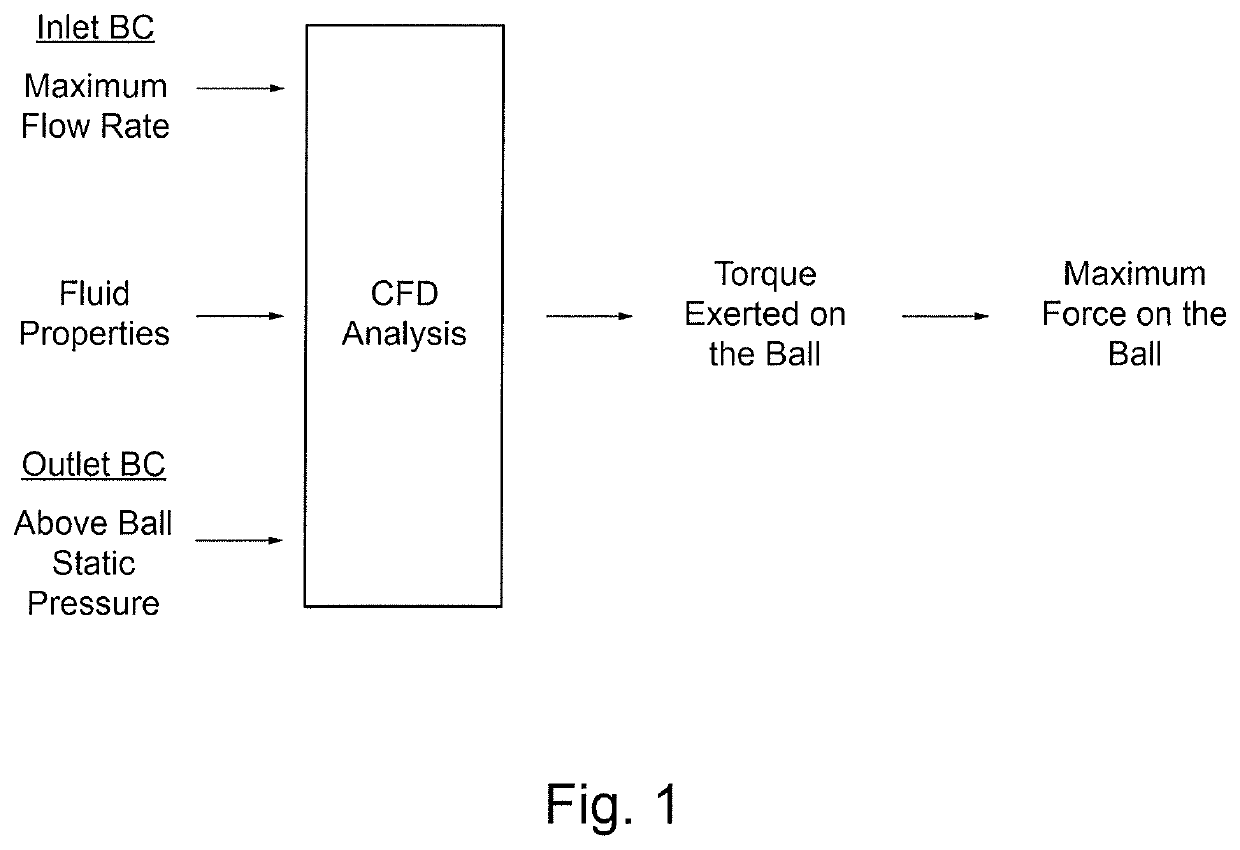
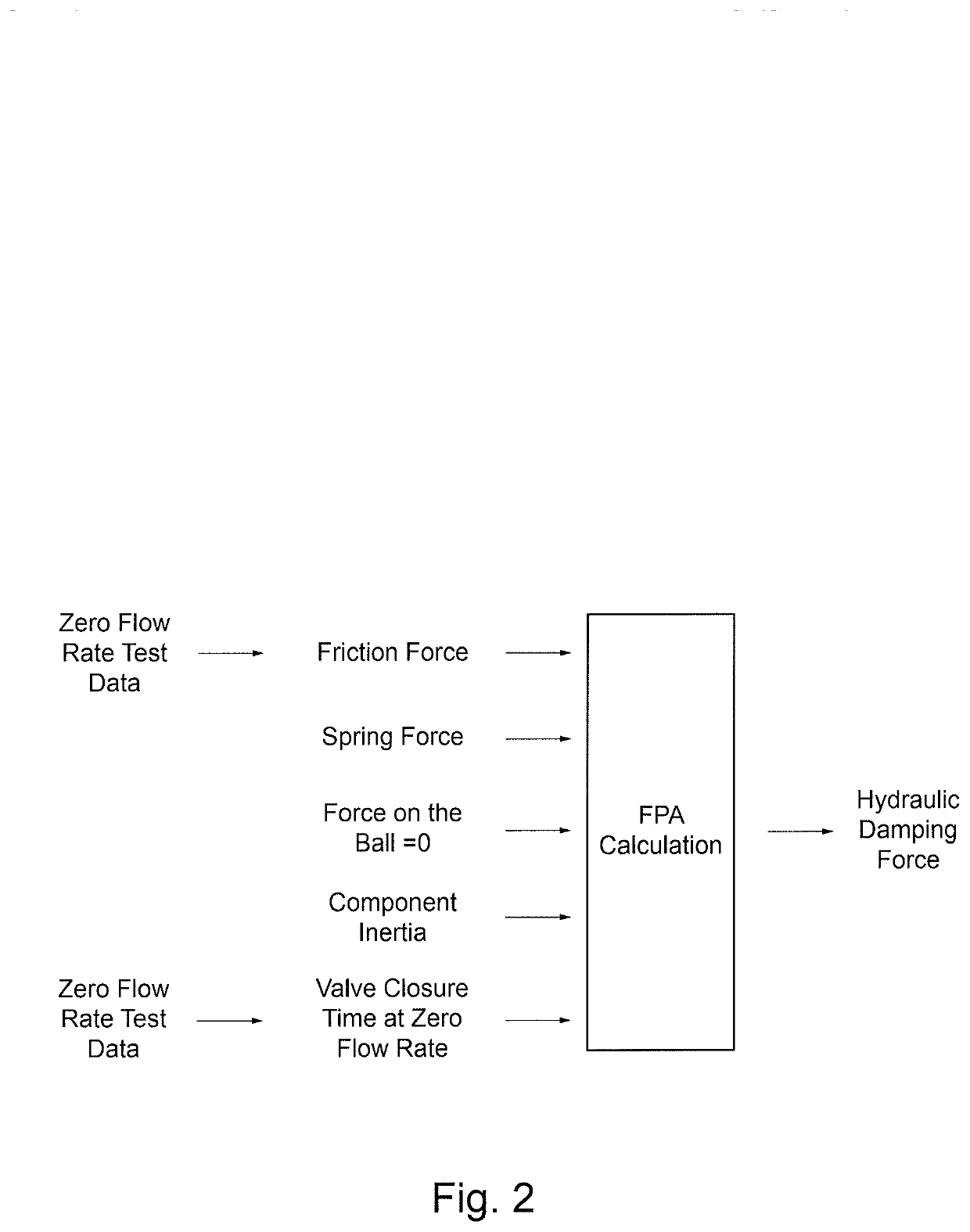
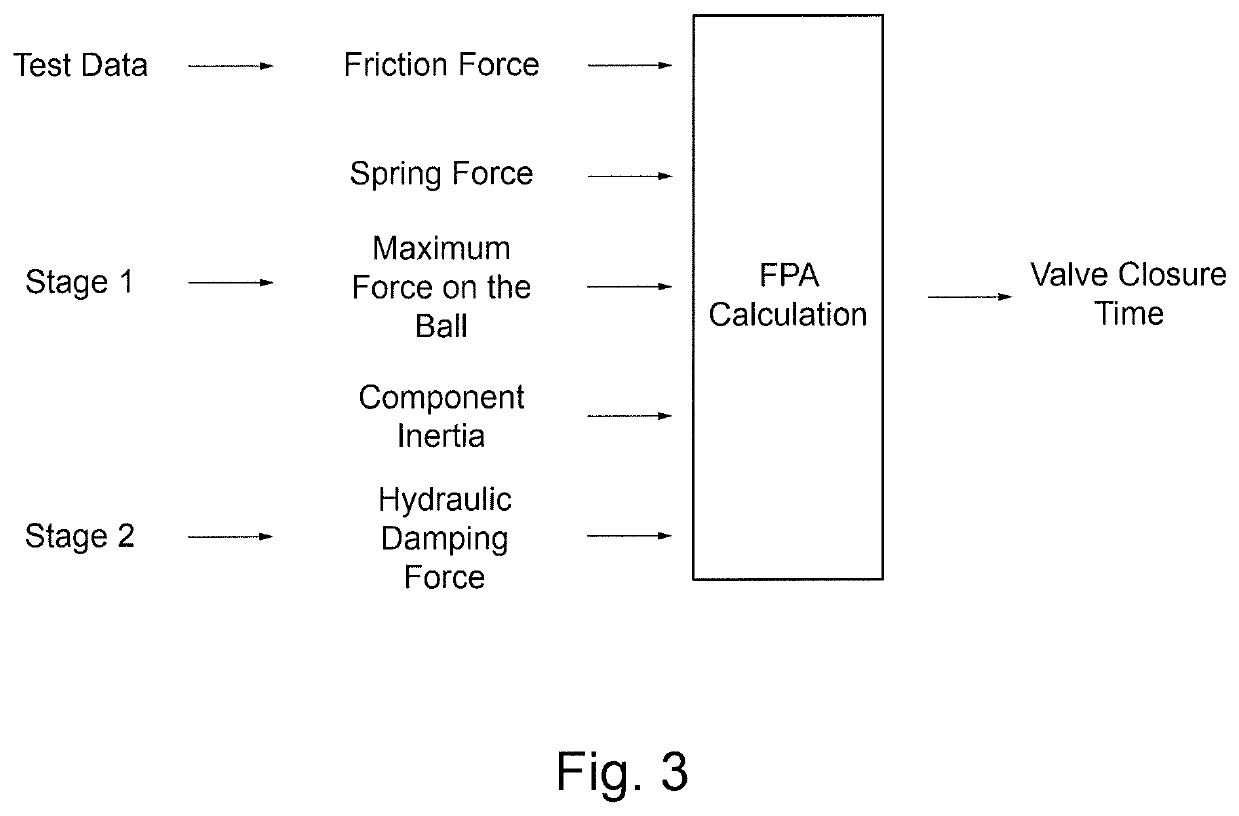
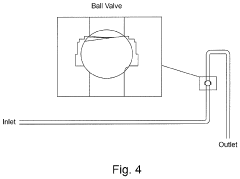
- Decoupling the CFD model from the FPA model allows a single CFD analysis to generate torque values usable in multiple FPA calculations, enabling quicker investigation of parameter variations and faster valve design modeling to assess functionality and compliance with performance standards.
Large-scale hydraulic variable-speed floating box flap valve
PatentInactiveUS9103452B2
Innovation
- A large-scale hydraulic variable-speed floating box flap valve design featuring hydraulic mechanisms connected between the upper and lower valve leaves, pressure equalizing pipes, and a modified sealing structure with obliquely welded mounting plates and a waist-shaped hinge connection, which reduces impact force, simplifies assembly, enhances sealing, and optimizes energy use.


Standards and Specifications for Industrial Valve Systems
Float valve flexibility analysis in large-scale industrial projects must align with established standards and specifications that govern valve system design, installation, and operation. International standards such as API 598, ASME B16.34, and ISO 5208 provide fundamental frameworks for valve testing and performance verification. These standards define pressure-temperature ratings, material requirements, and testing protocols that directly impact flexibility assessment methodologies. Compliance with these specifications ensures that float valve systems can accommodate operational variations while maintaining safety and reliability across diverse industrial applications.
The American Petroleum Institute (API) standards, particularly API 6D and API 600, establish critical parameters for valve construction and performance that influence flexibility characteristics. These specifications outline dimensional tolerances, pressure containment capabilities, and operational limits that must be considered when evaluating valve adaptability in large-scale installations. Additionally, ASME standards provide detailed requirements for valve materials, welding procedures, and quality assurance processes that affect long-term flexibility and system integration capabilities.
Industry-specific regulations further refine flexibility analysis requirements based on application contexts. For petrochemical facilities, NACE MR0175 addresses material selection for sour service environments, while for power generation plants, ASME Section III nuclear standards impose stringent quality requirements. These sector-specific specifications create additional constraints and considerations that must be incorporated into comprehensive flexibility assessments for float valve systems.
Documentation and certification requirements specified in international standards play a crucial role in validating flexibility analysis outcomes. Standards mandate detailed material traceability, non-destructive testing records, and performance verification documentation that support flexibility claims. Compliance with ISO 9001 quality management systems and industry-specific certification schemes ensures that flexibility analysis methodologies meet recognized benchmarks for technical rigor and reliability.
Emerging standards addressing digitalization and smart valve technologies are increasingly relevant to flexibility analysis. IEC 61508 functional safety standards and ISA-95 automation specifications provide frameworks for integrating advanced monitoring and control capabilities that enhance operational flexibility. These evolving standards reflect the industry's transition toward intelligent valve systems capable of real-time performance optimization and predictive maintenance, fundamentally expanding the scope of flexibility analysis in contemporary large-scale projects.
The American Petroleum Institute (API) standards, particularly API 6D and API 600, establish critical parameters for valve construction and performance that influence flexibility characteristics. These specifications outline dimensional tolerances, pressure containment capabilities, and operational limits that must be considered when evaluating valve adaptability in large-scale installations. Additionally, ASME standards provide detailed requirements for valve materials, welding procedures, and quality assurance processes that affect long-term flexibility and system integration capabilities.
Industry-specific regulations further refine flexibility analysis requirements based on application contexts. For petrochemical facilities, NACE MR0175 addresses material selection for sour service environments, while for power generation plants, ASME Section III nuclear standards impose stringent quality requirements. These sector-specific specifications create additional constraints and considerations that must be incorporated into comprehensive flexibility assessments for float valve systems.
Documentation and certification requirements specified in international standards play a crucial role in validating flexibility analysis outcomes. Standards mandate detailed material traceability, non-destructive testing records, and performance verification documentation that support flexibility claims. Compliance with ISO 9001 quality management systems and industry-specific certification schemes ensures that flexibility analysis methodologies meet recognized benchmarks for technical rigor and reliability.
Emerging standards addressing digitalization and smart valve technologies are increasingly relevant to flexibility analysis. IEC 61508 functional safety standards and ISA-95 automation specifications provide frameworks for integrating advanced monitoring and control capabilities that enhance operational flexibility. These evolving standards reflect the industry's transition toward intelligent valve systems capable of real-time performance optimization and predictive maintenance, fundamentally expanding the scope of flexibility analysis in contemporary large-scale projects.
Risk Management in Large Scale Float Valve Projects
Risk management in large-scale float valve projects requires a systematic approach to identify, assess, and mitigate potential threats that could compromise project success. The complexity inherent in deploying float valve systems across extensive industrial facilities introduces multiple risk dimensions that demand proactive management strategies. These risks span technical performance uncertainties, supply chain vulnerabilities, installation challenges, and operational reliability concerns that can significantly impact project timelines and budgets.
Technical risks constitute a primary concern, particularly regarding valve flexibility performance under varying operational conditions. Inadequate flexibility analysis may result in valve failures, system inefficiencies, or premature component degradation. To mitigate these risks, comprehensive testing protocols should be established during the design phase, incorporating simulation models that replicate extreme operating scenarios. Prototype validation under controlled conditions helps identify potential failure modes before full-scale deployment.
Supply chain risks pose significant challenges in large-scale projects, especially when sourcing specialized float valve components from multiple vendors. Material shortages, quality inconsistencies, or delivery delays can cascade through project schedules. Implementing dual-sourcing strategies, maintaining strategic inventory buffers, and establishing rigorous supplier qualification processes help minimize these vulnerabilities. Contractual agreements should include penalty clauses for non-compliance and quality assurance requirements.
Installation and commissioning risks emerge from the complexity of integrating numerous float valves into existing infrastructure. Coordination failures, installation errors, or inadequate testing procedures can compromise system integrity. Developing detailed installation protocols, conducting pre-installation site assessments, and implementing phased commissioning approaches reduce these risks. Training programs for installation teams ensure consistent execution across multiple sites.
Operational risks relate to long-term performance reliability and maintenance requirements. Establishing predictive maintenance programs, implementing real-time monitoring systems, and developing contingency response plans ensure sustained operational effectiveness. Regular risk reassessment throughout the project lifecycle enables adaptive management strategies that address emerging challenges and maintain project objectives within acceptable risk tolerances.
Technical risks constitute a primary concern, particularly regarding valve flexibility performance under varying operational conditions. Inadequate flexibility analysis may result in valve failures, system inefficiencies, or premature component degradation. To mitigate these risks, comprehensive testing protocols should be established during the design phase, incorporating simulation models that replicate extreme operating scenarios. Prototype validation under controlled conditions helps identify potential failure modes before full-scale deployment.
Supply chain risks pose significant challenges in large-scale projects, especially when sourcing specialized float valve components from multiple vendors. Material shortages, quality inconsistencies, or delivery delays can cascade through project schedules. Implementing dual-sourcing strategies, maintaining strategic inventory buffers, and establishing rigorous supplier qualification processes help minimize these vulnerabilities. Contractual agreements should include penalty clauses for non-compliance and quality assurance requirements.
Installation and commissioning risks emerge from the complexity of integrating numerous float valves into existing infrastructure. Coordination failures, installation errors, or inadequate testing procedures can compromise system integrity. Developing detailed installation protocols, conducting pre-installation site assessments, and implementing phased commissioning approaches reduce these risks. Training programs for installation teams ensure consistent execution across multiple sites.
Operational risks relate to long-term performance reliability and maintenance requirements. Establishing predictive maintenance programs, implementing real-time monitoring systems, and developing contingency response plans ensure sustained operational effectiveness. Regular risk reassessment throughout the project lifecycle enables adaptive management strategies that address emerging challenges and maintain project objectives within acceptable risk tolerances.
Unlock deeper insights with PatSnap Eureka Quick Research — get a full tech report to explore trends and direct your research. Try now!
Generate Your Research Report Instantly with AI Agent
Supercharge your innovation with PatSnap Eureka AI Agent Platform!