

How to Build CNC Resilience with Robust Components
MAR 20, 20269 MIN READ
Generate Your Research Report Instantly with AI Agent
PatSnap Eureka helps you evaluate technical feasibility & market potential.
CNC Resilience Technology Background and Objectives
Computer Numerical Control (CNC) technology has undergone significant evolution since its inception in the 1940s, transforming from basic punch-tape controlled systems to sophisticated digital manufacturing platforms. The journey began with John T. Parsons' pioneering work on automated machining for aircraft components, followed by MIT's development of the first numerical control systems in the 1950s. The integration of microprocessors in the 1970s marked a pivotal transition, enabling more complex operations and improved precision.
The contemporary CNC landscape faces unprecedented challenges as manufacturing demands intensify across aerospace, automotive, medical device, and precision engineering sectors. Modern CNC systems must operate continuously in harsh industrial environments while maintaining sub-micron accuracy levels. The increasing complexity of manufactured components, coupled with the push toward lights-out manufacturing, has exposed critical vulnerabilities in traditional CNC architectures.
Current technological trends indicate a shift toward Industry 4.0 integration, where CNC systems must seamlessly interface with IoT networks, cloud-based monitoring systems, and artificial intelligence platforms. This connectivity expansion introduces new failure modes and security vulnerabilities that traditional robust design approaches have not adequately addressed. The emergence of additive-subtractive hybrid manufacturing further complicates resilience requirements.
The primary objective of building CNC resilience through robust components centers on achieving fault-tolerant operation that maintains production continuity despite component failures or environmental stresses. This encompasses developing self-diagnostic capabilities that can predict component degradation before catastrophic failure occurs. Advanced sensor integration and machine learning algorithms are being deployed to create predictive maintenance frameworks that optimize component replacement schedules.
Secondary objectives include enhancing cybersecurity resilience as CNC systems become increasingly networked. Robust components must incorporate hardware-level security features to prevent unauthorized access and malicious interference. Additionally, modular component architectures are being pursued to enable rapid replacement and system reconfiguration without extensive downtime.
The ultimate goal involves establishing adaptive manufacturing systems that can automatically adjust operational parameters in response to component performance variations, ensuring consistent output quality throughout the component lifecycle while maximizing overall equipment effectiveness and minimizing total cost of ownership.
The contemporary CNC landscape faces unprecedented challenges as manufacturing demands intensify across aerospace, automotive, medical device, and precision engineering sectors. Modern CNC systems must operate continuously in harsh industrial environments while maintaining sub-micron accuracy levels. The increasing complexity of manufactured components, coupled with the push toward lights-out manufacturing, has exposed critical vulnerabilities in traditional CNC architectures.
Current technological trends indicate a shift toward Industry 4.0 integration, where CNC systems must seamlessly interface with IoT networks, cloud-based monitoring systems, and artificial intelligence platforms. This connectivity expansion introduces new failure modes and security vulnerabilities that traditional robust design approaches have not adequately addressed. The emergence of additive-subtractive hybrid manufacturing further complicates resilience requirements.
The primary objective of building CNC resilience through robust components centers on achieving fault-tolerant operation that maintains production continuity despite component failures or environmental stresses. This encompasses developing self-diagnostic capabilities that can predict component degradation before catastrophic failure occurs. Advanced sensor integration and machine learning algorithms are being deployed to create predictive maintenance frameworks that optimize component replacement schedules.
Secondary objectives include enhancing cybersecurity resilience as CNC systems become increasingly networked. Robust components must incorporate hardware-level security features to prevent unauthorized access and malicious interference. Additionally, modular component architectures are being pursued to enable rapid replacement and system reconfiguration without extensive downtime.
The ultimate goal involves establishing adaptive manufacturing systems that can automatically adjust operational parameters in response to component performance variations, ensuring consistent output quality throughout the component lifecycle while maximizing overall equipment effectiveness and minimizing total cost of ownership.
Market Demand for Robust CNC Manufacturing Systems
The global CNC manufacturing industry is experiencing unprecedented demand for resilient systems capable of maintaining operational continuity under challenging conditions. Manufacturing sectors including aerospace, automotive, medical devices, and precision engineering are driving this demand as they face increasing pressure to minimize downtime, reduce maintenance costs, and ensure consistent product quality.
Aerospace manufacturers represent a particularly significant market segment, requiring CNC systems that can operate reliably in demanding production environments while maintaining strict tolerances. The sector's emphasis on zero-defect manufacturing has created substantial demand for robust CNC components that can withstand extended operational cycles without performance degradation. Similarly, automotive manufacturers are seeking resilient CNC solutions to support their high-volume production requirements and just-in-time manufacturing strategies.
The medical device manufacturing sector has emerged as another key driver of market demand, where regulatory compliance and product safety requirements necessitate extremely reliable CNC systems. These manufacturers require components that demonstrate consistent performance over extended periods, as equipment failures can result in significant regulatory and financial consequences.
Industrial automation trends are further amplifying demand for robust CNC manufacturing systems. As factories transition toward lights-out manufacturing and reduced human intervention, the reliability of individual system components becomes increasingly critical. This shift has created market opportunities for suppliers offering enhanced component durability and predictive maintenance capabilities.
Supply chain disruptions experienced across global manufacturing have highlighted the importance of equipment resilience. Manufacturers are increasingly prioritizing CNC systems with robust components that can maintain operations during component shortages or delayed maintenance schedules. This trend has accelerated adoption of systems designed with redundancy and enhanced component longevity.
The market is also responding to sustainability initiatives within manufacturing organizations. Robust CNC components that extend equipment lifecycles and reduce replacement frequency align with corporate environmental goals while delivering cost benefits. This dual value proposition has strengthened market demand across multiple industrial sectors.
Emerging markets in Asia-Pacific and Latin America are contributing to growing demand as these regions expand their manufacturing capabilities. Local manufacturers in these markets are increasingly recognizing the long-term value of investing in resilient CNC systems rather than lower-cost alternatives that may require frequent maintenance or replacement.
Aerospace manufacturers represent a particularly significant market segment, requiring CNC systems that can operate reliably in demanding production environments while maintaining strict tolerances. The sector's emphasis on zero-defect manufacturing has created substantial demand for robust CNC components that can withstand extended operational cycles without performance degradation. Similarly, automotive manufacturers are seeking resilient CNC solutions to support their high-volume production requirements and just-in-time manufacturing strategies.
The medical device manufacturing sector has emerged as another key driver of market demand, where regulatory compliance and product safety requirements necessitate extremely reliable CNC systems. These manufacturers require components that demonstrate consistent performance over extended periods, as equipment failures can result in significant regulatory and financial consequences.
Industrial automation trends are further amplifying demand for robust CNC manufacturing systems. As factories transition toward lights-out manufacturing and reduced human intervention, the reliability of individual system components becomes increasingly critical. This shift has created market opportunities for suppliers offering enhanced component durability and predictive maintenance capabilities.
Supply chain disruptions experienced across global manufacturing have highlighted the importance of equipment resilience. Manufacturers are increasingly prioritizing CNC systems with robust components that can maintain operations during component shortages or delayed maintenance schedules. This trend has accelerated adoption of systems designed with redundancy and enhanced component longevity.
The market is also responding to sustainability initiatives within manufacturing organizations. Robust CNC components that extend equipment lifecycles and reduce replacement frequency align with corporate environmental goals while delivering cost benefits. This dual value proposition has strengthened market demand across multiple industrial sectors.
Emerging markets in Asia-Pacific and Latin America are contributing to growing demand as these regions expand their manufacturing capabilities. Local manufacturers in these markets are increasingly recognizing the long-term value of investing in resilient CNC systems rather than lower-cost alternatives that may require frequent maintenance or replacement.
Current CNC Component Reliability Challenges
CNC machining systems face significant reliability challenges that directly impact manufacturing efficiency and product quality. The complexity of modern CNC equipment, combined with demanding operational environments, creates multiple failure points that can compromise system performance and lead to costly downtime.
Spindle assemblies represent one of the most critical reliability concerns in CNC systems. High-speed rotation, thermal cycling, and continuous mechanical stress cause bearing degradation, shaft misalignment, and seal failures. These components typically operate at speeds exceeding 20,000 RPM while maintaining precision tolerances measured in micrometers, making them particularly susceptible to wear-related failures that can cascade throughout the entire machining process.
Linear motion systems, including ball screws, linear guides, and servo motors, experience reliability issues due to contamination, lubrication breakdown, and mechanical wear. Particulate matter from machining operations infiltrates these precision components, accelerating wear patterns and reducing positioning accuracy. The repetitive nature of CNC operations compounds these problems, as components undergo millions of cycles during their operational lifetime.
Control system electronics face unique challenges in manufacturing environments characterized by electromagnetic interference, temperature fluctuations, and vibration exposure. Power supply instabilities, sensor drift, and communication network disruptions can cause system malfunctions that are difficult to diagnose and resolve. The increasing complexity of modern CNC controllers, with their sophisticated software algorithms and multiple interconnected subsystems, creates additional failure modes that were not present in simpler mechanical systems.
Thermal management presents another significant reliability challenge, as CNC components generate substantial heat during operation. Inadequate cooling systems or thermal expansion mismatches between different materials can lead to dimensional instabilities, premature component failure, and reduced machining accuracy. This is particularly problematic in high-speed machining applications where thermal loads are extreme.
Tool changing systems and automatic workpiece handling mechanisms introduce additional complexity and potential failure points. Pneumatic and hydraulic actuators, mechanical clamping devices, and robotic interfaces must operate reliably under varying load conditions while maintaining precise positioning and timing. Contamination, seal degradation, and mechanical wear in these systems can disrupt automated manufacturing processes.
The integration of multiple subsystems creates interdependencies that can amplify individual component failures into system-wide reliability issues. A minor sensor malfunction can trigger protective shutdowns, while communication errors between controllers can cause synchronization problems that affect overall system performance and reliability.
Spindle assemblies represent one of the most critical reliability concerns in CNC systems. High-speed rotation, thermal cycling, and continuous mechanical stress cause bearing degradation, shaft misalignment, and seal failures. These components typically operate at speeds exceeding 20,000 RPM while maintaining precision tolerances measured in micrometers, making them particularly susceptible to wear-related failures that can cascade throughout the entire machining process.
Linear motion systems, including ball screws, linear guides, and servo motors, experience reliability issues due to contamination, lubrication breakdown, and mechanical wear. Particulate matter from machining operations infiltrates these precision components, accelerating wear patterns and reducing positioning accuracy. The repetitive nature of CNC operations compounds these problems, as components undergo millions of cycles during their operational lifetime.
Control system electronics face unique challenges in manufacturing environments characterized by electromagnetic interference, temperature fluctuations, and vibration exposure. Power supply instabilities, sensor drift, and communication network disruptions can cause system malfunctions that are difficult to diagnose and resolve. The increasing complexity of modern CNC controllers, with their sophisticated software algorithms and multiple interconnected subsystems, creates additional failure modes that were not present in simpler mechanical systems.
Thermal management presents another significant reliability challenge, as CNC components generate substantial heat during operation. Inadequate cooling systems or thermal expansion mismatches between different materials can lead to dimensional instabilities, premature component failure, and reduced machining accuracy. This is particularly problematic in high-speed machining applications where thermal loads are extreme.
Tool changing systems and automatic workpiece handling mechanisms introduce additional complexity and potential failure points. Pneumatic and hydraulic actuators, mechanical clamping devices, and robotic interfaces must operate reliably under varying load conditions while maintaining precise positioning and timing. Contamination, seal degradation, and mechanical wear in these systems can disrupt automated manufacturing processes.
The integration of multiple subsystems creates interdependencies that can amplify individual component failures into system-wide reliability issues. A minor sensor malfunction can trigger protective shutdowns, while communication errors between controllers can cause synchronization problems that affect overall system performance and reliability.
Existing Robust CNC Component Solutions
01 Redundant control architecture for CNC systems
Implementation of redundant control architectures in CNC systems to enhance resilience through backup controllers, dual processing units, or parallel control paths. These architectures ensure continuous operation even when primary control components fail, maintaining system availability and preventing production downtime. The redundancy can be implemented at hardware or software levels to provide failover capabilities.- Redundant control architecture for CNC systems: Implementation of redundant control architectures in CNC systems to enhance resilience through backup controllers, dual processing units, or parallel control paths. These architectures ensure continuous operation even when primary control components fail, maintaining system availability and preventing production downtime. The redundancy can be implemented at hardware or software levels to provide failover capabilities.
- Fault detection and diagnostic systems: Advanced fault detection and diagnostic mechanisms that monitor CNC system parameters in real-time to identify potential failures before they occur. These systems utilize sensors, monitoring algorithms, and predictive analytics to detect anomalies in machine behavior, tool wear, or component degradation. Early detection enables preventive maintenance and reduces unexpected system failures.
- Error recovery and self-healing mechanisms: Automated error recovery and self-healing capabilities that enable CNC systems to automatically correct errors and resume operations without human intervention. These mechanisms include automatic tool path correction, position error compensation, and system state restoration. The self-healing features improve system uptime and reduce the impact of transient faults on production processes.
- Data backup and recovery systems: Comprehensive data backup and recovery solutions for protecting critical CNC program data, machine parameters, and operational settings. These systems implement regular automated backups, version control, and rapid restoration capabilities to prevent data loss from system failures or cyber incidents. The backup mechanisms ensure business continuity and minimize recovery time objectives.
- Network resilience and communication redundancy: Enhanced network resilience through redundant communication paths, secure protocols, and robust network architectures for CNC systems. These solutions address network failures, communication interruptions, and cyber threats by implementing multiple communication channels, failover mechanisms, and secure data transmission protocols. Network resilience ensures reliable connectivity between CNC machines and control systems.
02 Error detection and recovery mechanisms
Advanced error detection and automatic recovery systems that monitor CNC operations in real-time and implement corrective actions when anomalies are detected. These mechanisms include sensor-based monitoring, diagnostic algorithms, and automated recovery procedures that can identify faults, isolate problems, and restore normal operation without human intervention. The systems enhance resilience by minimizing the impact of errors on production processes.Expand Specific Solutions03 Adaptive control strategies for disturbance compensation
Implementation of adaptive control algorithms that adjust CNC parameters dynamically in response to changing conditions or disturbances. These strategies enable the system to maintain performance despite variations in workpiece properties, tool wear, environmental factors, or other uncertainties. The adaptive mechanisms improve resilience by allowing the system to compensate for unpredictable conditions automatically.Expand Specific Solutions04 Network resilience and communication reliability
Enhancement of network infrastructure and communication protocols in CNC systems to ensure reliable data transmission and system connectivity. This includes implementation of robust communication protocols, network redundancy, fault-tolerant data transmission methods, and secure communication channels. These improvements ensure that CNC systems maintain connectivity and data integrity even under adverse network conditions or cyber threats.Expand Specific Solutions05 Predictive maintenance and health monitoring
Integration of predictive maintenance systems and continuous health monitoring capabilities that assess the condition of CNC components and predict potential failures before they occur. These systems utilize sensor data, machine learning algorithms, and historical performance data to identify degradation patterns and schedule maintenance proactively. This approach enhances resilience by preventing unexpected failures and optimizing system availability.Expand Specific Solutions
Major CNC Component and System Manufacturers
The CNC resilience market is experiencing significant growth driven by increasing automation demands across manufacturing sectors, with the industry transitioning from a growth phase to early maturity. Market expansion is fueled by aerospace, automotive, and precision manufacturing requirements for reliable, high-performance components. Technology maturity varies considerably among key players: established industrial giants like Siemens AG, Robert Bosch GmbH, and Toshiba Corp. lead in advanced control systems and automation technologies, while specialized manufacturers such as Gühring KG and FormFactor Inc. focus on precision tooling and testing solutions. Steel producers including NIPPON STEEL CORP., ArcelorMittal SA, and thyssenkrupp Steel Europe AG provide critical material foundations, though their CNC-specific innovations remain developing. Aerospace leaders like Boeing Co., Airbus Operations Ltd., and Rolls-Royce Plc drive high-precision requirements, pushing technological boundaries. The competitive landscape shows consolidation around integrated solutions providers who can deliver comprehensive resilience through robust hardware, advanced materials, and intelligent control systems.
Robert Bosch GmbH
Technical Solution: Bosch focuses on building CNC resilience through their Rexroth division, which specializes in robust drive and control technologies for industrial automation. Their solution emphasizes high-quality servo motors, drives, and control systems designed with enhanced durability specifications. Bosch implements advanced bearing technologies, reinforced housing designs, and superior thermal management systems to extend component lifespan under demanding operational conditions. Their CNC components feature integrated condition monitoring sensors that provide real-time feedback on component health, enabling predictive maintenance strategies. The company also develops specialized lubricants and protective coatings that enhance component resistance to wear, corrosion, and environmental stresses, significantly improving overall system reliability and reducing unplanned downtime.
Strengths: Excellent component quality and integrated condition monitoring capabilities. Weaknesses: Limited to specific market segments and higher component replacement costs.
Siemens AG
Technical Solution: Siemens develops comprehensive CNC resilience solutions through their SINUMERIK control systems featuring advanced diagnostic capabilities and predictive maintenance algorithms. Their approach integrates robust hardware components with intelligent software that monitors system health in real-time, detecting potential failures before they occur. The company implements redundant control architectures and fail-safe mechanisms to ensure continuous operation even when individual components fail. Their CNC systems utilize high-grade industrial components rated for extended operational life cycles, combined with adaptive control algorithms that compensate for component wear and environmental variations. Siemens also provides comprehensive condition monitoring systems that track critical parameters and enable proactive maintenance scheduling.
Strengths: Market-leading diagnostic capabilities and comprehensive system integration. Weaknesses: Higher initial investment costs and complexity requiring specialized technical expertise.
Core Technologies in CNC Resilience Engineering
Films for flexible applications using cellulose nanocrystals (CNC) and resilin-cbd
PatentInactiveUS20230203258A1
Innovation
- The development of bio-nanocomposite films by binding recombinant Resilin-CBD protein to cellulose nanocrystals (CNCs) at specific ratios, with crosslinking methods and coatings, to create stiff yet flexible films with enhanced mechanical and electrical properties.


Conductive cellulose nanocrystals, method of producing same and uses thereof
PatentActiveUS20190194400A1
Innovation
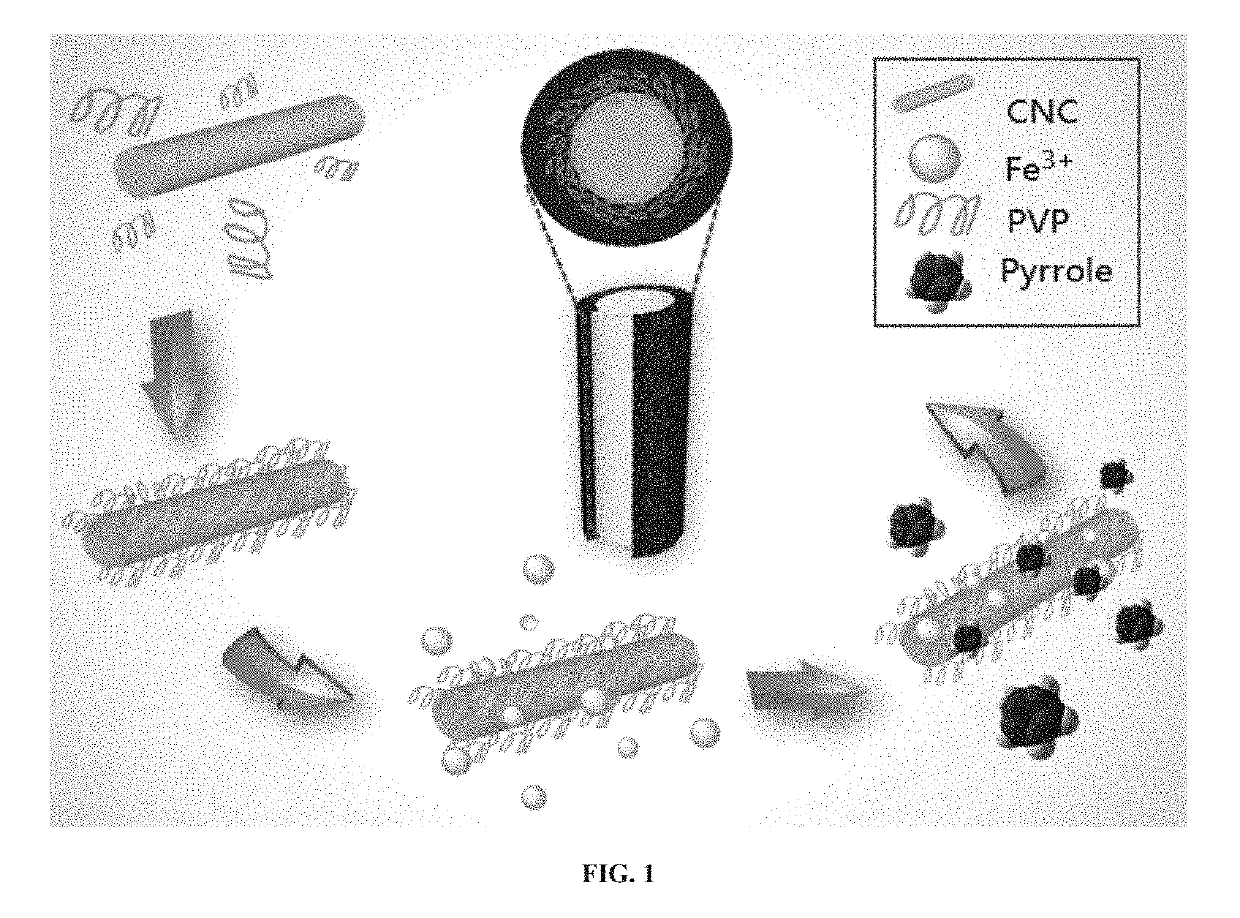
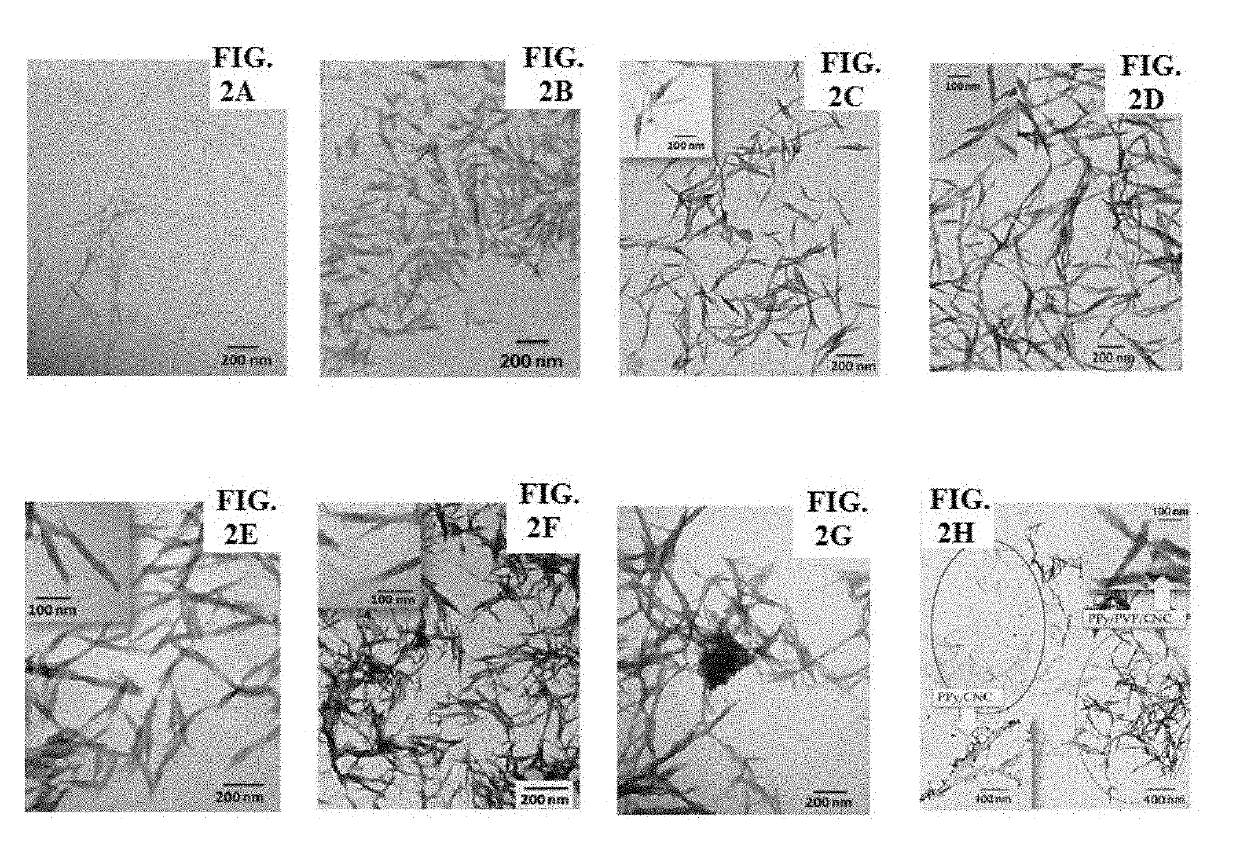
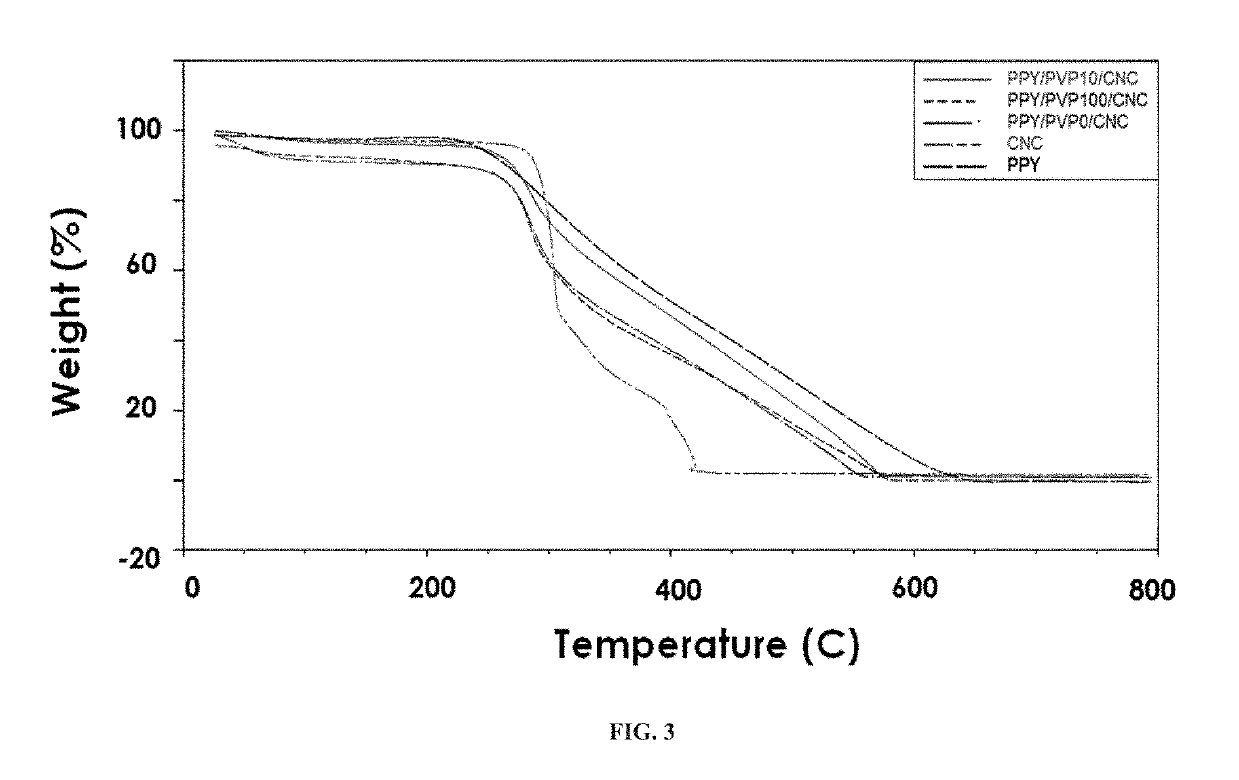
- A core-shell nanocomposite material is synthesized by dispersing cellulose nanocrystals in a solution, adsorbing a surface agent, and then polymerizing an intrinsically conductive polymer, such as polypyrrole, to form a uniform and stable conductive shell, using a process that includes controlled polymerization and surface modification to prevent agglomeration and enhance mechanical strength.

Industrial Standards for CNC Reliability
Industrial standards for CNC reliability serve as the foundation for ensuring consistent performance and operational excellence across manufacturing environments. These standards establish comprehensive frameworks that define minimum requirements for component durability, system integration, and performance metrics. The International Organization for Standardization (ISO) has developed several key standards, including ISO 230 series for machine tool testing and ISO 13041 for numerical control systems, which provide detailed specifications for accuracy, repeatability, and environmental resistance.
The American National Standards Institute (ANSI) and the Association for Manufacturing Technology (AMT) have collaborated to create B5 series standards that specifically address CNC machine tool performance criteria. These standards encompass thermal stability requirements, spindle performance specifications, and positioning accuracy tolerances that directly impact component selection and system design. European standards such as DIN 8606 and VDI/VDE guidelines complement these frameworks by establishing additional criteria for component qualification and system validation.
Compliance with these industrial standards requires rigorous testing protocols and certification processes. Component manufacturers must demonstrate adherence to specified environmental conditions, including temperature variations, humidity levels, and vibration resistance. The standards mandate specific testing methodologies for evaluating component lifecycle performance, including accelerated aging tests and stress analysis procedures that simulate real-world operating conditions.
Quality assurance frameworks embedded within these standards emphasize preventive maintenance protocols and condition monitoring requirements. Standards such as ISO 17359 for condition monitoring and diagnostics provide structured approaches for implementing predictive maintenance strategies that enhance system resilience. These frameworks establish clear metrics for component health assessment and define threshold parameters for proactive replacement scheduling.
The integration of cybersecurity considerations into reliability standards has become increasingly important, with frameworks like NIST Cybersecurity Framework and IEC 62443 addressing security requirements for connected CNC systems. These standards ensure that robust components maintain their reliability characteristics while operating within secure network environments, establishing protocols for secure communication and data integrity verification.
The American National Standards Institute (ANSI) and the Association for Manufacturing Technology (AMT) have collaborated to create B5 series standards that specifically address CNC machine tool performance criteria. These standards encompass thermal stability requirements, spindle performance specifications, and positioning accuracy tolerances that directly impact component selection and system design. European standards such as DIN 8606 and VDI/VDE guidelines complement these frameworks by establishing additional criteria for component qualification and system validation.
Compliance with these industrial standards requires rigorous testing protocols and certification processes. Component manufacturers must demonstrate adherence to specified environmental conditions, including temperature variations, humidity levels, and vibration resistance. The standards mandate specific testing methodologies for evaluating component lifecycle performance, including accelerated aging tests and stress analysis procedures that simulate real-world operating conditions.
Quality assurance frameworks embedded within these standards emphasize preventive maintenance protocols and condition monitoring requirements. Standards such as ISO 17359 for condition monitoring and diagnostics provide structured approaches for implementing predictive maintenance strategies that enhance system resilience. These frameworks establish clear metrics for component health assessment and define threshold parameters for proactive replacement scheduling.
The integration of cybersecurity considerations into reliability standards has become increasingly important, with frameworks like NIST Cybersecurity Framework and IEC 62443 addressing security requirements for connected CNC systems. These standards ensure that robust components maintain their reliability characteristics while operating within secure network environments, establishing protocols for secure communication and data integrity verification.
Predictive Maintenance for CNC Systems
Predictive maintenance represents a paradigm shift from traditional reactive and scheduled maintenance approaches in CNC systems. By leveraging advanced sensor technologies, data analytics, and machine learning algorithms, predictive maintenance enables manufacturers to anticipate component failures before they occur, thereby significantly enhancing system resilience and operational continuity.
The foundation of predictive maintenance lies in continuous condition monitoring through strategically deployed sensors throughout CNC systems. These sensors collect real-time data on critical parameters including vibration patterns, temperature fluctuations, acoustic emissions, power consumption, and spindle load variations. Advanced accelerometers monitor bearing health and detect early signs of wear, while thermal sensors identify overheating conditions that could lead to component degradation.
Machine learning algorithms process this vast amount of sensor data to establish baseline operational patterns and identify anomalies that indicate potential failures. Sophisticated algorithms such as neural networks, support vector machines, and ensemble methods analyze historical failure data to develop predictive models specific to different CNC components. These models continuously learn and adapt, improving their accuracy over time as more operational data becomes available.
Integration of Industrial Internet of Things (IIoT) platforms enables seamless data collection and transmission from multiple CNC machines to centralized monitoring systems. Cloud-based analytics platforms provide scalable computing resources for complex predictive algorithms while offering remote monitoring capabilities. Edge computing solutions process critical data locally, enabling real-time decision-making and reducing latency in emergency situations.
The implementation of digital twins creates virtual replicas of physical CNC systems, allowing for advanced simulation and predictive analysis. These digital models incorporate real-time operational data to simulate various failure scenarios and optimize maintenance schedules. By running predictive simulations, manufacturers can determine optimal replacement intervals for critical components and plan maintenance activities during scheduled downtime.
Predictive maintenance systems generate actionable insights through intuitive dashboards and automated alert mechanisms. Maintenance teams receive prioritized recommendations based on failure probability, potential impact, and available maintenance windows. This proactive approach minimizes unexpected downtime, extends component lifespan, and optimizes maintenance resource allocation, ultimately contributing to enhanced CNC system resilience through data-driven decision-making.
The foundation of predictive maintenance lies in continuous condition monitoring through strategically deployed sensors throughout CNC systems. These sensors collect real-time data on critical parameters including vibration patterns, temperature fluctuations, acoustic emissions, power consumption, and spindle load variations. Advanced accelerometers monitor bearing health and detect early signs of wear, while thermal sensors identify overheating conditions that could lead to component degradation.
Machine learning algorithms process this vast amount of sensor data to establish baseline operational patterns and identify anomalies that indicate potential failures. Sophisticated algorithms such as neural networks, support vector machines, and ensemble methods analyze historical failure data to develop predictive models specific to different CNC components. These models continuously learn and adapt, improving their accuracy over time as more operational data becomes available.
Integration of Industrial Internet of Things (IIoT) platforms enables seamless data collection and transmission from multiple CNC machines to centralized monitoring systems. Cloud-based analytics platforms provide scalable computing resources for complex predictive algorithms while offering remote monitoring capabilities. Edge computing solutions process critical data locally, enabling real-time decision-making and reducing latency in emergency situations.
The implementation of digital twins creates virtual replicas of physical CNC systems, allowing for advanced simulation and predictive analysis. These digital models incorporate real-time operational data to simulate various failure scenarios and optimize maintenance schedules. By running predictive simulations, manufacturers can determine optimal replacement intervals for critical components and plan maintenance activities during scheduled downtime.
Predictive maintenance systems generate actionable insights through intuitive dashboards and automated alert mechanisms. Maintenance teams receive prioritized recommendations based on failure probability, potential impact, and available maintenance windows. This proactive approach minimizes unexpected downtime, extends component lifespan, and optimizes maintenance resource allocation, ultimately contributing to enhanced CNC system resilience through data-driven decision-making.
Unlock deeper insights with PatSnap Eureka Quick Research — get a full tech report to explore trends and direct your research. Try now!
Generate Your Research Report Instantly with AI Agent
Supercharge your innovation with PatSnap Eureka AI Agent Platform!