

How To Calibrate Programmable Metasurfaces For Multi-User MIMO Performance
JUN 4, 20269 MIN READ
Generate Your Research Report Instantly with AI Agent
PatSnap Eureka helps you evaluate technical feasibility & market potential.
Metasurface MIMO Technology Background and Calibration Goals
Metasurfaces represent a revolutionary advancement in electromagnetic wave manipulation, consisting of artificially engineered two-dimensional arrays of subwavelength scattering elements. These structures enable unprecedented control over electromagnetic properties including amplitude, phase, and polarization of incident waves. The integration of programmable metasurfaces with Multiple-Input Multiple-Output (MIMO) systems has emerged as a transformative approach for next-generation wireless communications, particularly in addressing the growing demands of multi-user scenarios.
The evolution of metasurface technology traces back to the early 2000s with the development of metamaterials, progressing through passive metasurfaces to today's intelligent reflecting surfaces (IRS) and reconfigurable intelligent surfaces (RIS). This technological progression has been driven by the need for enhanced spectral efficiency, improved coverage, and reduced power consumption in wireless networks. The incorporation of programmable elements, typically achieved through PIN diodes, varactor diodes, or micro-electromechanical systems (MEMS), has enabled real-time reconfiguration of electromagnetic responses.
Multi-user MIMO systems face inherent challenges including inter-user interference, channel correlation, and limited degrees of freedom. Traditional solutions rely on complex baseband processing and sophisticated antenna arrays, which increase system complexity and power consumption. Programmable metasurfaces offer an alternative paradigm by manipulating the propagation environment itself, effectively creating virtual line-of-sight channels and enhancing spatial diversity.
The primary calibration goal for programmable metasurfaces in multi-user MIMO applications centers on achieving optimal phase and amplitude configurations that maximize system-wide performance metrics. These objectives include maximizing sum-rate capacity, minimizing inter-user interference, ensuring fairness among users, and maintaining robust performance under varying channel conditions. Calibration must account for hardware imperfections, mutual coupling effects between metasurface elements, and the dynamic nature of wireless channels.
Achieving these calibration goals requires sophisticated optimization algorithms capable of handling the high-dimensional, non-convex nature of the metasurface configuration space. The calibration process must balance computational complexity with real-time adaptation requirements, ensuring that the system can respond effectively to changing user distributions and channel conditions while maintaining acceptable performance levels across all served users.
The evolution of metasurface technology traces back to the early 2000s with the development of metamaterials, progressing through passive metasurfaces to today's intelligent reflecting surfaces (IRS) and reconfigurable intelligent surfaces (RIS). This technological progression has been driven by the need for enhanced spectral efficiency, improved coverage, and reduced power consumption in wireless networks. The incorporation of programmable elements, typically achieved through PIN diodes, varactor diodes, or micro-electromechanical systems (MEMS), has enabled real-time reconfiguration of electromagnetic responses.
Multi-user MIMO systems face inherent challenges including inter-user interference, channel correlation, and limited degrees of freedom. Traditional solutions rely on complex baseband processing and sophisticated antenna arrays, which increase system complexity and power consumption. Programmable metasurfaces offer an alternative paradigm by manipulating the propagation environment itself, effectively creating virtual line-of-sight channels and enhancing spatial diversity.
The primary calibration goal for programmable metasurfaces in multi-user MIMO applications centers on achieving optimal phase and amplitude configurations that maximize system-wide performance metrics. These objectives include maximizing sum-rate capacity, minimizing inter-user interference, ensuring fairness among users, and maintaining robust performance under varying channel conditions. Calibration must account for hardware imperfections, mutual coupling effects between metasurface elements, and the dynamic nature of wireless channels.
Achieving these calibration goals requires sophisticated optimization algorithms capable of handling the high-dimensional, non-convex nature of the metasurface configuration space. The calibration process must balance computational complexity with real-time adaptation requirements, ensuring that the system can respond effectively to changing user distributions and channel conditions while maintaining acceptable performance levels across all served users.
Market Demand for Multi-User MIMO Metasurface Systems
The telecommunications industry is experiencing unprecedented demand for high-capacity wireless networks driven by the proliferation of mobile devices, Internet of Things applications, and emerging technologies such as augmented reality and autonomous vehicles. Multi-user MIMO systems have emerged as a critical technology to address these capacity requirements by enabling simultaneous communication with multiple users through spatial multiplexing techniques.
Traditional multi-user MIMO implementations face significant limitations in terms of hardware complexity, power consumption, and deployment flexibility. The integration of programmable metasurfaces presents a transformative opportunity to overcome these constraints while delivering superior performance characteristics. These intelligent reflecting surfaces can dynamically manipulate electromagnetic waves, enabling more efficient spectrum utilization and enhanced signal quality for multiple users simultaneously.
The market demand for metasurface-enhanced multi-user MIMO systems is particularly strong in dense urban environments where network congestion and interference pose significant challenges. Cellular network operators are actively seeking solutions that can improve spectral efficiency without requiring extensive infrastructure overhauls. The ability to calibrate programmable metasurfaces for optimal multi-user performance directly addresses this need by providing adaptive beamforming capabilities and interference mitigation.
Enterprise applications represent another substantial market segment driving demand for these systems. Large-scale venues such as airports, stadiums, and convention centers require robust wireless connectivity for thousands of simultaneous users. Programmable metasurfaces offer the precision control necessary to maintain consistent service quality across diverse user distributions and mobility patterns.
The emergence of private 5G networks has further accelerated market interest in advanced multi-user MIMO solutions. Industrial facilities, smart cities, and critical infrastructure operators are investing in dedicated wireless networks that demand reliable performance guarantees. Metasurface calibration techniques enable these networks to adapt dynamically to changing operational requirements and environmental conditions.
Market growth is also fueled by the increasing adoption of millimeter-wave frequencies, where traditional antenna systems face significant propagation challenges. Programmable metasurfaces provide an effective means to extend coverage and maintain multi-user connectivity at these higher frequencies, making them essential components for next-generation wireless systems.
Traditional multi-user MIMO implementations face significant limitations in terms of hardware complexity, power consumption, and deployment flexibility. The integration of programmable metasurfaces presents a transformative opportunity to overcome these constraints while delivering superior performance characteristics. These intelligent reflecting surfaces can dynamically manipulate electromagnetic waves, enabling more efficient spectrum utilization and enhanced signal quality for multiple users simultaneously.
The market demand for metasurface-enhanced multi-user MIMO systems is particularly strong in dense urban environments where network congestion and interference pose significant challenges. Cellular network operators are actively seeking solutions that can improve spectral efficiency without requiring extensive infrastructure overhauls. The ability to calibrate programmable metasurfaces for optimal multi-user performance directly addresses this need by providing adaptive beamforming capabilities and interference mitigation.
Enterprise applications represent another substantial market segment driving demand for these systems. Large-scale venues such as airports, stadiums, and convention centers require robust wireless connectivity for thousands of simultaneous users. Programmable metasurfaces offer the precision control necessary to maintain consistent service quality across diverse user distributions and mobility patterns.
The emergence of private 5G networks has further accelerated market interest in advanced multi-user MIMO solutions. Industrial facilities, smart cities, and critical infrastructure operators are investing in dedicated wireless networks that demand reliable performance guarantees. Metasurface calibration techniques enable these networks to adapt dynamically to changing operational requirements and environmental conditions.
Market growth is also fueled by the increasing adoption of millimeter-wave frequencies, where traditional antenna systems face significant propagation challenges. Programmable metasurfaces provide an effective means to extend coverage and maintain multi-user connectivity at these higher frequencies, making them essential components for next-generation wireless systems.
Current Calibration Challenges in Programmable Metasurfaces
Programmable metasurfaces face significant calibration challenges that directly impact their effectiveness in multi-user MIMO systems. The primary obstacle stems from the inherent complexity of controlling thousands of individual meta-atoms simultaneously while maintaining phase and amplitude accuracy across the entire surface. Each meta-atom requires precise electromagnetic characterization, yet manufacturing tolerances introduce variations that can deviate by 5-15% from theoretical values.
Temperature-induced drift represents another critical challenge, as metasurface elements exhibit thermal sensitivity that affects their electromagnetic properties. Operating frequencies in the millimeter-wave spectrum exacerbate this issue, where even minor temperature fluctuations can cause phase shifts exceeding acceptable thresholds for MIMO performance. Current compensation mechanisms often lack real-time adaptation capabilities, leading to degraded beamforming accuracy over extended operation periods.
Mutual coupling between adjacent meta-atoms creates complex interdependencies that traditional calibration methods struggle to address effectively. The electromagnetic interaction between neighboring elements varies with configuration states, making it difficult to establish universal calibration models. This coupling effect becomes more pronounced in dense metasurface arrays designed for high-resolution beam steering applications.
Multi-user scenarios introduce additional complexity through dynamic channel conditions and interference patterns. Calibration procedures must account for rapidly changing propagation environments while maintaining optimal performance for multiple simultaneous users. Existing calibration frameworks typically assume static conditions, proving inadequate for real-world deployment scenarios where user mobility and environmental changes occur continuously.
Measurement accuracy limitations further compound calibration difficulties. Current near-field and far-field measurement systems often lack sufficient resolution to characterize individual meta-atom responses accurately. The measurement process itself can be time-consuming, making frequent recalibration impractical for operational systems. Additionally, measurement setups may not fully replicate actual deployment conditions, introducing discrepancies between calibrated and operational performance.
Computational complexity presents another significant barrier, as optimal calibration requires solving high-dimensional optimization problems involving thousands of variables. Real-time calibration algorithms must balance accuracy with processing speed, often resulting in suboptimal solutions that compromise overall system performance in multi-user MIMO applications.
Temperature-induced drift represents another critical challenge, as metasurface elements exhibit thermal sensitivity that affects their electromagnetic properties. Operating frequencies in the millimeter-wave spectrum exacerbate this issue, where even minor temperature fluctuations can cause phase shifts exceeding acceptable thresholds for MIMO performance. Current compensation mechanisms often lack real-time adaptation capabilities, leading to degraded beamforming accuracy over extended operation periods.
Mutual coupling between adjacent meta-atoms creates complex interdependencies that traditional calibration methods struggle to address effectively. The electromagnetic interaction between neighboring elements varies with configuration states, making it difficult to establish universal calibration models. This coupling effect becomes more pronounced in dense metasurface arrays designed for high-resolution beam steering applications.
Multi-user scenarios introduce additional complexity through dynamic channel conditions and interference patterns. Calibration procedures must account for rapidly changing propagation environments while maintaining optimal performance for multiple simultaneous users. Existing calibration frameworks typically assume static conditions, proving inadequate for real-world deployment scenarios where user mobility and environmental changes occur continuously.
Measurement accuracy limitations further compound calibration difficulties. Current near-field and far-field measurement systems often lack sufficient resolution to characterize individual meta-atom responses accurately. The measurement process itself can be time-consuming, making frequent recalibration impractical for operational systems. Additionally, measurement setups may not fully replicate actual deployment conditions, introducing discrepancies between calibrated and operational performance.
Computational complexity presents another significant barrier, as optimal calibration requires solving high-dimensional optimization problems involving thousands of variables. Real-time calibration algorithms must balance accuracy with processing speed, often resulting in suboptimal solutions that compromise overall system performance in multi-user MIMO applications.
Existing Calibration Solutions for Multi-User MIMO
01 Reconfigurable metasurface structures and control mechanisms
Programmable metasurfaces utilize reconfigurable structures that can dynamically alter their electromagnetic properties through various control mechanisms. These structures incorporate active elements that enable real-time tuning of phase, amplitude, and polarization responses. The control systems allow for precise manipulation of electromagnetic waves by adjusting the metasurface configuration based on specific requirements or environmental conditions.- Reconfigurable metasurface structures and control mechanisms: Programmable metasurfaces utilize reconfigurable unit cells and control mechanisms to dynamically adjust their electromagnetic properties. These structures incorporate active elements that can be electrically or mechanically controlled to modify the phase, amplitude, and polarization of electromagnetic waves. The reconfigurable nature allows for real-time tuning of the metasurface response, enabling adaptive functionality for various applications.
- Beam steering and wavefront manipulation capabilities: Advanced beam steering techniques are implemented in programmable metasurfaces to achieve precise control over electromagnetic wave propagation. These systems can manipulate wavefronts to redirect beams in desired directions, focus energy at specific points, or create complex radiation patterns. The capability enables dynamic beam forming and scanning without mechanical movement of the antenna system.
- Multi-frequency and broadband operation optimization: Programmable metasurfaces are designed to operate across multiple frequency bands or achieve broadband performance through optimized unit cell geometries and materials. These designs incorporate frequency-selective elements and multi-resonant structures to maintain consistent performance across wide frequency ranges. The optimization techniques ensure stable operation and minimal performance degradation across the operational bandwidth.
- Integration with communication and sensing systems: Programmable metasurfaces are integrated into communication and sensing platforms to enhance system performance and functionality. These implementations focus on improving signal quality, increasing data transmission rates, and enabling new sensing capabilities. The integration involves sophisticated control algorithms and interface circuits that coordinate the metasurface operation with the host system requirements.
- Performance optimization through advanced design methodologies: Sophisticated design methodologies and optimization algorithms are employed to enhance programmable metasurface performance. These approaches include machine learning techniques, genetic algorithms, and numerical optimization methods to achieve optimal electromagnetic responses. The methodologies consider multiple performance metrics simultaneously, including efficiency, bandwidth, and dynamic range to maximize overall system performance.
02 Beam steering and directional control capabilities
Advanced beam steering functionalities enable programmable metasurfaces to dynamically redirect electromagnetic waves in desired directions. These systems provide precise control over beam formation and steering angles, allowing for adaptive radiation patterns. The technology supports multi-beam generation and independent control of multiple beams simultaneously, enhancing the versatility of wireless communication and radar applications.Expand Specific Solutions03 Optimization algorithms and performance enhancement methods
Sophisticated optimization algorithms are employed to maximize the performance of programmable metasurfaces by determining optimal configuration parameters. These methods include machine learning approaches, genetic algorithms, and iterative optimization techniques that enhance efficiency and reduce computational complexity. The algorithms enable real-time adaptation and self-optimization capabilities for improved system performance under varying operational conditions.Expand Specific Solutions04 Multi-frequency and broadband operation characteristics
Programmable metasurfaces are designed to operate across multiple frequency bands and provide broadband functionality for diverse applications. These systems support simultaneous operation at different frequencies while maintaining independent control over each frequency band. The broadband characteristics enable versatile applications ranging from wireless communications to sensing systems, with enhanced spectral efficiency and reduced hardware complexity.Expand Specific Solutions05 Integration with communication systems and antenna arrays
Programmable metasurfaces are integrated with existing communication infrastructure and antenna systems to enhance overall performance and functionality. These integrated solutions provide improved signal quality, extended coverage, and enhanced capacity for wireless networks. The integration enables seamless compatibility with various communication standards while offering additional features such as interference mitigation and adaptive beamforming capabilities.Expand Specific Solutions
Key Players in Programmable Metasurface MIMO Industry
The programmable metasurface calibration for multi-user MIMO represents an emerging technology in the early commercialization phase, with the global market experiencing rapid growth driven by 5G deployment and beyond-5G research initiatives. The competitive landscape is dominated by established telecommunications giants including Huawei, Samsung Electronics, ZTE Corp., Nokia, and Ericsson, who possess mature hardware capabilities and extensive patent portfolios. These companies are complemented by traditional electronics manufacturers like NEC Corp., Fujitsu, and Mitsubishi Electric, alongside major telecom operators such as NTT Docomo and China Mobile who drive practical implementation requirements. The technology maturity varies significantly across players, with leading Chinese universities like Southeast University and Beijing University of Posts & Telecommunications contributing fundamental research, while companies like Huawei and Samsung demonstrate advanced prototyping capabilities, though full commercial deployment remains in development stages across the industry.
NTT Docomo, Inc.
Technical Solution: NTT Docomo has pioneered a distributed calibration framework for programmable metasurfaces that leverages cooperative sensing among multiple users and base stations. Their system utilizes compressed sensing techniques to reduce calibration overhead while maintaining high precision in multi-user MIMO scenarios. The approach includes novel algorithms for handling user mobility and dynamic channel variations, with particular emphasis on millimeter-wave applications. Docomo's solution also incorporates AI-driven optimization for real-time adaptation of calibration parameters based on network traffic patterns and quality of service requirements.
Strengths: Excellent millimeter-wave performance, innovative cooperative sensing approach. Weaknesses: Limited to specific frequency bands, requires dense network infrastructure.
Huawei Technologies Co., Ltd.
Technical Solution: Huawei has developed advanced calibration algorithms for programmable metasurfaces in multi-user MIMO systems, focusing on real-time channel estimation and beamforming optimization. Their approach utilizes machine learning-based calibration techniques that can adapt to dynamic channel conditions and user mobility. The system employs distributed calibration protocols that minimize overhead while maintaining high accuracy in phase and amplitude control of metasurface elements. Huawei's solution integrates with existing 5G infrastructure and supports massive MIMO configurations with up to 256 antenna elements per metasurface panel.
Strengths: Strong integration with 5G networks, robust machine learning algorithms. Weaknesses: High computational complexity, requires significant processing power.
Core Calibration Algorithms for Programmable Metasurfaces
Programmable metasurface for real time control of broadband elastic rays and method
PatentActiveUS20210327403A1
Innovation
- A programmable elastic metasurface with a 1D array of slits in an elastic plate, featuring self-sensing and self-actuating unit cells with piezoelectric patches, allowing for real-time reconfiguration of wave steering and phase control through digital circuits, enabling multifunctional control of flexural waves across broad frequency ranges.
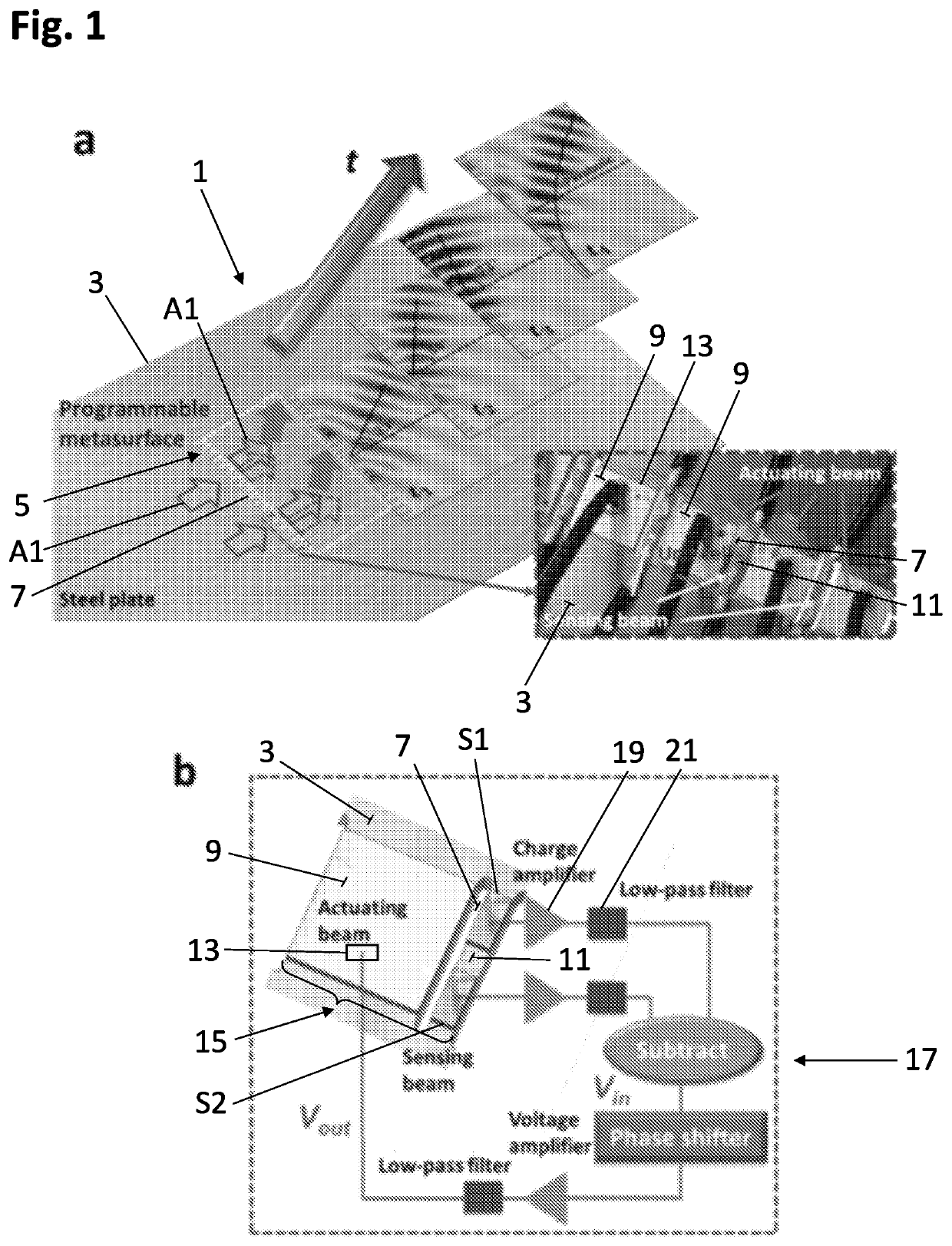
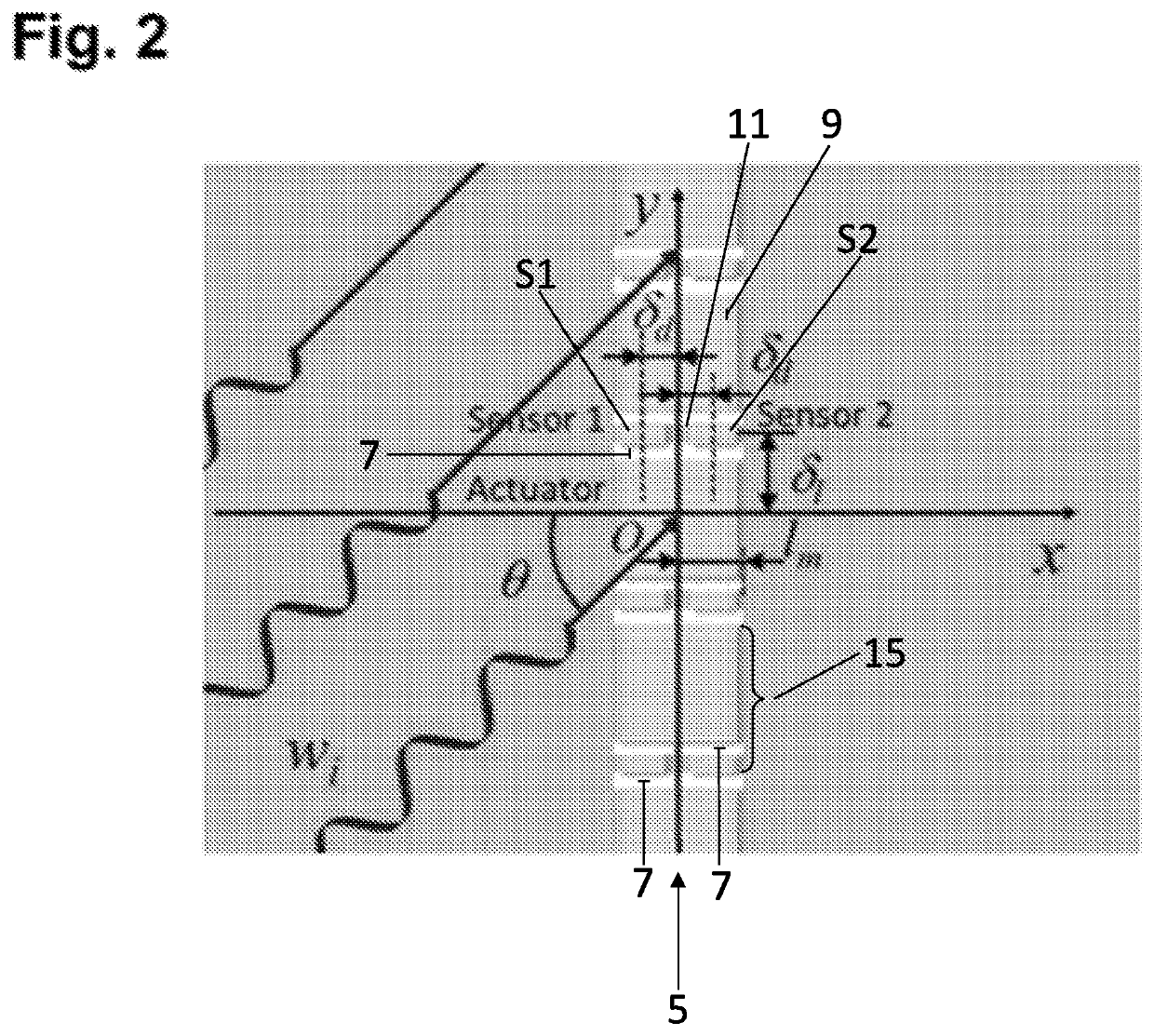
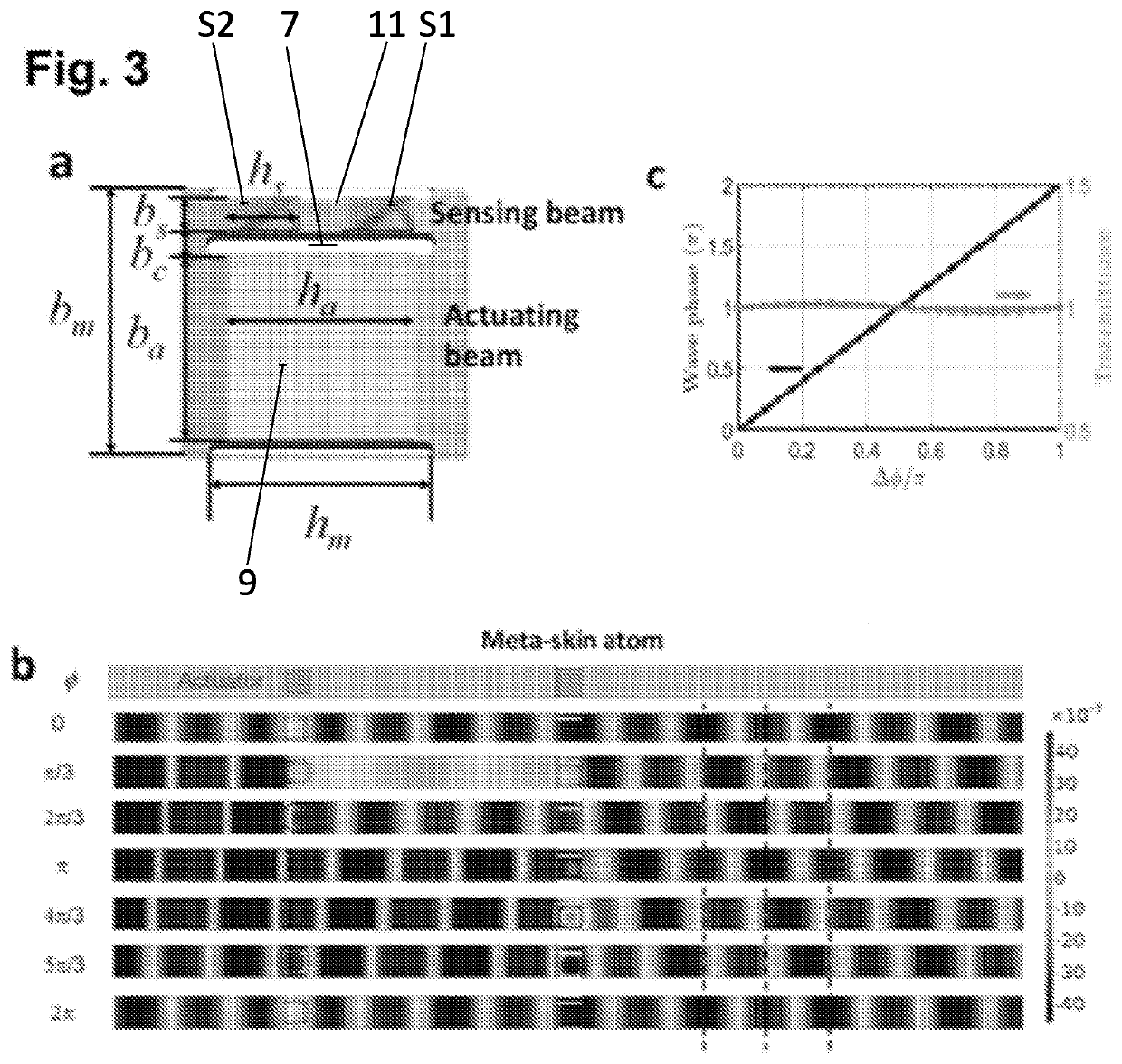

Calibration techniques for MIMO wireless communication systems
PatentWO2009158303A1
Innovation
- A re-configurable antenna in the antenna array is switched between a CAL state with high electromagnetic coupling and a NoCAL state with maximum isolation, allowing for efficient calibration and communication operations using lower RF power.


Spectrum Regulation Impact on Metasurface Deployment
The deployment of programmable metasurfaces for multi-user MIMO applications faces significant regulatory challenges that directly impact their calibration requirements and operational effectiveness. Current spectrum allocation frameworks were primarily designed for conventional wireless systems, creating regulatory gaps that affect how metasurfaces can be deployed and calibrated across different frequency bands.
Regulatory bodies worldwide are grappling with the classification of intelligent reflecting surfaces and programmable metasurfaces within existing spectrum management frameworks. The dynamic nature of metasurface beam steering and signal manipulation capabilities raises questions about interference mitigation requirements and coordination protocols with existing wireless infrastructure. These regulatory uncertainties directly influence calibration procedures, as operators must ensure compliance with power spectral density limits and out-of-band emission requirements across all operational configurations.
Spectrum licensing models significantly impact metasurface deployment strategies and associated calibration complexity. In licensed spectrum scenarios, metasurfaces must maintain precise calibration to avoid interference with primary license holders, requiring sophisticated real-time monitoring and adjustment capabilities. Conversely, unlicensed spectrum deployment allows more flexible calibration approaches but demands robust interference detection and avoidance mechanisms to coexist with other unlicensed devices.
International harmonization efforts are emerging to address metasurface-specific regulatory requirements. The ITU-R and regional regulatory bodies are developing technical standards that define acceptable calibration tolerances, measurement methodologies, and certification procedures for programmable metasurfaces. These evolving standards directly influence the design of calibration algorithms and hardware requirements for compliance verification.
Cross-border deployment scenarios present additional regulatory complexity, particularly for metasurfaces operating in border regions or supporting international communication links. Different national spectrum regulations may impose varying calibration requirements, necessitating adaptive calibration systems capable of switching between regulatory compliance modes based on geographical location and operational context.
The regulatory landscape continues evolving as authorities recognize the unique characteristics of metasurface technology, with ongoing discussions about dedicated spectrum allocations and simplified licensing procedures that could reduce calibration complexity while ensuring interference-free operation across diverse deployment scenarios.
Regulatory bodies worldwide are grappling with the classification of intelligent reflecting surfaces and programmable metasurfaces within existing spectrum management frameworks. The dynamic nature of metasurface beam steering and signal manipulation capabilities raises questions about interference mitigation requirements and coordination protocols with existing wireless infrastructure. These regulatory uncertainties directly influence calibration procedures, as operators must ensure compliance with power spectral density limits and out-of-band emission requirements across all operational configurations.
Spectrum licensing models significantly impact metasurface deployment strategies and associated calibration complexity. In licensed spectrum scenarios, metasurfaces must maintain precise calibration to avoid interference with primary license holders, requiring sophisticated real-time monitoring and adjustment capabilities. Conversely, unlicensed spectrum deployment allows more flexible calibration approaches but demands robust interference detection and avoidance mechanisms to coexist with other unlicensed devices.
International harmonization efforts are emerging to address metasurface-specific regulatory requirements. The ITU-R and regional regulatory bodies are developing technical standards that define acceptable calibration tolerances, measurement methodologies, and certification procedures for programmable metasurfaces. These evolving standards directly influence the design of calibration algorithms and hardware requirements for compliance verification.
Cross-border deployment scenarios present additional regulatory complexity, particularly for metasurfaces operating in border regions or supporting international communication links. Different national spectrum regulations may impose varying calibration requirements, necessitating adaptive calibration systems capable of switching between regulatory compliance modes based on geographical location and operational context.
The regulatory landscape continues evolving as authorities recognize the unique characteristics of metasurface technology, with ongoing discussions about dedicated spectrum allocations and simplified licensing procedures that could reduce calibration complexity while ensuring interference-free operation across diverse deployment scenarios.
Real-Time Calibration Implementation Challenges
Real-time calibration of programmable metasurfaces for multi-user MIMO systems presents significant implementation challenges that must be addressed to achieve optimal performance in practical deployments. The primary obstacle lies in the computational complexity required to process calibration algorithms within stringent timing constraints while maintaining system stability and user quality of service.
The most critical challenge involves managing the computational overhead of real-time channel estimation and metasurface element adjustment. Traditional calibration approaches require extensive matrix computations and optimization algorithms that can consume substantial processing resources. When scaled to support multiple users simultaneously, these calculations must be completed within millisecond timeframes to prevent service degradation, creating severe bottlenecks in existing hardware architectures.
Hardware limitations pose another significant barrier to real-time implementation. Current digital signal processors and field-programmable gate arrays often lack sufficient parallel processing capabilities to handle the simultaneous calibration of hundreds or thousands of metasurface elements while maintaining low latency requirements. The need for high-speed analog-to-digital converters and precise timing synchronization further complicates the hardware design and increases system costs.
Memory bandwidth constraints create additional implementation difficulties, particularly when storing and accessing large channel state information matrices for multiple users. The frequent updates required for dynamic calibration can overwhelm memory subsystems, leading to performance bottlenecks that compromise real-time operation. Efficient data management strategies become essential but add complexity to system design.
Synchronization challenges emerge when coordinating calibration processes across distributed metasurface arrays or multiple base stations. Maintaining phase coherence and timing alignment while performing real-time adjustments requires sophisticated coordination mechanisms that can introduce additional latency and complexity into the system architecture.
Power consumption represents a practical constraint that affects real-time calibration feasibility. The intensive computational requirements and frequent hardware adjustments can significantly increase energy consumption, particularly problematic for battery-powered or energy-constrained deployments where thermal management becomes a critical consideration.
The most critical challenge involves managing the computational overhead of real-time channel estimation and metasurface element adjustment. Traditional calibration approaches require extensive matrix computations and optimization algorithms that can consume substantial processing resources. When scaled to support multiple users simultaneously, these calculations must be completed within millisecond timeframes to prevent service degradation, creating severe bottlenecks in existing hardware architectures.
Hardware limitations pose another significant barrier to real-time implementation. Current digital signal processors and field-programmable gate arrays often lack sufficient parallel processing capabilities to handle the simultaneous calibration of hundreds or thousands of metasurface elements while maintaining low latency requirements. The need for high-speed analog-to-digital converters and precise timing synchronization further complicates the hardware design and increases system costs.
Memory bandwidth constraints create additional implementation difficulties, particularly when storing and accessing large channel state information matrices for multiple users. The frequent updates required for dynamic calibration can overwhelm memory subsystems, leading to performance bottlenecks that compromise real-time operation. Efficient data management strategies become essential but add complexity to system design.
Synchronization challenges emerge when coordinating calibration processes across distributed metasurface arrays or multiple base stations. Maintaining phase coherence and timing alignment while performing real-time adjustments requires sophisticated coordination mechanisms that can introduce additional latency and complexity into the system architecture.
Power consumption represents a practical constraint that affects real-time calibration feasibility. The intensive computational requirements and frequent hardware adjustments can significantly increase energy consumption, particularly problematic for battery-powered or energy-constrained deployments where thermal management becomes a critical consideration.
Unlock deeper insights with PatSnap Eureka Quick Research — get a full tech report to explore trends and direct your research. Try now!
Generate Your Research Report Instantly with AI Agent
Supercharge your innovation with PatSnap Eureka AI Agent Platform!