

How to Control Reciprocating Compressor Pulsation Effects
MAR 20, 20269 MIN READ
Generate Your Research Report Instantly with AI Agent
PatSnap Eureka helps you evaluate technical feasibility & market potential.
Reciprocating Compressor Pulsation Control Background and Objectives
Reciprocating compressors have been fundamental components in industrial applications since the early 19th century, evolving from simple steam-driven mechanisms to sophisticated high-performance systems. The development trajectory shows continuous advancement in design optimization, materials engineering, and control methodologies. Early compressors suffered from significant vibration and noise issues, which gradually led to the recognition of pulsation as a critical design consideration.
The evolution of pulsation control technology can be traced through several distinct phases. Initial approaches focused on mechanical dampening through heavy foundations and structural reinforcement. The mid-20th century introduced acoustic theory applications, leading to the development of pulsation bottles and resonator chambers. Modern developments emphasize active control systems, advanced simulation techniques, and integrated design approaches that consider pulsation effects from the initial design phase.
Current technological trends indicate a shift toward predictive modeling and real-time adaptive control systems. Advanced computational fluid dynamics enables precise prediction of pulsation characteristics during the design phase. Machine learning algorithms are increasingly applied to optimize control parameters based on operational data patterns. Digital twin technology allows for continuous monitoring and adjustment of pulsation control strategies throughout the compressor lifecycle.
The primary technical objective centers on minimizing pressure pulsations within acceptable operational limits while maintaining compressor efficiency and reliability. This involves achieving optimal balance between pulsation amplitude reduction and system performance preservation. Secondary objectives include extending equipment lifespan through reduced mechanical stress, improving operational stability across varying load conditions, and ensuring compliance with industry vibration and noise standards.
Performance targets typically aim for pulsation levels below 2% of line pressure for most industrial applications, with more stringent requirements for critical processes. Energy efficiency preservation remains paramount, as pulsation control measures should not significantly impact the compressor's thermodynamic performance. Reliability enhancement through reduced fatigue loading on piping systems and connected equipment represents another key objective.
Future technological goals encompass the development of intelligent pulsation control systems capable of autonomous optimization based on real-time operating conditions. Integration with broader plant control systems enables coordinated optimization strategies that consider pulsation effects within the context of overall process efficiency and stability requirements.
The evolution of pulsation control technology can be traced through several distinct phases. Initial approaches focused on mechanical dampening through heavy foundations and structural reinforcement. The mid-20th century introduced acoustic theory applications, leading to the development of pulsation bottles and resonator chambers. Modern developments emphasize active control systems, advanced simulation techniques, and integrated design approaches that consider pulsation effects from the initial design phase.
Current technological trends indicate a shift toward predictive modeling and real-time adaptive control systems. Advanced computational fluid dynamics enables precise prediction of pulsation characteristics during the design phase. Machine learning algorithms are increasingly applied to optimize control parameters based on operational data patterns. Digital twin technology allows for continuous monitoring and adjustment of pulsation control strategies throughout the compressor lifecycle.
The primary technical objective centers on minimizing pressure pulsations within acceptable operational limits while maintaining compressor efficiency and reliability. This involves achieving optimal balance between pulsation amplitude reduction and system performance preservation. Secondary objectives include extending equipment lifespan through reduced mechanical stress, improving operational stability across varying load conditions, and ensuring compliance with industry vibration and noise standards.
Performance targets typically aim for pulsation levels below 2% of line pressure for most industrial applications, with more stringent requirements for critical processes. Energy efficiency preservation remains paramount, as pulsation control measures should not significantly impact the compressor's thermodynamic performance. Reliability enhancement through reduced fatigue loading on piping systems and connected equipment represents another key objective.
Future technological goals encompass the development of intelligent pulsation control systems capable of autonomous optimization based on real-time operating conditions. Integration with broader plant control systems enables coordinated optimization strategies that consider pulsation effects within the context of overall process efficiency and stability requirements.
Market Demand for Low-Pulsation Compressor Systems
The global market for low-pulsation reciprocating compressor systems is experiencing robust growth driven by increasingly stringent industrial requirements for operational efficiency and equipment longevity. Industries such as oil and gas processing, petrochemicals, power generation, and manufacturing are demanding compressor solutions that minimize vibration-induced equipment damage and reduce maintenance costs associated with pulsation-related failures.
Process industries represent the largest market segment for low-pulsation compressor technologies. Refineries and chemical plants require continuous, reliable compression operations where pulsation-induced vibrations can cause catastrophic failures in downstream piping systems, instrumentation, and connected equipment. The economic impact of unplanned shutdowns in these facilities creates strong demand for advanced pulsation control solutions.
The natural gas industry drives significant market demand as pipeline compression stations and gas processing facilities expand globally. These applications require compressors capable of handling varying gas compositions and flow rates while maintaining stable operation. Pulsation control becomes critical in preventing fatigue failures in extensive pipeline networks and ensuring compliance with environmental regulations regarding emissions and noise levels.
Power generation facilities utilizing gas-fired turbines increasingly specify low-pulsation compressor systems for fuel gas boosting applications. The growing transition toward cleaner energy sources and the need for grid stability create demand for reliable compression equipment that can respond rapidly to load changes without introducing harmful pulsations into the fuel delivery system.
Emerging markets in developing economies present substantial growth opportunities as industrialization accelerates. New manufacturing facilities and infrastructure projects in these regions often incorporate modern pulsation control technologies from the design phase, avoiding the costly retrofitting challenges faced by older installations.
The marine and offshore sectors demonstrate growing demand for compact, low-pulsation compressor systems that can withstand harsh operating environments while maintaining precise control over gas handling processes. Space constraints and safety requirements in these applications drive innovation in integrated pulsation dampening solutions.
Industrial air compression applications increasingly emphasize pulsation control as manufacturing processes become more sensitive to pressure fluctuations. Precision manufacturing, pharmaceutical production, and food processing industries require stable compressed air supplies free from pulsation-induced pressure variations that could affect product quality or process consistency.
Process industries represent the largest market segment for low-pulsation compressor technologies. Refineries and chemical plants require continuous, reliable compression operations where pulsation-induced vibrations can cause catastrophic failures in downstream piping systems, instrumentation, and connected equipment. The economic impact of unplanned shutdowns in these facilities creates strong demand for advanced pulsation control solutions.
The natural gas industry drives significant market demand as pipeline compression stations and gas processing facilities expand globally. These applications require compressors capable of handling varying gas compositions and flow rates while maintaining stable operation. Pulsation control becomes critical in preventing fatigue failures in extensive pipeline networks and ensuring compliance with environmental regulations regarding emissions and noise levels.
Power generation facilities utilizing gas-fired turbines increasingly specify low-pulsation compressor systems for fuel gas boosting applications. The growing transition toward cleaner energy sources and the need for grid stability create demand for reliable compression equipment that can respond rapidly to load changes without introducing harmful pulsations into the fuel delivery system.
Emerging markets in developing economies present substantial growth opportunities as industrialization accelerates. New manufacturing facilities and infrastructure projects in these regions often incorporate modern pulsation control technologies from the design phase, avoiding the costly retrofitting challenges faced by older installations.
The marine and offshore sectors demonstrate growing demand for compact, low-pulsation compressor systems that can withstand harsh operating environments while maintaining precise control over gas handling processes. Space constraints and safety requirements in these applications drive innovation in integrated pulsation dampening solutions.
Industrial air compression applications increasingly emphasize pulsation control as manufacturing processes become more sensitive to pressure fluctuations. Precision manufacturing, pharmaceutical production, and food processing industries require stable compressed air supplies free from pulsation-induced pressure variations that could affect product quality or process consistency.
Current Pulsation Issues and Technical Challenges
Reciprocating compressors face significant pulsation challenges that directly impact operational efficiency, equipment longevity, and system reliability. The primary issue stems from the inherent discontinuous flow characteristics of positive displacement compression, where periodic suction and discharge cycles create pressure fluctuations throughout the piping system. These pulsations manifest as acoustic energy that propagates through the gas medium, causing vibrations in piping, vessels, and structural components.
Current pulsation problems are particularly pronounced in high-pressure applications and large-capacity compressor installations. The amplitude of pressure pulsations can reach 5-15% of the mean operating pressure under normal conditions, but may exceed 25% in poorly designed systems. This excessive pulsation energy leads to premature fatigue failure of piping components, valve malfunctions, and reduced compressor performance due to volumetric efficiency losses.
The technical challenges in pulsation control are multifaceted and interconnected. Acoustic resonance represents one of the most critical issues, occurring when pulsation frequencies coincide with natural frequencies of the piping system. This phenomenon can amplify pulsation levels by factors of 10-50 times, creating destructive vibrations that compromise system integrity. The complexity increases in multi-cylinder configurations where pulsation interactions between cylinders can either constructively or destructively interfere.
Thermal effects present another significant challenge, as pulsating flow creates temperature variations that affect gas properties and system performance. The rapid compression and expansion cycles during pulsation events can cause local heating and cooling, leading to thermal stress in piping materials and affecting the accuracy of flow measurements and control systems.
Modern compressor systems face additional complications from increasingly stringent environmental regulations and efficiency requirements. Traditional pulsation control methods often involve trade-offs between pulsation reduction and energy efficiency. Conventional pulsation bottles and dampeners add pressure drop to the system, reducing overall efficiency while occupying valuable installation space.
The integration of variable speed drives and advanced control systems has introduced new pulsation challenges. Operating compressors at variable speeds changes the fundamental pulsation frequencies, potentially creating resonance conditions at different operating points. This variability makes it difficult to design fixed pulsation control systems that remain effective across the entire operating range.
Measurement and monitoring of pulsation effects remain technically challenging due to the high-frequency nature of pressure fluctuations and the harsh operating environment of compressor installations. Accurate pulsation measurement requires specialized instrumentation capable of capturing rapid pressure changes while withstanding extreme temperatures, pressures, and vibrations typical of industrial compressor applications.
Current pulsation problems are particularly pronounced in high-pressure applications and large-capacity compressor installations. The amplitude of pressure pulsations can reach 5-15% of the mean operating pressure under normal conditions, but may exceed 25% in poorly designed systems. This excessive pulsation energy leads to premature fatigue failure of piping components, valve malfunctions, and reduced compressor performance due to volumetric efficiency losses.
The technical challenges in pulsation control are multifaceted and interconnected. Acoustic resonance represents one of the most critical issues, occurring when pulsation frequencies coincide with natural frequencies of the piping system. This phenomenon can amplify pulsation levels by factors of 10-50 times, creating destructive vibrations that compromise system integrity. The complexity increases in multi-cylinder configurations where pulsation interactions between cylinders can either constructively or destructively interfere.
Thermal effects present another significant challenge, as pulsating flow creates temperature variations that affect gas properties and system performance. The rapid compression and expansion cycles during pulsation events can cause local heating and cooling, leading to thermal stress in piping materials and affecting the accuracy of flow measurements and control systems.
Modern compressor systems face additional complications from increasingly stringent environmental regulations and efficiency requirements. Traditional pulsation control methods often involve trade-offs between pulsation reduction and energy efficiency. Conventional pulsation bottles and dampeners add pressure drop to the system, reducing overall efficiency while occupying valuable installation space.
The integration of variable speed drives and advanced control systems has introduced new pulsation challenges. Operating compressors at variable speeds changes the fundamental pulsation frequencies, potentially creating resonance conditions at different operating points. This variability makes it difficult to design fixed pulsation control systems that remain effective across the entire operating range.
Measurement and monitoring of pulsation effects remain technically challenging due to the high-frequency nature of pressure fluctuations and the harsh operating environment of compressor installations. Accurate pulsation measurement requires specialized instrumentation capable of capturing rapid pressure changes while withstanding extreme temperatures, pressures, and vibrations typical of industrial compressor applications.
Existing Pulsation Dampening and Control Solutions
01 Pulsation damping devices and dampeners
Various damping devices and dampeners can be installed in reciprocating compressor systems to reduce pulsation effects. These devices work by absorbing or dissipating pressure fluctuations in the gas flow, thereby minimizing vibration and noise. Pulsation dampeners typically include chambers, baffles, or acoustic filters that are designed to attenuate pressure waves at specific frequencies. The implementation of such devices helps protect downstream equipment and improves overall system stability.- Pulsation damping devices and dampeners: Various pulsation damping devices can be installed in reciprocating compressor systems to reduce pressure fluctuations and vibrations. These devices include acoustic filters, resonators, and damping chambers that absorb or dissipate pulsation energy. The dampeners are designed to attenuate specific frequency ranges of pulsations generated by the reciprocating motion of the compressor pistons, thereby reducing noise and mechanical stress on the system components.
- Suction and discharge valve optimization: The design and configuration of suction and discharge valves significantly affect pulsation characteristics in reciprocating compressors. Optimized valve designs with improved sealing mechanisms, reduced dead volume, and controlled opening/closing dynamics can minimize pressure pulsations. Advanced valve systems may incorporate special materials, geometries, or actuation mechanisms to reduce the amplitude of pressure waves generated during valve operation.
- Piping system design and layout modifications: The configuration of piping systems connected to reciprocating compressors plays a crucial role in managing pulsation effects. Proper pipe sizing, length optimization, and strategic placement of bends and branches can help minimize resonance conditions. Design modifications may include the use of pulsation bottles, volume chambers, or specially designed manifolds that alter the acoustic characteristics of the piping network to reduce harmful pulsations.
- Active pulsation control systems: Active control systems utilize sensors and actuators to detect and counteract pulsations in real-time. These systems monitor pressure fluctuations and generate opposing pressure waves or adjust compressor operating parameters dynamically to cancel out harmful pulsations. Advanced control algorithms and electronic systems enable adaptive response to varying operating conditions, providing more effective pulsation management compared to passive methods.
- Structural reinforcement and vibration isolation: Mechanical reinforcement of compressor components and implementation of vibration isolation systems help mitigate the effects of pulsations on the overall system. This includes the use of flexible couplings, isolation mounts, reinforced foundations, and structural damping materials. These measures prevent the transmission of pulsation-induced vibrations to surrounding equipment and structures, reducing fatigue damage and extending equipment service life.
02 Valve design and optimization
The design and optimization of compressor valves play a crucial role in controlling pulsation effects. Improved valve configurations can reduce pressure fluctuations by ensuring smoother opening and closing cycles, minimizing flow restrictions, and reducing impact forces. Advanced valve designs may incorporate special materials, geometries, or actuation mechanisms to achieve better performance. Proper valve selection and timing can significantly reduce the amplitude of pressure pulsations generated during compression cycles.Expand Specific Solutions03 Piping system configuration and resonance control
The configuration of piping systems connected to reciprocating compressors significantly affects pulsation characteristics. Proper design of pipe lengths, diameters, and routing can help avoid resonance conditions where natural frequencies coincide with compressor excitation frequencies. Modifications to piping layouts, including the use of branch connections, volume bottles, or orifice plates, can alter acoustic properties and reduce pulsation amplitudes. Careful analysis of the piping system is essential to prevent destructive vibrations.Expand Specific Solutions04 Multi-stage compression and cylinder arrangement
Multi-stage compression configurations and optimized cylinder arrangements can help balance pulsation effects in reciprocating compressors. By distributing the compression work across multiple stages or cylinders with phase-shifted operation, the overall pulsation amplitude can be reduced. Specific cylinder arrangements, such as opposed-piston or multi-throw configurations, can provide inherent pulsation cancellation through balanced reciprocating masses and gas forces. This approach addresses pulsation at the source rather than through external damping.Expand Specific Solutions05 Monitoring and control systems
Advanced monitoring and control systems can be implemented to detect and mitigate pulsation effects in real-time. These systems utilize sensors to measure pressure fluctuations, vibrations, and other parameters, then apply control algorithms to adjust compressor operation accordingly. Active control methods may include variable speed drives, adaptive valve timing, or feedback-controlled damping devices. Continuous monitoring enables early detection of problematic pulsation conditions and allows for preventive maintenance before equipment damage occurs.Expand Specific Solutions
Key Players in Compressor Pulsation Control Industry
The reciprocating compressor pulsation control market is in a mature development stage, driven by increasing demand for energy efficiency and vibration reduction across industrial applications. The market demonstrates significant scale potential, spanning from consumer appliances to heavy industrial systems, with estimated values reaching billions globally. Technology maturity varies considerably across market segments, with established players like Burckhardt Compression AG and Copeland LP leading specialized compressor technologies, while diversified manufacturers including Samsung Electronics, LG Electronics, and IHI Corp integrate advanced pulsation control into broader product portfolios. Companies such as Aci Services Inc focus specifically on reciprocating compressor solutions, while industrial giants like Nuovo Pignone Tecnologie Srl and Hoerbiger Kompressortechnik contribute specialized engineering expertise. The competitive landscape reflects a mix of specialized compressor manufacturers and diversified technology companies, indicating both market maturity and continued innovation opportunities in pulsation dampening, active control systems, and smart monitoring technologies.
Nuovo Pignone Tecnologie Srl
Technical Solution: Nuovo Pignone implements advanced pulsation control through multi-stage dampening systems and acoustic filters integrated into their reciprocating compressor designs. Their approach combines passive pulsation bottles with active control mechanisms, utilizing real-time pressure monitoring and adaptive valve timing to minimize pressure fluctuations. The company employs computational fluid dynamics modeling to optimize bottle sizing and placement, achieving pulsation reduction of up to 95% in critical frequency ranges. Their systems feature modular dampening components that can be customized for specific gas compositions and operating conditions, with particular emphasis on high-pressure natural gas applications.
Strengths: Proven track record in oil and gas industry with robust, field-tested solutions. Weaknesses: High initial investment costs and complex maintenance requirements for active control systems.
Copeland LP
Technical Solution: Copeland focuses on pulsation control through innovative valve design and internal dampening mechanisms specifically for refrigeration and HVAC applications. Their reciprocating compressors incorporate reed valve technology with optimized port geometry to minimize pressure pulsations at the source. The company utilizes internal mufflers and specially designed cylinder heads that create natural dampening chambers. Their approach emphasizes compact, cost-effective solutions that integrate pulsation control directly into the compressor housing, reducing the need for external dampening equipment. Copeland's systems are particularly optimized for variable speed operation and refrigerant applications where space constraints are critical.
Strengths: Cost-effective integrated solutions with compact design suitable for HVAC applications. Weaknesses: Limited applicability to high-pressure industrial gas compression and less effective for extreme pulsation conditions.
Core Patents in Compressor Pulsation Mitigation
Gas Compressor With Side Branch Absorber For Pulsation Control
PatentActiveUS20070289653A1
Innovation
- A tunable side-branch-absorber (SBA) system is installed on compressor piping, comprising a choke tube and surge volume, which adjusts its acoustic dimensions to absorb residual low-frequency pulsations across varying compressor speeds, using sensors and a controller to optimize pulsation control.


Dynamic variable orifice for compressor pulsation control
PatentActiveUS20180313343A9
Innovation
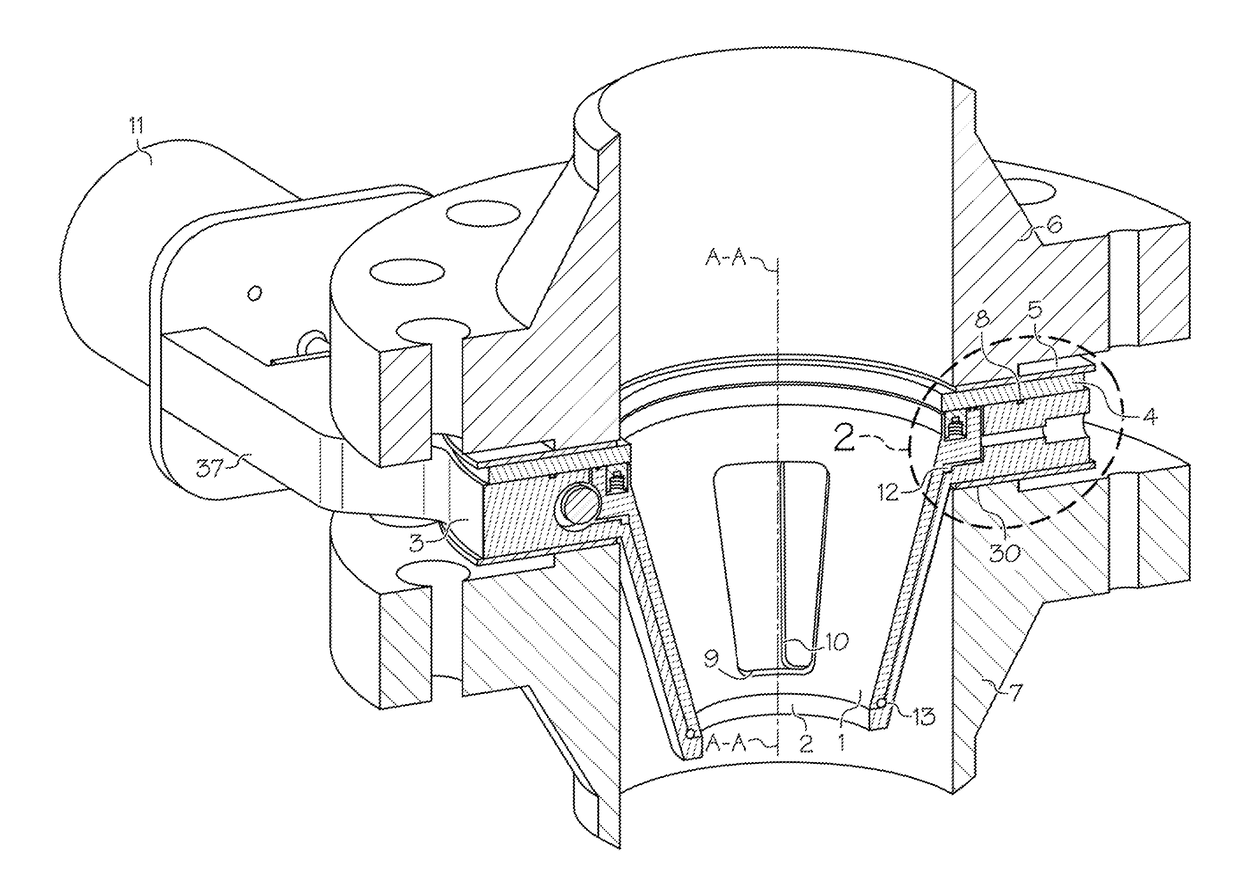
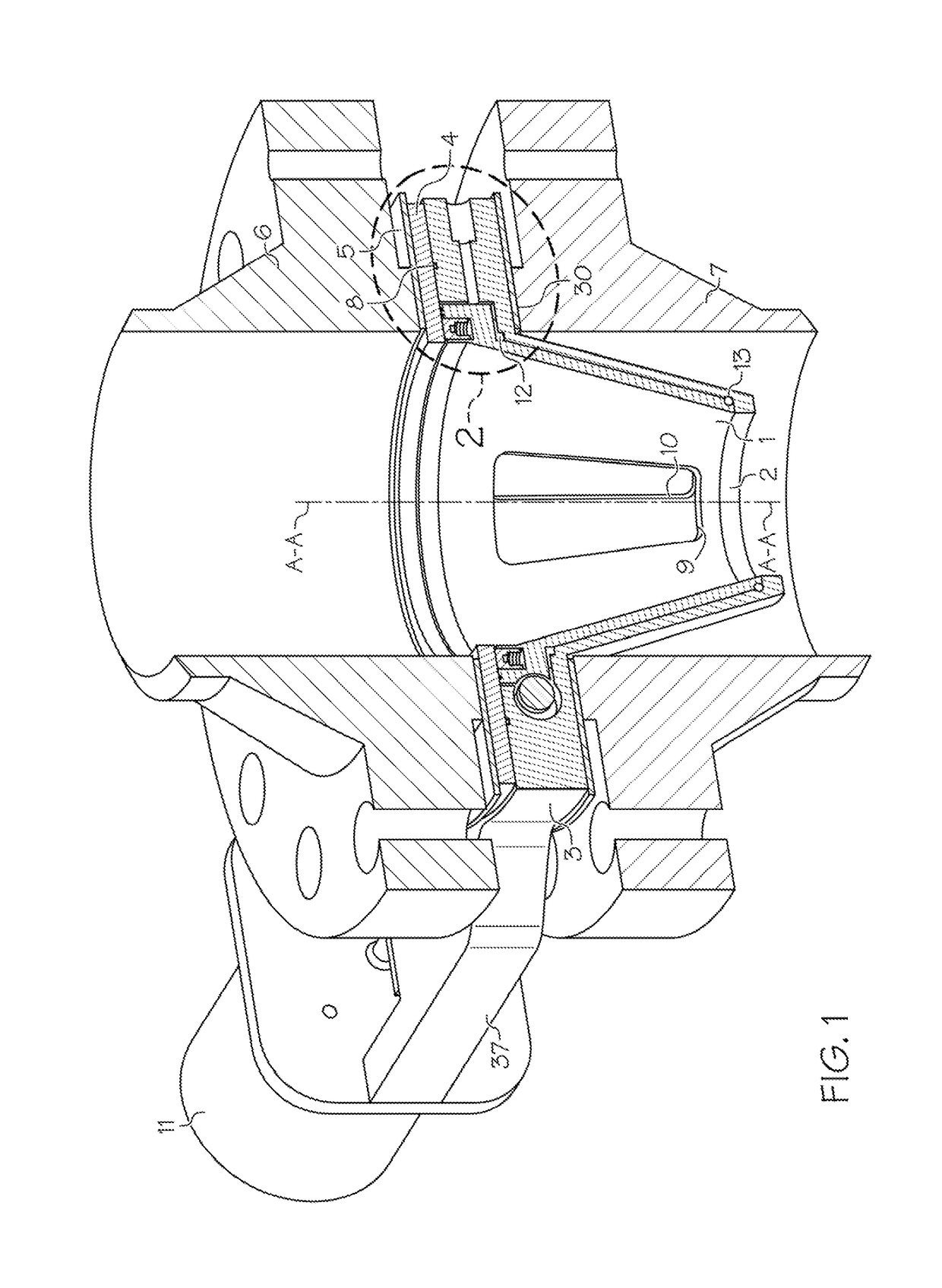
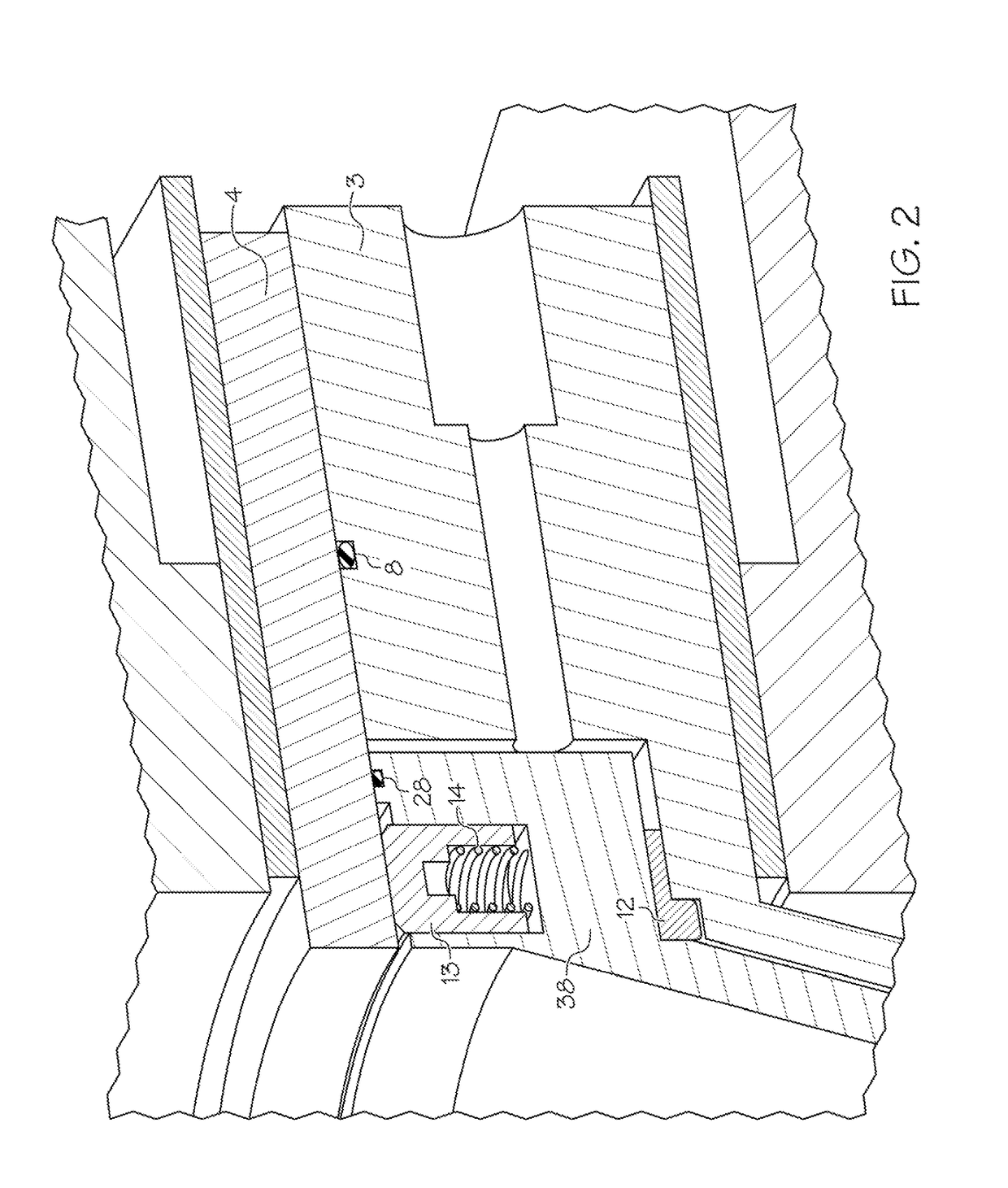
- A dynamic variable orifice (DVO) apparatus that adjusts its effective orifice size in response to changing operating conditions, allowing for optimal pulsation control with minimal pressure drop and power consumption, using a conical or disc-like design with rotatable cages and a bevel gear drive for manual or automated adjustment.

Safety Standards for Industrial Compressor Systems
Safety standards for industrial compressor systems represent a critical framework designed to mitigate risks associated with reciprocating compressor operations, particularly those arising from pulsation effects. These standards establish comprehensive guidelines that address the inherent dangers of pressure fluctuations, vibration-induced failures, and system instabilities that can lead to catastrophic equipment damage or personnel injury.
International safety standards such as API 618, ISO 13631, and ASME PTC-10 provide foundational requirements for reciprocating compressor design, installation, and operation. These standards specifically address pulsation control as a primary safety concern, mandating rigorous analysis and mitigation measures during system design phases. The standards require comprehensive pulsation studies, including acoustic modeling and resonance frequency analysis, to ensure safe operating conditions across all operational scenarios.
Regulatory compliance frameworks emphasize the implementation of multiple safety barriers to prevent pulsation-related incidents. Primary safety measures include mandatory installation of pulsation dampeners, acoustic filters, and pressure relief systems designed to handle dynamic pressure variations. Secondary protection involves continuous monitoring systems that detect abnormal pulsation patterns and automatically initiate shutdown procedures when predetermined safety thresholds are exceeded.
Personnel safety protocols within these standards mandate comprehensive training programs for operators and maintenance personnel. These programs focus on recognizing early warning signs of excessive pulsation, understanding the relationship between operating parameters and pulsation intensity, and implementing proper emergency response procedures. Regular safety audits and equipment inspections are required to maintain compliance with established safety benchmarks.
Modern safety standards increasingly incorporate risk-based assessment methodologies that evaluate the probability and consequences of pulsation-related failures. These assessments consider factors such as system complexity, operating environment, maintenance history, and potential impact on surrounding equipment and personnel. The standards require documentation of all safety-critical components and establishment of preventive maintenance schedules specifically targeting pulsation control systems.
Emergency response protocols outlined in safety standards address scenarios ranging from minor pulsation anomalies to complete system failures. These protocols include immediate shutdown procedures, personnel evacuation plans, and coordination with emergency services. The standards also mandate regular emergency drills and system testing to ensure rapid response capabilities during actual incidents.
International safety standards such as API 618, ISO 13631, and ASME PTC-10 provide foundational requirements for reciprocating compressor design, installation, and operation. These standards specifically address pulsation control as a primary safety concern, mandating rigorous analysis and mitigation measures during system design phases. The standards require comprehensive pulsation studies, including acoustic modeling and resonance frequency analysis, to ensure safe operating conditions across all operational scenarios.
Regulatory compliance frameworks emphasize the implementation of multiple safety barriers to prevent pulsation-related incidents. Primary safety measures include mandatory installation of pulsation dampeners, acoustic filters, and pressure relief systems designed to handle dynamic pressure variations. Secondary protection involves continuous monitoring systems that detect abnormal pulsation patterns and automatically initiate shutdown procedures when predetermined safety thresholds are exceeded.
Personnel safety protocols within these standards mandate comprehensive training programs for operators and maintenance personnel. These programs focus on recognizing early warning signs of excessive pulsation, understanding the relationship between operating parameters and pulsation intensity, and implementing proper emergency response procedures. Regular safety audits and equipment inspections are required to maintain compliance with established safety benchmarks.
Modern safety standards increasingly incorporate risk-based assessment methodologies that evaluate the probability and consequences of pulsation-related failures. These assessments consider factors such as system complexity, operating environment, maintenance history, and potential impact on surrounding equipment and personnel. The standards require documentation of all safety-critical components and establishment of preventive maintenance schedules specifically targeting pulsation control systems.
Emergency response protocols outlined in safety standards address scenarios ranging from minor pulsation anomalies to complete system failures. These protocols include immediate shutdown procedures, personnel evacuation plans, and coordination with emergency services. The standards also mandate regular emergency drills and system testing to ensure rapid response capabilities during actual incidents.
Environmental Impact of Compressor Vibration Control
The environmental implications of reciprocating compressor pulsation and vibration control extend far beyond immediate operational concerns, encompassing both direct and indirect ecological impacts that require comprehensive assessment and mitigation strategies. Uncontrolled pulsation effects generate excessive vibrations that propagate through structural foundations, potentially affecting surrounding ecosystems through ground-borne noise transmission and soil disturbance patterns.
Noise pollution represents the most immediate environmental concern, as pulsation-induced vibrations create low-frequency acoustic emissions that can disrupt wildlife behavior patterns, particularly affecting sensitive species in industrial proximity areas. These acoustic disturbances often exceed regulatory limits established by environmental protection agencies, necessitating implementation of advanced vibration control systems to maintain compliance with noise ordinances and protect local fauna habitats.
Energy consumption implications constitute another critical environmental dimension, as inefficient pulsation control systems require additional power input to maintain operational stability. Poor vibration management leads to increased mechanical losses, higher energy demands, and consequently elevated carbon emissions from power generation sources. Modern pulsation control technologies, including active damping systems and optimized pulsation bottles, can reduce overall energy consumption by 8-15% compared to conventional approaches.
Material lifecycle considerations play an increasingly important role in environmental impact assessment. Traditional vibration control solutions often rely on heavy metallic components and synthetic damping materials that present end-of-life disposal challenges. Contemporary approaches emphasize sustainable material selection, incorporating recyclable composites and bio-based damping compounds that minimize environmental footprint throughout the product lifecycle.
Secondary environmental effects emerge from maintenance requirements and operational inefficiencies caused by inadequate pulsation control. Excessive vibrations accelerate component wear, increasing replacement frequency and generating additional waste streams. Furthermore, vibration-induced seal failures can result in process fluid leakage, potentially causing soil and groundwater contamination depending on the compressed medium characteristics.
Regulatory compliance frameworks increasingly mandate comprehensive environmental impact assessments for industrial compressor installations, requiring detailed documentation of vibration control measures and their ecological implications. These regulations drive innovation toward environmentally conscious pulsation control technologies that balance operational performance with ecological responsibility, establishing new industry standards for sustainable compressor design and operation.
Noise pollution represents the most immediate environmental concern, as pulsation-induced vibrations create low-frequency acoustic emissions that can disrupt wildlife behavior patterns, particularly affecting sensitive species in industrial proximity areas. These acoustic disturbances often exceed regulatory limits established by environmental protection agencies, necessitating implementation of advanced vibration control systems to maintain compliance with noise ordinances and protect local fauna habitats.
Energy consumption implications constitute another critical environmental dimension, as inefficient pulsation control systems require additional power input to maintain operational stability. Poor vibration management leads to increased mechanical losses, higher energy demands, and consequently elevated carbon emissions from power generation sources. Modern pulsation control technologies, including active damping systems and optimized pulsation bottles, can reduce overall energy consumption by 8-15% compared to conventional approaches.
Material lifecycle considerations play an increasingly important role in environmental impact assessment. Traditional vibration control solutions often rely on heavy metallic components and synthetic damping materials that present end-of-life disposal challenges. Contemporary approaches emphasize sustainable material selection, incorporating recyclable composites and bio-based damping compounds that minimize environmental footprint throughout the product lifecycle.
Secondary environmental effects emerge from maintenance requirements and operational inefficiencies caused by inadequate pulsation control. Excessive vibrations accelerate component wear, increasing replacement frequency and generating additional waste streams. Furthermore, vibration-induced seal failures can result in process fluid leakage, potentially causing soil and groundwater contamination depending on the compressed medium characteristics.
Regulatory compliance frameworks increasingly mandate comprehensive environmental impact assessments for industrial compressor installations, requiring detailed documentation of vibration control measures and their ecological implications. These regulations drive innovation toward environmentally conscious pulsation control technologies that balance operational performance with ecological responsibility, establishing new industry standards for sustainable compressor design and operation.
Unlock deeper insights with PatSnap Eureka Quick Research — get a full tech report to explore trends and direct your research. Try now!
Generate Your Research Report Instantly with AI Agent
Supercharge your innovation with PatSnap Eureka AI Agent Platform!