How to Determine ROI from Active Memory Deployment
MAR 7, 20269 MIN READ
Generate Your Research Report Instantly with AI Agent
Patsnap Eureka helps you evaluate technical feasibility & market potential.
Active Memory ROI Assessment Background and Objectives
Active memory technology represents a paradigm shift in computing architecture, fundamentally altering how systems handle data processing and storage operations. This technology integrates processing capabilities directly into memory modules, enabling computation to occur closer to data storage locations rather than requiring constant data movement between separate processing units and memory banks. The evolution of active memory stems from the growing recognition that traditional von Neumann architecture creates significant bottlenecks in modern computing environments, particularly as data volumes continue to expand exponentially across enterprise applications.
The historical development of active memory can be traced through several key phases, beginning with early research into processing-in-memory concepts in the 1990s, progressing through proof-of-concept implementations in the 2000s, and culminating in commercially viable solutions emerging in the past decade. This technological evolution has been driven by the increasing demands of data-intensive applications, artificial intelligence workloads, and real-time analytics requirements that traditional computing architectures struggle to address efficiently.
Current market drivers for active memory adoption include the exponential growth in data generation, the need for real-time processing capabilities, energy efficiency requirements, and the limitations of traditional memory hierarchies in handling modern workloads. Organizations across various sectors are recognizing that conventional approaches to memory and processing create performance bottlenecks that directly impact operational efficiency and competitive positioning.
The primary objective of implementing active memory solutions centers on achieving significant performance improvements while simultaneously reducing energy consumption and operational costs. Organizations seek to eliminate or substantially reduce data movement overhead, which traditionally consumes considerable processing cycles and energy resources. By enabling computation to occur directly within memory modules, active memory technology promises to deliver substantial improvements in application response times, throughput capabilities, and overall system efficiency.
Secondary objectives include enhancing scalability for data-intensive applications, reducing infrastructure complexity, and enabling new categories of real-time processing capabilities that were previously impractical or economically unfeasible. These objectives align with broader enterprise goals of digital transformation, operational optimization, and competitive differentiation through advanced technology adoption.
The strategic importance of accurately measuring return on investment for active memory deployments cannot be overstated, as organizations require clear methodologies to evaluate the financial and operational benefits of this emerging technology against traditional alternatives and competing solutions.
The historical development of active memory can be traced through several key phases, beginning with early research into processing-in-memory concepts in the 1990s, progressing through proof-of-concept implementations in the 2000s, and culminating in commercially viable solutions emerging in the past decade. This technological evolution has been driven by the increasing demands of data-intensive applications, artificial intelligence workloads, and real-time analytics requirements that traditional computing architectures struggle to address efficiently.
Current market drivers for active memory adoption include the exponential growth in data generation, the need for real-time processing capabilities, energy efficiency requirements, and the limitations of traditional memory hierarchies in handling modern workloads. Organizations across various sectors are recognizing that conventional approaches to memory and processing create performance bottlenecks that directly impact operational efficiency and competitive positioning.
The primary objective of implementing active memory solutions centers on achieving significant performance improvements while simultaneously reducing energy consumption and operational costs. Organizations seek to eliminate or substantially reduce data movement overhead, which traditionally consumes considerable processing cycles and energy resources. By enabling computation to occur directly within memory modules, active memory technology promises to deliver substantial improvements in application response times, throughput capabilities, and overall system efficiency.
Secondary objectives include enhancing scalability for data-intensive applications, reducing infrastructure complexity, and enabling new categories of real-time processing capabilities that were previously impractical or economically unfeasible. These objectives align with broader enterprise goals of digital transformation, operational optimization, and competitive differentiation through advanced technology adoption.
The strategic importance of accurately measuring return on investment for active memory deployments cannot be overstated, as organizations require clear methodologies to evaluate the financial and operational benefits of this emerging technology against traditional alternatives and competing solutions.
Market Demand for Active Memory Solutions
The enterprise computing landscape is experiencing unprecedented demand for active memory solutions as organizations grapple with exponentially growing data volumes and real-time processing requirements. Traditional storage hierarchies, which rely heavily on disk-based systems with memory serving primarily as cache, are proving inadequate for modern workloads that demand instant access to large datasets. This fundamental shift has created a substantial market opportunity for active memory technologies that can bridge the performance gap between volatile DRAM and persistent storage.
Data-intensive industries are driving the primary demand surge for active memory deployments. Financial services organizations require microsecond-level transaction processing for high-frequency trading and real-time fraud detection systems. Healthcare institutions need immediate access to patient records and medical imaging data for critical decision-making. Telecommunications companies demand ultra-low latency for 5G network infrastructure and edge computing applications. These sectors collectively represent significant market segments where the cost of memory solutions is justified by the business-critical nature of performance requirements.
The proliferation of artificial intelligence and machine learning workloads has emerged as another major demand driver. Training large language models and deep neural networks requires keeping massive datasets readily accessible in memory to avoid I/O bottlenecks that can extend processing times from hours to days. Similarly, real-time inference applications in autonomous vehicles, industrial automation, and recommendation engines cannot tolerate the latency penalties associated with traditional storage access patterns.
Cloud service providers and hyperscale data centers represent the largest addressable market segment for active memory solutions. These organizations face constant pressure to improve application performance while managing infrastructure costs. The ability to demonstrate clear ROI from active memory deployments has become essential for technology adoption decisions in these environments, where even marginal performance improvements can translate to significant competitive advantages and cost savings at scale.
Enterprise adoption patterns indicate growing acceptance of active memory technologies beyond traditional high-performance computing environments. Mid-market organizations are increasingly recognizing that memory-centric architectures can provide substantial business value for analytics workloads, customer-facing applications, and operational systems. This democratization of active memory technology is expanding the total addressable market and creating opportunities for vendors to develop solutions tailored to different performance and budget requirements.
The emergence of persistent memory technologies has further accelerated market demand by addressing previous concerns about data durability and system restart times. Organizations can now deploy active memory solutions with confidence that critical data will survive power failures and system maintenance events, making these technologies viable for mission-critical production environments that previously relied exclusively on traditional storage systems.
Data-intensive industries are driving the primary demand surge for active memory deployments. Financial services organizations require microsecond-level transaction processing for high-frequency trading and real-time fraud detection systems. Healthcare institutions need immediate access to patient records and medical imaging data for critical decision-making. Telecommunications companies demand ultra-low latency for 5G network infrastructure and edge computing applications. These sectors collectively represent significant market segments where the cost of memory solutions is justified by the business-critical nature of performance requirements.
The proliferation of artificial intelligence and machine learning workloads has emerged as another major demand driver. Training large language models and deep neural networks requires keeping massive datasets readily accessible in memory to avoid I/O bottlenecks that can extend processing times from hours to days. Similarly, real-time inference applications in autonomous vehicles, industrial automation, and recommendation engines cannot tolerate the latency penalties associated with traditional storage access patterns.
Cloud service providers and hyperscale data centers represent the largest addressable market segment for active memory solutions. These organizations face constant pressure to improve application performance while managing infrastructure costs. The ability to demonstrate clear ROI from active memory deployments has become essential for technology adoption decisions in these environments, where even marginal performance improvements can translate to significant competitive advantages and cost savings at scale.
Enterprise adoption patterns indicate growing acceptance of active memory technologies beyond traditional high-performance computing environments. Mid-market organizations are increasingly recognizing that memory-centric architectures can provide substantial business value for analytics workloads, customer-facing applications, and operational systems. This democratization of active memory technology is expanding the total addressable market and creating opportunities for vendors to develop solutions tailored to different performance and budget requirements.
The emergence of persistent memory technologies has further accelerated market demand by addressing previous concerns about data durability and system restart times. Organizations can now deploy active memory solutions with confidence that critical data will survive power failures and system maintenance events, making these technologies viable for mission-critical production environments that previously relied exclusively on traditional storage systems.
Current State and Challenges of Active Memory ROI Evaluation
The evaluation of return on investment (ROI) for active memory deployments currently faces significant methodological and practical challenges across the industry. Traditional ROI calculation frameworks, originally designed for conventional IT infrastructure investments, prove inadequate when applied to active memory technologies due to their unique performance characteristics and deployment patterns.
Most organizations struggle with establishing baseline performance metrics before active memory implementation. Unlike storage or compute upgrades where performance improvements are easily quantifiable, active memory benefits often manifest as reduced latency, improved application responsiveness, and enhanced user experience - metrics that are inherently difficult to translate into direct financial returns. The lack of standardized measurement protocols creates inconsistencies in how different enterprises approach ROI evaluation.
Current industry practices reveal a fragmented landscape where organizations employ disparate methodologies ranging from simple cost-per-performance ratios to complex total cost of ownership models. However, these approaches frequently fail to capture the full spectrum of active memory benefits, particularly indirect gains such as improved developer productivity, reduced infrastructure complexity, and enhanced system reliability.
The temporal aspect of ROI measurement presents another significant challenge. Active memory deployments often deliver immediate performance improvements but their long-term financial impact may not become apparent for months or years. This temporal disconnect complicates traditional ROI calculations that typically focus on shorter evaluation periods, leading to potential undervaluation of active memory investments.
Technical complexity further compounds the evaluation challenge. Active memory technologies integrate deeply with existing application architectures, making it difficult to isolate their specific contribution to overall system performance improvements. The interdependencies between active memory, application design, and workload characteristics create measurement complexities that current evaluation frameworks struggle to address effectively.
Geographic and industry variations add another layer of complexity to ROI evaluation standards. Different regions and sectors have developed varying approaches to active memory ROI assessment, resulting in limited comparability of results and best practices. This fragmentation hinders the development of industry-wide evaluation standards and benchmarks that could facilitate more accurate and consistent ROI determinations across different deployment scenarios.
Most organizations struggle with establishing baseline performance metrics before active memory implementation. Unlike storage or compute upgrades where performance improvements are easily quantifiable, active memory benefits often manifest as reduced latency, improved application responsiveness, and enhanced user experience - metrics that are inherently difficult to translate into direct financial returns. The lack of standardized measurement protocols creates inconsistencies in how different enterprises approach ROI evaluation.
Current industry practices reveal a fragmented landscape where organizations employ disparate methodologies ranging from simple cost-per-performance ratios to complex total cost of ownership models. However, these approaches frequently fail to capture the full spectrum of active memory benefits, particularly indirect gains such as improved developer productivity, reduced infrastructure complexity, and enhanced system reliability.
The temporal aspect of ROI measurement presents another significant challenge. Active memory deployments often deliver immediate performance improvements but their long-term financial impact may not become apparent for months or years. This temporal disconnect complicates traditional ROI calculations that typically focus on shorter evaluation periods, leading to potential undervaluation of active memory investments.
Technical complexity further compounds the evaluation challenge. Active memory technologies integrate deeply with existing application architectures, making it difficult to isolate their specific contribution to overall system performance improvements. The interdependencies between active memory, application design, and workload characteristics create measurement complexities that current evaluation frameworks struggle to address effectively.
Geographic and industry variations add another layer of complexity to ROI evaluation standards. Different regions and sectors have developed varying approaches to active memory ROI assessment, resulting in limited comparability of results and best practices. This fragmentation hinders the development of industry-wide evaluation standards and benchmarks that could facilitate more accurate and consistent ROI determinations across different deployment scenarios.
Existing ROI Calculation Frameworks for Active Memory
01 Memory region selection and management techniques
Technologies for defining and managing specific regions of interest within memory systems to optimize performance and resource utilization. These techniques involve identifying critical memory areas that require enhanced monitoring, access control, or performance optimization. The approaches enable selective memory management by designating particular memory segments as regions of interest based on access patterns, data importance, or application requirements.- Memory region selection and management techniques: Systems and methods for defining and managing specific regions of interest within memory structures to optimize performance and resource utilization. These techniques involve identifying critical memory areas that require active monitoring or preferential treatment, implementing dynamic region boundaries based on access patterns, and utilizing hardware or software mechanisms to track and manage these designated memory zones. The approach enables efficient memory allocation and reduces overhead by focusing computational resources on relevant memory segments.
- Active memory monitoring and tracking systems: Technologies for continuously monitoring memory access patterns and tracking active memory regions to improve system performance. These systems employ various monitoring mechanisms to identify frequently accessed memory locations, analyze usage statistics, and maintain real-time information about memory activity. The monitoring data can be used to make informed decisions about memory management, caching strategies, and resource allocation to enhance overall system efficiency.
- Memory optimization through region-based caching: Methods for implementing region-based caching strategies that prioritize active memory areas to improve access speed and reduce latency. These approaches involve creating cache hierarchies that specifically target identified regions of interest, implementing prefetching algorithms based on regional access patterns, and dynamically adjusting cache allocation based on the activity level of different memory regions. The techniques help maximize cache hit rates and minimize memory access times for critical data.
- Hardware-assisted memory region identification: Hardware-based mechanisms and architectures designed to automatically identify and manage active memory regions. These solutions incorporate specialized hardware components such as dedicated monitoring units, region tracking registers, and hardware accelerators that work in conjunction with memory controllers to detect and respond to memory access patterns. The hardware assistance reduces software overhead and enables faster, more efficient identification and management of memory regions of interest.
- Adaptive memory management based on ROI analysis: Adaptive systems that dynamically adjust memory management policies based on analysis of active memory regions. These systems continuously evaluate memory usage patterns, identify changing regions of interest, and automatically modify management strategies such as allocation policies, garbage collection priorities, and memory compression techniques. The adaptive approach ensures optimal memory utilization across varying workload conditions and application requirements, improving both performance and energy efficiency.
02 Dynamic memory allocation and tracking for ROI
Methods for dynamically allocating and tracking memory resources within designated regions of interest to improve system efficiency. These solutions monitor memory usage patterns and adjust allocation strategies in real-time to ensure optimal performance for critical memory regions. The techniques include adaptive algorithms that respond to changing workload demands and prioritize memory access for high-priority regions.Expand Specific Solutions03 Memory access optimization and caching strategies
Approaches for optimizing memory access patterns and implementing intelligent caching mechanisms for regions of interest. These methods enhance data retrieval speed and reduce latency by predicting access patterns and pre-loading frequently accessed data. The strategies involve hierarchical memory structures and prefetching algorithms that prioritize critical memory regions to maximize throughput and minimize access times.Expand Specific Solutions04 Memory protection and security for critical regions
Security mechanisms designed to protect designated memory regions of interest from unauthorized access or modification. These solutions implement access control policies, encryption, and isolation techniques to safeguard sensitive data stored in critical memory areas. The technologies provide hardware and software-based protection layers that prevent malicious attacks and ensure data integrity within specified memory boundaries.Expand Specific Solutions05 Performance monitoring and analytics for memory ROI
Systems for monitoring and analyzing performance metrics of memory regions of interest to identify bottlenecks and optimization opportunities. These tools collect real-time data on memory access patterns, bandwidth utilization, and latency characteristics. The analytics capabilities enable system administrators to make informed decisions about memory configuration and resource allocation to improve overall system performance.Expand Specific Solutions
Key Players in Active Memory and ROI Analytics Industry
The active memory deployment ROI determination market is in its early growth stage, driven by increasing enterprise digitization and AI adoption. The market shows significant potential as organizations seek to quantify returns from memory-intensive computing investments. Technology maturity varies considerably across market participants. Established technology giants like IBM, Micron Technology, Dell, and Huawei demonstrate advanced capabilities in memory technologies and enterprise solutions. Infrastructure leaders including Cisco Technology and Oracle International bring mature networking and database optimization expertise. Chinese state enterprises like State Grid Corp and ICBC represent large-scale deployment experience, while emerging players like Monaco Risk Analytics and ScaleWith focus on specialized ROI analytics solutions. Academic institutions such as University of Science & Technology of China and Beijing Institute of Technology contribute research-driven innovations. The competitive landscape reflects a mix of hardware manufacturers, software providers, and consulting firms, indicating technology convergence but fragmented standardization approaches.
International Business Machines Corp.
Technical Solution: IBM provides comprehensive ROI measurement frameworks for active memory deployment through their hybrid cloud and AI solutions. Their approach combines performance monitoring tools with cost analysis models that track memory utilization efficiency, application response time improvements, and infrastructure cost savings. IBM's Watson AIOps platform integrates with memory management systems to provide real-time analytics on memory performance metrics, enabling organizations to quantify the business impact of active memory investments. The company offers ROI calculators that factor in reduced latency, improved application throughput, and decreased infrastructure requirements. Their methodology includes baseline establishment, continuous monitoring of key performance indicators, and correlation analysis between memory deployment and business outcomes such as transaction processing speed and user experience improvements.
Strengths: Comprehensive enterprise-grade analytics platform with proven ROI measurement methodologies and extensive consulting expertise. Weaknesses: High implementation costs and complexity may require significant technical expertise and resources.
Micron Technology, Inc.
Technical Solution: Micron offers specialized ROI assessment tools for their active memory solutions, focusing on quantifying performance gains and cost efficiencies. Their approach emphasizes measuring memory bandwidth improvements, power consumption reductions, and total cost of ownership calculations. Micron's ROI framework includes performance benchmarking tools that compare traditional memory architectures with their active memory solutions, demonstrating measurable improvements in data processing speeds and energy efficiency. The company provides detailed cost-benefit analysis models that account for hardware acquisition costs, operational expenses, and productivity gains. Their methodology incorporates real-world performance data from customer deployments to validate ROI projections and includes ongoing monitoring capabilities to track actual versus projected returns.
Strengths: Deep memory technology expertise with hardware-specific optimization and proven performance benchmarking capabilities. Weaknesses: Limited to memory-centric solutions and may require integration with broader enterprise systems for comprehensive ROI assessment.
Core Methodologies in Active Memory ROI Determination
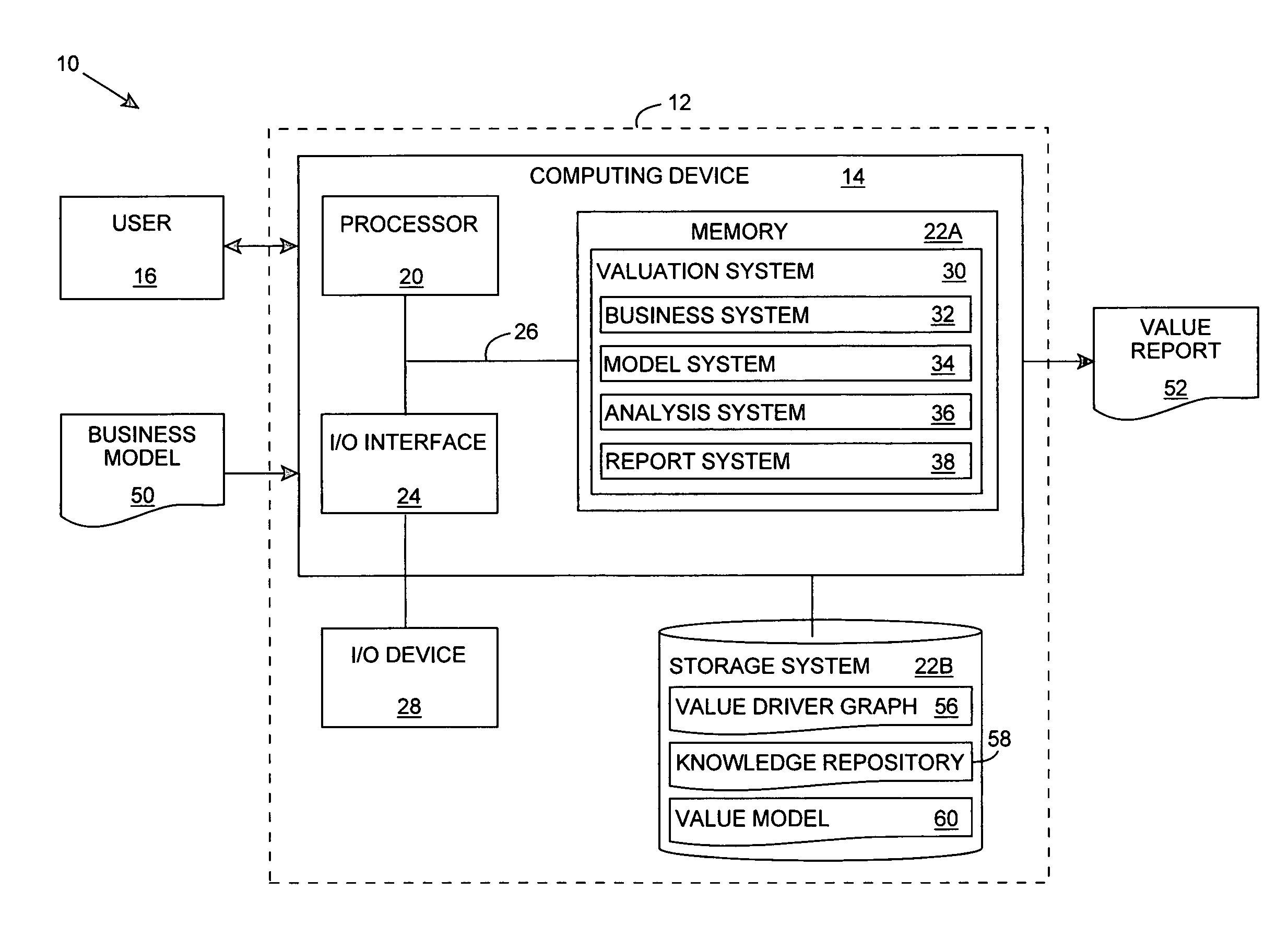
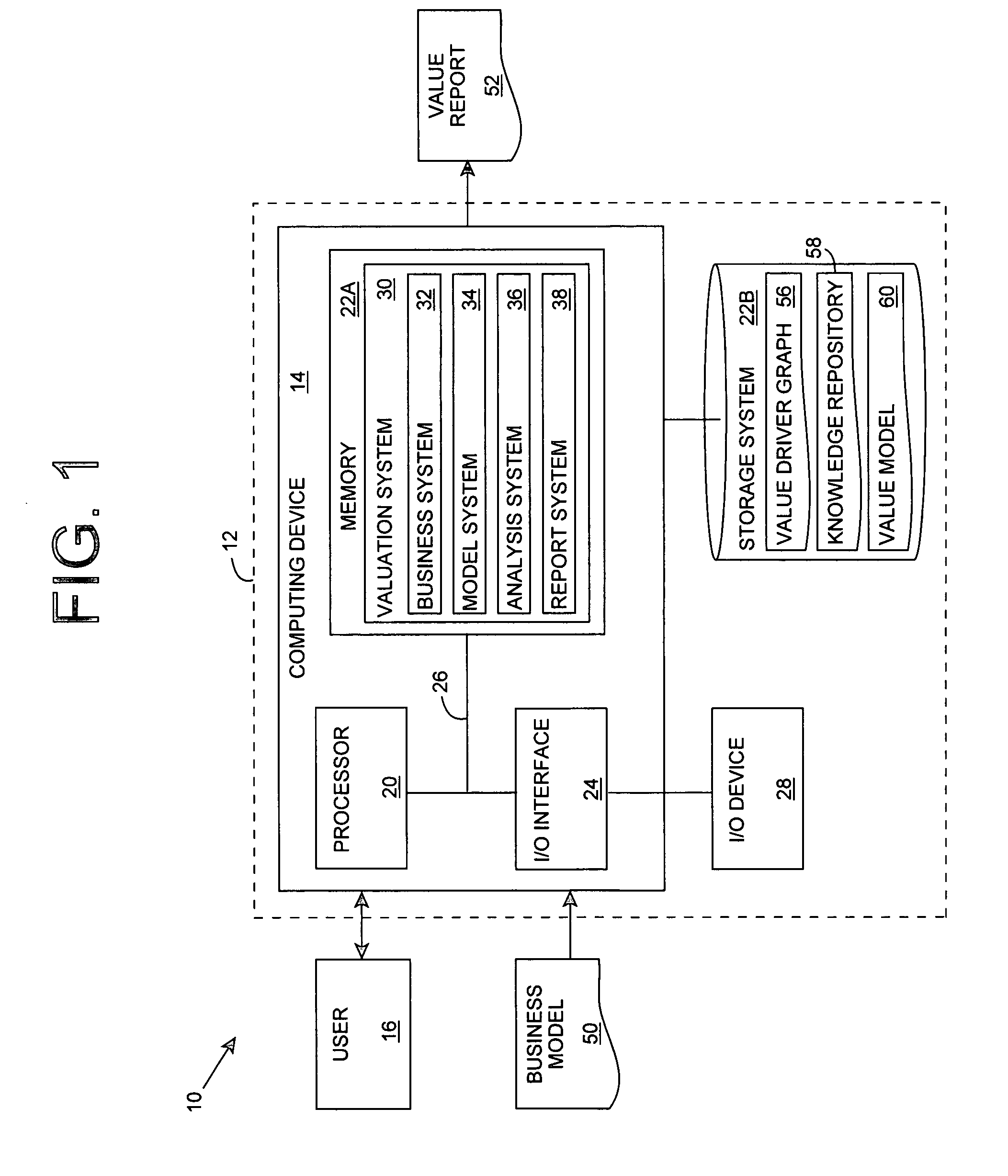
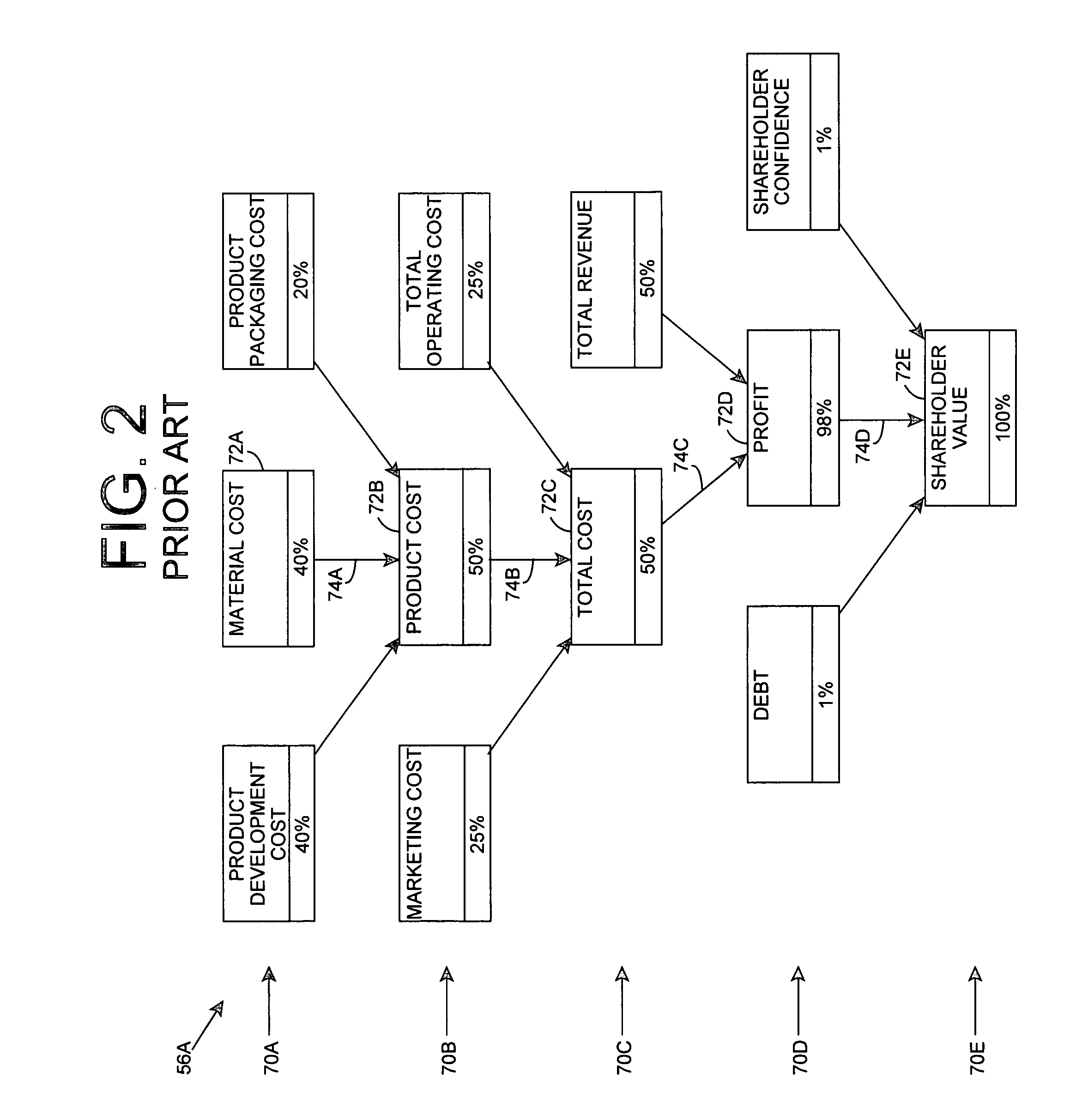
Value model
PatentInactiveUS20070038465A1
Innovation
- A value model is introduced that includes enterprise function nodes and driver metric nodes, allowing for the determination of value impact through relationships, with uncertainty ranges and aggregate data to account for dependencies, enabling flexible and comprehensive valuation of enterprise functions.

System and method for estimating expense and return on investment of a dynamically generated runtime solution to a business problem
PatentInactiveUS20060229894A1
Innovation
- The Solutions Runtime and Value Assets Assembly (SRVAA) toolset is employed to categorize and select reusable components based on business problems, industries, and integration points, assigning expense values and calculating ROI for dynamically generated business solutions, ensuring all necessary components are included while excluding unnecessary ones, and allowing for actual cost updates post-deployment.


Cost-Benefit Analysis Models for Memory Infrastructure
Cost-benefit analysis models for active memory infrastructure deployment require sophisticated frameworks that capture both quantifiable financial metrics and strategic value propositions. Traditional ROI calculations often fall short when evaluating memory technologies due to their complex interdependencies with system performance, application efficiency, and operational overhead. Comprehensive models must incorporate multi-dimensional assessment criteria that extend beyond simple capital expenditure comparisons.
The foundational cost-benefit framework begins with total cost of ownership calculations that encompass hardware acquisition, deployment expenses, operational maintenance, and lifecycle management costs. Memory infrastructure investments typically involve significant upfront capital but generate value through performance improvements, reduced latency, enhanced throughput, and decreased system bottlenecks. Quantifying these benefits requires establishing baseline performance metrics and measuring incremental improvements across critical system parameters.
Advanced modeling approaches utilize discounted cash flow analysis to evaluate long-term value creation from memory deployments. These models incorporate factors such as performance-driven revenue increases, operational cost reductions, and productivity gains from improved system responsiveness. The temporal aspect becomes crucial as memory technologies often deliver compounding benefits over extended periods, making traditional short-term ROI calculations inadequate for strategic decision-making.
Risk-adjusted return models provide additional analytical depth by incorporating uncertainty factors and scenario-based projections. Memory infrastructure investments carry technical risks related to compatibility, scalability limitations, and technology obsolescence. Sophisticated models employ Monte Carlo simulations and sensitivity analysis to evaluate potential outcomes under varying market conditions and technological evolution scenarios.
Comparative analysis frameworks enable organizations to evaluate different memory deployment strategies against alternative infrastructure investments. These models consider opportunity costs, resource allocation efficiency, and strategic alignment with organizational objectives. The framework must account for indirect benefits such as improved customer satisfaction, competitive advantages, and enhanced system reliability that contribute to long-term value creation but resist straightforward quantification.
The foundational cost-benefit framework begins with total cost of ownership calculations that encompass hardware acquisition, deployment expenses, operational maintenance, and lifecycle management costs. Memory infrastructure investments typically involve significant upfront capital but generate value through performance improvements, reduced latency, enhanced throughput, and decreased system bottlenecks. Quantifying these benefits requires establishing baseline performance metrics and measuring incremental improvements across critical system parameters.
Advanced modeling approaches utilize discounted cash flow analysis to evaluate long-term value creation from memory deployments. These models incorporate factors such as performance-driven revenue increases, operational cost reductions, and productivity gains from improved system responsiveness. The temporal aspect becomes crucial as memory technologies often deliver compounding benefits over extended periods, making traditional short-term ROI calculations inadequate for strategic decision-making.
Risk-adjusted return models provide additional analytical depth by incorporating uncertainty factors and scenario-based projections. Memory infrastructure investments carry technical risks related to compatibility, scalability limitations, and technology obsolescence. Sophisticated models employ Monte Carlo simulations and sensitivity analysis to evaluate potential outcomes under varying market conditions and technological evolution scenarios.
Comparative analysis frameworks enable organizations to evaluate different memory deployment strategies against alternative infrastructure investments. These models consider opportunity costs, resource allocation efficiency, and strategic alignment with organizational objectives. The framework must account for indirect benefits such as improved customer satisfaction, competitive advantages, and enhanced system reliability that contribute to long-term value creation but resist straightforward quantification.
Performance Metrics and KPIs for Active Memory Systems
Establishing comprehensive performance metrics and key performance indicators (KPIs) for active memory systems requires a multi-dimensional approach that captures both technical performance and business value. These metrics serve as the foundation for accurate ROI calculations and ongoing system optimization.
Memory access latency represents the most critical performance metric, typically measured in nanoseconds or microseconds. This includes average, median, and 95th percentile latency measurements across different workload patterns. Bandwidth utilization metrics track the effective data transfer rates, comparing theoretical maximum bandwidth against actual achieved throughput under various operational conditions.
System availability and reliability metrics encompass mean time between failures (MTBF), mean time to recovery (MTTR), and overall system uptime percentages. These indicators directly impact business continuity and operational costs, making them essential for ROI assessment. Error rates, including correctable and uncorrectable memory errors, provide insights into system stability and data integrity.
Energy efficiency KPIs measure power consumption per unit of memory capacity and performance delivered. This includes idle power consumption, active power under load, and power scaling characteristics. These metrics become increasingly important as organizations focus on operational cost reduction and environmental sustainability goals.
Capacity utilization metrics track memory pool efficiency, including allocation patterns, fragmentation levels, and dynamic scaling effectiveness. Peak utilization rates and average capacity consumption provide insights into resource optimization opportunities and future scaling requirements.
Application-specific performance indicators measure the impact on end-user applications, including transaction processing rates, query response times, and concurrent user capacity. These metrics bridge the gap between infrastructure performance and business outcomes, enabling more accurate ROI calculations.
Cost-related KPIs encompass total cost of ownership elements, including acquisition costs, operational expenses, maintenance requirements, and staff training investments. Performance-per-dollar metrics normalize technical achievements against financial investments, facilitating direct ROI comparisons with alternative memory solutions.
Memory access latency represents the most critical performance metric, typically measured in nanoseconds or microseconds. This includes average, median, and 95th percentile latency measurements across different workload patterns. Bandwidth utilization metrics track the effective data transfer rates, comparing theoretical maximum bandwidth against actual achieved throughput under various operational conditions.
System availability and reliability metrics encompass mean time between failures (MTBF), mean time to recovery (MTTR), and overall system uptime percentages. These indicators directly impact business continuity and operational costs, making them essential for ROI assessment. Error rates, including correctable and uncorrectable memory errors, provide insights into system stability and data integrity.
Energy efficiency KPIs measure power consumption per unit of memory capacity and performance delivered. This includes idle power consumption, active power under load, and power scaling characteristics. These metrics become increasingly important as organizations focus on operational cost reduction and environmental sustainability goals.
Capacity utilization metrics track memory pool efficiency, including allocation patterns, fragmentation levels, and dynamic scaling effectiveness. Peak utilization rates and average capacity consumption provide insights into resource optimization opportunities and future scaling requirements.
Application-specific performance indicators measure the impact on end-user applications, including transaction processing rates, query response times, and concurrent user capacity. These metrics bridge the gap between infrastructure performance and business outcomes, enabling more accurate ROI calculations.
Cost-related KPIs encompass total cost of ownership elements, including acquisition costs, operational expenses, maintenance requirements, and staff training investments. Performance-per-dollar metrics normalize technical achievements against financial investments, facilitating direct ROI comparisons with alternative memory solutions.
Unlock deeper insights with Patsnap Eureka Quick Research — get a full tech report to explore trends and direct your research. Try now!
Generate Your Research Report Instantly with AI Agent
Supercharge your innovation with Patsnap Eureka AI Agent Platform!