

How to Encourage Sustainable Intercooling Development
APR 3, 20269 MIN READ
Generate Your Research Report Instantly with AI Agent
PatSnap Eureka helps you evaluate technical feasibility & market potential.
Sustainable Intercooling Background and Objectives
Intercooling technology has evolved significantly since its inception in the early 20th century, initially developed for aviation applications to enhance engine performance at high altitudes. The fundamental principle involves cooling compressed air between compression stages, thereby increasing air density and improving overall thermodynamic efficiency. Traditional intercooling systems primarily focused on performance optimization with limited consideration for environmental impact or resource sustainability.
The contemporary landscape of intercooling development faces unprecedented challenges driven by global climate commitments and stringent environmental regulations. The Paris Agreement and various national carbon neutrality pledges have fundamentally shifted the development paradigm from pure performance enhancement to sustainable efficiency improvement. This transformation necessitates a comprehensive reevaluation of intercooling technologies across multiple sectors, including automotive, aerospace, industrial compression, and power generation applications.
Current market dynamics reveal a growing emphasis on energy-efficient cooling solutions that minimize environmental footprint while maintaining or improving performance standards. The automotive industry's transition toward electrification and hybrid powertrains has created new opportunities for innovative intercooling approaches, particularly in turbocharged internal combustion engines and fuel cell systems. Similarly, industrial applications increasingly demand intercooling solutions that reduce energy consumption and utilize environmentally friendly coolants.
The primary objective of sustainable intercooling development centers on achieving optimal thermal management while minimizing environmental impact throughout the entire product lifecycle. This encompasses the selection of eco-friendly materials, implementation of energy-efficient cooling mechanisms, and development of systems that support circular economy principles through recyclability and reduced waste generation.
Technical objectives include advancing heat exchanger efficiency through novel materials and surface enhancement technologies, developing intelligent control systems that optimize cooling performance based on real-time operating conditions, and integrating renewable energy sources into intercooling operations. These goals align with broader sustainability targets while addressing the increasing demand for higher performance standards in various applications.
The evolution toward sustainable intercooling also encompasses the development of alternative cooling mediums that eliminate or reduce the use of synthetic refrigerants with high global warming potential. This includes exploring natural refrigerants, phase-change materials, and innovative air-cooling techniques that leverage ambient conditions more effectively.
Furthermore, the integration of digital technologies and artificial intelligence presents opportunities to optimize intercooling system performance dynamically, reducing energy consumption while maintaining optimal operating conditions. These technological advancements support the overarching goal of creating intercooling solutions that contribute positively to environmental sustainability while meeting evolving performance requirements across diverse industrial applications.
The contemporary landscape of intercooling development faces unprecedented challenges driven by global climate commitments and stringent environmental regulations. The Paris Agreement and various national carbon neutrality pledges have fundamentally shifted the development paradigm from pure performance enhancement to sustainable efficiency improvement. This transformation necessitates a comprehensive reevaluation of intercooling technologies across multiple sectors, including automotive, aerospace, industrial compression, and power generation applications.
Current market dynamics reveal a growing emphasis on energy-efficient cooling solutions that minimize environmental footprint while maintaining or improving performance standards. The automotive industry's transition toward electrification and hybrid powertrains has created new opportunities for innovative intercooling approaches, particularly in turbocharged internal combustion engines and fuel cell systems. Similarly, industrial applications increasingly demand intercooling solutions that reduce energy consumption and utilize environmentally friendly coolants.
The primary objective of sustainable intercooling development centers on achieving optimal thermal management while minimizing environmental impact throughout the entire product lifecycle. This encompasses the selection of eco-friendly materials, implementation of energy-efficient cooling mechanisms, and development of systems that support circular economy principles through recyclability and reduced waste generation.
Technical objectives include advancing heat exchanger efficiency through novel materials and surface enhancement technologies, developing intelligent control systems that optimize cooling performance based on real-time operating conditions, and integrating renewable energy sources into intercooling operations. These goals align with broader sustainability targets while addressing the increasing demand for higher performance standards in various applications.
The evolution toward sustainable intercooling also encompasses the development of alternative cooling mediums that eliminate or reduce the use of synthetic refrigerants with high global warming potential. This includes exploring natural refrigerants, phase-change materials, and innovative air-cooling techniques that leverage ambient conditions more effectively.
Furthermore, the integration of digital technologies and artificial intelligence presents opportunities to optimize intercooling system performance dynamically, reducing energy consumption while maintaining optimal operating conditions. These technological advancements support the overarching goal of creating intercooling solutions that contribute positively to environmental sustainability while meeting evolving performance requirements across diverse industrial applications.
Market Demand for Green Intercooling Solutions
The global intercooling market is experiencing unprecedented demand driven by stringent environmental regulations and corporate sustainability commitments. Industrial sectors including automotive, aerospace, power generation, and data centers are actively seeking energy-efficient cooling solutions to reduce their carbon footprint and operational costs. This shift represents a fundamental transformation from traditional cooling approaches toward environmentally conscious alternatives.
Automotive manufacturers face mounting pressure to improve fuel efficiency and reduce emissions across their vehicle portfolios. Advanced intercooling systems that minimize energy consumption while maintaining optimal engine performance have become critical components in meeting increasingly strict emission standards. The transition toward electric and hybrid vehicles further amplifies demand for innovative thermal management solutions that support battery cooling and overall system efficiency.
Data center operators represent another significant market segment driving green intercooling adoption. With global data consumption exponentially increasing, cooling systems account for substantial portions of facility energy consumption. Operators are prioritizing sustainable cooling technologies that reduce power usage effectiveness ratios while maintaining reliable temperature control for critical computing infrastructure.
Industrial manufacturing facilities are recognizing the economic benefits of sustainable intercooling systems beyond environmental compliance. Energy-efficient cooling solutions directly impact operational expenses through reduced electricity consumption and improved process efficiency. Manufacturing sectors including chemical processing, steel production, and semiconductor fabrication are investing in advanced intercooling technologies to optimize their thermal management processes.
The power generation industry faces unique challenges in balancing efficiency improvements with environmental responsibility. Gas turbine operators and renewable energy facilities require sophisticated intercooling solutions that enhance performance while minimizing environmental impact. This demand extends to emerging technologies including hydrogen production and carbon capture systems.
Market research indicates strong growth potential across multiple geographic regions, with developing economies showing particular interest in sustainable cooling technologies as they expand industrial capacity. Government incentives and carbon pricing mechanisms are creating favorable economic conditions for green intercooling investments, accelerating market adoption rates beyond traditional replacement cycles.
Automotive manufacturers face mounting pressure to improve fuel efficiency and reduce emissions across their vehicle portfolios. Advanced intercooling systems that minimize energy consumption while maintaining optimal engine performance have become critical components in meeting increasingly strict emission standards. The transition toward electric and hybrid vehicles further amplifies demand for innovative thermal management solutions that support battery cooling and overall system efficiency.
Data center operators represent another significant market segment driving green intercooling adoption. With global data consumption exponentially increasing, cooling systems account for substantial portions of facility energy consumption. Operators are prioritizing sustainable cooling technologies that reduce power usage effectiveness ratios while maintaining reliable temperature control for critical computing infrastructure.
Industrial manufacturing facilities are recognizing the economic benefits of sustainable intercooling systems beyond environmental compliance. Energy-efficient cooling solutions directly impact operational expenses through reduced electricity consumption and improved process efficiency. Manufacturing sectors including chemical processing, steel production, and semiconductor fabrication are investing in advanced intercooling technologies to optimize their thermal management processes.
The power generation industry faces unique challenges in balancing efficiency improvements with environmental responsibility. Gas turbine operators and renewable energy facilities require sophisticated intercooling solutions that enhance performance while minimizing environmental impact. This demand extends to emerging technologies including hydrogen production and carbon capture systems.
Market research indicates strong growth potential across multiple geographic regions, with developing economies showing particular interest in sustainable cooling technologies as they expand industrial capacity. Government incentives and carbon pricing mechanisms are creating favorable economic conditions for green intercooling investments, accelerating market adoption rates beyond traditional replacement cycles.
Current State and Challenges of Intercooling Sustainability
The global intercooling technology landscape presents a complex picture of advancing capabilities alongside persistent sustainability challenges. Current intercooling systems predominantly rely on traditional refrigerants and energy-intensive cooling methods, creating significant environmental concerns. While technological progress has improved cooling efficiency by approximately 15-20% over the past decade, the industry still faces substantial barriers in achieving comprehensive sustainability goals.
Energy consumption remains the most critical challenge in sustainable intercooling development. Conventional intercooling systems typically consume 20-30% of total system energy, with peak demand periods pushing consumption even higher. This energy intensity directly conflicts with global carbon reduction targets and increases operational costs for end users. The reliance on grid electricity, often generated from fossil fuels, compounds the environmental impact and creates a fundamental tension between cooling performance and sustainability objectives.
Refrigerant selection and management present another significant obstacle to sustainable intercooling advancement. Many existing systems continue to utilize high Global Warming Potential refrigerants, despite regulatory pressures and environmental concerns. The transition to low-GWP alternatives faces technical challenges including reduced cooling capacity, compatibility issues with existing infrastructure, and higher initial costs. Additionally, refrigerant leakage rates in current systems average 5-10% annually, contributing to direct greenhouse gas emissions.
Manufacturing and material sustainability challenges further complicate the development landscape. Traditional intercooling components rely heavily on energy-intensive materials such as aluminum and copper, while manufacturing processes generate substantial carbon footprints. The industry lacks standardized lifecycle assessment methodologies, making it difficult to accurately measure and compare the environmental impact of different intercooling solutions across their entire operational lifespan.
Geographical distribution of sustainable intercooling technology development reveals significant disparities. Advanced economies in Europe and North America lead in regulatory frameworks and research investment, while emerging markets face cost barriers and limited access to sustainable technologies. This uneven development pattern creates market fragmentation and slows global adoption of sustainable intercooling solutions.
The integration of renewable energy sources with intercooling systems presents both opportunities and technical challenges. While solar and wind power offer pathways to reduce carbon intensity, intermittency issues and energy storage requirements complicate system design and increase complexity. Current renewable integration rates in intercooling applications remain below 15% globally, indicating substantial room for improvement but also highlighting the technical and economic barriers that must be overcome.
Energy consumption remains the most critical challenge in sustainable intercooling development. Conventional intercooling systems typically consume 20-30% of total system energy, with peak demand periods pushing consumption even higher. This energy intensity directly conflicts with global carbon reduction targets and increases operational costs for end users. The reliance on grid electricity, often generated from fossil fuels, compounds the environmental impact and creates a fundamental tension between cooling performance and sustainability objectives.
Refrigerant selection and management present another significant obstacle to sustainable intercooling advancement. Many existing systems continue to utilize high Global Warming Potential refrigerants, despite regulatory pressures and environmental concerns. The transition to low-GWP alternatives faces technical challenges including reduced cooling capacity, compatibility issues with existing infrastructure, and higher initial costs. Additionally, refrigerant leakage rates in current systems average 5-10% annually, contributing to direct greenhouse gas emissions.
Manufacturing and material sustainability challenges further complicate the development landscape. Traditional intercooling components rely heavily on energy-intensive materials such as aluminum and copper, while manufacturing processes generate substantial carbon footprints. The industry lacks standardized lifecycle assessment methodologies, making it difficult to accurately measure and compare the environmental impact of different intercooling solutions across their entire operational lifespan.
Geographical distribution of sustainable intercooling technology development reveals significant disparities. Advanced economies in Europe and North America lead in regulatory frameworks and research investment, while emerging markets face cost barriers and limited access to sustainable technologies. This uneven development pattern creates market fragmentation and slows global adoption of sustainable intercooling solutions.
The integration of renewable energy sources with intercooling systems presents both opportunities and technical challenges. While solar and wind power offer pathways to reduce carbon intensity, intermittency issues and energy storage requirements complicate system design and increase complexity. Current renewable integration rates in intercooling applications remain below 15% globally, indicating substantial room for improvement but also highlighting the technical and economic barriers that must be overcome.
Existing Sustainable Intercooling Solutions
01 Intercooling systems for turbocharged engines
Intercooling technology is widely applied in turbocharged engine systems to cool the compressed air between compression stages or after turbocharging. By reducing the temperature of compressed air, intercoolers increase air density, improve combustion efficiency, and enhance engine performance while reducing the risk of knocking. These systems typically use air-to-air or air-to-water heat exchangers positioned in the intake pathway.- Intercooling systems for turbocharged engines: Intercooling technology is widely applied in turbocharged engine systems to cool the compressed air between compression stages or after turbocharging. By reducing the temperature of compressed air, intercoolers increase air density, improve combustion efficiency, and enhance engine performance while reducing the risk of knocking. These systems typically use air-to-air or air-to-water heat exchangers positioned between the turbocharger and intake manifold.
- Multi-stage compression with intercooling: Multi-stage compression systems incorporate intercooling between compression stages to improve overall efficiency. This approach is commonly used in compressors, refrigeration systems, and high-pressure air generation equipment. By cooling the working fluid between stages, the system reduces the work required for subsequent compression, minimizes temperature rise, and improves volumetric efficiency. This technology is particularly beneficial in industrial applications requiring high compression ratios.
- Intercooler design and heat exchanger configurations: Various intercooler designs focus on optimizing heat transfer efficiency and minimizing pressure drop. Innovations include enhanced fin structures, optimized flow channels, compact heat exchanger designs, and integrated cooling systems. These designs aim to maximize the cooling surface area while maintaining compact dimensions suitable for vehicle or equipment installation. Advanced materials and manufacturing techniques are employed to improve durability and thermal performance.
- Liquid cooling and water-cooled intercooling systems: Water-cooled or liquid-cooled intercooling systems offer advantages in applications where space is limited or where more precise temperature control is required. These systems use liquid coolant circulating through heat exchangers to remove heat from compressed air or gas. The liquid cooling approach can provide more consistent cooling performance across varying operating conditions and ambient temperatures, making it suitable for high-performance engines and industrial equipment.
- Integrated intercooling in refrigeration and air conditioning systems: Intercooling technology is applied in refrigeration cycles and air conditioning systems to improve coefficient of performance and system efficiency. By incorporating intermediate cooling stages in the refrigeration cycle, these systems can achieve better temperature control, reduce compressor work, and handle larger temperature differentials more efficiently. This approach is particularly valuable in industrial refrigeration, cold storage applications, and high-capacity HVAC systems.
02 Multi-stage compression with intercooling
Multi-stage compression systems incorporate intercooling between compression stages to improve overall efficiency. By cooling the working fluid between stages, the compression process approaches isothermal conditions, reducing the work required for compression. This approach is commonly used in air compressors, gas turbines, and refrigeration systems to optimize energy consumption and system performance.Expand Specific Solutions03 Intercooler design and heat exchanger configurations
Various heat exchanger designs are employed in intercooling applications to maximize heat transfer efficiency. These include plate-fin configurations, tube-and-fin arrangements, and compact heat exchanger designs. The structural design focuses on optimizing flow distribution, minimizing pressure drop, and maximizing surface area for heat transfer. Advanced designs may incorporate enhanced surfaces or novel flow patterns to improve cooling performance.Expand Specific Solutions04 Integrated cooling systems with intercooling function
Integrated cooling systems combine intercooling with other thermal management functions to create comprehensive temperature control solutions. These systems may integrate intercooling with engine cooling, oil cooling, or charge air cooling in a unified architecture. The integration allows for better packaging, reduced component count, and improved overall thermal management efficiency in applications such as automotive powertrains and industrial machinery.Expand Specific Solutions05 Intercooling in refrigeration and air conditioning systems
Intercooling techniques are applied in refrigeration and air conditioning systems to improve coefficient of performance and system efficiency. By cooling the refrigerant between compression stages or using intermediate cooling methods, these systems achieve better energy efficiency and capacity control. The technology is particularly beneficial in large-scale industrial refrigeration, cold storage applications, and high-efficiency HVAC systems.Expand Specific Solutions
Core Innovations in Green Intercooling Patents
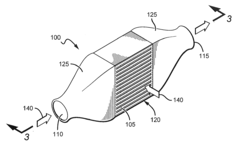
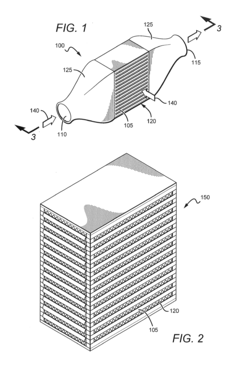
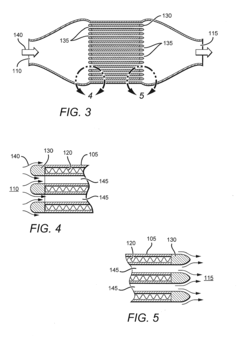
Intercooler system
PatentInactiveUS20120291993A1
Innovation
- The use of unique coil configurations and profiled passage separators to enhance airflow through the intercooler, applying basic fluid mechanics to improve fluid flow and temperature cooling in a smaller packaging size, with convex surfaces funneling fluid efficiently through passageways.
Environmental Policy Impact on Intercooling Development
Environmental policies serve as fundamental drivers shaping the trajectory of sustainable intercooling development across global markets. Regulatory frameworks increasingly emphasize energy efficiency standards, carbon emission reduction targets, and environmental compliance requirements that directly influence intercooling technology advancement. These policies create both opportunities and constraints for manufacturers, pushing them toward innovative solutions while establishing clear performance benchmarks.
The European Union's EcoDesign Directive and Energy Efficiency Directive have established stringent requirements for cooling systems, mandating minimum energy performance standards and lifecycle environmental assessments. Similarly, the United States Environmental Protection Agency's ENERGY STAR program and refrigerant phase-out regulations under the Clean Air Act significantly impact intercooling system design and implementation strategies. These regulatory measures compel manufacturers to prioritize sustainable refrigerants, improve heat exchange efficiency, and reduce overall system energy consumption.
Carbon pricing mechanisms and emissions trading systems create economic incentives that favor sustainable intercooling technologies. Companies operating under carbon cap-and-trade programs find substantial cost benefits in adopting high-efficiency intercooling solutions, as reduced energy consumption directly translates to lower carbon footprint and compliance costs. This economic pressure accelerates market adoption of advanced technologies such as variable-speed compressors, smart control systems, and waste heat recovery mechanisms.
Government incentive programs, including tax credits, rebates, and research grants, provide crucial financial support for sustainable intercooling development. The Infrastructure Investment and Jobs Act in the United States allocates significant funding for energy-efficient industrial equipment, while the European Green Deal mobilizes resources for clean technology innovation. These programs reduce initial investment barriers and encourage early adoption of sustainable intercooling solutions.
International agreements such as the Paris Climate Accord and the Kigali Amendment to the Montreal Protocol establish global frameworks that harmonize environmental standards across borders. These agreements facilitate technology transfer, standardize performance metrics, and create consistent market expectations for sustainable intercooling systems worldwide, ultimately accelerating the transition toward environmentally responsible cooling technologies.
The European Union's EcoDesign Directive and Energy Efficiency Directive have established stringent requirements for cooling systems, mandating minimum energy performance standards and lifecycle environmental assessments. Similarly, the United States Environmental Protection Agency's ENERGY STAR program and refrigerant phase-out regulations under the Clean Air Act significantly impact intercooling system design and implementation strategies. These regulatory measures compel manufacturers to prioritize sustainable refrigerants, improve heat exchange efficiency, and reduce overall system energy consumption.
Carbon pricing mechanisms and emissions trading systems create economic incentives that favor sustainable intercooling technologies. Companies operating under carbon cap-and-trade programs find substantial cost benefits in adopting high-efficiency intercooling solutions, as reduced energy consumption directly translates to lower carbon footprint and compliance costs. This economic pressure accelerates market adoption of advanced technologies such as variable-speed compressors, smart control systems, and waste heat recovery mechanisms.
Government incentive programs, including tax credits, rebates, and research grants, provide crucial financial support for sustainable intercooling development. The Infrastructure Investment and Jobs Act in the United States allocates significant funding for energy-efficient industrial equipment, while the European Green Deal mobilizes resources for clean technology innovation. These programs reduce initial investment barriers and encourage early adoption of sustainable intercooling solutions.
International agreements such as the Paris Climate Accord and the Kigali Amendment to the Montreal Protocol establish global frameworks that harmonize environmental standards across borders. These agreements facilitate technology transfer, standardize performance metrics, and create consistent market expectations for sustainable intercooling systems worldwide, ultimately accelerating the transition toward environmentally responsible cooling technologies.
Economic Incentives for Sustainable Intercooling Adoption
Economic incentives serve as powerful catalysts for accelerating the adoption of sustainable intercooling technologies across industrial sectors. The transition from conventional cooling systems to environmentally friendly alternatives requires substantial initial investments, making financial motivation mechanisms essential for widespread implementation. Current market dynamics demonstrate that without proper economic drivers, organizations tend to maintain existing infrastructure despite long-term environmental and operational benefits of sustainable solutions.
Government subsidies and tax incentives represent the most direct approach to reducing financial barriers. Several countries have implemented tax credits ranging from 15% to 30% for companies investing in energy-efficient cooling systems. These programs typically cover equipment costs, installation expenses, and system integration fees. Additionally, accelerated depreciation schedules allow businesses to recover investments more rapidly, improving cash flow and return on investment calculations.
Carbon pricing mechanisms create indirect economic pressure favoring sustainable intercooling adoption. As carbon credit markets mature, organizations with efficient cooling systems can monetize their reduced emissions through trading platforms. Current carbon prices averaging $25-50 per ton CO2 equivalent make sustainable intercooling investments increasingly attractive, particularly for large-scale industrial operations with significant cooling demands.
Utility rebate programs offer another compelling incentive structure. Electric utilities provide rebates of $50-200 per kilowatt of demand reduction achieved through efficient intercooling systems. These programs benefit both utilities and customers by reducing peak demand stress while lowering operational costs. Smart grid integration capabilities of modern sustainable intercooling systems enable participation in demand response programs, generating additional revenue streams.
Green financing initiatives specifically targeting sustainable infrastructure investments have emerged as crucial enablers. Low-interest loans, extended payment terms, and performance-based financing models reduce upfront capital requirements. Energy service companies increasingly offer comprehensive packages where efficiency improvements fund system upgrades through guaranteed savings, eliminating initial investment barriers entirely.
Performance-based incentives tied to measurable outcomes ensure sustained operational efficiency. These programs reward continued optimization rather than mere installation, promoting long-term commitment to sustainable practices. Certification programs and public recognition initiatives provide additional non-monetary incentives that enhance corporate reputation and market positioning.
Government subsidies and tax incentives represent the most direct approach to reducing financial barriers. Several countries have implemented tax credits ranging from 15% to 30% for companies investing in energy-efficient cooling systems. These programs typically cover equipment costs, installation expenses, and system integration fees. Additionally, accelerated depreciation schedules allow businesses to recover investments more rapidly, improving cash flow and return on investment calculations.
Carbon pricing mechanisms create indirect economic pressure favoring sustainable intercooling adoption. As carbon credit markets mature, organizations with efficient cooling systems can monetize their reduced emissions through trading platforms. Current carbon prices averaging $25-50 per ton CO2 equivalent make sustainable intercooling investments increasingly attractive, particularly for large-scale industrial operations with significant cooling demands.
Utility rebate programs offer another compelling incentive structure. Electric utilities provide rebates of $50-200 per kilowatt of demand reduction achieved through efficient intercooling systems. These programs benefit both utilities and customers by reducing peak demand stress while lowering operational costs. Smart grid integration capabilities of modern sustainable intercooling systems enable participation in demand response programs, generating additional revenue streams.
Green financing initiatives specifically targeting sustainable infrastructure investments have emerged as crucial enablers. Low-interest loans, extended payment terms, and performance-based financing models reduce upfront capital requirements. Energy service companies increasingly offer comprehensive packages where efficiency improvements fund system upgrades through guaranteed savings, eliminating initial investment barriers entirely.
Performance-based incentives tied to measurable outcomes ensure sustained operational efficiency. These programs reward continued optimization rather than mere installation, promoting long-term commitment to sustainable practices. Certification programs and public recognition initiatives provide additional non-monetary incentives that enhance corporate reputation and market positioning.
Unlock deeper insights with PatSnap Eureka Quick Research — get a full tech report to explore trends and direct your research. Try now!
Generate Your Research Report Instantly with AI Agent
Supercharge your innovation with PatSnap Eureka AI Agent Platform!