

Intercooling for Automotive Industry: Reducing Emissions
APR 3, 20269 MIN READ
Generate Your Research Report Instantly with AI Agent
PatSnap Eureka helps you evaluate technical feasibility & market potential.
Intercooling Technology Background and Emission Reduction Goals
Intercooling technology has emerged as a critical component in modern automotive engineering, representing a sophisticated thermal management solution that addresses the growing demands for enhanced engine performance while simultaneously reducing harmful emissions. The fundamental principle of intercooling involves cooling compressed air between compression stages in turbocharged and supercharged engines, thereby increasing air density and enabling more efficient combustion processes.
The automotive industry's adoption of intercooling systems gained significant momentum during the 1980s and 1990s, initially driven by performance enhancement objectives in motorsports and high-performance vehicles. However, the technology's evolution has been fundamentally reshaped by increasingly stringent environmental regulations and global commitments to carbon neutrality. The European Union's Euro 6 standards, California's Zero Emission Vehicle program, and similar regulatory frameworks worldwide have established ambitious targets for reducing nitrogen oxides, particulate matter, and carbon dioxide emissions.
Contemporary intercooling technology serves dual purposes in emission reduction strategies. Primary benefits include enabling downsized engines to maintain power output while consuming less fuel, directly reducing CO2 emissions per kilometer traveled. The cooler, denser air provided by intercoolers facilitates more complete combustion, minimizing the formation of unburned hydrocarbons and carbon monoxide. Additionally, optimized combustion temperatures help control nitrogen oxide formation, addressing one of the most challenging aspects of emission control.
The technology has evolved from simple air-to-air heat exchangers to sophisticated systems incorporating variable geometry designs, liquid cooling circuits, and integrated thermal management strategies. Modern intercooling solutions must balance multiple objectives: maximizing thermal efficiency, minimizing pressure losses, reducing system weight, and maintaining cost-effectiveness for mass production applications.
Current emission reduction goals driving intercooling development include achieving fleet-average CO2 emissions of 95 grams per kilometer by 2025 in Europe, with further reductions targeted for 2030. These objectives necessitate comprehensive approaches combining intercooling with advanced engine technologies, hybrid powertrains, and alternative fuel systems. The technology's role extends beyond traditional internal combustion engines to include applications in hydrogen fuel cell systems and range-extended electric vehicles, where thermal management remains crucial for optimal performance and longevity.
The automotive industry's adoption of intercooling systems gained significant momentum during the 1980s and 1990s, initially driven by performance enhancement objectives in motorsports and high-performance vehicles. However, the technology's evolution has been fundamentally reshaped by increasingly stringent environmental regulations and global commitments to carbon neutrality. The European Union's Euro 6 standards, California's Zero Emission Vehicle program, and similar regulatory frameworks worldwide have established ambitious targets for reducing nitrogen oxides, particulate matter, and carbon dioxide emissions.
Contemporary intercooling technology serves dual purposes in emission reduction strategies. Primary benefits include enabling downsized engines to maintain power output while consuming less fuel, directly reducing CO2 emissions per kilometer traveled. The cooler, denser air provided by intercoolers facilitates more complete combustion, minimizing the formation of unburned hydrocarbons and carbon monoxide. Additionally, optimized combustion temperatures help control nitrogen oxide formation, addressing one of the most challenging aspects of emission control.
The technology has evolved from simple air-to-air heat exchangers to sophisticated systems incorporating variable geometry designs, liquid cooling circuits, and integrated thermal management strategies. Modern intercooling solutions must balance multiple objectives: maximizing thermal efficiency, minimizing pressure losses, reducing system weight, and maintaining cost-effectiveness for mass production applications.
Current emission reduction goals driving intercooling development include achieving fleet-average CO2 emissions of 95 grams per kilometer by 2025 in Europe, with further reductions targeted for 2030. These objectives necessitate comprehensive approaches combining intercooling with advanced engine technologies, hybrid powertrains, and alternative fuel systems. The technology's role extends beyond traditional internal combustion engines to include applications in hydrogen fuel cell systems and range-extended electric vehicles, where thermal management remains crucial for optimal performance and longevity.
Market Demand for Automotive Emission Control Solutions
The global automotive industry faces unprecedented pressure to reduce emissions as governments worldwide implement increasingly stringent environmental regulations. The European Union's Euro 7 standards, scheduled for implementation, will impose even tighter limits on nitrogen oxides and particulate matter emissions. Similarly, China's National VI emission standards and the United States' Tier 3 vehicle emission standards continue to drive demand for advanced emission control technologies. These regulatory frameworks create a mandatory market environment where automotive manufacturers must invest in sophisticated emission reduction solutions to maintain market access.
Consumer awareness regarding environmental impact has reached a critical inflection point, with surveys indicating that environmental considerations now rank among the top three factors influencing vehicle purchasing decisions. This shift in consumer behavior extends beyond traditional environmentally conscious demographics, penetrating mainstream market segments. The growing preference for cleaner vehicles creates additional market pull beyond regulatory compliance, establishing a dual-driver demand structure for emission control technologies.
The commercial vehicle segment presents particularly robust demand for intercooling solutions due to higher emission reduction requirements and longer operational lifecycles that justify advanced technology investments. Heavy-duty trucks, construction equipment, and marine applications generate substantial emissions volumes, making them priority targets for regulatory enforcement and creating concentrated demand for effective emission control systems.
Emerging markets demonstrate accelerating adoption of emission control technologies as developing economies implement their own environmental standards. Countries such as India, Brazil, and Southeast Asian nations are progressively adopting Euro-equivalent standards, expanding the addressable market for automotive emission control solutions significantly. This geographic expansion of regulatory requirements creates sustained long-term demand growth prospects.
The integration of intercooling technology with hybrid and electric powertrains represents an evolving market segment. While pure electric vehicles eliminate tailpipe emissions, hybrid systems and range-extended electric vehicles still require sophisticated emission control for their internal combustion components. This technological convergence maintains demand for advanced intercooling solutions even as the industry transitions toward electrification.
Fleet operators increasingly recognize the total cost of ownership benefits associated with advanced emission control systems, including reduced fuel consumption, extended engine life, and compliance-related operational advantages. This economic rationale supports premium pricing for high-performance intercooling solutions and drives market expansion beyond basic regulatory compliance requirements.
Consumer awareness regarding environmental impact has reached a critical inflection point, with surveys indicating that environmental considerations now rank among the top three factors influencing vehicle purchasing decisions. This shift in consumer behavior extends beyond traditional environmentally conscious demographics, penetrating mainstream market segments. The growing preference for cleaner vehicles creates additional market pull beyond regulatory compliance, establishing a dual-driver demand structure for emission control technologies.
The commercial vehicle segment presents particularly robust demand for intercooling solutions due to higher emission reduction requirements and longer operational lifecycles that justify advanced technology investments. Heavy-duty trucks, construction equipment, and marine applications generate substantial emissions volumes, making them priority targets for regulatory enforcement and creating concentrated demand for effective emission control systems.
Emerging markets demonstrate accelerating adoption of emission control technologies as developing economies implement their own environmental standards. Countries such as India, Brazil, and Southeast Asian nations are progressively adopting Euro-equivalent standards, expanding the addressable market for automotive emission control solutions significantly. This geographic expansion of regulatory requirements creates sustained long-term demand growth prospects.
The integration of intercooling technology with hybrid and electric powertrains represents an evolving market segment. While pure electric vehicles eliminate tailpipe emissions, hybrid systems and range-extended electric vehicles still require sophisticated emission control for their internal combustion components. This technological convergence maintains demand for advanced intercooling solutions even as the industry transitions toward electrification.
Fleet operators increasingly recognize the total cost of ownership benefits associated with advanced emission control systems, including reduced fuel consumption, extended engine life, and compliance-related operational advantages. This economic rationale supports premium pricing for high-performance intercooling solutions and drives market expansion beyond basic regulatory compliance requirements.
Current Intercooling Technology Status and Emission Challenges
The automotive intercooling technology landscape has evolved significantly over the past two decades, driven primarily by increasingly stringent emission regulations and fuel efficiency standards worldwide. Current intercooler systems predominantly utilize air-to-air and air-to-water heat exchange mechanisms, with air-to-air configurations dominating the market due to their cost-effectiveness and reliability. These systems typically achieve charge air temperature reductions of 60-80°C, enabling improved combustion efficiency and reduced NOx formation.
Modern intercooler designs incorporate advanced materials such as aluminum alloy cores with optimized fin geometries and enhanced heat transfer coefficients. Leading manufacturers have developed compact, lightweight solutions that maintain thermal performance while reducing packaging constraints. However, current technology faces significant limitations in achieving the temperature reduction levels required for next-generation emission standards, particularly Euro 7 and China VI regulations.
The primary technical challenge lies in balancing thermal efficiency with pressure drop characteristics. Conventional intercoolers typically introduce 2-4% pressure losses, which directly impact engine efficiency and turbocharger performance. This trade-off becomes more pronounced as emission regulations demand lower charge air temperatures while maintaining or improving overall system efficiency. Additionally, transient response characteristics remain problematic, with current systems exhibiting thermal lag during rapid load changes.
Emission reduction challenges are multifaceted, encompassing both regulated pollutants and greenhouse gas emissions. NOx formation, highly temperature-dependent, requires charge air temperatures below 40°C for optimal reduction, yet current mainstream intercoolers struggle to achieve consistent performance at this level across varying operating conditions. Particulate matter formation also correlates with combustion temperature uniformity, demanding more precise thermal management than existing technologies provide.
Geographic distribution of advanced intercooling technology development shows concentration in European and Asian markets, with German and Japanese manufacturers leading innovation in high-efficiency designs. North American focus remains primarily on cost optimization rather than performance advancement. This disparity creates technology gaps that impact global emission reduction efforts, particularly in emerging markets where older intercooling technologies persist.
Current manufacturing constraints limit the adoption of advanced materials and complex geometries that could significantly improve thermal performance. Production scalability issues with micro-channel designs and advanced coating technologies prevent widespread implementation of next-generation solutions, maintaining reliance on conventional tube-and-fin architectures despite their performance limitations.
Modern intercooler designs incorporate advanced materials such as aluminum alloy cores with optimized fin geometries and enhanced heat transfer coefficients. Leading manufacturers have developed compact, lightweight solutions that maintain thermal performance while reducing packaging constraints. However, current technology faces significant limitations in achieving the temperature reduction levels required for next-generation emission standards, particularly Euro 7 and China VI regulations.
The primary technical challenge lies in balancing thermal efficiency with pressure drop characteristics. Conventional intercoolers typically introduce 2-4% pressure losses, which directly impact engine efficiency and turbocharger performance. This trade-off becomes more pronounced as emission regulations demand lower charge air temperatures while maintaining or improving overall system efficiency. Additionally, transient response characteristics remain problematic, with current systems exhibiting thermal lag during rapid load changes.
Emission reduction challenges are multifaceted, encompassing both regulated pollutants and greenhouse gas emissions. NOx formation, highly temperature-dependent, requires charge air temperatures below 40°C for optimal reduction, yet current mainstream intercoolers struggle to achieve consistent performance at this level across varying operating conditions. Particulate matter formation also correlates with combustion temperature uniformity, demanding more precise thermal management than existing technologies provide.
Geographic distribution of advanced intercooling technology development shows concentration in European and Asian markets, with German and Japanese manufacturers leading innovation in high-efficiency designs. North American focus remains primarily on cost optimization rather than performance advancement. This disparity creates technology gaps that impact global emission reduction efforts, particularly in emerging markets where older intercooling technologies persist.
Current manufacturing constraints limit the adoption of advanced materials and complex geometries that could significantly improve thermal performance. Production scalability issues with micro-channel designs and advanced coating technologies prevent widespread implementation of next-generation solutions, maintaining reliance on conventional tube-and-fin architectures despite their performance limitations.
Existing Intercooling Solutions for Emission Reduction
01 Intercooler design with integrated emission control
Advanced intercooler systems incorporate emission control features directly into the cooling structure. These designs optimize the flow path and temperature management to reduce harmful emissions while maintaining efficient charge air cooling. The integration allows for compact packaging and improved overall system efficiency in reducing pollutants from compressed air systems.- Intercooler design with integrated emission control: Advanced intercooler systems incorporate emission control features directly into the cooling structure. These designs optimize the flow path and temperature management to reduce harmful emissions while maintaining efficient charge air cooling. The integration allows for compact packaging and improved overall system efficiency in reducing pollutants from compressed air systems.
- Multi-stage intercooling systems for emission reduction: Multi-stage intercooling configurations utilize sequential cooling stages to progressively reduce charge air temperature and control emissions. This approach allows for better thermal management and more effective removal of condensates and contaminants that contribute to emissions. The staged design provides flexibility in optimizing cooling efficiency at different operating conditions.
- Intercooler with exhaust gas recirculation integration: Systems that combine intercooling with exhaust gas recirculation pathways enable simultaneous charge air cooling and emission control. The integrated design facilitates heat exchange between cooled charge air and recirculated exhaust gases, reducing nitrogen oxide emissions while maintaining engine performance. This configuration optimizes space utilization and thermal management efficiency.
- Condensate management systems in intercoolers: Specialized condensate separation and drainage systems within intercoolers prevent moisture-related emissions and improve air quality. These systems incorporate collection chambers, separators, and drainage mechanisms to remove water and oil vapors from the charge air stream. Effective condensate management reduces particulate emissions and prevents contamination of downstream components.
- Advanced materials and coatings for emission control: Utilization of specialized materials and surface coatings in intercooler construction enhances emission reduction capabilities. These materials provide catalytic properties or improved thermal conductivity to facilitate pollutant breakdown and heat transfer. The application of advanced coatings also prevents corrosion and contamination buildup that can contribute to increased emissions over time.
02 Multi-stage intercooling systems for emission reduction
Multi-stage intercooling configurations utilize sequential cooling stages to progressively reduce charge air temperature and control emissions. These systems employ multiple heat exchangers arranged in series or parallel to achieve optimal cooling performance while minimizing the formation of pollutants. The staged approach allows for better control of condensation and emission byproducts throughout the cooling process.Expand Specific Solutions03 Intercooler with exhaust gas recirculation integration
Intercooling systems integrated with exhaust gas recirculation pathways enable simultaneous charge air cooling and emission control. These designs incorporate channels or chambers that allow controlled mixing or heat exchange between cooled intake air and recirculated exhaust gases. This integration helps reduce nitrogen oxide emissions while maintaining engine performance and thermal efficiency.Expand Specific Solutions04 Condensate management in intercoolers for emission control
Specialized condensate collection and drainage systems in intercoolers prevent moisture-related emissions and improve air quality. These systems include separators, drains, and collection chambers designed to efficiently remove condensed water vapor from the cooled charge air. Proper condensate management prevents water ingestion into the engine and reduces hydrocarbon emissions associated with incomplete combustion.Expand Specific Solutions05 Advanced materials and coatings for low-emission intercoolers
Innovative materials and surface treatments applied to intercooler components reduce emission-causing deposits and improve long-term performance. These include corrosion-resistant alloys, catalytic coatings, and specialized surface finishes that minimize particulate buildup and chemical reactions that could generate pollutants. The advanced materials maintain heat transfer efficiency while contributing to overall emission reduction throughout the system lifecycle.Expand Specific Solutions
Key Players in Automotive Intercooling Industry
The automotive intercooling technology for emissions reduction represents a mature market segment within the broader automotive industry, which is currently undergoing significant transformation toward electrification and stricter environmental regulations. The market demonstrates substantial scale, driven by increasingly stringent emissions standards globally and the need for enhanced engine efficiency in both traditional ICE and hybrid powertrains. Technology maturity varies significantly across market participants, with established OEMs like Ford Global Technologies LLC, GM Global Technology Operations LLC, Volkswagen AG, and Hyundai Motor Co. leading advanced intercooling integration in their powertrain systems. Tier-1 suppliers including DENSO Corp., Modine Manufacturing Co., and Hanon Systems provide specialized thermal management solutions, while component manufacturers like K&N Engineering focus on filtration technologies. The competitive landscape shows high consolidation among major automotive manufacturers, with emerging players like Zhejiang Geely Powertrain Co. expanding capabilities, indicating a market transitioning from traditional cooling solutions toward more sophisticated, emissions-focused thermal management systems.
Ford Global Technologies LLC
Technical Solution: Ford has developed advanced intercooling systems integrated with their EcoBoost turbocharged engines to reduce emissions and improve fuel efficiency. Their technology focuses on optimized air-to-air intercoolers with enhanced heat transfer surfaces and improved airflow management. The system incorporates variable geometry intercooling that adapts to different operating conditions, reducing charge air temperatures by up to 100°C compared to non-intercooled systems. This results in increased air density, allowing for more efficient combustion and reduced NOx emissions. Ford's intercooling solutions are particularly effective in their smaller displacement turbocharged engines, contributing to their corporate average fuel economy improvements while maintaining performance standards.
Strengths: Proven integration with mass-production turbocharged engines, significant emission reduction capabilities. Weaknesses: Limited to specific engine configurations, requires complex packaging solutions.
Volkswagen AG
Technical Solution: Volkswagen has implemented sophisticated intercooling technologies across their TSI and TDI engine families to meet stringent emission standards. Their approach includes multi-stage intercooling systems with integrated bypass valves for optimal temperature control under varying load conditions. The company utilizes advanced aluminum construction with micro-fin technology to maximize heat dissipation efficiency. VW's intercooling systems are designed to work synergistically with their exhaust gas recirculation (EGR) systems, reducing combustion temperatures and subsequently lowering NOx formation. Their latest generation intercoolers feature smart thermal management that can reduce charge air temperatures by 80-120°C, directly contributing to cleaner combustion and reduced particulate matter emissions in both gasoline and diesel applications.
Strengths: Comprehensive integration across multiple engine platforms, advanced thermal management capabilities. Weaknesses: Higher manufacturing complexity, increased system weight compared to simpler solutions.
Core Innovations in Advanced Intercooling Technologies
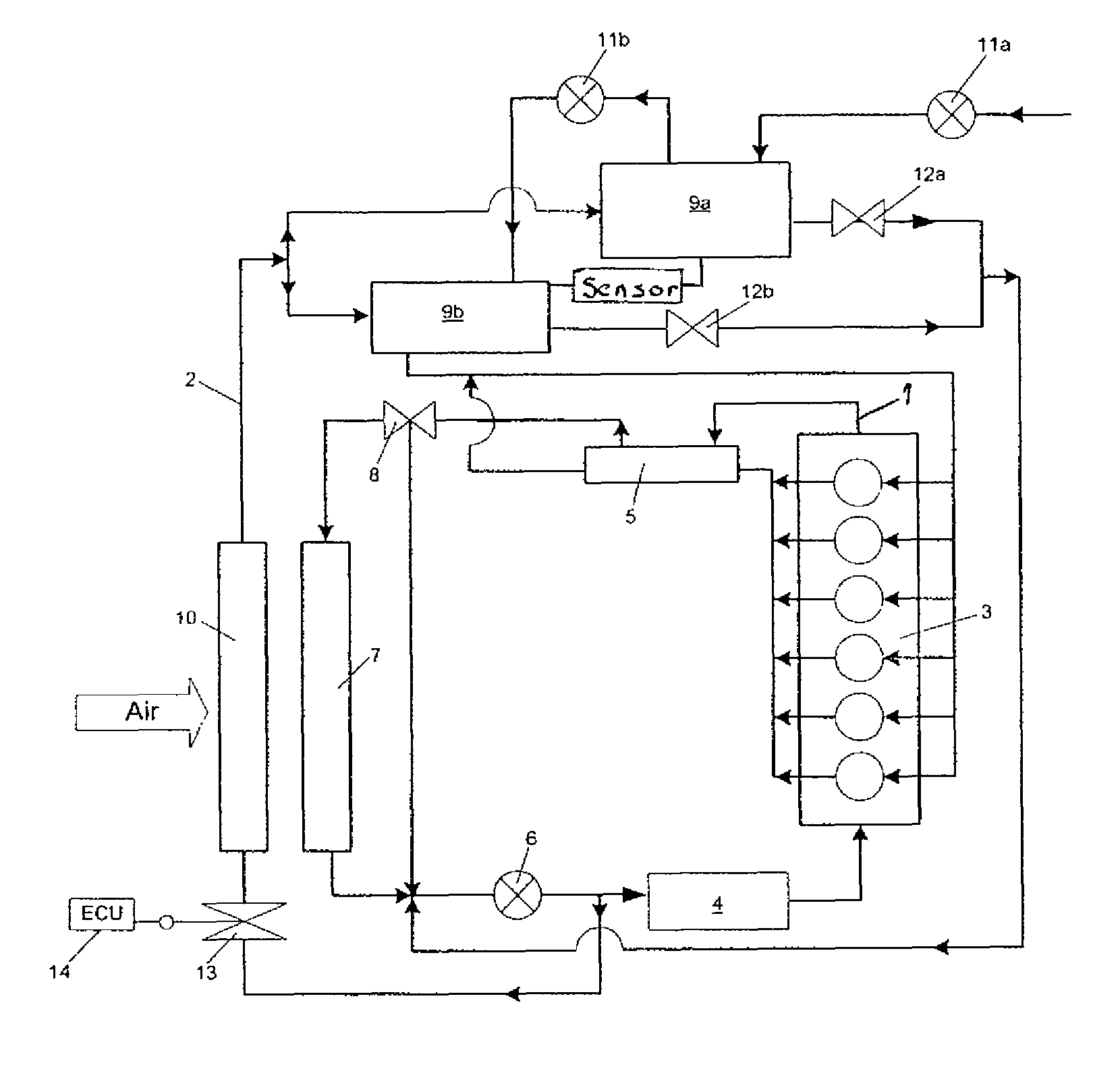
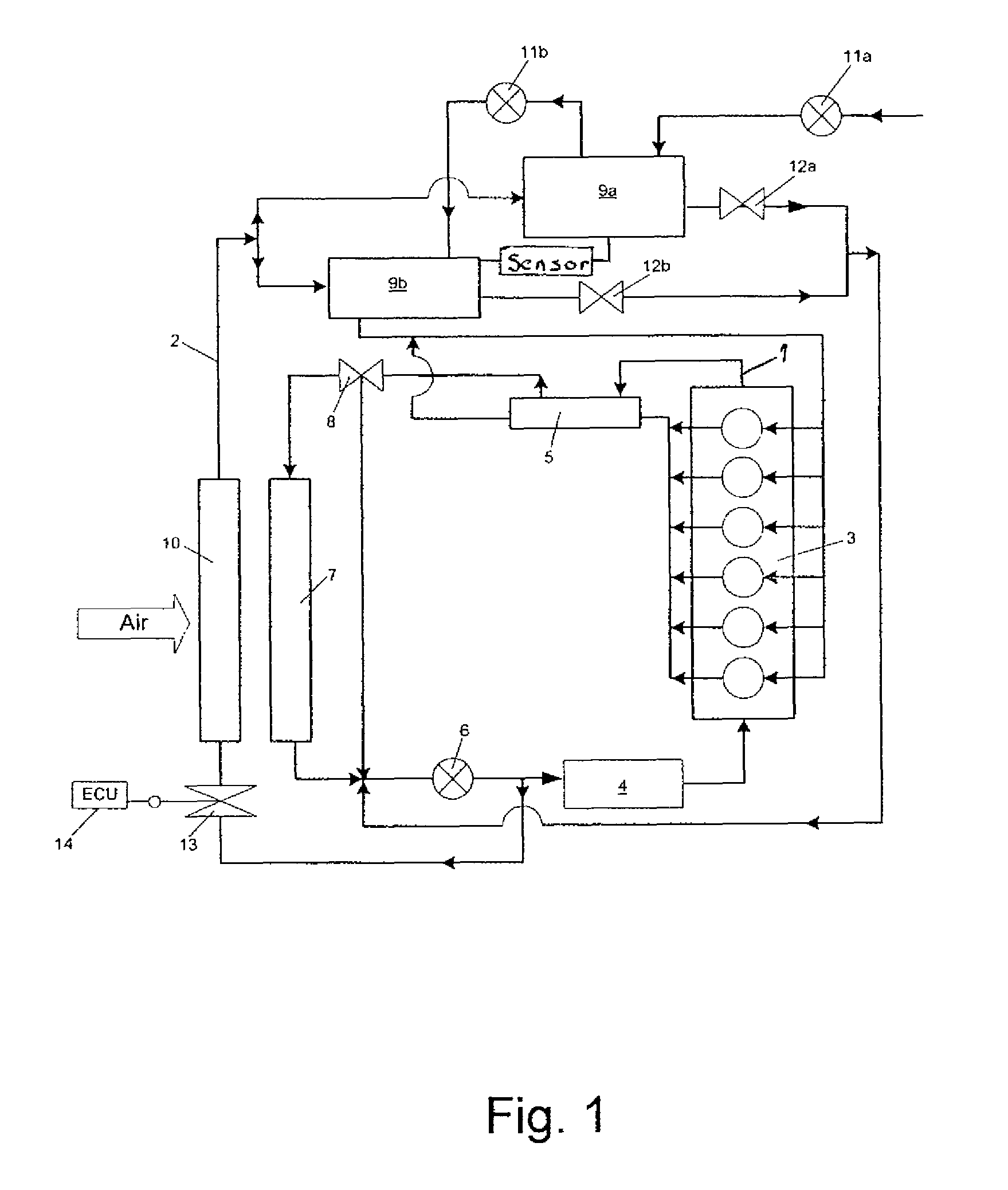
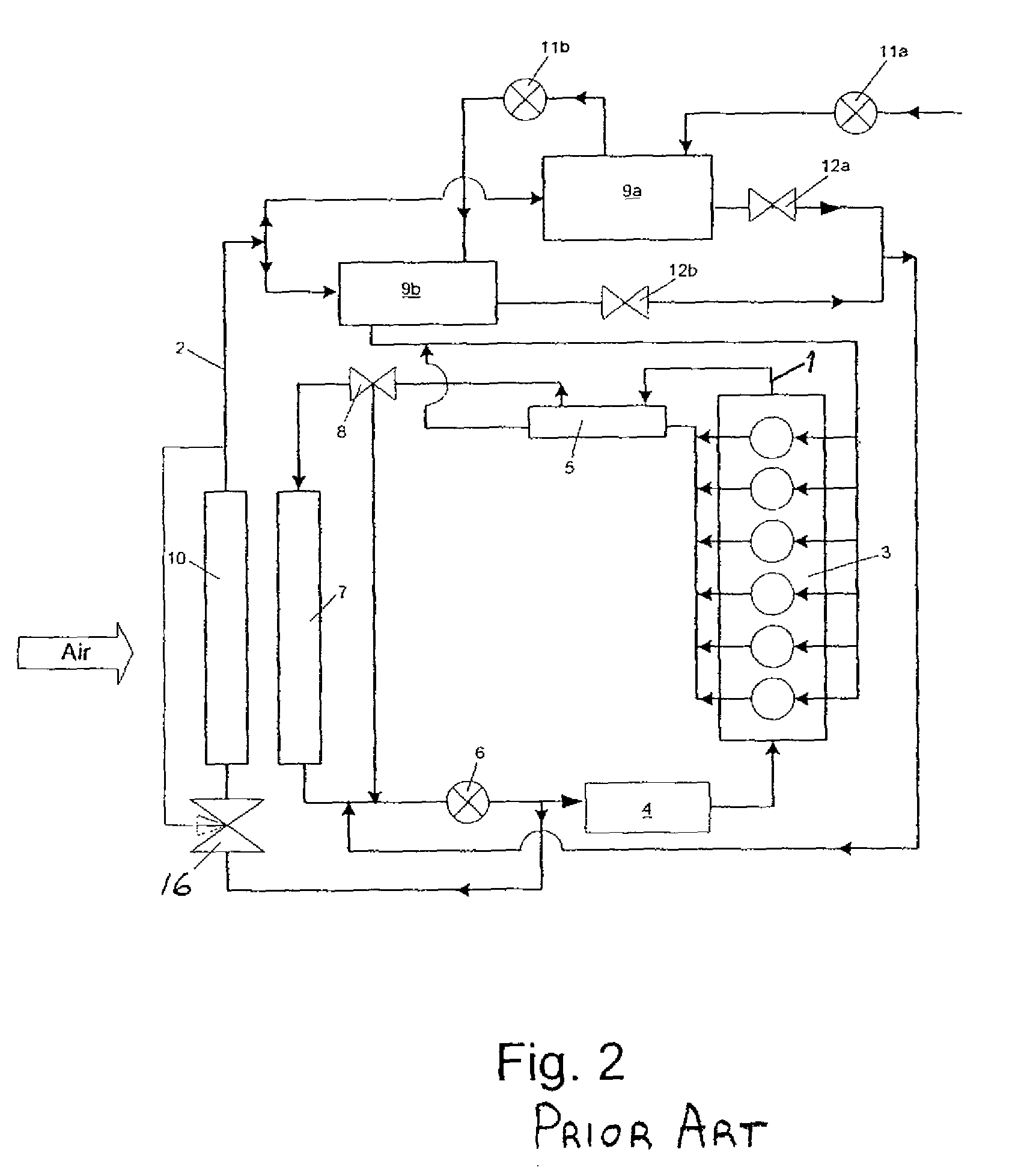
Cooling system of an internal combustion engine having charge air feed
PatentActiveUS7874154B2
Innovation
- A cooling system with a first and second cooling loop, where the first loop operates at a higher temperature and the second loop has a controllable intercooling unit, incorporating a shutdown element to throttle or completely shut down coolant throughput in the second loop based on operating parameters or state changes, such as ambient temperature or exhaust gas treatment system conditions.

Intercooler for vehicle
PatentPendingKR1020240079341A
Innovation
- The intercooler design includes a housing with a core portion composed of spaced plates extending into the header tank, featuring curved ends and sub-plates with chamfers for improved heat exchange and thermal stress reduction.


Environmental Regulations for Automotive Emissions
The automotive industry operates within an increasingly stringent regulatory framework designed to combat air pollution and climate change. The European Union's Euro 7 standards, expected to be implemented by 2025, will impose even tighter limits on nitrogen oxides (NOx), particulate matter (PM), and carbon dioxide emissions. Similarly, the United States Environmental Protection Agency continues to strengthen Corporate Average Fuel Economy (CAFE) standards, requiring automakers to achieve fleet-wide fuel efficiency improvements of approximately 5% annually through 2026.
China's National VI emission standards, already among the world's most restrictive, are driving significant technological advancement in the world's largest automotive market. These regulations mandate substantial reductions in pollutant emissions, with NOx limits reduced by 42% compared to previous standards. The implementation timeline varies by region, but the overall trajectory toward zero-emission vehicles is accelerating globally.
Real Driving Emissions (RDE) testing protocols have fundamentally changed how manufacturers approach emission control. Unlike laboratory-based testing, RDE requires vehicles to meet emission standards under actual driving conditions, including various weather scenarios, traffic patterns, and altitude changes. This shift has made intercooling technology increasingly critical, as maintaining optimal combustion temperatures across diverse operating conditions directly impacts emission performance.
The regulatory landscape also encompasses lifecycle emissions assessments, pushing manufacturers to consider the environmental impact of their technologies from production through disposal. Carbon intensity regulations in regions like California and the European Union create additional pressure for efficiency improvements, making advanced intercooling systems essential for meeting both immediate emission targets and long-term sustainability goals.
Compliance penalties have become increasingly severe, with fines reaching billions of dollars for major violations. The Volkswagen emissions scandal highlighted the reputational and financial risks of non-compliance, leading to enhanced regulatory oversight and more frequent testing protocols. These enforcement mechanisms create strong economic incentives for investing in proven emission reduction technologies.
Future regulatory trends indicate continued tightening of standards, with many jurisdictions announcing phase-out dates for internal combustion engines. However, during the transition period, advanced intercooling systems will play a crucial role in helping manufacturers meet interim targets while developing next-generation powertrains.
China's National VI emission standards, already among the world's most restrictive, are driving significant technological advancement in the world's largest automotive market. These regulations mandate substantial reductions in pollutant emissions, with NOx limits reduced by 42% compared to previous standards. The implementation timeline varies by region, but the overall trajectory toward zero-emission vehicles is accelerating globally.
Real Driving Emissions (RDE) testing protocols have fundamentally changed how manufacturers approach emission control. Unlike laboratory-based testing, RDE requires vehicles to meet emission standards under actual driving conditions, including various weather scenarios, traffic patterns, and altitude changes. This shift has made intercooling technology increasingly critical, as maintaining optimal combustion temperatures across diverse operating conditions directly impacts emission performance.
The regulatory landscape also encompasses lifecycle emissions assessments, pushing manufacturers to consider the environmental impact of their technologies from production through disposal. Carbon intensity regulations in regions like California and the European Union create additional pressure for efficiency improvements, making advanced intercooling systems essential for meeting both immediate emission targets and long-term sustainability goals.
Compliance penalties have become increasingly severe, with fines reaching billions of dollars for major violations. The Volkswagen emissions scandal highlighted the reputational and financial risks of non-compliance, leading to enhanced regulatory oversight and more frequent testing protocols. These enforcement mechanisms create strong economic incentives for investing in proven emission reduction technologies.
Future regulatory trends indicate continued tightening of standards, with many jurisdictions announcing phase-out dates for internal combustion engines. However, during the transition period, advanced intercooling systems will play a crucial role in helping manufacturers meet interim targets while developing next-generation powertrains.
Sustainability Impact of Intercooling Technologies
Intercooling technologies represent a pivotal advancement in automotive sustainability, delivering measurable environmental benefits through enhanced engine efficiency and reduced emissions. Modern intercooling systems contribute significantly to lowering carbon dioxide emissions by optimizing combustion processes, with studies indicating potential reductions of 8-15% in CO2 output compared to naturally aspirated engines of equivalent power. This improvement stems from the technology's ability to increase air density, enabling more complete fuel combustion and reducing unburned hydrocarbon emissions.
The lifecycle environmental impact of intercooling systems demonstrates favorable sustainability metrics when evaluated comprehensively. Manufacturing processes for aluminum and composite intercooler cores have evolved to incorporate recycled materials, with leading manufacturers achieving up to 70% recycled content in their products. The energy payback period for intercooling systems typically ranges from 6-12 months of vehicle operation, after which the cumulative emission reductions significantly outweigh the initial manufacturing carbon footprint.
Water-cooled intercooling systems present additional sustainability advantages through improved thermal management efficiency. These systems reduce the overall thermal load on vehicle cooling systems, potentially extending component lifecycles and reducing maintenance requirements. The integration of heat recovery mechanisms in advanced intercooling designs enables waste heat utilization for cabin heating or auxiliary power generation, further enhancing overall energy efficiency.
Emerging sustainable materials in intercooling technology include bio-based composite cores and recyclable polymer components, addressing end-of-life environmental concerns. Research initiatives focus on developing intercoolers with enhanced durability and repairability, extending service life from typical 150,000 miles to over 250,000 miles. These developments align with circular economy principles, reducing resource consumption and waste generation throughout the automotive value chain.
The regulatory landscape increasingly recognizes intercooling as an enabling technology for meeting stringent emission standards. European Union regulations credit intercooling systems in fleet average CO2 calculations, while emerging markets adopt similar frameworks. This regulatory support accelerates adoption rates and drives continued innovation in sustainable intercooling solutions, positioning the technology as essential for achieving automotive industry decarbonization targets.
The lifecycle environmental impact of intercooling systems demonstrates favorable sustainability metrics when evaluated comprehensively. Manufacturing processes for aluminum and composite intercooler cores have evolved to incorporate recycled materials, with leading manufacturers achieving up to 70% recycled content in their products. The energy payback period for intercooling systems typically ranges from 6-12 months of vehicle operation, after which the cumulative emission reductions significantly outweigh the initial manufacturing carbon footprint.
Water-cooled intercooling systems present additional sustainability advantages through improved thermal management efficiency. These systems reduce the overall thermal load on vehicle cooling systems, potentially extending component lifecycles and reducing maintenance requirements. The integration of heat recovery mechanisms in advanced intercooling designs enables waste heat utilization for cabin heating or auxiliary power generation, further enhancing overall energy efficiency.
Emerging sustainable materials in intercooling technology include bio-based composite cores and recyclable polymer components, addressing end-of-life environmental concerns. Research initiatives focus on developing intercoolers with enhanced durability and repairability, extending service life from typical 150,000 miles to over 250,000 miles. These developments align with circular economy principles, reducing resource consumption and waste generation throughout the automotive value chain.
The regulatory landscape increasingly recognizes intercooling as an enabling technology for meeting stringent emission standards. European Union regulations credit intercooling systems in fleet average CO2 calculations, while emerging markets adopt similar frameworks. This regulatory support accelerates adoption rates and drives continued innovation in sustainable intercooling solutions, positioning the technology as essential for achieving automotive industry decarbonization targets.
Unlock deeper insights with PatSnap Eureka Quick Research — get a full tech report to explore trends and direct your research. Try now!
Generate Your Research Report Instantly with AI Agent
Supercharge your innovation with PatSnap Eureka AI Agent Platform!