

How to Implement V2G for Community Energy Projects?
AUG 8, 20259 MIN READ
Generate Your Research Report Instantly with AI Agent
Patsnap Eureka helps you evaluate technical feasibility & market potential.
V2G Technology Background and Objectives
Vehicle-to-Grid (V2G) technology has emerged as a promising solution for integrating electric vehicles (EVs) into the power grid, offering potential benefits for both grid operators and EV owners. The concept of V2G dates back to the late 1990s, but it has gained significant traction in recent years due to the rapid growth of EV adoption and the increasing need for grid flexibility.
The primary objective of V2G technology is to enable bidirectional power flow between EVs and the electrical grid. This allows EVs to not only consume electricity for charging but also discharge stored energy back to the grid when needed. By doing so, V2G aims to transform EVs from mere transportation assets into mobile energy storage units that can actively participate in grid operations.
The evolution of V2G technology has been closely tied to advancements in EV battery technology, power electronics, and smart grid infrastructure. Early V2G concepts focused on using EVs for peak shaving and load balancing. However, as the technology has matured, its potential applications have expanded to include frequency regulation, voltage support, and renewable energy integration.
In the context of community energy projects, V2G technology offers unique opportunities to enhance local energy resilience and sustainability. The primary goal is to leverage the collective battery capacity of EVs within a community to optimize energy consumption, reduce peak demand, and increase the utilization of renewable energy sources.
One of the key technical objectives for implementing V2G in community energy projects is to develop robust communication and control systems that can efficiently manage the bidirectional power flow between multiple EVs and the local grid. This involves creating sophisticated algorithms for predicting energy demand, optimizing charging and discharging schedules, and ensuring fair compensation for EV owners who participate in V2G services.
Another critical objective is to address the potential impact of V2G on EV battery life. While frequent charging and discharging cycles can accelerate battery degradation, recent research suggests that smart V2G strategies can actually extend battery life by optimizing charging patterns and avoiding deep discharges.
As V2G technology continues to evolve, there is a growing focus on developing standardized protocols and interfaces to ensure interoperability between different EV models, charging stations, and grid management systems. This standardization is crucial for the widespread adoption of V2G in community energy projects, as it allows for seamless integration of diverse EV fleets and charging infrastructure.
The primary objective of V2G technology is to enable bidirectional power flow between EVs and the electrical grid. This allows EVs to not only consume electricity for charging but also discharge stored energy back to the grid when needed. By doing so, V2G aims to transform EVs from mere transportation assets into mobile energy storage units that can actively participate in grid operations.
The evolution of V2G technology has been closely tied to advancements in EV battery technology, power electronics, and smart grid infrastructure. Early V2G concepts focused on using EVs for peak shaving and load balancing. However, as the technology has matured, its potential applications have expanded to include frequency regulation, voltage support, and renewable energy integration.
In the context of community energy projects, V2G technology offers unique opportunities to enhance local energy resilience and sustainability. The primary goal is to leverage the collective battery capacity of EVs within a community to optimize energy consumption, reduce peak demand, and increase the utilization of renewable energy sources.
One of the key technical objectives for implementing V2G in community energy projects is to develop robust communication and control systems that can efficiently manage the bidirectional power flow between multiple EVs and the local grid. This involves creating sophisticated algorithms for predicting energy demand, optimizing charging and discharging schedules, and ensuring fair compensation for EV owners who participate in V2G services.
Another critical objective is to address the potential impact of V2G on EV battery life. While frequent charging and discharging cycles can accelerate battery degradation, recent research suggests that smart V2G strategies can actually extend battery life by optimizing charging patterns and avoiding deep discharges.
As V2G technology continues to evolve, there is a growing focus on developing standardized protocols and interfaces to ensure interoperability between different EV models, charging stations, and grid management systems. This standardization is crucial for the widespread adoption of V2G in community energy projects, as it allows for seamless integration of diverse EV fleets and charging infrastructure.
Market Analysis for V2G in Community Energy
The market for Vehicle-to-Grid (V2G) technology in community energy projects is experiencing significant growth and transformation. As electric vehicle (EV) adoption continues to rise, the potential for V2G to play a crucial role in community energy management becomes increasingly apparent. The global V2G market is projected to expand rapidly, driven by the increasing integration of renewable energy sources and the need for grid stability.
Community energy projects are particularly well-suited for V2G implementation due to their localized nature and focus on sustainability. These projects often involve shared renewable energy resources, such as solar panels or wind turbines, which can benefit from the energy storage capabilities of EVs. The market demand for V2G in community energy is fueled by several factors, including the desire for energy independence, reduced electricity costs, and improved grid resilience.
One of the primary drivers of V2G adoption in community energy projects is the potential for cost savings. By utilizing EV batteries as a distributed energy resource, communities can reduce their reliance on grid electricity during peak demand periods, leading to lower energy bills. Additionally, V2G enables communities to participate in demand response programs, generating revenue by selling excess energy back to the grid.
The environmental benefits of V2G in community energy projects also contribute to market growth. By optimizing the use of renewable energy sources and reducing reliance on fossil fuels, V2G helps communities lower their carbon footprint and achieve sustainability goals. This aligns with increasing public awareness and government initiatives focused on combating climate change.
Market trends indicate a growing interest in smart grid technologies and microgrids, which complement V2G implementation in community energy projects. The integration of V2G with these technologies creates opportunities for more efficient energy management and increased grid stability. This synergy is attracting investment from both public and private sectors, further driving market expansion.
However, the V2G market for community energy projects also faces challenges. The high initial costs of infrastructure development and the need for standardization across different EV models and charging systems can be barriers to adoption. Additionally, concerns about battery degradation and the complexity of implementing V2G systems may slow market growth in some regions.
Despite these challenges, the overall market outlook for V2G in community energy projects remains positive. As technology advances and costs decrease, the adoption of V2G is expected to accelerate. The market is likely to see increased collaboration between EV manufacturers, energy providers, and community organizations to develop integrated solutions that maximize the benefits of V2G technology.
Community energy projects are particularly well-suited for V2G implementation due to their localized nature and focus on sustainability. These projects often involve shared renewable energy resources, such as solar panels or wind turbines, which can benefit from the energy storage capabilities of EVs. The market demand for V2G in community energy is fueled by several factors, including the desire for energy independence, reduced electricity costs, and improved grid resilience.
One of the primary drivers of V2G adoption in community energy projects is the potential for cost savings. By utilizing EV batteries as a distributed energy resource, communities can reduce their reliance on grid electricity during peak demand periods, leading to lower energy bills. Additionally, V2G enables communities to participate in demand response programs, generating revenue by selling excess energy back to the grid.
The environmental benefits of V2G in community energy projects also contribute to market growth. By optimizing the use of renewable energy sources and reducing reliance on fossil fuels, V2G helps communities lower their carbon footprint and achieve sustainability goals. This aligns with increasing public awareness and government initiatives focused on combating climate change.
Market trends indicate a growing interest in smart grid technologies and microgrids, which complement V2G implementation in community energy projects. The integration of V2G with these technologies creates opportunities for more efficient energy management and increased grid stability. This synergy is attracting investment from both public and private sectors, further driving market expansion.
However, the V2G market for community energy projects also faces challenges. The high initial costs of infrastructure development and the need for standardization across different EV models and charging systems can be barriers to adoption. Additionally, concerns about battery degradation and the complexity of implementing V2G systems may slow market growth in some regions.
Despite these challenges, the overall market outlook for V2G in community energy projects remains positive. As technology advances and costs decrease, the adoption of V2G is expected to accelerate. The market is likely to see increased collaboration between EV manufacturers, energy providers, and community organizations to develop integrated solutions that maximize the benefits of V2G technology.
V2G Technical Challenges and Constraints
Vehicle-to-Grid (V2G) technology presents several technical challenges and constraints when implementing it for community energy projects. One of the primary obstacles is the bidirectional charging infrastructure required for V2G systems. This infrastructure must be capable of managing both power flow from the grid to electric vehicles (EVs) and from EVs back to the grid. Developing and deploying such systems at a community scale can be complex and costly.
Another significant challenge is the impact on EV battery life. Frequent charging and discharging cycles associated with V2G operations may accelerate battery degradation, potentially reducing the overall lifespan of EV batteries. This concern needs to be carefully addressed to ensure that V2G implementation does not negatively affect EV owners' long-term investment in their vehicles.
Grid stability and power quality issues also pose technical constraints. The intermittent nature of V2G power supply, dependent on EV availability and user behavior, can introduce voltage fluctuations and harmonics into the local grid. Maintaining grid stability while integrating a large number of EVs as distributed energy resources requires sophisticated control systems and grid management strategies.
Communication and coordination between EVs, charging stations, and the grid present another set of challenges. Real-time data exchange is crucial for efficient V2G operations, necessitating robust, secure, and standardized communication protocols. Ensuring interoperability between different EV models, charging equipment, and grid management systems adds another layer of complexity to V2G implementation.
The variability in EV battery capacities and states of charge introduces challenges in predicting and managing available energy resources. Community energy projects relying on V2G must develop accurate forecasting models and flexible energy management systems to effectively utilize the distributed storage capacity of connected EVs.
Regulatory and policy frameworks also pose constraints on V2G implementation. Many existing regulations were not designed with V2G in mind, creating barriers to its widespread adoption. Issues such as electricity market participation rules, grid connection standards, and energy pricing mechanisms may need to be revised to accommodate V2G technology.
Lastly, the scalability of V2G systems for community projects presents technical challenges. As the number of participating EVs grows, so does the complexity of managing the system. Developing scalable solutions that can efficiently handle increasing numbers of vehicles while maintaining system performance and reliability is a significant technical hurdle.
Addressing these challenges requires ongoing research and development efforts, collaboration between stakeholders, and innovative approaches to system design and integration. As V2G technology matures, overcoming these constraints will be crucial for its successful implementation in community energy projects.
Another significant challenge is the impact on EV battery life. Frequent charging and discharging cycles associated with V2G operations may accelerate battery degradation, potentially reducing the overall lifespan of EV batteries. This concern needs to be carefully addressed to ensure that V2G implementation does not negatively affect EV owners' long-term investment in their vehicles.
Grid stability and power quality issues also pose technical constraints. The intermittent nature of V2G power supply, dependent on EV availability and user behavior, can introduce voltage fluctuations and harmonics into the local grid. Maintaining grid stability while integrating a large number of EVs as distributed energy resources requires sophisticated control systems and grid management strategies.
Communication and coordination between EVs, charging stations, and the grid present another set of challenges. Real-time data exchange is crucial for efficient V2G operations, necessitating robust, secure, and standardized communication protocols. Ensuring interoperability between different EV models, charging equipment, and grid management systems adds another layer of complexity to V2G implementation.
The variability in EV battery capacities and states of charge introduces challenges in predicting and managing available energy resources. Community energy projects relying on V2G must develop accurate forecasting models and flexible energy management systems to effectively utilize the distributed storage capacity of connected EVs.
Regulatory and policy frameworks also pose constraints on V2G implementation. Many existing regulations were not designed with V2G in mind, creating barriers to its widespread adoption. Issues such as electricity market participation rules, grid connection standards, and energy pricing mechanisms may need to be revised to accommodate V2G technology.
Lastly, the scalability of V2G systems for community projects presents technical challenges. As the number of participating EVs grows, so does the complexity of managing the system. Developing scalable solutions that can efficiently handle increasing numbers of vehicles while maintaining system performance and reliability is a significant technical hurdle.
Addressing these challenges requires ongoing research and development efforts, collaboration between stakeholders, and innovative approaches to system design and integration. As V2G technology matures, overcoming these constraints will be crucial for its successful implementation in community energy projects.
Current V2G Implementation Solutions
01 V2G system architecture and communication
This category focuses on the overall architecture of V2G systems, including communication protocols between vehicles and the grid. It covers the design of interfaces, data exchange methods, and network structures that enable efficient bidirectional power flow and information transfer between electric vehicles and the power grid.- V2G system architecture and communication: This category focuses on the overall system architecture and communication protocols for Vehicle-to-Grid (V2G) technology. It includes methods for establishing secure connections between electric vehicles and the power grid, data exchange protocols, and management systems for coordinating V2G operations. These systems enable efficient bidirectional power flow and information exchange between vehicles and the grid.
- Grid stabilization and load balancing: V2G technology can be used to stabilize the power grid and balance loads during peak demand periods. This category covers methods for utilizing electric vehicle batteries as distributed energy storage units to provide ancillary services to the grid. It includes algorithms for optimizing power distribution, demand response strategies, and techniques for managing grid frequency and voltage regulation using V2G-enabled vehicles.
- Charging and discharging control strategies: This category encompasses intelligent charging and discharging control strategies for V2G systems. It includes methods for optimizing battery life, managing state of charge, and implementing smart charging schedules. These strategies aim to maximize the benefits of V2G while minimizing the impact on vehicle battery degradation and ensuring that vehicles have sufficient charge for their primary transportation purpose.
- Economic models and incentive mechanisms: This category focuses on the economic aspects of V2G technology, including pricing models, incentive mechanisms, and market structures. It covers methods for calculating and distributing financial benefits to V2G participants, as well as strategies for encouraging adoption of V2G technology. These economic models aim to create win-win scenarios for vehicle owners, grid operators, and energy providers.
- Integration with renewable energy sources: This category addresses the integration of V2G systems with renewable energy sources such as solar and wind power. It includes methods for using electric vehicles as energy storage buffers to mitigate the intermittency of renewable energy generation. These approaches aim to increase the overall efficiency and sustainability of the power grid by leveraging V2G technology to support higher penetration of renewable energy sources.
02 Grid stabilization and load balancing
V2G technology can be used to stabilize the power grid and balance loads during peak demand periods. This involves using electric vehicle batteries as distributed energy storage units, allowing them to supply power back to the grid when needed, thus improving overall grid reliability and efficiency.Expand Specific Solutions03 Smart charging and energy management
This aspect covers intelligent charging strategies and energy management systems for V2G applications. It includes algorithms for optimizing charging schedules, predicting energy demand, and managing the flow of electricity between vehicles and the grid to maximize efficiency and minimize costs.Expand Specific Solutions04 V2G economic models and incentives
This category addresses the economic aspects of V2G technology, including pricing models, incentive structures, and market mechanisms. It covers methods for compensating vehicle owners for providing grid services and strategies for creating viable business models around V2G implementation.Expand Specific Solutions05 V2G integration with renewable energy sources
This point focuses on integrating V2G systems with renewable energy sources such as solar and wind power. It includes methods for using electric vehicles as energy storage to balance the intermittent nature of renewables, as well as strategies for optimizing the use of clean energy in transportation and grid applications.Expand Specific Solutions
Key Players in V2G and Community Energy
The implementation of Vehicle-to-Grid (V2G) technology for community energy projects is in its early stages, with the market still developing and technology maturing. Major players like State Grid Corp. of China, Hyundai Motor Co., and Toyota Motor Corp. are investing in V2G research and pilot projects. The market size is expected to grow significantly as electric vehicle adoption increases and grid integration becomes more critical. While some technical challenges remain, advancements in battery technology and smart grid systems from companies like Contemporary Amperex Technology and State Grid Electric Vehicle Service are accelerating V2G feasibility for community-scale applications.
State Grid Corp. of China
Technical Solution: State Grid Corp. of China has developed a comprehensive V2G implementation strategy for community energy projects. Their approach includes smart charging infrastructure, bidirectional power flow management, and advanced grid integration techniques. The company has deployed pilot projects in several cities, utilizing a centralized control system that optimizes energy flow between electric vehicles and the grid[1]. Their V2G solution incorporates real-time pricing mechanisms and predictive algorithms to balance grid load and maximize renewable energy utilization. State Grid has also developed specialized V2G-enabled charging stations that can handle high-power bidirectional energy transfer, supporting both AC and DC charging modes[3]. The system integrates with their existing smart grid infrastructure, allowing for seamless communication between vehicles, charging stations, and the power grid.
Strengths: Extensive grid infrastructure, large-scale implementation capability, and integration with existing smart grid systems. Weaknesses: Potential challenges in standardization across different regions and vehicle manufacturers.
Contemporary Amperex Technology Co., Ltd.
Technical Solution: Contemporary Amperex Technology Co., Ltd. (CATL) has developed advanced battery systems specifically designed for V2G applications in community energy projects. Their solution focuses on high-capacity, long-life batteries with bidirectional charging capabilities. CATL's V2G-ready batteries feature enhanced cycle life to withstand frequent charge-discharge cycles associated with grid services[2]. The company has also developed smart battery management systems (BMS) that optimize battery performance and lifespan during V2G operations. CATL's V2G solution includes cloud-based analytics for predictive maintenance and real-time monitoring of battery health. They have partnered with several automakers to integrate their V2G-enabled batteries into electric vehicles, ensuring compatibility with various V2G protocols and standards[4].
Strengths: Expertise in battery technology, partnerships with major automakers, and focus on battery longevity for V2G applications. Weaknesses: Limited control over the entire V2G ecosystem, relying on partnerships for full implementation.
Core V2G Innovations for Communities
Dynamic adjusting system and method for participation of electric vehicle in power grid based on V2G technology
PatentActiveCN118651117A
Innovation
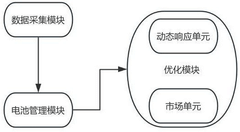
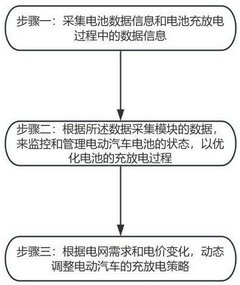
- The battery status is monitored in real time through the data acquisition module. The battery management module dynamically adjusts the charge and discharge strategy according to the comprehensive evaluation value and grid demand. The optimization module includes a dynamic response unit to adjust the charge and discharge rate and strategy. The predictive maintenance unit predicts battery maintenance time. The market unit provides Incentive mechanisms to optimize grid load.
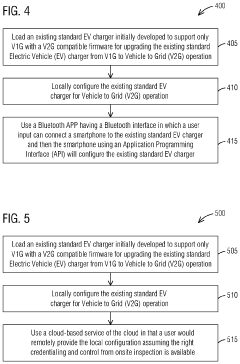
Upgrading an existing standard electric vehicle (EV) charger from grid to vehicle (V1G) to v1g plus vehicle to grid (V2G) operation
PatentPendingUS20240201974A1
Innovation
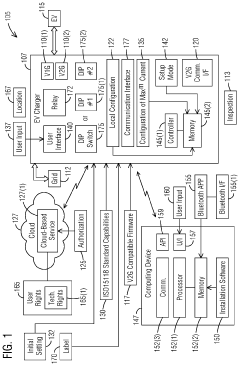
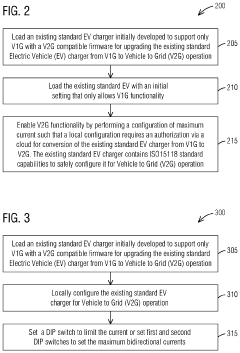
- A method to locally configure existing standard AC EV chargers with ISO15118 capabilities for V2G operation by loading V2G compatible firmware, authorizing via the cloud, and configuring maximum current, allowing bi-directional charging/discharging through a communication interface.
Regulatory Framework for V2G Projects
The regulatory framework for Vehicle-to-Grid (V2G) projects in community energy initiatives is a complex and evolving landscape. At the national level, many countries are developing policies to support V2G integration, recognizing its potential to enhance grid stability and promote renewable energy adoption. These policies often include incentives for V2G-enabled electric vehicles (EVs) and charging infrastructure, as well as guidelines for grid interconnection and energy market participation.
In the United States, the Federal Energy Regulatory Commission (FERC) has issued orders that facilitate the participation of distributed energy resources, including V2G systems, in wholesale electricity markets. Order No. 2222, in particular, removes barriers to the participation of aggregated distributed energy resources in regional organized wholesale electric markets, creating new opportunities for V2G projects.
At the state level, regulations vary significantly. Some states have implemented specific V2G policies, while others are still in the process of developing appropriate frameworks. California, for instance, has been at the forefront of V2G regulation, with the California Public Utilities Commission (CPUC) approving pilot programs and establishing rules for V2G integration.
Local regulations also play a crucial role in V2G implementation. Municipalities may have specific zoning laws, building codes, and permitting processes that affect the installation of V2G infrastructure. Community energy projects must navigate these local regulations to ensure compliance and smooth implementation.
Standardization is another key aspect of the regulatory framework. Organizations such as the Society of Automotive Engineers (SAE) and the International Electrotechnical Commission (IEC) have developed standards for V2G communication protocols and hardware interfaces. These standards are essential for ensuring interoperability between different EV models, charging stations, and grid systems.
Data privacy and cybersecurity regulations are increasingly important in the V2G context. As V2G systems involve the exchange of sensitive information between vehicles, charging stations, and grid operators, robust data protection measures are necessary. Regulations such as the European Union's General Data Protection Regulation (GDPR) have implications for V2G projects, particularly in terms of data collection, storage, and sharing practices.
The regulatory framework must also address the economic aspects of V2G, including tariff structures, revenue sharing mechanisms, and compensation models for EV owners participating in V2G programs. These economic regulations are crucial for creating viable business models and ensuring fair compensation for the grid services provided by V2G-enabled vehicles.
In the United States, the Federal Energy Regulatory Commission (FERC) has issued orders that facilitate the participation of distributed energy resources, including V2G systems, in wholesale electricity markets. Order No. 2222, in particular, removes barriers to the participation of aggregated distributed energy resources in regional organized wholesale electric markets, creating new opportunities for V2G projects.
At the state level, regulations vary significantly. Some states have implemented specific V2G policies, while others are still in the process of developing appropriate frameworks. California, for instance, has been at the forefront of V2G regulation, with the California Public Utilities Commission (CPUC) approving pilot programs and establishing rules for V2G integration.
Local regulations also play a crucial role in V2G implementation. Municipalities may have specific zoning laws, building codes, and permitting processes that affect the installation of V2G infrastructure. Community energy projects must navigate these local regulations to ensure compliance and smooth implementation.
Standardization is another key aspect of the regulatory framework. Organizations such as the Society of Automotive Engineers (SAE) and the International Electrotechnical Commission (IEC) have developed standards for V2G communication protocols and hardware interfaces. These standards are essential for ensuring interoperability between different EV models, charging stations, and grid systems.
Data privacy and cybersecurity regulations are increasingly important in the V2G context. As V2G systems involve the exchange of sensitive information between vehicles, charging stations, and grid operators, robust data protection measures are necessary. Regulations such as the European Union's General Data Protection Regulation (GDPR) have implications for V2G projects, particularly in terms of data collection, storage, and sharing practices.
The regulatory framework must also address the economic aspects of V2G, including tariff structures, revenue sharing mechanisms, and compensation models for EV owners participating in V2G programs. These economic regulations are crucial for creating viable business models and ensuring fair compensation for the grid services provided by V2G-enabled vehicles.
Economic Feasibility of Community V2G
The economic feasibility of community Vehicle-to-Grid (V2G) projects is a critical factor in determining the viability and success of such initiatives. V2G technology allows electric vehicles (EVs) to not only draw power from the grid but also feed electricity back into it, creating a bidirectional flow of energy. This capability presents unique opportunities for community energy projects, but also poses significant economic challenges.
One of the primary economic considerations for community V2G projects is the initial investment required. This includes the cost of upgrading existing infrastructure to support bidirectional power flow, installing smart charging stations, and implementing advanced energy management systems. While these upfront costs can be substantial, they must be weighed against the potential long-term benefits and revenue streams that V2G can generate.
The economic viability of community V2G projects is closely tied to the local electricity market structure and pricing mechanisms. In regions with time-of-use pricing or real-time pricing, V2G can offer significant value by enabling communities to arbitrage electricity prices. By charging vehicles during low-demand periods when electricity is cheaper and discharging during peak hours when prices are higher, communities can potentially reduce their overall energy costs and even generate revenue.
Another crucial factor in the economic feasibility of V2G is the potential for providing grid services. Community V2G projects can participate in ancillary service markets, offering frequency regulation, voltage support, and demand response services to grid operators. These services can provide additional revenue streams, improving the overall economic outlook of the project. However, the value of these services varies greatly depending on local market conditions and regulatory frameworks.
The scale of the community V2G project also plays a significant role in its economic feasibility. Larger projects with a higher number of participating vehicles can benefit from economies of scale, reducing per-unit costs and increasing the potential for revenue generation. However, this must be balanced against the complexity of managing a larger fleet and the potential strain on local grid infrastructure.
Battery degradation is a critical economic consideration in V2G projects. Frequent charging and discharging cycles associated with V2G operations can accelerate battery wear, potentially reducing the lifespan of EV batteries. The economic model must account for this increased degradation and include strategies to mitigate its impact, such as smart charging algorithms or battery replacement programs.
The regulatory environment and policy support are also key determinants of the economic feasibility of community V2G projects. Supportive policies, such as feed-in tariffs for V2G services, tax incentives, or grants for infrastructure development, can significantly improve the economic outlook. Conversely, restrictive regulations or lack of policy support can create barriers to implementation and reduce the economic viability of such projects.
One of the primary economic considerations for community V2G projects is the initial investment required. This includes the cost of upgrading existing infrastructure to support bidirectional power flow, installing smart charging stations, and implementing advanced energy management systems. While these upfront costs can be substantial, they must be weighed against the potential long-term benefits and revenue streams that V2G can generate.
The economic viability of community V2G projects is closely tied to the local electricity market structure and pricing mechanisms. In regions with time-of-use pricing or real-time pricing, V2G can offer significant value by enabling communities to arbitrage electricity prices. By charging vehicles during low-demand periods when electricity is cheaper and discharging during peak hours when prices are higher, communities can potentially reduce their overall energy costs and even generate revenue.
Another crucial factor in the economic feasibility of V2G is the potential for providing grid services. Community V2G projects can participate in ancillary service markets, offering frequency regulation, voltage support, and demand response services to grid operators. These services can provide additional revenue streams, improving the overall economic outlook of the project. However, the value of these services varies greatly depending on local market conditions and regulatory frameworks.
The scale of the community V2G project also plays a significant role in its economic feasibility. Larger projects with a higher number of participating vehicles can benefit from economies of scale, reducing per-unit costs and increasing the potential for revenue generation. However, this must be balanced against the complexity of managing a larger fleet and the potential strain on local grid infrastructure.
Battery degradation is a critical economic consideration in V2G projects. Frequent charging and discharging cycles associated with V2G operations can accelerate battery wear, potentially reducing the lifespan of EV batteries. The economic model must account for this increased degradation and include strategies to mitigate its impact, such as smart charging algorithms or battery replacement programs.
The regulatory environment and policy support are also key determinants of the economic feasibility of community V2G projects. Supportive policies, such as feed-in tariffs for V2G services, tax incentives, or grants for infrastructure development, can significantly improve the economic outlook. Conversely, restrictive regulations or lack of policy support can create barriers to implementation and reduce the economic viability of such projects.
Unlock deeper insights with Patsnap Eureka Quick Research — get a full tech report to explore trends and direct your research. Try now!
Generate Your Research Report Instantly with AI Agent
Supercharge your innovation with Patsnap Eureka AI Agent Platform!