
How to Improve Compression Wave Application in IoT Devices
MAR 9, 20269 MIN READ
Generate Your Research Report Instantly with AI Agent
Patsnap Eureka helps you evaluate technical feasibility & market potential.
Compression Wave IoT Background and Objectives
Compression wave technology has emerged as a critical enabler for next-generation Internet of Things (IoT) ecosystems, where efficient data transmission and energy optimization are paramount. This technology leverages acoustic and electromagnetic wave compression principles to enhance communication protocols, reduce bandwidth requirements, and extend device operational lifespans in resource-constrained environments.
The historical development of compression wave applications in IoT traces back to early acoustic sensing systems in the 1990s, evolving through digital signal processing advancements in the 2000s, and reaching maturity with the proliferation of low-power wireless communication standards. The integration of compression algorithms with wave-based transmission methods has created new possibilities for ultra-low-power IoT deployments, particularly in remote monitoring and industrial automation scenarios.
Current technological evolution demonstrates a clear trajectory toward adaptive compression techniques that dynamically adjust to environmental conditions and network topology changes. Modern implementations incorporate machine learning algorithms to optimize compression ratios based on real-time data patterns, signal quality metrics, and energy consumption constraints. This evolution has been driven by the exponential growth of IoT device deployments and the corresponding demand for efficient spectrum utilization.
The primary technical objectives center on achieving significant improvements in data throughput efficiency while maintaining signal integrity across diverse IoT communication channels. Key performance targets include reducing transmission energy consumption by 40-60% compared to conventional methods, achieving compression ratios exceeding 8:1 for typical sensor data streams, and maintaining sub-millisecond latency for time-critical applications.
Strategic goals encompass the development of standardized compression wave protocols that can seamlessly integrate with existing IoT infrastructure while providing backward compatibility. The technology aims to enable new categories of ultra-low-power IoT applications, including long-range environmental monitoring, smart agriculture systems, and distributed industrial sensor networks that were previously impractical due to energy and bandwidth limitations.
Future objectives focus on creating self-optimizing compression systems that can adapt to changing network conditions, device capabilities, and application requirements without manual intervention, ultimately enabling truly autonomous IoT ecosystems with extended operational periods and enhanced reliability.
The historical development of compression wave applications in IoT traces back to early acoustic sensing systems in the 1990s, evolving through digital signal processing advancements in the 2000s, and reaching maturity with the proliferation of low-power wireless communication standards. The integration of compression algorithms with wave-based transmission methods has created new possibilities for ultra-low-power IoT deployments, particularly in remote monitoring and industrial automation scenarios.
Current technological evolution demonstrates a clear trajectory toward adaptive compression techniques that dynamically adjust to environmental conditions and network topology changes. Modern implementations incorporate machine learning algorithms to optimize compression ratios based on real-time data patterns, signal quality metrics, and energy consumption constraints. This evolution has been driven by the exponential growth of IoT device deployments and the corresponding demand for efficient spectrum utilization.
The primary technical objectives center on achieving significant improvements in data throughput efficiency while maintaining signal integrity across diverse IoT communication channels. Key performance targets include reducing transmission energy consumption by 40-60% compared to conventional methods, achieving compression ratios exceeding 8:1 for typical sensor data streams, and maintaining sub-millisecond latency for time-critical applications.
Strategic goals encompass the development of standardized compression wave protocols that can seamlessly integrate with existing IoT infrastructure while providing backward compatibility. The technology aims to enable new categories of ultra-low-power IoT applications, including long-range environmental monitoring, smart agriculture systems, and distributed industrial sensor networks that were previously impractical due to energy and bandwidth limitations.
Future objectives focus on creating self-optimizing compression systems that can adapt to changing network conditions, device capabilities, and application requirements without manual intervention, ultimately enabling truly autonomous IoT ecosystems with extended operational periods and enhanced reliability.
Market Demand for Enhanced IoT Data Transmission
The proliferation of Internet of Things devices across multiple sectors has created an unprecedented demand for efficient data transmission solutions. As IoT ecosystems expand from smart homes and industrial automation to healthcare monitoring and smart city infrastructure, the volume of data generated by these interconnected devices continues to grow exponentially. This surge in data generation has highlighted critical limitations in current transmission capabilities, particularly regarding bandwidth constraints and energy consumption.
Traditional data transmission methods in IoT environments face significant challenges when handling the massive data streams generated by modern sensor networks. The inherent limitations of wireless communication protocols, combined with the distributed nature of IoT deployments, create bottlenecks that impede real-time data processing and decision-making capabilities. These constraints become particularly pronounced in applications requiring continuous monitoring, such as environmental sensing networks and industrial process control systems.
The market demand for enhanced data transmission solutions is driven by several converging factors. Edge computing applications require rapid data processing capabilities that current compression technologies struggle to support efficiently. Simultaneously, the push toward more sophisticated analytics and machine learning applications at the device level demands higher data throughput while maintaining strict power consumption requirements.
Battery-powered IoT devices represent a particularly challenging segment where enhanced data transmission becomes critical. These devices must balance the need for comprehensive data collection with severe energy constraints, making efficient compression and transmission technologies essential for practical deployment. The growing adoption of IoT in remote monitoring applications, where device maintenance is costly and infrequent, further amplifies this demand.
Industrial IoT applications present another significant market driver, where real-time data transmission directly impacts operational efficiency and safety protocols. Manufacturing environments increasingly rely on dense sensor networks that generate continuous data streams requiring immediate processing and response. The economic impact of transmission delays or data loss in these contexts creates strong market pressure for improved compression and transmission technologies.
The emergence of 5G networks and edge computing infrastructure has created new opportunities for enhanced IoT data transmission, but also raised performance expectations. Organizations investing in next-generation IoT deployments expect transmission solutions that can fully leverage these advanced network capabilities while maintaining compatibility with existing infrastructure investments.
Traditional data transmission methods in IoT environments face significant challenges when handling the massive data streams generated by modern sensor networks. The inherent limitations of wireless communication protocols, combined with the distributed nature of IoT deployments, create bottlenecks that impede real-time data processing and decision-making capabilities. These constraints become particularly pronounced in applications requiring continuous monitoring, such as environmental sensing networks and industrial process control systems.
The market demand for enhanced data transmission solutions is driven by several converging factors. Edge computing applications require rapid data processing capabilities that current compression technologies struggle to support efficiently. Simultaneously, the push toward more sophisticated analytics and machine learning applications at the device level demands higher data throughput while maintaining strict power consumption requirements.
Battery-powered IoT devices represent a particularly challenging segment where enhanced data transmission becomes critical. These devices must balance the need for comprehensive data collection with severe energy constraints, making efficient compression and transmission technologies essential for practical deployment. The growing adoption of IoT in remote monitoring applications, where device maintenance is costly and infrequent, further amplifies this demand.
Industrial IoT applications present another significant market driver, where real-time data transmission directly impacts operational efficiency and safety protocols. Manufacturing environments increasingly rely on dense sensor networks that generate continuous data streams requiring immediate processing and response. The economic impact of transmission delays or data loss in these contexts creates strong market pressure for improved compression and transmission technologies.
The emergence of 5G networks and edge computing infrastructure has created new opportunities for enhanced IoT data transmission, but also raised performance expectations. Organizations investing in next-generation IoT deployments expect transmission solutions that can fully leverage these advanced network capabilities while maintaining compatibility with existing infrastructure investments.
Current Compression Wave IoT Implementation Challenges
The implementation of compression wave technology in IoT devices faces significant technical constraints primarily stemming from the inherent limitations of edge computing environments. Most IoT devices operate with severely restricted processing capabilities, typically featuring microcontrollers with limited CPU cycles and minimal RAM allocation. This computational scarcity creates a fundamental bottleneck when attempting to execute complex compression algorithms that traditionally require substantial processing power for real-time wave analysis and data compression operations.
Power consumption represents another critical challenge that significantly impacts the practical deployment of compression wave applications. IoT devices are frequently designed for extended autonomous operation, often relying on battery power for months or years without maintenance. The intensive computational requirements of advanced compression algorithms can dramatically reduce battery life, creating a direct conflict between compression efficiency and operational longevity. Current implementations struggle to balance the energy cost of compression processing against the potential savings in data transmission power.
Memory constraints pose additional implementation difficulties, as compression wave algorithms typically require substantial buffer space for temporary data storage during processing cycles. Many IoT devices operate with extremely limited memory footprints, often measured in kilobytes rather than megabytes. This restriction forces developers to implement simplified compression schemes that may sacrifice efficiency for memory conservation, resulting in suboptimal compression ratios and reduced overall system performance.
Real-time processing requirements create timing challenges that are particularly acute in time-sensitive IoT applications. Compression wave algorithms must process incoming data streams within strict latency constraints while maintaining acceptable compression ratios. The sequential nature of many compression techniques conflicts with the need for immediate data processing and transmission, especially in applications requiring rapid response times such as industrial monitoring or emergency detection systems.
Interoperability issues emerge when different IoT devices within the same network implement varying compression standards or protocols. The lack of standardized compression wave implementations across diverse hardware platforms creates compatibility problems that can compromise system-wide data integrity and communication efficiency. This fragmentation particularly affects large-scale IoT deployments where devices from multiple manufacturers must seamlessly exchange compressed data.
Finally, the dynamic nature of IoT data patterns presents adaptive challenges for static compression algorithms. Traditional compression techniques are optimized for specific data characteristics, but IoT environments often generate highly variable data streams that change based on environmental conditions, usage patterns, or operational states. Current implementations frequently lack the adaptive capabilities necessary to maintain optimal compression performance across diverse and changing data scenarios.
Power consumption represents another critical challenge that significantly impacts the practical deployment of compression wave applications. IoT devices are frequently designed for extended autonomous operation, often relying on battery power for months or years without maintenance. The intensive computational requirements of advanced compression algorithms can dramatically reduce battery life, creating a direct conflict between compression efficiency and operational longevity. Current implementations struggle to balance the energy cost of compression processing against the potential savings in data transmission power.
Memory constraints pose additional implementation difficulties, as compression wave algorithms typically require substantial buffer space for temporary data storage during processing cycles. Many IoT devices operate with extremely limited memory footprints, often measured in kilobytes rather than megabytes. This restriction forces developers to implement simplified compression schemes that may sacrifice efficiency for memory conservation, resulting in suboptimal compression ratios and reduced overall system performance.
Real-time processing requirements create timing challenges that are particularly acute in time-sensitive IoT applications. Compression wave algorithms must process incoming data streams within strict latency constraints while maintaining acceptable compression ratios. The sequential nature of many compression techniques conflicts with the need for immediate data processing and transmission, especially in applications requiring rapid response times such as industrial monitoring or emergency detection systems.
Interoperability issues emerge when different IoT devices within the same network implement varying compression standards or protocols. The lack of standardized compression wave implementations across diverse hardware platforms creates compatibility problems that can compromise system-wide data integrity and communication efficiency. This fragmentation particularly affects large-scale IoT deployments where devices from multiple manufacturers must seamlessly exchange compressed data.
Finally, the dynamic nature of IoT data patterns presents adaptive challenges for static compression algorithms. Traditional compression techniques are optimized for specific data characteristics, but IoT environments often generate highly variable data streams that change based on environmental conditions, usage patterns, or operational states. Current implementations frequently lack the adaptive capabilities necessary to maintain optimal compression performance across diverse and changing data scenarios.
Existing Compression Wave Optimization Methods
01 Compression wave generation and control mechanisms
Technologies for generating and controlling compression waves in various systems, including methods for creating controlled pressure pulses and managing wave propagation. These mechanisms involve specific apparatus designs and control systems to produce desired compression wave characteristics for different applications.- Compression wave generation and control mechanisms: Technologies for generating and controlling compression waves in various systems, including methods for creating controlled pressure pulses and managing wave propagation. These mechanisms involve specific designs for initiating compression waves with desired characteristics such as amplitude, frequency, and duration. The systems may incorporate valves, pistons, or other mechanical components to generate and regulate compression waves for specific applications.
- Compression wave measurement and detection systems: Devices and methods for detecting, measuring, and analyzing compression waves in different media. These systems utilize sensors, transducers, or other detection equipment to monitor wave characteristics and provide data for analysis. The measurement systems can be used for quality control, process monitoring, or diagnostic purposes in various industrial and scientific applications.
- Compression wave applications in material processing: Utilization of compression waves for processing, treating, or modifying materials. This includes applications in manufacturing, material densification, powder compaction, and surface treatment. The compression wave energy can be used to alter material properties, improve structural characteristics, or facilitate specific manufacturing processes through controlled pressure application.
- Compression wave damping and attenuation technologies: Methods and apparatus for reducing, absorbing, or controlling compression wave energy to minimize unwanted effects. These technologies include damping materials, structural designs, and active control systems that mitigate compression wave impacts. Applications range from noise reduction to vibration control and protection of sensitive equipment from pressure fluctuations.
- Compression wave transmission and propagation systems: Systems designed for transmitting compression waves through various media or structures with specific characteristics. These include waveguides, transmission lines, and specialized conduits that facilitate efficient wave propagation. The designs optimize wave transmission efficiency, minimize energy loss, and ensure controlled delivery of compression wave energy to target locations.
02 Compression wave measurement and detection systems
Systems and devices designed to measure, detect, and analyze compression waves in different media. These technologies include sensors, transducers, and monitoring equipment that can accurately capture compression wave parameters such as amplitude, frequency, and propagation speed for diagnostic or control purposes.Expand Specific Solutions03 Compression wave applications in material processing
Utilization of compression waves for material treatment, forming, and processing operations. These applications leverage the energy and mechanical effects of compression waves to modify material properties, perform compaction, or achieve specific manufacturing outcomes in industrial processes.Expand Specific Solutions04 Compression wave attenuation and damping technologies
Methods and devices for reducing, absorbing, or controlling unwanted compression waves in systems. These technologies include damping materials, structural designs, and active control systems that minimize the negative effects of compression waves such as noise, vibration, or structural stress.Expand Specific Solutions05 Compression wave transmission and propagation systems
Technologies focused on the transmission and propagation of compression waves through various media and structures. These systems include waveguides, transmission lines, and specialized structures designed to efficiently direct and maintain compression wave energy over distances for communication or energy transfer applications.Expand Specific Solutions
Key Players in IoT Compression Wave Solutions
The compression wave application in IoT devices represents an emerging technology sector in its early growth phase, driven by increasing demand for efficient data transmission and energy optimization in connected devices. The market demonstrates significant expansion potential as IoT deployments accelerate across industries, with current market size reflecting nascent but rapidly growing adoption. Technology maturity varies considerably across key players, with established telecommunications giants like Ericsson, Qualcomm, Nokia, Huawei, and ZTE leading advanced compression algorithm development and implementation. Semiconductor specialists including Samsung Electronics, Sony Semiconductor Solutions, and NXP USA contribute critical hardware optimization capabilities. Consumer electronics manufacturers such as LG Electronics and Sharp integrate compression technologies into IoT-enabled products. Research institutions like Indian Institutes of Technology and Osaka University advance theoretical foundations, while emerging companies like Goodix Technology and Trackonomy Systems focus on specialized IoT compression applications, creating a diverse competitive landscape spanning mature corporations and innovative startups.
Telefonaktiebolaget LM Ericsson
Technical Solution: Ericsson's compression wave solution focuses on network-level optimization for IoT devices through their IoT Accelerator platform. Their technology implements intelligent compression algorithms that operate at the cellular network edge, reducing IoT data transmission overhead by up to 75%. The solution features adaptive compression protocols that automatically adjust based on network congestion and device capabilities. Ericsson's approach includes predictive compression that uses machine learning to anticipate IoT data patterns, enabling proactive compression optimization. Their technology supports both NB-IoT and LTE-M networks, providing seamless compression across different IoT connectivity standards with latency improvements of 40% compared to traditional methods.
Strengths: Deep telecommunications expertise, global network infrastructure presence, strong standardization influence. Weaknesses: Primarily focused on cellular IoT applications, limited support for non-cellular IoT protocols, higher infrastructure investment requirements.
QUALCOMM, Inc.
Technical Solution: QUALCOMM has developed advanced compression algorithms specifically optimized for IoT devices through their Snapdragon IoT platforms. Their compression wave technology utilizes adaptive bitrate compression that can reduce data transmission by up to 70% while maintaining signal integrity. The solution incorporates machine learning-based predictive compression that analyzes IoT sensor patterns to optimize compression ratios dynamically. Their QCC series chips feature dedicated compression processing units that handle real-time data compression with minimal power consumption, achieving compression ratios of 8:1 for typical IoT sensor data streams.
Strengths: Industry-leading power efficiency, extensive IoT ecosystem integration, proven scalability across diverse IoT applications. Weaknesses: Higher licensing costs, dependency on proprietary chipsets, limited customization options for specialized applications.
Core Patents in IoT Compression Wave Technology
Sensor Data Compression in a Multi-Sensor Internet of Things Environment
PatentActiveUS20200137420A1
Innovation
- Implementing image-based compression techniques, such as discrete cosine transform and auto-encoder deep learning methods, specifically designed for sensor data from sensors satisfying predefined proximity and similarity criteria, to generate compressed data, which can be processed by edge-based devices and sent to a data center, thereby improving data compression efficiency.


System and Method for Aggregation, Archiving and Compression of Internet Of Things wireless Sensor Data
PatentActiveUS20180338017A1
Innovation
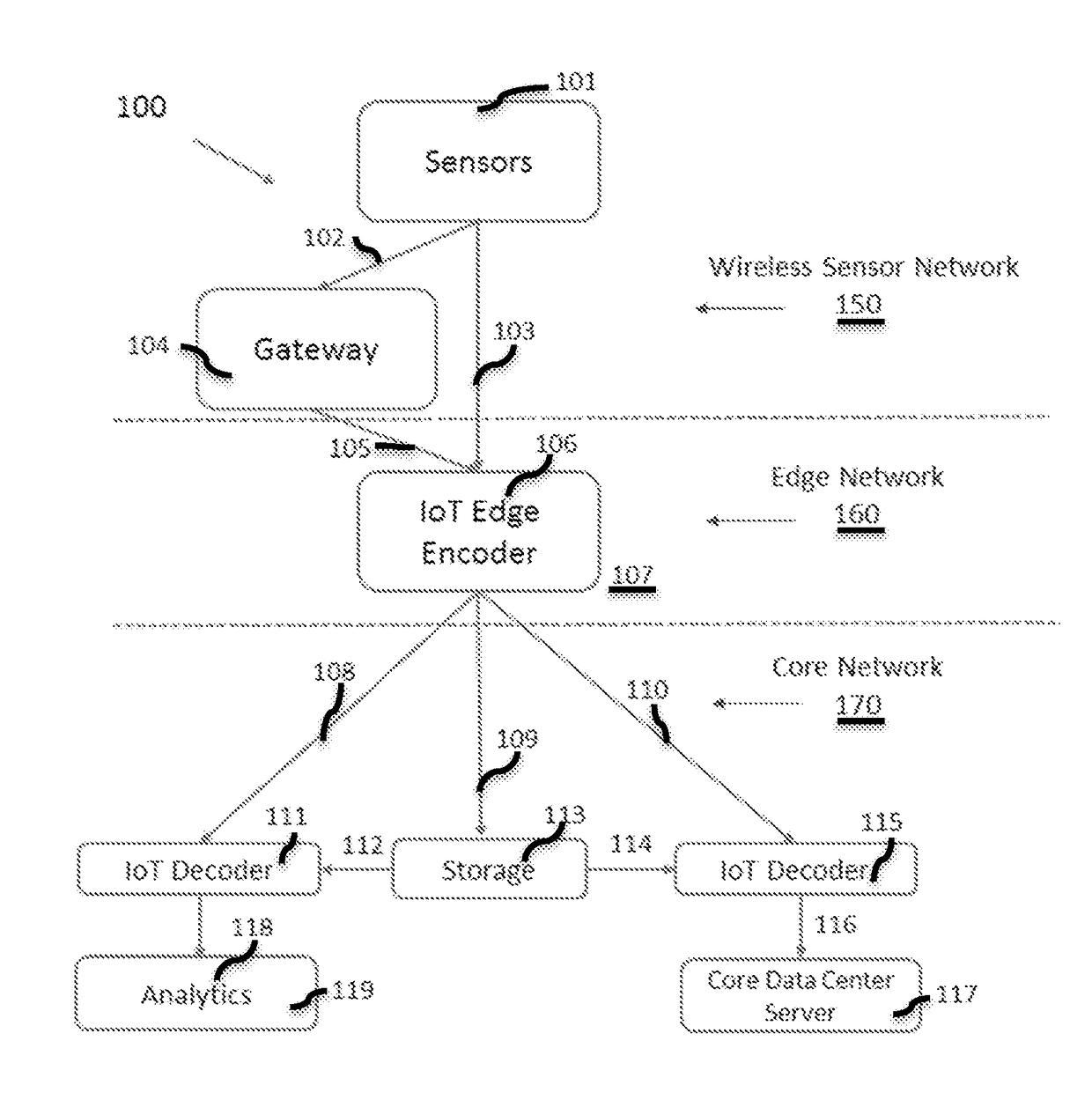
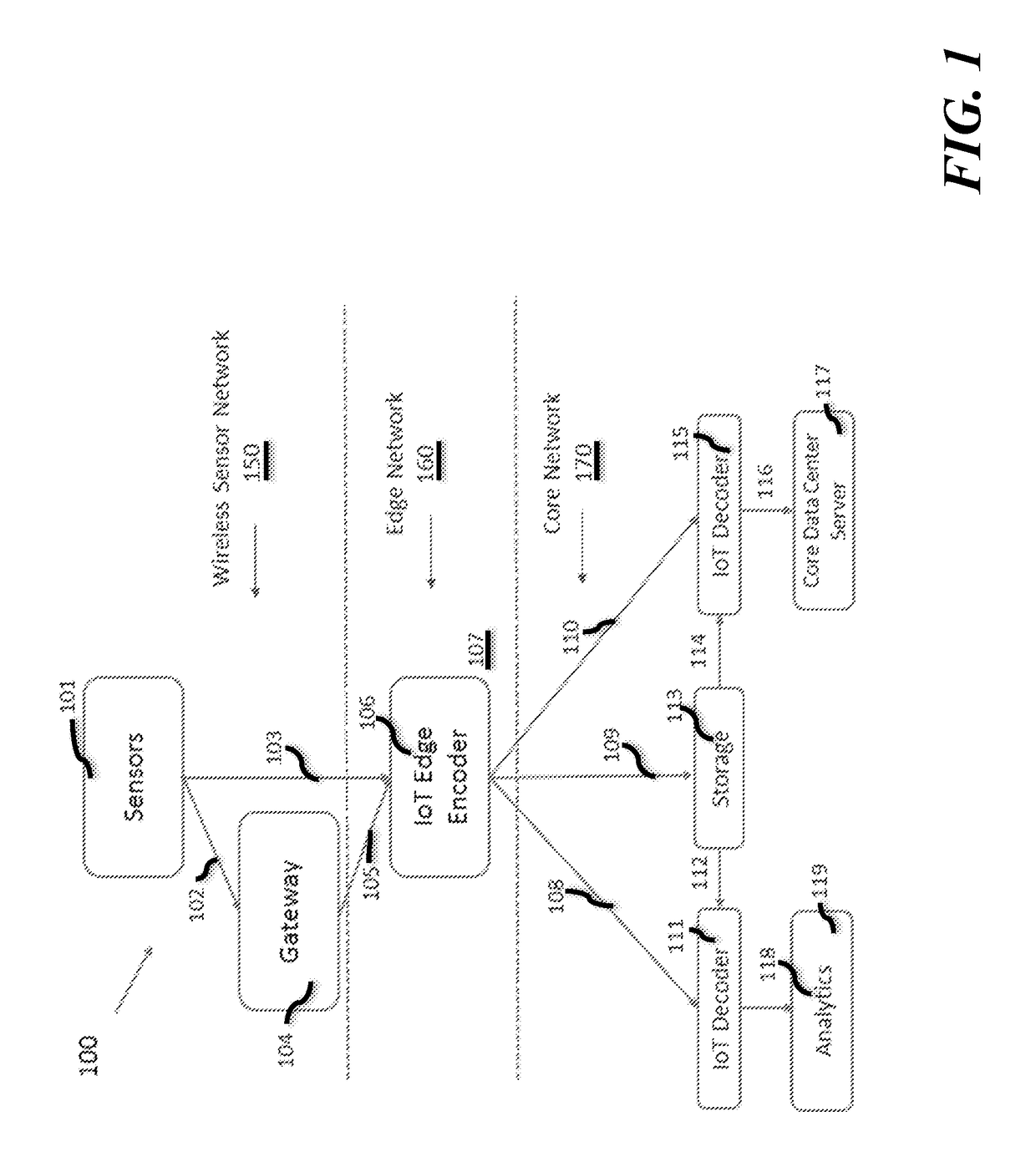
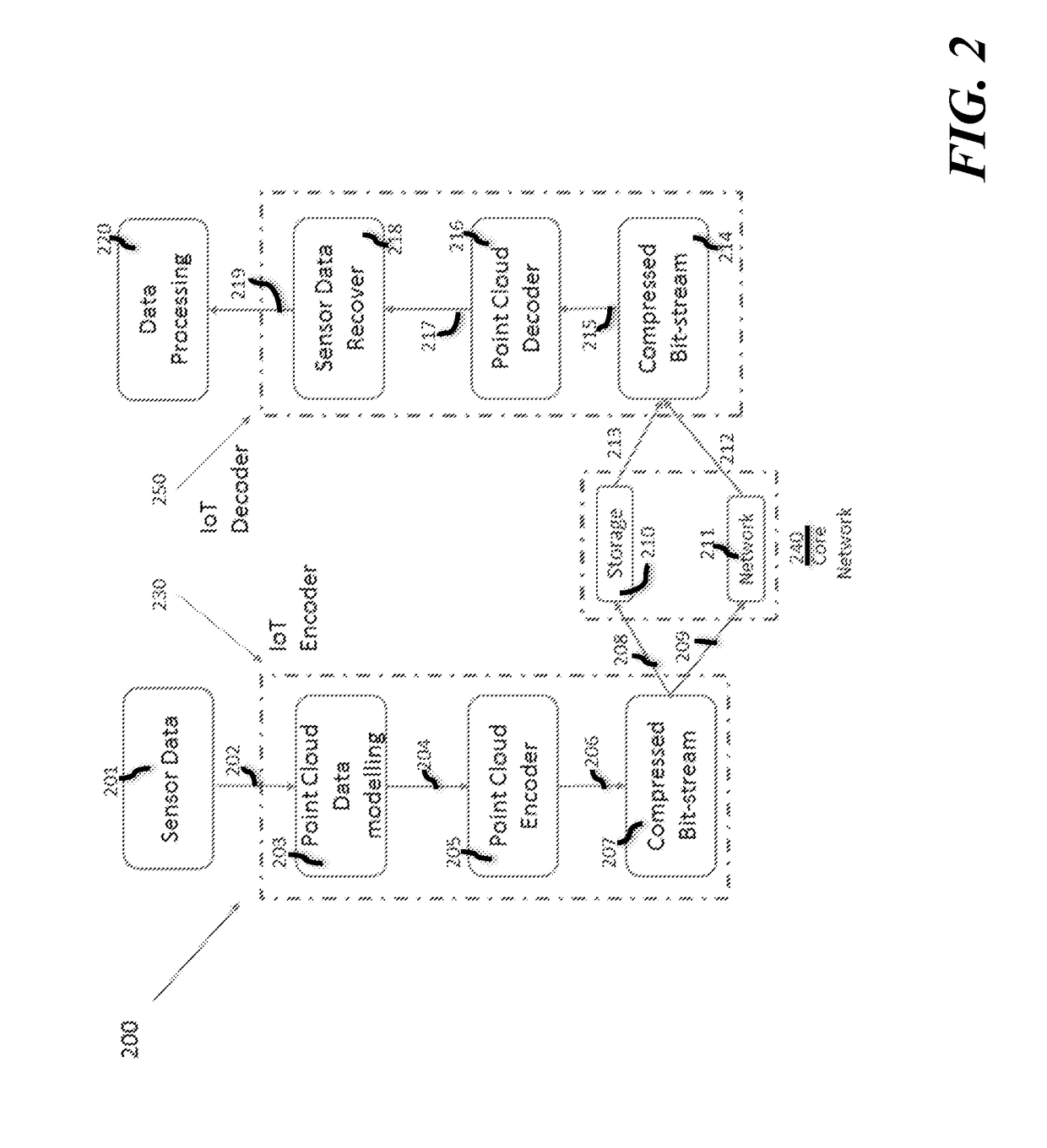
- A system and method that employs spatial correlation to compress and aggregate IoT data using a point cloud-based geometric data model, enabling efficient lossy and lossless compression and archiving, which can be processed at IoT gateways or edge servers, reducing storage costs and supporting increased connectivity in next-generation networks.

Energy Efficiency Standards for IoT Devices
The implementation of compression wave technology in IoT devices necessitates adherence to stringent energy efficiency standards to ensure sustainable operation within resource-constrained environments. Current energy efficiency frameworks for IoT devices primarily focus on IEEE 802.11ah standards for low-power wireless communication and the Energy Star IoT device specifications, which mandate maximum power consumption thresholds during active, idle, and sleep modes.
Compression wave applications introduce unique energy consumption patterns that existing standards inadequately address. The computational overhead associated with wave compression algorithms, particularly real-time signal processing requirements, creates energy spikes that can exceed conventional IoT power budgets. Standard frameworks like IEC 62430 and ISO/IEC 30071 provide baseline energy measurement methodologies but lack specific provisions for compression-intensive applications.
Emerging energy efficiency standards specifically targeting compression wave IoT implementations are being developed through collaborative efforts between the IEEE Communications Society and the International Telecommunication Union. These standards propose dynamic power scaling mechanisms that adjust compression ratios based on available energy resources, ensuring continuous operation while maintaining acceptable data quality levels.
The proposed standards introduce adaptive compression thresholds that automatically reduce computational complexity when battery levels drop below predetermined limits. This approach enables devices to maintain essential functionality while preserving energy for critical operations. Additionally, the standards mandate implementation of hardware-accelerated compression units to minimize CPU-intensive processing overhead.
Compliance with these evolving energy efficiency standards requires IoT manufacturers to integrate power monitoring capabilities directly into compression wave processing pipelines. The standards specify maximum energy consumption per compression cycle and establish benchmarks for compression efficiency ratios relative to power consumption. Furthermore, certification processes will evaluate device performance across various compression scenarios to ensure consistent energy efficiency across different operational conditions.
Implementation of these standards will significantly impact the design and deployment of compression wave-enabled IoT devices, requiring careful balance between compression performance and energy conservation to meet regulatory requirements while maintaining operational effectiveness.
Compression wave applications introduce unique energy consumption patterns that existing standards inadequately address. The computational overhead associated with wave compression algorithms, particularly real-time signal processing requirements, creates energy spikes that can exceed conventional IoT power budgets. Standard frameworks like IEC 62430 and ISO/IEC 30071 provide baseline energy measurement methodologies but lack specific provisions for compression-intensive applications.
Emerging energy efficiency standards specifically targeting compression wave IoT implementations are being developed through collaborative efforts between the IEEE Communications Society and the International Telecommunication Union. These standards propose dynamic power scaling mechanisms that adjust compression ratios based on available energy resources, ensuring continuous operation while maintaining acceptable data quality levels.
The proposed standards introduce adaptive compression thresholds that automatically reduce computational complexity when battery levels drop below predetermined limits. This approach enables devices to maintain essential functionality while preserving energy for critical operations. Additionally, the standards mandate implementation of hardware-accelerated compression units to minimize CPU-intensive processing overhead.
Compliance with these evolving energy efficiency standards requires IoT manufacturers to integrate power monitoring capabilities directly into compression wave processing pipelines. The standards specify maximum energy consumption per compression cycle and establish benchmarks for compression efficiency ratios relative to power consumption. Furthermore, certification processes will evaluate device performance across various compression scenarios to ensure consistent energy efficiency across different operational conditions.
Implementation of these standards will significantly impact the design and deployment of compression wave-enabled IoT devices, requiring careful balance between compression performance and energy conservation to meet regulatory requirements while maintaining operational effectiveness.
Security Implications of Compressed IoT Communications
The implementation of compression techniques in IoT communications introduces significant security vulnerabilities that require careful consideration and mitigation strategies. Compressed data streams can become attractive targets for malicious actors, as the compression algorithms themselves may inadvertently expose patterns or create exploitable weaknesses in the communication protocol.
One primary security concern involves the potential for compression-based side-channel attacks. When compression ratios vary based on data content, attackers can infer sensitive information by monitoring compressed packet sizes and transmission patterns. This vulnerability is particularly pronounced in IoT environments where devices frequently transmit predictable data structures, making pattern analysis more feasible for unauthorized parties.
Authentication and integrity verification present additional challenges in compressed IoT communications. Traditional cryptographic signatures and hash functions may not align efficiently with compression algorithms, potentially requiring decompression before security validation. This process creates computational overhead and introduces timing vulnerabilities where data integrity cannot be verified until after resource-intensive decompression operations.
The reduced redundancy inherent in compressed data streams amplifies the impact of transmission errors and malicious modifications. Single-bit alterations in compressed payloads can cascade into significant data corruption upon decompression, making it difficult to distinguish between natural transmission errors and deliberate tampering attempts. This characteristic necessitates robust error detection mechanisms specifically designed for compressed IoT communications.
Key management becomes increasingly complex when implementing compression in resource-constrained IoT devices. The computational overhead of encryption combined with compression algorithms can exceed the processing capabilities of low-power devices, forcing developers to make trade-offs between security strength and operational efficiency. Additionally, the dynamic nature of compression ratios complicates the implementation of fixed-length cryptographic blocks.
Denial-of-service attacks targeting compression algorithms represent another critical security consideration. Maliciously crafted input data can trigger compression bombs or algorithmic complexity attacks, causing IoT devices to exhaust their limited computational resources or memory capacity. These attacks are particularly effective against devices with minimal processing power and no sophisticated input validation mechanisms.
To address these security implications, IoT system designers must implement compression-aware security protocols that maintain cryptographic strength while preserving the efficiency benefits of data compression in resource-constrained environments.
One primary security concern involves the potential for compression-based side-channel attacks. When compression ratios vary based on data content, attackers can infer sensitive information by monitoring compressed packet sizes and transmission patterns. This vulnerability is particularly pronounced in IoT environments where devices frequently transmit predictable data structures, making pattern analysis more feasible for unauthorized parties.
Authentication and integrity verification present additional challenges in compressed IoT communications. Traditional cryptographic signatures and hash functions may not align efficiently with compression algorithms, potentially requiring decompression before security validation. This process creates computational overhead and introduces timing vulnerabilities where data integrity cannot be verified until after resource-intensive decompression operations.
The reduced redundancy inherent in compressed data streams amplifies the impact of transmission errors and malicious modifications. Single-bit alterations in compressed payloads can cascade into significant data corruption upon decompression, making it difficult to distinguish between natural transmission errors and deliberate tampering attempts. This characteristic necessitates robust error detection mechanisms specifically designed for compressed IoT communications.
Key management becomes increasingly complex when implementing compression in resource-constrained IoT devices. The computational overhead of encryption combined with compression algorithms can exceed the processing capabilities of low-power devices, forcing developers to make trade-offs between security strength and operational efficiency. Additionally, the dynamic nature of compression ratios complicates the implementation of fixed-length cryptographic blocks.
Denial-of-service attacks targeting compression algorithms represent another critical security consideration. Maliciously crafted input data can trigger compression bombs or algorithmic complexity attacks, causing IoT devices to exhaust their limited computational resources or memory capacity. These attacks are particularly effective against devices with minimal processing power and no sophisticated input validation mechanisms.
To address these security implications, IoT system designers must implement compression-aware security protocols that maintain cryptographic strength while preserving the efficiency benefits of data compression in resource-constrained environments.
Unlock deeper insights with Patsnap Eureka Quick Research — get a full tech report to explore trends and direct your research. Try now!
Generate Your Research Report Instantly with AI Agent
Supercharge your innovation with Patsnap Eureka AI Agent Platform!