

Quantify Compression Wave Power in Energy Harvesting
MAR 9, 20269 MIN READ
Generate Your Research Report Instantly with AI Agent
Patsnap Eureka helps you evaluate technical feasibility & market potential.
Compression Wave Energy Harvesting Background and Objectives
Compression wave energy harvesting represents a rapidly evolving field within the broader domain of mechanical energy harvesting technologies. This approach focuses on capturing and converting the kinetic energy present in compression waves, which are ubiquitous in various environments including industrial machinery, transportation systems, ocean waves, and seismic activities. The fundamental principle involves utilizing the periodic compression and decompression cycles inherent in these waves to generate electrical energy through various transduction mechanisms.
The historical development of compression wave energy harvesting can be traced back to early piezoelectric applications in the 1960s, where researchers first recognized the potential of converting mechanical stress into electrical energy. However, significant advancement occurred in the late 1990s and early 2000s when miniaturization technologies enabled the development of micro-scale energy harvesters suitable for wireless sensor networks and Internet of Things applications.
The evolution of this technology has been driven by the increasing demand for autonomous power sources in remote monitoring systems, wearable devices, and structural health monitoring applications. Traditional battery-powered solutions face limitations in terms of maintenance requirements, environmental impact, and operational lifespan, creating a compelling need for self-sustaining energy solutions.
Current technological objectives in compression wave energy harvesting center on achieving higher power density, broader frequency response ranges, and improved conversion efficiency. Researchers are particularly focused on developing adaptive systems that can effectively capture energy across varying compression wave frequencies and amplitudes, which is crucial for real-world applications where wave characteristics are often unpredictable and non-uniform.
The quantification of compression wave power represents a critical challenge in optimizing harvester design and predicting system performance. This involves developing sophisticated mathematical models that can accurately characterize wave propagation, energy density distribution, and the complex interactions between wave mechanics and harvesting devices. Advanced computational methods and experimental validation techniques are essential for establishing reliable power quantification frameworks.
Contemporary research objectives also emphasize the development of hybrid harvesting systems that can simultaneously capture energy from multiple compression wave sources or combine compression wave harvesting with other energy harvesting modalities. This multi-modal approach aims to maximize energy capture efficiency and provide more consistent power output for demanding applications.
Market Demand for Compression Wave Energy Solutions
The global energy harvesting market is experiencing unprecedented growth driven by the increasing demand for sustainable and autonomous power solutions across multiple industries. Compression wave energy harvesting represents a particularly promising segment within this expanding market, addressing critical needs in applications where traditional power sources are impractical or impossible to implement.
Industrial automation and manufacturing sectors demonstrate substantial demand for compression wave energy solutions, particularly in environments where mechanical vibrations and pressure fluctuations are abundant. Manufacturing facilities, heavy machinery operations, and processing plants generate continuous compression waves that remain largely untapped as energy sources. The growing emphasis on energy efficiency and sustainability in industrial operations creates significant market opportunities for technologies that can quantify and harness this mechanical energy.
The Internet of Things and wireless sensor network markets present another major demand driver for compression wave energy harvesting solutions. As industries increasingly deploy distributed sensor systems for monitoring and control applications, the need for self-powered devices becomes critical. Compression wave energy harvesting offers a viable solution for powering sensors in remote or inaccessible locations where battery replacement is costly or impractical.
Transportation infrastructure represents a rapidly expanding market segment, with applications ranging from railway systems to highway monitoring. The constant mechanical stress and vibrations generated by vehicles and trains create substantial compression wave energy potential. Smart city initiatives and infrastructure modernization projects worldwide are driving demand for energy harvesting solutions that can power monitoring systems, communication devices, and safety equipment without requiring external power sources.
Healthcare and biomedical applications constitute an emerging high-value market segment. Medical implants, wearable devices, and remote patient monitoring systems require reliable, long-term power sources. Compression wave energy harvesting from human movement, cardiovascular activity, and respiratory functions offers promising solutions for next-generation medical devices.
The aerospace and defense sectors show increasing interest in compression wave energy harvesting for powering sensors and communication systems in challenging environments. Military applications, satellite systems, and unmanned vehicles require autonomous power solutions that can operate reliably under extreme conditions.
Market growth is further accelerated by stringent environmental regulations and corporate sustainability initiatives that mandate reduced carbon footprints and improved energy efficiency. Organizations across various sectors are actively seeking innovative energy harvesting technologies to meet regulatory requirements and achieve sustainability goals.
Current State of Compression Wave Power Quantification
The quantification of compression wave power in energy harvesting systems represents a rapidly evolving field with significant technological advancements across multiple application domains. Current methodologies primarily focus on measuring mechanical stress, displacement amplitude, and frequency characteristics to determine harvestable energy potential from compression waves propagating through various media.
Piezoelectric-based measurement systems dominate the current landscape, utilizing materials such as lead zirconate titanate (PZT) and polyvinylidene fluoride (PVDF) to convert mechanical compression into quantifiable electrical signals. These systems typically achieve measurement accuracies within 5-10% for compression waves ranging from 10 Hz to 10 kHz, with power density measurements reaching up to 100 μW/cm³ in optimal conditions.
Electromagnetic induction approaches represent another significant measurement category, employing coil-magnet assemblies to quantify compression wave energy through induced voltage measurements. Current implementations demonstrate effective quantification capabilities for low-frequency compression waves below 500 Hz, with recent developments incorporating advanced signal processing algorithms to enhance measurement precision and reduce noise interference.
Capacitive sensing technologies have emerged as promising alternatives, particularly for high-frequency compression wave applications. These systems utilize variable capacitance changes induced by mechanical deformation to quantify available energy, achieving response times under 1 millisecond and demonstrating excellent linearity across wide dynamic ranges.
Contemporary measurement challenges include accurate quantification in multi-modal wave environments, temperature compensation effects, and long-term stability issues. Current solutions address these through advanced filtering techniques, temperature-compensated sensor designs, and machine learning algorithms for pattern recognition and signal enhancement.
Recent technological developments have introduced hybrid measurement approaches combining multiple sensing modalities to improve accuracy and expand operational frequency ranges. These integrated systems demonstrate enhanced performance in complex wave environments, achieving measurement uncertainties below 3% across broader frequency spectrums while maintaining compact form factors suitable for practical energy harvesting applications.
Existing Methods for Compression Wave Power Measurement
01 Compression wave energy conversion devices
Devices and systems designed to convert compression wave energy into usable power through mechanical or hydraulic mechanisms. These systems typically utilize pistons, cylinders, or similar components that respond to pressure waves to generate energy. The conversion process may involve multiple stages of energy transformation to optimize power output.- Compression wave energy conversion devices: Devices and systems designed to convert compression wave energy into usable power through mechanical or hydraulic mechanisms. These systems typically utilize pistons, cylinders, or similar components that respond to pressure waves to generate energy. The conversion process involves capturing the kinetic energy from compression waves and transforming it into electrical or mechanical power output.
- Wave-powered compression systems for fluid processing: Systems that harness wave energy to drive compression mechanisms for processing fluids, including water desalination, pumping, or pressurization applications. These systems integrate wave energy capture with compression technology to perform useful work without external power sources. The compression action is directly driven by the oscillating motion of waves.
- Pneumatic and hydraulic compression wave generators: Apparatus that generate compression waves through pneumatic or hydraulic means for power transmission or energy storage purposes. These devices create controlled pressure pulses that can be used to transmit power over distances or store energy in compressed form. The technology involves valves, accumulators, and control systems to manage wave generation and propagation.
- Compression wave power transmission systems: Systems designed to transmit power using compression waves through various media such as fluids or gases. These transmission systems offer advantages in specific applications where traditional mechanical or electrical transmission is impractical. The technology includes wave guides, transmission lines, and coupling mechanisms optimized for compression wave propagation.
- Control and optimization mechanisms for compression wave power: Advanced control systems and optimization methods for managing compression wave power generation and utilization. These mechanisms include sensors, feedback systems, and algorithms that maximize energy extraction efficiency and system performance. The technology encompasses real-time monitoring, adaptive control strategies, and power conditioning circuits.
02 Wave-powered compression systems for fluid processing
Systems that harness wave energy to drive compression mechanisms for processing fluids, including water desalination, pumping, or pressurization applications. These systems integrate wave motion capture with compression chambers to perform useful work without external power sources. The technology enables autonomous operation in marine environments.Expand Specific Solutions03 Pneumatic and hydraulic power transmission from compression waves
Methods and apparatus for transmitting power generated from compression waves through pneumatic or hydraulic systems. These approaches utilize pressure differentials created by wave action to drive actuators, turbines, or other power-consuming devices. The systems may include accumulators and control valves to regulate power delivery.Expand Specific Solutions04 Compression wave generators and oscillating mechanisms
Devices that generate or utilize compression waves through oscillating components, reciprocating elements, or resonant structures. These mechanisms may be designed to either produce compression waves for specific applications or to extract energy from existing wave sources. The technology includes various configurations of chambers, valves, and moving parts optimized for wave interaction.Expand Specific Solutions05 Control systems and optimization for compression wave power
Control mechanisms and optimization strategies for managing compression wave power systems, including sensors, feedback loops, and adaptive algorithms. These systems monitor operating parameters and adjust system configuration to maximize energy capture and conversion efficiency under varying wave conditions. Advanced implementations may include predictive control and automated tuning capabilities.Expand Specific Solutions
Key Players in Wave Energy and Compression Systems
The compression wave power energy harvesting field represents an emerging technology sector in its early development stage, characterized by significant research activity but limited commercial deployment. The market remains nascent with substantial growth potential as energy harvesting applications expand across IoT, automotive, and industrial sectors. Technology maturity varies considerably among key players, with established corporations like Schneider Electric USA, Mitsubishi Electric Corp., and Panasonic Intellectual Property Management leading in practical implementation capabilities. Academic institutions including University of California, Tsinghua University, and Fraunhofer-Gesellschaft drive fundamental research breakthroughs, while specialized companies like Calwave Power Technologies focus on wave energy conversion applications. Chinese institutions such as Nanjing University of Science & Technology and University of Electronic Science & Technology demonstrate strong research momentum in this domain, indicating global competition for technological leadership in compression wave energy harvesting solutions.
Schneider Electric USA, Inc.
Technical Solution: Schneider Electric develops building-integrated energy harvesting systems that capture and quantify compression wave power from HVAC systems, mechanical equipment, and structural vibrations. Their technology utilizes hybrid energy conversion approaches combining electromagnetic and piezoelectric elements to maximize energy extraction from various compression wave sources within buildings. The system features intelligent monitoring capabilities that continuously analyze wave patterns and quantify available power potential throughout building infrastructure. Their approach includes predictive analytics software that optimizes energy harvesting scheduling based on building occupancy patterns and equipment operation cycles. The technology integrates seamlessly with Schneider's EcoStruxure platform, providing real-time energy harvesting performance data and automated system optimization. Their solution incorporates advanced power electronics with grid-tie capabilities for feeding harvested energy back into building electrical systems.
Strengths: Excellent building system integration, comprehensive IoT platform connectivity, proven commercial deployment experience. Weaknesses: Limited to building-scale applications, requires existing infrastructure for optimal performance.
Tsinghua University
Technical Solution: Tsinghua University has developed innovative triboelectric nanogenerator (TENG) technology for quantifying and harvesting compression wave power in various environments. Their research focuses on advanced material engineering using novel polymer composites and surface texturing techniques to maximize triboelectric charge generation from compression wave motion. The technology incorporates sophisticated mathematical modeling approaches for accurately quantifying compression wave power density and predicting energy harvesting potential. Their system features multi-layer TENG structures with optimized electrode configurations that can capture energy from low-frequency compression waves typically found in human motion, vehicle vibrations, and environmental sources. The research includes development of intelligent power management circuits with ultra-low power consumption for maximizing net energy output. Their approach emphasizes scalable manufacturing processes and cost-effective materials to enable widespread deployment of compression wave energy harvesting systems.
Strengths: Cutting-edge research in triboelectric technology, innovative material science approaches, strong theoretical foundation. Weaknesses: Primarily research-focused with limited commercial products, technology still in development phases.
Core Innovations in Compression Wave Power Quantification
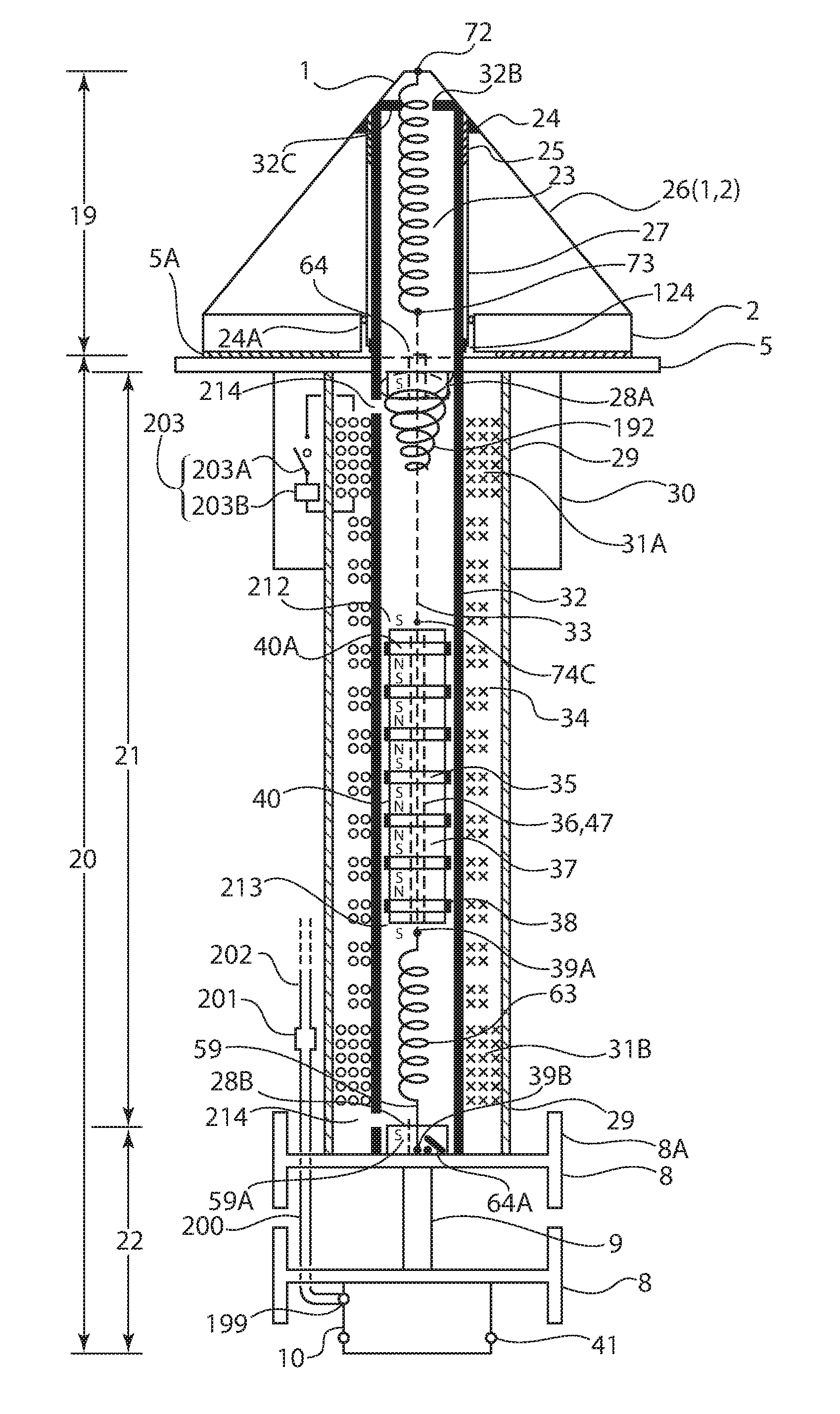
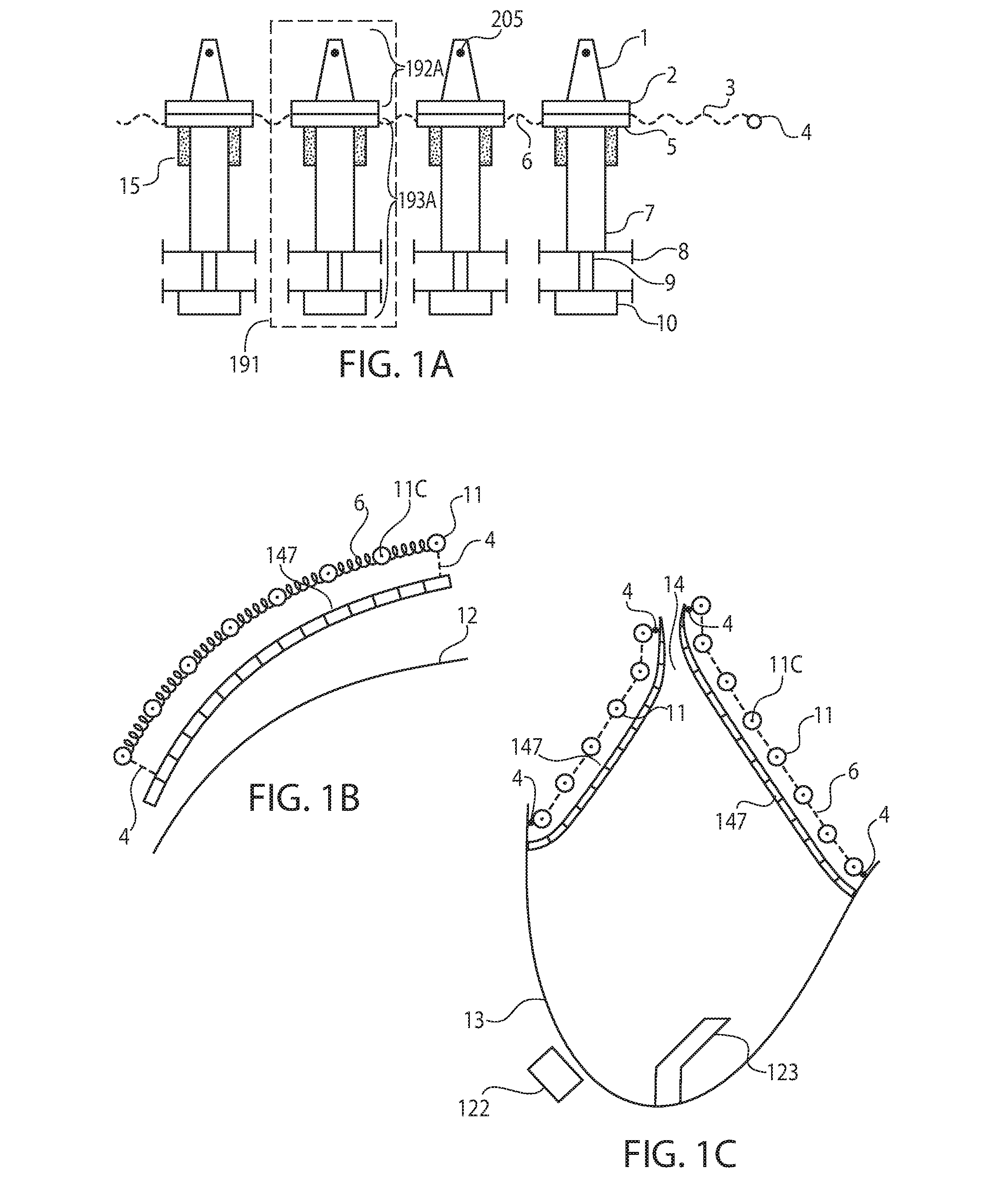
Linear faraday induction generator for the generation of electrical power from ocean wave kinetic energy and arrangements thereof
PatentActiveUS20160252071A1
Innovation
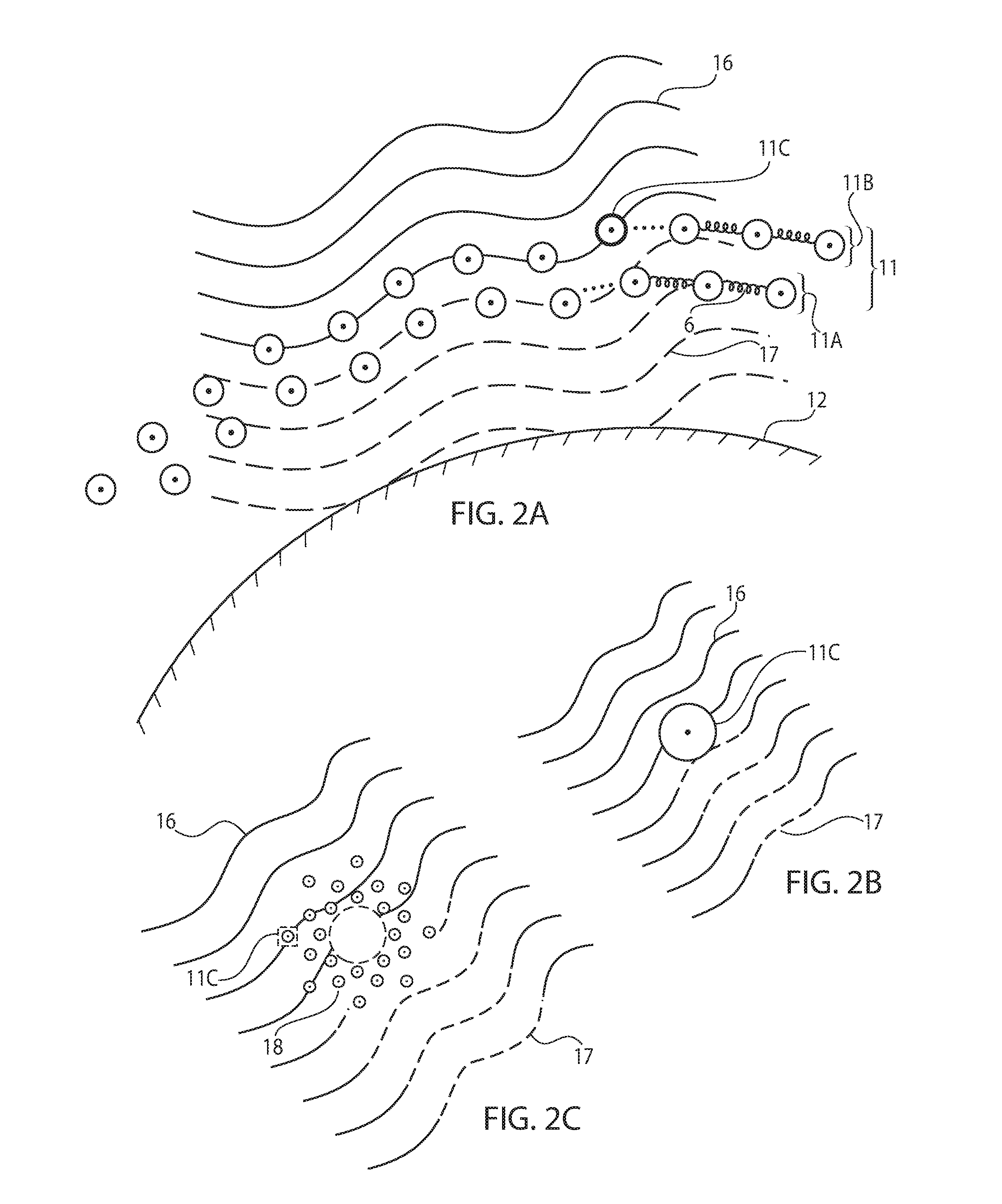
- The Electrokinetic Seawall system employs a network of Vibrational Linear Electric Generators (VLEGs) with Compressive Repulsive Magnetic Fields, using a matrix of Permanent Magnet Arrays (PMAs) and Field Coil Arrays (FCAs) to convert wave kinetic energy into electrical energy through the Faraday effect, minimizing mechanical components and maximizing magnetic flux linkage.

Wave engine: system and methods for efficient wave power harvesting
PatentInactiveIN201631026341A
Innovation
- A wave power capture device featuring specially designed buoys that heave with the surface waves, converting heave motion into bidirectional rotational motion through pinion couplers and double-side threaded racks, storing energy as potential energy using a weight stack and magnetic field, and releasing it as torque to drive electrical generators, with a modular power takeoff system that provides continuous torque output and coastal protection.


Environmental Impact Assessment of Wave Energy Systems
Wave energy harvesting systems designed to quantify compression wave power present unique environmental considerations that require comprehensive assessment across multiple ecological dimensions. The deployment of compression wave energy converters introduces both direct and indirect environmental impacts that must be carefully evaluated to ensure sustainable ocean energy development.
Marine ecosystem disruption represents a primary concern in wave energy system deployment. Compression wave energy devices alter natural wave patterns and hydrodynamic flows, potentially affecting sediment transport mechanisms and coastal erosion patterns. These modifications can impact benthic communities, fish spawning grounds, and marine mammal migration routes. The physical presence of energy harvesting infrastructure creates artificial reef effects, which may benefit some species while displacing others from traditional habitats.
Acoustic pollution emerges as a significant environmental factor during both installation and operational phases. Wave energy converters generate underwater noise through mechanical operations, power transmission systems, and structural vibrations. Marine mammals, particularly cetaceans that rely on echolocation, face potential behavioral disruptions and communication interference. Fish populations may experience stress responses, altered feeding patterns, and changes in schooling behavior due to continuous acoustic emissions from compression wave quantification equipment.
Electromagnetic field generation from power transmission cables and electrical components poses additional environmental risks. Subsea cables carrying harvested energy to shore create electromagnetic signatures that can affect the navigation systems of marine species, particularly those using magnetic field detection for migration. Elasmobranchs, including sharks and rays, demonstrate particular sensitivity to electromagnetic disturbances, potentially altering their hunting and reproductive behaviors.
Chemical contamination risks arise from anti-fouling coatings, hydraulic fluids, and corrosion protection systems used in wave energy infrastructure. These substances may leach into marine environments over operational lifespans, accumulating in sediments and entering food chains. Heavy metals from sacrificial anodes and industrial lubricants present long-term bioaccumulation concerns for marine organisms.
Visual and landscape impacts affect coastal communities and marine environments. Large-scale wave energy arrays alter seascape aesthetics and may interfere with traditional maritime activities including fishing, shipping, and recreational boating. The cumulative visual impact of multiple compression wave energy installations requires careful consideration of coastal zone management principles.
Mitigation strategies must incorporate adaptive management approaches, continuous environmental monitoring, and stakeholder engagement throughout project lifecycles. Environmental impact assessments should establish baseline conditions, implement real-time monitoring systems, and develop contingency protocols for unexpected ecological responses to wave energy harvesting operations.
Standardization Framework for Wave Power Quantification
The establishment of a comprehensive standardization framework for wave power quantification represents a critical need in the energy harvesting sector, particularly for compression wave applications. Current measurement approaches lack uniformity across different research institutions and commercial entities, leading to inconsistent performance evaluations and hindering technology advancement. The absence of standardized metrics creates significant barriers for technology comparison, investment decisions, and regulatory compliance.
International standardization bodies, including the International Electrotechnical Commission (IEC) and IEEE, have initiated preliminary discussions regarding wave energy measurement protocols. However, specific standards for compression wave power quantification remain underdeveloped. The IEC Technical Committee 114 has established foundational guidelines for marine energy systems, but these primarily focus on large-scale ocean wave applications rather than micro-scale compression wave harvesting technologies.
A robust standardization framework must encompass multiple measurement parameters, including power density calculations, efficiency metrics, frequency response characteristics, and environmental condition specifications. The framework should define standardized testing procedures for laboratory environments, field deployment scenarios, and accelerated aging protocols. Critical measurement units must be established for compression wave amplitude, frequency bandwidth, energy conversion efficiency, and power output normalization across different device scales.
Testing methodology standardization requires careful consideration of environmental variables that significantly impact compression wave energy harvesting performance. Temperature variations, humidity levels, mechanical vibration interference, and electromagnetic compatibility must be incorporated into standardized testing protocols. The framework should establish baseline testing conditions while providing adjustment factors for real-world deployment scenarios.
Calibration procedures represent another essential component of the standardization framework. Reference devices and measurement equipment must be specified to ensure consistent results across different testing facilities. Traceability to international measurement standards becomes crucial for maintaining accuracy and reliability in power quantification processes.
The proposed framework should also address data reporting formats, uncertainty quantification methods, and statistical analysis requirements. Standardized documentation templates would facilitate technology comparison and accelerate commercialization processes. Regular framework updates must be incorporated to accommodate emerging technologies and evolving measurement capabilities in the compression wave energy harvesting field.
Unlock deeper insights with Patsnap Eureka Quick Research — get a full tech report to explore trends and direct your research. Try now!
Generate Your Research Report Instantly with AI Agent
Supercharge your innovation with Patsnap Eureka AI Agent Platform!