
How to Improve Compression Wave Signal Accuracy
MAR 9, 20269 MIN READ
Generate Your Research Report Instantly with AI Agent
Patsnap Eureka helps you evaluate technical feasibility & market potential.
Compression Wave Technology Background and Objectives
Compression wave technology has evolved significantly since its initial applications in seismic exploration during the early 20th century. Originally developed for geological surveying and oil exploration, compression waves, also known as P-waves or primary waves, represent longitudinal acoustic waves that propagate through various media by compressing and expanding particles in the direction of wave travel. The fundamental principle relies on the elastic properties of materials, where wave velocity depends on the medium's bulk modulus and density.
The historical development of compression wave applications expanded from basic seismic surveys to sophisticated non-destructive testing, medical ultrasound imaging, and advanced materials characterization. Early systems suffered from significant signal degradation, noise interference, and limited resolution capabilities. The advent of digital signal processing in the 1970s marked a pivotal transformation, enabling more precise wave analysis and interpretation.
Modern compression wave technology faces increasing demands for enhanced accuracy across multiple industries. In medical diagnostics, precise wave measurements are crucial for tissue characterization and early disease detection. Industrial applications require accurate flaw detection in critical components, while geophysical exploration demands improved subsurface imaging resolution. The challenge lies in overcoming inherent limitations such as signal attenuation, scattering effects, and environmental noise that compromise measurement precision.
Current technological objectives focus on developing advanced signal processing algorithms that can effectively filter noise while preserving essential wave characteristics. Machine learning approaches are being integrated to recognize complex wave patterns and compensate for systematic errors. Additionally, hardware improvements in transducer design and data acquisition systems aim to capture higher fidelity signals with improved signal-to-noise ratios.
The ultimate goal involves achieving sub-wavelength resolution capabilities while maintaining real-time processing speeds. This requires sophisticated calibration techniques, adaptive filtering methods, and intelligent signal reconstruction algorithms. Success in these areas would revolutionize applications ranging from precision manufacturing quality control to advanced medical imaging, establishing new standards for compression wave measurement accuracy and reliability across diverse technological domains.
The historical development of compression wave applications expanded from basic seismic surveys to sophisticated non-destructive testing, medical ultrasound imaging, and advanced materials characterization. Early systems suffered from significant signal degradation, noise interference, and limited resolution capabilities. The advent of digital signal processing in the 1970s marked a pivotal transformation, enabling more precise wave analysis and interpretation.
Modern compression wave technology faces increasing demands for enhanced accuracy across multiple industries. In medical diagnostics, precise wave measurements are crucial for tissue characterization and early disease detection. Industrial applications require accurate flaw detection in critical components, while geophysical exploration demands improved subsurface imaging resolution. The challenge lies in overcoming inherent limitations such as signal attenuation, scattering effects, and environmental noise that compromise measurement precision.
Current technological objectives focus on developing advanced signal processing algorithms that can effectively filter noise while preserving essential wave characteristics. Machine learning approaches are being integrated to recognize complex wave patterns and compensate for systematic errors. Additionally, hardware improvements in transducer design and data acquisition systems aim to capture higher fidelity signals with improved signal-to-noise ratios.
The ultimate goal involves achieving sub-wavelength resolution capabilities while maintaining real-time processing speeds. This requires sophisticated calibration techniques, adaptive filtering methods, and intelligent signal reconstruction algorithms. Success in these areas would revolutionize applications ranging from precision manufacturing quality control to advanced medical imaging, establishing new standards for compression wave measurement accuracy and reliability across diverse technological domains.
Market Demand for High-Accuracy Compression Wave Systems
The global market for high-accuracy compression wave systems is experiencing unprecedented growth driven by expanding applications across multiple industrial sectors. Oil and gas exploration represents the largest market segment, where enhanced seismic imaging capabilities directly translate to improved reservoir characterization and reduced exploration risks. The increasing complexity of unconventional resource extraction, including deep-water drilling and shale formations, demands superior signal accuracy to optimize drilling locations and minimize environmental impact.
Medical diagnostics constitutes another rapidly expanding market segment, particularly in ultrasonic imaging and therapeutic applications. Healthcare providers increasingly require precise compression wave measurements for early disease detection, cardiac monitoring, and non-invasive treatment procedures. The aging global population and rising healthcare standards are driving sustained demand for advanced diagnostic equipment with enhanced signal processing capabilities.
Industrial non-destructive testing markets are witnessing significant growth as manufacturing quality standards become more stringent. Aerospace, automotive, and infrastructure sectors require highly accurate compression wave systems to detect microscopic defects in critical components. The shift toward predictive maintenance strategies across industries further amplifies demand for precision measurement systems capable of identifying potential failures before they occur.
Emerging applications in materials science and research institutions are creating new market opportunities. Advanced materials characterization, geological research, and environmental monitoring applications require unprecedented signal accuracy levels. The development of smart materials and nanotechnology applications particularly demands compression wave systems with enhanced precision capabilities.
Regional market dynamics show strong growth in Asia-Pacific regions, driven by industrial expansion and infrastructure development. North American markets remain robust due to continued oil and gas activities and advanced healthcare infrastructure. European markets emphasize environmental monitoring and renewable energy applications, creating specialized demand for high-accuracy systems.
The market trend toward integrated digital solutions and real-time data processing capabilities is reshaping customer expectations. End users increasingly demand systems that combine high accuracy with advanced analytics, cloud connectivity, and automated interpretation capabilities. This evolution from standalone measurement devices to comprehensive diagnostic platforms represents a fundamental shift in market requirements and value propositions.
Medical diagnostics constitutes another rapidly expanding market segment, particularly in ultrasonic imaging and therapeutic applications. Healthcare providers increasingly require precise compression wave measurements for early disease detection, cardiac monitoring, and non-invasive treatment procedures. The aging global population and rising healthcare standards are driving sustained demand for advanced diagnostic equipment with enhanced signal processing capabilities.
Industrial non-destructive testing markets are witnessing significant growth as manufacturing quality standards become more stringent. Aerospace, automotive, and infrastructure sectors require highly accurate compression wave systems to detect microscopic defects in critical components. The shift toward predictive maintenance strategies across industries further amplifies demand for precision measurement systems capable of identifying potential failures before they occur.
Emerging applications in materials science and research institutions are creating new market opportunities. Advanced materials characterization, geological research, and environmental monitoring applications require unprecedented signal accuracy levels. The development of smart materials and nanotechnology applications particularly demands compression wave systems with enhanced precision capabilities.
Regional market dynamics show strong growth in Asia-Pacific regions, driven by industrial expansion and infrastructure development. North American markets remain robust due to continued oil and gas activities and advanced healthcare infrastructure. European markets emphasize environmental monitoring and renewable energy applications, creating specialized demand for high-accuracy systems.
The market trend toward integrated digital solutions and real-time data processing capabilities is reshaping customer expectations. End users increasingly demand systems that combine high accuracy with advanced analytics, cloud connectivity, and automated interpretation capabilities. This evolution from standalone measurement devices to comprehensive diagnostic platforms represents a fundamental shift in market requirements and value propositions.
Current State and Challenges in Compression Wave Signal Processing
Compression wave signal processing has evolved significantly over the past decades, driven by advances in sensor technology, digital signal processing algorithms, and computational capabilities. The field encompasses applications ranging from non-destructive testing and seismic exploration to medical ultrasound imaging and structural health monitoring. Current systems typically employ piezoelectric transducers, advanced analog-to-digital converters, and sophisticated signal processing chains to capture and analyze compression wave propagation characteristics.
Modern compression wave signal processing systems face several fundamental challenges that limit their accuracy and reliability. Signal attenuation represents a primary concern, as compression waves lose energy during propagation through various media, resulting in reduced signal-to-noise ratios at detection points. This attenuation is particularly problematic in heterogeneous materials where wave scattering and absorption vary significantly across different regions.
Noise interference constitutes another critical challenge, encompassing both environmental noise and system-generated artifacts. Electronic noise from amplification circuits, electromagnetic interference from surrounding equipment, and mechanical vibrations can significantly degrade signal quality. Additionally, multiple reflection paths and mode conversion phenomena create complex wave patterns that complicate accurate signal interpretation and timing measurements.
Temperature variations and material property changes introduce systematic errors in compression wave velocity calculations, directly impacting distance measurements and defect characterization accuracy. These environmental factors cause drift in system calibration and require continuous compensation mechanisms that are often inadequate for dynamic operating conditions.
Current technological limitations include insufficient sampling rates in some applications, limited dynamic range of detection systems, and computational constraints in real-time processing scenarios. Many existing systems struggle with simultaneous multi-channel processing requirements while maintaining high temporal resolution necessary for precise time-of-flight measurements.
Geographically, compression wave signal processing technology development is concentrated in regions with strong industrial and research infrastructure. North America and Europe lead in advanced algorithm development and high-precision instrumentation, while Asia-Pacific regions show rapid growth in manufacturing applications and cost-effective solutions. The technology distribution reflects varying industrial needs, with aerospace and nuclear industries demanding highest accuracy levels, while construction and manufacturing sectors focus on practical, robust solutions for routine inspection tasks.
Modern compression wave signal processing systems face several fundamental challenges that limit their accuracy and reliability. Signal attenuation represents a primary concern, as compression waves lose energy during propagation through various media, resulting in reduced signal-to-noise ratios at detection points. This attenuation is particularly problematic in heterogeneous materials where wave scattering and absorption vary significantly across different regions.
Noise interference constitutes another critical challenge, encompassing both environmental noise and system-generated artifacts. Electronic noise from amplification circuits, electromagnetic interference from surrounding equipment, and mechanical vibrations can significantly degrade signal quality. Additionally, multiple reflection paths and mode conversion phenomena create complex wave patterns that complicate accurate signal interpretation and timing measurements.
Temperature variations and material property changes introduce systematic errors in compression wave velocity calculations, directly impacting distance measurements and defect characterization accuracy. These environmental factors cause drift in system calibration and require continuous compensation mechanisms that are often inadequate for dynamic operating conditions.
Current technological limitations include insufficient sampling rates in some applications, limited dynamic range of detection systems, and computational constraints in real-time processing scenarios. Many existing systems struggle with simultaneous multi-channel processing requirements while maintaining high temporal resolution necessary for precise time-of-flight measurements.
Geographically, compression wave signal processing technology development is concentrated in regions with strong industrial and research infrastructure. North America and Europe lead in advanced algorithm development and high-precision instrumentation, while Asia-Pacific regions show rapid growth in manufacturing applications and cost-effective solutions. The technology distribution reflects varying industrial needs, with aerospace and nuclear industries demanding highest accuracy levels, while construction and manufacturing sectors focus on practical, robust solutions for routine inspection tasks.
Existing Solutions for Compression Wave Signal Accuracy
01 Signal processing and filtering techniques for compression wave accuracy
Advanced signal processing methods including digital filtering, noise reduction algorithms, and adaptive filtering techniques are employed to enhance the accuracy of compression wave signals. These techniques help eliminate unwanted noise and interference, improving signal-to-noise ratio and overall measurement precision. Various filtering approaches such as bandpass filters, low-pass filters, and digital signal processors are utilized to extract clean compression wave signals from raw data.- Signal processing and filtering techniques for compression wave accuracy: Various signal processing methods can be employed to enhance the accuracy of compression wave signals. These include digital filtering, noise reduction algorithms, and signal conditioning techniques that help eliminate interference and improve signal-to-noise ratio. Advanced processing methods can compensate for distortions and enhance the fidelity of the measured compression wave data.
- Sensor design and transducer optimization: The physical design and configuration of sensors and transducers play a crucial role in accurately detecting compression waves. Optimized sensor geometries, material selection, and mounting configurations can significantly improve measurement precision. Proper transducer design ensures better coupling with the medium and reduces signal loss or distortion during wave propagation detection.
- Calibration and compensation methods: Implementing systematic calibration procedures and compensation algorithms is essential for maintaining compression wave signal accuracy. These methods account for environmental factors, temperature variations, and system drift over time. Regular calibration routines and adaptive compensation techniques ensure consistent and reliable measurements across different operating conditions.
- Timing and synchronization control: Precise timing control and synchronization mechanisms are critical for accurate compression wave signal measurement. High-resolution timing circuits, synchronized sampling systems, and phase-locked loop technologies enable accurate capture of wave characteristics. Proper synchronization between multiple sensors or measurement points ensures coherent data collection and analysis.
- Data acquisition and digitization systems: Advanced data acquisition systems with high sampling rates and resolution are fundamental to capturing compression wave signals accurately. Modern digitization techniques, including high-speed analog-to-digital converters and multi-channel acquisition systems, enable precise recording of wave parameters. Proper selection of sampling frequency and bit depth ensures that critical signal features are preserved during the measurement process.
02 Sensor calibration and compensation methods
Calibration techniques and compensation algorithms are implemented to improve the accuracy of compression wave measurements. These methods account for sensor drift, temperature effects, and environmental variations that may affect signal accuracy. Calibration procedures involve reference signal comparison, offset correction, and gain adjustment to ensure consistent and reliable measurements across different operating conditions.Expand Specific Solutions03 Time-domain and frequency-domain analysis for signal accuracy
Analytical methods in both time and frequency domains are applied to enhance compression wave signal accuracy. These include waveform analysis, spectral analysis, and time-of-flight measurements. Advanced algorithms process the compression wave characteristics to identify and correct distortions, phase shifts, and amplitude variations that may compromise measurement accuracy.Expand Specific Solutions04 Multi-sensor fusion and redundancy systems
Multiple sensor configurations and data fusion techniques are employed to improve compression wave signal reliability and accuracy. Redundant measurement systems cross-validate signals from different sensors, while fusion algorithms combine data to produce more accurate results. These approaches help detect and compensate for individual sensor errors and provide fault tolerance in critical applications.Expand Specific Solutions05 Hardware optimization and transducer design improvements
Physical design enhancements of transducers and measurement hardware contribute to improved compression wave signal accuracy. This includes optimized transducer geometry, improved coupling mechanisms, enhanced sensitivity designs, and reduced mechanical interference. Material selection and structural configurations are optimized to minimize signal distortion and maximize measurement precision.Expand Specific Solutions
Key Players in Compression Wave Signal Processing Industry
The compression wave signal accuracy improvement field represents a mature technology sector experiencing steady growth, driven by applications across telecommunications, defense, healthcare, and industrial automation. The market demonstrates significant scale with established players like Huawei Technologies, Siemens AG, and Thales SA leading infrastructure development, while specialized companies such as TKMS ATLAS ELEKTRONIK focus on marine applications and Rohde & Schwarz provides precision measurement solutions. Technology maturity varies across segments, with telecommunications giants like Ericsson and NTT advancing 5G implementations, healthcare leaders including Philips and Siemens Healthcare developing medical imaging systems, and defense contractors like General Dynamics Mission Systems creating sophisticated radar applications. Academic institutions such as Xidian University and Beijing University of Posts & Telecommunications contribute fundamental research, while consumer electronics manufacturers like Sony and LG Electronics integrate compression wave technologies into mainstream products, indicating broad market penetration and continued innovation potential.
Huawei Technologies Co., Ltd.
Technical Solution: Huawei has developed advanced signal processing algorithms for compression wave signal accuracy improvement, particularly in telecommunications and radar applications. Their approach combines adaptive filtering techniques with machine learning-based noise reduction algorithms to enhance signal-to-noise ratio by up to 15dB. The company implements multi-stage compression wave processing using proprietary chipsets that support real-time signal correction and amplitude calibration. Their solution incorporates predictive error correction mechanisms and dynamic range optimization to maintain signal integrity across varying environmental conditions and transmission distances.
Strengths: Strong R&D capabilities in signal processing, integrated hardware-software solutions, extensive telecommunications expertise. Weaknesses: Limited focus on specialized acoustic applications, potential export restrictions in certain markets.
Koninklijke Philips NV
Technical Solution: Philips specializes in medical ultrasound compression wave signal accuracy through advanced beamforming technologies and tissue-specific signal optimization. Their proprietary PureWave crystal technology combined with advanced signal processing algorithms achieves up to 30% improvement in image resolution and penetration depth. The company's approach includes real-time adaptive gain control, multi-frequency compound imaging, and harmonic imaging techniques to reduce artifacts and enhance signal clarity. Their systems incorporate AI-driven automatic optimization that adjusts compression wave parameters based on patient anatomy and tissue characteristics for optimal diagnostic accuracy.
Strengths: Deep medical imaging expertise, proven clinical applications, strong regulatory approvals. Weaknesses: Primarily focused on medical applications, high cost of implementation, limited applicability to non-medical sectors.
Core Innovations in Compression Wave Signal Enhancement
Wavelet compression of gravity correction data
PatentWO2005017454A1
Innovation
- The method employs a discrete wavelet transform to compress gravitational deflection data, allowing for efficient storage and retrieval of compensation data in a navigation system, using lossless compression algorithms like GNU ZIP to reduce memory requirements while maintaining accuracy, and utilizes inverse wavelet transforms to correct inertial sensor outputs for gravitational effects.


Enhanced test and measurement instruments using compression and decompression
PatentInactiveUS7071852B1
Innovation
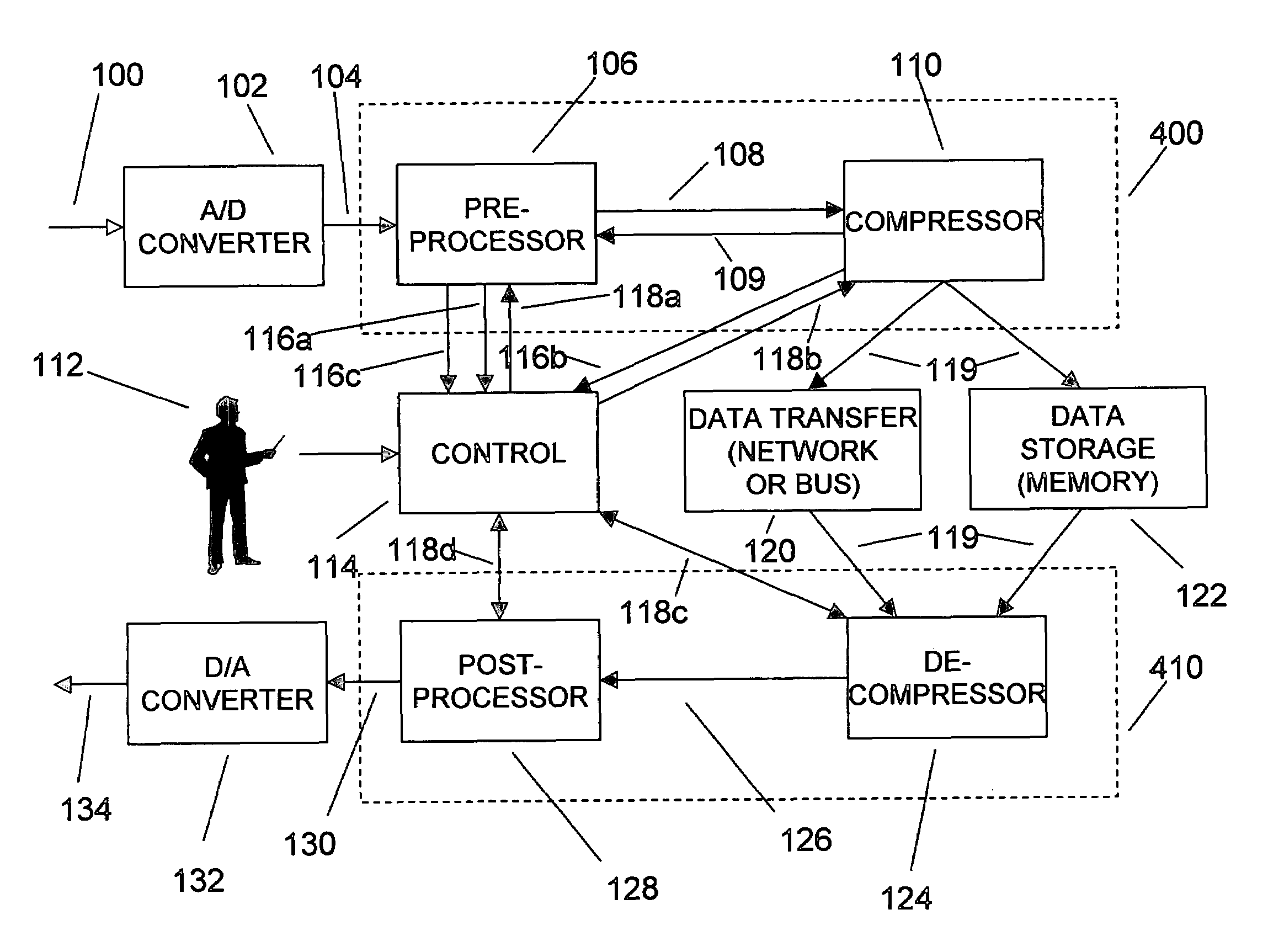
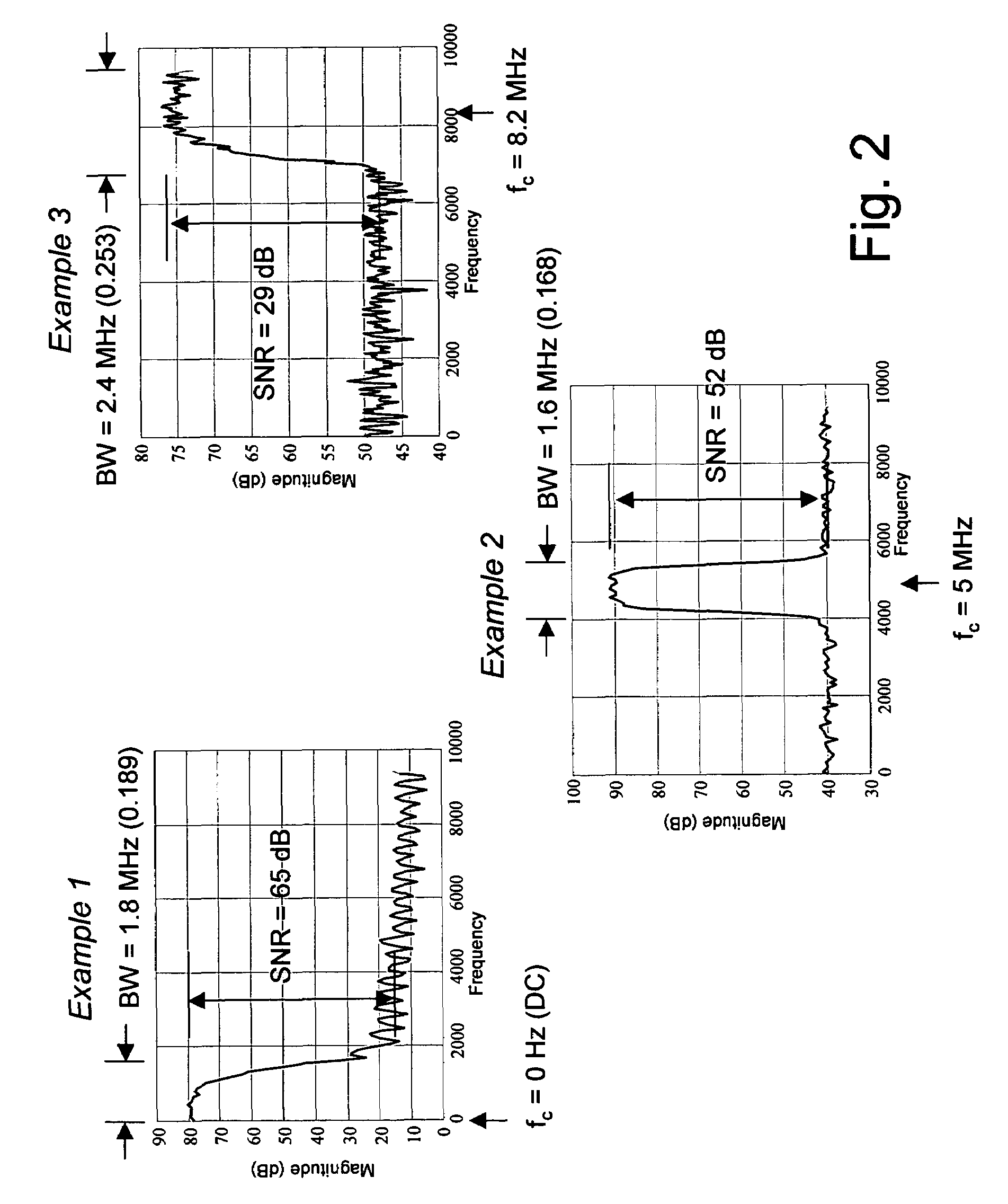
- A system that integrates lossless and lossy compression modes, using preprocessors to adjust signal parameters like noise floor, center frequency, and bandwidth, allowing for real-time compression and decompression of high-speed analog signals at high sampling rates, with the ability to select compression ratios or distortion levels, and operates efficiently on a range of hardware platforms.

Signal Processing Standards and Compliance Requirements
The accuracy of compression wave signal processing is fundamentally governed by a comprehensive framework of international and industry-specific standards that establish minimum performance criteria and measurement protocols. IEEE 802.11 standards define signal-to-noise ratio requirements, while IEC 61000 series standards specify electromagnetic compatibility parameters that directly impact signal fidelity. These standards mandate specific accuracy thresholds, typically requiring measurement uncertainties below 0.5% for critical applications in seismic monitoring and non-destructive testing.
Regulatory compliance frameworks vary significantly across geographical regions and application domains. The Federal Communications Commission (FCC) Part 15 regulations in North America establish stringent requirements for signal processing equipment, particularly regarding spurious emissions and frequency stability. European ETSI standards complement these requirements with additional specifications for environmental testing and long-term stability. In seismic applications, the International Association of Seismology and Physics of the Earth's Interior (IASPEI) provides guidelines for waveform data quality and processing accuracy.
Industry-specific compliance requirements impose additional constraints on compression wave signal accuracy. Medical ultrasound applications must adhere to FDA 510(k) requirements and IEC 60601 safety standards, which mandate specific accuracy levels for diagnostic imaging. Aerospace applications follow DO-160 environmental testing standards and RTCA guidelines that specify signal processing performance under extreme conditions. Oil and gas exploration requires compliance with API standards that define accuracy requirements for seismic data acquisition and processing.
Emerging standards are addressing next-generation signal processing challenges, including machine learning-based enhancement techniques and real-time processing requirements. The ISO/IEC 23053 standard for neural network compression introduces new accuracy metrics specifically designed for AI-enhanced signal processing systems. These evolving standards recognize the need for adaptive accuracy requirements that can accommodate varying environmental conditions and application-specific performance criteria.
Compliance verification protocols require comprehensive testing methodologies that validate signal accuracy across operational parameter ranges. Standard test procedures include linearity assessments, frequency response characterization, and long-term stability evaluations. Certification processes typically involve third-party validation and ongoing monitoring to ensure sustained compliance with accuracy requirements throughout the equipment lifecycle.
Regulatory compliance frameworks vary significantly across geographical regions and application domains. The Federal Communications Commission (FCC) Part 15 regulations in North America establish stringent requirements for signal processing equipment, particularly regarding spurious emissions and frequency stability. European ETSI standards complement these requirements with additional specifications for environmental testing and long-term stability. In seismic applications, the International Association of Seismology and Physics of the Earth's Interior (IASPEI) provides guidelines for waveform data quality and processing accuracy.
Industry-specific compliance requirements impose additional constraints on compression wave signal accuracy. Medical ultrasound applications must adhere to FDA 510(k) requirements and IEC 60601 safety standards, which mandate specific accuracy levels for diagnostic imaging. Aerospace applications follow DO-160 environmental testing standards and RTCA guidelines that specify signal processing performance under extreme conditions. Oil and gas exploration requires compliance with API standards that define accuracy requirements for seismic data acquisition and processing.
Emerging standards are addressing next-generation signal processing challenges, including machine learning-based enhancement techniques and real-time processing requirements. The ISO/IEC 23053 standard for neural network compression introduces new accuracy metrics specifically designed for AI-enhanced signal processing systems. These evolving standards recognize the need for adaptive accuracy requirements that can accommodate varying environmental conditions and application-specific performance criteria.
Compliance verification protocols require comprehensive testing methodologies that validate signal accuracy across operational parameter ranges. Standard test procedures include linearity assessments, frequency response characterization, and long-term stability evaluations. Certification processes typically involve third-party validation and ongoing monitoring to ensure sustained compliance with accuracy requirements throughout the equipment lifecycle.
Quality Assurance Framework for Compression Wave Systems
A comprehensive quality assurance framework for compression wave systems represents a critical foundation for achieving and maintaining high signal accuracy standards. This framework encompasses systematic methodologies, standardized procedures, and continuous monitoring protocols that ensure consistent performance across all operational parameters. The establishment of such a framework requires integration of multiple quality control layers, from initial system calibration to ongoing performance validation.
The framework's core architecture centers on real-time monitoring capabilities that continuously assess signal integrity throughout the entire compression wave propagation path. Advanced diagnostic algorithms embedded within the system perform automated quality checks, detecting deviations from established accuracy thresholds and triggering corrective actions when necessary. These monitoring systems utilize statistical process control methods to identify trends and patterns that may indicate potential accuracy degradation before it impacts system performance.
Calibration protocols form another essential component of the quality assurance framework, establishing standardized procedures for initial system setup and periodic recalibration. These protocols define specific calibration intervals based on system usage patterns, environmental conditions, and historical performance data. The framework incorporates automated calibration verification processes that validate system accuracy against known reference standards, ensuring traceability to international measurement standards.
Error detection and correction mechanisms within the framework provide multiple layers of protection against signal accuracy degradation. Primary error detection systems identify immediate signal anomalies, while secondary validation processes cross-reference multiple measurement parameters to confirm signal integrity. The framework includes automated error correction algorithms that can compensate for common sources of signal distortion without requiring manual intervention.
Documentation and traceability requirements ensure comprehensive record-keeping of all quality assurance activities. The framework mandates detailed logging of calibration events, performance metrics, error occurrences, and corrective actions taken. This documentation supports regulatory compliance requirements and provides valuable data for continuous improvement initiatives.
Performance validation procedures establish regular testing schedules using standardized test signals and measurement protocols. These validation processes verify that compression wave systems maintain specified accuracy levels under various operational conditions, including temperature variations, mechanical stress, and electromagnetic interference scenarios.
The framework's core architecture centers on real-time monitoring capabilities that continuously assess signal integrity throughout the entire compression wave propagation path. Advanced diagnostic algorithms embedded within the system perform automated quality checks, detecting deviations from established accuracy thresholds and triggering corrective actions when necessary. These monitoring systems utilize statistical process control methods to identify trends and patterns that may indicate potential accuracy degradation before it impacts system performance.
Calibration protocols form another essential component of the quality assurance framework, establishing standardized procedures for initial system setup and periodic recalibration. These protocols define specific calibration intervals based on system usage patterns, environmental conditions, and historical performance data. The framework incorporates automated calibration verification processes that validate system accuracy against known reference standards, ensuring traceability to international measurement standards.
Error detection and correction mechanisms within the framework provide multiple layers of protection against signal accuracy degradation. Primary error detection systems identify immediate signal anomalies, while secondary validation processes cross-reference multiple measurement parameters to confirm signal integrity. The framework includes automated error correction algorithms that can compensate for common sources of signal distortion without requiring manual intervention.
Documentation and traceability requirements ensure comprehensive record-keeping of all quality assurance activities. The framework mandates detailed logging of calibration events, performance metrics, error occurrences, and corrective actions taken. This documentation supports regulatory compliance requirements and provides valuable data for continuous improvement initiatives.
Performance validation procedures establish regular testing schedules using standardized test signals and measurement protocols. These validation processes verify that compression wave systems maintain specified accuracy levels under various operational conditions, including temperature variations, mechanical stress, and electromagnetic interference scenarios.
Unlock deeper insights with Patsnap Eureka Quick Research — get a full tech report to explore trends and direct your research. Try now!
Generate Your Research Report Instantly with AI Agent
Supercharge your innovation with Patsnap Eureka AI Agent Platform!